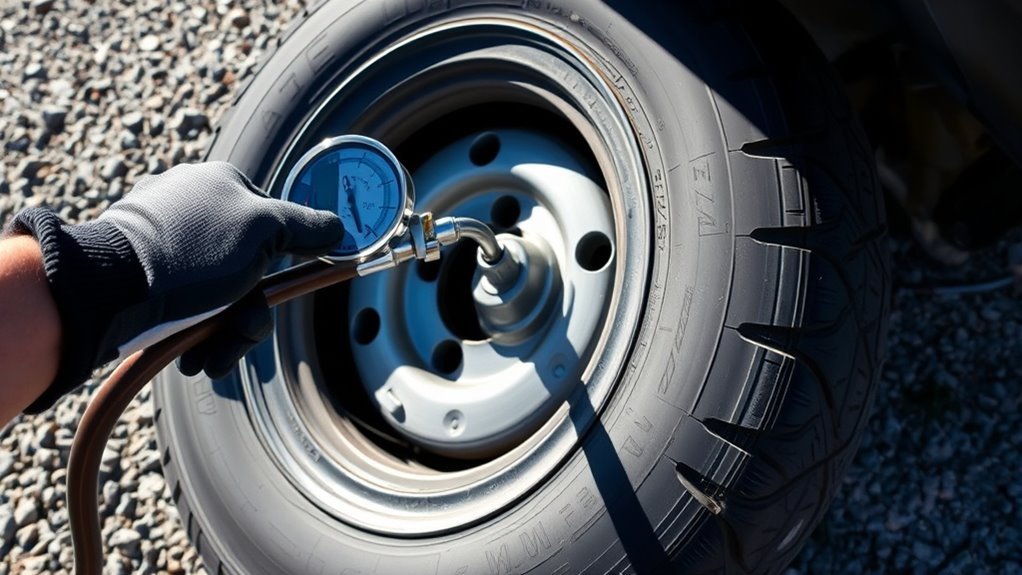
Inflating a spare tire is simple, but the correct PSI matters. A compact “donut” spare is not inflated like a normal road tire, and a full-size spare may follow a different pressure listed on your vehicle placard. The safest approach is to check the spare tire label, your owner’s manual, and the driver-side door placard before adding air.
Quick Answer
To inflate a spare tire correctly, check it when cold with a reliable tire pressure gauge, then add air in short bursts until it reaches the PSI listed on the spare tire label, owner’s manual, or vehicle placard. Most compact temporary spares commonly call for 60 psi cold, while full-size spares usually match the regular tire pressure.
Key Takeaways
- Check your spare tire pressure at least once a month and before long trips.
- Most compact temporary spares commonly specify 60 psi cold, but always follow the tire label or owner’s manual.
- Full-size spares usually use the same cold PSI as the matching road tires listed on the vehicle placard.
- Never use a cracked, bulging, leaking, badly aged, or mismatched spare tire.
- A compact spare is temporary; many are limited to about 50 mph and short-distance driving.
At a Glance
| Time Required | 5–10 minutes |
| Difficulty | Easy |
| Tools Needed | Tire pressure gauge, air compressor or portable inflator, flashlight, and valve-cap check |
| Cost | Usually free if you already have the tools; public air machines may charge a small fee |
Why Regular Spare Tire Pressure Checks Are Crucial for Your Safety
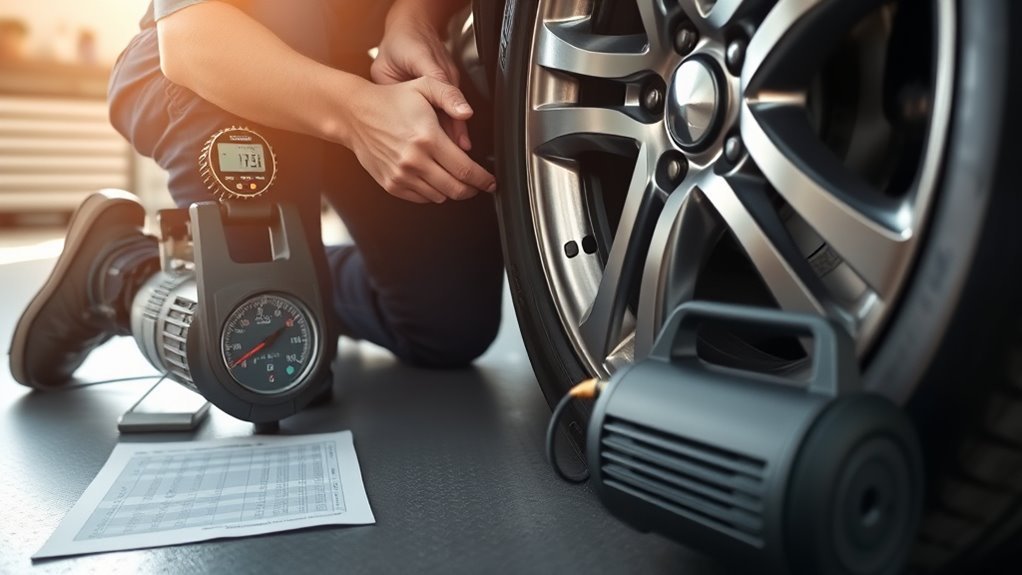
You may not think about your spare tire until you have a flat, but that is exactly why it needs regular attention. A spare that is low on air, cracked, or too old may not safely carry the vehicle when you need it most.
The National Highway Traffic Safety Administration recommends checking the pressure of all tires, including the spare, at least once a month when the tires are cold. NHTSA also reports that tire-related crashes remain a real safety issue, with 511 tire-related crash fatalities in 2024.
Spare tires are easy to overlook because many are stored under the trunk floor, under the vehicle, or on the rear hatch. That hidden storage also means the spare may be exposed to heat, moisture, dirt, road salt, or slow air loss for years.
Warning: Do not use a spare tire that has sidewall cracks, bulges, exposed cords, severe dry rot, a damaged valve stem, or a pressure label you cannot read. If the spare will not hold air, replace it or call roadside assistance instead of driving on it.
How to Find Your Spare Tire’s Correct PSI
The correct spare tire PSI depends on the type of spare your vehicle uses. Do not guess, and do not use the “maximum pressure” wording on a regular tire as your target unless your owner’s manual or spare tire label specifically tells you to.
Use this order to find the correct pressure:
- Check the spare tire sidewall or label. Compact temporary spares often have the required inflation pressure printed directly on the tire or wheel label.
- Check your owner’s manual. The manual gives vehicle-specific spare tire pressure, speed, distance, and installation warnings.
- Check the driver-side door placard. The placard lists the recommended cold PSI for the road tires and may include spare tire information.
- Confirm the spare type. A compact spare, full-size matching spare, and folding temporary spare can each have different instructions.
| Spare Tire Type | Typical PSI Guidance | What to Check |
|---|---|---|
| Compact temporary spare or “donut” | Commonly 60 psi cold | Spare tire label, owner’s manual, and speed warning on tire |
| Full-size matching spare | Usually matches the regular tire PSI on the door placard | Door placard, tire size, load rating, and owner’s manual |
| Non-matching full-size spare | Vehicle-specific | Manual restrictions, tire size, and drivetrain warnings |
| Folding or collapsible temporary spare | Only as listed by the manufacturer | Owner’s manual and the inflation instructions supplied with the spare |
Tire Rack notes that full-size spares typically use the same pressure as the vehicle’s other tires, while smaller temporary mini-spares commonly require 60 psi to carry the vehicle. Goodyear also describes compact temporary spares as smaller, lighter tires that generally require higher inflation pressure than standard tires.
Note: Tire pressure should be checked “cold,” which means before driving or after the vehicle has been parked for at least three hours. Heat from driving can raise the reading and make the tire look more inflated than it really is.
[Products Worth Considering]
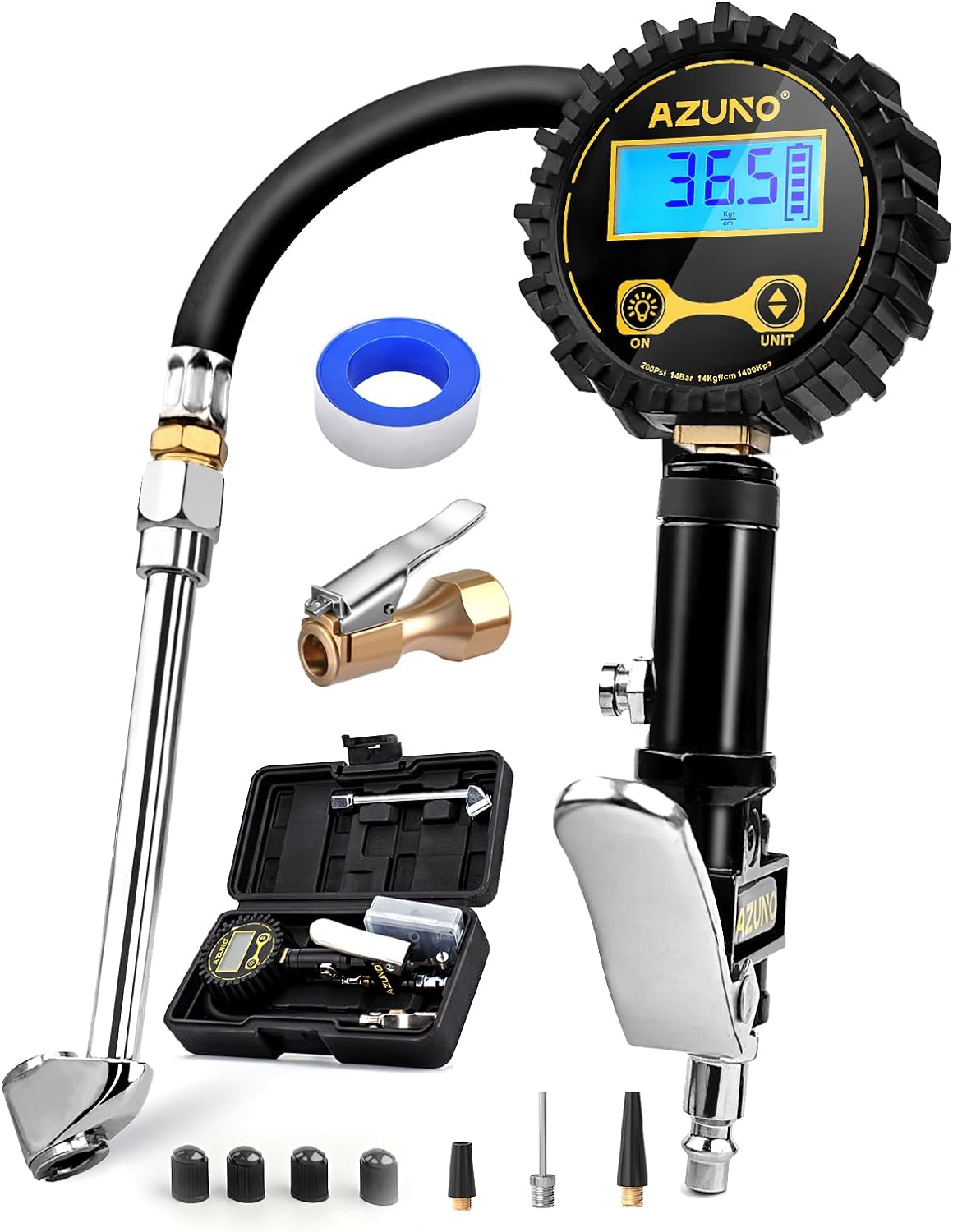
This digital tire inflator delivers accurate, easy-to-read pressure measurements with a bright backlit LCD and precise 0.1 resolution for confident inflation. Designed for single-handed use, it makes it simple to inflate or deflate tires while staying organized in the included portable carrying box. Built for a wide range of vehicles, it is a practical air compressor accessory for cars, trucks, SUVs, motorcycles, and more.

This upgraded Dorman OE FIX oil filter housing replaces failure-prone plastic on select Chrysler, Dodge, Jeep, and Ram vehicles with a durable aluminum design. It includes the oil cooler, filter element, cap, and required gaskets to help deliver a complete repair and updated fitment. Engineered for reliable sealing and long-term leak resistance, it is designed to help solve recurring oil filter housing failures.

This portable tire inflator delivers fast, convenient inflation for cars, bikes, motorcycles, and balls with dual power options from a rechargeable battery or a 12V car cord. Its digital LCD pressure gauge and automatic shutoff help prevent over-inflation, while multiple preset modes and a custom setting make it easy to use for different inflation tasks. Built-in flashlight and USB power ports add extra emergency utility on the road.
How to Check and Inflate Your Spare Tire Properly
Follow these steps to check and inflate your spare tire safely:
- Park on a safe, level surface. Set the parking brake and make sure the vehicle is off.
- Find the spare tire. Look under the trunk floor, under the rear of the vehicle, on the rear hatch, or in the cargo area. Your owner’s manual shows the exact location.
- Inspect before inflating. Look for cracks, bulges, punctures, dry rot, missing valve caps, rim damage, or signs that the tire has been rubbing against its storage bracket.
- Find the correct PSI. Read the spare tire label, owner’s manual, or door placard. For many compact temporary spares, this will be 60 psi cold.
- Remove the valve cap. Put it in your pocket or a cup holder so it does not roll away.
- Press the tire gauge straight onto the valve stem. A hissing sound usually means the gauge is not seated firmly. Reposition it and check again.
- Compare the reading to the recommended PSI. If it is low, attach an air compressor or portable tire inflator.
- Add air in short bursts. Compact spares hold less air volume than full-size tires, so the pressure can rise quickly.
- Recheck with the gauge. Keep checking until the pressure matches the recommended cold PSI.
- Bleed air if you overfill it. Press the small pin inside the valve stem briefly, then recheck the pressure.
- Reinstall the valve cap. The cap helps keep dirt and moisture out of the valve.
- Put the spare back securely. Tighten the hold-down bolt, cable, or bracket so the tire does not move while driving.
Pro Tip: Keep a simple pencil-style or digital tire gauge in the glove box and a portable inflator in the trunk. Do not rely only on a gas-station gauge, because damaged or heavily used gauges can read inaccurately.
[Products Worth Considering]

This smart color coded tire tread depth gauge makes it easy to check tread wear at a glance with clear red, yellow, and green ranges. Calibrated from 0 to 1 inch in 1/32 inch increments, it helps you quickly assess tire condition for safer driving and timely replacements. The pocket clip design makes it convenient to carry and use on trucks, motorcycles, cars, and other passenger vehicles.

This custom-fit trunk mat is designed for Toyota RAV4 models from 2013 to 2018, delivering full cargo area coverage without trimming. Made from durable TPE with a textured anti-slip surface, it helps protect your trunk from dirt, spills, grime, and daily wear while staying easy to remove and clean. Raised edges and waterproof construction make it a practical all-weather solution for keeping your cargo space neat and protected.

ADVANCED TRUEGAUGE SCREEN: This battery tire inflator includes updated sensor technology, capable of collecting pressure data from tire inflators at a frequency of 200 times per second. Its valid data rate is higher than 80%, which is 60% better than the market average. From routine maintenance to roadside emergencies, its accurate readings ensure confident pressure checks and a safer driving experience.Suitable as a Father's Day gift for your dad.
Essential Maintenance Tips to Keep Your Spare Tire Ready
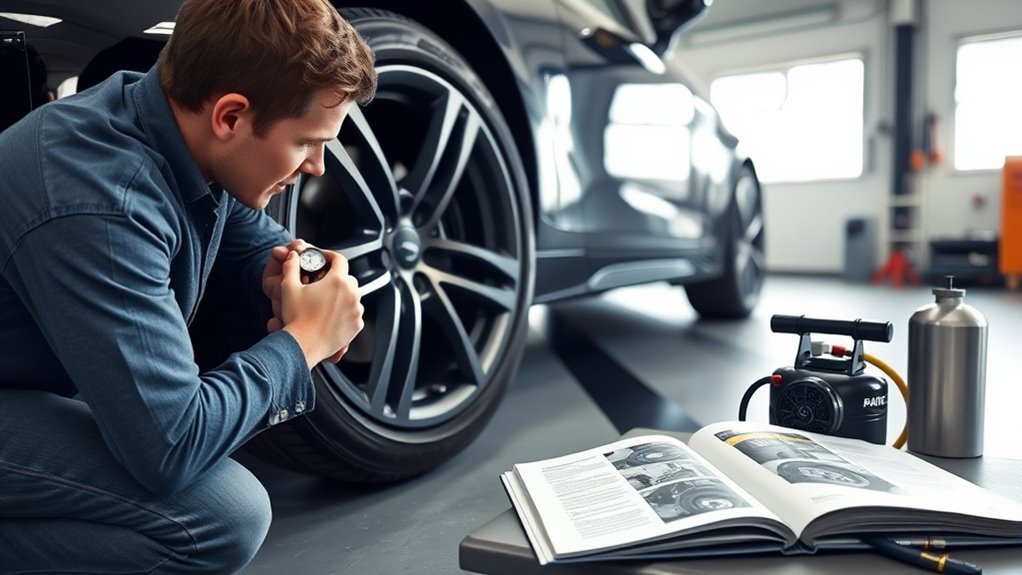
To keep your spare tire ready, treat it like part of your monthly maintenance routine instead of emergency-only equipment.
- Check pressure monthly. NHTSA recommends checking all tires, including the spare, at least once a month.
- Check before road trips. A spare that was fine last season may be low before a long drive.
- Watch temperature changes. According to AAA, tire pressure can change by about 1 psi for every 10°F change in temperature.
- Inspect the valve stem. Replace cracked valve stems and missing caps.
- Check the tire age. Find the DOT date code on the sidewall. If the spare is old, cracked, or questionable, have it inspected by a tire professional.
- Confirm the tools are present. Make sure your jack, lug wrench, wheel-lock key, inflator kit, and owner’s manual are in the vehicle.
- Do not assume TPMS is watching the spare. Many vehicles monitor the four road tires, and some systems will show a warning after a compact spare is installed.
A spare tire that is 20 psi low may look usable in the trunk, but it can be unsafe once it has to carry the weight of the vehicle.
What to Do After Installing a Compact Spare
A compact spare is designed to get you to a safe place for repair, not to replace a normal tire for daily driving. Many compact spares warn drivers not to exceed 50 mph. Some vehicle manuals also limit distance, handling, towing, all-wheel-drive use, or snow-chain use.
After installing a compact spare:
- Drive slowly and avoid sudden braking, hard cornering, and fast lane changes.
- Stay under the speed listed on the spare tire label or owner’s manual.
- Go directly to a tire shop or safe repair location.
- Replace the spare with a repaired or matching full-size tire as soon as possible.
- Recheck the spare after use before storing it again.
Warning: Do not treat a compact spare like a regular tire. Manufacturer guidance, such as Honda’s compact spare instructions, commonly lists 60 psi and a 50 mph limit for temporary spare use.
Avoid These Common Mistakes When Inflating Your Spare Tire
Inflating a spare tire is easy, but these mistakes can leave you with a spare that is unsafe or unusable during a flat.
| Mistake | Why It Matters | What to Do Instead |
|---|---|---|
| Guessing the PSI | Compact and full-size spares may use different pressures. | Use the spare label, owner’s manual, or vehicle placard. |
| Inflating a compact spare like a normal tire | A compact spare often needs much higher pressure than a regular tire. | Check the compact spare’s printed PSI before adding air. |
| Overinflating past the listed pressure | Too much pressure can reduce traction, worsen wear, and stress a damaged tire. | Add air slowly and recheck often. |
| Checking only after driving | Warm tires can show a higher pressure reading. | Check when cold whenever possible. |
| Ignoring age or visible damage | A damaged spare can fail even if the PSI looks correct. | Inspect the tire before inflating or driving on it. |
| Forgetting the jack and lug wrench | A good spare is useless if you cannot install it. | Check your tire-changing tools during the same monthly inspection. |
Troubleshooting Spare Tire Inflation Problems
[Products Worth Considering]

PRO ACCURACY - mechanic recommended, performance tested, & calibrated accurate to professional ANSI 2A standards - with dual pressure sensors certified to ±0.50% FS (0.50 PSI), offering reliable readings up to 100 PSI w/ precise readout resolution of 0.10 PSI - so you can now maintain your tires with a shop-grade mechanic trusted tool

TRUSTED BY OVER 3 MILLION USERS: Based in Garden Grove, California, AstroAI serves customers in more than 15 countries worldwide. Known for professional-grade accuracy and durable construction, this digital tire inflator with gauge is a trusted choice for drivers, mechanics, and DIYers who rely on dependable tools.

1. Accurately measures tire tread depth gauge tool, Calibrated from 0 to 1 inch in 1/32 inch
The Spare Tire Will Not Hold Air
Do not drive on it. The tire may have a puncture, a cracked valve stem, bead damage, rim corrosion, or age-related cracking. Use roadside assistance or have the spare inspected and replaced.
The Spare Tire Is Overfilled
Press the center pin inside the valve stem for one or two seconds, then recheck with your tire gauge. Repeat until the pressure matches the recommended cold PSI.
The Pressure Label Is Missing or Unreadable
Check the owner’s manual and vehicle placard. If you still cannot verify the correct PSI, contact the vehicle manufacturer, a tire shop, or roadside assistance before using the spare.
You Only Have a Sealant Kit Instead of a Spare
Some vehicles do not come with a spare tire. If your vehicle uses a sealant-and-inflator kit, follow the kit instructions exactly and repair or replace the damaged tire as soon as possible. Sealant kits may not work for large punctures, sidewall damage, or blowouts.
Frequently Asked Questions
How do I check PSI for a spare tire?
Use a reliable tire pressure gauge when the tire is cold. Press the gauge straight onto the valve stem, read the PSI, and compare it with the pressure listed on the spare tire label, owner’s manual, or vehicle placard. Add air if it is low, then recheck before storing or using the spare.
What PSI should my spare wheel be?
Many compact temporary spare tires commonly specify 60 psi cold. A full-size matching spare usually uses the same cold PSI as the regular tires listed on the driver-side door placard. Always follow your vehicle’s owner’s manual and the pressure printed on the spare tire label.
What is the 50/50 rule for spare tires?
The 50/50 rule usually refers to driving on a compact temporary spare for no more than about 50 miles and no faster than about 50 mph. It does not mean inflating the spare to 50% of its maximum pressure. Always follow the speed and distance limits printed on the spare tire or listed in your owner’s manual.
Can I inflate a donut spare with a regular air compressor?
Yes, you can use a gas-station compressor or portable tire inflator, as long as you add air slowly and check the pressure often. Compact spares have less air volume than full-size tires, so the PSI can rise quickly.
Should I use the tire sidewall maximum PSI?
For regular tires and full-size spares, use the vehicle manufacturer’s recommended cold PSI on the door placard, not the maximum sidewall pressure. For compact spares, use the pressure printed on the spare tire label or listed in the owner’s manual.
How often should I check my spare tire pressure?
Check it at least once a month and before long trips. Also check it after major temperature changes, because tire pressure can rise or fall with the weather.
Conclusion
A spare tire is only useful if it is properly inflated, undamaged, and ready before a flat happens. Check the PSI when the tire is cold, use the pressure listed on the spare tire label or owner’s manual, and add air slowly with a reliable gauge. For many compact temporary spares, that pressure is commonly 60 psi cold, while full-size spares usually match the vehicle placard. A few minutes of monthly maintenance can prevent a roadside headache when you need your spare most.
Sources
- NHTSA TireWise — tire safety, cold pressure guidance, placard guidance, and tire-related crash context
- NHTSA Tire Safety Month — monthly pressure checks for all tires, including the spare
- Tire Rack: Why Check Spare Tire Air Pressure? — full-size spare and mini-spare pressure guidance
- Goodyear Spare Tire Guide — compact temporary spare types and general 60 psi guidance
- Honda Compact Spare Tire Owner’s Manual Example — manufacturer example listing 60 psi and 50 mph compact spare limits
- AAA: Tire Pressure and Temperature Change — seasonal pressure-change guidance