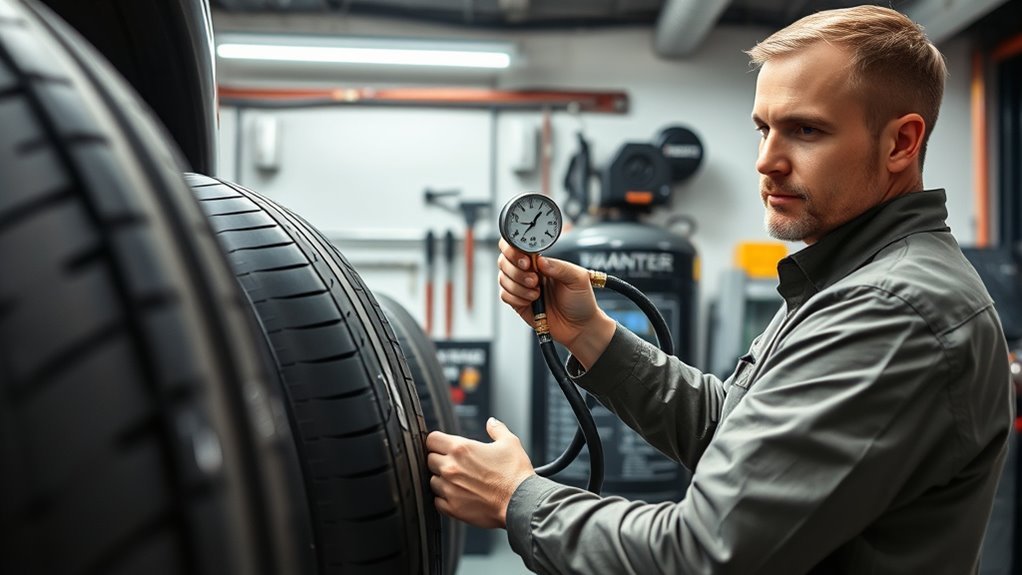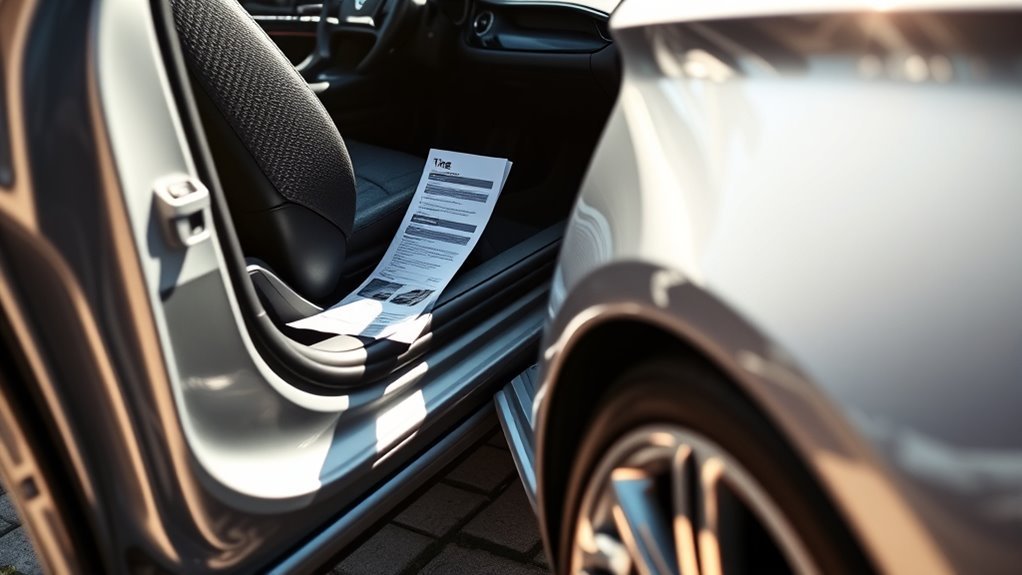
To find your vehicle’s recommended tire pressure, start with the tire and loading information sticker on the driver’s side door jamb or the owner’s manual. That number is the vehicle maker’s recommended cold tire pressure, usually shown in PSI. Using the right pressure helps your tires wear evenly, supports safer handling, and can improve fuel economy.
Quick Answer
Your correct tire pressure is listed on the sticker inside the driver’s door jamb, glove box, fuel door, or in the owner’s manual. Check it when the tires are cold, before driving or after the car has been parked for at least three hours. Do not use the maximum PSI printed on the tire sidewall.
Key Takeaways
- Use the vehicle placard or owner’s manual for the correct PSI, not the tire sidewall maximum.
- Check pressure when tires are cold for the most accurate reading.
- Check all four tires monthly, before long trips, and during major temperature changes.
- If one tire keeps losing air, inspect it for a puncture, valve leak, rim issue, or sidewall damage.
At a Glance
| Time Required | 5–10 minutes |
| Difficulty | Easy |
| Tools Needed | Digital or dial tire pressure gauge, air compressor, valve caps |
| Cost | Usually free at home if you own a gauge; paid air pumps may cost a small fee |
How to Find the Recommended Tire Pressure for Your Vehicle
The best place to find your vehicle’s recommended tire pressure is the tire and loading information label. For most vehicles, it is on the driver’s side door edge or door jamb. It may also be in the glove box, fuel door, trunk area, or owner’s manual. The National Highway Traffic Safety Administration recommends using this vehicle-specific information when checking tire pressure.
- Driver’s door jamb: Open the driver’s door and look for a sticker that lists tire size, recommended cold tire pressure, and vehicle load information.
- Owner’s manual: Check the tire maintenance or specifications section for front, rear, spare, and loaded-vehicle pressure guidance.
- Glove box, fuel door, or trunk area: Some vehicles place the tire placard in one of these alternate locations.
- Spare tire label or manual: Compact spare tires often require a different PSI than the regular tires.
Note: The correct pressure may be different for front and rear tires. If the placard lists separate front and rear PSI values, follow those exact positions instead of making all four tires the same.
What the Manufacturer’s Specifications Sticker Tells You
The manufacturer’s specifications sticker is the fastest reference because it is matched to your exact vehicle, tire size, and load rating. It usually lists the recommended cold inflation pressure, tire size, seating capacity, and maximum vehicle load. Some vehicles also list a higher pressure for heavy loads, towing, or high-speed driving. When the sticker and a generic online chart disagree, use the sticker or owner’s manual.
Owner’s Manual Reference
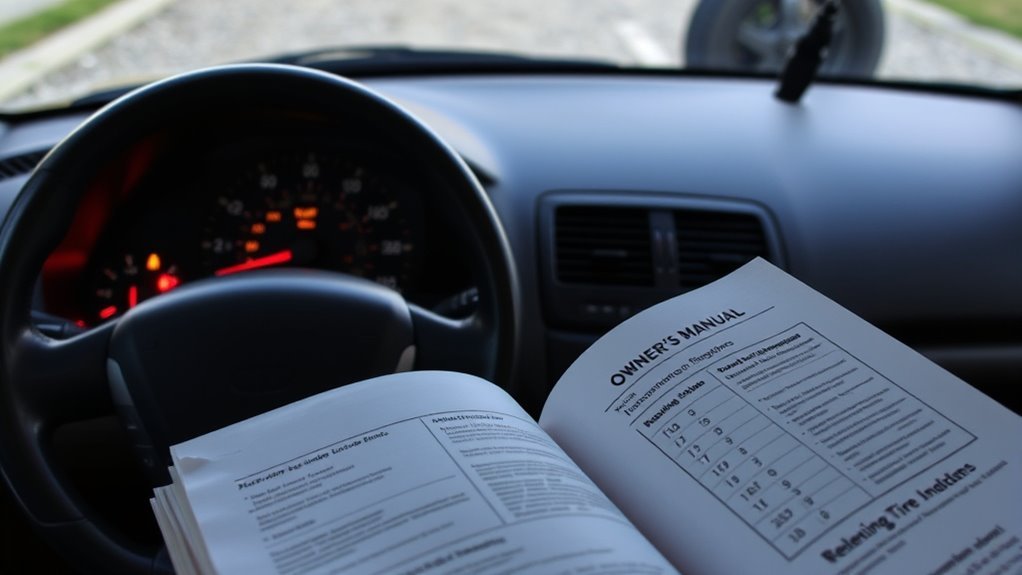
The owner’s manual gives more context than the door sticker. It may explain how to check pressure, how to adjust for heavier loads, how to reset the Tire Pressure Monitoring System, and what pressure to use for the spare tire. Look in the index under “Tires,” “Tire Maintenance,” “Tire Pressure,” or “Specifications.”
Why the Tire Sidewall PSI Is Not Your Target
The PSI printed on the tire sidewall is usually the tire’s maximum cold inflation pressure, not the recommended pressure for your vehicle. FuelEconomy.gov warns drivers not to use the maximum pressure printed on the tire sidewall as the vehicle’s proper tire pressure. The sidewall number tells you the tire’s limit; the door placard tells you the pressure your vehicle was designed to use.
Warning: Do not inflate tires to the sidewall maximum unless your vehicle manual specifically instructs you to do so for a certain load or use case. Overinflation can reduce ride comfort, cause uneven center tread wear, and reduce the tire’s contact patch with the road.
How to Use a Digital Tire Gauge Effectively
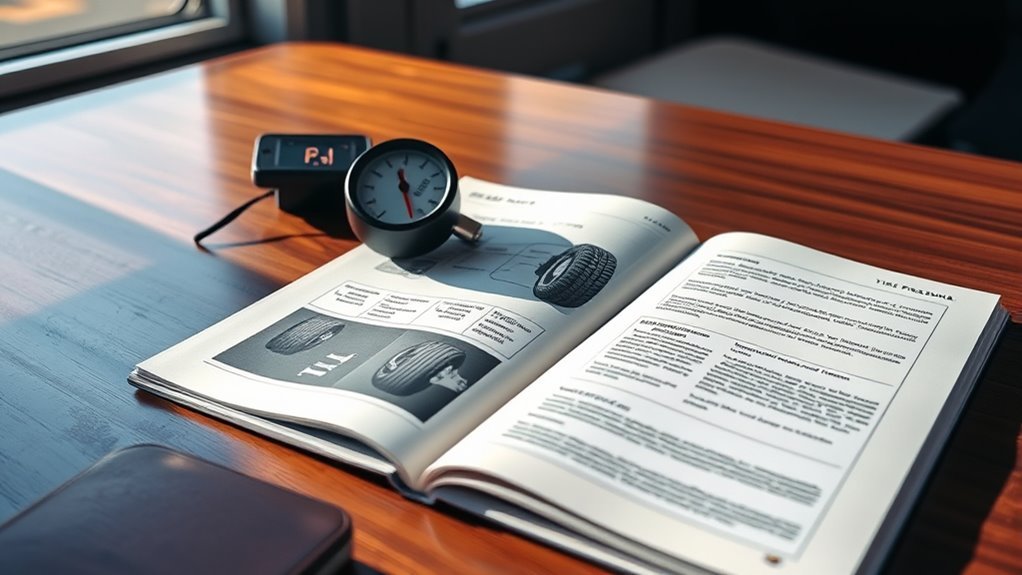
Using a digital tire gauge is simple, but timing matters. Check tire pressure when the tires are cold, ideally before driving or after the vehicle has been parked for at least three hours. Driving warms the tires and can temporarily raise the reading.
- Find the recommended PSI. Check the driver’s door placard or owner’s manual before measuring.
- Set the gauge to PSI. Many digital gauges can also display kPa or bar, so confirm the unit first.
- Remove the valve cap. Keep it somewhere clean so it does not pick up dirt.
- Press the gauge straight onto the valve stem. A firm, even seal prevents air from hissing out and gives a cleaner reading.
- Compare the reading to the placard. If the reading is low, add the missing PSI. If it is high, release small amounts of air and recheck.
- Check all four tires. Include the spare tire if your vehicle has one.
- Replace every valve cap. Valve caps help keep dirt and moisture away from the valve stem.
Pro Tip: Keep a small tire pressure gauge in your glove box. Gas station gauges can be convenient, but your own gauge makes monthly checks faster and more consistent.
[Products Worth Considering]

The ETENWOLF T300 digital tire pressure gauge delivers accurate readings across a wide pressure range, making it ideal for cars, trucks, and other vehicles. It is built to perform reliably in extreme temperatures and features replaceable AAA batteries plus an LED light for easier checks in low-light conditions. Designed for durability, it can withstand tough use while maintaining dependable performance.

The JACO ElitePro Digital Tire Pressure Gauge delivers shop-grade accuracy with a clear digital readout, making it easy to maintain proper tire pressure for safer driving and better performance. Built with rugged brass and steel components, a protective guard, and a flexible air hose, it is designed for reliable use across cars, trucks, motorcycles, bikes, RVs, and trailers. The lock-on display, built-in bleeder valve, and bright backlit screen add convenience in any lighting condition.
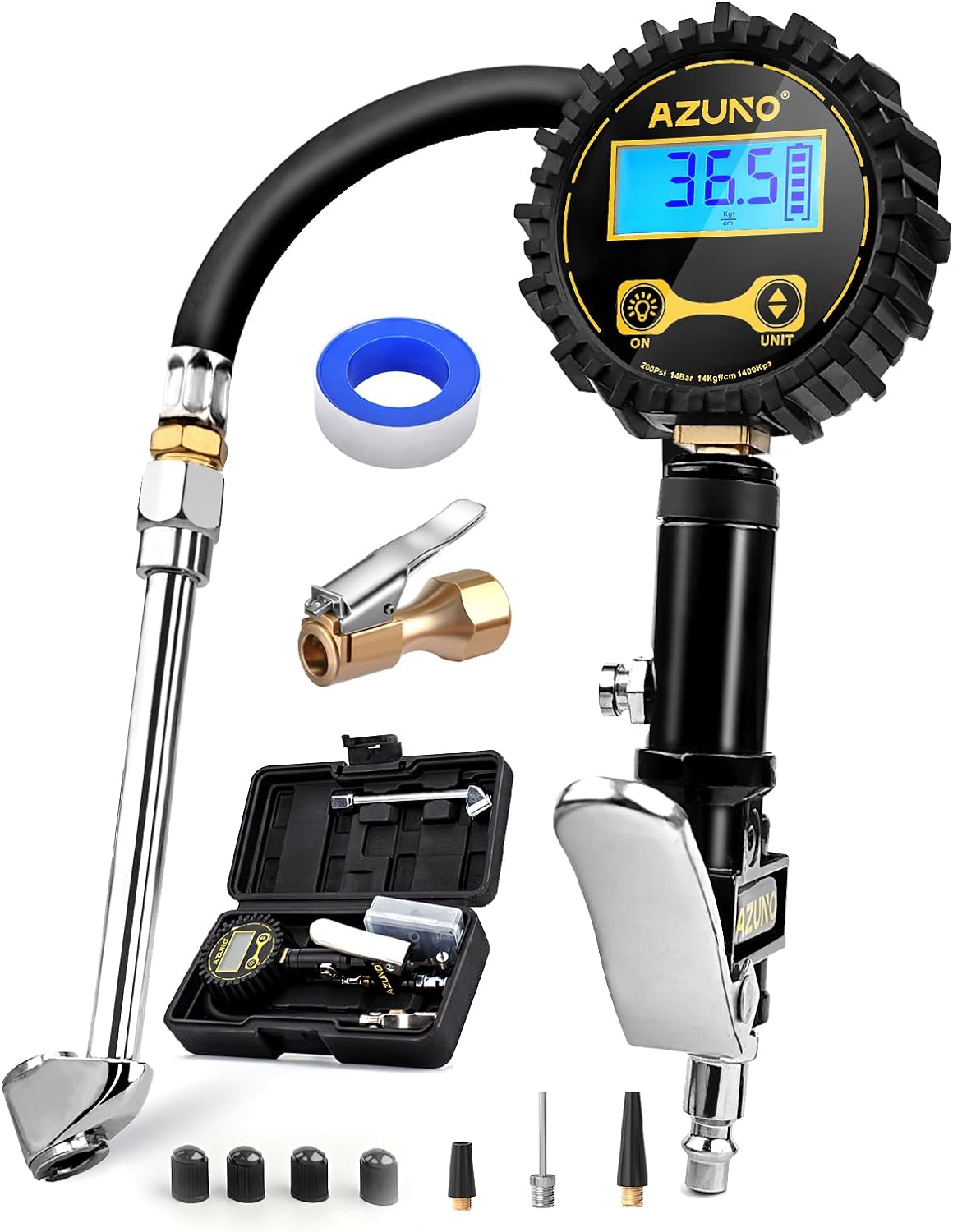
This digital tire inflator delivers accurate, easy-to-read pressure measurements with a bright backlit LCD and precise 0.1 resolution for confident inflation. Designed for single-handed use, it makes it simple to inflate or deflate tires while staying organized in the included portable carrying box. Built for a wide range of vehicles, it is a practical air compressor accessory for cars, trucks, SUVs, motorcycles, and more.
What Are Tire Pressure Ratings and Why Do They Matter?
Tire pressure ratings are usually shown in pounds per square inch, or PSI. The important part is knowing which PSI number you are looking at. Your vehicle has a recommended cold tire pressure, your tire sidewall has a maximum pressure, and your Tire Pressure Monitoring System has a warning threshold. They are not the same thing.
- Recommended cold tire pressure: The daily driving target listed on the vehicle placard or owner’s manual.
- Maximum sidewall pressure: The tire’s maximum cold inflation pressure, not the normal target for your vehicle.
- TPMS warning point: A safety warning threshold. It is not a substitute for monthly manual pressure checks.
Correct tire pressure helps the tire maintain its designed shape. That improves road contact, steering response, braking stability, fuel economy, and tread wear. Too little air can create extra heat and tire flex. Too much air can make the tire ride harshly and wear unevenly in the center.
Tire Pressure: Why Regular Checks Matter
Regular tire pressure checks are a small maintenance habit with a large safety payoff. NHTSA recommends monthly tire maintenance inspections that include inflation pressure, treadwear, tire damage, rotation, balancing, and alignment. Tires can lose pressure naturally over time, and temperature changes can make the pressure rise or fall.
FuelEconomy.gov says properly inflated tires can improve gas mileage by 0.6% on average and up to 3% in some cases.
[Products Worth Considering]
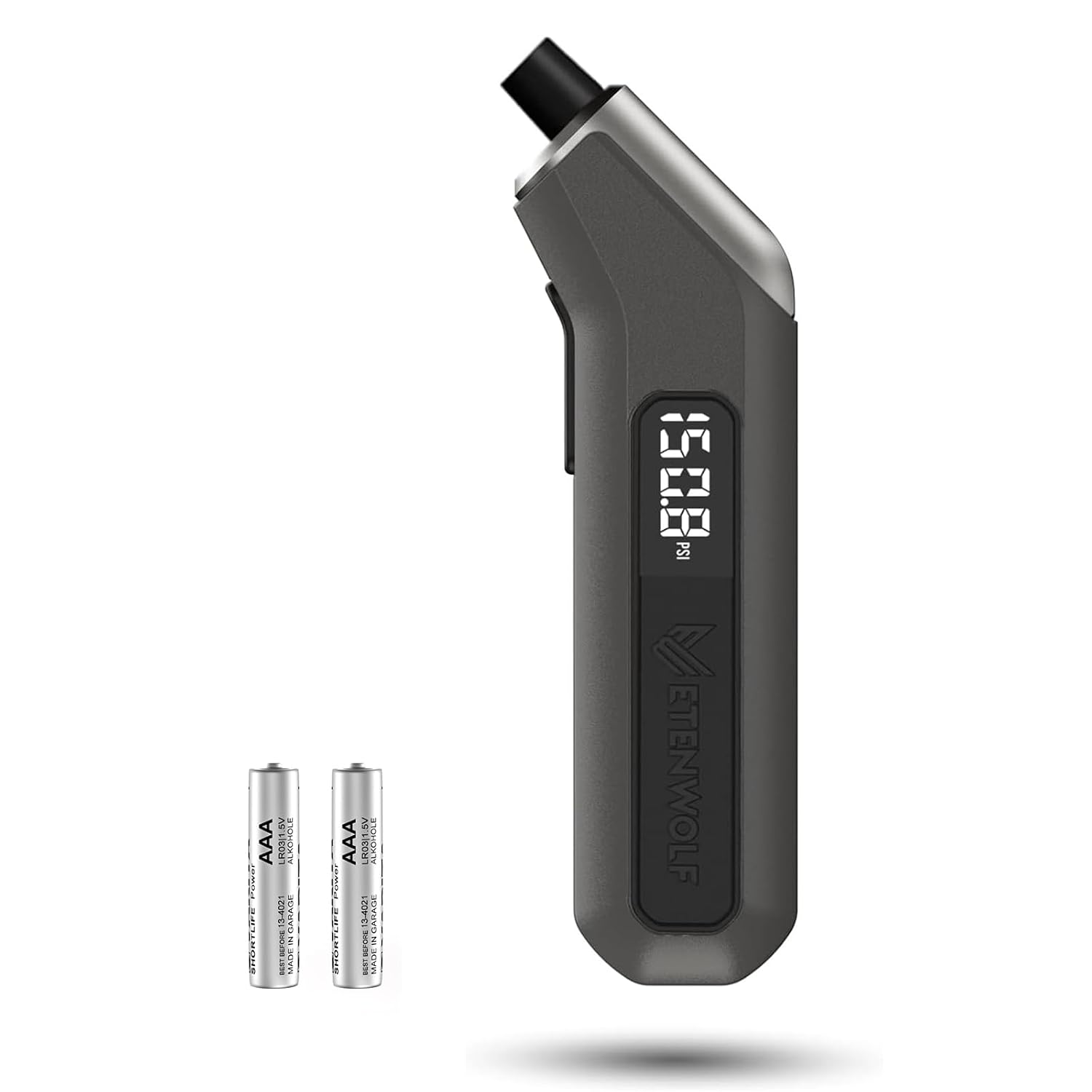
The ETENWOLF T300 digital tire pressure gauge delivers precise readings for cars, RVs, trucks, bikes, and heavy-duty vehicles with a wide measuring range and consistent accuracy. It is built to perform in extreme temperatures, includes a bright LED light for low-visibility use, and uses replaceable AAA batteries for convenient long-term operation. Durable enough to withstand rugged use, it is a practical tool for maintaining proper tire pressure across a variety of vehicles.

The AstroAI Digital Tire Pressure Gauge with Inflator combines accurate pressure checking, inflation, and deflation in one easy-to-use tool. Designed for compatibility with standard Schrader valves and common air compressor outputs, it delivers precise digital readings for cars, trucks, motorcycles, SUVs, RVs, and more. Its durable construction and leak-resistant chuck help support safer driving, better tire performance, and improved fuel efficiency.

This GM TPMS relearn tool helps reset tire sensors, clear warning lights, and match tire positions after rotation quickly at home. Designed for Chevrolet, GMC, Cadillac, and Buick vehicles, it offers one-button operation, fast activation, and broad compatibility with many GM models. It is best suited for OE/OEM sensors and includes paper instructions plus video guidance for easier DIY use.
Enhanced Fuel Efficiency
Under-inflated tires create more rolling resistance, which makes the engine work harder. According to FuelEconomy.gov, under-inflated tires can lower gas mileage by about 0.2% for every 1 PSI drop in the average pressure of all tires. Keeping your tires at the recommended pressure is a simple way to protect fuel economy.
Improved Vehicle Safety
Properly maintained tires support steering, stopping, traction, and load-carrying ability. Low pressure can make a tire flex more than intended, which increases heat and can contribute to tire failure. Pressure checks are especially important before highway driving, long trips, heavy loads, towing, and sudden seasonal temperature changes.
What to Do If You Find Low Tire Pressure
If you find low tire pressure, do not guess. Measure, compare, inflate, and recheck each tire.
- Measure all tires with a gauge. Write down each reading if one tire is much lower than the others.
- Confirm the correct PSI. Use the driver’s door placard or owner’s manual.
- Add air gradually. Add air in short bursts, then recheck with the gauge.
- Match the correct front and rear values. Do not assume all four tires use the same pressure if the placard lists different numbers.
- Replace the valve caps. Missing caps can let dirt and moisture reach the valve core.
- Drive only after the tires are safely inflated. The TPMS light may clear after driving, but the reset process varies by vehicle.
- Recheck soon. If the same tire drops again, have it inspected for a nail, puncture, bead leak, cracked valve stem, bent wheel, or sidewall damage.
Warning: Do not drive on a tire that is visibly flat, has a bulge, exposes cords, or loses air rapidly. Install the spare or call roadside assistance instead of trying to “top it off” and continue driving.
[Products Worth Considering]

This tire inflator attachment combines accurate pressure reading and easy inflation in one heavy-duty tool for maintaining tire pressure with less hassle. A longer hose and 360-degree swivel air chuck help create a secure seal while giving you better control during use. Designed for universal compressor compatibility, it measures, inflates, and deflates without batteries.
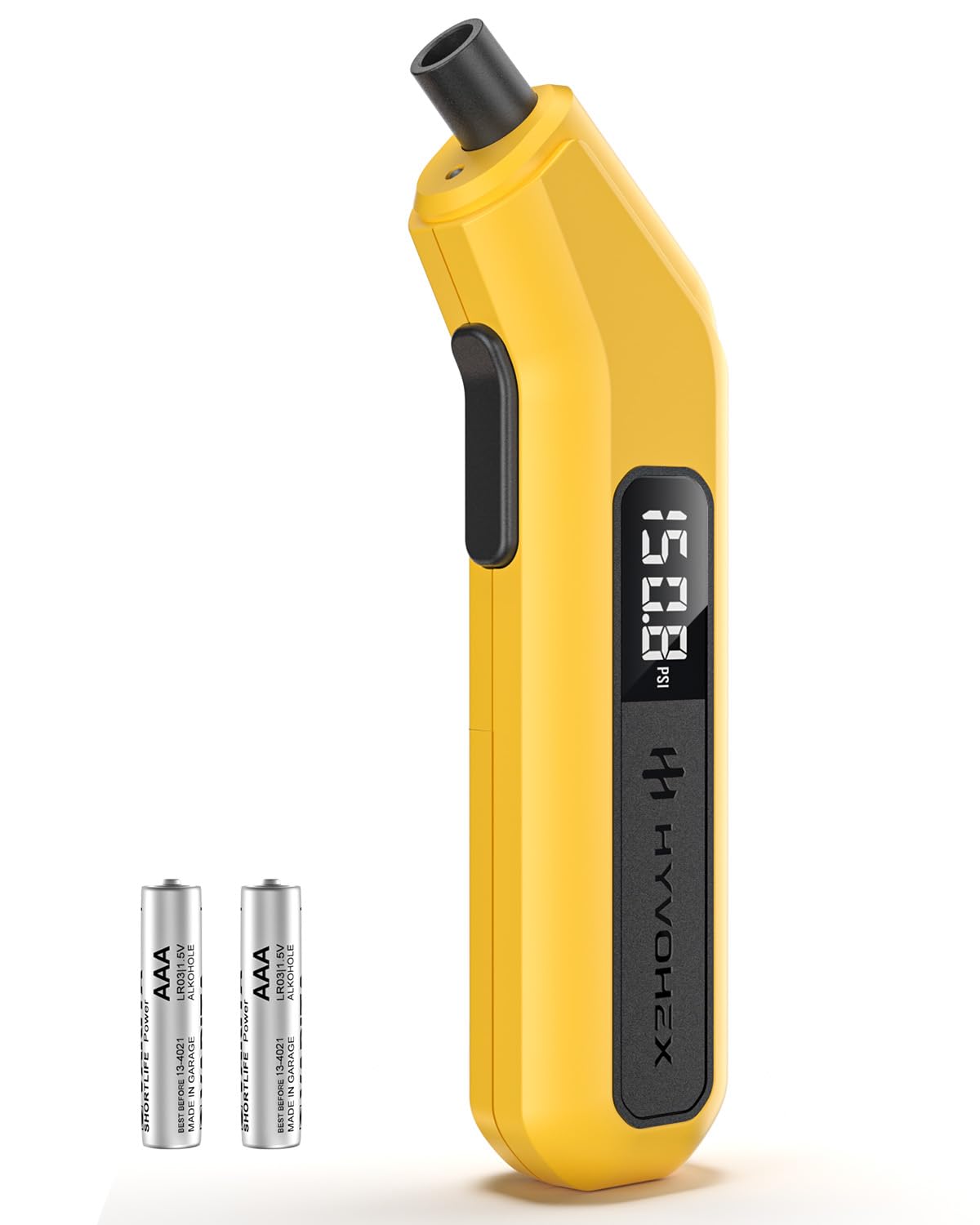
HYVOHEX digital tire pressure gauge delivers fast, accurate readings with an easy-to-read LED backlit display and a high-sensitivity sensor for reliable tire checks. Its valveless one-click operation, rotating valve head, and broad compatibility make it a practical tool for cars, bikes, and trucks. Built with a durable rubber shell and aluminum nozzle, it is compact enough to keep in your glove box or tool bag.

HYVOHEX digital tire pressure gauge delivers fast, highly accurate readings with an easy-to-read LED backlit display for convenient checking in any lighting. Its valveless one-click operation, 360-degree rotating valve, and wide PSI range make it a practical tool for cars, bikes, and trucks. Built with a durable aluminum nozzle and rubberized shell, it is designed for everyday use and easy storage in your vehicle or tool bag.
What Happens If You Don’t Maintain Proper Tire Pressure?
Neglecting tire pressure can affect safety, tire life, and fuel economy. Under-inflated tires can build extra heat, wear unevenly, reduce steering response, and increase the risk of tire failure. Over-inflated tires can also wear unevenly and reduce ride comfort. Either problem can reduce traction when you need the tires most.
- Under-inflation: Can cause extra flexing, heat buildup, shoulder wear, poor handling, and lower fuel economy.
- Over-inflation: Can cause a harsher ride, center tread wear, and reduced road contact.
- Uneven tire pressures: Can make the vehicle pull, brake unevenly, or feel unstable.
- Ignored TPMS warnings: Can allow a small pressure problem to become a tire failure risk.
Cold Weather, Hot Tires, and Pressure Changes
Tire pressure changes with temperature. Cold weather can lower PSI, and driving can warm the tires enough to raise the reading temporarily. That is why the vehicle placard pressure is a cold tire pressure. If you must add air after driving, inflate to the recommended pressure for safety, then recheck and fine-tune the pressure when the tires are cold.
Note: A TPMS light on a cold morning may be caused by a pressure drop from colder air, but you should still check the tires with a gauge. A light that stays on, flashes, or returns after inflation may indicate a leak or sensor issue.
Tips for Maintaining Tire Health Beyond Pressure Checks
Good tire care goes beyond PSI. Use these habits to keep your tires safer for longer:
- Inspect tread and sidewalls monthly. Look for uneven tread, cuts, cracks, bulges, exposed cords, embedded nails, or objects in the tread.
- Rotate tires on schedule. The Tire Industry Association recommends rotation every 5,000–7,000 miles, depending on the vehicle. Your owner’s manual may give a specific interval.
- Check alignment if wear is uneven. Feathering, cupping, or heavy wear on one edge can point to alignment, suspension, or inflation problems.
- Keep valve caps installed. They help protect valve stems from dirt and moisture.
- Do not overload the vehicle. The same door placard that lists tire pressure also lists vehicle load information.
- Check the spare tire. Spare tires are often forgotten until an emergency, and many require a different pressure than regular tires.
Frequently Asked Questions
How do you tell what PSI your tires should be at?
Check the tire and loading information sticker on the driver’s door jamb or the owner’s manual. Use that number as your target when the tires are cold. Do not use the maximum PSI printed on the tire sidewall as your normal tire pressure.
What is the 5 PSI rule?
The “5 PSI rule” is an informal rule of thumb, not the official way to set tire pressure. If a tire is about 5 PSI below the placard pressure, it is meaningfully low and should be corrected. Always use the vehicle placard or owner’s manual as the real target.
How do you read a manual tire pressure gauge?
Remove the valve cap, press the gauge firmly and straight onto the valve stem, and read the number where the stick stops or the dial needle points. If air hisses out, reseat the gauge and try again. Compare the reading with the cold PSI listed on the vehicle placard.
What is the 3% tire rule?
The “3% tire rule” is another informal guideline that suggests pressure should stay very close to the recommended PSI. It is not a replacement for the placard value. For everyday maintenance, check cold tire pressure and set it to the exact front and rear PSI listed by the vehicle manufacturer.
Should I use the PSI on the tire or the door sticker?
Use the door sticker or owner’s manual. The tire sidewall usually shows the tire’s maximum cold inflation pressure, which is not the same as the recommended pressure for your vehicle’s weight, suspension, and handling design.
How often should I check tire pressure?
Check tire pressure at least once a month, before long trips, before towing or carrying heavy loads, and when the weather changes sharply. Always check when the tires are cold for the most accurate reading.
What should I do if the TPMS light stays on?
Check all tires with a gauge and inflate them to the placard pressure. If the TPMS light stays on, flashes, or comes back soon after inflation, inspect for a leak or have the TPMS system checked. The federal TPMS standard is designed to warn of significant underinflation, but it does not replace manual checks.
Conclusion
Maintaining the right tire pressure starts with one simple rule: use the vehicle placard or owner’s manual, not the sidewall maximum. Check tires when they are cold, keep them at the recommended PSI, and inspect them monthly for wear or damage. This small routine can improve fuel economy, support safer handling, extend tire life, and help you catch pressure problems before they become roadside emergencies.
Sources
- NHTSA TireWise: Tire Safety Ratings and Awareness — cold tire pressure, tire placard guidance, and tire maintenance basics.
- FuelEconomy.gov: Keeping Your Vehicle in Shape — fuel-economy impact of proper tire inflation and sidewall PSI warning.
- Tire Industry Association: Tire Rotation — recommended tire rotation interval and tire-life guidance.
- NHTSA Tire Safety Brochure — tire safety, tire failure prevention, load limits, and inspection guidance.
- eCFR: 49 CFR § 571.138 Tire Pressure Monitoring Systems — federal TPMS performance requirements.