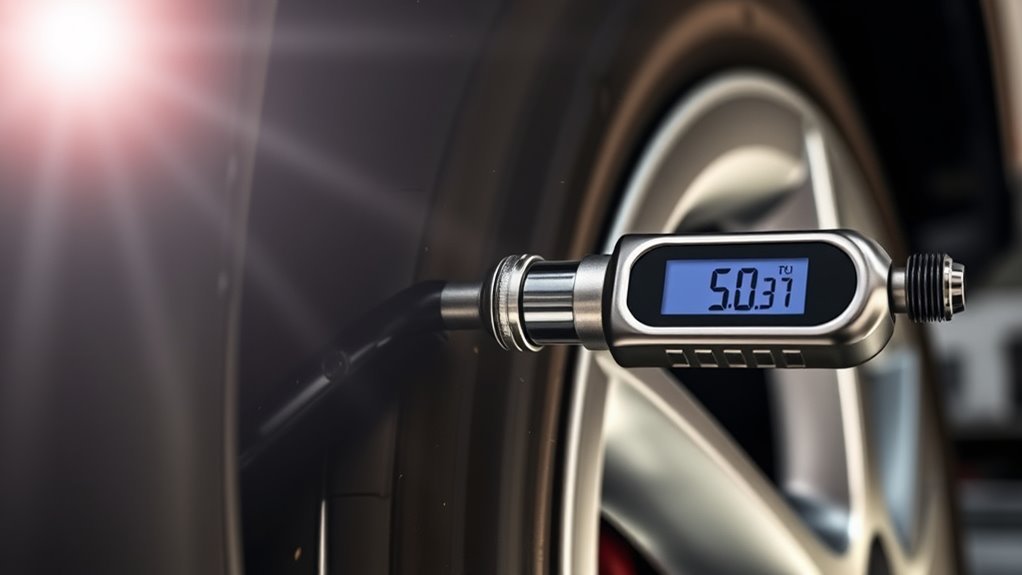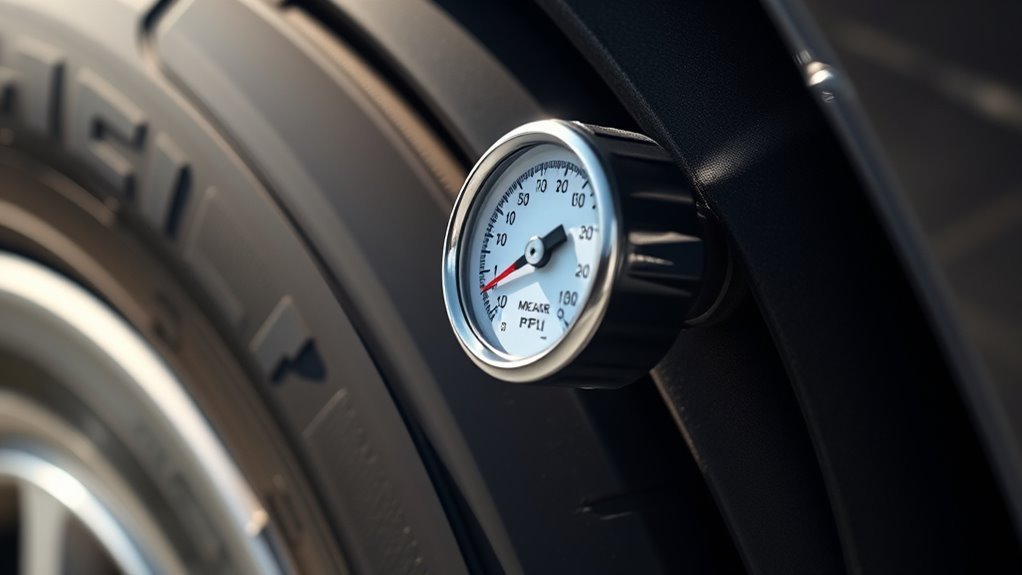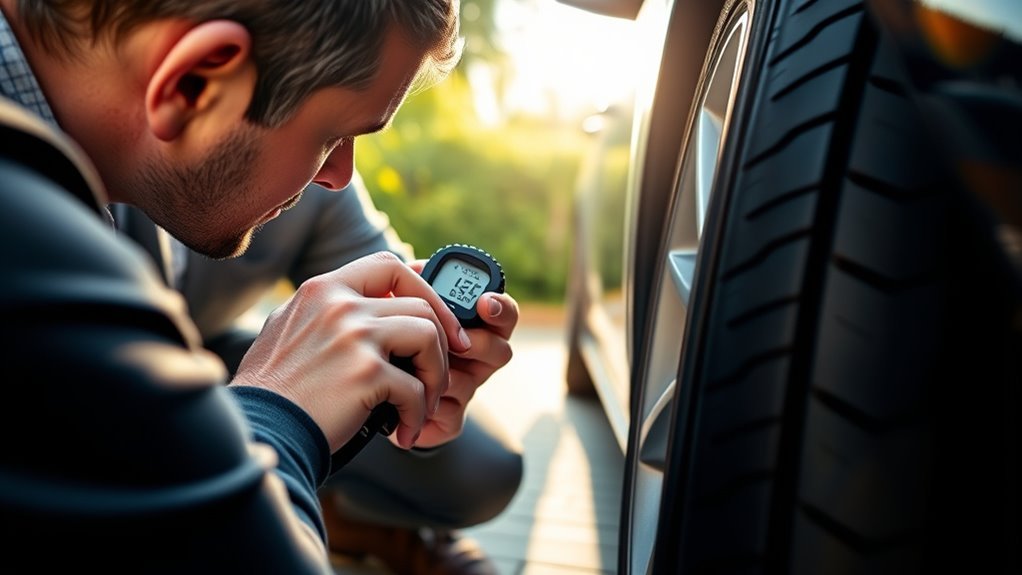
Knowing when your tire is fully inflated is not about how round it looks or how firm it feels. The safe answer is simple: your tire is fully inflated when a reliable pressure gauge matches the cold PSI listed on your vehicle’s tire placard or owner’s manual. Feel tests and visual checks can warn you something is wrong, but they cannot confirm the exact pressure.
Quick Answer
A tire is fully inflated when its cold pressure matches the PSI recommended by your vehicle manufacturer, usually shown on the driver-side door placard or in the owner’s manual. Use a tire pressure gauge, not the tire sidewall number, thumb pressure, or visual appearance, to confirm it.
Key Takeaways
- The correct target is the vehicle’s recommended cold PSI, not the maximum PSI printed on the tire sidewall.
- Check pressure before driving or after the vehicle has been parked for several hours.
- A thumb test, visual inspection, or tire shape check can spot obvious problems, but it cannot verify exact inflation.
- If the tire has a sidewall bulge, exposed cords, rapid air loss, vibration, or repeated low-pressure warnings, have it inspected before driving far.
At a Glance
| Time Required | 5–10 minutes for all four tires |
| Difficulty | Easy |
| Tools Needed | Tire pressure gauge, air compressor, valve caps, and your tire placard or owner’s manual |
| Cost | Usually free at many air pumps after you own a gauge; basic gauges are inexpensive |
How Proper Tire Inflation Enhances Safety and Performance

Proper tire inflation helps your tires keep the right shape under the weight of the vehicle. That improves road contact, steering response, braking feel, ride comfort, and tread wear. Incorrect pressure can make the tire run hotter, wear unevenly, reduce fuel economy, and increase the chance of tire damage.
According to FuelEconomy.gov, keeping tires properly inflated can improve gas mileage by 0.6% on average and up to 3% in some cases. Underinflated tires can lower gas mileage by about 0.2% for every 1 psi drop in the average pressure of all tires.
The key is not to add air until the tire “looks full.” The key is to match the correct cold PSI for your specific vehicle.
Warning: Do not use the maximum PSI printed on the tire sidewall as your normal target unless your vehicle manufacturer specifically tells you to. For most passenger vehicles, use the PSI shown on the tire placard or in the owner’s manual.
What “Fully Inflated” Really Means
A fully inflated tire is a tire that matches the vehicle manufacturer’s recommended cold tire pressure. You can usually find that number on the tire placard inside the driver-side door jamb, inside the fuel filler door on some vehicles, in the glove box area on some older vehicles, or in the owner’s manual.
Michelin’s tire-pressure guidance explains that drivers should compare the gauge reading with the sticker inside the driver’s door or owner’s manual and should not compare it with the PSI on the tire sidewall. The sidewall number is usually the tire’s maximum cold inflation pressure, not the recommended everyday pressure for your car.
How to Check and Inflate a Tire Without Overdoing It
The most reliable method is quick and simple. Follow these steps when the tires are cold, ideally before driving in the morning or after the vehicle has been parked for several hours.
- Find the correct PSI. Look at the tire placard or owner’s manual. Front and rear tires may have different recommended pressures.
- Remove the valve cap. Put it in your pocket or a safe place so it does not roll away.
- Press the gauge firmly onto the valve stem. A short hiss is normal, but a long hiss means the gauge is not sealed properly.
- Read the PSI. Compare it with the recommended cold PSI.
- Add air in short bursts if the reading is low. Recheck often so you do not overshoot.
- Release air slowly if the reading is high. Press the valve pin briefly, then recheck with the gauge.
- Replace the valve cap. Repeat the process for all four tires and the spare if your vehicle has one.
The Tire Industry Association recommends checking tire pressure once a month and before long trips. That routine helps catch slow leaks, seasonal pressure changes, and tire damage before they become bigger problems.
Pro Tip: Keep a small digital or pencil-style tire gauge in the glove box. Gas-station gauges can be convenient, but your own gauge makes it easier to check pressure when the tires are still cold.
[Products Worth Considering]
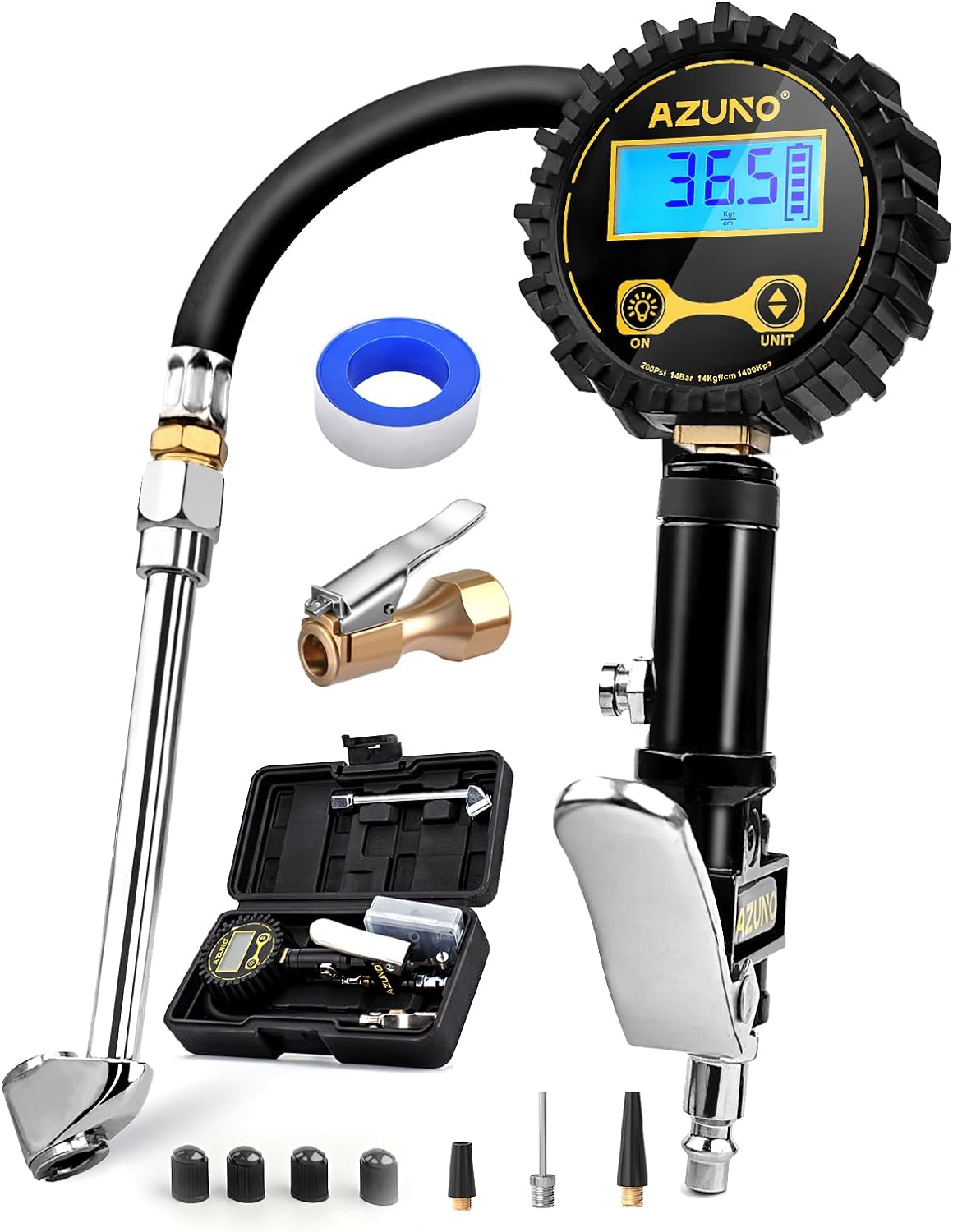
This digital tire inflator delivers accurate, easy-to-read pressure measurements with a bright backlit LCD and precise 0.1 resolution for confident inflation. Designed for single-handed use, it makes it simple to inflate or deflate tires while staying organized in the included portable carrying box. Built for a wide range of vehicles, it is a practical air compressor accessory for cars, trucks, SUVs, motorcycles, and more.

The JACO ElitePro Digital Tire Pressure Gauge delivers shop-grade accuracy with a clear digital readout, making it easy to maintain proper tire pressure for safer driving and better performance. Built with rugged brass and steel components, a protective guard, and a flexible air hose, it is designed for reliable use across cars, trucks, motorcycles, bikes, RVs, and trailers. The lock-on display, built-in bleeder valve, and bright backlit screen add convenience in any lighting condition.

This compact relay tester quickly checks the condition of most common 12-volt 4- and 5-pin automotive relays outside the vehicle. It provides self-contained testing without needing to connect to the battery, helping you identify coil and contact issues fast. Clear green and red LED indicators make pass or fail results easy to read, and the included batteries let you start using it right away.
Ways to Check Tire Pressure Without a Gauge
If you do not have a gauge, you can still look for warning signs. These checks can help you decide whether a tire may be low or unsafe, but they cannot confirm that the tire is fully inflated.
[Products Worth Considering]

This portable tire inflator delivers fast, convenient inflation for cars, bikes, motorcycles, and balls with dual power options from a rechargeable battery or a 12V car cord. Its digital LCD pressure gauge and automatic shutoff help prevent over-inflation, while multiple preset modes and a custom setting make it easy to use for different inflation tasks. Built-in flashlight and USB power ports add extra emergency utility on the road.

This portable 12V tire inflator delivers fast, convenient inflation for cars, SUVs, trucks, motorcycles, and other inflatables. It features a digital display, bright LED lighting, auto shutoff, and multiple nozzle adapters to help you inflate accurately and safely, even in low-light situations. The long power cord and air hose make it easy to reach all tires and handle roadside emergencies or routine maintenance.
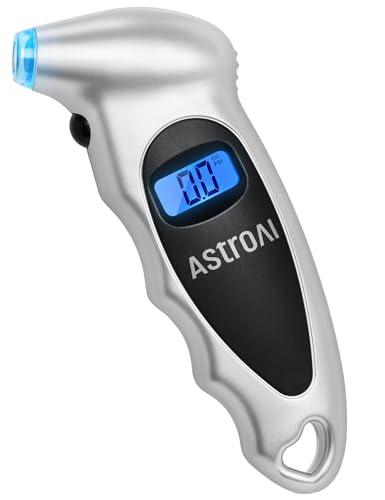
Accurate, Dependable Readings: Factory‑calibrated to ±1 PSI, so you can confidently match your vehicle’s recommended PSI (check the door jamb sticker). Ideal for monthly checks and road trips — consistent results every time, cold or warm.
Thumb Pressure Test
Press your thumb firmly against the tire tread or sidewall. A severely underinflated tire may feel unusually soft, while an overinflated tire may feel very rigid. However, this test is only a rough clue. Modern tires can hide low pressure well, so do not rely on thumb pressure as your final answer.
Visual Inspection Techniques
Park on a flat surface and look at all four tires from the front, rear, and sides. Check for a tire that looks flatter than the others, has a wider footprint, or appears to sag at the bottom. Also inspect for cracks, cuts, nails, exposed cords, or sidewall bulges.
A visible sidewall bulge is not just a low-pressure sign. It can mean internal tire damage. Do not try to “fix” a bulge by adding air.
Load and Shape Observation
A properly inflated tire should hold its normal shape under the vehicle’s weight. If one tire squats much more than the others, it may be low. If the center of the tread looks crowned and the ride feels harsh, it may be overinflated. Still, shape alone is not precise enough to replace a gauge reading.
Note: No-gauge checks are best used as emergency screening. If a tire looks suspicious, drive slowly only as far as needed to reach a safe air source or tire shop, and avoid highway speeds if the tire appears very low or damaged.
How to Recognize the Right Tire Pressure Feel
A properly inflated tire usually feels firm, stable, and consistent with the other tires. On the road, the steering should feel normal, the vehicle should track straight, and the ride should not suddenly feel harsh or squirmy. But “feel” is not a measurement.
Use driving feel as a warning system, not as proof. If the vehicle pulls, vibrates, wanders, feels sluggish, or rides much harder than usual, check the pressure with a gauge and inspect the tires for damage.
Signs of Low and High Tire Pressure

Low and high tire pressure can both cause handling and tire-wear problems. Use these signs to know when to stop and check your PSI.
Signs of Low Tire Pressure
- The tire looks flatter or wider at the bottom than the others.
- The vehicle feels sluggish, heavy, or less responsive when steering.
- The tire shoulders wear faster than the center tread.
- The TPMS light comes on.
- You hear flapping, thumping, or feel vibration after a sudden pressure loss.
Signs of High Tire Pressure
- The ride feels unusually harsh or bouncy.
- The center of the tread wears faster than the outer edges.
- The tire looks overly rounded across the tread.
- Traction may feel reduced on rough or wet roads.
The safest target is not “hard enough” or “round enough.” It is the vehicle manufacturer’s recommended cold PSI, confirmed with a gauge.
Cold vs. Warm Tire Pressure
Tire pressure rises as tires warm up from driving and from outdoor temperature changes. That is why recommended tire pressure is based on cold inflation pressure. Continental notes that tire pressure can fluctuate about 1 psi for every 10°F change in temperature and warns drivers not to reduce pressure from warm tires because the pressure may drop too low once the tires cool.
If you must add air when the tires are warm, use the placard PSI as your guide and recheck the tires again when they are cold. Do not bleed air out of a warm tire just because the reading is slightly above the placard number after driving.
Why the TPMS Light Is Not Enough
A Tire Pressure Monitoring System can warn you when a tire is significantly underinflated, but it is not a replacement for regular pressure checks. NHTSA explains that TPMS warns drivers when tire pressure is below an acceptable level, and federal rules under 49 CFR 571.138 require the low-pressure telltale at significant underinflation thresholds.
That means a tire can be a few PSI low before the warning appears. Check pressure monthly even if the TPMS light is off.
[Products Worth Considering]

PROCESS LEVEL ACCURACY: Each ETENWOLF’s digital tire pressure gauge is calibrated manually to ANSI B40.7 Grade 2A(plus-minus 1 PSI).Presta valve adapter not included, if used for bicycles, it must be purchased separately

PRO ACCURACY - mechanic recommended, performance tested, & calibrated accurate to professional ANSI 2A standards - with dual pressure sensors certified to ±0.50% FS (1 PSI), offering reliable readings up to 200 PSI w/ precise readout resolution of 0.10 PSI - so you can now maintain your tires with a shop-grade mechanic trusted tool

【Accurate Digital Tire Gauge】Safeguard your every trip. HYVOHEX tire pressure gauge is certified by ANSI B40.7 Grade 2A standard and equipped with a high-sensitivity sensor to provide you with instant, error-free results (±0.1 PSI). The intelligent anti-interference chip ensures stable operation in extreme temperatures (-4°F-130°F). Whether it is daily commuting or long-distance driving, you can always know the tire condition
Essential Tips for Maintaining Consistent Tire Pressure
- Check monthly. Tires can slowly lose pressure over time.
- Check before long trips. Highway speeds, heat, heavy loads, and long distances make proper inflation more important.
- Use the placard PSI. Do not guess and do not use the tire sidewall maximum as your everyday target.
- Check when cold. Morning is usually best.
- Inspect tread and sidewalls. Uneven wear, cracks, punctures, exposed cords, or bulges need attention.
- Remember the spare. A spare tire can lose pressure even when it is not being used.
When to Seek Professional Help for Tire Inflation Issues
Some tire problems should not be handled with air alone. Have a qualified tire technician inspect the tire if you notice any of these issues:
- The same tire keeps losing pressure.
- The TPMS light stays on after you inflate the tires correctly.
- The tire has a sidewall bulge, deep cut, exposed cord, or visible puncture.
- You feel vibration, pulling, thumping, or unstable handling.
- The tread shows bald spots, cupping, or uneven wear.
- You accidentally drove on a tire that was very low or flat.
Warning: Adding air does not repair internal tire damage. If a tire has been driven while severely underinflated, have it inspected even if it holds air afterward.
Frequently Asked Questions
How do I tell if a tire is full of air?
Use a tire pressure gauge and compare the reading with the recommended cold PSI on your vehicle’s tire placard or owner’s manual. If the reading matches that number, the tire is properly inflated. Visual checks and thumb pressure can only reveal obvious problems.
What is the 3% tire rule?
The 3% figure usually refers to fuel economy, not a tire-fill method. FuelEconomy.gov says proper inflation can improve gas mileage by 0.6% on average and up to 3% in some cases. It does not mean you should inflate tires 3% above the recommended PSI.
How can I tell if a tire is overinflated?
A tire may be overinflated if the gauge reading is above the vehicle’s recommended cold PSI, the ride feels unusually harsh, or the center tread wears faster than the shoulders. Always confirm with a gauge before releasing air.
What is the 4 PSI rule?
For everyday passenger-car use, do not treat “add 4 PSI” as the normal rule. Your target is the vehicle manufacturer’s recommended cold PSI. If tires are warm after driving, recheck them cold later instead of using a blanket 4 PSI adjustment.
Can I rely on my TPMS light?
No. TPMS is a useful safety warning, but it is not a substitute for monthly gauge checks. A tire can be below the ideal PSI before the warning light appears.
Should I check tire pressure hot or cold?
Check tire pressure cold whenever possible, before driving or after the vehicle has been parked for several hours. Warm tires usually read higher because driving builds heat inside the tire.
Conclusion
The safest way to know your tire is fully inflated is to check it cold with a reliable pressure gauge and match the PSI on your vehicle’s tire placard or owner’s manual. A tire that looks firm or feels hard may still be underinflated or overinflated. Use visual checks as a warning tool, not a measuring tool, and get professional help for leaks, bulges, vibration, or uneven wear.
Sources
- NHTSA TireWise — TPMS meaning, tire safety, and why regular pressure checks matter.
- FuelEconomy.gov: Keeping Your Vehicle in Shape — fuel economy impact of proper tire inflation and reminder not to use sidewall max PSI as the target.
- Tire Industry Association: Tire Inflation Pressure — monthly pressure checks and step-by-step inflation guidance.
- Michelin: How to Check Tire Pressure — cold tire checks, placard PSI, and sidewall PSI warning.
- Continental Tire: How Do I Check My Tire Pressure? — cold inflation pressure, temperature changes, and TPMS limitations.
- 49 CFR 571.138 — federal tire pressure monitoring system performance standard.