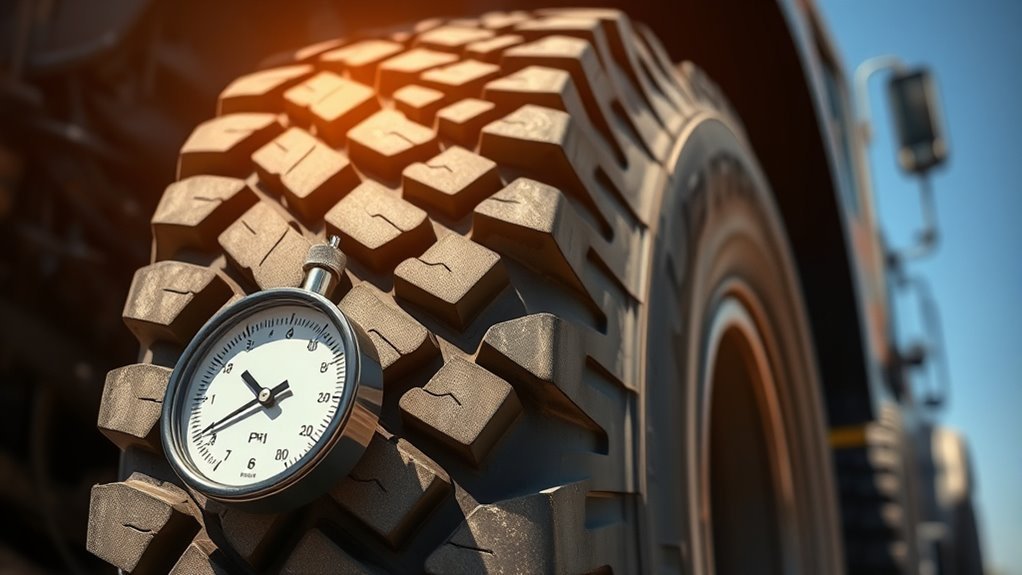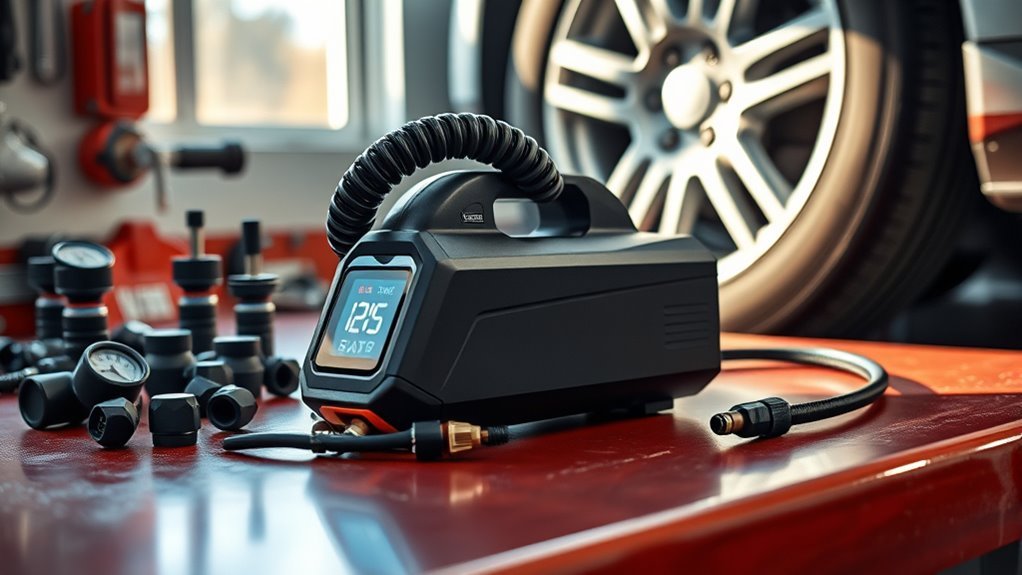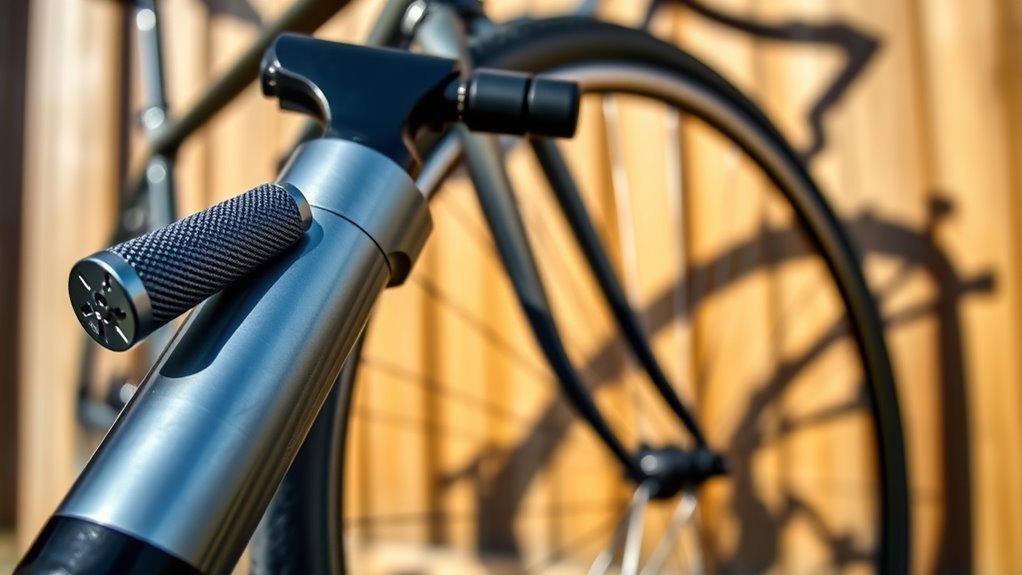
A manual tire inflator, also called a hand pump or manual tire pump, is a portable tool that pushes air into a tire using your own physical effort instead of electricity. It can be a smart backup for roadside emergencies, bikes, trailers, camping gear, and small tire top-offs, but it is not the best choice for every flat tire. Before using one, you need to know the correct PSI, check the tire for damage, and confirm the tire can safely hold air.
Quick Answer
A manual tire inflator is worth keeping as a low-cost, no-power backup for topping off tires or handling slow pressure loss. For a fully flat car tire, large SUV tire, or damaged tire, it can be slow, exhausting, or unsafe. Always inflate to the vehicle’s recommended cold PSI, not the tire sidewall maximum.
Key Takeaways
- A manual tire inflator works without batteries, outlets, or a 12V socket, making it useful as an emergency backup.
- It is best for topping off low tires, bikes, small trailers, lawn equipment, and situations where power is not available.
- For car tires, use the recommended cold tire pressure on the vehicle placard or owner’s manual, not the PSI printed on the tire sidewall.
- Do not inflate a tire with sidewall damage, exposed cords, a bulge, severe puncture damage, or rapid air loss.
- A separate tire pressure gauge is helpful because many manual inflator gauges are basic and can be less precise.
At a Glance
| Time Required | A few minutes for a small top-off; much longer for very low, large, or high-volume tires. |
| Difficulty | Easy to moderate for top-offs; physically demanding for full car-tire inflation. |
| Tools Needed | Manual tire inflator, Schrader-compatible chuck for most car tires, separate pressure gauge, gloves, and a clean valve cap. |
| Cost | Usually lower than an electric inflator, with no charging, outlet, or 12V power requirement. |
What Is a Manual Tire Inflator and How Does It Work?
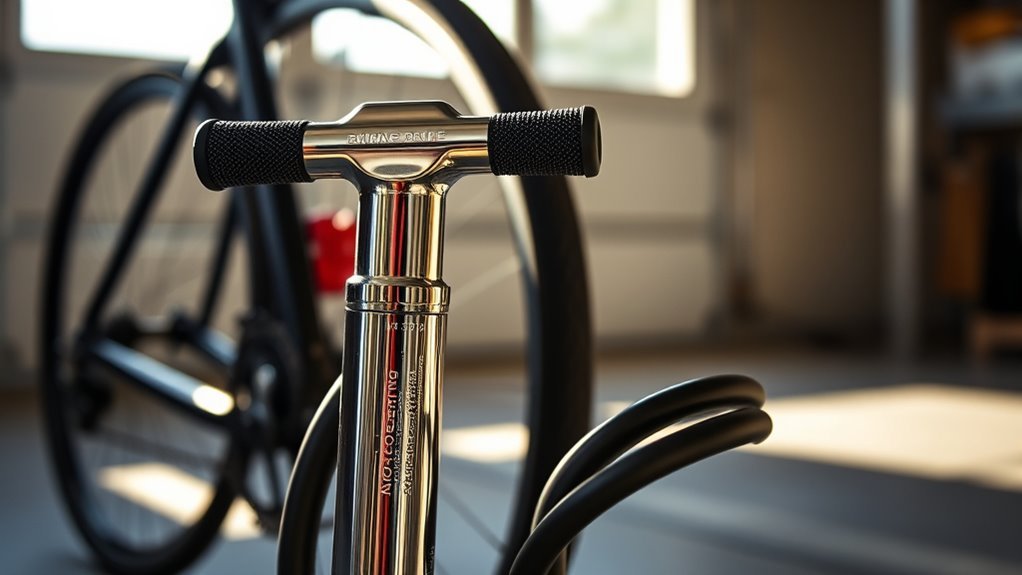
A manual tire inflator is a pump that moves air into a tire through a hose and valve connector. Most car tires use a Schrader valve, the same basic valve style found on many automotive and utility tires. When you push the handle or press the foot pedal, the pump compresses air and sends it through the hose into the tire.
Manual inflators come in several styles. A floor pump gives you a tall handle and a stable base. A foot pump uses a pedal motion and can be easier to store in a vehicle. A small handheld mini pump is portable, but it may be too slow for anything beyond small top-offs, bicycles, or emergency use.
The most important thing to understand is that a manual inflator adds air, but it does not decide the correct pressure for you. For passenger vehicles, the target pressure should come from the vehicle’s tire information placard or owner’s manual. The National Highway Traffic Safety Administration advises drivers to use the recommended cold inflation pressure listed by the vehicle manufacturer, not a guess.
Warning: Do not use a manual tire inflator to “save” a tire with a sidewall bulge, exposed cords, deep cuts, a torn valve stem, or air that escapes as fast as you pump it in. Install the spare, use roadside assistance, or have the tire inspected by a qualified tire professional.
Benefits of Manual Tire Inflators in Emergencies
A manual tire inflator is most useful when you need a simple, independent way to add air and no power source is available. It can help if a tire is slightly low before a road trip, if your spare needs a pressure check, or if you are in a remote area without a working compressor nearby.
Manual inflators also have fewer electrical failure points than battery-powered or 12V inflators. There is no battery to charge, no fuse to blow, and no motor to overheat. That said, they still need care: hoses, seals, chucks, and gauges can wear out, leak, or become inaccurate.
| Advantage | What It Means in Real Use |
|---|---|
| Portability | Easy to store in a trunk, garage, RV, trailer kit, or camping bag. |
| No power needed | Works when your battery is dead, you are away from an outlet, or your 12V socket is unavailable. |
| Lower cost | Often less expensive than electric compressors, especially for occasional use. |
| Simple operation | Attach the chuck, pump steadily, check the pressure, and stop at the recommended PSI. |
Essential Features of an Effective Manual Tire Inflator
Choosing the right manual tire inflator is about more than picking the smallest pump. A pump that works well for a bicycle tire may be frustrating on a car tire because passenger-vehicle tires need more air volume.
- Pressure rating: Choose a pump rated above the tire pressures you expect to use. Most passenger vehicles are commonly inflated in the general range listed by the vehicle placard, but the exact PSI depends on the vehicle.
- Air volume: A larger barrel or dual-barrel design can move more air per stroke, which helps with car and trailer tires.
- Stable base or pedal: A floor pump or foot pump is usually easier than a tiny hand pump for vehicle tires.
- Secure valve chuck: The connector should lock firmly onto the valve without constant hissing.
- Readable gauge: A built-in gauge is convenient, but a separate tire pressure gauge is still useful for final accuracy.
- Durable hose: A flexible hose reduces stress on the valve stem and makes it easier to pump from a stable position.
- Storage-friendly design: Compact size matters, but not at the expense of stability and pumping efficiency.
Pro Tip: Keep a separate pencil, dial, or digital tire pressure gauge in the vehicle. Use the pump’s gauge as a guide, then confirm the final PSI with the separate gauge before driving.
[Products Worth Considering]
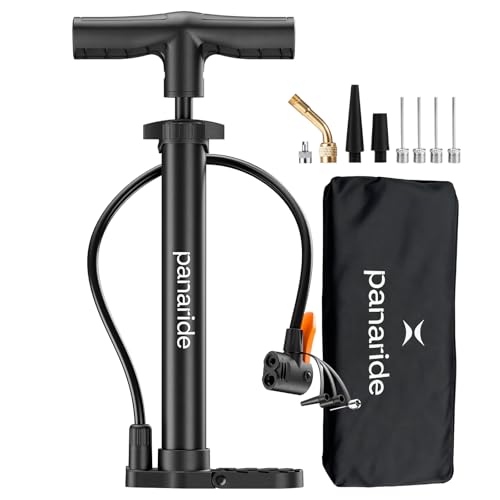
Portable manual model without a pressure gauge. This compact P120 hand pump has no built-in PSI display. Select a gauge-equipped model if you need pressure readings while pumping.

FAST INFLATION & TIME SAVING: Power up your journey with this car tire inflator, equipped with a long-lasting, rechargeable 5200mAh battery that makes inflating tires a breeze, no more waiting in line at the gas station

[Fast & Efficient Inflation] The OlarHike tire inflator features a high-performance motor that delivers rapid airflow—inflate a standard car tire (195/65 R15) from 30 to 35 PSI (+5 PSI) in just 55 seconds, or a larger SUV tire (235/65 R17) from 30 to 35 PSI (+5 PSI) in only 2.2 minutes. Ideal for cars, SUVs, light Pickup(Within 51 PSI), motorcycles, bicycles, and sports balls. Its practical everyday usefulness also makes it a thoughtful car gift for men who value reliable tools for their vehicles. Important Note: The unit can only inflate car and pickup truck tires up to 51 PSI and is not compatible with heavy-duty pickup trucks or RVs.
Manual vs. Electric Tire Inflators: Which Should You Choose?
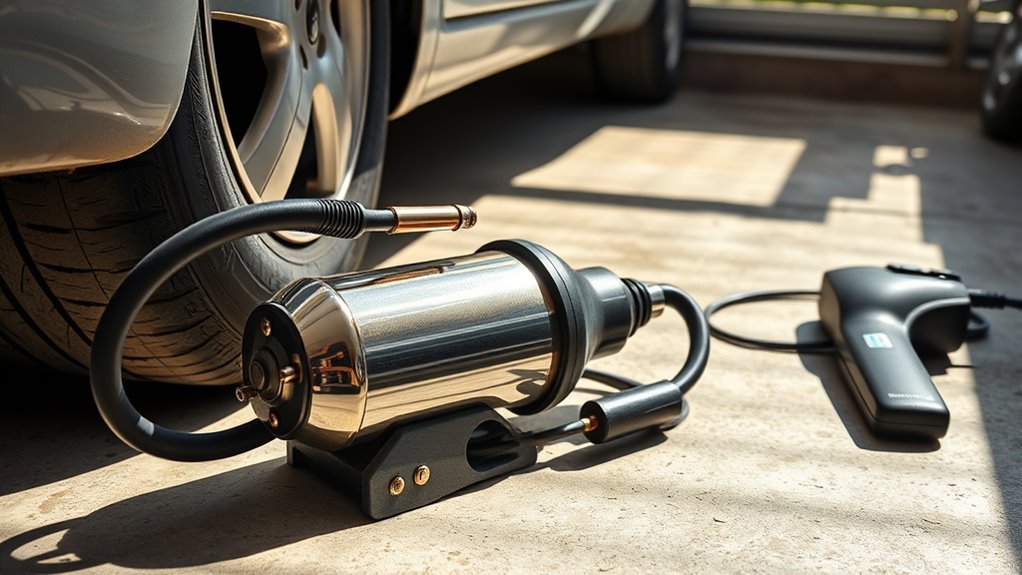
The best tire inflator depends on how often you drive, what you drive, and how much effort you are willing to use. Manual tire inflators are simple and power-free, while electric tire inflators use a motorized compressor to add air faster with less physical work.
| Need | Manual Inflator | Electric Inflator |
|---|---|---|
| Emergency backup | Excellent if the tire is only low and still safe to inflate. | Excellent if you have battery or 12V power available. |
| Speed | Slower, especially for larger tires or low starting PSI. | Usually faster and less tiring. |
| Physical effort | Requires steady pumping and breaks may be needed. | Minimal physical effort. |
| Power dependence | No electricity required. | Requires battery charge, outlet, or vehicle power. |
| Best for | Top-offs, small tires, bikes, spare tire checks, camping kits, and backup use. | Frequent drivers, larger tires, faster roadside work, and routine vehicle maintenance. |
[Products Worth Considering]
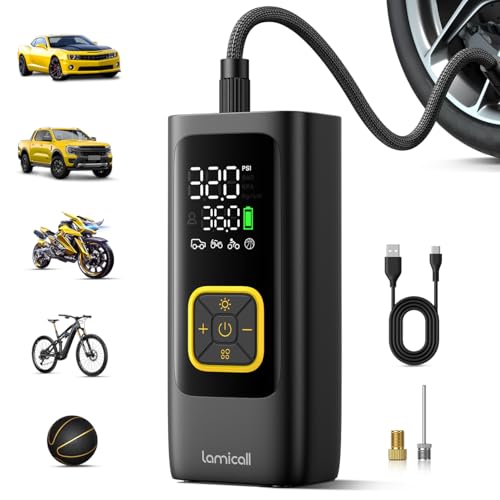
【Ultra-Compact & Portable】This inflator is designed for maximum portability, with a footprint same with a compact footprint. It easily fits in your car’s glove box, center console, side door pockets, trunk, as well as a bicycle bag or motorcycle tailbox. Size: 6.3*2.7*2.1"

COMFORTABLE HANDLE because of ergonomically designed air pump for bike handle.
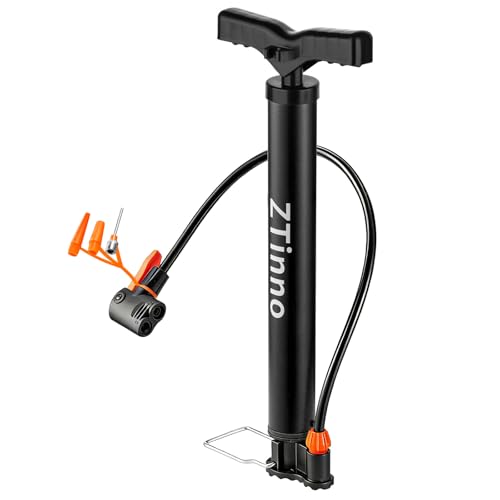
PORTABLE & PRACTICAL: This floor bicycle pump is your easy-carry inflation kit, at just 12.6 inches long and 0.49 lb. Whether you're at home or on the go, it tucks neatly into your car trunk, garage shelf, or backpack
When to Choose a Manual Tire Inflator Over Electric Options
A manual tire inflator makes the most sense when you want a backup tool that works anywhere. Choose one if you are budget-conscious, store emergency gear in your vehicle, camp or travel away from power, or only need to top off tires occasionally.
It is also useful for drivers who want a simple tool with no charging schedule. A manual inflator can sit in a trunk for months and still work, as long as the hose, seals, and chuck are in good condition.
However, choose an electric inflator if you regularly maintain multiple vehicles, drive a truck or SUV with larger tires, have limited strength or mobility, or want automatic shutoff. For a badly underinflated vehicle tire, an electric inflator is usually the more practical choice.
[Products Worth Considering]

Powerful Inflation Performance - With a built-in true 6000mAh rechargeable battery, this tire inflator can support up to 4 car tires (195/55 R15) and charge them from 30PSI to 36PSI in 45 seconds

✅【ALL-IN-1 MULTIFUNCTIONAL CAR JUMP STARTER】 Say goodbye to ordinary jump starters! It's a 9-in-1 portable car jump starter, tire pump, air blower, pressure gauge, portable power bank, flashlight, SOS signal, white strobe, red strobe as triangle warning light It replaces many separate tools, bringing convenience whether at home, in the car, or traveling outdoors!
When Not to Use a Manual Tire Inflator
A manual pump is not a substitute for tire repair. It can add air, but it cannot fix structural damage, punctures, or unsafe tire conditions.
- Do not inflate a tire with sidewall damage. Puncture repairs are generally limited to the tread area, not the sidewall or shoulder, according to tire repair guidance from the Tire Industry Association.
- Do not keep pumping if air escapes immediately. A rapid leak means the tire, valve stem, bead, or wheel may need service.
- Do not inflate a tire with exposed cords, a bulge, or severe cracking. These can signal structural damage.
- Do not rely on the sidewall maximum PSI as your target. Use the vehicle placard or owner’s manual for the recommended cold pressure.
- Do not drive normally after a temporary roadside top-off. If the tire lost pressure unexpectedly, check it again soon and have it inspected.
Your tire pressure monitoring system is a warning system, not a replacement for a tire gauge. Under federal TPMS rules, the warning is tied to significant underinflation thresholds, so a tire can be low before the light appears.
How to Properly Use a Manual Tire Inflator
Using a manual tire inflator is simple, but the order matters. The goal is to add air slowly, check pressure accurately, and avoid overinflation.
- Park safely on level ground. If you are roadside, move as far from traffic as possible, turn on hazard lights, and only work where it is safe.
- Find the correct PSI. Look for the tire information placard, often on the driver’s door jamb, door edge, glove box area, fuel door, or in the owner’s manual. The NHTSA tire pressure guidance explains that the manufacturer’s number is for cold tires.
- Check the tire condition. Look for sidewall bubbles, cuts, exposed cords, nails, a torn valve stem, or bead separation. Do not inflate if the tire appears unsafe.
- Remove the valve cap. Put it in your pocket or a cup holder so it does not roll away.
- Attach the pump chuck firmly. Press or lock the nozzle onto the valve until hissing stops. If it leaks, remove it and reseat it squarely.
- Pump steadily. Use smooth strokes. Take breaks if needed, especially on larger tires.
- Check the pressure often. Stop every short interval and confirm PSI with a separate gauge. This helps prevent overinflation.
- Stop at the recommended cold PSI. If the tire is warm from driving, follow the vehicle manufacturer’s guidance and recheck when cold.
- Detach quickly and replace the valve cap. A small puff of air during removal is normal. Replace the cap to help keep dirt and moisture out of the valve.
- Recheck later. If the tire drops again, there may be a puncture, valve leak, wheel leak, or other problem that needs repair.
Note: Tire pressure should be checked at least monthly and when tires are cold. The U.S. Tire Manufacturers Association notes that cold means the vehicle has been parked for at least three hours, and pressure can change with temperature.
Using and Maintaining Your Manual Tire Inflator
Using a manual tire inflator effectively depends on a tight connection, steady pumping, and regular maintenance. If the chuck leaks, the hose cracks, or the gauge sticks, the pump may waste effort or give a poor reading.
- Inspect the hose: Look for cracks, splits, dry rot, or loose fittings.
- Check the valve chuck: Make sure it locks securely and releases cleanly.
- Compare the gauge: Test the built-in gauge against a separate gauge from time to time.
- Keep it dry: Store the pump away from standing water to reduce rust and corrosion.
- Protect the threads and adapters: Keep small adapters in a pouch so they are not lost.
- Practice once at home: A quick practice run makes roadside use much easier.
Common Mistakes to Avoid When Using a Manual Tire Inflator
Small mistakes can lead to wrong pressure readings, wasted effort, or unsafe driving. Avoid these common problems:
- Using the tire sidewall PSI as the target. The sidewall number is not the normal recommended pressure for your specific vehicle.
- Checking hot tires without understanding the difference. Tire pressure rises as tires heat up. For the most accurate routine reading, check when cold.
- Skipping a tire inspection. Adding air to a damaged tire can be dangerous.
- Trusting a questionable gauge. Use a separate gauge if the pump’s gauge is hard to read, sticky, or inconsistent.
- Forgetting the spare. A spare tire is only useful if it is properly inflated before you need it.
- Ignoring repeat pressure loss. If a tire keeps losing air, it needs inspection rather than repeated top-offs.
What to Do If the Tire Won’t Inflate
If pumping feels difficult or the tire pressure will not rise, stop and troubleshoot before you exhaust yourself.
- Air hisses at the valve: The chuck may not be seated correctly. Remove it, line it up straight, and lock it again.
- The gauge does not move: The pump may not be connected, the gauge may be stuck, or the tire may have a major leak.
- The tire inflates then drops again: Check for a puncture, loose valve core, damaged valve stem, rim leak, or bead leak.
- Pumping becomes extremely hard: Stop and check the pressure. The tire may already be near or above the target PSI.
- The sidewall looks distorted: Do not continue inflating. The tire may be damaged or improperly seated.
Practical Scenarios for Using a Manual Tire Inflator
Inflating tires manually can be useful in several real-world situations, especially when power sources are not available.
- Roadside top-off: A tire is a few PSI low and you need enough pressure to reach a safe service location.
- Remote travel: You are camping, overlanding, or working away from a gas station or outlet.
- Spare tire maintenance: You check the spare and find it low before a trip.
- Bicycles and small tires: Manual inflators are often practical for bikes, garden carts, small trailers, and lawn equipment.
- Power failure backup: Your electric inflator is dead, missing, or unable to draw power from the vehicle.
For larger tires or a fully flat passenger-vehicle tire, expect more effort. A manual inflator can work in some cases, but it may take patience and repeated pressure checks. If the tire will not hold air, switch to the spare or call for help.
Is a Manual Tire Inflator Worth It for You?
A manual tire inflator is worth it if you want a simple, low-cost backup that does not depend on power. It is especially useful for occasional top-offs, outdoor trips, and emergency kits. It is also a practical companion to an electric inflator because it gives you a fallback if the electric unit fails.
It may not be worth it as your only inflator if you drive long distances often, maintain several vehicles, have large truck tires, or want the fastest and easiest roadside solution. In those cases, a quality electric inflator with automatic shutoff may be the better primary tool, while the manual pump stays in the kit as backup.
Frequently Asked Questions
How does a manual tire inflator work?
A manual tire inflator works by compressing air with a handle, barrel, piston, or foot pedal. The air travels through a hose and into the tire valve. You keep pumping until the tire reaches the recommended pressure, then confirm the final PSI with a gauge.
What are the different types of tire inflators?
Common tire inflators include manual floor pumps, manual foot pumps, handheld mini pumps, 12V electric inflators, cordless battery inflators, and shop air compressors. Manual pumps are best for backup and top-offs, while electric models are usually better for faster vehicle-tire inflation.
Do hand-held tire inflators work?
Yes, hand-held tire inflators can work, but the result depends on the pump size, tire size, starting pressure, and your effort. Small hand pumps are usually better for bicycles or small top-offs than for fully inflating a low car tire.
How do you use a manual tire pump?
Park safely, find the recommended cold PSI, inspect the tire for damage, remove the valve cap, lock the pump chuck onto the valve, pump steadily, and check pressure often. Stop at the vehicle manufacturer’s recommended pressure, detach the pump, and replace the valve cap.
Can I use a manual tire inflator on a car tire?
You can use a manual tire inflator on a car tire if the pump is compatible with the valve and the tire is safe to inflate. It is most practical for small pressure top-offs. For a very low or fully flat car tire, a manual pump can be slow and tiring.
Should I inflate to the PSI on the tire sidewall?
No. For normal vehicle use, inflate to the recommended cold tire pressure listed on the vehicle placard or in the owner’s manual. The PSI printed on the tire sidewall is not the normal target pressure for your specific vehicle.
Conclusion
A manual tire inflator is a practical tool when you need a portable, no-power way to add air to a tire. It shines as a backup for slow leaks, small top-offs, spare tire checks, outdoor travel, and emergency kits. Its trade-offs are effort, time, and gauge precision.
If you choose one, use it safely: check the vehicle’s recommended cold PSI, inspect the tire first, inflate gradually, confirm pressure with a reliable gauge, and get professional help for damaged tires or repeat air loss. Used that way, a manual inflator can be a simple but valuable part of your roadside toolkit.
Sources
- NHTSA TireWise: Tire Safety Ratings and Awareness — supports cold tire pressure checks, vehicle placard guidance, and tire safety basics.
- NHTSA tire pressure brochure — supports checking recommended pressure on the vehicle placard or owner’s manual.
- 49 CFR 571.138: Tire Pressure Monitoring Systems — supports the TPMS underinflation warning threshold discussion.
- U.S. Tire Manufacturers Association: Tire Care Essentials — supports monthly pressure checks, cold-tire checks, and temperature-related pressure changes.
- U.S. Tire Manufacturers Association: Tire Repair Basics — supports safe tire repair limitations and puncture repair guidance.
- Tire Industry Association: Tire Repair — supports warnings about sidewall/shoulder damage and improper repairs.