Tire pressure affects how safely your tires support the weight of your vehicle, passengers, cargo, and trailer. The right PSI keeps the tire’s shape stable, controls heat buildup, protects tread wear, and helps the tire carry its rated load. Too little air can overload the tire even when the vehicle itself does not look overloaded. Too much air can reduce the contact patch and make the ride harsher.
Quick Answer
Tire pressure affects load capacity because air pressure helps the tire hold its shape under weight. Use the vehicle’s cold PSI from the door placard or owner’s manual, not a simple “pounds per PSI” formula. For replacement sizes, heavy towing, RVs, or commercial tires, use a tire load and inflation table.
Key Takeaways
- The correct tire pressure is the vehicle manufacturer’s cold PSI, usually listed on the driver-side door placard or in the owner’s manual.
- Do not use the tire sidewall’s maximum PSI as your normal daily pressure unless your vehicle manufacturer specifically calls for it.
- Under-inflated tires flex more, run hotter, wear faster, and may lose safe load-carrying ability.
- Over-inflated tires can reduce traction, ride comfort, and impact protection.
- For towing, RVs, commercial tires, or non-original tire sizes, match actual axle weight to a published load and inflation table.
At a Glance
| Time Required | 5–10 minutes for a normal pressure check; longer if you are weighing a trailer or RV |
| Difficulty | Easy for routine checks; moderate for load-table matching |
| Tools Needed | Reliable tire pressure gauge, air compressor, valve caps, owner’s manual, and tire placard information |
| Cost | Usually free to low cost; a quality gauge is often cheaper than premature tire wear |
Why Tire Pressure Matters for Your Vehicle’s Load Capacity
Tire pressure matters because the air inside the tire helps support the load. When pressure is correct, the tire keeps its intended shape, the tread contacts the road more evenly, and the sidewall flexes within its design range. That is what allows the tire to carry weight safely while maintaining predictable steering, braking, and stability.
The most important number is the vehicle manufacturer’s recommended cold PSI. You can usually find it on the vehicle tire information placard on the driver-side door edge or door post, or in the owner’s manual. That placard pressure is matched to the vehicle’s original tire size, suspension, axle ratings, and load limits.
Do not treat tire capacity as a simple “pounds per PSI” calculation. A tire may list a maximum load at a maximum pressure, but that does not mean every PSI adds the same amount of safe capacity. Tire engineers use published load and inflation tables to match tire size, axle weight, and inflation pressure. This is especially important when using replacement tire sizes, light-truck tires, RV tires, trailers, or commercial tires.
Warning: Never exceed the vehicle’s gross vehicle weight rating, axle rating, tire load rating, or wheel rating. Adding air does not make an overloaded vehicle safe.
Recommended PSI vs. Sidewall Maximum PSI
The recommended PSI and the tire sidewall maximum PSI are not the same thing. The recommended PSI is the pressure your vehicle manufacturer wants you to use for normal cold inflation. The sidewall maximum PSI is the tire’s maximum pressure limit for its rated load and should not be used as your daily target unless your vehicle or tire manufacturer specifically instructs you to do so.
This difference matters because the vehicle was designed around a specific tire size, load rating, ride height, braking behavior, and handling balance. Inflating to the sidewall number without checking the placard can make the ride harsh, reduce the contact patch, and increase the risk of center tread wear or impact damage.
Note: If you changed tire size, changed from passenger tires to LT tires, tow heavy loads, or drive an RV, the placard may not tell the full story. In those cases, use the tire manufacturer’s load/inflation data or ask a qualified tire professional.
[Products Worth Considering]

This smart color coded tire tread depth gauge makes it easy to check tread wear at a glance with clear red, yellow, and green ranges. Calibrated from 0 to 1 inch in 1/32 inch increments, it helps you quickly assess tire condition for safer driving and timely replacements. The pocket clip design makes it convenient to carry and use on trucks, motorcycles, cars, and other passenger vehicles.

The NOCO Boost GB70 is a compact yet powerful jump starter designed to safely revive dead 12V batteries in seconds. It combines UltraSafe spark-proof protection, a built-in power bank, and a bright LED flashlight in a rugged, portable design that fits easily in a glove box or emergency kit. Built for cars, trucks, SUVs, boats, motorcycles, and more, it delivers dependable emergency starting power whenever you need it.
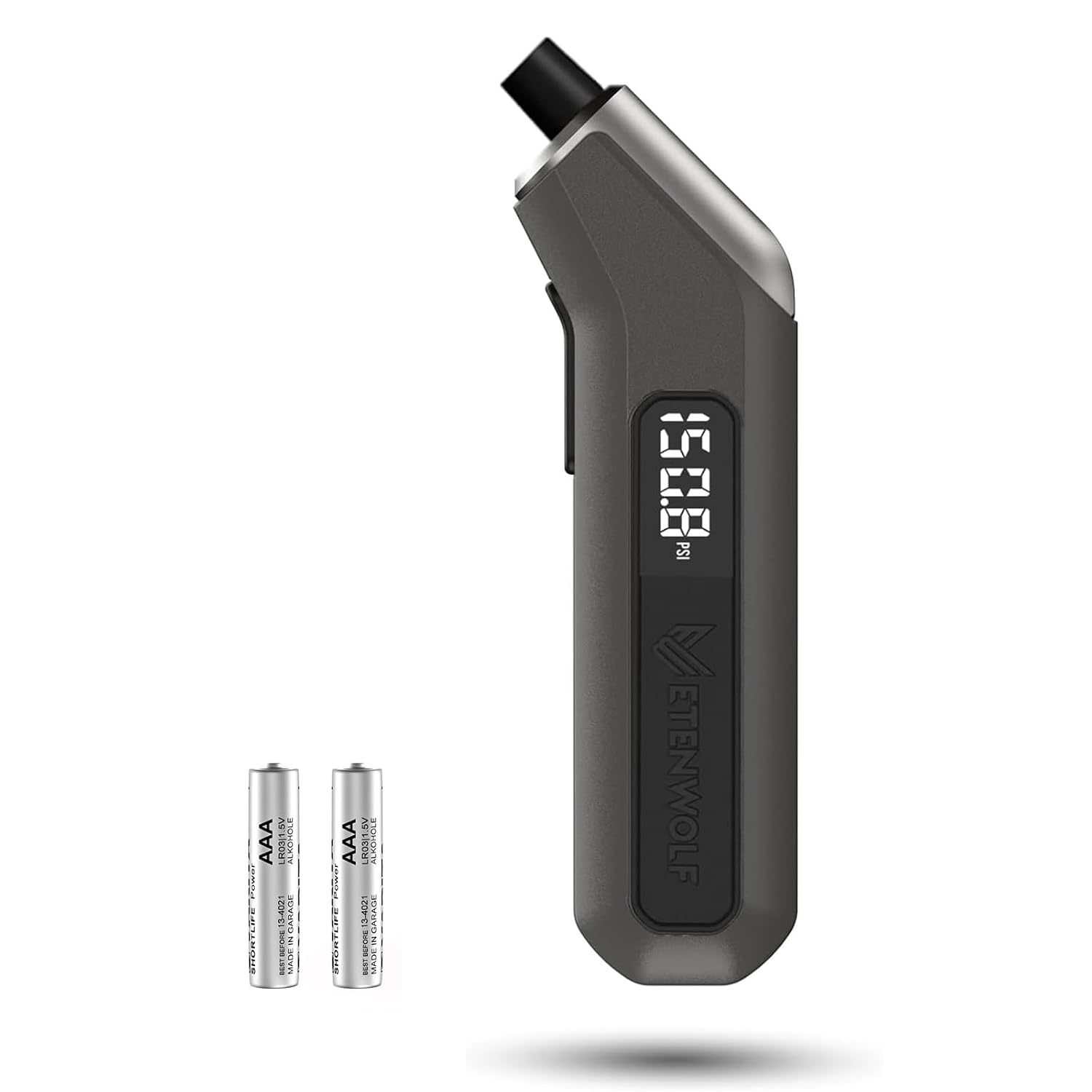
The ETENWOLF T300 digital tire pressure gauge delivers precise readings for cars, RVs, trucks, bikes, and heavy-duty vehicles with a wide measuring range and consistent accuracy. It is built to perform in extreme temperatures, includes a bright LED light for low-visibility use, and uses replaceable AAA batteries for convenient long-term operation. Durable enough to withstand rugged use, it is a practical tool for maintaining proper tire pressure across a variety of vehicles.
The Risks of Under-Inflation and Over-Inflation
Under-inflated tires carry weight poorly because the sidewalls flex more than they should. That extra flex creates heat, increases rolling resistance, and can damage the tire internally. It can also wear the outer shoulders of the tread faster and make steering feel soft or delayed.
Under-inflation is especially risky when the vehicle is loaded with passengers, tools, luggage, or trailer tongue weight. The tire may look normal from the outside while the casing is overheating inside. At highway speed, that heat can raise the risk of tread separation, rapid air loss, or blowout.
Over-inflated tires create a different problem. Too much pressure can crown the tread, concentrating more load near the center of the tire. This may reduce traction, make the ride harsher, and make the tire more vulnerable to damage from potholes, curbs, and road debris. Michelin notes that underinflation increases flexing and heat buildup, while overinflation can reduce traction and increase impact-damage risk.
Keeping tires at the recommended pressure can improve gas mileage by 0.6% on average and up to 3% in some cases, according to FuelEconomy.gov.
How to Maintain Proper Tire Pressure for Optimal Performance
Check tire pressure when the tires are cold. Cold means the vehicle has been parked for at least three hours or has only been driven a short distance at low speed. Heat from driving raises pressure temporarily, so a hot reading can make an under-inflated tire look closer to normal than it really is.
- Find the recommended cold PSI on the driver-side door placard or in the owner’s manual.
- Use a reliable tire pressure gauge before driving, not after a long highway trip.
- Check all four tires and the spare if your vehicle has one.
- Add air to any tire that is below the recommended cold PSI.
- If a tire is too high while cold, release air slowly and recheck with the gauge.
- Replace valve caps to help keep dirt and moisture out of the valve stem.
- Recheck pressure before long trips, heavy loads, towing, or major temperature swings.
Temperature changes matter. According to USTMA tire care guidance, tire pressure can change about 1–2 PSI for every 10°F change in temperature. That means a tire that was correct in warm weather can become low after a cold night.
Pro Tip: Keep a digital or dial gauge in the vehicle and check PSI in the morning. Gas-station gauges can be inaccurate, and checking after driving can hide a low cold-pressure condition.
[Products Worth Considering]

The Masoll M13 Tire Pressure Monitoring System helps monitor tire pressure for sedans, SUVs, pickup trucks, RVs, and travel trailers with four tires. It features automatic reference pressure calibration, alerting you when pressure changes fall outside the set range, while solar charging and auto wake-up support convenient everyday use. With precise pressure detection, an easy-to-read color LCD, and adaptive backlighting, it is designed to improve driving safety and help protect tire life.

Meguiar's PlastX Clear Plastic Cleaner & Polish restores clarity to uncoated plastic surfaces by reducing light scratches, haze, yellowing, and oxidation. Its versatile formula works on headlights, taillights, plexiglass, and other clear plastics while leaving a protective water-resistant finish for improved visibility and safer nighttime driving.
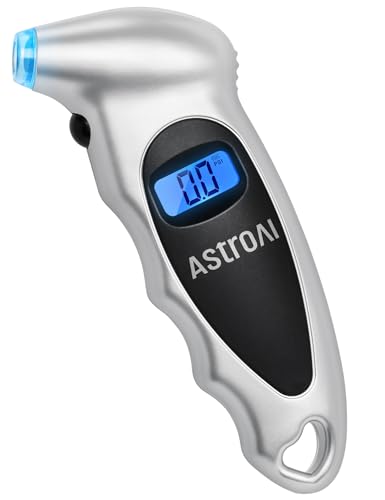
Accurate, Dependable Readings: Factory‑calibrated to ±1 PSI, so you can confidently match your vehicle’s recommended PSI (check the door jamb sticker). Ideal for monthly checks and road trips — consistent results every time, cold or warm.
Why You Should Regularly Check Your Tires?
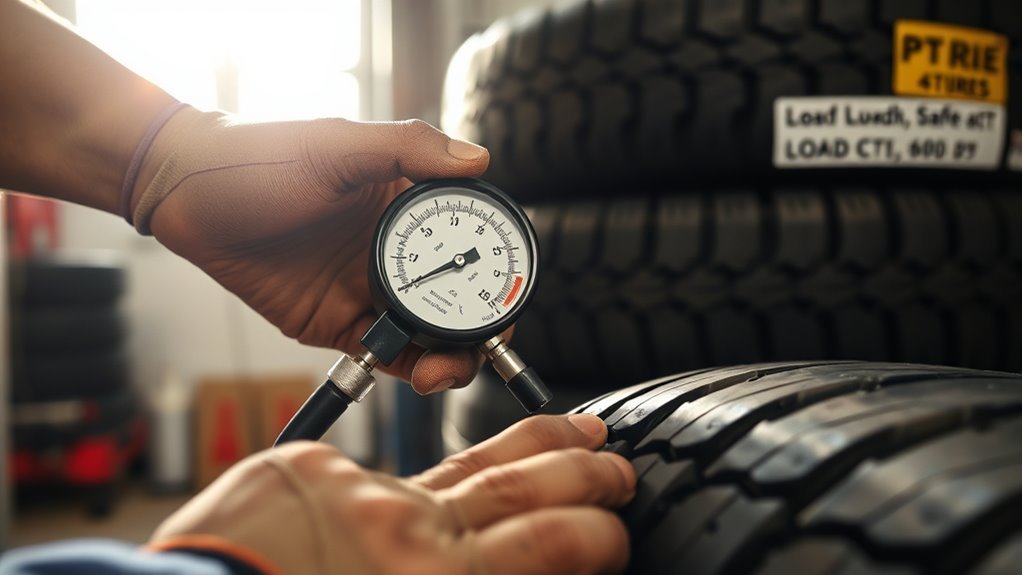
Regular tire checks protect safety, tire life, fuel economy, and load capacity. A tire can lose pressure slowly through normal air permeation, small punctures, valve-stem leaks, rim corrosion, or temperature changes. You may not notice the loss by sight alone.
During a monthly tire check, look at more than PSI. Inspect tread depth, uneven wear, cracks, bulges, cuts, exposed cords, embedded nails, and valve-stem damage. If one tire repeatedly loses pressure or looks different from the others, have it inspected before carrying a heavy load or driving at highway speed.
Do not wait for the TPMS light. Tire Pressure Monitoring Systems are helpful, but they are not a replacement for gauge checks. USTMA notes that TPMS warnings often occur when tires are already about 25% underinflated, which may be too late to prevent tire damage. Check pressure manually at least once a month and before long trips.
Proper inflation also supports fuel economy. FuelEconomy.gov reports that under-inflated tires can lower gas mileage by about 0.2% for every 1 PSI drop in the average pressure of all tires, while proper inflation is safer and helps tires last longer.
[Products Worth Considering]

RUGGED DESIGN: The stainless steel components prevent rust and corrosion while the precision-crafted nozzle seamlessly seals onto the valve stems for highly accurate readings (±2% span). We also provide 4 valve stem caps for convenient replacement.

HIGH ACCURACY: Every ETENWOLF's pencil tire gauge is calibrated to ANSI B40.1 Grade B, it is accurate to 2% of span in the middle 50% of range and 3% of span in the lower and upper 25% of range. Each ETENWOLF pencil tire pressure gauge is manually calibrated and has its unique calibration number printed on the pencil

PROCESS LEVEL ACCURACY: This heavy duty tire pressure gauge is calibrated manually to ANSI B40.1 Grade A (±1% of span)
Boosting Safety and Efficiency With Tire Management
Good tire management means matching pressure, load, speed, tire condition, and vehicle use. The more weight you carry, the more important that match becomes. A lightly loaded commuter car and a truck towing a trailer do not place the same demands on their tires.
Before carrying a heavy load, check three ratings:
- Payload capacity: the combined weight of passengers and cargo your vehicle can carry.
- GAWR: the gross axle weight rating for each axle.
- Tire load index or load range: the tire’s rated carrying capacity at the correct pressure.
For cars and many light trucks on original-size tires, the door placard is the best everyday reference. For RVs, trailers, commercial vehicles, or modified tire sizes, the safer method is to weigh the vehicle by axle and use a tire manufacturer’s load/inflation table. This helps avoid guessing and prevents one axle or one tire from being overloaded.
Central Tire Inflation Systems (CTIS) can help some commercial, off-road, agricultural, or specialty vehicles adjust pressure for changing surfaces and loads. For most passenger vehicles, though, the best system is still simple: check cold PSI with a gauge, stay within load limits, inspect the tread, and correct problems early.
When to Get Professional Help
Get a tire professional involved if you see bulges, exposed cords, sidewall cuts, vibration, repeated pressure loss, uneven wear, or damage after hitting a pothole or curb. Also get help if you changed tire size, installed LT tires on a vehicle that originally used passenger tires, tow near the vehicle’s limit, or are unsure how to read a load/inflation table.
Pressure can correct an inflation problem, but it cannot repair internal tire damage. If a tire has been driven while severely low, have it inspected even after you refill it. Heat damage can occur inside the tire where you cannot see it.
Frequently Asked Questions
What is the 3% rule for tires?
Do not use a generic “3% rule” to set tire pressure or increase load capacity. Tire load capacity does not scale safely by a simple percentage rule. Use the vehicle placard for original tire sizes, or use a tire manufacturer’s load and inflation table for replacement sizes, RVs, trailers, and heavy-duty applications.
How does tire pressure affect load rating?
Air pressure helps the tire maintain its shape under weight. Too little pressure allows excess sidewall flex and heat buildup, which can reduce safe load-carrying ability. The exact relationship depends on tire size, construction, load index, axle weight, and the applicable load/inflation table.
Is 40 PSI too much for tires marked 33 PSI on the placard?
If the vehicle placard recommends 33 PSI cold, 40 PSI cold is usually too high for normal driving unless the owner’s manual gives a separate loaded-vehicle pressure. A hot tire may read higher after driving, so do not bleed air from a hot tire just because it is above the cold placard number. Recheck when cold.
Does 10 lbs per tire make a difference?
Yes. Ten pounds of cargo per tire may not sound like much, but total vehicle load, axle balance, trailer tongue weight, and tire pressure all work together. The bigger issue is not one small item; it is cumulative weight that can push an axle or tire close to its rating.
Should I add more air when carrying a heavy load?
Check your owner’s manual first. Some vehicles list separate cold pressures for normal and fully loaded driving. If your tire size or use is outside the original setup, use actual axle weights and a load/inflation table instead of guessing. Never exceed the wheel, tire, or vehicle ratings.
Can I rely on the TPMS light?
No. TPMS is a safety warning, not a maintenance schedule. It may not alert you until a tire is significantly underinflated. Use a gauge at least monthly, before long trips, and before towing or hauling heavy cargo.
Conclusion
Tire pressure and load capacity are closely connected, but the safe answer is not a quick PSI formula. Use the cold PSI on your vehicle placard for normal driving, understand that the sidewall number is a maximum limit, and use load/inflation tables when weight, tire size, towing, or RV use changes the equation. Regular checks take only a few minutes, but they protect handling, braking, fuel economy, tire life, and your ability to carry a load safely.
Sources
- NHTSA TireWise — correct tire pressure, cold-pressure checks, placard guidance, TPMS basics, and blowout safety.
- USTMA Tire Care Essentials — monthly pressure checks, cold-tire timing, temperature effects, heavy-load checks, and TPMS limitations.
- Michelin Tire Safety Tips — underinflation, overinflation, heat buildup, traction, and impact-damage risks.
- FuelEconomy.gov Gas Mileage Tips — fuel-economy impact of proper and improper tire inflation.
- Toyo Tires Load & Inflation Tables — how load/inflation tables support optional replacement tire sizing and pressure selection.