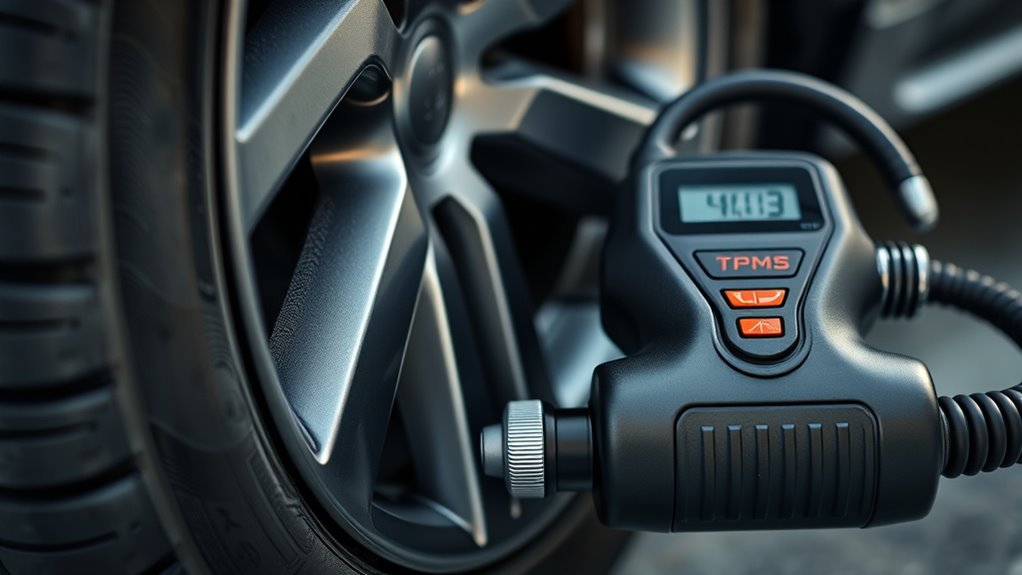
TPMS, or Tire Pressure Monitoring System, helps warn you when one or more tires are significantly under-inflated. It is a safety backup, not a replacement for checking tire pressure with a gauge. To keep your tires safe, use the PSI listed on your vehicle’s door placard or owner’s manual, check pressure when tires are cold, and use a tire inflator carefully when pressure is low.
Quick Answer
When your TPMS light comes on, pull over when safe, inspect the tires, check cold tire pressure with a gauge, and inflate each tire to the recommended PSI on the vehicle placard. If the light flashes, stays on after correction, or a tire looks damaged, have the system inspected by a mechanic.
Key Takeaways
- TPMS usually warns when a tire is significantly under-inflated, but the warning may not appear until pressure is already far below the recommended cold PSI.
- Use the PSI on the driver-side door placard or owner’s manual, not the maximum pressure printed on the tire sidewall.
- Check tire pressure at least once a month, before long trips, and when tires are cold.
- A solid TPMS light usually points to low pressure; a flashing light or a light that returns may indicate a sensor, relearn, or system problem.
- A tire inflator is useful, but a reliable tire pressure gauge is still the tool that confirms the tire is inflated correctly.
At a Glance
| Time Required | 5–15 minutes for a basic tire-pressure check and inflation |
| Difficulty | Easy for routine inflation; professional help if the light flashes or tire damage is visible |
| Tools Needed | Tire pressure gauge, tire inflator or air compressor, valve caps, owner’s manual or door placard PSI |
| Cost | Usually free to low-cost for air; higher if a TPMS sensor, valve stem, tire repair, or relearn service is needed |
Understanding the Importance of TPMS for Vehicle Safety

The Tire Pressure Monitoring System is designed to warn you when tire pressure becomes low enough to create a safety concern. Under federal TPMS rules, the system must warn when pressure in one or more tires is at or below the required low-pressure threshold, which is generally tied to 25% below the vehicle manufacturer’s recommended cold inflation pressure or a minimum pressure specified in the standard, whichever is higher.
Proper inflation matters because under-inflated tires can overheat, wear unevenly, reduce handling, and increase the chance of tire failure. It can also affect fuel economy. According to FuelEconomy.gov, keeping tires inflated to the proper pressure can improve gas mileage by 0.6% on average and up to 3% in some cases.
Note: TPMS is not a substitute for tire maintenance. A tire can be low before the warning light appears, so monthly pressure checks are still necessary.
How TPMS Works: Direct vs Indirect Monitoring Systems
There are two main TPMS designs: direct TPMS and indirect TPMS. Both help alert you to low tire pressure, but they gather information in different ways.
| Type | How It Works | What to Know |
|---|---|---|
| Direct TPMS | Uses a pressure sensor in each wheel to measure tire pressure directly. | Usually gives more specific pressure information, but sensors have batteries and may need replacement over time. |
| Indirect TPMS | Uses wheel-speed data, often through the ABS system, to estimate when a tire is rolling differently because pressure is low. | May need recalibration after tire inflation, rotation, or replacement. |
NHTSA describes direct systems as using tire-pressure sensors and indirect systems as estimating inflation from wheel-speed differences. That means a direct system may show individual tire PSI, while an indirect system may simply alert you that pressure needs attention.
Common Reasons Your TPMS Warning Light Activates
A TPMS warning light does not always mean you have a puncture, but it should never be ignored. Common causes include:
- Low tire pressure: Natural air loss, a slow leak, or cold weather can drop pressure below the warning threshold.
- Temperature changes: Tire pressure often rises or falls about 1–2 psi for every 10°F temperature change, according to Goodyear tire inflation guidance.
- Tire damage: Nails, valve-stem leaks, cracked rubber, bulges, or sidewall damage can cause pressure loss.
- Recent tire service: Tire rotation, replacement tires, new wheels, or winter tire swaps may require a TPMS reset or relearn.
- Sensor or system malfunction: A flashing TPMS light or a warning that returns after proper inflation may point to a dead sensor battery, damaged sensor, or communication problem.
Warning: Do not keep driving on a tire that looks flat, has a sidewall bulge, shows exposed cords, smells hot, or loses air again quickly after inflation. Stop safely and get roadside help or professional tire service.
What to Do When Your TPMS Light Comes On?
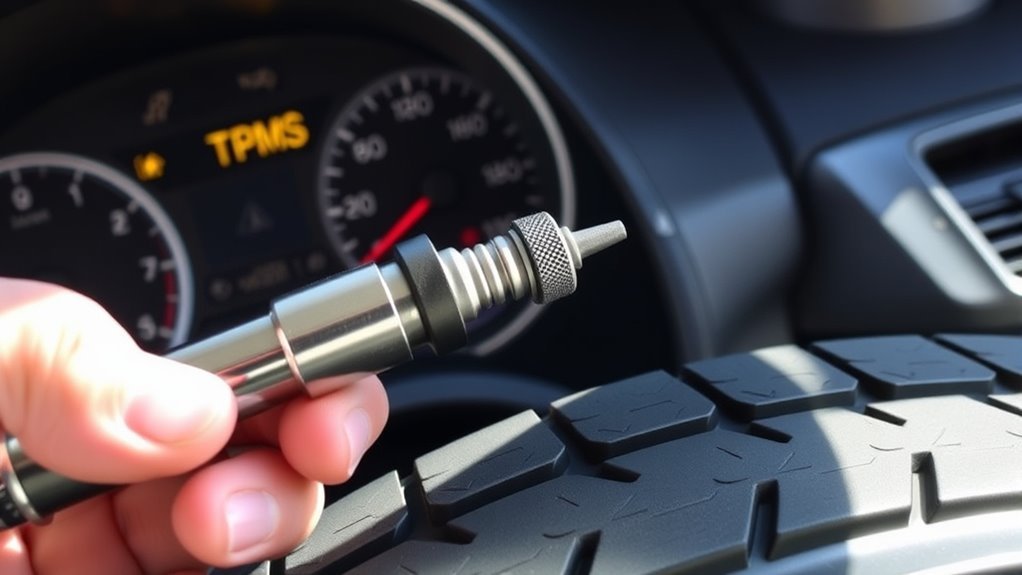
When the TPMS light comes on, treat it as a prompt to check your tires as soon as it is safe. A steady light usually points to low tire pressure. A flashing light, or a light that flashes and then stays on, often indicates a TPMS malfunction or a sensor issue.
[Products Worth Considering]

This AstroAI digital tire pressure gauge delivers factory-calibrated readings with dependable ±1 PSI accuracy, helping you keep cars, trucks, motorcycles, and spare tires at the right pressure. Its bright backlit LCD and illuminated nozzle make nighttime checks easy, while the one-button unit switch and auto-off design add convenience and battery efficiency for routine maintenance.
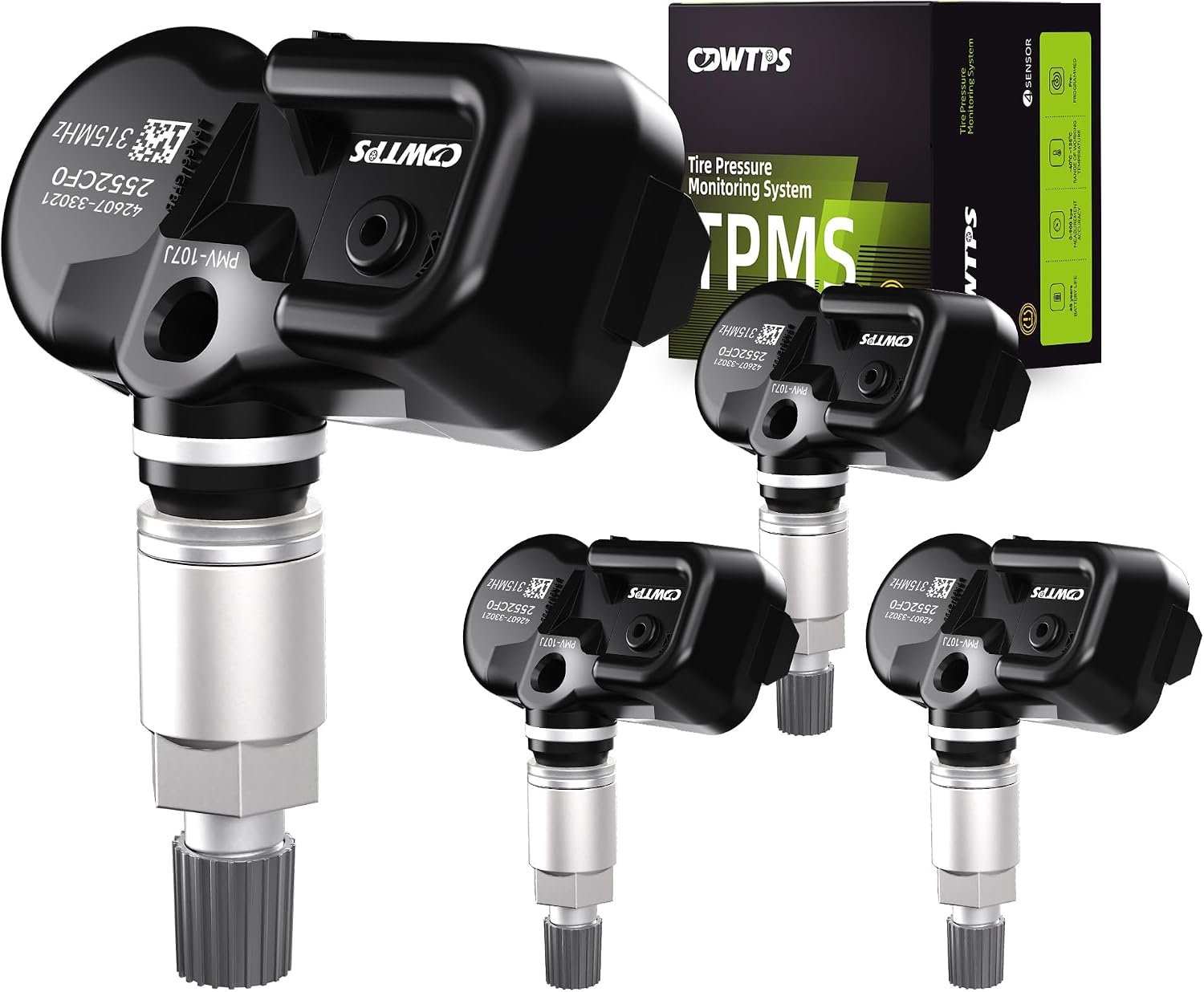
This set of four pre-programmed TPMS sensors is designed as a direct-fit replacement for compatible Toyota, Lexus, and Scion vehicles. It helps restore accurate tire pressure monitoring without sensor programming, and each unit is factory-tested for dependable performance. Built for long service life, these sensors offer a convenient solution for replacing worn or failed tire pressure monitors.

This CARORAV TPMS sensor set provides reliable tire pressure monitoring for a wide range of Toyota and Lexus vehicles with 315MHz compatibility. It is pre-programmed for easier setup, but still requires relearning or reset procedures after installation. Designed for accurate real-time pressure tracking, these sensors help support safer driving and long-lasting performance across many model years.
Safely Pull Over
Reduce speed smoothly and pull over in a safe place. Walk around the vehicle and look for a visibly low tire, puncture, sidewall bulge, cut, or object stuck in the tread. If a tire looks unsafe, do not rely on an inflator as a permanent fix.
Check Tire Pressure
Use a reliable tire pressure gauge on each tire. For the most accurate reading, check pressure when tires are cold. NHTSA recommends checking tires at least once a month and notes that the correct cold PSI is found on the tire information placard or in the owner’s manual, not on the tire sidewall.
- Find the recommended cold tire PSI on the driver-side door placard or owner’s manual.
- Remove the valve cap and press the tire pressure gauge firmly onto the valve stem.
- Compare the reading with the recommended PSI for that tire position.
- If pressure is low, add air with a tire inflator in short bursts.
- Recheck with the gauge until the tire reaches the recommended pressure.
- Replace the valve cap to help keep moisture and debris out of the valve core.
- Repeat for all tires, including the spare if your vehicle has one.
Reset or Drive If Required
After correcting tire pressure, some vehicles turn the TPMS light off automatically after a short drive. Others require a reset button, dashboard menu, or relearn procedure. Follow the owner’s manual. If you use winter wheels or replace sensors, a shop may need to program or relearn the sensors.
Seek Professional Help
If the TPMS light remains on after all tires are correctly inflated, or if it flashes before staying on, have the system inspected. The issue may be a sensor battery, damaged valve-stem sensor, incompatible wheel, failed relearn, or another system fault.
| Warning Sign | Likely Meaning | Best Action |
|---|---|---|
| Solid TPMS light | One or more tires may be under-inflated. | Check all tires with a gauge and inflate to the placard PSI. |
| Flashing light | Possible TPMS malfunction or sensor communication issue. | Check pressure first, then schedule diagnosis if the warning continues. |
| Light returns after inflation | Slow leak, faulty valve stem, puncture, or sensor issue. | Inspect the tire and have it repaired or tested. |
TPMS and Tire Inflators: Their Role in Tire Pressure Maintenance
TPMS tells you when tire pressure needs attention; a tire inflator helps you correct low pressure. The safest approach is to use both with a separate gauge: TPMS gives the alert, the gauge confirms the actual pressure, and the inflator adds air only as needed.
[Products Worth Considering]

These aluminum alloy tire valve stem caps provide durable, corrosion-resistant protection for your vehicle’s valve stems while helping maintain stable tire pressure. The rubber seal design helps block dust, moisture, and debris, reducing the risk of air leakage and valve damage. Easy to install and styled for a clean look, they fit a range of cars, SUVs, trucks, and motorcycles.

This set of four pre-programmed TPMS sensors is designed to restore accurate tire pressure monitoring for a wide range of Toyota, Lexus, and Scion vehicles. Built to OE-quality standards with long battery life and broad compatibility, these sensors help maintain proper tire pressure, improve safety, and eliminate TPMS warning lights when installed and activated correctly.

These metal tire valve stem caps are designed to protect tire valves from dust, moisture, corrosion, and air leakage while adding a clean, stylish look to your wheels. Made from durable aluminum alloy with rubber sealing rings, they are easy to install without tools and help support stable tire pressure for safer driving.
Importance Of Tire Pressure
Correct tire pressure supports steering response, braking, tread wear, fuel economy, and ride quality. Low pressure makes the tire flex more, which creates heat. Too much pressure can also cause uneven wear and make the tire more vulnerable to impact damage.
The right PSI is the vehicle manufacturer’s recommended cold inflation pressure, not the maximum pressure printed on the tire sidewall.
Types Of Tire Inflators
Most drivers use one of three tire inflator types:
- Portable 12-volt inflators: Compact units that plug into a vehicle power outlet. Good for roadside top-offs.
- Battery-powered inflators: Convenient and cordless, but battery charge matters.
- Garage air compressors or service-station air pumps: Faster for multiple tires, but you still need a gauge to confirm the final PSI.
Some inflators include a built-in gauge and automatic shutoff. These features help, but it is still smart to verify final pressure with a separate, trusted tire pressure gauge.
Best Practices For Maintenance
Keep a pressure gauge and portable inflator in your vehicle, especially before road trips. Check the inflator hose, power cord, battery, and fittings occasionally so the tool works when you need it. Replace missing valve caps and inspect valve stems for cracks or leaks.
Pro Tip: Check pressure in the morning before driving. Driving heats the tires, and warm-tire readings can be higher than true cold pressure.
Using Tire Inflators: Best Practices
Use a tire inflator slowly and recheck often. Over-inflating a tire can cause uneven wear and poor ride quality, while under-inflating leaves the original safety problem unresolved.
| Step | Why It Matters |
|---|---|
| Find the placard PSI | This is the pressure your vehicle was designed to use. |
| Check pressure with a gauge | TPMS tells you there is a problem; the gauge tells you the number. |
| Add air in short bursts | This helps prevent over-inflation. |
| Recheck and adjust | A final gauge reading confirms the tire is at the correct PSI. |
| Replace the valve cap | Valve caps help keep dirt and moisture out of the valve core. |
[Products Worth Considering]

Be ready for roadside emergencies with this comprehensive car safety kit designed to help you handle common breakdown situations quickly and confidently. It includes a portable air compressor for fast tire inflation, jumper cables for dead batteries, and a self-contained emergency set with essential tools and first aid supplies. Built for all-weather preparedness, this kit helps keep drivers, passengers, and families safer on the road.

Add a touch of sparkle while helping protect your tire valves from dust, water, and sand with these handmade rhinestone valve stem caps. Designed for easy hand installation and a universal fit for many cars, trucks, motorcycles, and bicycles, they combine decorative style with practical sealing performance. The durable ABS construction with rubber seals helps support a tighter fit and helps reduce the risk of air leakage.

This set of four ignition coils is designed to restore smooth engine performance and reliable starting for compatible Toyota, Scion, and Lexus applications. Built to meet or exceed OE specifications, these coil packs help reduce misfires, hesitation, and check engine light issues while supporting stronger ignition output. The direct-fit design makes installation straightforward, and the package includes a warranty for added peace of mind.
Essential TPMS Maintenance Tips
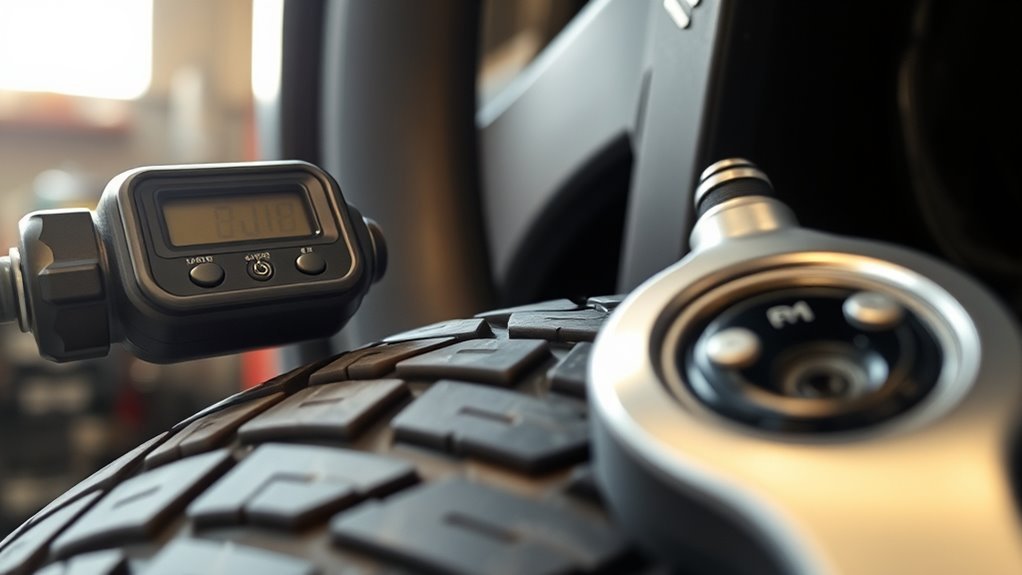
Good TPMS maintenance starts with good tire maintenance. Check the pressure monthly, before long trips, and during major weather changes. Tires can lose air naturally over time, and cold weather can lower pressure enough to trigger the TPMS light.
- Check all tires: Include the spare if your vehicle has one. Some TPMS systems do not monitor the spare.
- Know your system: Direct TPMS may use battery-powered sensors; indirect TPMS may need recalibration after tire service.
- Watch sensor age: TPMS sensor batteries are sealed. REDI-Sensor notes a typical operational lifespan of 5 to 10 years, depending on sensor type, use, and conditions.
- Relearn after changes: Tire rotation, replacement wheels, winter tires, or new sensors may require a TPMS reset, relearn, or programming step.
- Inspect valve stems: A damaged TPMS valve stem can leak air even if the tire itself is fine.
If the TPMS light stays on after you correct pressure, do not keep resetting it without finding the cause. A persistent warning may be a slow leak, a failed sensor, or an issue with the tire/wheel setup.
When to Call a Mechanic for TPMS Problems?
Call a mechanic or tire technician when the warning does not clear after proper inflation, the light flashes, the same tire repeatedly loses air, or you recently changed wheels or tires and the system no longer reads correctly.
| Problem | Possible Cause | Action Needed |
|---|---|---|
| TPMS light stays on | Low pressure, slow leak, failed reset, or sensor issue | Check pressure, inspect tires, then seek diagnosis if unresolved |
| Light flashes | TPMS malfunction or sensor communication issue | Have sensors and system scanned |
| Warning after new tires or rotation | Reset or relearn needed | Follow manual or visit a tire shop |
| Visible tire damage | Puncture, sidewall damage, impact damage, or separation | Do not drive far; get professional tire inspection |
Frequently Asked Questions
Can TPMS sensors be reset after tire rotation?
Yes. Some vehicles reset automatically after a short drive, while others need a reset button, dashboard menu, scan tool, or relearn procedure. Direct TPMS systems may need sensor positions relearned after rotation. Indirect TPMS systems often need recalibration after pressure is corrected or tires are rotated.
How often should I check my tire pressure?
Check tire pressure at least once a month, before long trips, before towing or carrying heavy loads, and when the weather changes sharply. Use a gauge when tires are cold for the most accurate reading.
What tire pressure is recommended for my vehicle?
Use the recommended cold tire pressure printed on the driver-side door placard, glove-box label, fuel-door label, trunk label, or owner’s manual. Do not use the maximum pressure printed on the tire sidewall as your normal inflation target.
Do winter tires require different TPMS settings?
Winter tires do not automatically require a different pressure just because they are winter tires. Use the vehicle manufacturer’s recommended cold PSI unless your vehicle or tire manufacturer gives a specific alternate recommendation. If winter tires are mounted on separate wheels, the wheels may need compatible TPMS sensors and a relearn procedure.
Can low tire pressure affect my vehicle’s handling?
Yes. Low tire pressure can make steering feel sluggish, increase heat buildup, reduce stability, affect braking, and cause uneven tread wear. It can also lower fuel economy and increase the risk of tire failure.
Why did my TPMS light come on after a cold night?
Cold air contracts, so tire pressure can drop as temperatures fall. If your tires were already near the low-pressure threshold, a cold night can be enough to trigger the TPMS light. Check and adjust pressure when the tires are cold.
Can I drive with the TPMS light on?
You should check tire pressure as soon as it is safe. If a tire looks flat, damaged, or loses air quickly, do not continue driving normally. If all tires are correctly inflated and the light remains on, drive cautiously and schedule service to diagnose the TPMS issue.
Does TPMS check the spare tire?
Sometimes. Some vehicles monitor the spare tire and some do not. Check your owner’s manual and manually check the spare’s pressure regularly, especially before long trips.
Conclusion
Maintaining proper tire pressure is one of the simplest ways to protect your vehicle’s handling, tire life, fuel economy, and safety. TPMS is valuable because it warns you when pressure becomes dangerously low, but it should work alongside regular gauge checks and proper use of a tire inflator. Check the placard PSI, inspect tires for damage, inflate carefully, and call a mechanic when the warning light flashes, returns, or stays on after the tires are correctly inflated.
Sources
- eCFR — 49 CFR § 571.138, Standard No. 138; Tire Pressure Monitoring Systems — TPMS definition, warning threshold, malfunction behavior, and compliance scope.
- NHTSA Tire Safety Brochure — monthly tire-pressure checks, cold-pressure guidance, tire placard location, and spare tire checks.
- FuelEconomy.gov — Keeping Your Vehicle in Shape — fuel-economy impact of proper tire inflation.
- NHTSA FMVSS 138 Tire Pressure Monitoring System Analysis — direct vs indirect TPMS explanation.
- Goodyear Tire Inflation Pressure Guidance — cold-tire measurement, temperature effects, valve caps, and inflation best practices.
- REDI-Sensor — Understanding TPMS Batteries — typical TPMS sensor lifespan and sealed battery information.