The duty cycle of a tire inflator tells you how long the compressor can safely run before it needs a rest period. It matters because small inflators build heat quickly, especially when filling large tires, topping off several tires in a row, or working near the inflator’s maximum pressure. The safest rule is simple: follow your model’s manual first, and when you do not know the rating, stop often and let the unit cool.
Quick Answer
A tire inflator’s duty cycle is its safe run time compared with its required cool-down time. Many compact inflators need a break after about 10 to 15 minutes, but heavy-duty models vary widely. Always use the duty cycle printed in your manual or spec sheet.
Key Takeaways
- Duty cycle is not the same as maximum PSI. It is the safe run/rest limit for the compressor.
- A 33% duty cycle usually means the inflator runs for one-third of the rated cycle and rests for the rest.
- Compact tire inflators often need short cool-down breaks; heavy-duty inflators may have longer ratings.
- Power source does not decide duty cycle. Corded, battery-clamp, and cordless inflators can all have run-time limits.
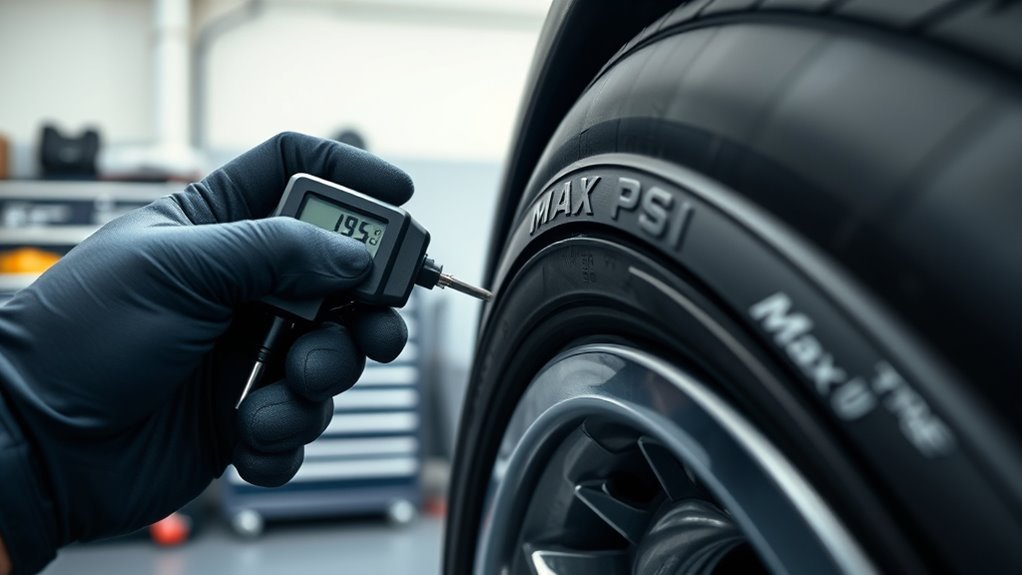
- Inflate tires to the vehicle’s cold tire pressure on the door-jamb label or owner’s manual, not the tire sidewall maximum.
At a Glance
| Time Required | Usually 3 to 20 minutes per tire, plus any manual-required cool-down time |
| Difficulty | Easy, but heat management is important |
| Tools Needed | Tire inflator, tire pressure gauge, vehicle placard or owner’s manual, timer |
| Cost | $0 if you already own the inflator; possible repair or replacement cost if overheated |
What Is a Tire Inflator Duty Cycle?

A tire inflator duty cycle is the amount of time the compressor can run during a complete run-and-rest cycle. VIAIR explains duty cycle as the compressor’s run time and rest time within a full cycle, typically measured over one hour.
For example, a 33% duty cycle often means the compressor can run for about one-third of the rated cycle and should rest for the remaining two-thirds. If that rating is based on a 60-minute cycle, that would be about 20 minutes of run time and 40 minutes of rest.
The exact number can change by model, pressure, and test conditions. A rating such as “33% at 100 PSI” is not the same as “33% at 30 PSI.” Higher pressure usually makes the compressor work harder and build heat faster.
Note: If your manual gives a specific instruction such as “run 10 minutes, cool 15 minutes,” follow that instruction instead of calculating your own schedule.
Why Understanding Duty Cycle Matters for Your Tire Inflator
Duty cycle matters because tire inflators are small compressors, and compressors create heat. When heat builds faster than the motor, piston, seals, hose, and wiring can handle, the inflator may slow down, shut off, melt parts, or fail completely.
Knowing the duty cycle helps you plan the job. Topping off one passenger-car tire may take only a minute or two. Inflating a large truck, RV, trailer, or off-road tire can take much longer and may require several cool-down breaks.
It also keeps your pressure reading more reliable. A hot compressor may lose efficiency, and a hot tire can read higher than it will when cold. For tire safety, use the vehicle manufacturer’s recommended cold tire pressure from the door-jamb Tire and Loading Information Label or owner’s manual. NHTSA specifically warns that the correct pressure is the vehicle manufacturer’s cold inflation pressure, not the maximum pressure molded into the tire sidewall.
How to Find Your Inflator’s Duty Cycle Rating
The most reliable place to find the duty cycle is your product manual, specification label, or manufacturer product page. Look for phrases such as:
- Duty cycle: 25%, 33%, 50%, or 100%
- Maximum run time: for example, “do not run more than 10 minutes”
- Cool-down time: for example, “allow 15 minutes to cool”
- Rating condition: for example, “33% at 100 PSI”
- Thermal protection: automatic shutoff or thermal overload protection
Some manufacturers list duty cycle as a percentage, while others give direct run and rest instructions. Both formats are useful, but direct manual instructions are easier and safer for most users.
[Products Worth Considering]
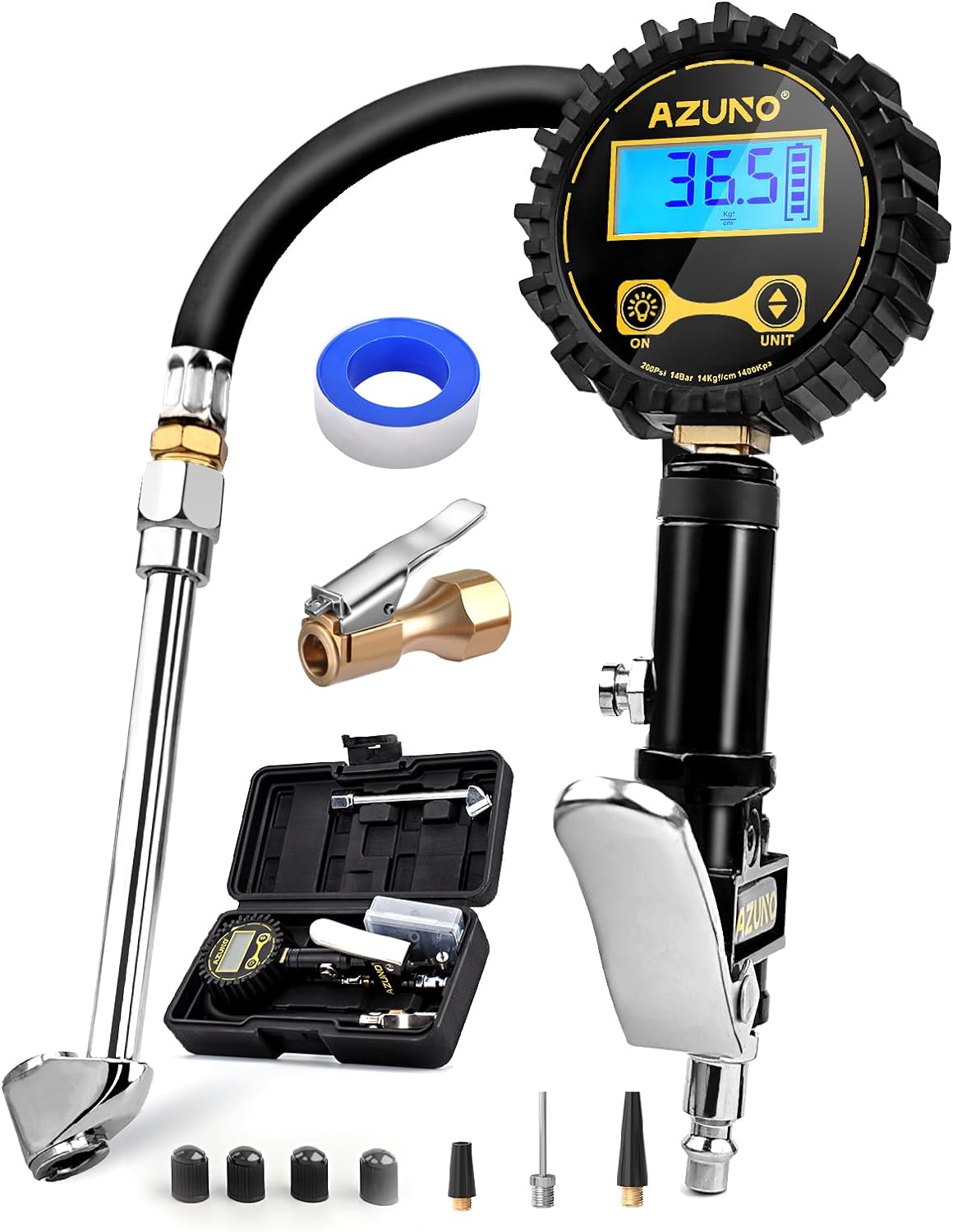
This digital tire inflator delivers accurate, easy-to-read pressure measurements with a bright backlit LCD and precise 0.1 resolution for confident inflation. Designed for single-handed use, it makes it simple to inflate or deflate tires while staying organized in the included portable carrying box. Built for a wide range of vehicles, it is a practical air compressor accessory for cars, trucks, SUVs, motorcycles, and more.

Febreze Car air freshener helps keep your vehicle smelling clean by fighting strong odors and releasing a fresh scent through your air vents. Its easy clip-on design provides continuous fragrance for up to 40 days per vent clip, with adjustable intensity for a customized experience. The crisp Unstopables Fresh aroma makes daily drives more enjoyable and also makes a practical gift for car owners.

The OXILAM jump starter delivers powerful emergency starting performance for gas engines and up to 12L diesel engines, helping revive dead batteries in seconds. It also doubles as a portable power bank and LED flashlight, with USB and Type-C ports for convenient device charging. Built with multiple safety protections, a clear LED display, and a rugged portable design, it is a reliable roadside companion for cars, trucks, motorcycles, and more.
Calculating Your Tire Inflator Duty Cycle: A Step-by-Step Guide
You can calculate duty cycle when you know the run time and rest time. Use this formula:
Duty Cycle (%) = Run Time ÷ (Run Time + Rest Time) × 100
| Run Time | Rest Time | Duty Cycle | What It Means |
|---|---|---|---|
| 5 minutes | 15 minutes | 25% | Short use, longer cool-down |
| 10 minutes | 20 minutes | 33% | Common style of rating for smaller compressors |
| 15 minutes | 15 minutes | 50% | Equal work and rest |
| 15 minutes | 5 minutes | 75% | Longer run, shorter cool-down |
| 60 minutes | 0 minutes | 100% | Continuous-duty rating under the stated conditions |
Do not assume a 100% rating unless your inflator’s documentation clearly says so. If the label does not list a duty cycle, treat the inflator as an intermittent-use tool and give it cooling breaks during longer jobs.
Common Duty Cycle Ratings for Tire Inflators Explained
Tire inflator duty cycles vary widely. Small 12-volt inflators may list a short maximum run time, while larger battery-clamp or off-road compressors may publish percentage ratings at a specific PSI.
For example, the VIAIR 400P Portable Compressor lists a 33% duty cycle at 100 PSI. That does not mean every tire inflator has a 33% duty cycle; it means that specific model has that rating under that pressure condition.
Other compact inflators use direct warnings. One Harbor Freight portable inflator manual warns not to run the unit more than 15 minutes at a time and to let it cool for 5 minutes afterward. That is a practical run/rest instruction rather than a percentage printed on the box.
Warning: Do not keep running an inflator just because it is still moving air. If it smells hot, sounds different, slows down, or becomes too hot to touch, stop and let it cool.
[Products Worth Considering]

This portable tire inflator delivers fast, convenient inflation for cars, bikes, motorcycles, and balls with dual power options from a rechargeable battery or a 12V car cord. Its digital LCD pressure gauge and automatic shutoff help prevent over-inflation, while multiple preset modes and a custom setting make it easy to use for different inflation tasks. Built-in flashlight and USB power ports add extra emergency utility on the road.

ADVANCED TRUEGAUGE SCREEN: This battery tire inflator includes updated sensor technology, capable of collecting pressure data from tire inflators at a frequency of 200 times per second. Its valid data rate is higher than 80%, which is 60% better than the market average. From routine maintenance to roadside emergencies, its accurate readings ensure confident pressure checks and a safer driving experience.Suitable as a Father's Day gift for your dad.

ETENWOLF Vortex S6 cordless air compressor excels at inflating heavy-duty vehicles quickly, such as pickups, trucks, off-road vehicles, not to mention regular cars, bicycles, balls, pool floats, and air mattresses(Not for SUPs)
What Affects a Tire Inflator’s Duty Cycle?
The printed duty cycle is only part of the story. Real-world run time can change based on the job and conditions.
- Target pressure: Higher PSI makes the compressor work harder.
- Tire size: Large truck, RV, trailer, and off-road tires need more air volume than small passenger-car tires.
- Starting pressure: A tire that is nearly flat takes much longer than a tire that is only 3 PSI low.
- Ambient temperature: Hot weather can reduce the safe working window because the compressor starts warmer.
- Power supply: Weak vehicle voltage or a low battery can make the inflator strain.
- Airflow around the compressor: A unit sitting in direct sun, a hot trunk, or a cramped space may cool slowly.
Identifying Signs of Overuse in Your Tire Inflator
Most inflators give warning signs before they fail. Watch for heat, sound changes, slower inflation, and automatic shutoff.
Excess Heat Emission
Heat is the biggest clue that your inflator is being pushed too hard. The compressor body, hose fitting, chuck, and metal adapters can become hot during normal use, but they should not be ignored.
- Warm compressor casing: Warm is expected; too hot to comfortably touch means it needs a break.
- Hot hose or chuck: Avoid touching metal fittings immediately after use.
- Burning smell: Stop immediately and disconnect power.
Unusual Noises During Operation
A steady compressor sound is normal. A sudden rattle, grinding noise, squeal, or rough vibration can point to mechanical stress, low voltage, loose parts, or overheating.
If the sound changes suddenly, switch the inflator off. Let it cool, inspect the hose and chuck, and do not keep using it if the abnormal noise returns.
Extended Inflation Times
If the same tire suddenly takes much longer to fill than usual, the inflator may be overheating, leaking at the chuck, or struggling with a weak power source. Stop and check:
- The air chuck is fully seated on the valve stem.
- The hose is not kinked or leaking.
- The vehicle or battery power source is strong enough for the inflator.
- The inflator has not exceeded its run-time limit.
How to Use Your Tire Inflator Safely
Safe use starts before you turn the compressor on. Use this process whenever you inflate vehicle tires:
- Find the correct PSI. Use the Tire and Loading Information Label on the driver’s door jamb or the owner’s manual. Do not use the tire sidewall maximum as your target pressure.
- Check the tire when cold if possible. A cold tire is one that has not been driven on for at least three hours.
- Read the inflator’s duty-cycle instructions. Look for maximum run time, cool-down time, and pressure conditions.
- Connect power correctly. Use the correct outlet, battery clamp, or battery pack for your inflator.
- Attach the chuck securely. A leaking connection wastes time and makes the compressor run hotter.
- Inflate in short sessions. Use a timer if your manual lists a run-time limit.
- Recheck pressure with a gauge. Built-in gauges are convenient, but a separate tire pressure gauge is often easier to verify.
- Let the unit cool before storage. Do not pack a hot hose or compressor into a bag immediately.
Warning: If your inflator manual says to run the vehicle engine for power, do it only outdoors or in a well-ventilated area. Never run a vehicle engine inside a garage or enclosed space because carbon monoxide can be deadly.
How Long Can You Run Your Tire Inflator Continuously?
You can run a tire inflator continuously only as long as its manual allows. For many compact models, that may be around 10 to 15 minutes. For some heavy-duty compressors, the rating may be longer or shown as a duty-cycle percentage.
If you do not have the manual, use a conservative approach: run the inflator for a few minutes at a time, monitor heat, and allow cooling breaks during multi-tire jobs. This is especially important when filling large tires or raising pressure by more than a few PSI.
The manual is more important than the marketing label. Maximum PSI tells you what pressure the inflator may reach; duty cycle tells you how long it can safely work.
Corded vs. Cordless Tire Inflators: Duty Cycle Comparison
Corded and cordless inflators differ in power source, but the power source alone does not tell you the duty cycle.
| Inflator Type | Strengths | Duty-Cycle Caution |
|---|---|---|
| 12V accessory-port inflator | Easy to keep in a car; useful for small top-offs | Often has short run-time limits; can strain weak vehicle outlets |
| Battery-clamp inflator | Usually stronger than small accessory-port units | Still must follow the listed duty cycle and fuse rating |
| Cordless inflator | Portable and convenient away from the vehicle | Limited by battery charge and thermal protection |
| Heavy-duty off-road compressor | Better for large tires and repeated inflation | Ratings often depend on PSI and ambient temperature |
For example, Slime lists a cordless tire inflator that can fill a standard car tire from flat to full in 8 minutes and fill three tires on one charge. That is a battery-performance claim, not a universal duty-cycle rule for every cordless inflator.
Tips for Extending the Lifespan of Your Tire Inflator
- Respect the duty cycle. Overrunning the compressor is the fastest way to shorten its life.
- Start with a secure valve connection. A leak makes the inflator work longer than necessary.
- Keep the intake area clear. Dust, carpet fibers, and debris can reduce cooling airflow.
- Store it dry. Moisture can damage electrical parts and metal fittings.
- Protect the hose. Avoid kinks, hot compressor heads, and prolonged UV exposure.
- Do not use it for jobs it was not built for. A compact tire inflator is not a shop compressor.
Pro Tip: When inflating all four tires, rotate around the vehicle instead of fully finishing one tire and immediately moving to the next. Short bursts with brief pauses help the compressor shed heat.
What to Do if Your Inflator Overheats or Shuts Off
Many modern inflators include thermal protection, but you should not rely on it as your normal stopping point. If the inflator overheats or shuts off:
- Turn the inflator off.
- Disconnect it from power if the manual says to do so.
- Let it cool in open air for the manual-recommended time.
- Check the hose, chuck, and power cord for damage.
- Restart only after it has cooled and the cause is clear.
If the inflator repeatedly shuts off, smells burnt, trips a fuse, or makes abnormal noise, stop using it until it can be inspected or replaced.
Duty Cycle Examples and Common Questions
Here are simple examples to make the ratings easier to understand:
| Rating | Example Run Time | Example Rest Time | Best Use |
|---|---|---|---|
| 25% | 5 minutes | 15 minutes | Small top-offs and light use |
| 33% | 10 minutes | 20 minutes | Moderate use, depending on PSI rating |
| 50% | 15 minutes | 15 minutes | Longer top-offs with equal rest |
| 100% | Continuous during rated cycle | No required rest under stated conditions | Only when the manufacturer clearly lists continuous duty |
These examples are for understanding the math. Your inflator’s manual always overrides example tables.
Frequently Asked Questions
How long can an air compressor run continuously?
It depends on the compressor. A small tire inflator may need a break after 10 to 15 minutes, while a heavier-duty compressor may list a percentage rating such as 33% at 100 PSI or a continuous-duty rating. Always follow the manual for your exact model.
What is a good duty cycle for an air compressor?
A good duty cycle depends on the job. For occasional tire top-offs, a short-duty compact inflator may be fine. For trucks, RVs, off-road tires, or repeated use, look for a higher duty cycle, stronger airflow rating, and clear thermal protection.
What does a 70% duty cycle mean?
A 70% duty cycle means the compressor can run for 70% of the rated cycle and should rest for the remaining 30%. If the rating is based on one hour, that equals 42 minutes of run time and 18 minutes of rest, under the manufacturer’s stated conditions.
What happens if I do not break in my air compressor?
Some shop air compressors have a break-in procedure, but many small tire inflators do not. If your manual includes break-in steps, follow them before normal use. If it does not, focus on the listed duty cycle, correct power supply, clean airflow, and cool-down periods.
Can I use a tire inflator on all four tires at once?
Yes, but do it in short sessions. If all four tires are low, inflate one tire for a few minutes, pause, move to the next tire, and watch the compressor temperature. If the manual lists a maximum run time, stop before you reach it.
Is a 100 PSI inflator stronger than one with a better duty cycle?
Not necessarily. Maximum PSI only tells you the pressure the inflator may reach. Duty cycle and airflow tell you more about how well it can handle longer inflation jobs. For large tires, duty cycle and airflow are often more useful than maximum PSI alone.
Conclusion
A tire inflator’s duty cycle is the safety limit that keeps the compressor from overheating. Instead of assuming every inflator can run for 15 minutes, check your manual for the exact run time, cool-down time, and pressure rating. Use the vehicle’s cold tire pressure, stop when the inflator gets hot or sounds unusual, and give compact units plenty of rest during multi-tire jobs. A few extra cooling minutes can prevent a burned-out inflator and make your tire maintenance safer.
Sources
- NHTSA TireWise tire safety guide — backs cold tire pressure and vehicle placard guidance.
- VIAIR FAQ — backs duty-cycle definition and engine-voltage guidance.
- VIAIR 400P Portable Compressor specifications — backs duty-cycle example at 100 PSI.
- Slime Digital Pro Power Tire Inflator — backs thermal break and manufacturer safety-feature example.
- Slime Cordless Tire Inflator — backs cordless inflator battery and fill-time example.
- Harbor Freight portable inflator manual — backs run-time, cool-down, hot-part, and carbon monoxide cautions.