A tire inflator is a compact air pump that lets you add air to a low tire at home, in a garage, or during a roadside emergency. It is useful for routine tire-pressure maintenance, but it is not a repair for a punctured, damaged, or unsafe tire.
Quick Answer
A tire inflator pumps air through the tire valve stem so you can bring a low tire back to the vehicle maker’s recommended cold PSI. Use it for topping off tires, pre-trip checks, and minor pressure loss. Do not rely on it for sidewall damage, major punctures, or a tire that will not hold air.
Key Takeaways
- Use the PSI listed on your vehicle’s door-jamb placard or owner’s manual, not the maximum pressure printed on the tire sidewall.
- Check and inflate tires when they are cold, ideally before driving or after the vehicle has been parked for at least three hours.
- A 12V, cordless, or AC inflator can top off low tires, but damaged tires need repair, replacement, a spare, or roadside assistance.
- The best tire inflator for a car has an accurate gauge, auto shutoff, enough hose and cable reach, and a duty cycle that matches your tire size.
What Is a Tire Inflator and How Does It Work?
A tire inflator is a small air compressor designed to push compressed air into a tire through the valve stem. Most portable models include a hose, power cord or battery, pressure gauge, and an on/off switch. Many digital models also include a preset PSI setting and automatic shutoff, which stops the pump when the target pressure is reached.
The basic process is simple: connect the hose to the tire valve, power the inflator, set or watch the pressure, and stop when the tire reaches the correct PSI. For accuracy, use the vehicle manufacturer’s recommended cold tire pressure from the door-jamb placard or owner’s manual. The maximum PSI printed on the tire sidewall is not the recommended inflation pressure for your vehicle.
Note: “Cold” tire pressure means the tire has not been driven on recently. For the most accurate reading, check pressure before driving or after the vehicle has been parked for at least three hours.
Why You Need a Tire Inflator for Your Vehicle
A tire inflator helps you maintain the right tire pressure, which supports safer handling, more even tire wear, and better fuel economy. According to FuelEconomy.gov, keeping tires inflated to the proper pressure can improve gas mileage by 0.6% on average and up to 3% in some cases. Under-inflated tires can lower gas mileage by about 0.2% for every 1 PSI drop in the average pressure of all tires.
Proper tire inflation is a small maintenance habit that can improve fuel economy, help tires last longer, and reduce the chance of driving on dangerously low pressure.
A portable inflator is especially useful before long drives, during seasonal temperature swings, and when a tire-pressure warning light appears. It also saves time because you can top off a low tire without looking for a working service-station air pump.
Warning: Do not inflate and keep driving on a tire with a visible puncture, sidewall cut, bulge, exposed cords, separated tread, or pressure that drops again quickly. Use the spare, a manufacturer-approved sealant kit, or roadside assistance.
Choosing the Best Tire Inflator for Your Vehicle
When selecting the best tire inflator for your vehicle, look beyond the biggest PSI number on the box. A high maximum PSI rating does not always mean fast inflation. For most drivers, the best choice is the inflator that is accurate, easy to reach all four tires with, and strong enough to run without overheating.
Use this checklist when comparing models:
- Power source: 12V DC models plug into a vehicle outlet, AC models plug into a wall outlet, cordless models use rechargeable batteries, and dual-power models offer more flexibility.
- Gauge accuracy: A built-in gauge is convenient, but a separate handheld tire pressure gauge is useful for confirming the final PSI.
- Auto shutoff: A preset shutoff helps prevent over-inflation and makes the inflator easier to use.
- Hose and cord reach: Make sure the hose and power cord can reach all tires on your vehicle without awkward stretching.
- Duty cycle: Check how long the inflator can run before it needs to cool down. Larger tires need a longer duty cycle and stronger airflow.
- Valve chuck: A secure clamp-on or screw-on connector helps prevent air leaks while inflating.
- Extras: Built-in lights, storage bags, fuse protection, and adapters for sports balls or bike tires can be useful, but they should not replace core performance.
[Products Worth Considering]
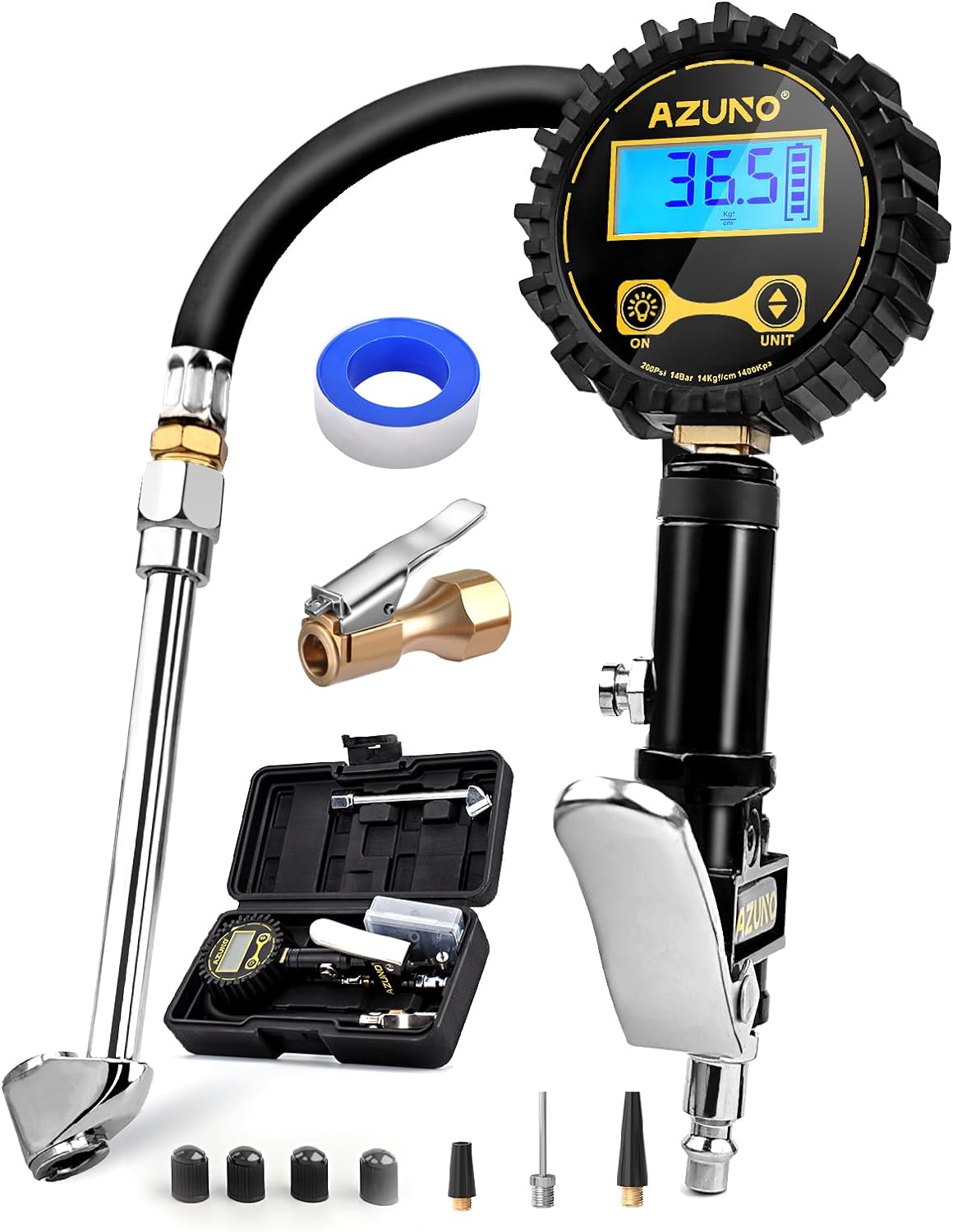
This digital tire inflator delivers accurate, easy-to-read pressure measurements with a bright backlit LCD and precise 0.1 resolution for confident inflation. Designed for single-handed use, it makes it simple to inflate or deflate tires while staying organized in the included portable carrying box. Built for a wide range of vehicles, it is a practical air compressor accessory for cars, trucks, SUVs, motorcycles, and more.

This custom 3-piece floor mat set is designed specifically for Toyota Tundra CrewMax Cab models from 2022 through 2026, delivering a precise fit with full front and rear coverage. Made from durable all-weather TPE, it helps protect your cabin from mud, snow, rain, sand, and everyday spills while staying securely in place and easy to clean.
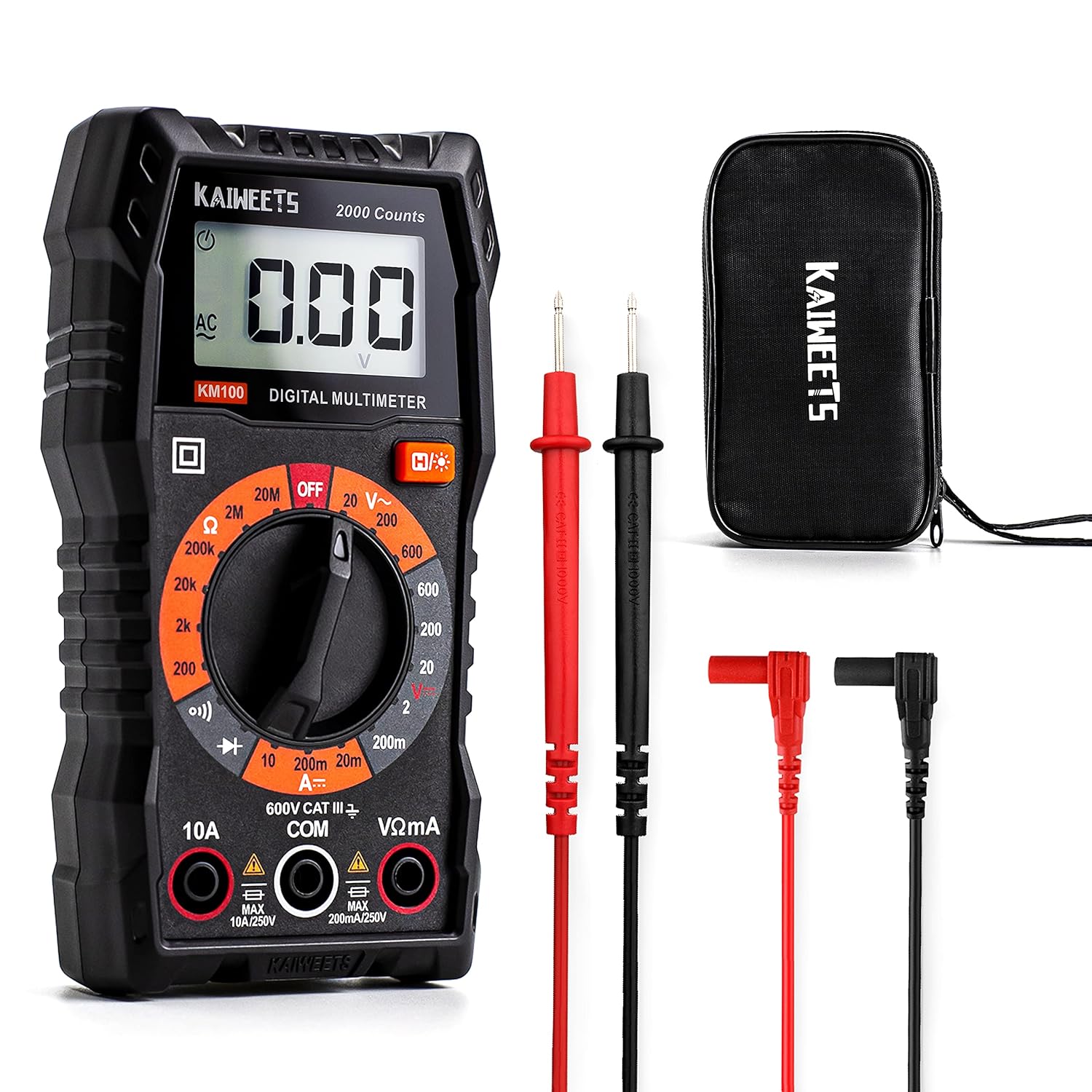
This KAIWEETS digital multimeter is a versatile tool for measuring AC/DC voltage, DC current, resistance, continuity, and diodes in home, automotive, and electrical applications. It includes pre-installed batteries, a carrying case, test leads, data hold, backlight, and overload protection for easier and safer everyday testing. Built with double fuses and rated for broad household and light professional use, it helps users diagnose electrical issues with confidence.
Corded vs. Cordless Tire Inflators: Key Benefits
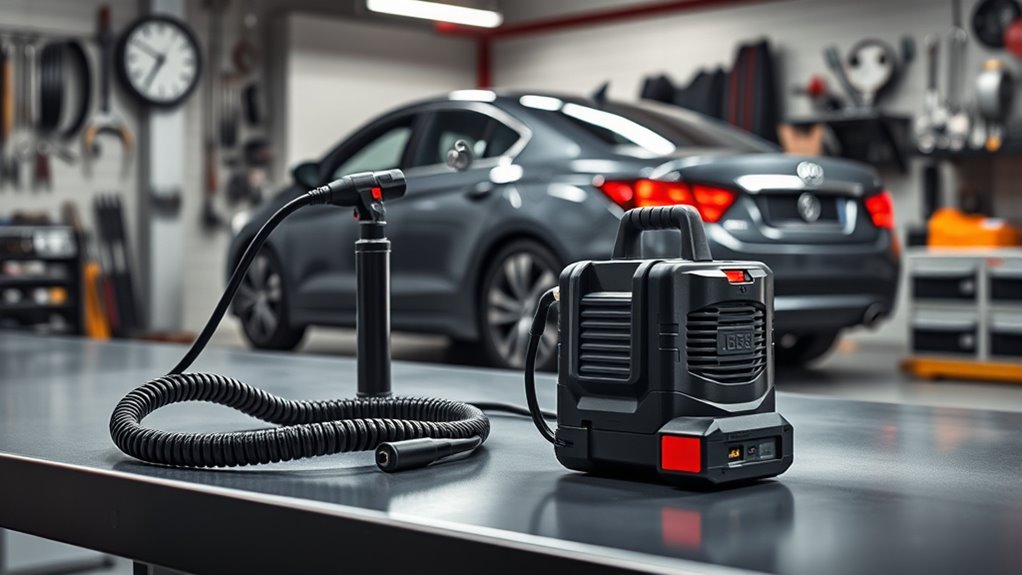
Both corded and cordless tire inflators can be useful, but they fit different situations. A corded 12V model is often the most practical emergency option because it runs from the vehicle. An AC model works well in a garage. A cordless model is the easiest to carry, but it depends on battery charge and may struggle with repeated inflation jobs unless it has a strong battery and good airflow.
| Inflator Type | Best For | Watch Out For |
|---|---|---|
| 12V DC portable inflator | Keeping in the car for emergencies and road trips | May require accessory/on mode; cord length matters |
| AC corded inflator | Garage use and regular home maintenance | Not useful roadside unless you have power access |
| Cordless inflator | Quick top-offs, bikes, sports gear, and portability | Battery must be charged; may be slower on large tires |
| Dual-power inflator | Drivers who want one unit for home and travel | Usually larger and may cost more |
[Products Worth Considering]

This portable tire inflator delivers fast, convenient inflation for cars, bikes, motorcycles, and balls with dual power options from a rechargeable battery or a 12V car cord. Its digital LCD pressure gauge and automatic shutoff help prevent over-inflation, while multiple preset modes and a custom setting make it easy to use for different inflation tasks. Built-in flashlight and USB power ports add extra emergency utility on the road.

This mud flaps kit helps protect your Toyota Camry’s lower body panels from snow, salt, sand, rocks, and road debris thrown up by the wheels. Designed for SE and XSE Sport models, it offers a direct-fit install with included mounting hardware for a cleaner, more finished look. Built from durable ABS thermoplastic, it is made to handle harsh driving conditions while helping keep your vehicle cleaner.

RAPID INFLATION & ROAD-READY PORTABILITY: Powerful 120W motor delivers up to 35L/min airflow—inflates a standard car tire (195/65 R15) from 30 to 36 PSI in under 1 minute under ideal operating conditions. Weighs only 2.2 lbs and fits glove compartments or trunks for daily commutes, road trips, and emergencies. Plugs into standard 12V DC car outlet with 15A fuse protection. AIRUN H features its cordless counterpart H2 Pro.
Essential Features to Look for in a Tire Inflator
The most useful tire inflator features are the ones that make inflation safer and more accurate. Start with a pressure range that covers your vehicle’s tires, then check airflow, duty cycle, and gauge quality. Compact car tires are easier to fill than truck, SUV, RV, or off-road tires, so larger tires need a stronger compressor and better heat control.
Prioritize these features:
- Accurate pressure reading: Digital gauges are easy to read, but verify with a separate gauge if accuracy matters.
- Preset pressure and auto shutoff: This reduces the risk of over-inflation.
- Clear display: Backlit displays are easier to use at night.
- Long hose and power cord: This prevents repositioning the vehicle or stretching the hose.
- Thermal protection or clear cool-down instructions: Small compressors can overheat during long inflation jobs.
- Adapters: Useful for bicycles, balls, air mattresses, and other inflatables.
- Storage: A case keeps the cord, hose, and adapters together in your trunk.
Pro Tip: Keep a separate pencil, dial, or digital tire gauge in the vehicle. Built-in inflator gauges are convenient, but a standalone gauge makes it easier to confirm the final cold PSI.
[Products Worth Considering]

【Powerful Inflation】Delivers up to 150 PSI on CUSTOM MODE, inflating a 195/65 R15 tire from 30–36 PSI in under 1 minute—fast, reliable performance for roadside emergencies.

The Rapidair automatic tire inflator with shutoff feature is a professional quality handheld unit. S
How to Use Your Tire Inflator Safely and Effectively
Using a tire inflator is simple, but tire pressure is safety-related. Work in a safe, flat location away from traffic whenever possible. Set the parking brake, read the inflator manual, and use the vehicle’s recommended cold PSI.
At a Glance
| Time Required | About 5–15 minutes for a routine pressure check and top-off |
| Difficulty | Easy |
| Tools Needed | Tire inflator, tire pressure gauge, vehicle PSI placard or owner’s manual |
| Cost | Usually $0 if you already own the inflator; portable inflators commonly cost extra if purchased separately |
| Step | Action |
|---|---|
| 1. Find the correct PSI | Check the driver-side door placard, fuel-door placard, glove-box label, or owner’s manual. |
| 2. Inspect the tire first | Look for cuts, bulges, exposed cords, nails, or a tire that appears separated from the rim. |
| 3. Remove the valve cap | Set it somewhere safe so it does not roll away. |
| 4. Attach the hose | Connect the chuck firmly to the valve stem. If you hear steady hissing, reseat the connector. |
| 5. Power the inflator | For 12V models, follow the inflator manual and vehicle manual. Some outlets need accessory/on mode; some inflator instructions recommend keeping the engine off. |
| 6. Inflate in short cycles | Set the target PSI if your model has auto shutoff. If not, stop often and check pressure. |
| 7. Recheck pressure | Confirm with a separate gauge if possible, then release air if the tire is over the recommended PSI. |
| 8. Replace the valve cap | Repeat for all tires, including the spare if your vehicle has one. |
Let the inflator cool according to the manufacturer’s instructions. Many small portable compressors are not designed to run continuously for long periods, especially when filling a very low or larger tire.
Tire Inflator Types, Uses, and Maintenance

Different tire inflators are built for different jobs. Some are best for quick car tire top-offs, while others are stronger compressors made for larger tires, repeated use, or garage work.
Types of Tire Inflators
12V portable tire inflators are popular for emergency kits because they plug into a vehicle power outlet. Cordless inflators are convenient for small jobs and quick top-offs, but the battery must be charged. AC inflators are useful at home. Portable air compressors with higher airflow and longer duty cycles are better for trucks, SUVs, trailers, and off-road tires.
Common Usage Scenarios
Use a tire inflator when a tire is slightly low, before a long drive, after a temperature drop, after your TPMS light appears, or when checking the spare tire. Do not wait for the TPMS light before checking pressure. TPMS is helpful, but it is not a replacement for regular tire-pressure checks with a gauge.
Temperature changes can affect tire pressure. Bridgestone notes that tire pressure changes by about 1 PSI for every 10°F change in ambient temperature, which is why many drivers see low-pressure warnings during cold snaps.
Maintenance Tips for Longevity
Store your inflator in a dry, accessible place in the vehicle or garage. Keep adapters, the manual, and spare fuses together. Recharge cordless models every few months, especially before winter or road trips. After using the inflator, coil the cord loosely, check the hose for cracks, and let the unit cool before putting it away.
When Should You Use a Tire Inflator?
Use a tire inflator whenever one or more tires are below the vehicle manufacturer’s recommended cold PSI and the tire appears safe to inflate. It is best for low-pressure maintenance, not structural tire damage.
| Situation | Action Needed |
|---|---|
| Tire is a few PSI low | Inflate to the vehicle’s recommended cold PSI. |
| TPMS light comes on | Check all tires with a gauge, including the spare if equipped, and inflate as needed. |
| Cold weather arrives | Check pressure more often because cold air can lower PSI. |
| Long drive planned | Check and adjust pressure before departure while tires are cold. |
| Tire is flat, damaged, or losing pressure quickly | Do not rely on the inflator. Use the spare, repair kit, or roadside assistance. |
Troubleshooting Common Tire Inflator Problems
If your tire inflator is not working as expected, stop and check the simple causes first. Small inflators are useful, but they have limits.
- Inflator will not turn on: Check the vehicle outlet, battery charge, power switch, fuse, and plug connection.
- Inflation is very slow: Confirm the hose is sealed, the tire is not severely damaged, and the inflator is rated for your tire size.
- Air leaks at the valve: Remove and reattach the chuck. Make sure it is straight and fully seated.
- Gauge reading seems wrong: Stop the inflator and compare with a separate tire gauge.
- Inflator gets hot: Turn it off and let it cool according to the manual.
- Pressure drops again after inflation: The tire may have a puncture, valve leak, rim leak, or bead problem. Have it inspected before driving far.
Additional Tips for Tire Maintenance and Safety
Check tire pressure at least once a month and before long trips. The National Highway Traffic Safety Administration recommends checking all tires, including the spare, and using the cold inflation pressure listed by the vehicle manufacturer.
Also inspect tires for cracks, bulges, uneven wear, embedded objects, and low tread. Rotate tires according to your owner’s manual. If the vehicle maker does not provide a schedule, Michelin recommends rotating tires every 5,000 to 7,000 miles as a standard guideline.
Do not forget the spare tire. A flat spare is no help during an emergency, and some spare tires require a much higher PSI than the regular road tires. Always check the placard or owner’s manual for the correct spare-tire pressure.
Frequently Asked Questions
What does a tire inflator do?
A tire inflator adds air to a tire through the valve stem so the tire can be brought back to the recommended PSI. It is mainly used for topping off low tires, pre-trip pressure checks, and emergency low-pressure situations.
What is the difference between a tire compressor and a tire inflator?
The terms often overlap. A tire inflator is usually a compact compressor made for tires and small inflatables. A larger air compressor may deliver more airflow, run longer, and power air tools, but it is less portable.
Is it worth buying a tire inflator?
Yes, for most drivers. A tire inflator makes it easier to maintain proper tire pressure, handle small pressure drops, and prepare for road trips. It is especially helpful if you drive long distances, commute daily, or live far from service stations.
Does a car need to be running to use a tire inflator?
Not always. Follow your inflator manual and vehicle manual. Some 12V outlets need the ignition in accessory or on mode, while some inflator instructions recommend keeping the engine off for safety. If the manual says the engine should run, park outside, set the parking brake, and keep the area clear.
Can a tire inflator fix a flat tire?
A tire inflator can add air, but it does not repair damage. If the tire has a puncture, sidewall cut, bead leak, or will not hold pressure, use a spare, tire repair kit approved by your vehicle maker, or roadside assistance.
How often should I check tire pressure?
Check tire pressure at least once a month, before long trips, and when temperatures change sharply. Always check when the tires are cold for the most accurate reading.
Can I use a tire inflator for bikes, balls, or air mattresses?
Usually, yes, if the inflator includes the correct adapters and the item’s pressure requirement is within the inflator’s range. Use low-pressure/high-volume inflators for large air mattresses, because tire inflators can be slow for high-volume inflatables.
Sources
- NHTSA TireWise — cold tire pressure, vehicle placard guidance, tire safety, and TPMS basics.
- FuelEconomy.gov: Keeping Your Vehicle in Shape — fuel-economy effect of proper tire inflation.
- Bridgestone Americas: Proper Tire Inflation — tire pressure changes with temperature and cold-pressure checks.
- Michelin Tire Rotation Guide — tire rotation interval guidance.
- Slime Tire Inflator FAQ — engine-off and accessory-mode guidance for some 12V inflators.
Conclusion
A tire inflator is one of the most useful tools to keep in your vehicle because it helps you correct low tire pressure before it becomes a bigger problem. Choose a model that matches your vehicle, use the recommended cold PSI, and treat visible tire damage seriously. With the right inflator and a good pressure gauge, regular tire maintenance becomes faster, safer, and much easier.