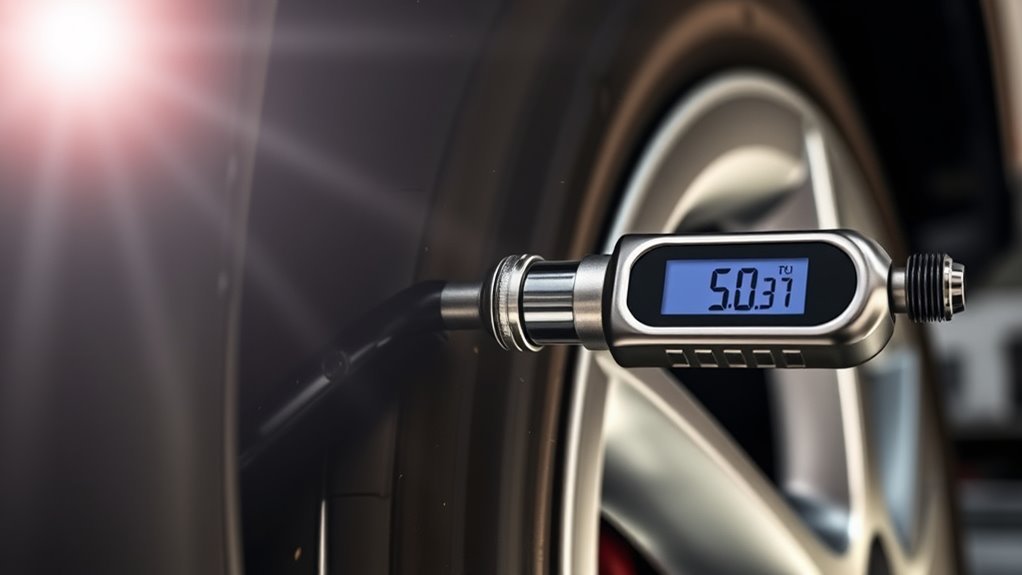
To deflate a tire with an inflator, first confirm whether your inflator has a built-in deflate, bleed, or pressure-release button. If it does, connect the hose to the valve stem, watch the pressure reading, and release air in short bursts until the tire reaches the recommended cold PSI. If your inflator only adds air, use a tire pressure gauge or the small pin inside the valve stem to let air out slowly, then recheck the pressure often.
Quick Answer
A tire inflator can deflate a tire only if it has a deflate or bleed function. Set or check the target PSI from your vehicle’s door placard, connect the inflator, release air in short bursts, and confirm the final reading with a separate tire pressure gauge.
Key Takeaways
- Use the vehicle manufacturer’s recommended cold PSI, not the maximum PSI printed on the tire sidewall.
- For routine pressure correction, release air through the valve stem or inflator bleed button; do not remove the valve core unless you need full deflation.
- Check pressure when tires are cold whenever possible, because driving and sunlight can raise the reading.
- If you lower tire pressure for off-road driving, reinflate before returning to normal road speeds.
At a Glance
| Time Required | 3 to 10 minutes per tire |
| Difficulty | Easy, as long as you check pressure often |
| Tools Needed | Tire inflator with bleed/deflate function, tire pressure gauge, valve cap, and optional portable compressor for reinflation |
| Cost | Usually free if you already have a gauge or inflator |
Why You Might Need to Deflate a Tire
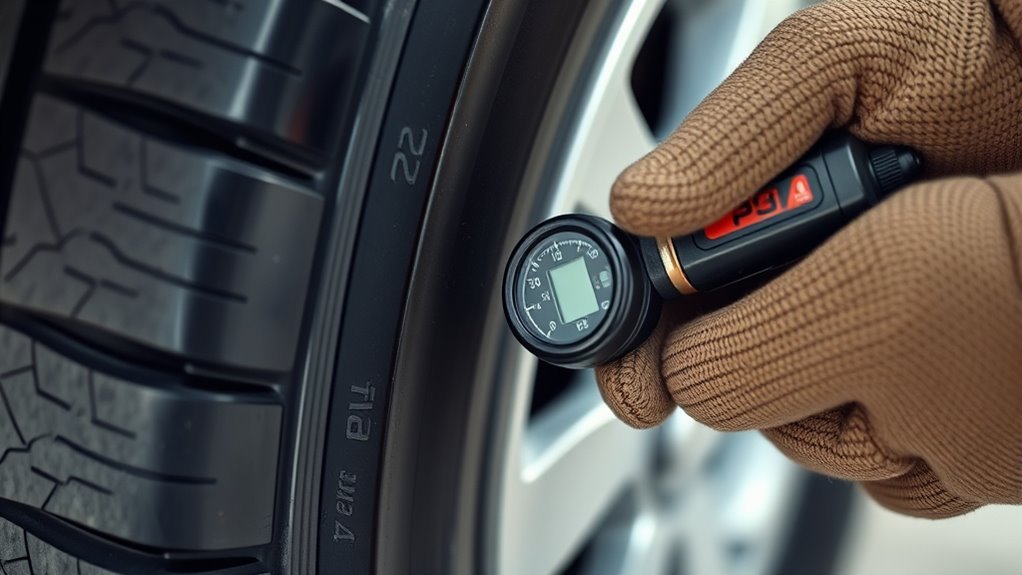
You may need to deflate a tire when it is above the recommended pressure, after adding too much air at a gas-station pump, before certain tire repairs, or before driving off-road on sand, mud, rocks, or snow. For everyday road driving, the goal is simple: bring the tire back to the vehicle manufacturer’s recommended cold PSI.
Overinflated tires can ride harshly and wear more quickly in the center of the tread. Michelin notes that the center of an overinflated tire carries more load and wears faster than the outside edges. Underinflated tires are also a problem because they can reduce fuel economy, increase heat buildup, and shorten tire life. FuelEconomy.gov says properly inflated tires are safer and last longer, and that underinflated tires can lower gas mileage by about 0.2% for every 1 PSI drop in the average pressure of all tires.
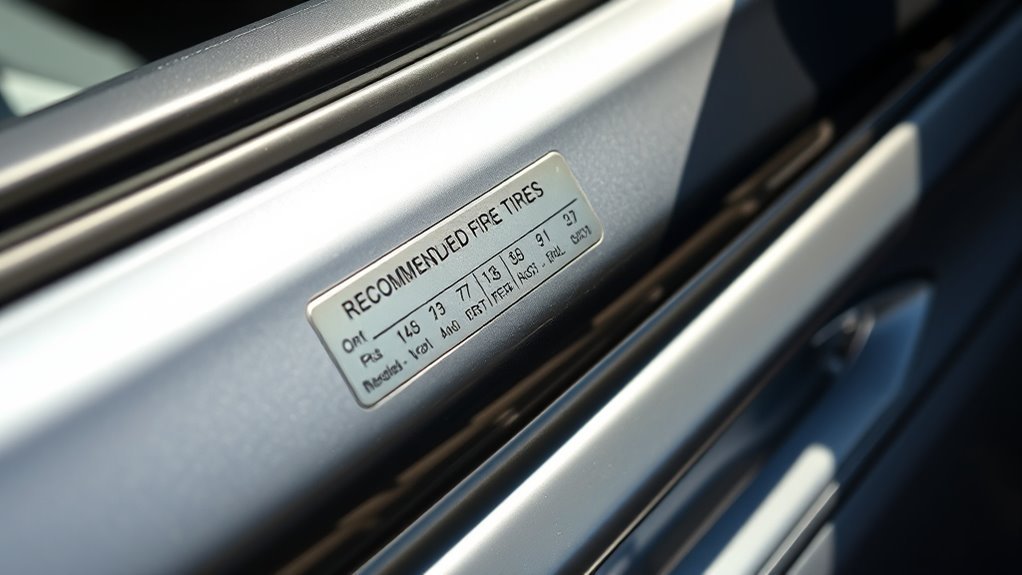
Warning: Do not use the maximum PSI printed on the tire sidewall as your target pressure. That number is a tire limit, not the vehicle’s recommended inflation pressure. Use the tire information placard, usually on the driver-side door edge or door jamb, or your owner’s manual.
Essential Tools for Tire Deflation
You do not need many tools to let air out of a tire, but you do need a reliable way to measure pressure. Keep these items nearby:
- Tire pressure gauge: A digital, dial, or pencil gauge lets you confirm the actual PSI. A separate gauge is useful even if your inflator has a built-in display.
- Tire inflator with bleed or deflate function: Some inflators have a button, trigger, or valve that releases air while showing the pressure.
- Valve cap: Do not lose it. The cap helps keep dirt and moisture out of the valve stem.
- Small blunt tool or gauge bleed nub: If your inflator cannot deflate, the small protrusion on many gauges can press the valve pin to release air.
- Portable air compressor: This is helpful if you accidentally drop below the target PSI or need to reinflate after off-road driving.
- Valve core removal tool: Use this only when you intentionally need rapid or full deflation, such as during some repairs or when using dedicated off-road deflators. It is not the best tool for small PSI corrections.
Pro Tip: Check the pressure in all four tires, not just the one you adjusted. Some vehicles use different front and rear pressures, so compare each tire with the placard instead of assuming all four should match.
[Products Worth Considering]
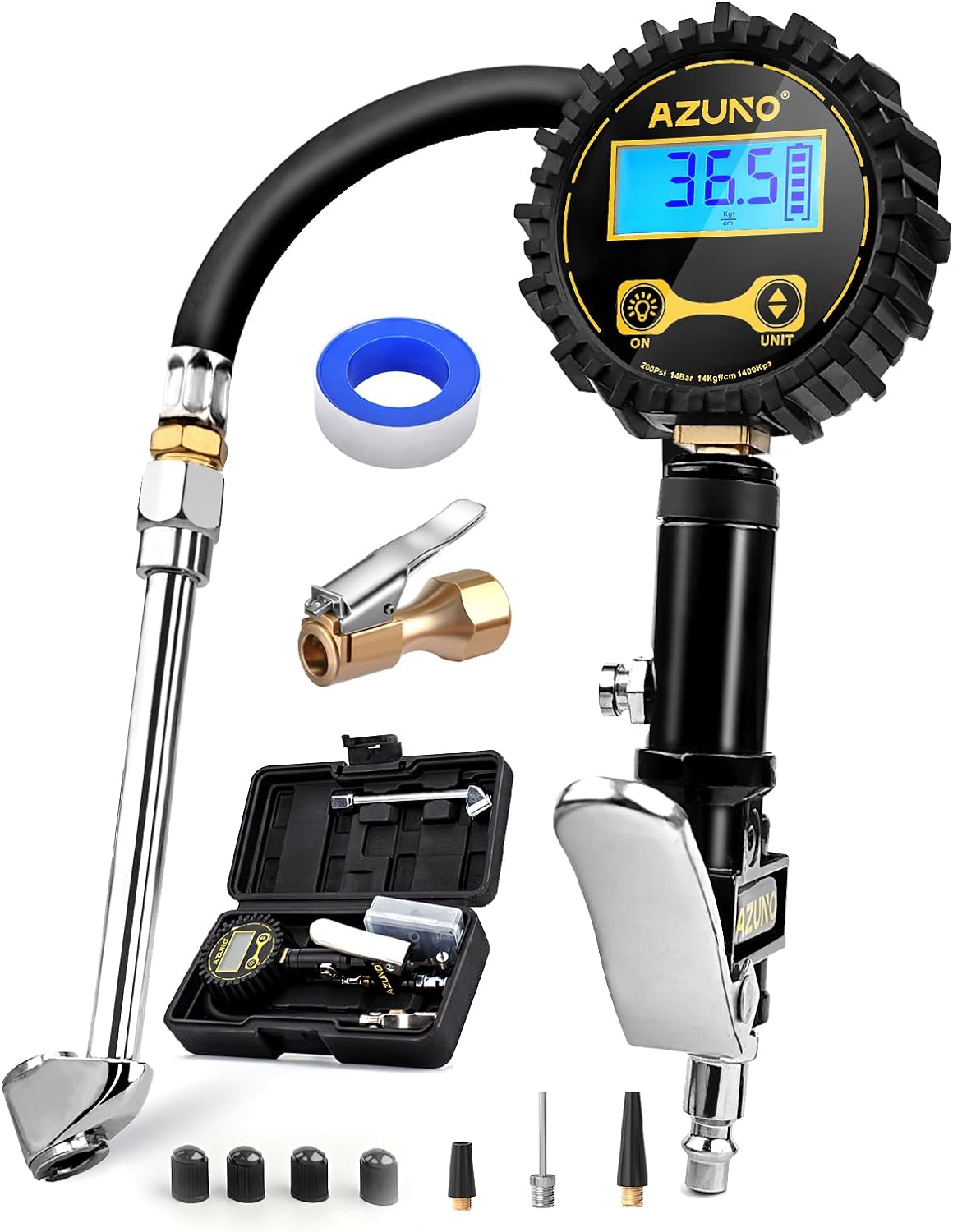
This digital tire inflator delivers accurate, easy-to-read pressure measurements with a bright backlit LCD and precise 0.1 resolution for confident inflation. Designed for single-handed use, it makes it simple to inflate or deflate tires while staying organized in the included portable carrying box. Built for a wide range of vehicles, it is a practical air compressor accessory for cars, trucks, SUVs, motorcycles, and more.

The JACO ElitePro Digital Tire Pressure Gauge delivers shop-grade accuracy with a clear digital readout, making it easy to maintain proper tire pressure for safer driving and better performance. Built with rugged brass and steel components, a protective guard, and a flexible air hose, it is designed for reliable use across cars, trucks, motorcycles, bikes, RVs, and trailers. The lock-on display, built-in bleeder valve, and bright backlit screen add convenience in any lighting condition.

This tire inflator attachment combines accurate pressure reading and easy inflation in one heavy-duty tool for maintaining tire pressure with less hassle. A longer hose and 360-degree swivel air chuck help create a secure seal while giving you better control during use. Designed for universal compressor compatibility, it measures, inflates, and deflates without batteries.
How to Deflate Your Tire Like a Pro
Follow these steps to lower tire pressure safely and avoid taking out too much air.
Step 1: Park Safely and Let the Tires Cool
Park on a level surface, set the parking brake, and keep your hands clear of moving parts. For the most accurate reading, check tires when they are cold. NHTSA defines cold tire pressure as pressure measured when the tire has not been driven on for at least three hours.
Step 2: Find the Correct Target PSI
Look for the tire information placard on the driver-side door edge, driver-side door jamb, glove box, fuel door, or in the owner’s manual. Use the recommended cold PSI listed for your vehicle and load. Do not use the tire sidewall maximum as the target.
Step 3: Remove the Valve Cap
Unscrew the valve cap and place it somewhere safe, such as your pocket. Check the valve stem for dirt, cracks, or damage before connecting your inflator or gauge.
Step 4: Connect the Inflator or Gauge
Press the inflator chuck or tire pressure gauge firmly onto the valve stem. If you hear a strong hiss, reseat the chuck so it seals properly. Read the current PSI before releasing any air.
Step 5: Release Air in Short Bursts
If your inflator has a deflate or bleed button, press it for one or two seconds at a time. If your inflator does not deflate, use the bleed nub on your pressure gauge or a small blunt tool to gently press the pin in the center of the valve stem. You should hear air escaping.
Step 6: Recheck Pressure Often
Stop every few seconds and check the PSI again. As you get close to the target, release smaller bursts of air. This prevents over-deflation and saves you from having to add air back.
Step 7: Replace the Valve Cap and Check for Leaks
Once the tire reaches the correct PSI, remove the inflator or gauge and reinstall the valve cap. Listen for hissing around the valve stem. If the tire keeps losing pressure, inspect the tire and valve or have a tire professional check it.
Note: If the tire is hot from driving, the reading may be higher than the cold PSI. Do not automatically bleed a warm tire down to the cold placard number unless it was clearly overinflated when cold. Recheck when the tire has cooled.
Setting the Right PSI on Your Inflator
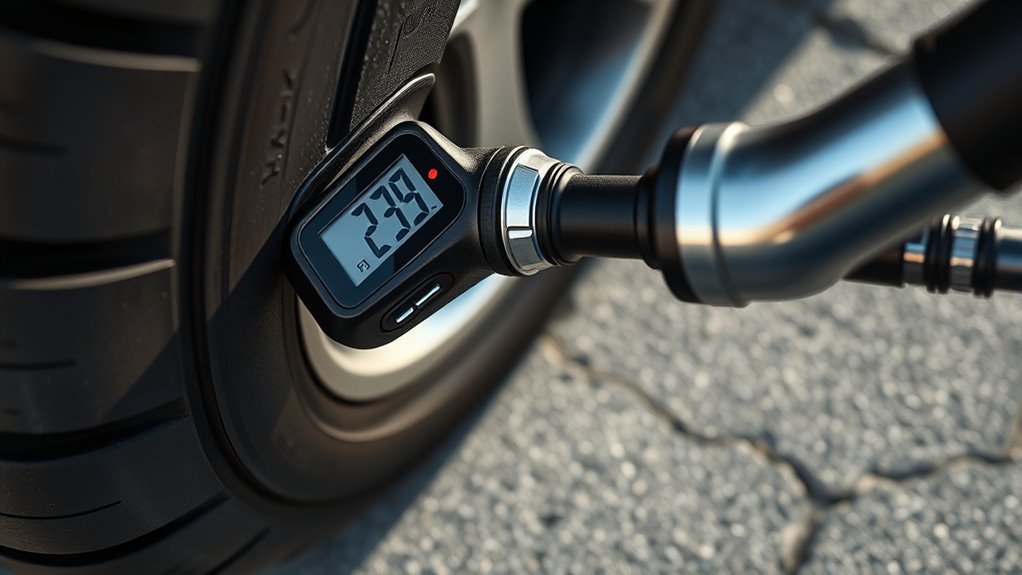
If your inflator lets you set a target PSI, set it to the vehicle manufacturer’s recommended cold pressure. Many passenger vehicles list a pressure somewhere around the low-to-mid 30 PSI range, but your vehicle may be different. Always check the placard.
Some inflators stop automatically when adding air, but they may not automatically stop while deflating. Watch the display and confirm the final pressure with a separate gauge. Built-in inflator gauges are convenient, but a dedicated tire pressure gauge is often easier to use for final checks.
For everyday driving, the correct PSI is the vehicle’s recommended cold tire pressure, not the sidewall maximum and not a guess based on how the tire looks.
[Products Worth Considering]

This portable tire inflator delivers fast, convenient inflation for cars, bikes, motorcycles, and balls with dual power options from a rechargeable battery or a 12V car cord. Its digital LCD pressure gauge and automatic shutoff help prevent over-inflation, while multiple preset modes and a custom setting make it easy to use for different inflation tasks. Built-in flashlight and USB power ports add extra emergency utility on the road.

TRUSTED BY OVER 3 MILLION USERS: Based in Garden Grove, California, AstroAI serves customers in more than 15 countries worldwide. Known for professional-grade accuracy and durable construction, this digital tire inflator with gauge is a trusted choice for drivers, mechanics, and DIYers who rely on dependable tools.
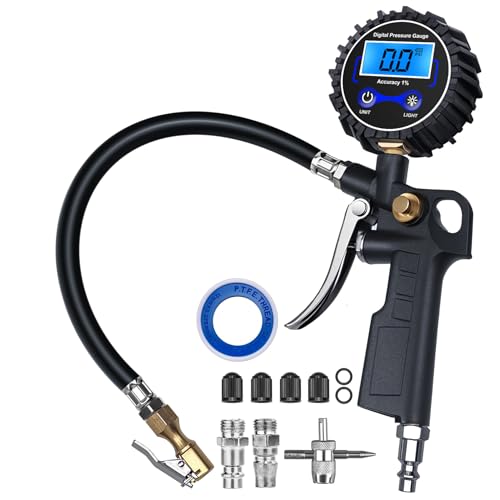
【Accuracy】The digital tire pressure gauge has 4 different measurement units: PSI, KPA, BAR, KG/CM². It reads within 1% of the exact tire pressure, with a resolution of 0.1 PSI and the measuring range is 3-250 PSI (0.2-17.2 Bar; 20-1724 Kpa; 0.2-17.5 kg/cm^2)
Monitoring Tire Pressure While Using an Inflator
Monitor tire pressure throughout the process. A small amount of air can change the reading quickly, especially on smaller tires. Check the PSI every few seconds, and slow down as you approach the target.
Importance of Tire Pressure
Tire pressure affects handling, braking feel, ride comfort, tread wear, and fuel economy. The NHTSA tire safety brochure recommends checking tire pressure at least once a month and before long trips. It also recommends inspecting tires for uneven wear, cracks, foreign objects, and other signs of damage.
Using a Tire Pressure Gauge
To use a gauge, press it straight onto the valve stem until the hissing stops and the gauge gives a reading. Compare that reading with the vehicle placard. If the pressure is too high, release a little air and check again. If it is too low, add air gradually and recheck.
| Gauge Type | Best For | Tip |
|---|---|---|
| Digital | Quick, easy-to-read checks | Keep the battery fresh. |
| Dial | Precise manual readings | Look for a bleed button if you adjust pressure often. |
| Pencil | Simple backup tool | Read it at eye level and use it gently. |
Adjusting Pressure During Deflation
Release air slowly. If you need to drop only 1 to 3 PSI, a few short bursts may be enough. If you are intentionally lowering tire pressure for off-road use, use a dedicated off-road tire deflator or inflator with a controlled bleed function, and make sure you have a way to reinflate before driving at road speeds.
Warning: Do not drive on public roads with tires intentionally aired down for off-road traction. Low pressure can build heat, affect handling, and damage the tire. Reinflate to the recommended road PSI before normal driving.
Can a Tire Inflator Deflate a Tire?
Yes, but only some tire inflators can deflate a tire. Look for terms such as “deflate,” “bleed,” “air release,” or “pressure release” in the inflator manual or on the tool body. Some portable inflators only push air into the tire and cannot remove air through the hose.
If your inflator does not have a deflate feature, you can still lower the PSI by pressing the pin in the center of the valve stem with the back of a pressure gauge or another small blunt tool. This is the same basic valve-stem method used for small pressure corrections.
When to Use a Valve Core Removal Tool
A valve core removal tool removes the small core inside the valve stem, which lets air escape very quickly. That can be useful when a tire needs to be fully deflated for a repair or when using certain off-road deflation tools, but it is usually too aggressive for routine pressure adjustment.
For normal overinflation, do not remove the valve core. Use the inflator’s bleed button, a gauge bleed valve, or gentle pressure on the valve pin instead. If you do remove the core, hold onto it carefully, keep dirt out of the valve stem, and be ready to reinstall it and reinflate the tire.
[Products Worth Considering]

This handy valve core removal and installation tool makes removing and inserting valve cores easy and error-proof.Good quality for professional use.

What You Get - 4 x valve core remover, 1 x 4-way valve tool,10 x valve stem caps ,20 x valve cores.

A dual durometer handle for comfort with a rotating knob on the end allowing the tool to turn smoothly while applying pressure with the palm of your hand
What to Do After Deflating Your Tire?
After you let air out, verify the pressure, inspect the tire, and make sure it is safe before driving.
Check Tire Pressure Again
Recheck the tire with a reliable gauge after the final air release. If the tire is still above the target, release another small burst of air. If it is below the target, add air gradually with your inflator or compressor.
Reinflate If Necessary
If you let out too much air, reinflate to the recommended cold PSI. Add air in short bursts, then check again. If you checked the tire warm, recheck it when cold so the final pressure matches the placard more closely.
Inspect for Damage
Look over the tread and sidewalls before driving. Check for:
- Cuts, punctures, cracks, or bulges
- Nails, glass, stones, or other objects lodged in the tread
- Uneven wear across the tread
- A hissing valve stem or missing valve cap
- A tire that keeps losing pressure after adjustment
If you see sidewall damage, a bulge, exposed cords, or repeated pressure loss, do not rely on deflation or inflation as the fix. Have the tire inspected by a qualified tire professional.
Troubleshooting Common Tire Deflation Problems
Air Will Not Come Out
Make sure you are pressing the center pin inside the valve stem, not the outer threads. If the valve is clogged, damaged, or stuck, stop and have it inspected. Do not force sharp tools into the valve stem.
The Inflator Gauge and Handheld Gauge Do Not Match
Small differences are common. Use the same reliable handheld gauge for your final reading each time so your results are consistent. If the difference is large, replace or recalibrate the questionable gauge.
The TPMS Light Stays On
After correcting pressure, drive for a few minutes and check your owner’s manual. Some tire pressure monitoring systems reset automatically, while others require a reset procedure. If the light stays on after proper inflation, there may be a sensor, tire, or valve issue.
The Tire Dropped Too Low
Add air slowly until the tire reaches the recommended PSI. If you do not have a compressor and the tire is very low, avoid driving on it. Driving on a severely underinflated tire can damage the tire and wheel.
Tips for Maintaining Proper Tire Pressure
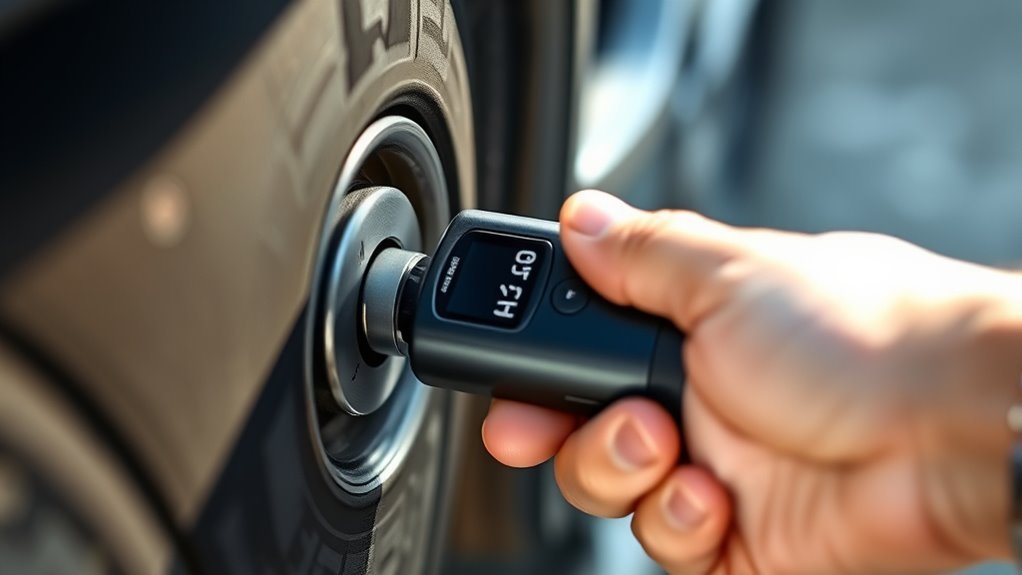
Good tire-pressure habits prevent most deflation problems. Check pressure at least once a month, before long trips, and when seasons change. Tire Rack explains that tire pressure changes about 2% for every 10°F change in air temperature, which is roughly 1 PSI for many light-duty tires.
| Action | Recommended Timing |
|---|---|
| Check tire pressure | At least once a month |
| Check before trips | Before long drives or heavy loads |
| Adjust for temperature | During major seasonal changes |
| Inspect tire condition | Whenever you adjust pressure |
| Reinstall valve caps | Every time you check or adjust pressure |
Frequently Asked Questions
How do you deflate a tire with a pressure gauge?
Remove the valve cap, check the current PSI, then use the small nub on the gauge or a blunt tool to press the pin inside the valve stem. Let air out in short bursts, recheck the PSI often, and stop when the reading matches the vehicle’s recommended cold pressure.
Can a tire inflator deflate a tire?
Yes, if the inflator has a deflate, bleed, or pressure-release function. If it only inflates, it will not pull air out through the hose. In that case, use a tire pressure gauge or gently press the valve stem pin to release air manually.
What is the 3% tire rule?
The 3% rule is not an official tire-pressure rule for deflating tires. For pressure adjustment, use your vehicle’s recommended cold PSI. For temperature changes, a common rule of thumb is that pressure changes about 2% for every 10°F change in air temperature, or about 1 PSI on many passenger tires.
What is the 5 PSI rule?
The 5 PSI rule is only a rough adjustment idea, not a universal standard. Do not blindly remove 5 PSI from a tire. Release air in small bursts and recheck with a gauge until the tire matches the recommended PSI for your vehicle and driving conditions.
Should I deflate my tires when they are hot?
Avoid adjusting a warm tire down to the cold placard PSI unless you know it was overinflated when cold. Heat from driving can raise the pressure reading. For the most accurate adjustment, let the vehicle sit for at least three hours and check the tires cold.
Is it safe to drive after letting air out of a tire?
Yes, if the tire is at the vehicle’s recommended PSI, the valve cap is back on, and there is no visible damage or ongoing leak. Do not drive on a tire that is very low, damaged, hissing, bulging, or repeatedly losing pressure.
Conclusion
Deflating a tire with an inflator is simple when you use the right target PSI and release air slowly. Start with the pressure listed on your vehicle’s placard, check the tire when cold whenever possible, use the inflator’s bleed function or the valve stem pin, and recheck with a reliable gauge before driving. If you accidentally go too low, reinflate before you hit the road.
Sources
- NHTSA TireWise — cold tire pressure, placard PSI, and safe air-release guidance.
- NHTSA tire safety brochure — monthly pressure checks, long-trip checks, and tire inspection guidance.
- FuelEconomy.gov gas mileage tips — fuel economy impact of underinflated tires and proper tire-pressure location.
- Tire Rack: temperature and tire pressure — pressure-change rule of thumb for temperature swings.
- Michelin: center tread wear — overinflation and center tread wear.
- AAA: checking and correcting tire pressure — practical gauge, bleed-valve, and TPMS reset tips.