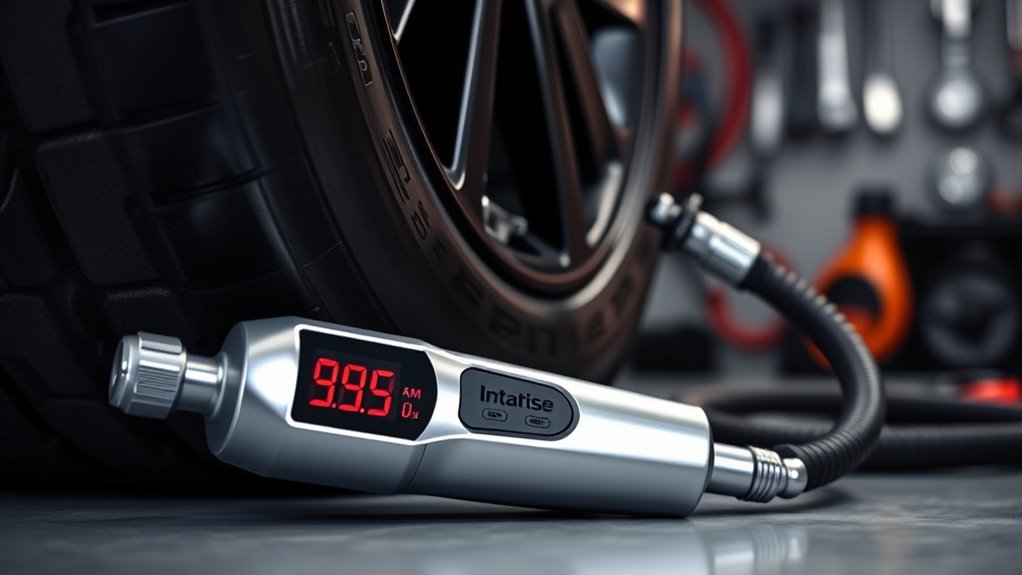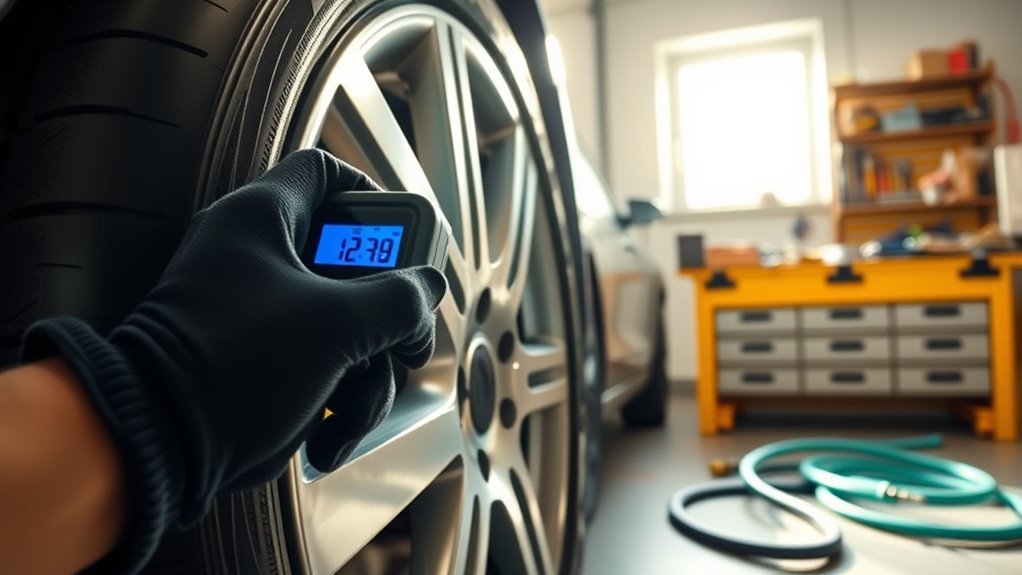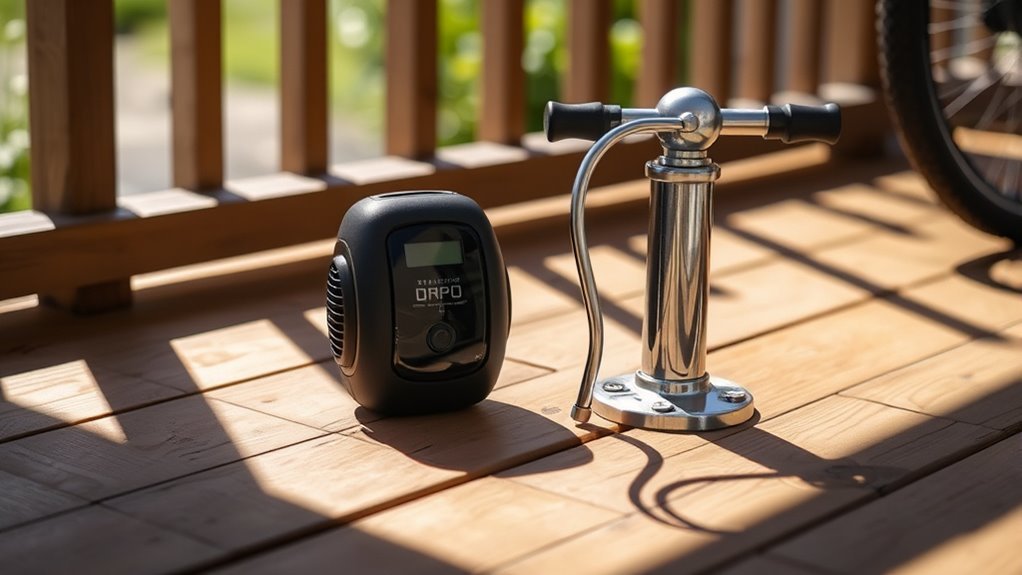
When choosing between a tire inflator and a bike pump, the best option depends on where you use it and what kind of tire you are filling. A plug-in or battery tire inflator is convenient for cars, e-bikes, commuter bikes, and emergency top-offs. A bike pump, especially a floor pump, is usually the better everyday tool for cyclists who want dependable pressure control without batteries.
Quick Answer
A tire inflator is best when you want easy, low-effort inflation, especially for cars, e-bikes, and roadside emergencies. A bike pump is better for regular bicycle maintenance because it is reliable, battery-free, valve-friendly, and gives better control when setting the right tire pressure.
Key Takeaways
- Use a bike floor pump at home if you want fast, repeatable inflation for road, gravel, hybrid, or mountain bike tires.
- Use a portable electric inflator if convenience matters more than weight, charging, and noise.
- Use CO2 only as an emergency cycling tool; it is fast, but cartridges are single-use and pressure can drop after the ride.
- Check the pressure range on the tire sidewall and rim manufacturer guidance before inflating. Do not assume “more PSI” is better.
- Car tire inflators can work on some bikes, but Presta valves need an adapter and the high airflow can overinflate small bicycle tires quickly.
Understanding Tire Inflators and Bike Pumps

A tire inflator is usually powered by electricity, a vehicle 12V outlet, a rechargeable battery, an air compressor, or a CO2 cartridge. It pushes air into the tire with very little physical effort. Some models include a digital gauge, preset PSI, and automatic shut-off.
A bike pump is designed specifically for bicycle tires. The most common types are floor pumps, frame pumps, mini pumps, and CO2 inflators. Floor pumps are the easiest manual option for home use. Mini pumps are slower but useful on rides. CO2 inflators are very fast, but each cartridge is single-use.
The most important difference is not simply “which one is faster.” It is which tool gives the right balance of speed, control, portability, valve compatibility, and reliability for your situation.
Speed Comparison: Which Inflates Tires Faster?
For bicycles, a good floor pump is usually the fastest practical tool at home because it moves a lot of air with each stroke and does not depend on a battery. A portable electric inflator can be slower than a floor pump on some bike tires, but it wins on effort because you press a button instead of pumping by hand.
For emergencies, CO2 inflators are often the fastest bicycle option. They can fill a tire in seconds, but they are best treated as a ride-saving tool rather than a daily pressure-maintenance tool.
| Tool | Typical Speed | Best Use | Main Trade-Off |
|---|---|---|---|
| Floor bike pump | Fast for most bike tires | Home and garage inflation | Too bulky to carry on most rides |
| Mini bike pump | Slow to moderate | On-bike backup | Requires effort, especially at high PSI |
| Portable electric inflator | Moderate to fast | Low-effort top-offs and emergencies | Needs charging and can be heavier |
| CO2 inflator | Very fast | Race-day or roadside flat repair | Single-use cartridges and less pressure control |
| Car tire inflator | Fast for car tires, variable for bikes | Vehicle tires and occasional bike use | May need a Presta adapter and careful pressure control |
Note: Inflation speed depends on tire volume, target PSI, battery charge, hose design, valve type, and whether the pump is built for high pressure or high volume.
Control and Precision: How to Choose the Right Pressure
Correct tire pressure matters more than raw inflation speed. Too little pressure can increase squirm, pinch-flat risk, rim strikes, and tire wear. Too much pressure can reduce comfort, traction, and control, especially on rough roads or trails.
For bicycles, start with the pressure range printed on the tire sidewall, then adjust based on rider weight, tire width, rim width, surface, and riding style. Tire makers such as Schwalbe recommend checking and correcting bicycle tire pressure regularly because bike tires naturally lose air over time. For performance road and gravel setups, pressure calculators such as SRAM/Zipp’s tire pressure guide can help you estimate a safe starting point.
[Products Worth Considering]
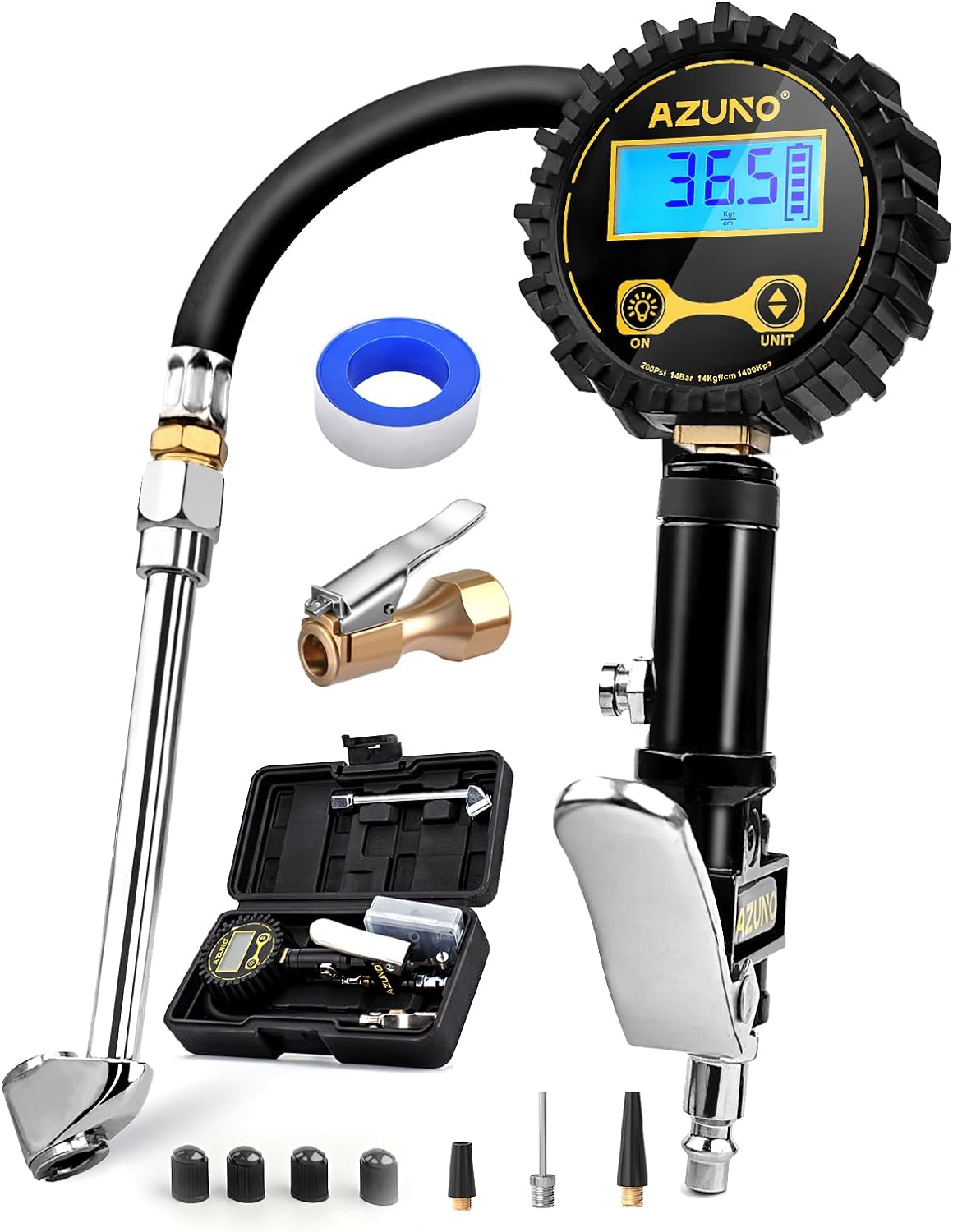
This digital tire inflator delivers accurate, easy-to-read pressure measurements with a bright backlit LCD and precise 0.1 resolution for confident inflation. Designed for single-handed use, it makes it simple to inflate or deflate tires while staying organized in the included portable carrying box. Built for a wide range of vehicles, it is a practical air compressor accessory for cars, trucks, SUVs, motorcycles, and more.

This portable tire inflator delivers fast, convenient inflation for cars, bikes, motorcycles, and balls with dual power options from a rechargeable battery or a 12V car cord. Its digital LCD pressure gauge and automatic shutoff help prevent over-inflation, while multiple preset modes and a custom setting make it easy to use for different inflation tasks. Built-in flashlight and USB power ports add extra emergency utility on the road.

This heavy-duty dual cylinder air compressor delivers fast, reliable inflation for off-road vehicles, trucks, RVs, and other outdoor gear. Built with a metal shell, aluminum cylinders, and thermal protection, it is designed to handle demanding inflating tasks while helping keep the motor cool and stable during use. The included hose, gauge, adapters, and carrying bag make it a practical portable solution for road trips, recovery kits, and recreational inflation needs.
Digital Gauge Accuracy
Digital gauges on electric inflators are convenient because you can often set a target PSI and let the tool stop automatically. That is helpful for casual riders, commuters, and anyone who wants a repeatable setting without watching the gauge the whole time.
However, a digital display does not automatically mean laboratory-level accuracy. Cheap gauges, old gauges, and gauges built into compact pumps can vary. If pressure is critical for racing, tubeless setup, or high-pressure road tires, use a trusted standalone pressure gauge or a quality floor pump gauge and check pressure when the tire is cool.
PSI Settings Flexibility
Electric inflators are useful when you want to enter a target pressure and avoid guessing. Manual bike pumps give you more tactile control, but the accuracy depends on the gauge and your technique.
For cars, follow the vehicle placard or owner’s manual, not the maximum pressure printed on the tire sidewall. The National Highway Traffic Safety Administration recommends checking vehicle tire pressure when tires are cold or compensating for pressure changes after driving.
Warning: Do not overinflate a bicycle tire with a car inflator or shop compressor. Small bicycle tires can reach unsafe pressure quickly. Check the tire sidewall, rim limits, and pump gauge before adding air.
Ideal Scenarios for Using Tire Inflators
A tire inflator is the better choice when you want convenience and low effort. This is especially true for drivers, e-bike riders, commuters, and casual cyclists who want a simple tool for quick top-offs.
Quick Tire Inflation Needs
Use a tire inflator when you need to restore pressure without physical pumping. It is useful for:
- Car tire top-offs: A 12V or cordless inflator is practical for maintaining vehicle tires at the placard pressure.
- E-bikes and cargo bikes: Heavier bikes often use larger tires, and an electric inflator saves effort.
- Commuter bikes: A preset digital inflator makes routine pressure checks easier.
- Riders with limited hand strength: An inflator removes most of the physical work.
- Emergency roadside use: A charged portable inflator can help you get moving again after installing a tube or plugging a tubeless puncture.
Precision Pressure Adjustments
Electric inflators with preset PSI are helpful when you want repeatable pressure. They are especially convenient for riders who use the same bike and tire setup every day. Some models also include a bleed button or slow-fill mode, which gives better control near the final PSI.
| Feature | Tire Inflator | Bike Pump |
|---|---|---|
| Low-effort inflation | Excellent | Depends on pump type |
| Preset pressure | Common on electric models | Usually no |
| Battery-free reliability | No, unless compressor-based | Yes |
| Best for cars | Yes | No |
| Best for daily bike setup | Good | Excellent with a floor pump |
When Is a Bike Pump Most Effective?
A bike pump is most effective when you maintain bicycle tires regularly. It is the better everyday tool for cyclists because it is built around bike valves, bike pressure ranges, and repeated use.
For most riders, the best setup is simple: keep a floor pump at home and carry a mini pump, CO2 inflator, or compact electric inflator on rides.
A bike pump is especially effective for:
- Road bikes: Floor pumps make it easier to reach higher pressures without draining a battery.
- Mountain bikes: High-volume floor pumps move more air per stroke for wider tires.
- Gravel bikes: A quality gauge helps fine-tune pressure for mixed surfaces.
- Tubeless setups: A floor pump is useful for regular top-offs, though seating a new tubeless tire may require a booster pump or compressor.
- Long rides: A mini pump is slower, but it works even when batteries die or CO2 cartridges run out.
Pro Tip: If you ride often, buy a quality floor pump with a readable gauge and a head that fits both Presta and Schrader valves. It will usually be more useful than relying only on a portable inflator.
Understanding Portability and Convenience

Portability is where the decision gets more personal. A floor pump is best at home, but it is not ride-friendly. A mini pump can fit in a jersey pocket, frame mount, or bike bag, but it takes more effort. A CO2 inflator is tiny and fast, but each cartridge is single-use. A compact electric inflator sits in the middle: easy to use, but heavier than CO2 and dependent on battery charge.
If you ride short routes near home, a small electric inflator or CO2 kit may be enough. If you ride remote gravel, bikepacking routes, or long endurance events, a manual pump is still the safest backup because it does not run out of charge.
Valve Compatibility: Presta, Schrader, and Adapters
Before choosing a pump or inflator, check your valve type. Schrader valves are wider and common on cars, many hybrids, kids’ bikes, and some mountain bikes. Presta valves are narrower and common on road, gravel, tubeless, and higher-performance bikes.
Many bicycle pumps have dual heads or reversible heads for both valve types. Some car tire inflators fit Schrader valves directly, but need a small adapter for Presta valves. Bicycle-specific shop inflators, such as Park Tool’s inflator systems, are designed around bike valve access and pressure reading, which is why bike-specific tools are safer and easier for regular cycling use.
Also check valve length. Deep-section road rims may need longer Presta valves or valve extenders. If the pump head cannot attach securely, you may lose air or damage the valve.
Can You Use a Car Tire Inflator for a Bike?
Yes, you can use a car tire inflator for a bike in some situations, but you need to be careful. It works most easily on bikes with Schrader valves. For Presta valves, you need a Presta-to-Schrader adapter.
The main risk is overinflation. Car tire inflators are designed for larger-volume vehicle tires, so they may add air quickly to a small bicycle tire. Use short bursts, watch the gauge, and stop below the maximum pressure listed on the tire and rim.
A car inflator is useful for casual bike owners who already keep one in the trunk, but frequent cyclists will usually be happier with a bicycle floor pump or a compact bike-specific inflator.
CO2 Inflators vs Pumps: Which Is Better for Flats?
A CO2 inflator is best when speed and size matter. Racers and group riders often like CO2 because it can get a tire rideable very quickly. The downside is that one mistake can waste a cartridge, and once your cartridges are gone, you are out of inflation options.
CO2 can also behave differently from regular air after the repair. It may leak down faster over time, so it is smart to replace the CO2 with normal air when you get home. If you use tubeless sealant, check your sealant manufacturer’s guidance. Some wheel and sealant instructions warn that CO2 can affect sealant performance, especially after emergency use.
Note: For the safest on-ride setup, many cyclists carry both: CO2 for a fast fix and a mini pump as a backup.
How Do Electric Pumps Compare to Manual Ones on Price?
Manual bike pumps usually cost less and last longer because they have fewer electronics. A basic mini pump can be inexpensive, while a high-quality floor pump costs more but can serve for years with occasional gasket or hose replacement.
Electric inflators usually cost more because they include a motor, battery, display, sensor, and charging hardware. They are convenient, but their long-term value depends on battery life, replacement parts, and how often you use them.
- Choose a manual pump if you want low cost, long life, and battery-free reliability.
- Choose an electric inflator if you value convenience, preset PSI, and low physical effort.
- Choose CO2 if you want the smallest and fastest emergency tool, and you accept the cost of replacement cartridges.
- Choose a compressor-style inflator if you maintain multiple cars, bikes, sports balls, and household inflatables.
What Are the Pros and Cons of Tire Inflators and Bike Pumps?
Both tools are useful, but they solve different problems.
| Option | Pros | Cons | Best For |
|---|---|---|---|
| Tire inflator | Easy, low effort, often has preset PSI | Needs power or battery, can be noisy, may be less bike-specific | Cars, commuters, e-bikes, casual riders |
| Floor bike pump | Fast, reliable, accurate enough for most riders | Not portable | Home bicycle maintenance |
| Mini bike pump | Light, reusable, battery-free | Slow and tiring at higher pressures | Ride backup and touring |
| CO2 inflator | Tiny and very fast | Single-use cartridges, less control, not ideal for daily checks | Racing and emergency flats |
[Products Worth Considering]

The OXILAM jump starter delivers powerful emergency starting performance for gas engines and up to 12L diesel engines, helping revive dead batteries in seconds. It also doubles as a portable power bank and LED flashlight, with USB and Type-C ports for convenient device charging. Built with multiple safety protections, a clear LED display, and a rugged portable design, it is a reliable roadside companion for cars, trucks, motorcycles, and more.

This portable 12V tire inflator delivers fast, convenient inflation for cars, SUVs, trucks, motorcycles, and other inflatables. It features a digital display, bright LED lighting, auto shutoff, and multiple nozzle adapters to help you inflate accurately and safely, even in low-light situations. The long power cord and air hose make it easy to reach all tires and handle roadside emergencies or routine maintenance.

HIGH VOLUME OUTPUT: High pressure allows you to quickly inflate anything, designed for needs ranging from a tire pump to an air mattress pump
Which One Should You Buy?
If you only want one tool for bicycle use, buy a floor bike pump. It is the most practical choice for regular pressure checks, pre-ride inflation, and home maintenance.
If you drive and bike, a portable tire inflator is useful as a shared emergency tool, but it should not completely replace a good bike pump if you ride often.
If you race or want the smallest flat-repair kit, carry CO2, but keep a manual pump at home or in your longer-distance kit. If you ride in remote areas, a mini pump is the more dependable backup.
[Products Worth Considering]

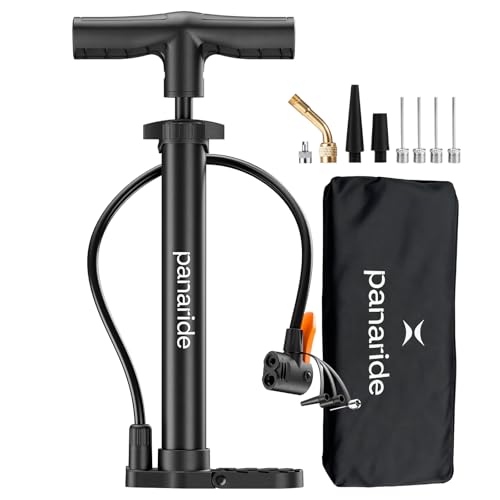
COMFORTABLE HANDLE because of ergonomically designed air pump for bike handle.
Portable manual model without a pressure gauge. This compact P120 hand pump has no built-in PSI display. Select a gauge-equipped model if you need pressure readings while pumping.

💪 VERSATILE COMPATIBILITY: This bicycle pump with pressure gauge is compatible with both Schrader and Presta valves, making it an ideal bike floor pump for road and mountain bikes. Its dual valve design ensures seamless operation without the need for additional adapters.
Frequently Asked Questions
Is a CO2 bike tire inflator better than a pump?
A CO2 inflator is better for fast emergency inflation because it is tiny and very quick. A pump is better for regular use because it is reusable, easier to control, and does not depend on cartridges.
Can you use a car tire inflator for a bike?
Yes, but use caution. It works directly on Schrader valves, while Presta valves need an adapter. Add air in short bursts and watch the gauge closely because a car inflator can overinflate a small bike tire quickly.
Is an air pump better than a tire inflator?
For bicycles, a floor air pump is usually better for everyday maintenance because it is reliable, quick, and battery-free. A tire inflator is better when you want low-effort inflation, preset pressure, or a tool that can also handle car tires.
Is it worth buying a tire inflator?
Yes, a tire inflator is worth buying if you maintain car tires, e-bike tires, or multiple household inflatables. If you only maintain bicycles at home, a quality floor pump may be the better first purchase.
Do electric bike pumps replace mini pumps?
They can replace mini pumps for short rides if they are charged, but they are not as dependable for long or remote rides. A mini pump remains the safer backup because it keeps working without battery power.
What tire pressure should I use on my bike?
Start with the pressure range printed on the tire, then adjust for rider weight, tire width, rim width, terrain, and comfort. Wider tires usually need less pressure than narrow road tires. Never exceed the tire or rim maximum.
Conclusion
The best choice depends on how you ride. For most cyclists, a bike floor pump is the best everyday tool because it is fast, reliable, and built for bicycle valves. A tire inflator is the better convenience tool for drivers, commuters, e-bike owners, and anyone who wants push-button inflation. For flat repairs on the road, a mini pump or CO2 inflator belongs in your kit. If you want the most complete setup, keep a floor pump at home and carry a portable backup when you ride.
Sources
- Schwalbe Tire Pressure FAQ — supports bicycle tire pressure guidance and regular pressure checks.
- SRAM/Zipp Know Your Tire Pressure — supports the importance of tire width, rider weight, surface, and setup when choosing cycling tire pressure.
- NHTSA TireWise — supports vehicle tire pressure safety and checking pressure when tires are cold.
- Park Tool INF-2 Shop Inflator — supports bicycle-specific inflator compatibility with Presta and Schrader valves.
- Giant Bicycle Sealant Caution — supports caution around CO2 use with some tubeless sealants.