For most 2026 Toyota Tacoma buyers, the 8-speed automatic is the better all-around choice. It is easier in traffic, available across more trims, and required for the i-FORCE MAX hybrid. Choose the 6-speed manual only if shifting is part of the experience you want. The manual is currently offered on select SR, TRD Sport, and TRD Off-Road models, and it trades some convenience and fuel economy for direct driver control.
Last updated: July 31, 2026
Quick Answer
Buy the Tacoma automatic for commuting, towing, shared-household use, the widest trim choice, or the hybrid powertrain. Buy the manual if you already enjoy driving stick and want direct gear control on roads and trails. The manual is the emotional choice; the automatic is the practical choice for most owners.
Key Takeaways
- For 2026, Toyota lists the manual on select SR, TRD Sport, and TRD Off-Road models.
- The 6-speed iMT includes automatic rev matching, anti-stall technology, and a Clutch Start Cancel switch.
- Manual models produce 270 hp and 310 lb-ft. Most non-SR gas automatics produce up to 278 hp and 317 lb-ft, while the automatic SR uses a lower-output tune.
- The automatic generally has the fuel-economy edge in comparable current-generation gas configurations.
- Toyota’s 6,500-pound maximum tow rating applies only to properly equipped configurations, not every manual or automatic Tacoma.
Tacoma Manual vs. Automatic: Quick Comparison
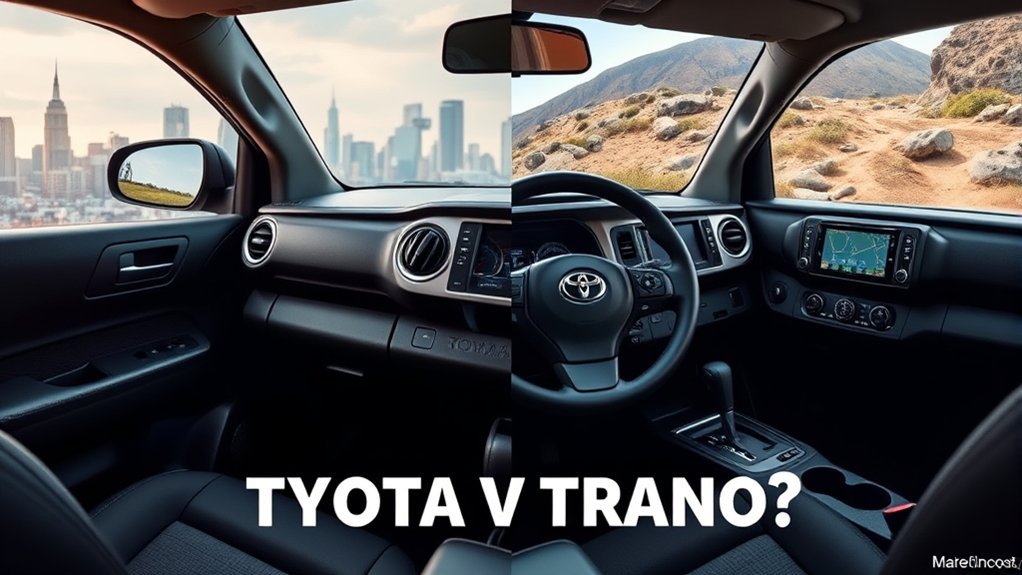
The transmission choice changes how the Tacoma feels and which configurations you can buy. The manual gives you direct control of gear selection, clutch engagement, and engine braking. The automatic removes clutch work, makes low-speed driving easier, and opens access to more trims and the i-FORCE MAX hybrid.
| Decision Factor | Manual Tacoma | Automatic Tacoma |
|---|---|---|
| Best overall use | Enthusiast driving and hands-on trail control | Commuting, towing, family use, and mixed driving |
| 2026 U.S. trim availability | Select SR, TRD Sport, and TRD Off-Road models | Available across the broader Tacoma lineup |
| Gas-engine output | 270 hp / 310 lb-ft | Up to 278 hp / 317 lb-ft; SR automatic is lower |
| Traffic and parking | More clutch work | Easier and less tiring |
| Off-road use | Direct gear and engine-braking control | No clutch management; more driver-assist compatibility on applicable trims |
| Hybrid availability | Not available | Required for i-FORCE MAX |
| Best default recommendation | Only if you specifically want a manual | Best for most buyers |
Decision rule: If you are unsure, choose the automatic. A buyer who will enjoy the manual usually already knows that clutch work and frequent shifting are part of the appeal.
What Are the Key Features of Each Tacoma Transmission?
The fourth-generation Tacoma pairs its turbocharged 2.4-liter four-cylinder engine with either a 6-speed intelligent manual transmission or an 8-speed electronically controlled automatic. Toyota lists 270 hp and 310 lb-ft for manual models. Most non-SR gas automatic models make up to 278 hp and 317 lb-ft. The entry-level SR automatic uses a lower-output engine tune, so the manual SR is the stronger SR on paper.
Manual Transmission Features
The manual Tacoma uses a 6-speed intelligent manual transmission, often called iMT. Toyota lists automatic rev matching, anti-stall technology, and a Clutch Start Cancel switch. These systems reduce some low-speed difficulty, but the driver still controls the clutch and each shift.
- Power: 270 hp and 310 lb-ft of torque.
- Driver control: You choose the gear and decide when to upshift or downshift.
- Trail use: Low range, engine braking, and Clutch Start Cancel can help an experienced driver in specific off-road situations.
- Availability: Select 2026 SR, TRD Sport, and TRD Off-Road models.
Note: Rev matching and anti-stall are driver aids. They do not replace correct clutch use, careful gear selection, or the instructions in the Tacoma owner’s manual.
Automatic Transmission Features
The gas Tacoma uses an 8-speed automatic, and the i-FORCE MAX hybrid also uses an 8-speed automatic. It is easier in traffic, smoother during low-speed maneuvers, and available in more Tacoma configurations. The automatic does not make peak torque earlier than the manual; Toyota lists the main gas outputs at the same 1,700-rpm torque peak in current-generation specifications.
- Power: Up to 278 hp and 317 lb-ft on most non-SR gas automatic models.
- SR exception: The automatic SR uses a lower-output tune than the manual SR.
- Hybrid option: i-FORCE MAX produces up to 326 hp and 465 lb-ft.
- Ease of use: No clutch work in traffic, parking lots, hill starts, or trailer maneuvers.
- Broader availability: More cab, bed, trim, drivetrain, and powertrain combinations.
Transmission Specification Comparison
| Feature | 6-Speed Manual | 8-Speed Automatic |
|---|---|---|
| Gas output | 270 hp / 310 lb-ft | Up to 278 hp / 317 lb-ft |
| SR output note | Higher-output SR powertrain | Lower-output SR tune |
| Torque peak | 1,700 rpm | 1,700 rpm on the 278-hp gas tune |
| Hybrid compatibility | No | Yes |
| Main advantage | Driver involvement | Convenience and configuration choice |
Does the Automatic Tacoma Get Better MPG?
Usually, yes. In the closest 2024 EPA comparison, a 4WD manual Tacoma was rated at 18 mpg city, 23 mpg highway, and 20 mpg combined. Comparable 4WD gas automatics were commonly rated at 19 to 20 mpg city, 23 to 24 mpg highway, and about 21 mpg combined. The automatic advantage is small, but it is consistent in most like-for-like current-generation gas comparisons.
For 2026, Toyota lists gas Tacoma configurations with highway ratings as high as 26 mpg and the i-FORCE MAX hybrid at 23 mpg combined. Exact ratings change with trim, drivetrain, cab, bed, tires, and transmission. Check the vehicle’s window sticker or Toyota’s configuration-specific specifications before comparing two trucks.
| 2024 EPA Gas Example | City | Highway | Combined |
|---|---|---|---|
| 4WD manual, 2.4L gas | 18 mpg | 23 mpg | 20 mpg |
| Comparable 4WD automatic, 2.4L gas | 19–20 mpg | 23–24 mpg | About 21 mpg |
Real-world mileage can move in either direction because of speed, load, tire choice, terrain, temperature, idling, towing, and driver habits. The manual does not guarantee better mileage simply because the driver selects the gears.
How Does the Driving Experience Differ?
The manual Tacoma keeps the driver busy. You choose the gear, control clutch take-up, and decide how much engine braking to use. That can make back roads and technical trails more engaging. It can also make traffic, parking, and repeated hill starts more tiring.
The automatic Tacoma lets you focus on steering, braking, traffic, trailer position, and terrain. It is easier for mixed daily use and easier to share with another driver. Its main trade-off is less direct involvement, not a lack of capability.
The manual is more involving. The automatic is easier to recommend.
What Are the Advantages and Drawbacks of the Manual Tacoma?
The manual Tacoma makes sense when driving engagement is a goal, not merely a side benefit. Its strengths are control and involvement. Its costs are clutch work, limited availability, and fewer powertrain choices.
| Manual Advantage | Practical Effect |
|---|---|
| Hold a selected gear | Useful on grades, back roads, and some trail sections |
| Direct engine braking | The driver controls the downshift and selected gear |
| iMT driver aids | Rev matching and anti-stall reduce some low-speed effort |
| Clutch Start Cancel | Can help restart in gear in appropriate off-road situations |
| Rarity | Appeals to buyers who specifically want a stick-shift pickup |
The drawbacks are equally important. A clutch is a wear item, stop-and-go traffic requires more effort, the hybrid is unavailable, and current manual configurations are limited. Do not buy the manual only because you expect lower repair costs or better resale. Neither outcome is guaranteed.
Pro Tip: Test the clutch take-up, pedal position, shifter feel, and highway rpm before ordering. A short test drive can reveal whether you enjoy this manual, not just manuals in general.
What Are the Benefits and Drawbacks of the Automatic Tacoma?
The automatic Tacoma is the more flexible ownership choice. It works better for stop-and-go traffic, frequent towing, shared drivers, and buyers who want the broadest trim selection. It is also required for the i-FORCE MAX hybrid.
Ease of Use
You do not have to balance a clutch on hills, crawl through traffic in first gear, or coordinate downshifts while merging. That lowers the workload during daily driving and low-speed trailer maneuvers.
Daily Driving Convenience
The automatic fits school runs, work commutes, long highway trips, and mixed city driving with less effort. It is also easier to lend or share because more drivers are comfortable with it.
| Automatic Advantage | Why It Matters |
|---|---|
| No clutch pedal | Less fatigue in traffic and parking |
| Consistent low-speed control | Easier trailer backing and obstacle approaches |
| Broader configuration range | More choices of trim, drivetrain, cab, bed, and powertrain |
| Hybrid compatibility | Access to 326 hp and 465 lb-ft |
| Fuel-economy edge | Usually about 1 mpg combined in comparable gas examples |
Automatic Trade-Offs
The automatic is less involving, and repair work can be more complex if a major internal failure occurs. It can also shift when an experienced manual driver would prefer to hold a gear, although selectable drive modes and manual gear selection can reduce that concern. These trade-offs rarely outweigh its convenience for a daily-driven truck.
Which 2026 Tacoma Trims Offer a Manual?
Toyota lists the 2026 manual transmission on select SR, TRD Sport, and TRD Off-Road models in the United States. It is not offered with the i-FORCE MAX hybrid, Limited, Trailhunter, or TRD Pro. The automatic is available across a much wider range of Tacoma configurations.
Availability still varies by drivetrain, cab, bed, package, region, and dealer allocation. Use Toyota’s current build tool and verify the transmission on the window sticker before placing a deposit. For a separate powertrain comparison, see the site’s Tacoma gas vs. hybrid guide.
Warning: Do not use an older model-year trim list to shop for a new Tacoma. Toyota has changed manual availability between generations and model years.
[Products Worth Considering]

This waterproof dog car seat cover helps protect your back seat from scratches, fur, mud, and spills while keeping pets comfortable during travel. Built with a nonslip design, side flaps, and secure anchors, it stays in place for added safety and peace of mind. Its versatile layout also works as a bench cover, cargo liner, or flat mat for outdoor use.

This universal trailer coupler lock helps secure trailers, vehicles, and RVs by fitting a wide range of common hitch couplers. Its advanced locking mechanism is designed to resist picking and prying, while the zinc construction helps protect against rust and corrosion for dependable outdoor use.

Built for towing, winching, and off-road recovery, this D-ring shackle set delivers dependable strength in a compact, easy-to-use design. The drop-forged steel construction and protective coated finish help provide reliable performance and resistance to rust in demanding outdoor conditions. Compatible with Jeeps, ATVs, UTVs, trucks, trailers, and SUVs, it is a practical recovery accessory for everyday trail and rescue use.
Is the Manual or Automatic Tacoma Better for Towing?
The automatic is the better towing choice for most drivers. It reduces clutch heat concerns during hill starts and trailer backing, and it works smoothly with available towing aids. Toyota lists a maximum Tacoma tow rating of up to 6,500 pounds, but that number applies only to a properly equipped configuration.
Do not assume a manual Tacoma can tow the lineup maximum. The exact rating depends on the truck’s trim, drivetrain, cab, bed, engine, transmission, options, curb weight, passengers, and cargo. Confirm the specific truck’s published tow rating and payload label before connecting a trailer.
| Towing Factor | Manual Tacoma | Automatic Tacoma |
|---|---|---|
| Hill starts | Requires careful clutch control | Easier for most drivers |
| Backing uphill | Can add clutch heat and wear | Smoother low-speed control |
| Engine braking | Direct gear control | Available through selected lower gears |
| Frequent towing | Possible within its exact rating | Better default choice |
| Maximum published capacity | Configuration-specific | Up to 6,500 lb on the proper configuration |
[Products Worth Considering]

This custom-fit Toyota Tacoma truck cover is designed to protect Access and Double Cab short bed models from rain, wind, sun, dust, snow, and everyday outdoor damage. Its multi-layer composite fabric offers waterproof, UV-resistant, breathable coverage, while practical details like a side zipper, wind straps, and reflective strips improve convenience and security. A storage bag and cleaning towel are included for easy care and transport.

This cordless portable air compressor delivers fast, reliable inflation for car tires and other inflatables with a powerful motor, high-pressure output, and automatic shut-off for precise results. Its rechargeable battery, compact size, and included accessories make it easy to carry and use at home, on the road, or during emergencies. A built-in LED light and preset modes add convenience and versatility for day or night use.

【IMPORTANT FUNCTION】Durable brazed aluminum construction, incorporates advanced low-pressure drop technology, 30% more cooling delivers maximum heat transfer. Maintain lower temperatures in your transmission, extend the life of the vehicle you depend on.
Which Transmission Is Better Off-Road?
Neither transmission is automatically better on every trail. The manual rewards an experienced driver who wants to choose each gear and control engine braking. The automatic reduces workload and avoids clutch management in sand, mud, steep climbs, and technical obstacles.
The manual’s Clutch Start Cancel switch can help in specific low-range situations. The automatic can pair with available systems such as Multi-Terrain Select and Crawl Control on applicable trims. Feature availability changes by trim and configuration, so confirm the build sheet rather than assuming every automatic includes every off-road aid.
Use low range for slow, difficult terrain and follow the correct shift procedure. The site’s Tacoma 4LO guide explains the basic sequence and safety limits.
| Off-Road Situation | Better Starting Choice | Reason |
|---|---|---|
| Experienced driver on slow technical trails | Manual | Direct gear and engine-braking control |
| Newer off-road driver | Automatic | Lower workload and no stalling |
| Sand or mud requiring steady momentum | Automatic | Smooth power delivery without clutch heat |
| Long descents | Either | Use low range and an appropriate low gear |
Which Tacoma Transmission Lasts Longer?
There is no verified mileage winner. A manual gearbox can last a long time, but its clutch wears faster with slipping, heavy traffic, repeated hill starts, towing, and difficult off-road use. An automatic can also last a long time, but heat, overload, fluid condition, and neglected service can shorten its life.
- Check the service history: Look for documented maintenance that matches Toyota’s schedule for the exact model and use.
- Inspect manual wear: Watch for clutch slip, chatter, difficult engagement, grinding, or a high bite point.
- Inspect automatic behavior: Watch for delayed engagement, harsh shifts, slipping, overheating warnings, or fluid leaks.
- Account for modifications: Oversized tires, added weight, towing, and hard off-road use raise stress on either transmission.
A well-maintained automatic is a safer purchase than an abused manual, and the reverse is also true. Condition and history matter more than a simple manual-versus-automatic label.
Which Tacoma Transmission Has Better Resale Value?
The automatic is usually easier to sell because more buyers can drive it and more Tacoma configurations use it. The manual has a smaller audience, but some enthusiasts actively search for clean stick-shift trucks.
No official data in the cited sources proves that one transmission always keeps a higher percentage of its value. Mileage, rust, accident history, maintenance records, trim, drivetrain, modifications, local demand, and overall condition can matter more than the gearbox.
Choose the automatic if broad resale demand is your priority. Choose the manual because you want to own and drive it, not because future appreciation is guaranteed.
Which Tacoma Transmission Has Better Performance?
For most non-SR gas trims, the automatic has the paper advantage at up to 278 hp and 317 lb-ft, compared with 270 hp and 310 lb-ft for the manual. The exception is the SR: Toyota’s lower-output automatic SR tune makes less power than the manual SR.
The i-FORCE MAX hybrid automatic is the strongest Tacoma powertrain at up to 326 hp and 465 lb-ft. The manual’s value is not maximum output. It is the driver’s control over each shift.
- Choose manual for involvement: You control the clutch, gear, and shift timing.
- Choose gas automatic for ease: You get smoother daily operation and the broadest gas-model choice.
- Choose hybrid automatic for maximum torque: i-FORCE MAX provides up to 465 lb-ft.
Which Tacoma Transmission Should You Choose?
Choose the manual if you already enjoy driving stick, can accept limited trim availability, and want the act of shifting to be part of every drive. Choose the automatic if your Tacoma will commute, tow often, carry family, be shared with other drivers, or cover long distances.
| Your Priority | Better Choice | Why |
|---|---|---|
| Daily comfort | Automatic | Less work in traffic and parking |
| Driver engagement | Manual | Direct control of each shift |
| Best gas fuel economy | Automatic | Usually better in comparable EPA ratings |
| Maximum torque | Hybrid automatic | Up to 465 lb-ft |
| Frequent towing | Automatic | Easier low-speed control and no clutch heat |
| Experienced technical trail driving | Manual or automatic | Choose direct control or lower workload |
| Widest trim selection | Automatic | Available across more Tacoma configurations |
| Rare stick-shift experience | Manual | One of few new pickups with a manual |
[Products Worth Considering]

For best performance, follow the manufacturer's recommendations in your vehicle owner’s manual.

Automatic Transmission Fluid WS is a world-spec fluid specifically designed for sealed, automatic transmissions.

For use in 95% of vehicles including most CVTs in operation with US registered light duty applications
Frequently Asked Questions
Which 2026 Tacoma trims have a manual transmission?
Toyota lists the 2026 manual on select SR, TRD Sport, and TRD Off-Road models in the United States. Availability can still vary by drivetrain, cab, bed, package, region, and dealer allocation.
Are Tacoma manual transmissions reliable?
They can be reliable, but there is no guaranteed lifespan. Clutch wear depends on traffic, towing, hill starts, off-road use, and driver technique. Service history and present condition matter more than a broad reliability claim.
Is a manual or automatic Tacoma better for daily driving?
The automatic is better for most daily drivers because it is easier in traffic, parking lots, hill starts, and long commutes. Choose the manual only if the extra involvement is a benefit to you.
Does the Tacoma manual get better gas mileage?
Usually, no. Comparable current-generation EPA ratings generally favor the automatic by about 1 mpg combined. Exact results depend on the model year, trim, drivetrain, tires, load, and driving conditions.
Can you get the Tacoma hybrid with a manual transmission?
No. The Tacoma i-FORCE MAX hybrid is paired with an 8-speed automatic transmission. It produces up to 326 hp and 465 lb-ft of torque.
Is the manual Tacoma better off-road?
It can be more rewarding for an experienced driver who wants direct gear and engine-braking control. The automatic is easier for many drivers because it removes clutch management and can work with more off-road driver aids on applicable trims.
Can a manual Tacoma tow 6,500 pounds?
Do not assume so. The 6,500-pound figure is the Tacoma lineup maximum for a properly equipped configuration. Check the exact manual truck’s published tow rating, payload label, options, passengers, and cargo before towing.
Which Tacoma transmission is better for resale value?
The automatic has a wider buyer pool, while the manual can attract enthusiasts. There is no guarantee that either will retain a higher percentage of value. Condition, mileage, history, trim, drivetrain, and local demand remain major factors.
Conclusion
The automatic Tacoma is the best choice for most buyers. It is easier in traffic, better suited to frequent towing, available in more configurations, and required for the i-FORCE MAX hybrid.
The manual Tacoma is the better choice for a smaller group: drivers who already enjoy a clutch pedal and want direct control to be part of the truck’s character. Test-drive both if possible, then verify the exact trim, transmission, fuel-economy rating, payload, and tow rating on the truck you plan to buy.
Sources
- Toyota USA Newsroom: 2026 Toyota Tacoma – current powertrain output, hybrid output, fuel-economy highlights, towing maximum, and model-year lineup.
- Toyota.com: 2026 Tacoma manual-transmission models – manual trim availability, rev matching, anti-stall technology, and Clutch Start Cancel.
- Toyota.com: 2026 Tacoma overview and trims – current trim, transmission, and powertrain availability.
- Toyota.com: 2026 Tacoma full specifications – configuration-specific MPG, drivetrain, cab, bed, and equipment data.
- FuelEconomy.gov: 2024 Toyota Tacoma ratings – direct current-generation manual and automatic EPA fuel-economy comparison.
- Toyota 2026 Tacoma owner’s manual – manual-transmission operation and driver-assist cautions.