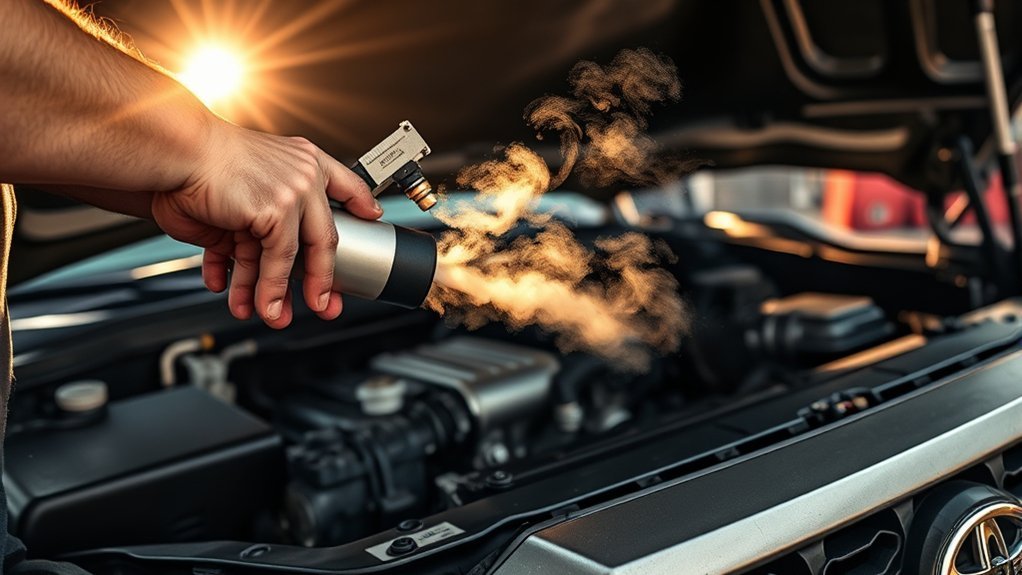
A vacuum leak on a Toyota Tacoma can cause rough idle, lean trouble codes, poor throttle response, stalling, and in some cases reduced brake assist. The best way to find one is to work in order: scan fuel trims, inspect hoses and intake seals, listen for hissing, then confirm the leak with a smoke test, vacuum gauge, or careful enrichment test.
Quick Answer
To check for vacuum leaks on a Toyota Tacoma, start with an OBD-II scan for lean codes and high positive fuel trims, then inspect vacuum hoses, the intake tube, PCV hose, brake booster line, throttle body gasket, and intake manifold gaskets. A smoke test is the safest and most reliable confirmation method.
Key Takeaways
- Common signs include rough idle, hissing sounds, stalling, lean codes such as P0171 or P0174, and fuel trims that are high at idle.
- Check simple parts first: cracked hoses, loose clamps, the intake boot, PCV hose, brake booster hose, vacuum caps, and intake gasket areas.
- A smoke test with the engine off is usually safer and more accurate than spraying flammable chemicals around a running engine.
- Brake-related vacuum problems deserve immediate attention because loss of brake assist can make the pedal hard and increase stopping effort.
At a Glance
| Time Required | 20–60 minutes for basic checks; longer if parts must be removed |
| Difficulty | Beginner to intermediate |
| Tools Needed | OBD-II scanner, flashlight, inspection mirror, mechanic’s stethoscope or hose, smoke machine or handheld vacuum pump |
| Cost | Often $0–$40 for hose or clamp repairs; more for gaskets, smoke testing, or brake booster parts |
Warning: If your Tacoma has a hard brake pedal, brake warning message, sudden loss of brake assist, or a loud hiss when pressing the brake pedal, do not treat it as only an idle problem. Inspect the brake booster vacuum hose, check valve, and vacuum source immediately, and have the truck repaired before normal driving.
Recognizing Symptoms of Vacuum Leaks and Their Impacts
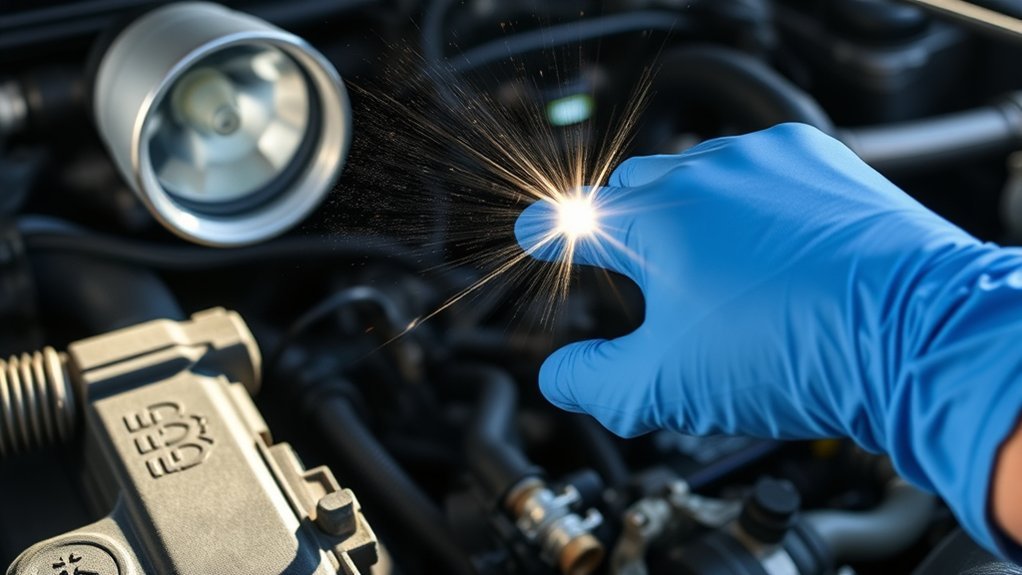
A vacuum leak lets unmetered air enter the engine after the air has already been measured by the intake system. That extra air can make the engine run lean, especially at idle, where a small leak has a bigger effect.
Watch for these common Tacoma vacuum leak symptoms:
- Rough or unstable idle: The idle may surge, dip, or feel shaky when stopped.
- Lean trouble codes: P0171, P0174, or fuel-trim-related codes may appear on an OBD-II scanner.
- High positive fuel trims: Short-term and long-term fuel trims may climb because the computer is adding fuel to correct the extra air.
- Hissing sounds: A steady hiss near a hose, intake gasket, throttle body, or brake booster line can point to a leak.
- Stalling or near-stalling: A larger leak can make the engine stumble when coming to a stop.
- Hard brake pedal: A leak in the brake booster hose, check valve, booster, or vacuum pump system can reduce brake assist.
Do not assume every lean code is a vacuum leak. A dirty mass airflow sensor, exhaust leak ahead of an oxygen sensor, low fuel pressure, faulty sensor, or EVAP purge valve stuck open can create similar symptoms. That is why the best diagnosis combines scan data, inspection, and a confirmation test.
Pro Tip: A vacuum leak often shows worse fuel trims at idle and improved trims at 2,000–2,500 rpm. If fuel trims stay high at all speeds, also check the MAF sensor, fuel delivery, exhaust leaks, and oxygen sensor data.
Essential Tools for Detecting Vacuum Leaks
You can find many leaks with simple tools, but a few diagnostic tools make the job faster and safer.
- OBD-II scanner: Use it to read codes, monitor short-term and long-term fuel trims, and confirm the repair after clearing codes.
- Flashlight and inspection mirror: These help you inspect hidden hoses, clamps, grommets, and intake gasket areas.
- Mechanic’s stethoscope or rubber hose: Use it as a listening tool to locate hissing sounds without putting your hands near moving belts or fans.
- Smoke machine: This is the most reliable DIY-friendly test for small leaks. It fills the intake or vacuum circuit with visible smoke while the engine is off.
- Handheld vacuum pump: Use it to test vacuum-operated components, check valves, and hoses one part at a time.
- Vacuum gauge with T-fitting: This helps measure system vacuum, especially around brake booster and vacuum pump circuits on models that use a dedicated vacuum pump.
Use the repair information for your exact year and engine before disconnecting lines. Tacoma vacuum routing varies by generation, engine, emissions equipment, and whether the truck has a 2.7L four-cylinder, 3.5L V6, turbocharged engine, or hybrid system. Toyota’s official manuals and warranty resources are available through Toyota Owners, and factory repair information is available through Toyota Technical Information System.
[Products Worth Considering]

The ANCEL AD410 PRO combines engine diagnostics and 12V battery testing in one easy-to-use tool, helping you read and clear check engine codes while checking battery health, cranking, and charging performance. It also provides live data, freeze frame details, and I/M readiness checks to help you diagnose issues faster and prepare for emissions testing. With plug-and-play operation, a clear screen, and broad vehicle compatibility, it is a practical solution for home mechanics and everyday drivers.

The ANCEL AD410 helps drivers quickly read and clear engine-related fault codes, view live data, and understand why the check engine light is on before heading to a repair shop. With built-in code definitions, readiness checks, and support for common OBD2 functions, it makes basic diagnostics straightforward for beginners and DIY users. Powered directly from the vehicle and easy to use with no app required, it offers practical value for everyday vehicle troubleshooting.

These silicone windshield wiper blades are designed as replacement fitments for a wide range of Toyota, Kia, Hyundai, GMC, Chevrolet, and Ford vehicles. They deliver smooth, streak-free wiping with quieter operation and improved resistance to cracking and deformation across changing weather conditions. The easy-install design helps drivers replace worn blades quickly without tools.
Visual Inspection: Common Areas to Check
Start with a cold engine when possible. Look for hoses that are cracked, swollen, oil-soaked, brittle, disconnected, rubbing against another part, or loose at the clamp. Many vacuum leaks are found before any special tool is needed.
Inspect Vacuum Hoses
Inspect every visible vacuum hose and rubber connector. Bend each hose gently and look for surface cracks that open under movement. Pay close attention to hose ends because they often split where the hose slides over a plastic nipple.
Common Tacoma leak points include:
- Brake booster vacuum hose and check valve
- PCV hose and valve grommet
- EVAP purge valve hoses
- Vacuum caps on unused ports
- Small molded elbows near the intake manifold
- Air intake tube between the air box, MAF sensor area, and throttle body
- Throttle body gasket area
- Intake manifold gasket area
Replace damaged hose with the correct diameter and vacuum-rated material. Fuel hose, coolant hose, and generic soft tubing may not hold shape under engine vacuum or heat.
Check Intake Manifold Gasket
The intake manifold gasket seals the manifold to the cylinder head or lower intake section. A leak here can cause a lean condition, rough idle, and misfires that may be worse on one bank or one cylinder group.
Use a flashlight to inspect around the manifold edges. Look for loose bolts, disturbed gasket areas, missing brackets, oil residue, dust tracks, or signs that a previous repair left a hose unplugged. A visual inspection may not reveal a small gasket leak, so confirm suspicious areas with smoke testing or scan-tool data before replacing parts.
Inspect the Intake Boot and MAF Area
Do not overlook the intake boot. Cracks in the flexible duct after the MAF sensor can allow unmetered air into the engine and mimic a vacuum leak. Remove the duct if needed and flex it under bright light. Small cracks often hide in the ribs on the underside.
Make sure the air box is sealed, clamps are tight, and the MAF sensor connector is fully seated. If the boot is cracked after the MAF sensor, replacement is better than tape because heat and engine movement can reopen the leak.
How to Use the Soapy Water Test for Leak Detection
A soapy water test is useful only in the right situation. On a running engine, most intake vacuum leaks pull air inward, so you may not see bubbles. Bubbles usually appear when the area is under slight positive pressure, such as during a smoke test or a low-pressure intake pressure test.
Use this method safely:
- Mix the solution: Add a small amount of dish soap to water in a spray bottle.
- Use low pressure only: Follow the smoke machine or test tool instructions. Do not over-pressurize the intake system.
- Spray suspected areas: Focus on hose connections, rubber elbows, vacuum caps, and gasket edges.
- Watch for bubbles or smoke movement: Bubbling, smoke escape, or fluid being pulled inward points to a leak path.
- Dry the area: Wipe off the solution after testing to prevent residue on connectors, sensors, and metal parts.
Note: Avoid spraying soapy water on the alternator, open electrical connectors, ignition components, belts, pulleys, or hot exhaust parts. If the engine is running, keep hands, sleeves, and tools clear of the fan and drive belt.
Using Propane and Other Gas Methods for Leak Detection
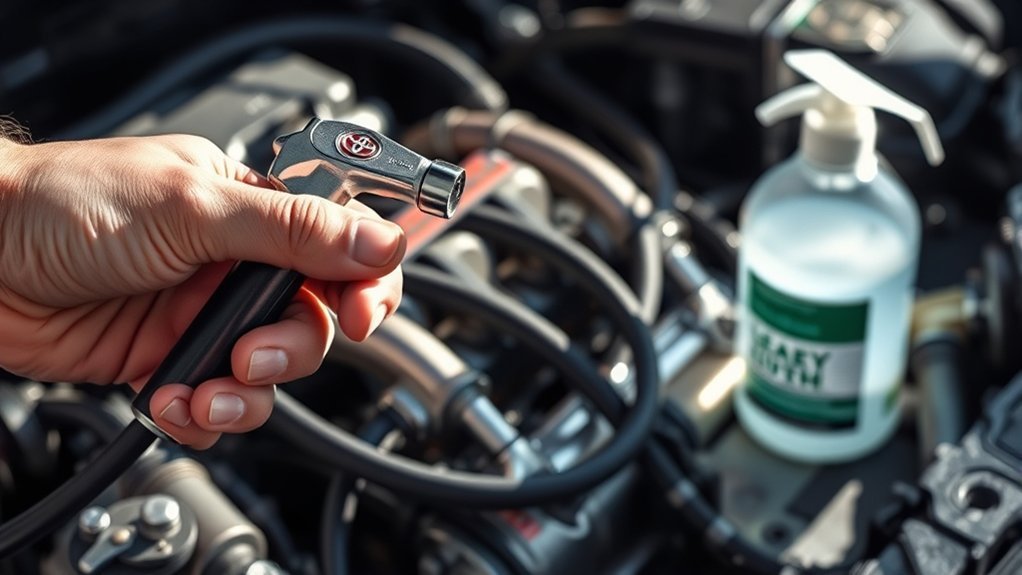
An unlit propane enrichment test can help identify a vacuum leak, but it should be used with caution. The idea is simple: if propane is drawn through a leak, the air-fuel mixture changes and the engine idle or fuel trims may respond.
To use this method:
- Work outdoors or in a very well-ventilated area.
- Keep the propane torch unlit at all times.
- Use only a small flow of propane.
- Move the nozzle slowly around suspected leak points.
- Watch for a change in idle speed, smoother running, or a short-term fuel trim change.
Check around the throttle body gasket, intake manifold gasket edges, vacuum hose ends, PCV hose, EVAP purge hose, and brake booster hose connection. If the idle changes at one spot, confirm the leak with smoke testing or a close visual inspection before replacing parts.
Warning: Propane is flammable. Do not use this test near sparks, cigarettes, hot exhaust, damaged wiring, or ignition arcing. Do not use brake cleaner, carb cleaner, or starting fluid as a casual spray test; those products can ignite and can damage rubber, sensors, or painted surfaces.
Smoke Testing for the Most Reliable Confirmation
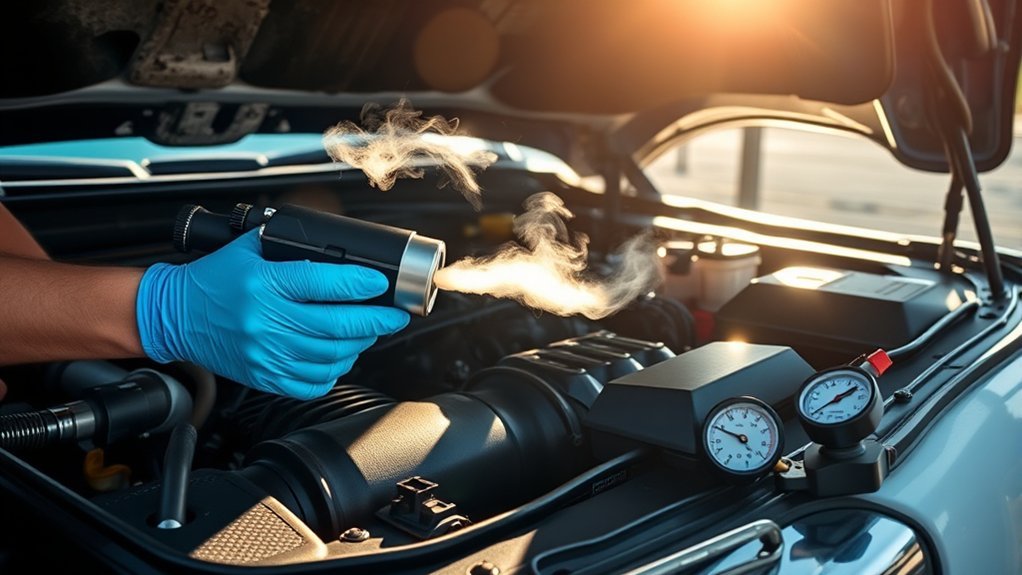
A smoke test is usually the best way to find a small Tacoma vacuum leak because the engine is off, the test is visible, and you can inspect slowly without chasing changes in idle speed.
Basic smoke-test process:
- Turn the engine off: Let hot parts cool enough to work safely.
- Seal the intake opening: Block the intake tube according to the smoke machine instructions.
- Introduce smoke: Feed smoke through a vacuum line, intake adapter, or approved service port.
- Inspect slowly: Look around hoses, the throttle body, intake manifold, PCV connections, brake booster hose, and EVAP purge lines.
- Mark the leak: Use tape or a marker so you can repair the exact point after the smoke clears.
Do not force shop air into the intake unless the smoke machine is designed for it and regulated for automotive intake testing. Too much pressure can damage sensors, seals, or diaphragms.
[Products Worth Considering]

This multi-function valve stem removal kit streamlines tire maintenance with single-head and double-head tools for quick valve core removal, installation, and cleaning. Built with corrosion-resistant materials and tested valve cores, it offers dependable performance for cars, trucks, motorcycles, bicycles, and more. The compact set includes multiple cores and caps, making it a practical solution for repairs at home or on the go.

The Chemical Guys TORQ Foam Blaster 6 Cannon turns any standard garden hose into an easy foaming car wash tool. Its adjustable foam dial lets you customize suds from light rinse to thick foam, helping lift dirt and grime while reducing swirl marks and scratches. Designed for safe, convenient washing, it makes cleaning cars, wheels, glass, and trim faster and more enjoyable for the whole family.
Applying Ultrasonic Leak Detectors for Accurate Diagnosis
Ultrasonic leak detectors convert high-frequency leak sounds into a signal you can hear through headphones. They can be helpful for small leaks in quiet areas, but they are not required for most DIY Tacoma diagnosis.
Benefits of Ultrasonic Detection
- Precision: The probe can help narrow down a sound source when several hoses are close together.
- No chemicals: You do not need flammable spray or solvent near the engine.
- Good for hidden areas: It can help near the rear of the intake manifold, brake booster hose, or crowded vacuum routing.
- Useful after repairs: Rechecking the same area can help confirm that a hiss is gone.
Effective Leak Localization Techniques
Move the ultrasonic probe slowly around one area at a time. Keep the tip close to hose ends, gasket seams, and plastic fittings without touching moving parts. Compare the sound level from several angles before deciding a part is leaking.
For the best results, use ultrasonic detection together with a smoke test or fuel-trim data. Sound alone can be misleading because injectors, pumps, belts, and normal airflow can create noise.
Key Areas to Inspect for Vacuum Leaks
Focus on parts that commonly age, move, or get disturbed during maintenance. A Tacoma that recently had spark plugs, valve cover work, throttle body cleaning, intake removal, or air filter service may simply have a hose or clamp left loose.
A small vacuum leak at idle can cause a big drivability problem because the engine is trying to meter a very small amount of air. Start with the simple rubber and plastic parts before assuming a major engine fault.
- Vacuum hoses and connections: Check for cracks, splits, oil-softened rubber, loose clamps, and disconnected lines.
- Intake tube after the MAF sensor: Look for cracks in the underside ribs and loose clamps at both ends.
- PCV system: Inspect the PCV valve, grommet, and hose for leaks or clogging.
- EVAP purge valve and hoses: A purge valve stuck open can behave like a vacuum leak and create a rough idle after refueling.
- Throttle body gasket: Check for disturbed gasket surfaces after cleaning or service.
- Intake manifold gaskets: Smoke around the manifold edge or cylinder-specific lean misfire symptoms may point here.
- Brake booster hose and check valve: Inspect for hissing, hard pedal, loose fittings, or damaged check valve parts. Toyota sells brake booster vacuum check valves for specific applications through Toyota Genuine Parts.
- Vacuum pump circuit on equipped models: Some Tacoma engines use a vacuum pump for brake assist. Toyota and NHTSA documents show that certain Tacoma vacuum pump concerns can affect brake assist, so warning lights or hard-pedal symptoms should be handled urgently.
How to Analyze Engine Behavior During Leak Testing
Engine behavior gives important clues, but it should not be your only proof. Use the scanner, your ears, and a confirmation test together.
Here is what to watch:
- Idle quality: A leak may cause surging, shaking, or stalling when the throttle is closed.
- Fuel trims: Positive trims at idle that improve at higher rpm often suggest unmetered air.
- RPM response during enrichment testing: If the idle smooths out or rises when propane reaches one spot, that spot may be leaking.
- Brake pedal effect: A hiss or idle change when pressing the brake pedal can point to the brake booster hose, check valve, or booster.
- Smoke location: Smoke escaping from a hose end, gasket seam, or fitting is strong visual evidence of a leak.
If a warning light or warning message appears and continues to return, follow the Toyota owner’s manual guidance and have the vehicle inspected. Toyota notes in its owner information that continuing warning lights or repeated warning messages can indicate a malfunction that requires inspection by a dealer or qualified technician.
Next Steps After Finding a Leak
Once you find the leak, repair it properly instead of sealing it temporarily. Tape, silicone smeared over old rubber, or zip ties on cracked hoses may work for a short time but usually fail again with heat and engine movement.
- Replace damaged parts: Use the correct vacuum hose, molded hose, gasket, grommet, cap, or check valve for your Tacoma.
- Secure every connection: Reinstall clamps and make sure hoses are fully seated on their fittings.
- Clear codes: Use an OBD-II scanner after the repair.
- Recheck fuel trims: Let the engine reach operating temperature and confirm that trims improve at idle.
- Repeat the smoke test: Confirm that smoke no longer escapes from the repaired area.
- Test drive carefully: Check for smooth idle, clean acceleration, normal brake pedal feel, and no returning warning lights.
If the leak is at the intake manifold gasket, brake booster, vacuum pump circuit, or a hard-to-reach plastic fitting, consider professional diagnosis. These repairs can affect braking, emissions, and engine performance if they are done incorrectly.
Preventing Future Vacuum Leaks
Vacuum leaks are easier to prevent than to chase later. Add a quick hose inspection to normal maintenance, especially before long trips or after any under-hood repair.
- Replace brittle or oil-soaked hoses before they split.
- Make sure the air filter box and intake tube are fully seated after filter changes.
- Use the correct replacement hose size so fittings seal tightly.
- Do not pull hoses off by force; twist gently or use a hose pick to avoid breaking plastic nipples.
- Keep oil leaks under control because oil can soften rubber vacuum parts.
- Check for open recalls by VIN if your Tacoma shows brake assist or vacuum pump symptoms.
Frequently Asked Questions
What are common signs of a vacuum leak on a Toyota Tacoma?
Common signs include rough idle, surging, stalling, hissing sounds, poor fuel economy, lean codes such as P0171 or P0174, and high positive fuel trims at idle. A hard brake pedal or hissing when pressing the brake pedal can point to a brake booster vacuum problem.
Can I drive my Tacoma with a vacuum leak?
A small engine vacuum leak may let the truck run, but it can cause lean running, stalling, misfires, and poor drivability. If the leak affects brake assist, do not continue normal driving until it is repaired because the brake pedal may become hard and stopping effort can increase.
Is a smoke test better than spraying cleaner around the engine?
Yes. A smoke test is usually safer and more accurate because the engine is off and the smoke visually shows where air escapes. Spraying flammable cleaner around a running engine can create a fire risk and may damage rubber or electrical parts.
Will a vacuum leak always trigger a check engine light?
No. Small leaks may cause a rough idle or fuel trim changes before the check engine light turns on. Larger or long-term leaks are more likely to trigger lean codes, misfire codes, or emissions-related warnings.
What Tacoma parts should I check first for a vacuum leak?
Start with the intake tube, vacuum hoses, PCV hose, EVAP purge hoses, brake booster hose, vacuum caps, throttle body gasket, and intake manifold gasket area. Also check anything that was recently removed during maintenance.
Conclusion
Finding a vacuum leak on a Toyota Tacoma is easiest when you follow a steady process instead of guessing. Start with scan data and a visual inspection, check the common hose and intake areas, then confirm the leak with smoke, a vacuum pump, or careful enrichment testing. Repair the exact leak, clear the codes, and verify the fix with fuel trims and a test drive. If brake assist is affected, treat the problem as a safety repair, not just an engine-performance issue.
Sources
- Toyota Owners Manuals and Warranties — official owner manual access for model-specific warnings, maintenance, and inspection guidance.
- Toyota Technical Information System — official Toyota factory repair information and model-specific service procedures.
- NHTSA Safety Recall 18V211 Toyota Tacoma vacuum pump notice — supports the brake-assist safety warning for affected Tacoma vacuum pump systems.
- NHTSA Toyota vacuum pump diagnostic bulletin — supports checking vacuum leaks and measuring system vacuum with a gauge and T-fitting during diagnosis.
- Toyota Genuine Vacuum Check Valve Assembly — supports the role of the brake booster vacuum check valve in brake assist operation.