
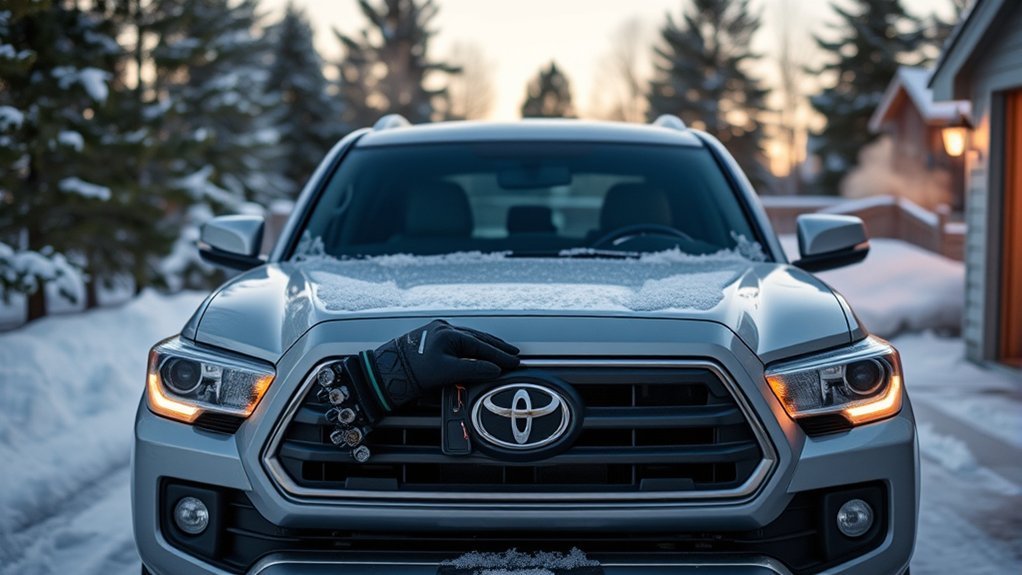
Cold weather can expose weak points in a Toyota Tacoma, especially a marginal 12-volt battery, poor terminal connections, incorrect oil viscosity, low tire pressure, or inadequate coolant protection. The best cold-start prep is simple: test the battery before winter, use the Toyota-specified oil and coolant for your exact model year and engine, keep the fuel tank close to full before severe weather, check tires and wipers, and carry a compact winter kit.
Quick Answer
To prepare a Toyota Tacoma for cold starts, test the 12-volt battery and charging system, inspect the terminals, use the oil viscosity and coolant specified for your exact model year, keep the fuel tank close to full before severe weather or long trips, set cold tire pressure to the door-jamb placard, and avoid extended warm-up idling. Start normally, make sure visibility is clear, then drive gently while the powertrain warms.
Last updated: September 16, 2026. Rechecked against current Toyota owner guidance, Toyota Canada battery guidance, NHTSA winter-driving recommendations, and EPA idling guidance.
Editorial basis: This is a source-based maintenance guide. It does not claim hands-on cold-chamber testing; model-year-specific procedures should be confirmed in the Toyota owner’s manual for your truck.
Key Takeaways
- Battery condition and terminal connections are among the first things to check when a Tacoma cranks slowly in freezing weather, so test them before the first cold snap.
- Use only the oil, coolant, transmission fluid, and gear oil specifications listed for your Tacoma’s model year.
- Keep the fuel tank close to full whenever practical before storms or long winter trips so you have extra range if traffic, closures, or delays keep you on the road.
- Modern gasoline vehicles do not need a long warm-up. Start normally, clear the glass, then drive gently instead of idling for several minutes.
- Carry jumper cables or a jump pack, traction aids, warm gear, a shovel, and an ice scraper in winter.
At a Glance
| Time Required | 30–60 minutes for basic checks; longer if parts need replacement |
| Difficulty | Easy to moderate |
| Tools Needed | Multimeter, tire pressure gauge, battery terminal brush, gloves, scraper, owner’s manual |
| Cost | Low for inspection; moderate if you need a battery, tires, fluids, or a jump pack |
Quick Cold-Start Checklist for Your Toyota Tacoma
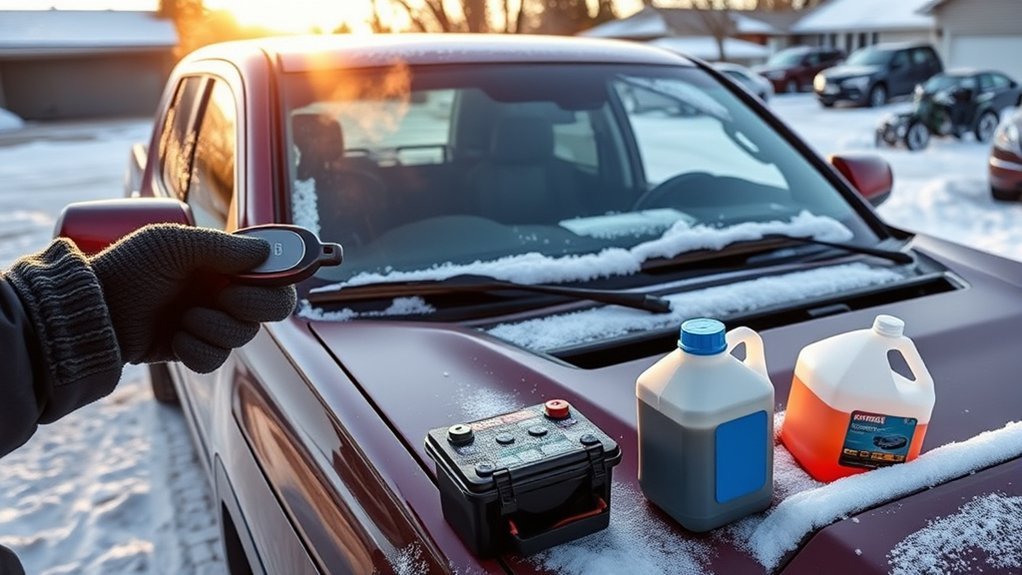
Before freezing weather hits, check these cold-start basics:
- Battery: Confirm the battery is charged and can pass a proper load or conductance test; age alone does not prove that a battery is healthy.
- Battery terminals: Inspect for corrosion and loose connections. Before disconnecting any terminal, check the exact owner’s-manual procedure for your model year because some Toyota models use a battery state sensor at the negative terminal.
- Engine oil: Use the viscosity and specification shown in your Tacoma owner’s manual or on the oil cap. Toyota explains that the number before the “W” in grades such as 0W-20 relates to cold-start performance, and a lower number helps oil flow more easily in cold weather.
- Coolant: Make sure the coolant level is correct and that the antifreeze protection matches your winter temperatures.
- Fuel: Keep the tank close to full whenever practical before storms, remote travel, or long winter drives.
- Tires: Check cold tire pressure and tread depth, and use winter tires or approved chains when conditions call for them.
- Warm-up: After starting, idle briefly, clear the glass, then drive gently until the engine and transmission are warm.
- Emergency kit: Carry jumper cables or a jump pack, gloves, a scraper, traction aids, a shovel, a flashlight, water, snacks, and a phone charger.
Warning: Never warm up your Tacoma in a closed garage. If you are stuck in snow and need heat, clear the exhaust pipe first and run the engine only briefly to reduce carbon monoxide risk.
How to Test and Read Your Tacoma’s Battery Health
Cold temperatures reduce available battery performance, which makes an already weak 12-volt battery or poor connection easier to notice. Toyota Canada specifically recommends checking battery condition, charging-system health, and terminal corrosion before winter.
2024-and-newer i-FORCE MAX note: Tacoma hybrid models also use a 12-volt battery, so the same winter battery-health checks still matter. Follow the hybrid-specific starting procedure and warning messages in the owner’s manual rather than treating the truck exactly like a non-hybrid Tacoma.
Start with a simple voltage check only as a screening step. Let the truck sit with the engine and accessories off, then measure across the battery posts with a multimeter. A conventional fully charged 12-volt lead-acid starting battery is commonly around 12.6 volts at rest, but AGM and other battery designs can use different fully charged values. If the reading is low for the battery type, charge it correctly and retest.
Voltage alone does not prove the battery can crank a cold engine. A load or conductance test is the better next step if the battery is several years old, the starter has been cranking slowly, or the truck has needed a jump. A repair shop or battery specialist can test the battery and charging system together.
| Battery Check | What It Means | What To Do |
|---|---|---|
| Clean, tight terminals | Good electrical contact | Clean and protect before winter |
| Slow crank in cold weather | Weak battery, poor connection, or starter draw issue | Test battery and charging system |
| Older battery or unknown service history | Higher chance of reduced reserve capacity | Test before severe cold |
| Needs repeated jump starts | Battery may not hold charge | Diagnose before driving in severe cold |
Pro Tip: Test the battery before the first deep freeze, not after the first no-start. Cold weather often exposes a battery that was already weak.
Clean and Protect Battery Terminals for Winter Reliability
Corrosion adds resistance between the battery and the starter. In cold weather, that small voltage loss can be the difference between a quick start and a clicking starter.
Clean Battery Posts
Wear gloves and eye protection. First check the owner’s manual for your exact Tacoma before disconnecting a battery cable. Toyota Canada notes that some Toyota models have a battery state sensor on the negative terminal and advises against casual terminal disconnection. If your model’s procedure permits battery removal or disconnection, follow that procedure exactly; otherwise, clean accessible exterior corrosion without disturbing the connection and have a technician service heavy corrosion.
If the battery is disconnected under an approved procedure, follow the specified disconnect/reconnect order and any required initialization steps for your model year. Inspect the cables for swelling, fraying, cracked insulation, looseness, or heat damage.
Apply Corrosion Preventative
After the terminal area is clean and dry, use a battery-terminal protectant only as directed by the product maker and your vehicle guidance. Keep protectant away from surfaces where it could interfere with the electrical connection.
- Inspect the battery case for cracks, bulging, or leaks.
- Remove visible corrosion safely; if the clamps must come off, follow the exact Toyota procedure for your model year.
- Charge a weak battery before severe cold arrives.
- Use a battery maintainer if the Tacoma sits for long periods in freezing weather.
Warning: Do not attempt to charge, jump, or handle a battery that appears frozen, cracked, leaking, or badly swollen. Have it inspected safely.
Best Engine Oil and Fluids for Tacoma Cold Starts
Cold oil moves more slowly, so the correct oil viscosity is a major part of cold-start protection. Toyota has used different oil grades across Tacoma generations and engines, so there is no universal winter viscosity for every truck. Check the exact owner’s manual, oil filler cap, or the model-year-specific Tacoma oil-viscosity guide before changing grades.
Toyota explains that the number before the “W” describes cold-start viscosity behavior and that a lower value allows easier starting in cold weather. Use that explanation to understand the label, not to choose a different grade on your own: the correct viscosity and performance specification still come from the manual for your exact engine.
Also check these fluids before the season:
- Coolant: Confirm the reservoir level and freeze protection. Use Toyota-approved coolant or an equivalent that meets the correct specification for your Tacoma.
- Transmission fluid: Do not add generic winter additives. Use the Toyota-specified automatic transmission fluid or manual transmission fluid for your model.
- Differential and transfer case fluids: If you drive in deep cold, tow, or off-road, follow the severe-service maintenance schedule and use the specified gear oil.
- Washer fluid: Fill the reservoir with winter washer fluid that is rated below your expected temperatures.
- Brake fluid: Keep service up to date and have the system inspected if the fluid condition or maintenance history is unknown.
Note: If your Tacoma is still under warranty, keep receipts and use fluids that meet Toyota’s specifications. Universal fluids and additives can create problems instead of solving them.
[Products Worth Considering]
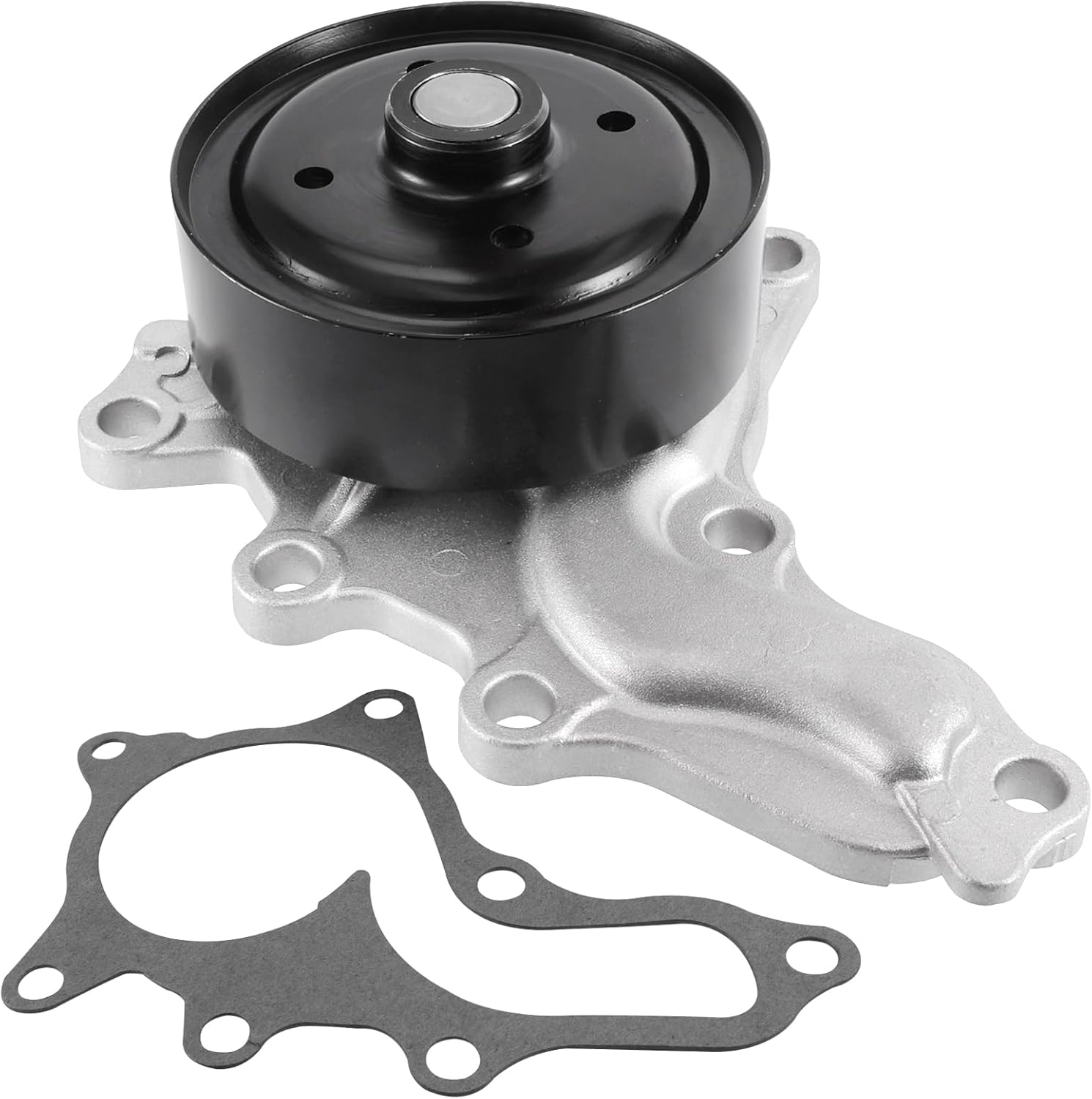
This AW6252 water pump is designed for a wide range of Toyota, Scion, and Lexus applications, helping maintain reliable engine cooling across compatible models. It features case hardened bearings for durability, a graphite-impregnated gasket for a secure seal, and 100% function and leakage testing for dependable performance. Built in TS16949 certified facilities, it offers a strong replacement option backed by service support.

This three-piece windshield wiper set is designed for compatible Toyota RAV4 and Highlander models to help deliver clear visibility in everyday driving. The natural rubber blades feature a graphite-treated surface for quiet, smooth wiping performance and reliable weather resistance. Installation is quick and tool-free, making it easy to replace worn blades on the front and rear of your vehicle.
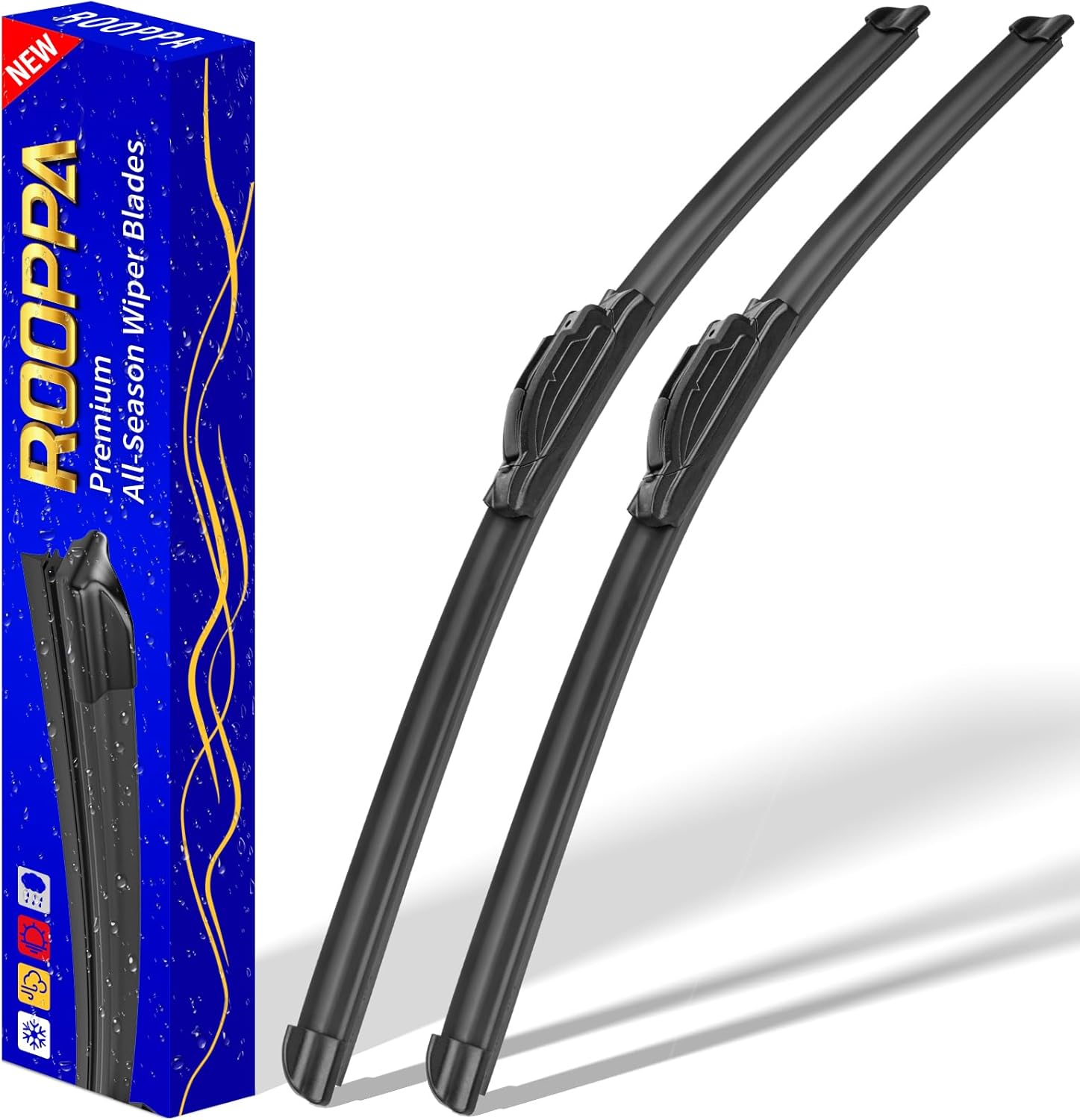
This front wiper blade set is designed as a direct replacement for select Toyota Corolla and RAV4 models, helping restore clear visibility in rain and road spray. Built for smooth, quiet performance with an easy plug-and-play installation, it includes both blades needed for the front windshield and is made to support dependable everyday driving.
Fuel Tips to Prevent Freeze and Cold-Weather Fuel Problems
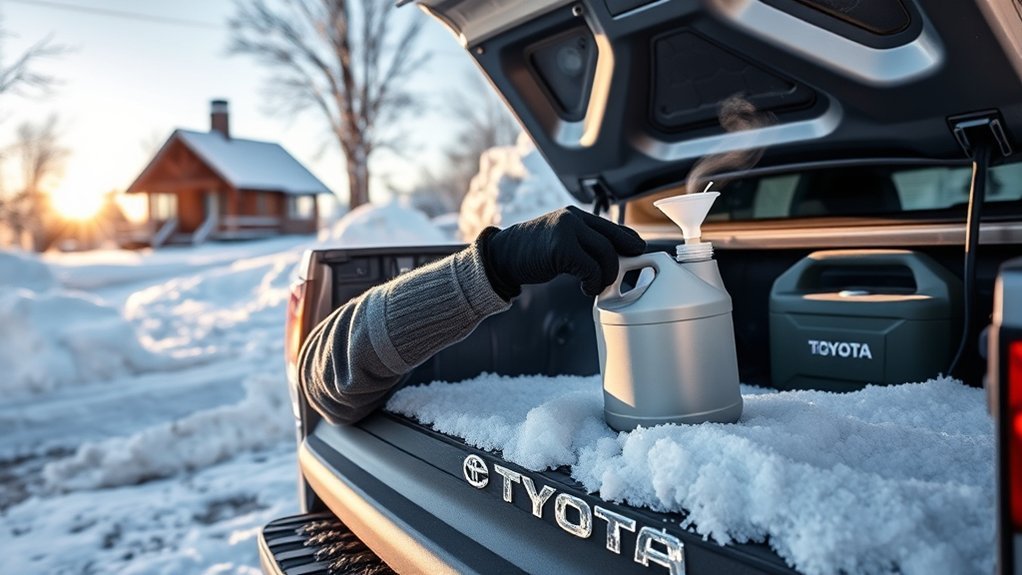
For a gasoline Tacoma, winter fuel preparation is mostly about having enough clean fuel for cold starts, detours, traffic, or an unexpected delay. NHTSA advises keeping the gas tank close to full whenever possible in winter. If the engine cranks normally but will not start, diagnose the fault instead of assuming the fuel is “frozen.”
Keep Fuel Tank Full
Keep the tank close to full whenever practical, especially before storms, mountain drives, or long trips. The main benefit is reserve range if traffic, road closures, or a breakdown leaves you waiting longer than planned.
- Refuel early before severe weather or remote winter travel.
- Use busy, reputable stations where fuel turns over quickly.
- Make sure the gas cap seals properly.
- Plan extra fuel range before driving into remote winter areas.
Use Quality Winter-Season Fuel
You usually do not need a special “winter fuel” additive for a gasoline Tacoma. Buy fresh fuel from a reputable station and avoid using old gasoline from a container with an unknown storage history.
If your Tacoma sits for weeks at a time, consider using a fuel stabilizer that is safe for gasoline engines and follow the product directions. Do not over-treat the tank, and do not use diesel anti-gel products in a gasoline Tacoma.
Prevent Moisture-Related Fuel Issues
If the engine cranks normally but does not start, and you suspect fuel trouble, avoid repeated long cranking. Check for warning lights, low fuel, water contamination symptoms, and recent refueling history. If the issue continues, have the fuel system diagnosed rather than guessing with additives.
Winter fuel prep is mostly about fresh fuel and enough reserve for delays—not guessing with random additives when the truck has a no-start problem.
Prep Tires and Traction for Safer Cold-Weather Starts
Cold starts are not only about getting the engine running. Once the Tacoma starts, it still needs traction to move safely. Tire pressure drops as outside temperature falls, so check all four tires and the spare when the tires are cold.
Use the pressure listed on the driver-side door placard, not the maximum pressure stamped on the tire sidewall. For a step-by-step check, see the Tacoma tire-pressure guide. Inspect tread depth, sidewalls, punctures, bulges, and uneven wear. NHTSA says tread should be at least 2/32 inch or greater; for snow and slush, more usable tread depth gives additional margin.
If winter temperatures stay low where you live, winter tires are a major upgrade. Their rubber compound and tread design are made for cold pavement, snow, and ice. All-terrain tires can help off-road, but they are not automatically equal to a true winter tire on ice.
Carry tire chains only if they are legal where you drive and approved for your Tacoma’s tire size and trim. Practice installing them at home before you need them in the dark beside a snowy road.
- Check cold tire pressure at least monthly.
- Inspect the spare tire before winter trips.
- Carry a tire pressure gauge and compact inflator.
- Pack traction mats, sand, or non-clumping kitty litter.
- Use four-wheel drive when appropriate for the surface and your Tacoma’s system, but remember that extra drive traction does not eliminate the need for longer braking distances on snow or ice.
How to Warm Up and Start Your Tacoma Safely
A safe cold start is controlled, brief, and easy on the engine. Do not race the engine immediately after startup. Modern gasoline vehicles do not need several minutes of stationary warm-up solely for engine protection; once the truck is ready and visibility is clear, drive gently while the engine and transmission warm.
Before You Start
- Turn off headlights, seat heaters, blower fan, and other accessories before cranking.
- Make sure the parking brake is set and the transmission is in Park or Neutral as appropriate.
- Clear heavy snow from the hood, grille, roof, windshield, lights, mirrors, and tailgate.
- Check that the exhaust outlet is not blocked by snow.
Start the Engine Correctly
Start the Tacoma normally. If it does not start within several seconds, stop and wait briefly before trying again. Repeated long cranking can overheat the starter and drain the battery.
Once the engine starts, give it only a brief moment while you buckle up, confirm the gauges look normal, and finish clearing the glass. EPA guidance says modern vehicles do not require extended winter warm-up idling, and AAA likewise recommends driving gently rather than sitting for several minutes. Use extra stationary time only when needed for safe visibility or when your exact Toyota manual specifies otherwise.
Clear Windshield And Wipers
Do not use the wipers to scrape frozen glass or force a frozen wiper to move. Use a scraper or suitable de-icer, then run the defroster. Replace worn wiper blades before storms and fill the washer reservoir with winter-rated fluid.
- Scrape ice before operating the wipers.
- Use the defroster and a scraper; avoid pouring boiling water on frozen glass.
- Remove snow from lights and sensors if equipped.
- Drive only when visibility is clear in all directions.
When to Use a Block Heater or Battery Maintainer
A compatible block heater can make starts easier in severe cold by warming the engine before startup. A battery maintainer can help keep a 12-volt battery charged when the Tacoma sits for extended periods; Toyota Canada specifically suggests a trickle charger or battery tender for vehicles left unused for long periods. Confirm heater compatibility and battery-charger procedure for your exact Tacoma before connecting either device.
Use only equipment made for automotive use, route cords away from belts and fans, and inspect extension cords for damage. Plug-in accessories should be rated for outdoor winter use and connected according to the manufacturer’s instructions.
Pro Tip: If your commute is mostly short trips, a battery maintainer can help prevent the slow winter discharge that leads to surprise no-start mornings.
[Products Worth Considering]

This front wiper blade set is designed to deliver clear, quiet visibility for compatible Toyota, Hyundai, and Honda vehicles with J/U hook wiper arms. The included driver and passenger blades provide a straightforward replacement for worn front wipers, with an OE-style connector and natural rubber edge for smooth wiping in rain, snow, and everyday driving. Always confirm your vehicle's fitment and original blade sizes before ordering.

ECOGARD X5608 is a premium cartridge oil filter designed for a wide range of Toyota, Lexus, and Scion vehicles. It helps protect your engine by screening out harmful contaminants and is built for use with both synthetic and conventional oils. Included O-rings support a proper housing seal for dependable maintenance between oil changes.
Winter Roadside Kit: Essentials for Cold-Start Emergencies
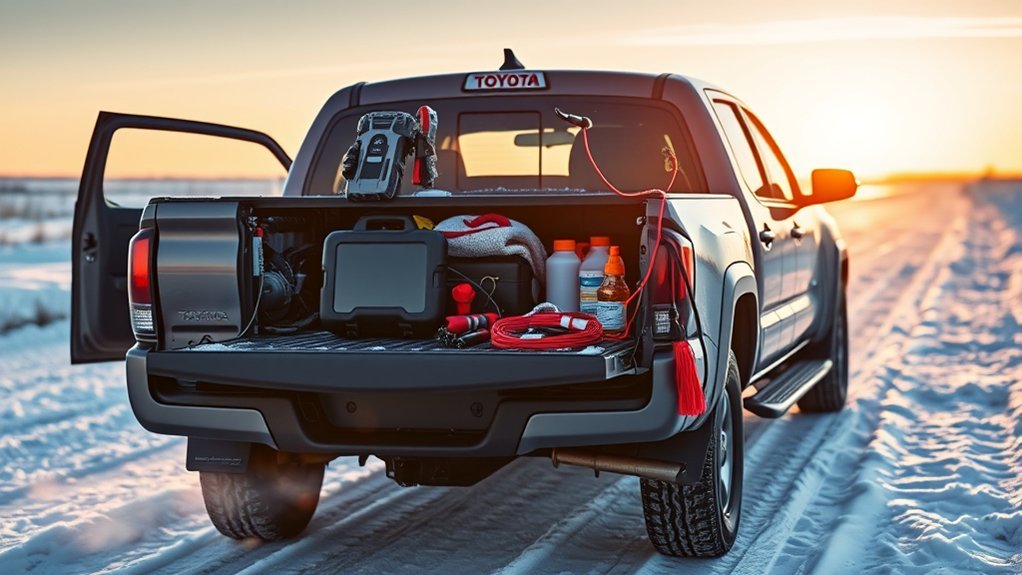
A Tacoma is capable, but winter can still stop any truck. Pack a compact roadside kit before cold weather arrives and keep it easy to reach.
| Item | Purpose |
|---|---|
| Ice scraper and snow brush | Clear windshield, mirrors, lights, and roof |
| Traction mats, sand, or kitty litter | Help tires bite into packed snow or ice |
| Small shovel | Remove snow from around tires and exhaust |
| Jumper cables or jump pack | Recover from a weak battery |
| Warm gloves, hat, and blanket | Protect against cold while waiting or digging out |
| Flashlight and warning markers | Improve visibility during roadside stops |
| Phone charger, water, and snacks | Support longer delays |
| First aid kit | Handle minor injuries until help arrives |
Secure the kit in the cab or bed so it does not slide around. Inspect batteries, food, water, and jump-pack charge monthly during winter.
[Products Worth Considering]
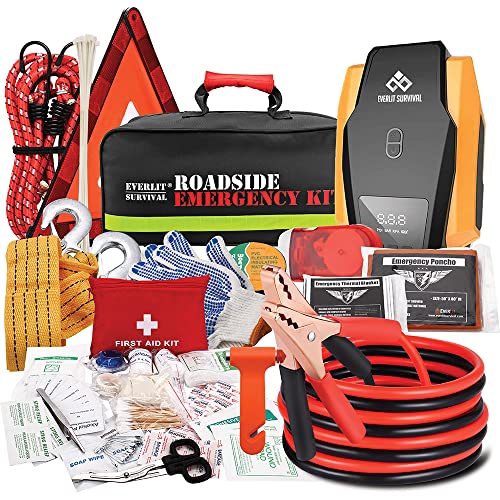
The Road Guardian- The portable roadside assistance kit is designed and hand picked by a group of experienced veterans and experts to provide every essential tools you need in roadside emergencies. The automotive safety bag contains accessories such as repair cable ties, bungee cords, electrical tape, space blanket, rain poncho, reflective warning triangle, glass breaker, seatbelt cutter, safety gloves, tow rope and more to get your vehicle back on the road and continue your travel.
Troubleshooting Common Cold-Start Problems and Quick Fixes
If your Tacoma will not start in the cold, diagnose it by symptom instead of guessing. The sound it makes tells you where to begin.
| Symptom | Likely Cause | Quick Check |
|---|---|---|
| Clicking sound, no crank | Weak battery or poor terminal connection | Check terminals, voltage, and jump-start procedure |
| Slow crank | Weak battery, thick oil, or high starter load | Load-test battery and confirm oil viscosity |
| Cranks fast but will not start | Fuel, ignition, sensor, or immobilizer issue | Check fuel level, warning lights, and diagnostic codes |
| Starts, then stalls | Idle control, fuel, intake, or sensor issue | Avoid revving and have codes scanned |
| No lights or power | Dead battery, loose cable, or main fuse issue | Inspect battery connections and charging system |
If the Battery Is Weak
Use a jump pack or jumper cables only if the battery is not frozen, cracked, or leaking. Follow the Tacoma owner’s manual for jump-start steps. Once started, do not assume the problem is fixed; test the battery and charging system.
If the Oil Is Too Thick
If the engine cranks slowly and you recently used the wrong oil grade, change to the Toyota-specified oil as soon as possible. Do not add random oil thinners or solvents.
If the Truck Cranks But Will Not Start
Stop before the battery is fully drained. Check for low fuel, recent refueling issues, dashboard security indicators, and stored trouble codes. Modern Tacomas are computer-controlled, so a scan tool can save time and prevent unnecessary parts replacement.
Seasonal Maintenance Schedule to Keep Your Tacoma Starting Reliably
Use this simple schedule before and during winter. If you tow, off-road, idle often, or drive in salted slush, follow Toyota’s severe-service maintenance guidance for your model year.
| When | Maintenance Item | Action |
|---|---|---|
| Early fall | Battery and charging system | Load-test, clean terminals, replace if weak |
| Early fall | Fluids | Verify oil grade, coolant protection, washer fluid, brake fluid, and driveline fluids |
| Before first snow | Tires | Set cold pressure, inspect tread, install winter tires if needed |
| Before storms | Wipers and lights | Replace worn blades, fill winter washer fluid, check all lights |
| Monthly in winter | Roadside kit | Recharge jump pack, check flashlight batteries, restock supplies |
| Before long winter trips | Belts, hoses, and visible leaks | Inspect for cracks, leaks, swelling, or looseness |
| After salted-road driving | Undercarriage and wheel wells | Rinse accumulated salt and slush when conditions allow; see the Tacoma winter undercarriage guide |
Frequently Asked Questions
How long should I let my Toyota Tacoma warm up before driving?
A modern Tacoma does not need several minutes of stationary warm-up just to protect the engine. Start normally, use only the brief idle time needed to buckle up and confirm safe visibility, then drive gently. Avoid hard acceleration, high RPM, and heavy towing until the engine and transmission are warm.
What should I do if my Tacoma is too cold to start?
Turn off accessories, check that the battery terminals are clean and tight, and try a safe jump start if the battery is not frozen or damaged. If it cranks but will not start, stop repeated long cranking and diagnose fuel, ignition, security, or sensor issues.
Why is my Tacoma struggling to start in cold weather?
Common causes include a weak or undercharged battery, corroded or loose terminals, incorrect oil viscosity, a starter problem, or a fuel, ignition, security, or sensor fault. Begin with the battery and connections because cold weather can expose a marginal 12-volt system.
Is 0W-20 oil best for every Toyota Tacoma in winter?
Not necessarily. Many newer Tacomas use 0W-20, but the correct oil depends on model year, engine, and market. Use the viscosity and specification listed in your owner’s manual or on the oil filler cap.
Should I keep my Tacoma’s gas tank full in winter?
Keep it close to full whenever practical before storms or long winter trips. NHTSA recommends keeping the gas tank close to full in winter, and the extra reserve gives you more margin if traffic, closures, or a breakdown delays you.
Do I need a block heater for my Toyota Tacoma?
Not for every climate. A compatible block heater is most useful in severe cold or when repeated cold starts are difficult. Confirm that the heater is approved for your exact Tacoma model year and engine, and follow the heater and Toyota instructions for installation and use.
Conclusion
Reliable winter starting comes from removing weak points before the first hard freeze. Test the 12-volt battery and charging system, inspect the terminal connections, use Toyota-specified fluids, keep enough fuel for delays, set tire pressure from the door placard, clear snow and ice before driving, and carry a winter roadside kit. If the Tacoma still cranks slowly or will not start after those checks, diagnose the symptom instead of adding random fuel or oil products.
Sources
- Toyota Owners — 2024 Tacoma maintenance data — oil-viscosity and model-specific maintenance reference.
- Toyota Owners — Manuals and warranties — model-year-specific Tacoma owner’s manuals and maintenance guidance.
- Toyota Owners — 2024 Tacoma Hybrid manual — hybrid-specific owner guidance for i-FORCE MAX Tacoma models.
- Toyota Canada — How to Prepare Your 12V Battery for Cold Weather Driving — cold-weather battery testing, corrosion checks, battery tenders, and battery-sensor caution.
- NHTSA — Winter Weather Driving Tips — tire pressure, tread, coolant, fuel reserve, emergency supplies, and carbon-monoxide precautions.
- U.S. EPA — Reduce Pollution from Vehicles and Engines — guidance that modern vehicles do not require extended winter warm-up idling.
- AAA — Cold Weather Driving Myths Debunked — practical warm-up guidance: start normally, then drive gently once visibility is safe.
- DENSO — Battery Visual Inspection & Performance Testing — 12-volt battery open-circuit and load-testing guidance.
- Ready.gov — Car Safety — emergency supplies and winter travel preparation.
- NHTSA Recalls Lookup — VIN-based safety recall checks before winter travel.


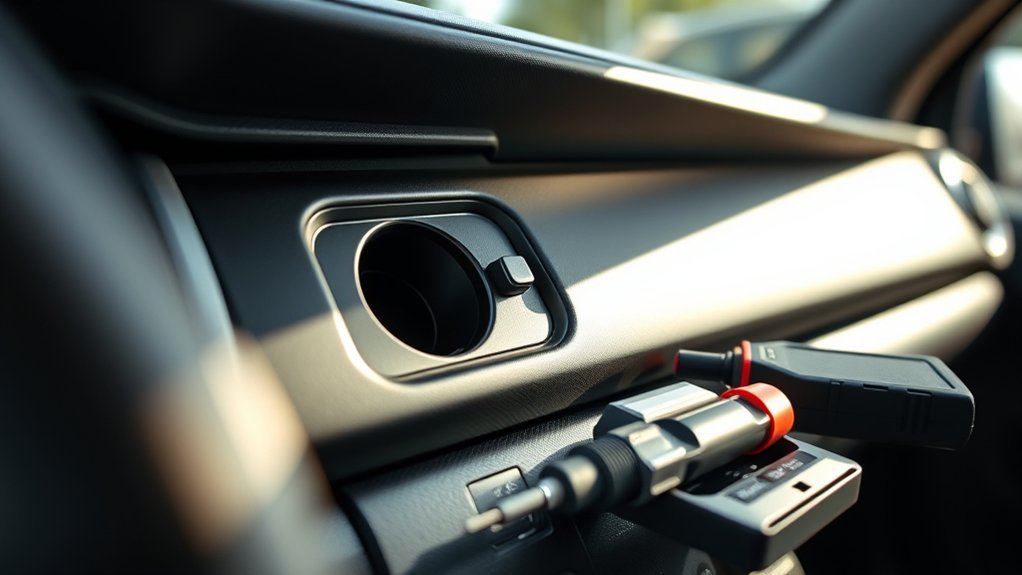
[…] resting 12-volt battery should be close to 12.6 volts before you judge charging […]