Quick Answer: Why Your Tacoma Cranks But Won’t Start
Last updated: July 31, 2026
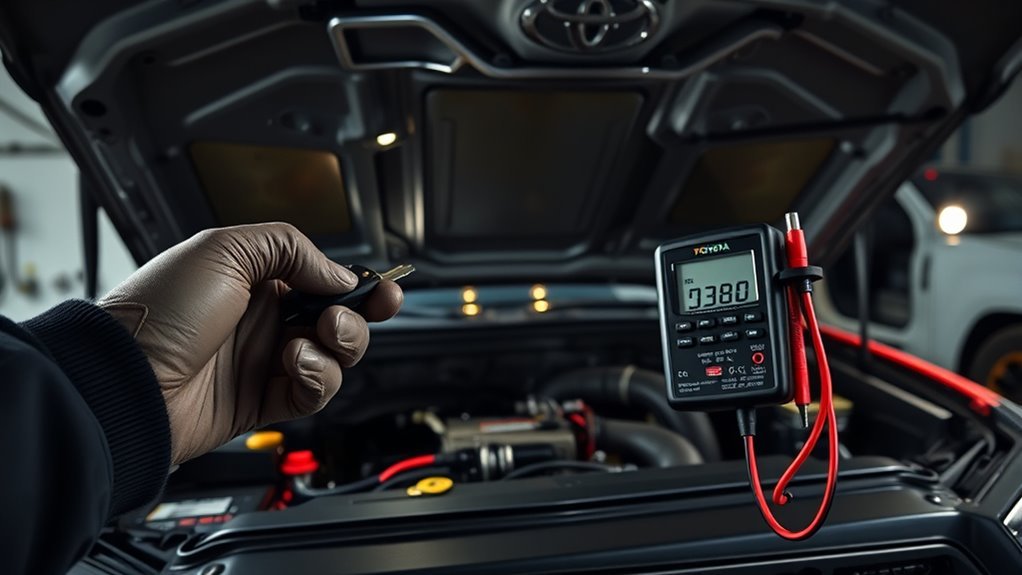
A Toyota Tacoma that cranks but won’t start usually has a failure in one of five areas: battery voltage under load, fuel delivery, ignition or injector control, engine-position data, or mechanical compression and timing. An immobilizer fault, damaged wiring, or a flooded engine can also allow the starter to turn while preventing the engine from running.
Start by confirming the truck has fuel, the battery terminals are clean and tight, the check engine light comes on normally with the ignition, and the security indicator behaves normally. Scan for codes and watch engine RPM while cranking. Then prove fuel pressure, spark, and injector pulse before replacing the pump, MAF sensor, ignition coils, crank sensor, or PCM.
Generation warning: Tacoma fuse names, fuel-pump operation, fuel-pressure specifications, immobilizer behavior, and test procedures vary by year and engine. Do not apply an older Tacoma specification to a 2016-2023 V6 or a 2024-and-newer i-FORCE or i-FORCE MAX truck.
Key Takeaways
- A battery can still be weak even when the starter turns the engine.
- Do not diagnose the fuel pump from key-on sound alone.
- Record codes and cranking RPM before clearing anything.
- Prove fuel pressure, spark, and injector pulse before buying parts.
- If those tests pass, check flooding, compression, and mechanical timing.
What’s in This Article
- Quick Answer: Why Your Tacoma Cranks But Won’t Start
- Match the Symptom to the Next Test
- Check Battery Power, Fuses, and Codes
- Check Fuel Delivery and Pressure Safely
- Check Spark, Injector Pulse, Security, and Compression
- Check MAF and Intake Airflow Without Guessing
- Follow This Troubleshooting Order Before Replacing Parts
- When to Call a Mechanic or Tow the Truck
- Frequently Asked Questions
Match the Symptom to the Next Test
Use the exact symptom to choose the first test. Cranking speed, warning-light behavior, fuel smell, and scan-tool data are more useful than guessing which component commonly fails.
| What You Notice | Check First | Why It Matters |
|---|---|---|
| Slow crank or dim lights | Battery load, terminals, and grounds | Low cranking voltage can disrupt PCM, ignition, and injector operation. |
| Normal crank but no check engine light at ignition-on | PCM power, engine-control fuses, grounds, and scan communication | The PCM may not be powered or communicating. |
| Security indicator stays on or behaves abnormally | Key recognition and immobilizer data | The truck may crank while fuel or injector authorization is blocked on some systems. |
| Scan tool shows zero RPM while cranking | Crankshaft-position signal, wiring, and PCM inputs | The PCM may not recognize that the engine is turning. |
| Fuel smell or wet spark plugs | Spark, injector control, and flooding | More cranking can add fuel without producing combustion. |
| Starts only when cold or only after cooling | Heat-sensitive relay, sensor, connector, pump circuit, or immobilizer | Testing after the symptom disappears may hide the failure. |
Check Battery Power, Fuses, and Codes
Confirm that the fuel gauge is not misleading and that there is usable fuel in the tank. Note whether the engine cranks fast and evenly, slowly, or with an uneven rhythm. Also check whether the check engine light appears normally when the ignition is switched on.
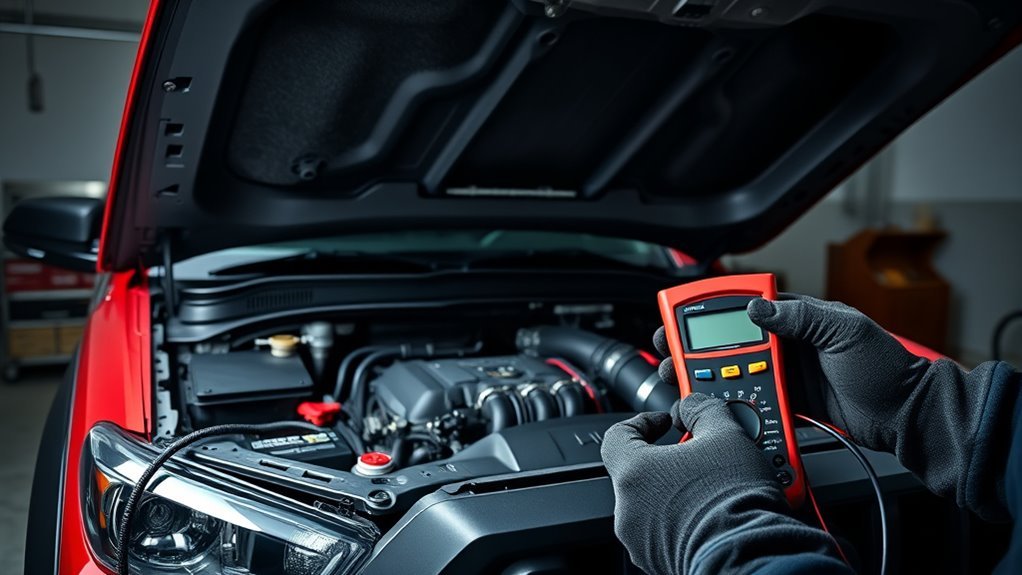
A charged 12-volt battery should read about 12.6 volts or higher after resting. However, resting voltage does not prove the battery can maintain voltage while the starter is operating. Load-test the battery if the lights dim heavily, cranking slows, or voltage drops sharply.
[Products Worth Considering]

This 121-piece mechanics tool set equips you for automotive repairs, household fixes, and garage projects with a versatile mix of sockets, wrenches, hex keys, and bits. It includes both metric and SAE sizes, a spark plug socket, extension pieces, and a ratchet with quick-release functionality to help tackle fasteners in tight or recessed spaces. The tools are organized in a rugged molded case for easy storage, transport, and quick size identification.

The S ZEVZO ET03 is a powerful 12V jump starter designed to revive gas and diesel vehicles quickly, including cars, trucks, motorcycles, lawnmowers, and boats. It also doubles as a portable power bank with USB charging ports, a bright LED flashlight, and an LCD display for added convenience during roadside emergencies. Built with multiple safety protections and included carrying case, it offers dependable backup power whenever you need it.
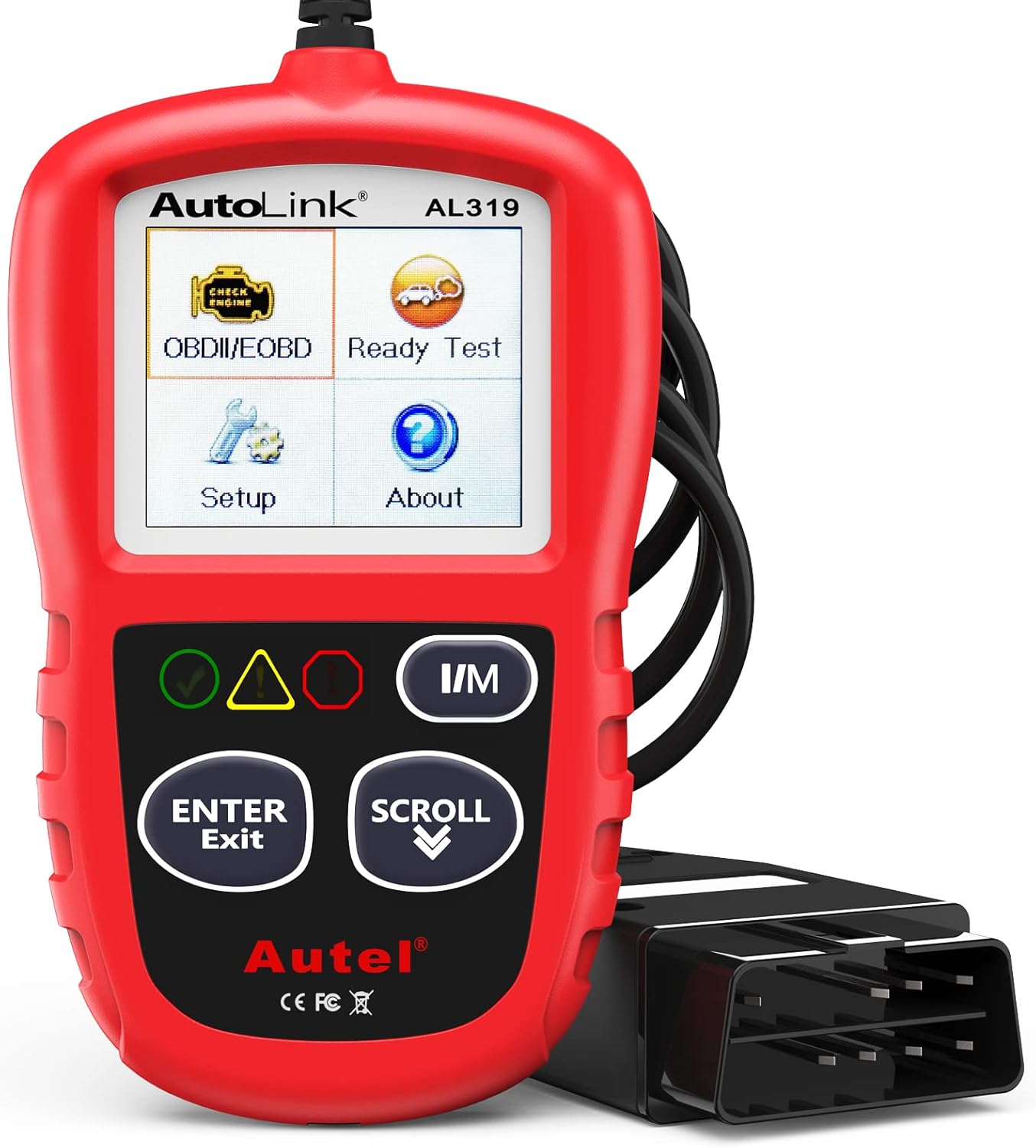
The Autel AL319 is a user-friendly OBD2 scan tool designed to help drivers quickly diagnose check engine light issues and understand vehicle fault codes. It supports reading and clearing DTCs, live data, freeze frame, I/M readiness, and vehicle information, making it a practical choice for DIYers and everyday car owners. With plug-and-play operation, a color display, built-in speaker, and broad vehicle compatibility, it delivers fast, reliable diagnostics without complicated setup.
Can the Battery Be Bad if the Tacoma Still Cranks?
Yes. The starter may still turn while voltage falls low enough to interfere with the PCM, ignition coils, injectors, electronic throttle, or security modules. Check both battery terminals, the engine ground, the body ground, and any smaller wires connected near the battery.
If corrosion is present, switch the vehicle off and use proper eye and hand protection. Clean and tighten the connection before testing deeper systems. Do not spread grease between the battery post and terminal contact surfaces.
Which Fuses, Relays, and Codes Should You Check?
Use the fuse-box lid, owner’s manual, or repair manual for the truck’s exact year and engine. EFI, ignition, starter-signal, circuit-opening, and fuel-pump circuit names are not identical across every Tacoma.
Test important fuses with a meter or test light on both sides instead of relying only on visual inspection. A relay click confirms movement inside the relay, but it does not prove the contacts are supplying enough current.
Run an OBD-II scan before disconnecting the battery or clearing codes. Record all codes, pending codes, freeze-frame information, and engine RPM while cranking. Read the site’s guide to OBD-II diagnostic trouble codes if you need help interpreting the scan.
High-Value Scan Result
If engine RPM remains at zero while the engine is physically cranking, inspect the crankshaft-position sensor circuit, related wiring, connectors, PCM power, and model-specific signal requirements before replacing fuel-system parts.
Check Fuel Delivery and Pressure Safely
Do not assume the fuel pump has failed because you cannot hear it when the key is turned on. Depending on the year and engine, the pump may run during cranking or may need to be commanded with a compatible scan tool during the Toyota test procedure.
Check the correct circuit for pump power and ground while the pump should be operating. A pump can receive voltage yet fail to build pressure, while a good pump may remain silent because the relay, fuse, ground, wiring, PCM command, or immobilizer control is missing.
Warning: Fuel can spray under pressure. Wear eye protection, work in a ventilated area, keep flames and sparks away, and relieve pressure with the correct procedure before opening a fuel connection.
[Products Worth Considering]

This all-in-one car detailing kit brings together a wide range of cleaning tools for interior, exterior, wheel, and glass care. It includes brushes, polishing pads, a vacuum, a foam gun, a collapsible bucket, and other useful accessories to help tackle dust, dirt, stains, and hard-to-reach areas with ease. Designed for versatile vehicle cleaning, it also comes with a storage bag for convenient organization at home or on the go.

The AICEL TPMS Relearn Tool helps quickly reset and relearn tire pressure sensors on compatible GM vehicles after tire rotation, sensor replacement, or warning light issues. Designed for easy handheld use, it works with most cars, SUVs, and pickup trucks and can save time by eliminating unnecessary trips to the auto store. Its durable ABS housing and simple activation process make it a practical tool for keeping the tire pressure monitoring system operating properly.
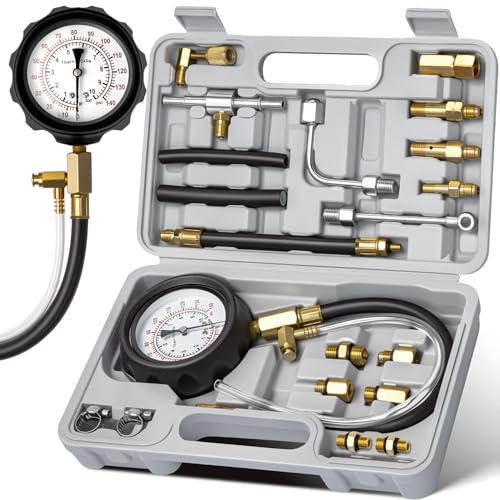
ACCURATE DUAL-SCALE GAUGE: Features a shock-resistant dry gauge with built-in damping mechanism, providing clear 0–140 PSI and 0–10 BAR dual scales for precise fuel system diagnostics
How Do You Confirm Fuel-Pump Operation?
Use the Toyota procedure for the truck’s year and engine. The procedure may require Techstream or another capable scan tool, circuit testing during cranking, or a specified jumper or active test. Do not bypass terminals unless the repair manual identifies the correct circuit and you understand the risk.
| Test Result | What It Suggests | Next Step |
|---|---|---|
| No pump command | Control, security, PCM, fuse, relay, or wiring issue | Trace the command circuit before replacing the pump. |
| Command present but no power at pump | Open circuit, relay, fuse, connector, or ground fault | Perform voltage-drop and continuity tests. |
| Power and ground present but no pressure | Pump or in-tank assembly fault | Confirm the test connection and replace only after the failed result is verified. |
| Pressure below the correct specification | Weak pump, restriction, voltage loss, regulator issue, or leak | Compare voltage and pressure under the specified operating condition. |
| Correct pressure but engine does not start | Fuel delivery alone is not the cause | Check injector pulse, spark, flooding, compression, and timing. |
What Fuel Pressure Should a Tacoma Have?
There is no universal Tacoma fuel-pressure number. As one historical example, a Toyota service procedure for a 2008 Tacoma with the 1GR-FE engine specifies approximately 40.8 to 41.7 psi while the pump is commanded through the scan tool. That number should not be transferred to a different engine, model year, turbocharged system, or hybrid powertrain.
Use the repair manual associated with the VIN, model year, engine, and market. Confirm the specified test condition, fitting, low-pressure or high-pressure circuit, and acceptable pressure-retention value before interpreting the gauge.
Check Spark, Injector Pulse, Security, and Compression
Once battery power and fuel pressure are known, determine whether the engine has spark and injector control. Use an approved spark tester rather than holding a removed plug or wire near metal. Ignition systems can produce dangerous voltage and can ignite fuel vapor.
[Products Worth Considering]

Fuel Injection Troubleshooting: This kit provides a simple, easy way to tell if your injectors are receiving a signal from the ECU/PCM/PMU/AARP/NATO/NASA to spray.Plug these into the connectors for your injectors, idle air control, etc., to rule out any electrical issues, which will save you time

TESTING YOUR EFI SYSTEM: This Alltooetools Noid Light/IAC Test Kit allows you to easily eliminate a vehicle's electrical system as a possible cause when it won't start; Just disconnect the electrical harness from the injector, plug in the correct noid lite with or without an extension, and crank the engine for a few seconds; A flashing light indicates a correctly functioning electrical system, while a solid light indicates a malfunction

Fuel Injector Noid Light Test Kit: Check that injectors are receiving injection signals from ECU/PCM/PMU/AARP/NATO/NASA, plug these into injector connectors, idle air control etc. to troubleshoot any electrical problems
Does the Tacoma Have Spark and Injector Pulse?
Check spark on more than one cylinder when practical. Then use an appropriate noid light, oscilloscope, or scan-tool test to determine whether the injectors receive a command. Injector testing is an advanced electrical task, so stop if you are not trained to back-probe connectors safely.
| Spark Result | Injector Result | Likely Diagnostic Direction |
|---|---|---|
| No spark on all tested cylinders | No injector pulse | Crank/cam input, PCM power, shared wiring, grounds, or immobilizer control |
| No spark on one cylinder | Injector pulse present | Coil, plug, connector, or cylinder-specific wiring |
| Spark present | No injector pulse | Injector power, PCM command, immobilizer, or injector-circuit problem |
| Spark and injector pulse present | Fuel pressure correct | Flooding, compression, mechanical timing, fuel quality, or incorrect sensor data |
Could the Immobilizer Cause a Crank-No-Start?
Yes, on some Tacoma key and immobilizer configurations. Watch the security indicator and instrument messages while using a known registered key. An indicator that fails to change normally, an unrecognized key, a depleted smart-key battery, or immobilizer communication trouble requires the model-specific security-system procedure.
Do not replace the PCM, key ECU, or immobilizer components based only on the security light. Scan the appropriate body and immobilizer modules and verify power, grounds, antenna or key communication, and stored security codes.
What if Fuel Pressure, Spark, and Injector Pulse Are Present?
Stop repeated cranking if you smell raw fuel or find wet spark plugs. The engine may be flooded, especially if spark was previously absent. Follow the owner’s manual procedure for a flooded engine rather than adding more fuel.
If the engine still does not start, perform a compression or relative-compression test and verify mechanical timing. Low compression across all cylinders, an uneven cranking sound, incorrect cam/crank correlation, or a timing-chain problem requires advanced diagnosis.
Rodent damage can also interrupt shared power, sensor, injector, or pump circuits. Inspect the engine bay, air-box area, firewall, battery area, and harness bends for chewed insulation, loose grounds, melted connectors, moisture, and green corrosion.
Check MAF and Intake Airflow Without Guessing
A severely incorrect mass air flow reading or a major intake leak can contribute to hard starting, stalling, or a no-start. However, do not begin by replacing the MAF if fuel pressure, cranking RPM, spark, and injector pulse have not been checked.
Inspect the air filter, air box, intake tube, clamps, throttle-body connection, MAF connector, and wiring. Look for an unplugged sensor, split intake boot, damaged pins, contamination, or a large vacuum leak.
Briefly disconnecting the MAF may provide a clue on some systems because the PCM may substitute a default value, but the result is not a conclusive MAF test. Check codes and live data, and use only cleaner specifically labeled for MAF sensors. Do not touch the sensing element.
| Clue | Check | Interpretation |
|---|---|---|
| MAF reading is implausible while cranking | Sensor power, ground, signal, connector, and intake path | The reading may be caused by the circuit or airflow path, not only the sensor. |
| Starts with MAF disconnected | MAF data, wiring, air filter, intake boot, and leaks | The substituted value helped, but further testing is still required. |
| MAF code returns after cleaning | Wiring, connector tension, intake leaks, and scan data | Replacing the sensor without circuit testing may not solve the fault. |
| No change after MAF inspection | Return to fuel, spark, injector, security, and compression results | The MAF is less likely to be the primary no-start cause. |
Follow This Troubleshooting Order Before Replacing Parts
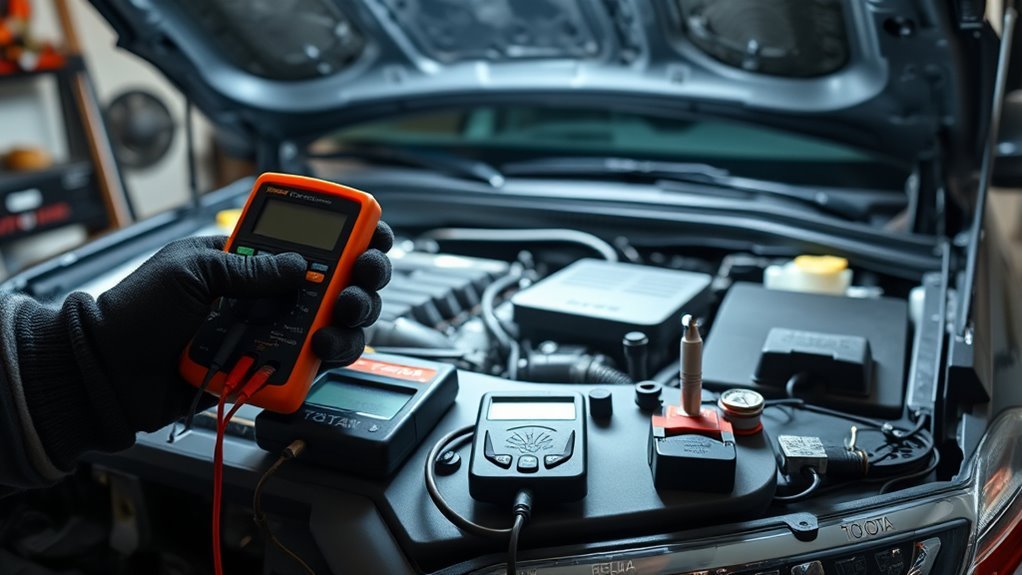
Follow this order and stop at the first failed test. Do not move to a later system until the earlier result is known.
- Confirm fuel level and the exact symptom. Note cranking speed, warning lights, security-indicator behavior, fuel smell, and whether the failure changes with temperature.
- Test the battery and connections. Check resting voltage, cranking behavior, terminals, battery-area wiring, and engine and body grounds.
- Scan every relevant module. Save codes, pending codes, freeze-frame data, cranking RPM, and immobilizer information before clearing anything.
- Verify fuses, relays, PCM power, and grounds. Use the correct diagram for the truck’s VIN, year, and engine.
- Test fuel-pump command, power, ground, and pressure. Do not use pump sound or a pressure number from another generation as proof.
- Test spark and injector pulse. Determine whether the failure affects one cylinder or the whole engine.
- Inspect security, crank/cam signals, MAF data, intake leaks, and wiring. Use test results to narrow the branch.
- Check flooding, compression, and mechanical timing. Perform this branch when fuel pressure, spark, and injector command are present.
Write down each result. Notes such as “cranking RPM is zero,” “pump has power but no pressure,” or “spark present but no injector pulse” give a technician far more value than a list of parts already replaced.
When to Call a Mechanic or Tow the Truck
Stop DIY testing if you smell a strong fuel odor, see liquid fuel, find melted wiring, notice smoke or battery heat, or lack the correct fuel-pressure and electrical tools. Do not repeatedly crank a flooded engine or continue testing near a fuel leak.
Call a qualified technician when the PCM will not communicate, the check engine light stays off at ignition-on, the scan tool shows no cranking RPM, the immobilizer does not recognize the key, or fuel pressure, spark, and injector tests require advanced equipment.
Tow the truck when there is a fuel leak, electrical overheating, suspected mechanical-timing failure, or a fourth-generation i-FORCE MAX hybrid fault that involves systems beyond ordinary 12-volt battery checks. Follow Toyota’s towing instructions for the truck’s drivetrain.
Frequently Asked Questions
Can a bad battery cause a Tacoma to crank but not start?
Yes. The starter may turn while battery voltage falls low enough to disrupt the PCM, ignition, injectors, throttle system, or security modules. Test the battery under load and inspect the terminals and grounds.
Should I replace the fuel pump if I can’t hear it prime?
No. Some Tacoma systems do not provide a simple key-on prime that you can reliably hear. Use the correct procedure to test pump command, power, ground, and fuel pressure before replacing the pump.
Can a bad MAF sensor stop a Tacoma from starting?
A severely incorrect MAF signal can contribute to hard starting or a no-start, but it should not be the first part replaced. Check codes, cranking RPM, spark, injector pulse, intake integrity, and wiring first.
What fuel pressure should a Tacoma have?
The correct pressure depends on the engine, year, fuel-system design, and test condition. Use Toyota’s repair procedure for the exact truck rather than a universal Tacoma pressure target.
Can the immobilizer let a Tacoma crank but not start?
It can on some Tacoma configurations. Abnormal security-indicator behavior, an unrecognized key, or immobilizer codes should be diagnosed with the model-specific Toyota procedure.
What if my Tacoma has fuel pressure and spark but won’t start?
Check injector pulse, flooding, compression, mechanical timing, fuel quality, and cam/crank correlation. Spark and fuel pressure alone do not prove that fuel is injected at the correct time or that the cylinders can build compression.
Safety Disclaimer: This article is for informational purposes only and does not replace the repair manual or professional auto-repair advice. Fuel, ignition, injector, electrical, immobilizer, compression, and hybrid-system testing can cause fire, injury, electric shock, or vehicle damage. Stop when you lack the specified tools, training, or safety equipment.
Conclusion
A Tacoma that cranks but won’t start should be tested in a fixed order: battery and grounds, codes and cranking RPM, control-circuit power, fuel pressure, spark, injector pulse, security and sensor data, then compression and timing.
Record the truck’s year and engine along with battery voltage, codes, cranking RPM, fuel-pressure, spark, and injector-pulse results. Those measurements identify the failed branch and prevent unnecessary replacement of the pump, MAF, coils, sensors, or PCM.
References
- Toyota: 2026 Tacoma Owner’s Manual
- Toyota USA Newsroom: 2024 Tacoma Powertrains and Fourth-Generation Overview
- Toyota Technical Information System: Factory Repair Manuals and Diagnostic Information
- Toyota 2008 Tacoma 1GR-FE Service Procedure: Fuel-System Testing
- Interstate Batteries: Battery Voltage and Testing Guidance