
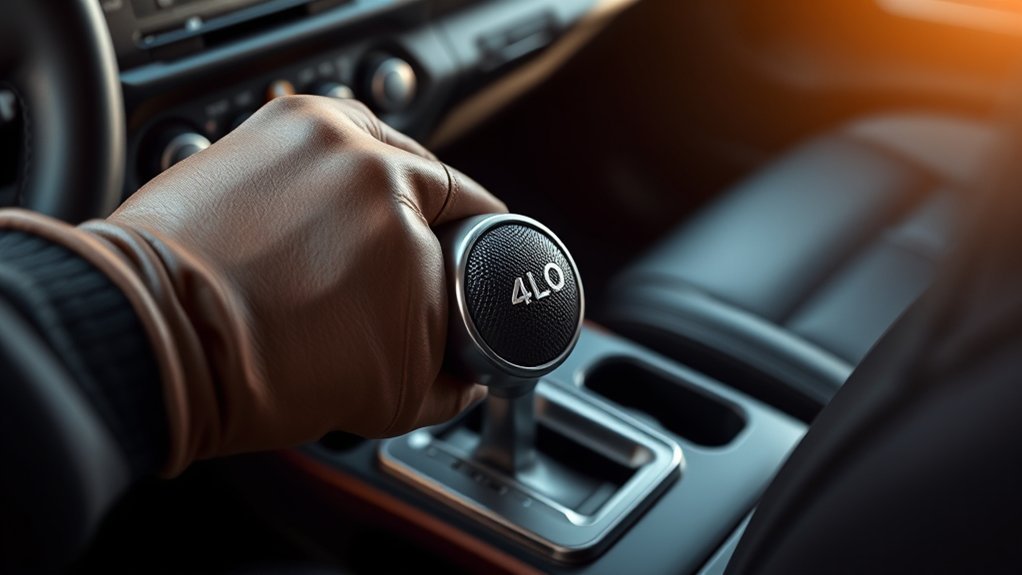
Shifting into 4LO on a Toyota Tacoma is simple, but it has to be done in the right order. Low range is meant for slow, difficult driving where you need control more than speed: rocks, steep climbs, descents, deep mud, sand, snow, or recovery situations. Use it carefully, because forcing 4LO on dry pavement or while the truck is moving can cause driveline bind or prevent the transfer case from engaging.
Quick Answer
To shift a Toyota Tacoma into 4LO, first shift into 4HI/H4, stop completely, keep your foot on the brake, shift the transmission to Neutral, then select L4/4LO with the 4WD selector. Wait until the 4LO or low-speed 4WD indicator stays solid before shifting back into Drive.
Key Takeaways
- Use 4LO only for slow, low-traction, off-road situations where you need extra torque and control.
- For most automatic-transmission Tacomas, the safe process is: 4HI/H4, complete stop, brake held, Neutral, then L4/4LO.
- Do not use 4LO on dry, high-grip pavement because the tires cannot slip enough to relieve drivetrain wind-up.
- If the 4LO light keeps flashing, the transfer case has not fully shifted; stay calm, recheck Neutral, and move the truck slightly straight ahead or backward if needed.
At a Glance
| Time Required | Less than 1 minute once you know the sequence |
| Difficulty | Easy, but the order matters |
| Tools Needed | None |
| Cost | Free |
Why 4LO Matters in Your Tacoma: Key Benefits
4LO, also called L4 in many Toyota manuals, is the Tacoma’s low-range four-wheel-drive setting. It changes the transfer-case gearing so the truck can move slowly with more torque at the wheels. That makes it useful when you need careful throttle control instead of wheel speed.
Use 4LO for steep climbs, controlled descents, rock crawling, deep ruts, mud, sand, and hard pulling on loose ground. It can reduce wheel spin, make throttle inputs smoother, and help the truck crawl over obstacles without needing as much accelerator input.
That extra control also helps protect the truck when used correctly. Instead of attacking an obstacle with speed, 4LO lets you move slowly and steadily. On equipped Tacoma trims, low range may also work with off-road systems such as Crawl Control and Multi-Terrain Select, which are designed to assist with low-speed traction and control.
Warning: 4LO is not for normal driving on dry roads. On high-traction pavement, the tires cannot slip enough to release driveline tension, which can cause binding, hard shifting, tire scrub, or drivetrain stress.
Step-by-Step Guide to Engaging 4LO Safely
The exact switch design varies by Tacoma year and trim, but the safe process is similar. On newer trucks, Toyota may label the low-range position as L4 on the selector while the dash indicator may show 4LO or a low-speed four-wheel-drive symbol.
- Get onto a suitable surface. Use 4LO on loose, slippery, or off-road terrain, not dry pavement.
- Shift into 4HI/H4 first. Do not jump straight from 2HI/2H to 4LO unless your owner’s manual specifically allows it.
- Come to a complete stop. Keep the steering wheel as straight as practical.
- Hold the brake pedal. Keep the truck still while the transfer case shifts.
- Shift the transmission to Neutral. For manual-transmission models, press and hold the clutch pedal.
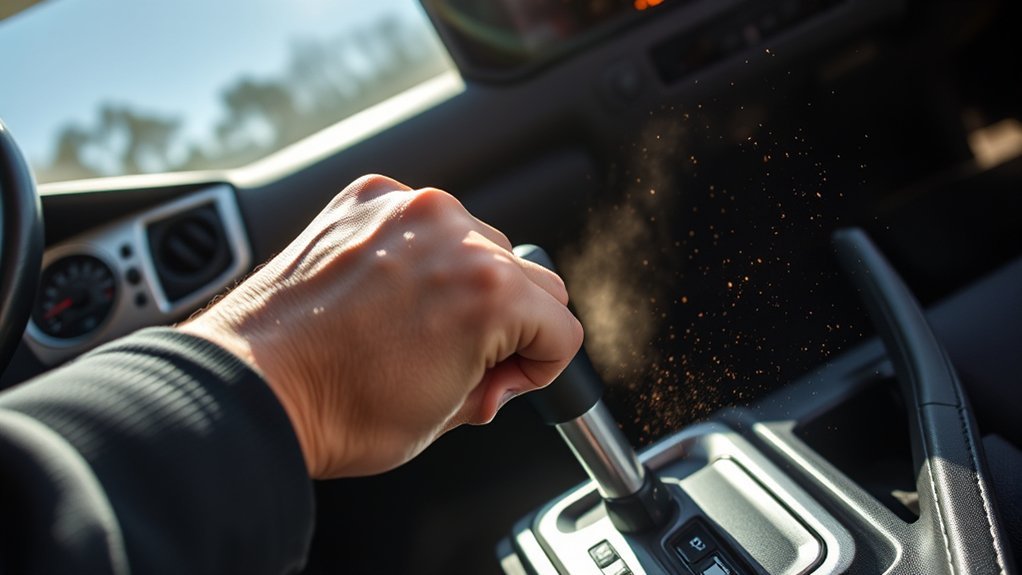
- Select L4/4LO. Depending on your Tacoma, push and turn the 4WD selector, press the unlock/release button, or move the transfer-case lever to the low-range position.
- Wait for confirmation. The 4LO or low-speed 4WD indicator should stop flashing and stay on.
- Shift back into Drive or first gear. Move slowly and keep your speed low while using 4LO.
Pro Tip: If the truck resists shifting into 4LO, do not force the selector. Recheck that you are stopped, in Neutral, and holding the brake, then let the truck roll a few inches straight ahead or backward on a loose surface.
[Products Worth Considering]

This compact dual-port car charger delivers balanced fast charging for everyday driving without cluttering your dashboard. Its aluminum alloy body helps dissipate heat efficiently, while the flush-fit design keeps your car interior clean and organized. With USB-C and USB-A output support, it works well for a wide range of phones, tablets, and accessories in one convenient two-pack.

This Nilight LED pod light set delivers wide flood illumination to improve visibility on roads, trails, and worksites. The adjustable mounting brackets make aiming easy, while the waterproof housing and aluminum cooling fins help support long-lasting performance in demanding outdoor conditions. Designed for a wide range of 12V and 24V vehicles, it is a versatile lighting upgrade for off-road and utility use.

This WODENTA car charger delivers fast, reliable charging for iPhone, Samsung, iPad, and other USB-powered devices while you drive. With three charging ports and a USB-C cable included, it is designed to power multiple devices at once for commutes, road trips, and everyday travel. Its smart chip protection and wide vehicle compatibility help keep charging safe and convenient wherever you go.
Top Mistakes to Avoid When Engaging 4LO
Most 4LO problems happen because one part of the shift sequence was skipped. Avoid these common mistakes:
- Trying to engage 4LO while moving. For automatic-transmission Tacomas, use a complete stop before shifting from H4/4HI to L4/4LO.
- Forgetting Neutral. If the transmission is still in Drive or Reverse, the transfer case may refuse the shift or the indicator may keep flashing.
- Using 4LO on dry pavement. Low range is for surfaces where tire slip can occur, such as dirt, gravel, snow, mud, sand, or rocks.
- Driving too fast in 4LO. 4LO is for low-speed control. Once the trail opens up, shift back to 4HI/H4 or 2HI/2H as conditions allow.
- Ignoring a flashing indicator. A flashing 4LO light usually means the shift has not completed yet. Wait for a solid indicator before driving normally.
Troubleshooting: How to Engage 4LO Successfully
If your Tacoma will not go into 4LO, do not panic. The system often needs the drivetrain to relax before the gears line up. Use the checklist below before assuming something is broken.
[Products Worth Considering]

VEHICLE FITMENT: Compatible with select 2012-2020 Toyota 4Runner, 2005-2017 Toyota Tacoma and 2000-2006 Toyota Tundra 4WD models. Use as a Tacoma transfer case actuator or Tundra transfer case actuator only when the OE number, connector layout, housing shape and transfer case configuration match the original part.

【Vehicle Compatibility】Transfer Case Motor Compatible with Toyota Tundra 2000 2001 2002 2003 2004 2005 2006 4.7L 4663CC 285Cu. In. V8 GAS DOHC Naturally Aspirated;Compatible with Toyota 4Runner 2012 2013 2014 2015 2016 2017 4.0L 3956CC 241Cu. In. V6 GAS DOHC Naturally Aspirated.

Tested and approved by Toyota
Confirm the Right Shift Sequence
Start with the basics: the truck should already be in 4HI/H4, fully stopped, brake pedal held, and transmission in Neutral. Then select L4/4LO and wait for the low-range indicator to stay solid. If you are in a manual Tacoma, keep the clutch fully depressed while selecting low range.
Watch the Indicator Lights
A solid low-speed 4WD or 4LO indicator means the shift is complete. A blinking light usually means the transfer case is still trying to engage. Keep the truck stopped and in Neutral for a moment. If it still blinks, shift back to H4/4HI, move straight ahead or backward a short distance on a loose surface, stop, and try again.
Listen for Warning Buzzers or Messages
On some Toyota 4WD systems, a buzzer or warning message can appear if the vehicle is moving, the transmission is not in Neutral, or the shift has not completed. Correct the condition first rather than forcing the selector.
Know When to Stop Trying
If the 4LO indicator flashes rapidly, the truck gives repeated warnings, or the system will not shift after several correct attempts, stop using the feature and have the 4WD system inspected by a Toyota dealer or qualified technician. Repeated force can turn a small issue into an expensive repair.
Using 4LO: Tips for Different Conditions
4LO is not a “more traction everywhere” button. It is a low-speed control setting. The best way to use it depends on the surface under the tires.
| Condition | Best Use of 4LO | Driver Tip |
|---|---|---|
| Rocks and ledges | Slow crawling with precise throttle control | Use light throttle and let the gearing work. |
| Steep climbs | Extra torque at low speed | Keep momentum steady; avoid sudden throttle. |
| Steep descents | Engine braking and controlled downhill speed | Use low speed and avoid riding the brakes. |
| Mud or deep snow | Controlled torque when traction is limited | Avoid spinning the tires; spinning digs holes. |
| Sand | Low-speed pulling power when the truck is loaded or bogged down | Use gentle inputs and avoid sharp steering. |
| Dry pavement | Do not use 4LO | Use 2HI/2H for normal dry-road driving. |
Note: Tire pressure, tire type, terrain, payload, and driver input all affect off-road traction. 4LO helps with control, but it cannot overcome poor tire grip or unsafe driving choices.
[Products Worth Considering]

Vehicle Fitment: Transfer Case Shift Motor Actuator compatible with Toyota Tacoma 2002 2.4L L4/2.7L L4/3.4L V6, 2005‑2010 2.7L L4, 2011‑2015 2.7L L4/4.0L V6, 2016 3.5L V6 (built before 08/2015); For Toyota 4Runner 2004‑2009 4.0L V6, 2014‑2019 4.0L V6; For Toyota Tundra 2000‑2001, 2003‑2006 4.7L V8. NOTE: Only fits 4‑Wheel Drive vehicles,NOT compatible with RWD/2‑Wheel Drive models. TIPS: Please check Amazon Confirmed Fit tool and original part number before ordering to avoid mismatch

[Vehicle Fitment]: Compatible with A-Premium Toyota Transfer Case Motor 4Runner 2011-2019 V6 4.0L, Tacoma 2005-2015 V6 4.0L/L4 2.7L, Tundra 2002-2006 V8 4.7L --- 6-Pins Connector; Without Wiring Harness
Properly Disengaging 4LO
Getting out of 4LO uses almost the same process as getting in. Do it before returning to higher-speed driving.
- Stop completely on a safe, preferably loose surface.
- Hold the brake pedal and keep the steering wheel straight.
- Shift the transmission to Neutral or depress the clutch on manual models.
- Select H4/4HI with the 4WD selector or transfer-case lever.
- Wait for the 4LO indicator to turn off or for the low-speed 4WD indicator to confirm the shift is complete.
- Shift back into Drive and proceed slowly until you confirm the truck is out of low range.
If the indicator keeps blinking while disengaging 4LO, move straight forward or backward a short distance on loose ground, stop again, and repeat the proper sequence. Binding is more likely if the wheels are turned sharply or the truck is sitting on a high-traction surface.
Get Ready for Advanced Off-Road Features After 4LO

Once 4LO is engaged, equipped Tacoma trims can use additional off-road systems designed for slow, technical terrain. Availability depends on model year, trim, drivetrain, and package, so check your owner’s manual for your exact truck.
Enhanced Traction Control
In low range, the Tacoma can deliver controlled torque to all four wheels. This helps the driver make small, smooth inputs when traction is uneven. On equipped models, traction-related systems can also manage wheelspin to help the truck keep moving on loose surfaces.
Optimized Off-Road Performance
4LO works best when you drive slowly and deliberately. Pick a clean line, keep both hands on the wheel, and let the truck crawl instead of bouncing over obstacles. When a hill, rock shelf, or deep rut requires patience, low range gives you the control to avoid unnecessary speed.
Terrain-Specific Driving Modes
Available Multi-Terrain Select can optimize brake control, steering feel, and drive force control for different off-road surfaces. Available Crawl Control can help maintain a low set speed by modulating throttle and braking, allowing the driver to focus more on steering through difficult terrain.
Frequently Asked Questions
Should I use 4H or 4L in a Toyota Tacoma?
Use 4H/4HI for slippery roads, snowy roads, dirt roads, and faster off-road travel where you need extra traction but not low-speed crawling power. Use 4L/4LO for slow, difficult off-road conditions such as rocks, steep hills, mud, sand, deep snow, or recovery situations.
Can I shift into 4LO while moving?
For most automatic-transmission Tacomas, no. The safe method is to stop completely, hold the brake, shift to Neutral, then select L4/4LO. Some manual-transmission instructions vary by model year, but stopping completely is the safest general rule.
Why is my Tacoma’s 4LO light blinking?
A blinking 4LO light usually means the transfer case has not finished shifting. Make sure the truck is stopped, the brake is held, and the transmission is in Neutral. If it still blinks, move straight ahead or backward a short distance on a loose surface, then try the shift again.
Is 4LO safe to use on pavement?
Do not use 4LO on dry, high-traction pavement. Low range is intended for loose or slippery surfaces where the tires can slip slightly. On dry pavement, drivetrain bind can make the truck hop, resist turning, or shift out of 4WD poorly.
How fast can I drive in 4LO?
4LO is for slow-speed control, not speed. Keep speeds low and shift back to 4H/4HI or 2H/2HI once you no longer need low-range torque. Your owner’s manual has the exact operating limits for your model year.
Conclusion
Engaging 4LO in a Toyota Tacoma comes down to patience and the right sequence: use 4HI/H4 first, stop completely, shift to Neutral, select L4/4LO, and wait for a solid indicator. Once low range is engaged, drive slowly and let the gearing do the hard work. Used correctly, 4LO gives your Tacoma the control it needs for steep, loose, and technical terrain without abusing the drivetrain.
Sources
- Toyota Owners: 2024 Tacoma Four-Wheel Drive System — transfer modes, 2H/H4/L4 usage, and official 4WD system guidance.
- Toyota Owners: 2024 Tacoma Hybrid Part-Time 4WD System — hybrid Tacoma part-time 4WD transfer-mode guidance.
- Toyota Owners: 2024 Tacoma Hybrid Full-Time 4WD System — full-time 4WD mode differences and low-range naming.
- Toyota Owners: 2024 Tacoma Multi-Terrain Select — official description of terrain mode operation and cautions.
- Toyota Support: Multi-Terrain Select and Crawl Control — official explanation of Tacoma off-road driver-assist features.

[…] low range for slow, difficult terrain and follow the correct shift procedure. The site’s Tacoma 4LO guide explains the basic sequence and safety […]