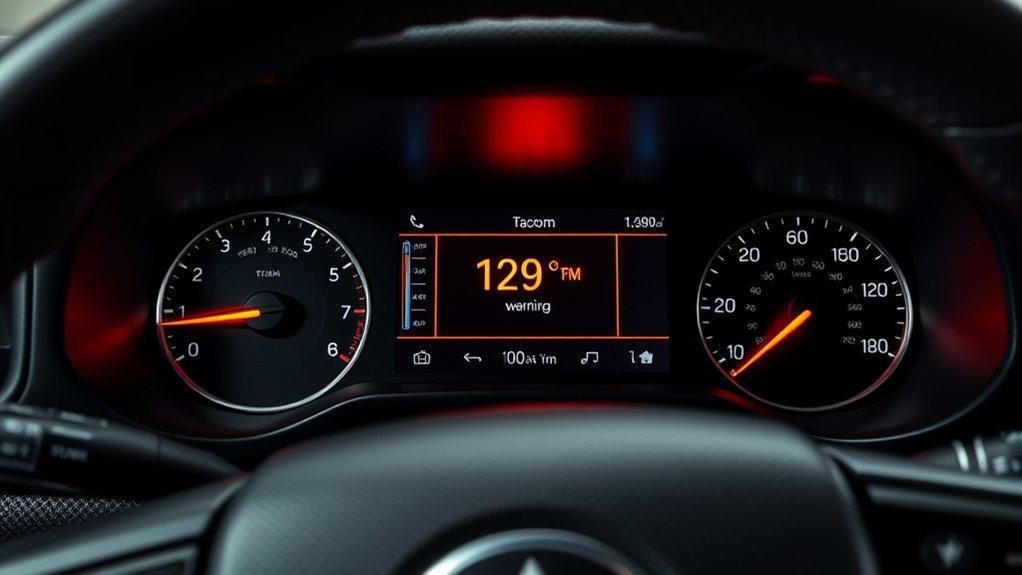
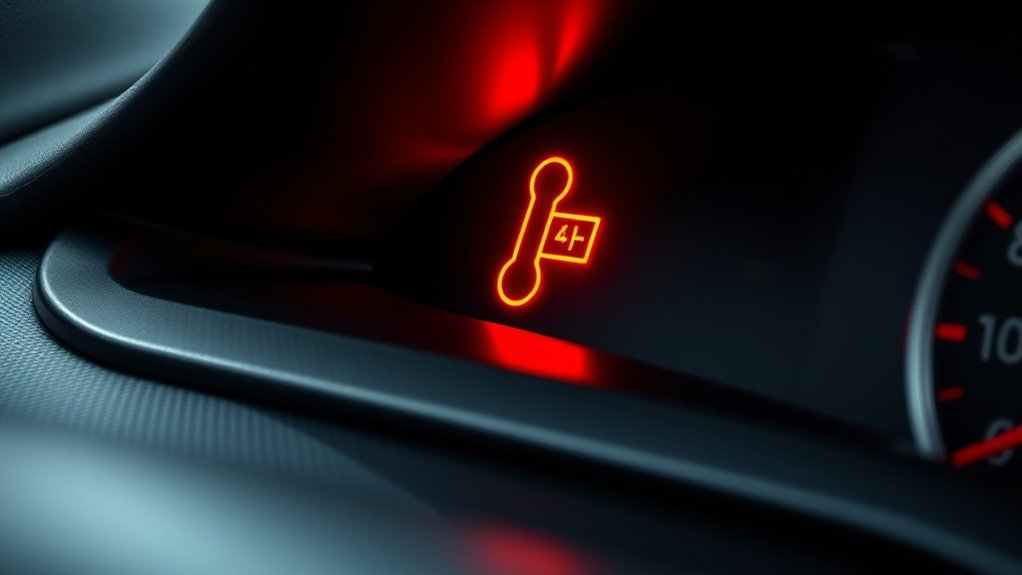
If your Tacoma shows a transmission temperature warning light or a message such as “Transmission Oil Temp. High,” treat it as an urgent overheating warning. The safest move is to ease off the throttle, pull over when it is safe, shift to Park, and let the transmission cool before driving again. Heat can damage automatic transmission fluid and internal parts, especially while towing, climbing, off-roading, or driving in hot weather.
Quick Answer
The Tacoma transmission temperature warning means the automatic transmission fluid is too hot or the truck has detected a transmission temperature fault. Stop in a safe place, shift to Park, and wait until the warning turns off. If it returns, leaks are visible, or shifting feels abnormal, have the truck inspected.
Key Takeaways
- Do not keep towing or climbing a grade after the transmission temperature warning appears.
- Toyota’s guidance for newer Tacoma models is to stop safely, shift to Park, and wait for the warning message to go off.
- Common causes include heavy towing, steep climbs, hot weather, low or leaking fluid, blocked cooling airflow, wrong fluid, or a sensor/wiring fault.
- Many newer Tacomas use sealed WS automatic transmission systems, so fluid checks are not as simple as pulling a dipstick.
- If the warning comes back after cooling, schedule service before driving under load again.
At a Glance
| Time Required | 20–45 minutes for roadside cooling; longer if diagnostics or repairs are needed |
| Difficulty | Easy for the immediate safety steps; moderate to professional for fluid-level checks on sealed transmissions |
| Tools Needed | Owner’s manual, flashlight, gloves, OBD-II scanner with transmission temperature data if available |
| Cost | $0 for cooling down; diagnostic or fluid service cost depends on the shop, model year, and repair needed |
What the Tacoma Transmission Temperature Warning Light Means
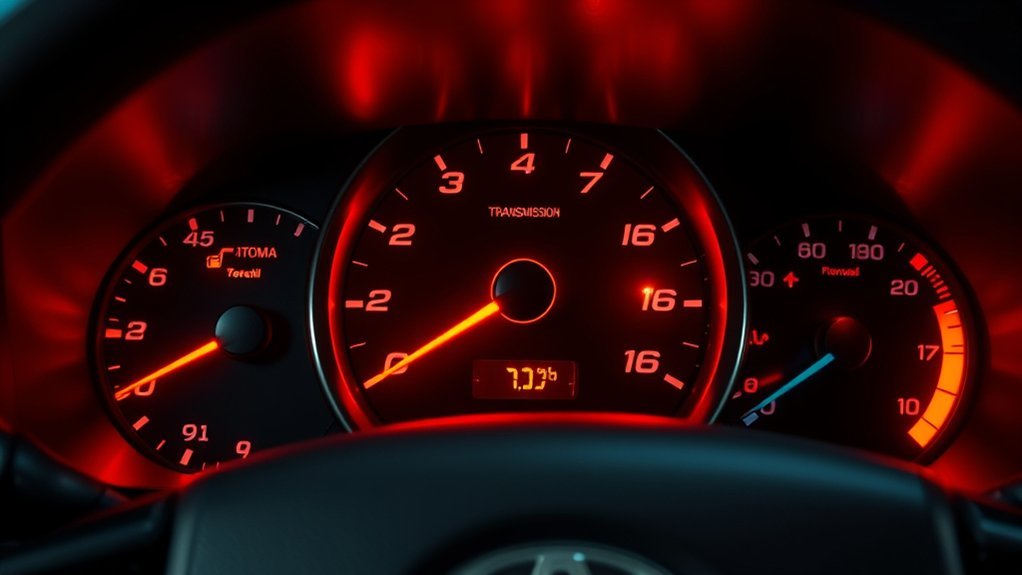
The Tacoma transmission temperature warning light means the transmission fluid is running too hot or the truck has detected a problem related to transmission temperature. On many newer Tacomas, the multi-information display may show a message such as “Transmission Oil Temp. High Stop in a Safe Place and See Owner’s Manual”. Toyota’s owner information says to stop the vehicle in a safe place for this warning rather than continuing to drive under load.
Automatic transmission fluid does several jobs at once. It lubricates moving parts, helps transfer hydraulic pressure, cools internal components, and supports smooth shifting. When the fluid gets too hot, it can lose its protective qualities faster. That can lead to harsh shifts, slipping, clutch wear, hardened seals, and expensive transmission repairs.
Warning: Do not ignore this warning just because the truck still drives. Continuing to tow, climb, or accelerate hard with overheated transmission fluid can turn a temporary heat event into internal transmission damage.
One important correction: there is no single “safe” Tacoma temperature number that applies to every model year, transmission, load, and sensor reading. Some aftermarket charts use general ATF ranges, but Toyota’s owner guidance is simpler and more important: when the warning appears, stop safely and wait until it clears.
What to Do Immediately When the Warning Light Activates
If the warning comes on while you are driving, your first goal is to reduce heat and avoid creating more load on the transmission.
- Ease off the accelerator. Avoid sudden acceleration, hard passing, or forcing the truck to hold a high gear on a grade.
- Find a safe place to stop. Use your hazard lights if traffic conditions require it.
- Shift to Park. Toyota’s guidance for newer Tacoma automatic transmissions is to stop safely, shift to P, and wait until the warning message goes off.
- Let the truck cool. Cooling may take 20–45 minutes depending on outside temperature, trailer weight, grade, and airflow.
- Look for leaks. Check the ground under the truck for red, brown, or dark oily fluid. Do not crawl under an unsafe vehicle or touch hot components.
- Check the owner’s manual for your exact model year. Tacoma procedures vary by generation and powertrain.
- Do not resume heavy towing right away. If the warning returns, stop driving and arrange an inspection.
Note: Many Tacoma automatic transmissions that use Toyota WS fluid are sealed and do not have a traditional dipstick. Toyota says WS automatic transmissions are sealed and do not normally consume fluid, so level checks should be done using the correct service procedure.
[Products Worth Considering]
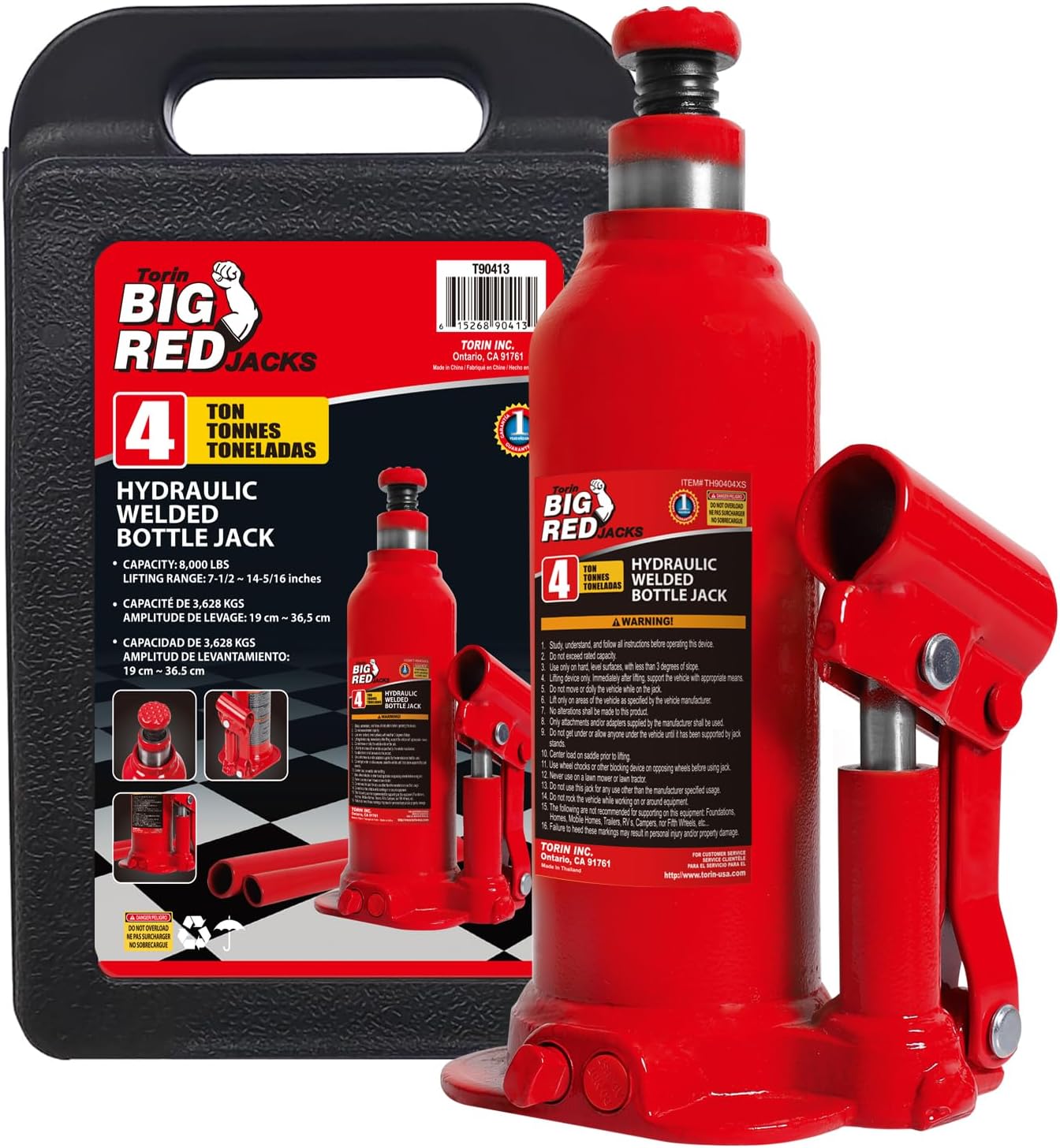
The Torin Big Red hydraulic bottle jack is built for residential and commercial lifting tasks, offering a stable wide base and rugged steel construction for dependable performance. Its smooth pressure pump, adjustable screw top extension, and serrated saddle make lifting easier and more secure, while the included carrying case simplifies storage and transport. Designed to meet ASME safety standards, it is ideal for vehicles, machinery, and other heavy-duty applications.

These clip-on towing mirrors expand your rear view for safer towing, helping you see your trailer and blind spots more clearly when changing lanes or backing up. The dual-arm design adds stability and reduces vibration, while the adjustable fit and weather-resistant build support reliable use on trucks, SUVs, RVs, and trailers.
This EL-50448 TPMS relearn tool helps quickly activate and reset tire pressure sensors so your vehicle’s monitoring system stays accurate after tire rotations, sensor replacement, or seasonal tire changes. Designed for many GM-related vehicles and compatible with common 315 and 433 MHz TPMS systems, it offers simple one-button operation and reliable performance for clearing warning lights and relearning sensor positions.
Top Causes of Tacoma Transmission Overheating and Quick Fixes
Transmission overheating usually comes from excess load, poor cooling, low fluid, old fluid, or a fault that makes the transmission work harder than it should. Here are the most common causes and what to do next.
| Possible Cause | What You May Notice | Best Next Step |
|---|---|---|
| Heavy towing or hauling | Warning appears on long grades, in headwinds, or in hot weather | Reduce speed, use Tow/Haul mode if equipped, and stop to cool down |
| Steep climbs or off-road driving | High temps during slow, high-load driving with little airflow | Take breaks, use the proper gear range, and avoid riding the throttle |
| Low transmission fluid or leak | Fluid spots, burnt smell, delayed engagement, slipping, or harsh shifts | Have the leak and level checked with the correct Toyota procedure |
| Old, incorrect, or contaminated fluid | Dark fluid, burnt odor, poor shift quality, or repeated warning | Use the fluid type specified for your year; many newer Tacomas require Toyota Genuine ATF WS |
| Cooling system restriction | Warning in traffic, mud-packed radiator area, damaged cooler lines, or poor airflow | Inspect radiator/cooler airflow and have damaged lines repaired |
| Temperature sensor or wiring fault | Warning appears with no obvious load, or scan data looks abnormal | Scan for transmission-related diagnostic trouble codes |
If your Tacoma has Tow/Haul mode, use it when pulling a trailer or carrying a heavy load. Toyota says Tow/Haul mode adjusts engine, transmission, and steering behavior to better suit trailer pulling or heavy hauling.
Pro Tip: If your scan tool can display transmission fluid temperature, watch the trend instead of waiting for the warning. A steady rise during towing means you should slow down, downshift if appropriate, or stop for a cooling break before the warning appears.
[Products Worth Considering]

This emergency tire repair kit helps you quickly fix tubeless punctures without removing the tire from the rim. It includes multiple screw sizes and sealant glue for a tight, reliable seal, making it a practical solution for roadside emergencies, travel, and everyday vehicle maintenance. Compact and easy to use, it is suitable for a wide range of vehicles, including cars, motorcycles, trucks, and ATVs.
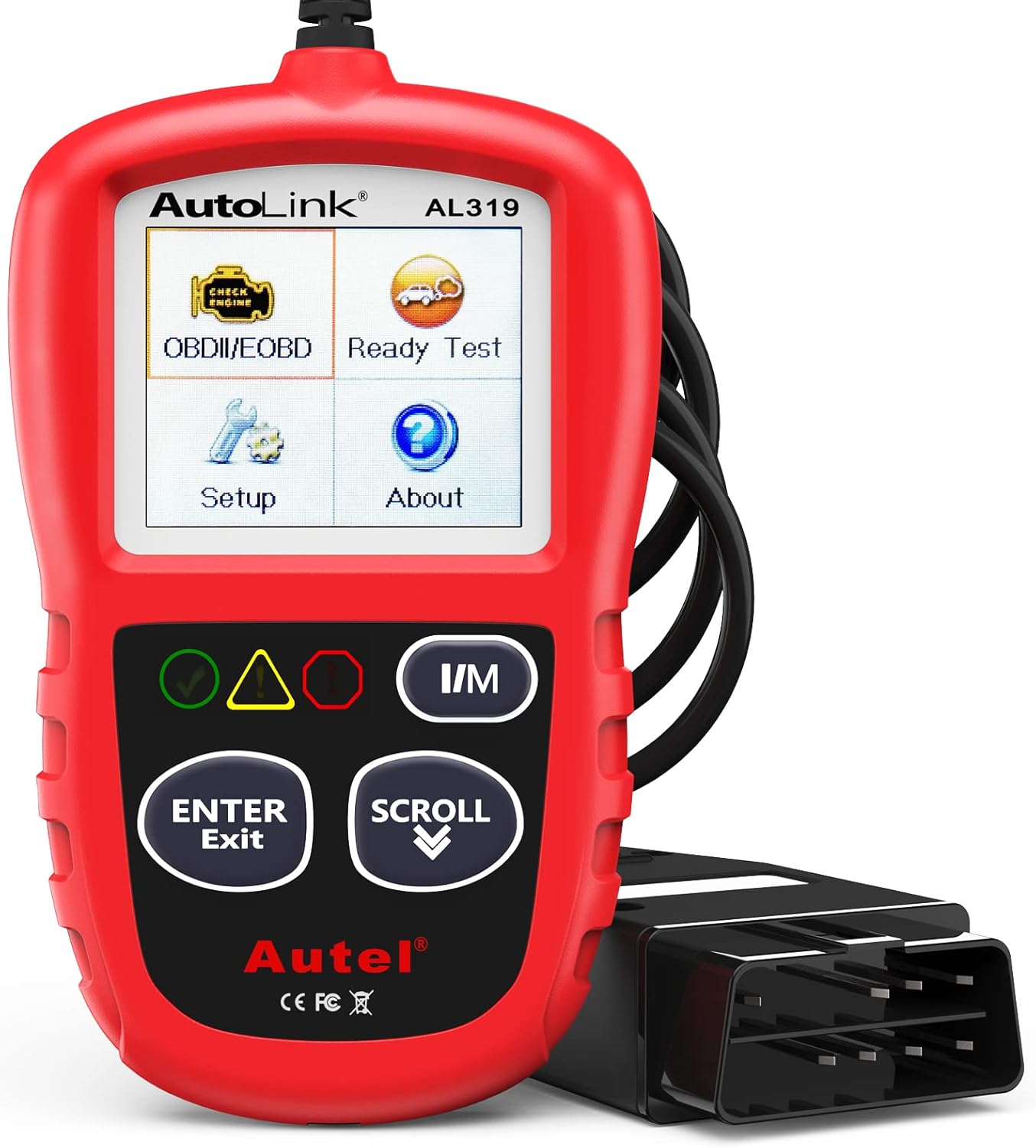
The Autel AL319 is a user-friendly OBD2 scan tool designed to help drivers quickly diagnose check engine light issues and understand vehicle fault codes. It supports reading and clearing DTCs, live data, freeze frame, I/M readiness, and vehicle information, making it a practical choice for DIYers and everyday car owners. With plug-and-play operation, a color display, built-in speaker, and broad vehicle compatibility, it delivers fast, reliable diagnostics without complicated setup.
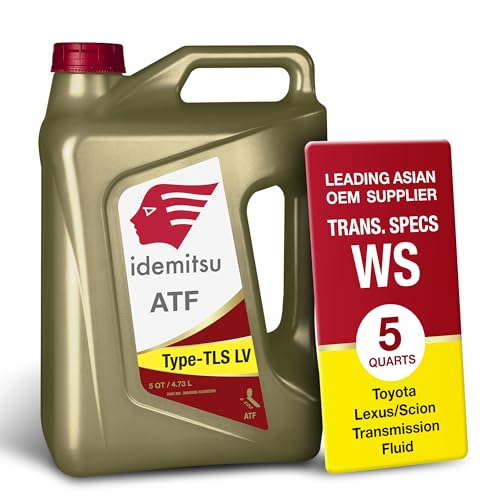
Optimized viscosity and advanced friction reducing additive technology provide exceptional fuel economy performance
How to Check Transmission Fluid Safely
Checking transmission fluid on a Tacoma depends heavily on the model year and transmission. Older trucks may have easier service access, while many newer Tacoma automatic transmissions use a sealed WS fluid system without a dipstick.
For sealed Toyota WS systems, Toyota explains that the transmission is sealed, does not normally consume fluid, and does not need routine dipstick-style checking. If there is a leak, shift problem, warning message, or service need, the level should be checked with the correct Toyota procedure by a qualified technician.
- Do not guess the fluid level. Overfilling or underfilling a sealed automatic transmission can cause shifting and heat problems.
- Use the correct fluid specification. The wrong ATF can cause abnormal noise, vibration, shift issues, or damage.
- Do not open hot components. Hot fluid can burn skin, and exhaust parts near the transmission can stay hot after shutdown.
- Document service. Keep receipts for inspections, fluid services, towing-related maintenance, and repairs.
[Products Worth Considering]

For best performance, follow the manufacturer's recommendations in your vehicle owner’s manual.

6Qt Genuine 00289-ATFWS
Preventive Measures for Maintaining Transmission Health
Preventing transmission overheating is easier and cheaper than repairing internal transmission damage. Use these habits if your Tacoma tows, hauls, climbs grades, drives off-road, or sees hot summer conditions.
- Follow Toyota’s maintenance schedule. Toyota’s maintenance information points owners to the Warranty and Maintenance Guide for transmission fluid inspection and replacement intervals.
- Inspect for leaks often. Look for fluid under the truck, wet cooler lines, wet transmission case areas, or a burnt smell after towing.
- Use Tow/Haul mode when equipped. This helps the truck choose more suitable shift behavior for heavy loads.
- Keep airflow clear. Mud, leaves, bent fins, or blocked airflow around the radiator and cooler area can reduce cooling performance.
- Slow down on long grades. High speed, heavy throttle, and repeated gear hunting create heat quickly.
- Take cooling breaks. Stop before the truck overheats when towing in mountains, sand, or high outside temperatures.
- Stay within ratings. Do not exceed your Tacoma’s payload, gross combined weight, tongue weight, or trailer rating for your exact configuration.
- Service after hard use. Toyota’s maintenance guide calls out additional maintenance for demanding use such as off-road driving, including checking transmission fluid or oil after deep sand, mud, or water use.
The best response to a Tacoma transmission temperature warning is not to “make it home.” It is to remove load, stop safely, and let the system cool before more damage is done.
When to Seek Professional Help for Transmission Problems
Seek professional help if the warning does not clear after cooling, comes back during normal driving, or appears with any change in how the truck shifts. A shop or Toyota dealer can read transmission data, check for diagnostic trouble codes, inspect cooler lines, verify fluid condition, and confirm the correct fluid level.
| Overheating Symptom | Action Needed |
|---|---|
| Warning light or high-temperature message activates | Stop safely, shift to Park, and wait for the warning to clear |
| Warning returns after cooling | Schedule transmission diagnostics before towing again |
| Power loss, slipping, harsh shifts, or delayed engagement | Stop driving under load and have the vehicle inspected |
| Visible transmission fluid leak | Do not keep driving; have the leak and level checked |
| Burnt fluid smell after towing | Have fluid condition and cooling performance checked |
Repeated overheating is not normal. Even if the warning clears each time, the heat event that triggered it should be treated as a sign that the truck was overloaded, undercooled, low on fluid, using degraded fluid, or experiencing a sensor or transmission fault.
Frequently Asked Questions
What would cause the Tacoma transmission temperature light to come on?
The most common causes are heavy towing, steep climbs, hot weather, slow off-road driving, low or leaking transmission fluid, old or incorrect fluid, blocked cooling airflow, cooler-line problems, or a transmission temperature sensor or wiring fault.
Can I drive with the transmission temperature light on?
You should not continue driving normally with the transmission temperature warning on. Ease off the throttle, pull over safely, shift to Park, and wait until the warning goes off. If it comes back, do not keep towing or driving under load.
How long does Tacoma transmission fluid take to cool down?
A typical roadside cool-down may take 20–45 minutes, but conditions vary. Trailer weight, outside temperature, grade, airflow, and how hot the transmission became all matter. The safest rule is to wait until the warning message turns off and the truck drives normally.
Should I idle the Tacoma or shut it off to cool the transmission?
Follow the owner’s manual for your model year. Toyota’s newer Tacoma guidance says to stop safely, shift to Park, and wait until the warning message goes off. If you see coolant overheating, smoke, leaking fluid, or any other danger sign, shut the vehicle down when safe and call for assistance.
Can low transmission fluid cause overheating?
Yes. Low fluid can reduce lubrication, cooling, and hydraulic pressure, which may cause heat, slipping, and harsh shifting. On sealed Toyota WS transmissions, do not guess the level; have it checked using the correct service procedure.
Is an external transmission cooler a good idea for a Tacoma?
An auxiliary cooler can help in some towing or off-road use cases, but it should be selected and installed correctly. Before adding parts, confirm the truck is within its tow rating, the fluid level and condition are correct, and the factory cooling system is working properly.
How do I fix low transmission temperature?
Low transmission temperature is usually not the same issue as a transmission overheat warning. If a scan tool shows unusually low readings after normal driving, suspect a sensor, wiring, thermostat, or scan-data issue rather than adding a cooler. Have the data verified before replacing parts.
Conclusion
Your Tacoma’s transmission temperature warning light is a serious alert, not a reminder to check later. Reduce load, pull over safely, shift to Park, and let the truck cool until the warning clears. If the warning returns, if fluid is leaking, or if shifting feels strange, get the transmission inspected before towing or climbing again. A careful stop today can prevent a major repair later.
Sources
- Toyota Owners: 2025 Tacoma warning messages — backs up the “Transmission Oil Temp. High” warning and stop-safely guidance.
- Toyota Owners: 2025 Tacoma automatic transmission — backs up Tow/Haul mode use and automatic transmission warning behavior.
- Toyota Support: sealed WS transmission fluid systems — backs up sealed-transmission and no-dipstick fluid-check guidance.
- Toyota Support: automatic transmission fluid inspection and replacement — backs up using the Warranty and Maintenance Guide for fluid inspection/replacement intervals.
- Toyota 2025 Tacoma Warranty & Maintenance Guide — backs up regular maintenance, fluid checks, special operating conditions, and off-road inspection guidance.
- NHTSA towing safety resources — supports using official tow ratings and safety information when hauling trailers.