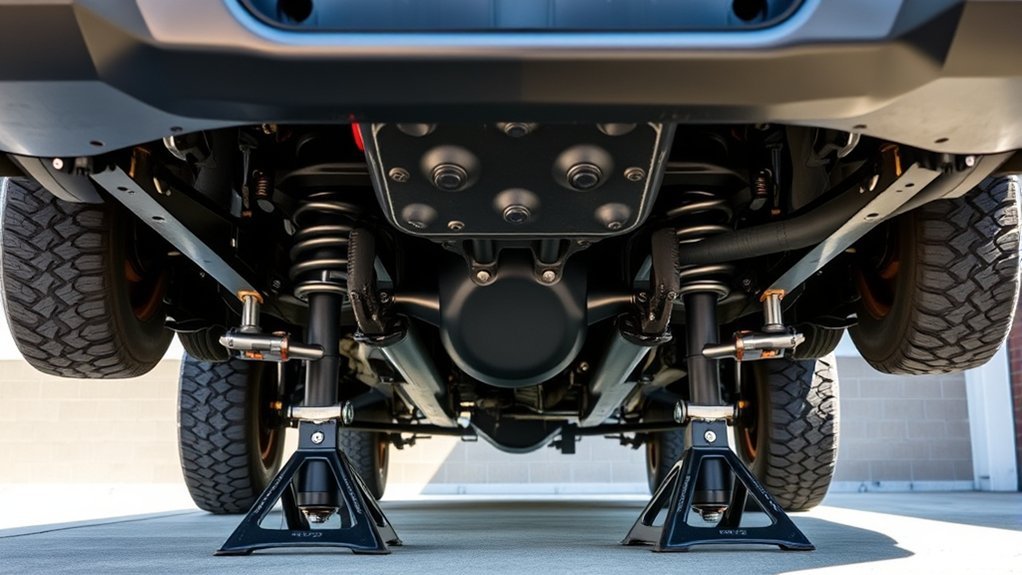
To change the engine oil on a 2016–2023 Toyota Tacoma, warm the engine briefly, support the truck safely, drain the old oil, replace the drain-plug gasket and cartridge-filter O-rings, refill with the oil grade and capacity listed for your engine, check for leaks, and reset the maintenance reminder. This guide focuses on third-generation U.S.-market Tacomas, especially the 3.5L V6 with the cartridge-style filter housing. The 2.7L four-cylinder and 2024 or newer Tacoma use different service details, so confirm the oil capacity and procedure for your exact year and engine before you begin.
Last updated: July 15, 2026
Quick Answer
For a 2016–2023 Toyota Tacoma, warm the engine briefly, support the truck with rated ramps or jack stands, drain the old oil, install a new drain-plug gasket, replace the cartridge filter and both O-rings where equipped, then refill with the manual-specified oil. Start the engine, inspect for leaks, recheck the dipstick on level ground, and reset the maintenance reminder.
Key Takeaways
- Use the oil grade, quality standard, and refill capacity listed for your exact Tacoma year and engine. Do not treat one capacity figure as universal.
- Replace the drain-plug gasket and every oil-filter O-ring supplied for your housing. Put each O-ring in its correct groove before tightening the housing.
- Thread the drain plug and filter housing by hand first, then use a torque wrench and the year-specific Toyota specification. Over-tightening can damage the oil pan or filter cap.
- Follow the maintenance guide for your model year. Toyota’s 2023 Tacoma guide schedules oil and filter replacement at 10,000 miles or 12 months under normal use, and at 5,000 miles or 6 months when the truck is driven primarily under listed special conditions.
At a Glance
| Vehicle Scope | Mainly 2016–2023 U.S.-market Tacoma, especially the 3.5L V6 cartridge-filter setup |
| Time Required | About 45–90 minutes for a first-time DIY service |
| Difficulty | Beginner to intermediate |
| Tools Needed | Torque wrench, drain pan, funnel, sockets, correct-fit oil-filter wrench, rated ramps or jack stands, wheel chocks, gloves, and rags |
| Parts and Supplies | Manual-specified oil, correct filter kit, new drain-plug gasket, and cleanup materials |
Toyota Tacoma Oil Change Tools and Supplies
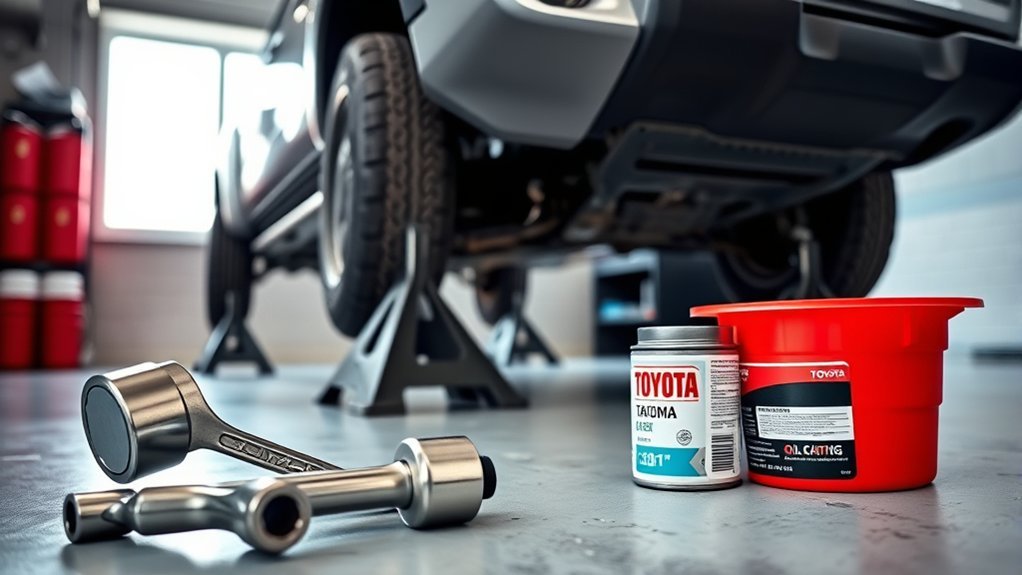
Before you crawl under the truck, gather everything you need. Having the correct tools ready keeps the job cleaner and helps you avoid stopping halfway through with oil draining into a pan.
- Engine oil: Use the viscosity, quality classification, and quantity listed in the owner’s manual for your exact year and engine. Many third-generation Tacomas specify SAE 0W-20, but confirm before buying.
- Oil filter kit: Use the correct Toyota cartridge or a quality equivalent that includes every O-ring required by your filter housing.
- New drain-plug gasket: Replace the flattened gasket instead of reusing it.
- Correct-fit oil-filter wrench: Use a cap wrench that fully engages the cartridge housing. Edge-gripping pliers and loose-fitting tools can crack or distort the cap.
- Torque wrench: Use the year- and engine-specific Toyota torque values for the drain plug, filter housing, and center filter-drain plug where equipped. Do not copy one generic Tacoma value across every engine.
- Sockets and ratchet: A 14 mm socket is commonly used for the drain plug on these trucks. Skid-plate and access-panel fasteners vary, so test the socket fit before applying force.
- Drain pan: Choose a stable pan with at least an 8-quart capacity to leave room for the initial oil stream.
- Funnel, wheel chocks, gloves, eye protection, shop towels, and absorbent material: These keep the job safer and make spills easier to control.
Note: Toyota redesigned the Tacoma for 2024. Oil capacity, filter layout, engine access, and reset steps can differ on newer trucks, so check the manual for your exact model year before following third-generation instructions.
[Products Worth Considering]

This plug-and-play OBD2 scanner helps drivers quickly read and clear engine error codes while providing live data, freeze frame information, I/M readiness, and MIL status for more confident troubleshooting. It adds a built-in voltage test and clear status indicators to support electrical checks and faster diagnostics, making it a practical choice for home users, car enthusiasts, and repair professionals. Compatible with most OBDII vehicles since 1996 and designed with an easy-to-use interface, it offers broad coverage and simple operation in one compact tool.

This Puroma cabin air filter uses activated carbon and a close-meshed filter layer to help trap odors, smog, smoke, and microscopic particles before they enter the cabin. It supports fresher air, helps reduce window fogging, and can improve comfort while also helping maintain HVAC airflow and performance. Designed for a straightforward installation, it is a practical replacement filter for a wide range of compatible Hyundai, Kia, Chevrolet, GMC, and Saturn vehicles.

These Tomatoman seat covers are designed to fit Tacoma models across multiple years and trims, giving your front seats a refreshed look with added protection. Made from faux leather with a non-slip backing, they are waterproof, comfortable, and built to resist wear while maintaining compatibility with side airbags for safety. Installation is straightforward with guidance from the manual or video, making them a practical upgrade for daily driving and long-term interior protection.
How to Prepare a Toyota Tacoma for an Oil Change
Park on a level surface, set the parking brake, and let the engine run for a few minutes so the oil flows more easily. The oil should be warm, not hot enough to burn you. Shut the engine off before opening the hood or removing any underbody covers.
Warning: Never work under a Tacoma supported only by a jack. Use solid ramps or properly rated jack stands on level ground, chock the wheels, and give the truck a firm shake before getting underneath.
If you use commercially rated ramps, drive up slowly and stop when the tires are centered. Chock the wheels that remain on the ground. If you use a floor jack, lift from the correct jacking point and lower the truck onto properly rated jack stands before you start. Never improvise supports from loose lumber, blocks, or stacked objects.
Open the hood, remove the engine oil fill cap, and loosen or pull the dipstick. This helps air enter the crankcase so the old oil can drain smoothly. Under the truck, remove the skid plate or access panel if it blocks the drain plug or oil filter housing.
Draining Old Oil Safely
Slide the drain pan under the oil drain plug and position it to catch the first strong stream, which can travel several inches before slowing. A 14 mm socket is common on these trucks, but confirm the fit before loosening the plug. Finish removing the plug by hand while holding it against the pan until the last thread releases.
- Let the oil drain until it slows to an occasional drip.
- Inspect the old oil for a strong fuel smell, coolant-like milkiness, thick sludge, or visible metal flakes. Dark color by itself is not a reliable sign of engine damage.
- Remove the old drain-plug gasket and install a new one.
- Thread the drain plug back in by hand first so it does not cross-thread.
- Tighten the drain plug with a torque wrench to the specification for your exact truck.
- Wipe the area clean so any new leak will be easy to spot later.
Pro Tip: If the drain plug feels gritty or loose while you reinstall it, stop and inspect the threads. Cross-threading or over-tightening can damage the oil pan and turn a simple oil change into an expensive repair.
How to Remove and Replace the Oil Filter

On many third-generation Tacoma models with the cartridge-style filter, the oil-filter housing sits near the front lower area of the engine. A housing with a small center drain plug normally uses a large cap O-ring plus a smaller drain-plug O-ring. Match each replacement O-ring to the groove used by the old seal. Work slowly because the housing can crack when the wrong tool or excessive force is used.
[Products Worth Considering]

This spill-proof radiator coolant filling funnel kit helps you refill cooling systems cleanly while reducing trapped air pockets that can affect heater and engine performance. It includes a 5-inch extension bar and 45-degree elbow for easier access under shrouds or at awkward angles. Color-matched caps for dedicated adapters make setup simpler and more organized.

This MOTOALL oil filter kit is designed for compatible Toyota and Lexus vehicles, helping support routine engine maintenance with a convenient five-piece pack. It fits select Avalon, Camry, RAV4, Sienna, and several Lexus models, making it a practical choice for scheduled oil changes. Built new and well packed, it includes multiple interchangeable part numbers for easy replacement matching.

COMPATIBLE WITH ALL TOYOTA CARTRIDGE STYLE OIL FILTERS - The Motivx Tools 64.3mm 14 flute oil filter wrench is compatible with all Toyota and Lexus cartridge style oil filter caps from 1.8L - 5.7L engines. This includes popular models like Camry, Tundra, Tacoma, 4Runner, RAV4, Corolla, Highlander, Prius and more that use a cartridge style filter where you remove a plastic cap to expose the paper filter element inside.
Oil Filter Location
The cartridge oil filter housing is commonly located at the front lower area of the engine. Depending on your skid plate, lift height, and engine, you may need to look from underneath the front of the truck rather than from above.
If your Tacoma has a different filter style, such as a spin-on filter, do not force these cartridge-style steps. Match the process to your engine and filter design.
Tools Required
For the cartridge-style housing, you will usually need a 3/8-inch extension, a correct-fit Toyota filter-cap wrench, a ratchet, the new filter cartridge, every supplied O-ring, and the plastic drain fitting included with many filter kits. A plastic pick can help remove an old O-ring without scratching the sealing groove. Use a torque wrench during reassembly.
Replacement Steps
- Place the drain pan under the oil-filter housing and clear loose dirt from the area.
- If the housing has a small center drain plug, remove it, replace its small O-ring, and use the filter kit’s drain tool to empty the housing before removing the cap.
- Fit the oil-filter socket fully onto the housing and loosen it with steady pressure.
- Remove the old cartridge and compare it with the replacement before installation.
- Remove the large housing O-ring without scratching the groove. Confirm that no old seal remains stuck in place.
- Wipe the housing clean, install the new cartridge, and lightly coat the new O-rings with fresh engine oil.
- Install the large O-ring in its designated groove, not on the threads or against the housing flange.
- Reinstall the housing by hand first, then tighten it with a torque wrench to the specification for your exact truck.
- Reinstall and torque the small filter-housing drain plug if your housing uses one.
Warning: Do not use an impact wrench on the oil filter housing. The cap can crack, the tabs can break, or the housing can become badly over-tightened.
Filling Your Engine With New Oil
Before pouring in fresh oil, confirm that the drain plug, filter housing, and filter drain plug are installed. Then place a clean funnel in the oil fill opening.
Do not use one refill number for every 2016–2023 Tacoma. Capacity varies by engine, model year, and whether the filter was replaced. Read the listed capacity for your exact truck, then begin about half a quart below that amount. Wait briefly, check the dipstick on level ground, and add small amounts until the level approaches the full mark without crossing it.
| Item | What to Check |
|---|---|
| Oil grade | Use the viscosity listed for your exact engine. Many third-generation Tacomas specify SAE 0W-20, but the manual controls. |
| Oil amount | Start below the listed refill capacity, then verify the final level with the dipstick on level ground. |
| Oil label | Use an API-licensed oil that meets the quality classification stated in the owner’s manual. |
After the first fill, reinstall the oil cap and dipstick. Start the engine and watch the oil-pressure warning. It should go out promptly. Let the engine idle for 30–60 seconds, then shut it off. Wait at least five minutes for the oil to drain back into the pan, check the dipstick again, and add oil in small amounts if needed.
Note: Overfilling is not better. Too much oil can foam, aerate, or push oil into places it should not go. If you accidentally overfill well above the full mark, drain a small amount and recheck.
How to Check for Oil Leaks After an Oil Change
Leak checks are just as important as the oil fill. A clean engine and underbody make new leaks easier to see, so wipe the drain plug, filter housing, and surrounding parts before starting the engine.
[Products Worth Considering]

Compatible with petroleum, semi-synthetic, and full synthetic motor oils

PAKAGE LIST: Heavy duty oil filter wrench, genuine oil filter for Toyota 04152-YZZA1, oil drain plug and gasket.

DON'T GAMBLE ON AN UNPROVEN BRAND: A leaking engine, head gasket, cooling system, power steering or transmission is your one shot to avoid a bigger repair bill – reach for the brand proven for over 75 years
Visual Inspection Under Vehicle
With the engine idling, look under the Tacoma with a flashlight from a safe position. Do not put your hands near moving belts, fans, or hot exhaust parts. Focus on the oil drain plug, the filter housing, the filter-housing drain plug, and any area where oil ran during the service. Shut the engine off immediately if you see a steady leak.
Check for Oil Spots
After the engine has idled briefly, shut it off and inspect the ground under the truck. A few leftover drips from the skid plate can happen if oil spilled during removal, but a fresh drip forming at the drain plug or filter housing needs attention.
If you see a leak, do not keep tightening blindly. First confirm that the drain-plug gasket is new and seated correctly, the filter O-ring is in the correct groove, and the filter housing is not cross-threaded.
Monitor Oil Level
Check the oil level after the initial idle, then again after a short drive and several minutes of drain-back time. Park on level ground and keep the level between the low and full marks. Reinspect the drain plug and filter housing after that drive because a slow seep may not appear during the first minute of idling.
Before you lower the truck, confirm five items: the drain plug is secure, the filter housing is secure, the oil cap is installed, the dipstick is seated, and no fresh leak appears after startup.
How Do You Reset a Tacoma Maintenance Light?

Reset the maintenance reminder only after the oil level and leak checks are complete. The exact method varies by model year, ignition type, and instrument cluster, and the reminder may cover scheduled maintenance beyond the oil change.
Later third-generation trucks commonly use the steering-wheel controls and the multi-information display to open vehicle settings and confirm a scheduled-maintenance or oil-maintenance reset. Earlier versions may use the Trip A display and trip-meter button while the ignition is switched to ON without starting the engine. Follow the exact sequence in your owner’s manual if the message does not clear.
Note: The maintenance reminder is not always the same as an oil-only reminder. Toyota may call for tire rotation, inspections, and other checks at 5,000-mile service points even when the oil itself is not due under normal driving conditions.
How Often Should You Change Tacoma Engine Oil?
For the 2023 Tacoma, Toyota lists engine-oil and filter replacement at 10,000 miles or 12 months under the normal schedule. The 5,000-mile or 6-month visit still includes inspections, tire rotation, and a reminder reset. Oil and filter replacement moves to the 5,000-mile service when the truck is driven primarily under Toyota’s listed special operating conditions.
| Driving Pattern | 2023 Tacoma Schedule |
|---|---|
| Normal use with the specified oil | Replace engine oil and filter at 10,000 miles or 12 months. |
| Primarily dirt or dusty roads | Replace engine oil and filter at 5,000 miles or 6 months. |
| Primarily towing, car-top carrier use, or heavy loading | Replace engine oil and filter at 5,000 miles or 6 months. |
| Repeated trips under five miles below 32°F / 0°C | Replace engine oil and filter at 5,000 miles or 6 months. |
| Extensive idling or prolonged low-speed use | Replace engine oil and filter at 5,000 miles or 6 months. |
Use the maintenance guide for your exact model year because Toyota can revise engines, oil specifications, and service language. A conservative 5,000-mile interval is an owner choice under lighter use, not a substitute for checking the official schedule.
Why DIY Oil Changes Save You Time and Money
Doing the oil change yourself can save money, but the bigger benefit is control. You know exactly what oil went in, whether the drain-plug gasket and O-rings were replaced, and whether the drain plug and filter housing were tightened correctly.
- Lower service cost: A DIY synthetic oil change often costs less than a shop visit, especially once you already own the tools.
- Better parts control: You can choose an OEM Toyota filter, a quality oil, and a new drain-plug gasket every time.
- Early problem spotting: While underneath, you can check for leaks, loose skid plate bolts, torn CV boots, damaged splash shields, or wet spots around the engine.
- Flexible timing: You can service the truck before a road trip, trail day, or towing weekend instead of waiting for an appointment.
Keep a simple maintenance log with the date, mileage, oil brand, viscosity, API classification, filter part number, and any issues you noticed. Photograph the odometer, oil label, filter box, and completed leak check. Those records make future troubleshooting easier and show exactly what was installed.
Common Tacoma Oil Change Problems and Fixes
The Oil Filter Housing Is Stuck
Use the correct filter cap wrench and steady hand pressure. Avoid impacts, oversized pliers, or tools that grab only the edges of the cap. If the housing is badly seized or already cracked, replacing it is safer than forcing it.
Oil Leaks After Service
Most fresh leaks come from a reused drain-plug gasket, an O-ring installed in the wrong groove, a dirty sealing surface, a loose filter housing drain plug, or over-tightening that damaged a seal. Clean the area, identify the exact source, and fix that part instead of guessing.
Oil Level Is Too High or Too Low
Always check oil on level ground after the engine has been off for several minutes. If the level is low, add oil in small amounts. If it is too high, drain a small amount and recheck. Do not drive with the level far below the low mark or far above the full mark.
The Oil-Pressure Warning Stays On
Shut the engine off immediately if the oil-pressure warning remains on after startup. Confirm that oil was added, the drain plug and filter housing are installed, and no large leak is present. Do not keep idling the engine to see whether the warning clears. If the level is correct and the warning remains, have the truck diagnosed before driving.
The Maintenance Light Will Not Reset
Make sure the ignition is in the correct mode and the display is on the correct trip or settings screen for your model year. If the reset still fails, check your owner’s manual because Toyota used different reset procedures across Tacoma years and trims.
How to Dispose of Used Oil and Filters
Pour the used oil into a clean, sealed container and take it to a recycling center, auto parts store, or service facility that accepts used motor oil. Do not dump used oil on the ground, into storm drains, into household drains, or into the trash. Drain the old filter as well; many collection sites accept used oil filters along with the oil.
The U.S. Environmental Protection Agency notes that used motor oil can be recycled and re-refined, and that used filters contain reusable scrap metal. Keeping the oil clean and unmixed with coolant, solvents, gasoline, or brake fluid makes recycling easier and safer.
Frequently Asked Questions
How many quarts of oil do you put in a Toyota Tacoma?
A Toyota Tacoma does not have one universal oil capacity. The amount depends on the model year, engine, and whether the filter is replaced. Use the capacity listed in your owner’s manual, begin about half a quart below that figure, then finish by dipstick reading on level ground.
How often do you need to change the oil in a Toyota Tacoma?
Toyota’s 2023 Tacoma guide lists 10,000 miles or 12 months for oil and filter replacement under normal use. It lists 5,000 miles or 6 months when the truck is driven primarily on dirt or dusty roads, while towing or heavily loaded, on repeated short cold trips, or with extensive idling or low-speed use.
Can I use 5W-20 instead of 0W-20 in a Tacoma?
Use the oil viscosity listed in your owner’s manual. Some Toyota manuals allow an alternate oil only temporarily if the recommended oil is unavailable, but they also instruct owners to return to the specified oil at the next change. For most owners, the safest choice is the listed SAE 0W-20 oil when that is what the manual specifies.
Do I need to replace the drain-plug gasket and O-rings every oil change?
Replace the drain-plug gasket and every O-ring supplied for the oil-filter housing. Reused, damaged, doubled, or misplaced seals can leak. Install the large housing O-ring in its designated groove and replace the small drain-plug O-ring where equipped.
Is this process the same for a 2024 or newer Toyota Tacoma?
Not exactly. The 2024 Tacoma introduced a new generation with different engines and service details. Follow the manual for the exact truck to confirm oil capacity, filter location, torque values, and reset steps.
Do you need to lift a Toyota Tacoma for an oil change?
Not always. Some Tacoma configurations provide enough clearance, while skid plates or access panels can make lifting helpful. If you raise the truck, use commercially rated ramps or jack stands on level ground, chock the wheels, and never work under a vehicle supported only by a jack.
What should you do if the oil-pressure light stays on after the oil change?
Shut the engine off immediately. Check the dipstick, drain plug, filter housing, and ground for a major leak. Do not keep the engine running to wait for the warning to clear. If the oil level is correct and the light remains on, have the truck diagnosed before driving.
Conclusion
Changing Toyota Tacoma engine oil at home is manageable when you control the details. Before starting, confirm the oil specification, refill capacity, filter design, and torque values for your exact year and engine. During the job, use rated supports, replace every sealing gasket and O-ring, refill below the listed capacity, and finish with a dipstick check, leak inspection, short drive, and maintenance log.
Sources
- Toyota 2023 Tacoma Warranty & Maintenance Guide: supports the normal and special-operating-condition maintenance intervals and reminder-reset language.
- Toyota Owners: Tacoma Manuals and Warranties: provides official access to model-specific manuals and maintenance information.
- American Petroleum Institute Motor Oil Guide: explains API engine-oil quality marks and service categories.
- U.S. EPA: Managing, Reusing, and Recycling Used Oil: supports used-oil and used-filter recycling guidance.