
Last updated: July 31, 2026 · Engine-year and maintenance guidance checked against Toyota owner resources and scheduled-maintenance guides.
Toyota Tacoma timing chain replacement is not routine maintenance on chain-equipped models. Most U.S. Tacomas from 2005 onward use timing chains, and Toyota does not publish one universal mileage at which those chains must be replaced. Replacement should follow diagnosis that confirms chain, guide, tensioner, sprocket, or related timing-system wear.
There is one important exception: a 1995–2004 Tacoma with the 3.4L V6 uses a timing belt, not a timing chain. Owners of those trucks must follow the timing-belt schedule for the exact model year. For any Tacoma, do not approve major timing work from mileage or one brief rattle alone. Identify the engine first, check the oil and stored codes, and rule out other noise or misfire causes.
What’s in This Article
- Quick Answer: Do Tacoma Timing Chains Need Replacing?
- Which Tacoma Engines Use a Timing Chain or Belt?
- What Is a Timing Chain and How Tacoma Engines Use It?
- How Long Does a Tacoma Timing Chain Last?
- What Are the Warning Signs of Tacoma Timing Chain Wear?
- How Do You Diagnose a Possible Tacoma Timing Chain Problem?
- When Should You Replace a Tacoma Timing Chain?
- Maintenance Checklist for Owners and Used Tacoma Buyers
- How Much Does Tacoma Timing Chain Replacement Cost?
- Frequently Asked Questions
- Source Notes
- Final Takeaway
Quick Answer: Do Tacoma Timing Chains Need Replacing?
A chain-equipped Toyota Tacoma normally does not need timing-chain replacement at a fixed mileage. Toyota’s scheduled-maintenance guidance does not establish one universal Tacoma timing-chain replacement interval. Replace the chain only after engine-specific diagnosis confirms excessive slack, damaged guides, a failed tensioner, abnormal timing operation, or another timing-system fault.
Do not assume every Tacoma has a chain. The 1995–2004 3.4L V6 uses a timing belt and follows model-year belt-service guidance. A rattle, misfire, check-engine light, or metal in the oil can justify prompt inspection, but none of those symptoms proves that the chain is the cause.
Key Takeaways
- Confirm the model year and engine before deciding whether the truck has a timing chain or timing belt.
- Chain-equipped Tacomas do not have one universal scheduled chain-replacement mileage.
- Do not diagnose a timing chain from startup noise, a misfire, or mileage alone.
- Low oil level, incorrect oil viscosity, poor oil pressure, worn guides, or a weak tensioner can affect chain operation.
- Stop driving and arrange diagnosis if the engine has a low-oil-pressure warning, severe continuous rattle, stalling, or a strong misfire.
Which Tacoma Engines Use a Timing Chain or Belt?
The answer depends on the Tacoma’s model year and engine. Use the VIN, emissions label, owner information, or Toyota service data to confirm the engine before ordering parts or approving repair work.
| U.S. model years | Engine | Timing drive | Owner action |
|---|---|---|---|
| 1995–2004 | 2.4L or 2.7L four-cylinder | Timing chain | No belt-style replacement interval. Diagnose abnormal noise or timing faults before replacement. |
| 1995–2004 | 3.4L 5VZ-FE V6 | Timing belt | This article’s chain guidance does not apply. Follow the scheduled-maintenance guide for the exact model year and verify documented belt service. |
| 2005–2023 | 2.7L four-cylinder, 4.0L V6, or 3.5L V6 | Timing chain | Use condition, codes, timing data, noise diagnosis, and internal inspection rather than mileage alone. |
| 2024–2026 | 2.4L turbo gas or i-FORCE MAX hybrid powertrain | Timing chain | Follow the maintenance guide and repair information for the exact VIN and powertrain. |
Used-truck check: A first-generation 3.4L V6 needs timing-belt records. A chain-equipped Tacoma needs clear oil-service records, a true cold start, a code scan, and an inspection for abnormal timing-cover noise or leakage.
Do not confuse the internal timing drive with the visible accessory belt. The Tacoma serpentine belt drives external accessories and follows a different inspection and replacement process.
What Is a Timing Chain and How Tacoma Engines Use It?
A timing chain synchronizes crankshaft rotation with camshaft movement so the valves operate at the correct point in the engine cycle. It runs inside the engine behind the timing cover and works with guides, tensioners, sprockets or timing gears, and engine oil.
The exact layout varies by engine. A Tacoma V6 can use more timing components than a four-cylinder, and modern variable-valve-timing hardware can affect both diagnosis and repair scope. Use service information for the exact engine instead of assuming every Tacoma has the same chain layout.
How Does the Chain Control Engine Timing?
The crankshaft tracks piston movement, while the camshaft or camshafts control valve movement. The timing drive keeps those parts synchronized. Excessive chain slack, damaged guide material, a weak tensioner, or a timing-gear problem can allow timing to move outside its intended range.
When timing moves far enough, the engine may run roughly, lose power, store camshaft or crankshaft correlation faults, or fail to start. Those symptoms can also have other causes, so scan data and mechanical inspection must support the diagnosis.
Why Do Oil Level and Oil Condition Matter?
The timing chain and guides depend on engine oil for lubrication. Many tensioner designs also depend on controlled oil pressure. Low oil, delayed pressure, sludge, an unsuitable viscosity, or a restricted oil passage can affect timing-system operation, especially during startup.
Use the oil grade and service interval specified for the exact engine. The requirements changed across Tacoma generations, so do not apply one viscosity to every model. See the Tacoma oil-viscosity guide for model-year context, then confirm the final specification in Toyota owner information.
How Is a Timing Chain Different From a Timing Belt?
A timing chain uses metal links and operates inside the lubricated engine. A timing belt uses reinforced rubber and normally has a model-specific scheduled replacement interval. A chain can remain serviceable for a long period, but its guides, tensioners, gears, seals, or related variable-valve-timing parts can still wear or fail.
The practical rule is simple: replace a timing belt according to its schedule, but replace a timing chain only after condition-based diagnosis supports the repair.
How Long Does a Tacoma Timing Chain Last?
Toyota does not publish one universal lifespan or automatic replacement mileage for Tacoma timing chains. A chain may remain serviceable for the useful life of a well-maintained engine, while another system may need repair earlier because of oil neglect, low oil pressure, guide damage, tensioner trouble, overheating, contamination, or a related component failure.
Do not use 150,000, 200,000, or 300,000 miles as an automatic replacement rule. Mileage is context, not proof. A high-mileage engine that starts quietly, has normal timing data, shows no relevant faults, and has strong service records may not need timing-chain work. A lower-mileage engine with persistent abnormal noise or confirmed timing deviation may need immediate repair.
Conditions that can increase risk include:
- Running the engine below the safe oil level
- Using an oil viscosity or specification that does not match Toyota guidance
- Extending oil service beyond the model-year schedule or allowing sludge to form
- Repeated overheating or coolant contamination of the oil
- A failed or slow-acting chain tensioner
- Worn, cracked, or broken chain guides
- Damaged sprockets, timing gears, or variable-valve-timing components
- Previous timing-cover work performed with incorrect parts or assembly procedures
Pro tip: Keep dated oil and filter receipts. They help a technician evaluate wear risk and help a used-truck buyer judge whether the timing system received consistent lubrication.
What Are the Warning Signs of Tacoma Timing Chain Wear?
A persistent metallic rattle from the timing-cover area, abnormal camshaft-to-crankshaft timing data, relevant fault codes, confirmed chain slack, or visible guide damage can support a timing-chain diagnosis. A single symptom by itself is not proof.
Cold-start rattles, rough idle, misfires, weak acceleration, and metal in the oil are important because they can indicate a serious problem. They are also nonspecific. A careful diagnosis must eliminate plausible alternatives before the timing cover is removed or a chain replacement is authorized.
| What you notice | Possible timing-system cause | Other causes to rule out | Best next step |
|---|---|---|---|
| Brief rattle after a cold start | Delayed tensioner action, guide wear, chain slack, or variable-valve-timing hardware | Oil level or viscosity problem, oil-filter drainback, accessory tensioner, idler, water pump, exhaust shield, or normal engine-specific sound | Record the first cold start, verify oil level and specification, scan for faults, and have the noise localized. |
| Continuous rattle or slapping from the front of the engine | Excessive slack, damaged guide, failed tensioner, or timing-gear problem | Accessory-drive bearing, loose pulley, fan hardware, heat shield, or internal engine wear | Limit operation and arrange prompt professional diagnosis. Do not keep revving the engine to test the sound. |
| Rough idle, misfire, or weak power | Valve timing outside its intended range | Spark plug, ignition coil, injector, intake leak, fuel delivery, compression, sensor, wiring, or exhaust restriction | Save codes and freeze-frame data, test the affected systems, and compare commanded and actual timing where service data allows. |
| Camshaft or crankshaft timing-related fault | Chain stretch or slack, guide or tensioner failure, incorrect mechanical timing, or VVT gear problem | Sensor, wiring, oil-control valve, oil pressure, contaminated oil, or control-system fault | Follow the engine-specific diagnostic tree. Do not replace the chain from a code description alone. |
| Metal particles or plastic fragments in the oil or filter | Chain, guide, gear, or tensioner wear | Bearing, camshaft, valvetrain, piston, oil-pump, or previous-repair debris | Stop routine driving and have the filter and engine inspected before further operation. |
Warning: Shut the engine off and arrange towing if a low-engine-oil-pressure warning appears with abnormal noise, or if the engine has a severe continuous rattle, stalls, runs with a strong misfire, or produces visible metal or guide fragments.
How Do You Diagnose a Possible Tacoma Timing Chain Problem?
A valid timing-chain diagnosis combines vehicle identification, oil and pressure checks, scan data, noise localization, and engine-specific mechanical testing. Replacing parts from mileage, sound, or one code alone is not enough.
- Identify the engine. Confirm the model year, engine code, and whether the truck uses a chain or belt.
- Do not clear codes first. Record stored, pending, and permanent codes plus freeze-frame data and the conditions under which the fault occurred.
- Check the oil correctly. Verify the level, condition, viscosity, specification, filter history, and signs of coolant or fuel contamination.
- Document the noise. Record a true cold start and note how many seconds the sound lasts, where it is loudest, the outside temperature, and whether it returns when warm.
- Scan live data. A qualified technician should compare commanded and actual camshaft timing and investigate camshaft/crankshaft correlation or VVT faults using the correct Toyota diagnostic procedure.
- Rule out external noise. Inspect the accessory belt, tensioner, idlers, pulleys, water-pump area, fan hardware, shields, and exhaust components. Any belt-off isolation test should be performed only when the engine-specific procedure permits it.
- Inspect the oil and filter. Cut the filter open with the proper tool if internal wear is suspected. Identify whether debris is magnetic metal, nonmagnetic metal, sealant, or plastic guide material.
- Confirm mechanical timing. If the preceding evidence supports an internal timing fault, follow Toyota repair information to inspect timing alignment, chain slack, tensioner operation, guides, gears, and related VVT components.
An OBD-II code is a starting point rather than a parts order. See what OBD-II data can tell you, then follow the diagnostic procedure for the exact code and engine.
When Should You Replace a Tacoma Timing Chain?
Replace a Tacoma timing chain when engine-specific testing confirms that the chain or related timing hardware can no longer maintain correct operation. Mileage by itself is not a replacement criterion.
[Products Worth Considering]

This complete ignition kit includes six direct replacement coil packs and six pre-gapped iridium spark plugs designed for select Toyota and Lexus 3.5L V6 vehicles. It can help address misfires, rough idle, hard starting, hesitation, and check engine light issues caused by worn ignition components while supporting smooth, reliable engine performance. Built for easy installation and backed by testing, warranty coverage, and technical support, it is a convenient tune-up solution.

This reusable stretch belt installation and removal tool helps guide stretch-fit belts on and off pulleys with greater control during service. It is designed to improve alignment, reduce belt damage, and make installation easier on compatible vehicles. Built for repeated use, it offers a practical solution for mechanics and DIY repairs working with stretch belt systems.
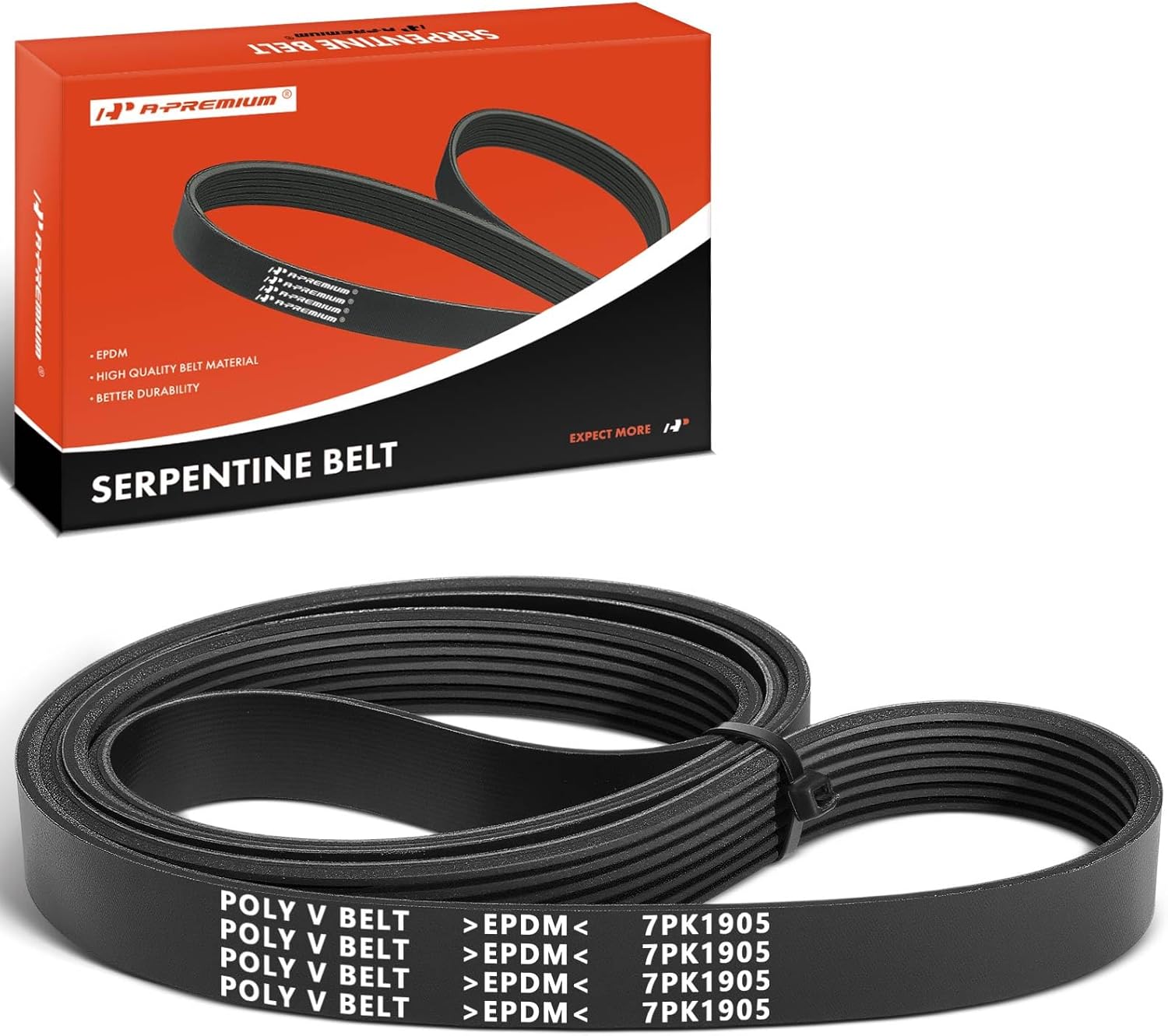
This A-Premium serpentine belt is engineered for select Toyota, Scion, and Pontiac vehicles with the L4 2.4L gas engine, delivering dependable air conditioning drive performance. Made with durable EPDM and precision dimensions, it helps resist cracking, reduce noise, and maintain stable tension for smooth operation. It's designed for straightforward installation and backed by a one-year unlimited-mileage guarantee for added confidence.
Should High Mileage Trigger Automatic Replacement?
No. Do not authorize timing-chain replacement solely because the truck has reached 150,000, 200,000, or another round-number mileage. Use mileage to review the maintenance history and wear risk, not to declare the chain defective.
A high-mileage truck deserves closer attention when its oil history is incomplete, but a quiet engine with normal timing data may not need chain service. A lower-mileage truck may require repair if testing confirms a failed tensioner, damaged guide, incorrect timing, or another internal defect.
What Evidence Should Support Replacement?
Before approving the job, ask the shop to document which test failed and which components are affected. Useful evidence can include:
- Persistent noise localized to the internal timing-drive area
- Relevant codes supported by abnormal timing data and completed circuit or VVT tests
- Mechanical timing outside specification
- Excessive chain slack measured by the engine-specific procedure
- A tensioner that does not hold or operate correctly
- Cracked, broken, or heavily worn guides
- Damaged sprockets, timing gears, cam phasers, or oil-control components
- Timing-system debris found in the oil pan or filter
When replacement is confirmed, the technician should inspect the complete timing system. Depending on the engine and findings, the repair may include the chain or chains, guides, tensioners, sprockets or gears, seals, timing-cover sealing materials, one-time-use fasteners, contaminated oil-system components, and damaged variable-valve-timing parts. The correct scope is engine-specific.
Urgency Guide
- Stop and tow: low-oil-pressure warning with noise, severe continuous rattle, stalling, strong misfire, loss of power that makes traffic operation unsafe, or visible metal or guide fragments.
- Schedule prompt diagnosis: repeated startup rattle, a new timing-area noise, a check-engine light with timing-related faults, or recurring rough running.
- Check and document: one brief noise with no warning light or drivability change. Verify the oil immediately and record the next cold start rather than assuming the chain is bad.
Maintenance Checklist for Owners and Used Tacoma Buyers
The best timing-system maintenance is not a preventive chain replacement. It is keeping the engine full of the correct oil, following the model-year maintenance guide, correcting leaks and overheating promptly, and investigating new symptoms before damage spreads.
[Products Worth Considering]

This 2-piece oil control variable valve timing solenoid set is designed to help restore proper VVT operation and engine performance across a wide range of Toyota, Lexus, Scion, and Pontiac applications. Built to meet or exceed OE performance, it uses quality seals for reliable oil control and helps reduce issues caused by improper oil flow. It is a practical replacement choice for maintaining smooth engine timing and dependable drivability.

The KZYEE KS40 helps diagnose weak spark plugs, ignition coil problems, and misfires by simulating real engine conditions under load. With adjustable RPM testing and dual-port comparison, it makes it easier to spot hidden ignition faults quickly and accurately. Its enclosed spark-proof design supports safer testing for both professionals and DIY users across a wide range of 12V gasoline engines.

This A-Premium cartridge engine oil filter is designed for a wide range of Toyota and Lexus vehicles, helping support cleaner oil flow and dependable engine protection. With high filtration efficiency and included O-rings, it offers a practical replacement solution for routine maintenance. Built for extended service intervals, it is suitable for conventional or synthetic oil applications.
For Current Owners
- Check the engine-oil level regularly and investigate unexplained consumption.
- Use the viscosity, specification, capacity, and filter required for the exact engine.
- Follow Toyota’s normal or special-operating-condition maintenance schedule as applicable.
- Repair coolant leaks and overheating problems promptly.
- Do not use unapproved engine flushes, oil thickeners, or additives to hide a rattle.
- Record new startup noises before clearing codes or changing several parts at once.
- Keep invoices showing the oil used, filter used, date, and mileage.
For Used Tacoma Buyers
- Confirm the engine and whether it uses a chain or belt.
- For a 1995–2004 3.4L V6, require timing-belt documentation or budget for model-year-appropriate service.
- Arrange to hear the first cold start of the day. A pre-warmed engine can hide startup symptoms.
- Review dated oil-change records rather than relying on a verbal claim.
- Scan all available modules for stored and pending faults before purchase.
- Inspect the timing-cover area and underbody for fresh oil, heavy sealant, or signs of recent engine work.
- Check the oil and filter for contamination or debris if the seller permits an inspection.
- Test drive the truck cold and warm, noting rough idle, hesitation, misfires, weak power, and warning lights.
- Get an independent pre-purchase inspection before committing to a high-mileage or modified truck.
For broader used-engine context, compare the Tacoma V6 and four-cylinder engines and review the factors that influence Tacoma engine life.
How Much Does Tacoma Timing Chain Replacement Cost?
Timing-chain replacement is labor intensive because the internal timing components sit behind the timing cover and the required disassembly varies by engine. A quote can also grow if the shop finds damaged guides, tensioners, gears, VVT components, oil-system debris, leaks, or previous repair errors.
At this article’s July 31, 2026 review, Kelley Blue Book showed a $2,960–$3,230 estimate for one 2017 Tacoma Double Cab in ZIP 22025. That is a localized example, not a national fixed price.
Ask for a written, VIN-specific estimate that separates diagnosis, labor, parts, fluids, seals, taxes, and any optional work. The estimate should also state which failed test supports replacement and whether the quote includes guides, tensioners, gears, VVT components, and a warranty.
[Products Worth Considering]

This ignition coil pack and pre-gapped spark plug set is designed for select 3.5L V6 Toyota and Lexus models, helping restore smooth engine performance and reliable starting. Built to meet or exceed OEM specifications, it can help fix common issues like misfires, rough idle, poor fuel economy, and reduced power. The complete 6-piece set offers a convenient replacement solution for compatible vehicles.

These custom-fit floor mats are designed specifically for Toyota Tacoma Double Cab models with automatic transmission, providing edge-to-edge coverage for reliable interior protection. Made from premium unscented TPE, they are waterproof, stain-resistant, anti-slip, and easy to clean while helping guard against rain, slush, mud, and everyday messes. Raised edges and a durable flexible build help keep spills contained and maintain a secure fit in all seasons.

These custom-fit all weather floor mats are designed for Toyota Tacoma Double Cab models to deliver full-floor coverage without trimming. Made from durable TPE material, they help protect against mud, water, snow, and debris while staying flexible, odorless, and easy to clean. The anti-slip design improves traction and helps keep the mats securely in place for safer everyday driving.
Frequently Asked Questions
Do Toyota Tacoma Timing Chains Need Routine Replacement?
No. Chain-equipped Tacomas do not have one universal scheduled timing-chain replacement mileage. Replace the chain when engine-specific diagnosis confirms chain or related timing-system wear, damage, or failure.
Which Toyota Tacomas Have a Timing Belt?
U.S. 1995–2004 Tacomas with the 3.4L 5VZ-FE V6 use a timing belt. The first-generation four-cylinder engines use chains. Confirm the engine and follow the scheduled-maintenance guide for the exact model year.
How Long Does a Toyota Tacoma Timing Chain Last?
Toyota does not publish one universal lifespan for every Tacoma timing chain. Oil history, oil pressure, engine design, guide and tensioner condition, overheating, previous repairs, and operating conditions affect service life. Mileage alone cannot confirm that replacement is needed.
Is a Cold-Start Rattle Always a Bad Timing Chain?
No. A cold-start rattle can involve a chain, guide, tensioner, or VVT component, but oil level, oil viscosity, filter drainback, accessory pulleys, heat shields, exhaust parts, and other engine components can sound similar. Record the noise and have it localized before replacing parts.
Can You Drive a Tacoma With a Suspected Bad Timing Chain?
Do not continue driving if the engine has a low-oil-pressure warning, severe continuous rattle, stalling, strong misfire, major power loss, or metal or plastic fragments in the oil. Arrange towing. A brief unexplained noise without those signs still deserves an oil check and prompt diagnosis.
How Much Does It Cost to Replace a Timing Chain on a 2017 Toyota Tacoma?
There is no single national price. At the July 31, 2026 review, KBB showed $2,960–$3,230 for one 2017 Tacoma Double Cab in ZIP 22025. Engine configuration, location, labor rate, parts scope, taxes, and additional damage can change the total.
Should You Replace the Tensioner and Guides With the Timing Chain?
The shop should inspect the complete timing system and replace worn or damaged related parts. A confirmed chain repair commonly requires attention to guides and tensioners, but the exact parts list must follow the engine-specific procedure and inspection findings.
Source Notes
- Toyota Manuals and Warranties — use this portal to locate owner and maintenance information for the exact model year.
- 1999 Toyota Scheduled Maintenance Guide — distinguishes belt-equipped and four-cylinder Tacoma timing systems in scheduled maintenance.
- 2008 Tacoma Scheduled Maintenance Guide — model-year maintenance reference for a chain-equipped Tacoma generation.
- 2026 Tacoma owner resources — current owner, warranty, and maintenance-guide access.
- Kelley Blue Book 2017 Tacoma repair estimate — localized cost example reviewed July 31, 2026.
Final Takeaway
First identify the engine. A 1995–2004 3.4L V6 Tacoma has a scheduled-service timing belt, while chain-equipped Tacomas normally use condition-based timing-system repair rather than automatic replacement at a round-number mileage.
Do not authorize a timing-chain job from one rattle, one misfire, or the odometer alone. Check the oil, preserve codes and freeze-frame data, localize the noise, eliminate external and VVT-related causes, and require engine-specific evidence of chain, guide, tensioner, gear, or timing failure. Stop driving if abnormal noise appears with low oil pressure, severe misfiring, stalling, or debris in the oil.


[…] service is not diagnosed by A/C squeal or alternator charging symptoms. See the separate Toyota Tacoma timing-chain guide for that […]