
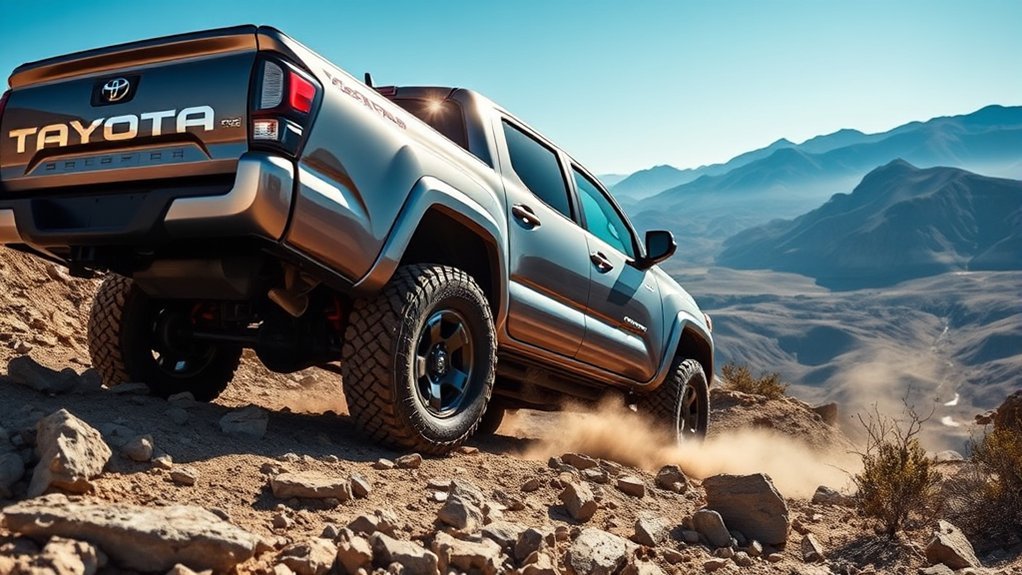
Last updated: July 31, 2026
|
The Toyota Tacoma’s A-TRAC system (Active Traction Control) is an advanced off-road traction aid that uses the four-channel ABS hydraulic brake actuator to stop wheel spin on unloaded tires, instantly routing engine torque across open differentials to the wheels with physical grip. How you engage it depends directly on your Tacoma’s generation and transmission: button-equipped 2nd Gen (2005–2015) and 3rd Gen Manual (2016–2023) trucks use an overhead console switch in 4L, 3rd Gen Automatics integrate it within Multi-Terrain Select (MTS), and 4th Gen (2024–2026) trucks automate the function through modern 4WD and Brake LSD logic.
Quick Summary: How to Engage Tacoma A-TRAC
Dedicated Button Models (2nd Gen & 3rd Gen Manual): Stop the vehicle, shift into Neutral (or depress clutch), engage 4L (4WD Low), press the A-TRAC button, confirm the dashboard light, and maintain steady, smooth throttle (~1,500–2,000 RPM).
Dial / MTS Models (3rd Gen Auto & 4th Gen 2024–2026): Shift into 4L, activate Multi-Terrain Select (MTS), choose Rock or Mogul mode, and let the automated brake-traction system regulate slip dynamically.
Key Takeaways
- Electronic Limited-Slip Action: A-TRAC uses ABS caliper braking to simulate locking differentials at both front and rear axles while preserving full steering ability.
- Generation & Transmission Nuances: On 3rd Gen (2016–2023) Tacomas, the physical A-TRAC button is exclusive to 6-speed manual TRD Off-Road trims; automatic models manage this via Multi-Terrain Select (MTS).
- Low Range Requirement: Factory activation on button-equipped trucks requires the transfer case to be fully locked in 4L.
- Normal Operating Signs: Rapid mechanical clicking, brake pedal shudder, chassis vibration, and a flashing slip indicator confirm the system is actively braking a spinning wheel.
- Thermal Protection Mode: Sustained, aggressive wheel spin heats the ABS hydraulic pump, triggering a protective buzzer and temporary system pause until temperatures drop.
How to Use A-TRAC for Optimal Off-Roading
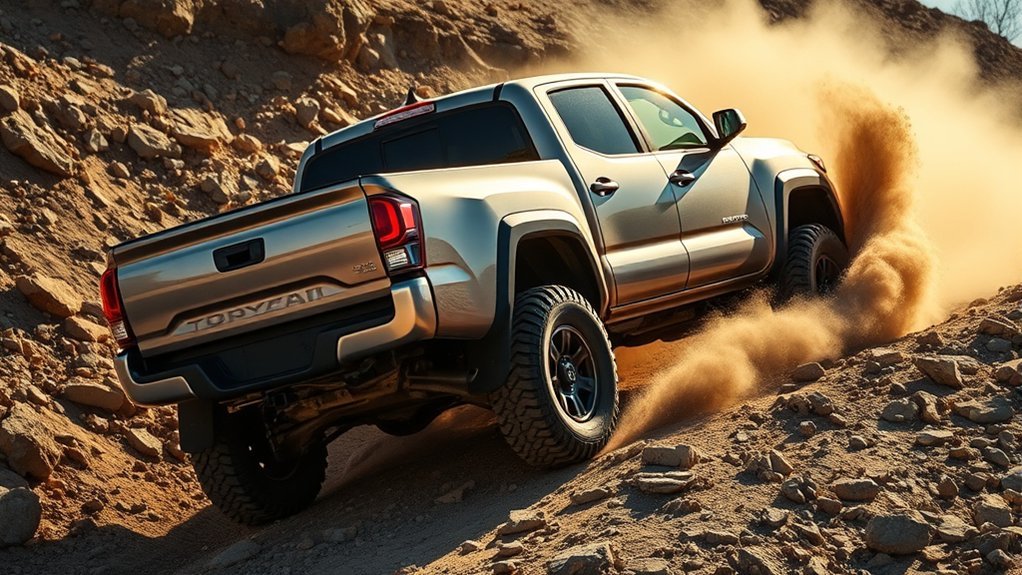
Operating A-TRAC correctly begins with identifying your truck’s specific interior switchgear. The traditional “shift to 4L, then press A-TRAC” sequence applies specifically to button-equipped models. Third-generation automatic Tacomas manage individual wheel slip through Multi-Terrain Select, while 2024–2026 fourth-generation models utilize next-generation unified 4WD vehicle dynamics controllers.
At a Glance: Operating Requirements
| Time Required | About 30–60 seconds to stop and engage low range |
| Driver Input | Smooth, steady throttle (avoid rapid pumping) |
| Operating Range | Low speeds (typically under 12 mph / 20 km/h in technical crawling) |
| Optimal Terrain | Cross-axle articulation ruts, boulder fields, uneven hill climbs, deep mud/snow |
| Pre-Engagement Check | Model year, transmission type (Automatic vs. Manual), and 4LO indicator solid status |
Which A-TRAC Procedure Applies to Your Tacoma?
| Tacoma Configuration | Activation Sequence | System Operation Notes |
|---|---|---|
| 2nd Gen (2005–2015) TRD Off-Road & 3rd Gen (2016–2023) Manual TRD Off-Road | Stop, shift transmission to Neutral/depress clutch, turn 4WD dial to 4L, wait for solid 4LO light, press overhead A-TRAC button. | Dedicated standalone button illuminates green “A-TRAC” instrument cluster light. |
| 3rd Gen (2016–2023) Automatic TRD Off-Road & TRD Pro | Stop, shift to Neutral, engage 4L, press the overhead MTS button, and rotate the dial to Rock or Rock & Dirt mode. | No physical A-TRAC button exists on automatics; MTS controls brake pulse and slip thresholds. |
| 4th Gen (2024–2026) All 4WD Models | Shift into 4L using the electronic transfer case switch. Select terrain mode via the drive mode selector if equipped. | Active Brake Limited-Slip logic operates seamlessly in background across open differentials. |
Once active, maintain a smooth, steady throttle application (~1,500–2,000 RPM). A-TRAC requires approximately a quarter- to a half-turn of initial wheel spin for the wheel-speed sensors to calculate differential rotation and command the ABS hydraulic unit to clamp down on the slipping wheel. Pumping or stabbing the accelerator pedal interrupts these sensor calculations and reduces system efficiency.
- Stop completely before the obstacle: Choose a level staging spot and eliminate active wheel spin before engaging low-range 4WD.
- Shift the transfer case into 4L: Place an automatic transmission in Neutral (or fully depress the clutch on manuals) and turn the 4WD dial to 4L. Wait until the “4LO” dash indicator turns solid.
- Activate A-TRAC or MTS: On button-equipped models, press the overhead console A-TRAC switch. On 3rd Gen automatics, enable Multi-Terrain Select in Rock mode.
- Verify dash illumination: Confirm that the green A-TRAC or active MTS icon is solidly illuminated.
- Maintain linear throttle: Guide the vehicle forward using progressive throttle. Allow the ABS hydraulic actuators to pulse and transfer torque without over-revving.
- Disengage on high-traction ground: Press the button again to turn off A-TRAC, shift back into 4H or 2H, and never operate in 4L on dry asphalt.
Trail Pro Tip: If forward momentum stops completely while climbing an obstacle, do not aggressively spin the tires. Hold the vehicle with the foot brake, ease off the throttle, straighten the steering wheel slightly to reduce driveline bind, and reapply steady, modest throttle to let A-TRAC redistribute torque.
What Is A-TRAC on a Toyota Tacoma?
Toyota’s Active Traction Control (A-TRAC) is a specialized off-road hydraulic braking software protocol. In standard open-differential four-wheel-drive vehicles, torque naturally follows the path of least resistance: when one tire lifts into the air or rests on slick mud, it spins freely, receiving 100% of that axle’s rotational energy while the tire with grip remains stationary.
A-TRAC counteracts this mechanical limitation. Wheel-speed sensors report rotational velocity at each corner to the Skid Control ECU. When excessive wheel slip is detected, rapid-firing hydraulic solenoid valves apply caliper brake pressure exclusively to the spinning wheel. This creates artificial resistance, forcing the open differential’s spider gears to transfer up to 50% of available axle torque across to the opposing wheel resting firmly on the ground.
- Dynamic Four-Wheel Management: Unlike a rear mechanical locker that only addresses the rear axle, A-TRAC controls wheel slip independently across both front and rear axles.
- Preserved Steering Control: Because the front differential remains mechanically unlocked, the truck retains sharp turning capability without the heavy binding or wide pushing associated with a locked front spool.
- ABS Actuator Dependent: The system relies entirely on healthy wheel-speed sensors, hydraulic brake fluid pressure, and the skid control module.
How Does A-TRAC Improve Off-Road Traction?
A-TRAC delivers its greatest advantage during cross-axle articulation events—situations where the front left and rear right tires are heavily loaded in deep ruts while the opposite diagonal tires are unloaded or suspended in mid-air. Without active braking, all power is wasted spinning the two airborne tires.
[Products Worth Considering]

These off-road traction boards are designed to help vehicles recover from mud, sand, and snow with reliable grip and easier ramp-up. Their double-sided diamond construction, cross-shaped teeth, and contoured ramps improve traction while the durable polypropylene build stays flexible in harsh conditions. Convenient mounting points, ergonomic handles, and a visible leash make them practical to carry, store, and retrieve when recovery is needed.

Upgrade your vehicle interior with Skechers Memory Foam front seat covers designed for comfort, protection, and a clean custom look. The memory foam contours to your body to help relieve pressure, while the cooling Lycra top layer adds breathability for a more comfortable drive. Built with a form-fitting design and airbag-compatible stitching, these covers suit most cars, trucks, vans, and SUVs.

This Tesla interior cleaner is designed to help keep seats, consoles, dashboards, door panels, and other high-touch cabin surfaces looking fresh. It works on white and black vegan leather to remove everyday dirt, smudges, and light stains with a simple spray-and-wipe routine. The kit includes a larger bottle and towel, making it a practical maintenance accessory for Tesla owners who want easy interior care.
Key Features of A-TRAC
- Independent Corner Braking: Precise hydraulic brake force isolates individual spinning wheels within milliseconds.
- Simulated Front & Rear Limited-Slip: Delivers true four-wheel driving force without requiring aftermarket mechanical locking differentials.
- Automatic Speed Regulation: Operates at technical crawling speeds to preserve vehicle control and minimize drivetrain shock loading.
- Integrated Ecosystem: Complements Toyota off-road hardware including Hill-Start Assist Control (HAC), Downhill Assist Control (DAC), and Crawl Control.
Model-Year Compatibility Note: Always verify your truck’s factory configuration. 2nd Gen TRD Off-Road models, 3rd Gen 6-speed manuals, and 4th Gen trucks each possess specific electronic actuation logic. Refer to your exact model-year owner’s manual before tackling technical trails.
Which Terrain Is A-TRAC Best For?
| Terrain Type | Recommended Setup | Field Technique |
|---|---|---|
| Cross-Axle Ruts & Boulders | 4L + A-TRAC (or MTS Rock) | Crawl at 1–3 mph; hold throttle steady to allow brake cycling. |
| Loose Gravel & Fire Roads | 4H + Standard TRAC | Maintain consistent momentum; low-range A-TRAC is not required. |
| Deep Mud & Sand Dunes | 4H/4L + MTS Mud & Sand (TRAC off) | Allow intentional wheel spin to clear tread voids; excessive brake pulsing can bog the engine. |
| Uneven Snow & Ice | 4H/4L + MTS Snow + Dedicated Winter Tires | Apply gentle steering; brake traction aids cannot manufacture grip on pure sheet ice. |
What Happens When a Wheel Lifts?
When a Tacoma’s front or rear wheel leaves the ground, the internal differential gears spin the airborne tire at twice the driveshaft speed. The moment A-TRAC senses this velocity mismatch via the wheel-speed sensor, it fires the hydraulic brake caliper on that lifted wheel. This artificial resistance transfers up to 50% of the axle’s rotational energy across to the grounded tire, pulling the Tacoma smoothly across the ledge.
A-TRAC maximizes available tire traction across split-grip surfaces. However, it cannot overcome high-centered skid plates, zero-traction ice, or extreme trail slopes where physical rollover thresholds are exceeded.
What Makes A-TRAC Work Well?
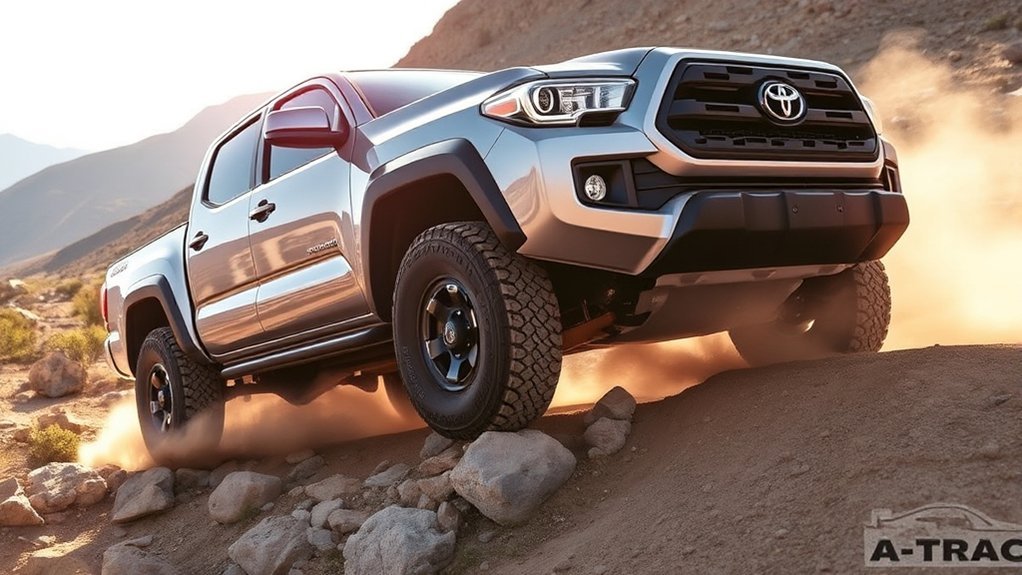
Electronic traction aids amplify mechanical capability, but they cannot replace proper vehicle preparation and driver technique:
- Aired-Down All-Terrain / Mud-Terrain Tires: Lowering tire pressure (e.g., 15–20 PSI depending on tire load rating and wheel type) widens the contact patch, giving A-TRAC significantly more usable surface friction to work with.
- Disciplined Throttle Control: Hold a steady throttle position around 1,500–2,000 RPM. Rapid pedal pumping prevents the ABS ECU from settling into a steady brake-pulse frequency.
- Clean ABS Sensor Wiring: Ensure wheel-speed sensor wiring harnesses are securely routed and free from tension or brush snags, especially on trucks with aftermarket suspension lifts.
- Driveline Fluid Health: Regular transfer case and differential fluid services ensure open differential spider gears handle dynamic torque transfer without excessive thermal stress.
Safety Warning: Never use A-TRAC or 4L on dry, paved roads. Doing so creates driveline binding (“crow hop”), placing severe stress on half-shaft CV joints, transfer case chains, and differential gears.
How Do You Activate A-TRAC on a Button-Equipped Tacoma?
This procedure applies directly to 2nd Gen (2005–2015) TRD Off-Road Tacomas and 3rd Gen (2016–2023) 6-speed manual TRD Off-Road models equipped with the factory overhead A-TRAC switch:
Step-by-Step Activation
- Bring the Tacoma to a complete stop: Ensure the vehicle is on level ground where possible.
- Shift Transmission to Neutral / Depress Clutch: For automatic 2nd Gens, shift into Neutral (N) and hold the brake pedal firmly. For manual 3rd Gens, fully depress the clutch pedal.
- Engage 4WD Low (4L): Rotate the dash 4WD selector knob from 4H to 4L. Wait 2–5 seconds until the instrument cluster 4LO light stops flashing and stays solidly illuminated.
- Depress the A-TRAC Button: Press the overhead console A-TRAC switch. Verify that the green “A-TRAC” instrument indicator light illuminates.
- Select Your Driving Line: Pick a trail line that keeps weight loaded on as many contact patches as possible.
- Apply Steady Throttle: Slowly apply linear throttle (~1,500 RPM) to initiate forward motion and allow the brake system to modulate wheel slip automatically.
How Does It Work on 4th Gen (2024–2026) Tacomas?
On 4th Gen Tacomas, Toyota engineers integrated active brake traction management directly into the core vehicle stability and 4WD architecture. In 4L, the system automatically runs aggressive brake-limited-slip routines. If equipped with Multi-Terrain Select, choosing Rock mode sharpens the ABS hydraulic response time and tailors throttle sensitivity for slow crawling without requiring a separate physical toggle switch.
When Should You Use A-TRAC?
- Steep Cross-Axle Ledges: When ascending rocky shelves where diagonally opposite tires lift off the surface.
- Deep Articulation Ruts: When navigating rain-carved gullies that leave tires clawing for traction at uneven angles.
- Slick Rock Shelf Climbs: Where consistent torque transfer across the front axle is required without losing steering authority.
- Uneven Snow & Mud Pockets: Where one side of the vehicle is submerged in deep slush while the other has firm earth.
[Products Worth Considering]

These oil-based battery terminal protectors help stop corrosion by sealing out acid fumes that can damage battery connections. The saturated felt washers are designed to last without drying out, helping maintain cleaner terminals and better electrical contact for stronger starting performance. Their universal design works with both top-post and side-post batteries, making them a practical choice for routine battery maintenance.

This custom-fit floor mat and cargo liner set is designed for select Kia K5 and Hyundai Sonata models, offering full interior coverage for the front row, second row, and trunk. Made from odorless TPE with raised edges and anti-slip backing, it helps block dirt, water, snow, and spills while staying securely in place. The durable, easy-to-clean design is ideal for daily driving, family use, and messy outdoor adventures.

【Enhanced Throttle Response Optimization】 The EVKCAR Throttle Controller eliminates factory-set accelerator delays, significantly improving throttle sensitivity and instantaneous acceleration. It adapts to diverse driving habits and road conditions, resolving sluggish starts and ensuring faster acceleration for smoother handling.
A-TRAC vs. TRAC, Auto LSD, MTS, Crawl Control, and the Rear Locker
| System | Primary Use Case | Operating Mechanism | Steering Impact |
|---|---|---|---|
| TRAC (Traction Control) | Daily wet/snow street driving in 2H or 4H | Cuts engine throttle and applies light braking to stop spin. | None (standard road steering) |
| A-TRAC | Technical slow crawling in 4L | Aggressively brakes spinning wheels without cutting engine power. | Preserves 100% front steering capability |
| Auto LSD | 2WD low-traction starts on sand/gravel | Brakes the spinning rear wheel in 2WD mode. | None |
| Multi-Terrain Select (MTS) | Surface-tailored wheel-slip management | Adjusts throttle mapping and brake aggressiveness across 5 modes. | None |
| Crawl Control | Low-speed technical ascent/descent autopilot | Fully automates both throttle and braking at 5 selectable low speeds. | Driver steers only |
| Rear Differential Locker | Severe single rear-wheel traction loss | Mechanically locks rear axle shafts together (50/50 split). | Slight rear tire scrub during tight turns |
Can A-TRAC and the Rear Locker Work Together? On 2nd Gen Tacomas, engaging the factory rear differential lock automatically disables factory A-TRAC unless an aftermarket bypass (“A-TRAC/Locker mod”) is wired. On 3rd Gen manual Tacomas, official Toyota programming allows A-TRAC on the front axle while the rear differential is mechanically locked below 3 mph (5 km/h), providing full four-wheel lock-up capability.
[Products Worth Considering]

Fits Tacoma (05-15) Tacoma 2005-2015 2.7L PACKAGE QUANTITY : 2 Total 1 Bypass Pipe 1 Gasket Manufacturer Part Number:16268-75110 Interchange Part Number:1626875111, 16268...
What Can’t A-TRAC Do?
- Cannot Manufacture Friction: A-TRAC cannot pull a vehicle across smooth ice or grease-slick mud if all four tires have zero grip.
- Susceptible to Thermal Overheating: Extended, heavy wheel spin cycles the ABS pump and solenoid valves rapidly. If internal fluid temperatures exceed safety limits, an audible warning buzzer sounds, the slip light stays on, and A-TRAC temporarily disengages until the brake system cools down.
- Not a High-Speed System: Designed strictly for low-range crawling; it cannot be used for high-speed snow or desert driving in 4H.
- Vulnerable to Sensor Damage: Damaged ABS wiring, seized calipers, or worn-out wheel bearings will trigger ABS fault codes and disable A-TRAC.
What Does A-TRAC Feel and Sound Like?
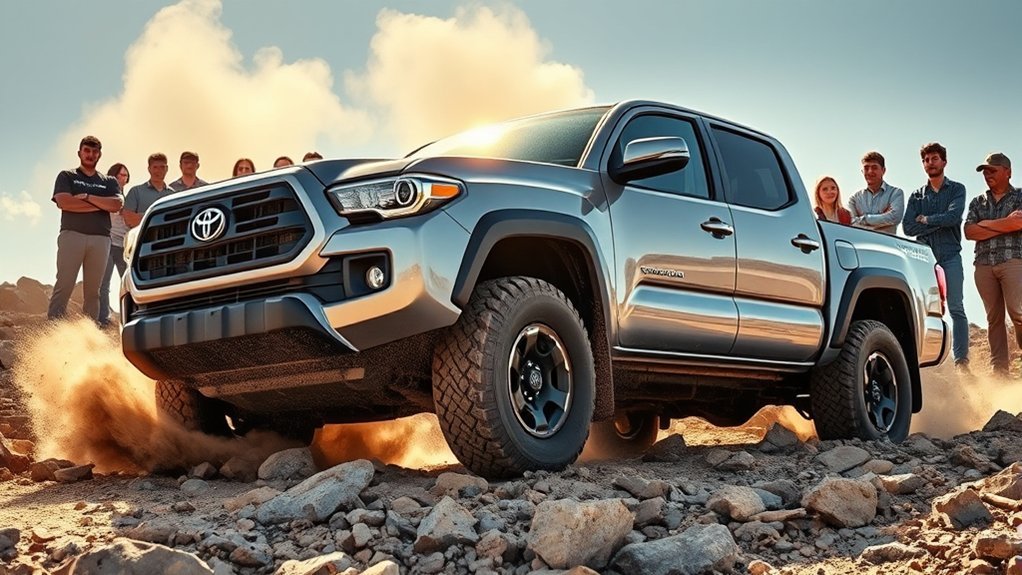
First-time users frequently mistake normal A-TRAC operation for mechanical failure. When A-TRAC engages, the driver will experience:
- Rapid “Machine-Gun” Clicking / Chattering: The ABS hydraulic solenoid valves pulsing fluid at high pressure to the brake calipers.
- Pedal & Floorpan Vibration: Mechanical feedback vibrating through the chassis as torque redirects across open differential spider gears.
- Flashing Slip Indicator: The amber dashboard slip icon flashes synchronously with brake pulse cycles.
- Brief Hesitation Before Pull: A minor 0.5-second pause while the ECU verifies wheel slip ratios before clamping the spinning tire.
How Do You Maintain A-TRAC Performance?
- Flush Brake Fluid Every 2–3 Years: A-TRAC places high hydraulic demands on brake fluid. Old, moisture-contaminated fluid boils at lower temperatures, leading to premature thermal shutdown on the trail.
- Inspect ABS Wire Harness Slack: If your Tacoma is equipped with an aftermarket suspension lift or extended-travel shocks, check that the ABS sensor wire brackets have sufficient slack at full downward suspension droop.
- Clean Wheel-Speed Sensor Rings: Pressure-wash mud, iron dust, and trail debris from the front hub tone rings and rear axle speed sensor pickups.
- Maintain Differential Fluid Levels: Frequent open-differential torque transfer generates heat; change front/rear differential fluids according to Toyota’s severe service schedule (every 15,000–30,000 miles for off-road use).
When Should You Get Professional Help?
Schedule an inspection with a qualified Toyota technician or off-road specialist if your truck displays any of the following symptoms:
- The 4LO or A-TRAC indicator continues flashing indefinitely and refuses to lock solidly.
- The ABS, VSC, or Brake warning lights remain illuminated upon vehicle startup.
- The system issues a continuous high-pitched buzzer immediately upon pressing the switch (indicating an ABS accumulator pressure fault or failed thermal sensor).
- Harsh grinding or clunking sounds persist after wheel spin has completely ceased.
Frequently Asked Questions
Should A-TRAC be on or off during normal off-roading?
Keep A-TRAC off during routine trail cruising and easy gravel driving. Engage it selectively when entering slow, technical 4L obstacles where tires are likely to lift or encounter split traction surfaces (rocks, deep ruts, ledge climbs).
Is A-TRAC the same as a mechanical locking differential?
No. A mechanical differential lock physically splines both axle shafts together for an unconditional 50/50 torque split. A-TRAC keeps differentials open, using selective ABS brake pressure to simulate limited-slip action while maintaining full steering capability.
Can I use A-TRAC with the rear differential lock engaged?
On factory 3rd Gen manual transmission TRD Off-Road Tacomas, A-TRAC operates on the front axle while the rear differential is locked at speeds under 3 mph (5 km/h). 2nd Gen Tacomas disable A-TRAC when the factory rear locker is engaged unless an aftermarket electrical bypass modification is installed.
Does A-TRAC work in 4H (4WD High)?
No. Factory button-activated A-TRAC requires the transfer case to be in 4L (Low Range). In 4H, the Tacoma utilizes standard TRAC (Traction Control) and VSC (Vehicle Stability Control), which cut engine power to prevent high-speed fishtailing rather than aggressively braking individual wheels to climb obstacles.
Why is my A-TRAC light flashing and making a chattering noise?
A flashing slip indicator accompanied by rapid hydraulic clicking/chattering is normal operation. It indicates that the ABS actuators are actively pulsing the brake caliper on a spinning wheel to redirect power to the wheel with grip.
Why doesn’t my 3rd Gen or 4th Gen Tacoma have an A-TRAC button?
On 3rd Gen (2016–2023) automatic Tacomas, A-TRAC functionality is built directly into the Multi-Terrain Select (MTS) system on the overhead dial. On 4th Gen (2024–2026) Tacomas, active brake-traction routines run automatically within the 4WD system and drive modes without needing a standalone physical switch.
Can A-TRAC overheat my truck’s brakes?
Yes. Continuous, prolonged wheel spin forces the ABS hydraulic pump to pulse repeatedly, generating intense heat. When thermal thresholds are reached, an alert buzzer sounds, the slip light stays illuminated, and A-TRAC temporarily suspends operation until the brake system cools down.
Conclusion
The Toyota Tacoma A-TRAC system bridges the gap between open differentials and mechanical lockers. By rapidly braking spinning wheels through the four-channel ABS system, A-TRAC transforms cross-axle ruts and rocky steps into straightforward crawls while preserving complete steering authority.
For the best trail results, identify whether your Tacoma uses a dedicated button, Multi-Terrain Select, or 4th Gen automated logic. Shift fully into 4L, verify solid dashboard indicator status, and maintain a steady, disciplined throttle to let the electronics do the work.
Sources
- Toyota Owners – 2023 Tacoma Manuals and Warranties – Official technical documentation for 3rd Gen 4WD and MTS operation.
- Toyota Owners – 2026 Tacoma Manuals and Warranties – Official manual for 4th Gen Tacoma 4WD and Brake LSD specifications.
- Toyota USA Newsroom – 2024 Tacoma Overview – Manufacturer release detailing unified 4WD architecture and traction modes.
- Toyota Owners – 2024 Tacoma Four-Wheel-Drive System – Official operating instructions for 2H, 4H, and 4L transfer cases.
- Toyota Owners – Rear Differential Lock System – Factory operational limitations and cautions regarding differential locking.
- NHTSA – Tires – Technical guidance on tire pressure, sidewall deformation, and trail safety.
- Toyota Support – Vehicle diagnostic indicators, ABS brake system alerts, and factory maintenance schedules.

[…] For related trail systems, see the Tacoma Crawl Control vs. low range guide and the Toyota Tacoma A-TRAC guide. […]