Reading your Toyota Tacoma tire pressure placard is simple once you know what each line means. The sticker tells you the correct cold tire pressure, original tire size, seating and load information, and sometimes alternate tire details. Use the placard first, not the number molded into the tire sidewall, because Toyota sets the placard pressure for your truck’s weight, tires, suspension, and handling.
Quick Answer
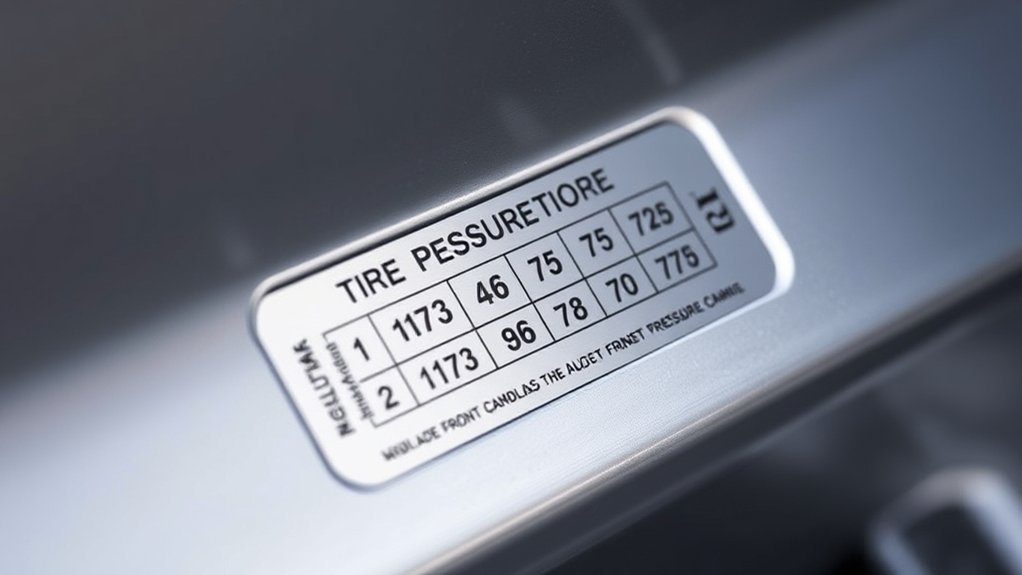
To read your Toyota Tacoma tire pressure placard, open the driver’s door and check the door jamb label. Match your tire size to the pressure listed for the front and rear tires, then set the tires to that cold PSI before driving or after the truck has been parked for at least three hours.
Key Takeaways
- The Tacoma tire pressure placard is usually on the driver’s side door jamb.
- Use the placard’s cold tire pressure, not the tire sidewall’s maximum pressure.
- Many Tacoma configurations list pressures in the 30–35 psi range, but your exact truck may differ.
- Check pressure monthly, before long trips, and whenever temperatures change sharply.
- A TPMS warning is helpful, but it does not replace manual checks with a reliable gauge.
At a Glance
| Time Required | 5–10 minutes |
| Difficulty | Easy |
| Tools Needed | Tire pressure gauge and air compressor or tire inflator |
| Cost | Usually free at home if you already own a gauge; a basic gauge is inexpensive |
Understanding the Tire Pressure Placard Location
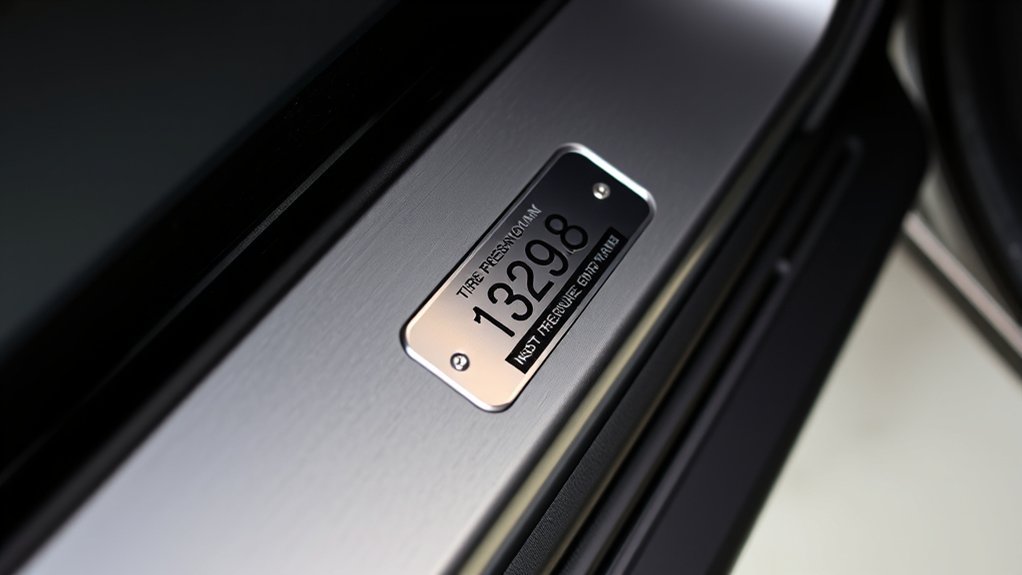
On most Toyota Tacoma models, the tire and loading information placard is on the driver’s side door jamb. Open the driver’s door and look along the pillar or door opening for a white and yellow label. Toyota’s owner resources also point owners to the vehicle’s official tire inflation information and manual as the correct reference for pressure settings: Toyota Tacoma Manuals and Warranties.
The placard is designed to be easy to access before a trip, after a tire rotation, or when seasonal temperatures change. It normally lists the original tire size, recommended cold inflation pressure, seating capacity, and load information. Some trucks may show different front and rear pressures, while others may list the same pressure for all four road tires.
Note: If your Tacoma has aftermarket tires or wheels, the door placard is still the starting point, but you should confirm the correct pressure with the tire manufacturer or a qualified tire professional, especially if the tire size, load rating, or load range has changed.
Essential Details on the Tire Pressure Placard
The tire pressure placard is more than a sticker with a PSI number. It gives you the information needed to inflate the tires safely for normal driving. Here is what to look for:
- Original tire size: This shows the factory tire size Toyota matched to your Tacoma configuration.
- Front tire pressure: This is the cold PSI for the front tires.
- Rear tire pressure: This is the cold PSI for the rear tires. It may match the front or be different depending on the model and tire setup.
- Cold inflation wording: This means the pressure should be checked before driving or after the truck has been parked long enough for the tires to cool.
- Load and seating information: This helps you avoid overloading the vehicle.
For many Tacoma configurations, the recommended pressure is commonly around 30–35 psi, but you should always follow the number printed on your own placard. The proper tire pressure for a vehicle is usually found on the driver’s side door jamb or in the owner’s manual, according to FuelEconomy.gov.
Placard Pressure vs. Tire Sidewall Pressure
One of the most common tire inflation mistakes is reading the tire sidewall and using that number as the daily driving pressure. The sidewall usually shows the maximum cold inflation pressure the tire can handle for its rated load. That is not the same as Toyota’s recommended operating pressure for your Tacoma.
| Where You Read It | What It Means | Should You Use It Daily? |
|---|---|---|
| Door-jamb placard | Toyota’s recommended cold tire pressure for that truck setup | Yes |
| Tire sidewall | Maximum pressure allowed for that tire under its rated load | No, unless a tire professional or specific load guidance calls for it |
| Toyota owner’s manual | Official tire inflation guidance and safety warnings | Yes, especially if the placard is damaged or unclear |
Warning: Do not inflate your Tacoma tires to the sidewall maximum just because the number is higher. Overinflation can reduce ride comfort, change handling, and increase uneven tread wear. Underinflation can cause heat buildup, poor handling, and tire damage.
Importance of Cold Tire Pressure Readings
A cold tire pressure reading is the most accurate way to compare your Tacoma’s tires to the placard. NHTSA explains that a tire is considered cold when it has not been driven for at least three hours, and that the vehicle manufacturer’s recommended pressure is the correct cold PSI or kPa to use: NHTSA TireWise tire safety guidance.
Tires heat up as you drive. As heat builds, air pressure rises, so a warm reading may look higher than the true cold pressure. That is why a tire can seem “fine” after driving but still be low the next morning.
Under-inflated tires can lower gas mileage by about 0.2% for every 1 psi drop in the average pressure of all tires, according to FuelEconomy.gov.
How Do I Check Cold Tire Pressure?
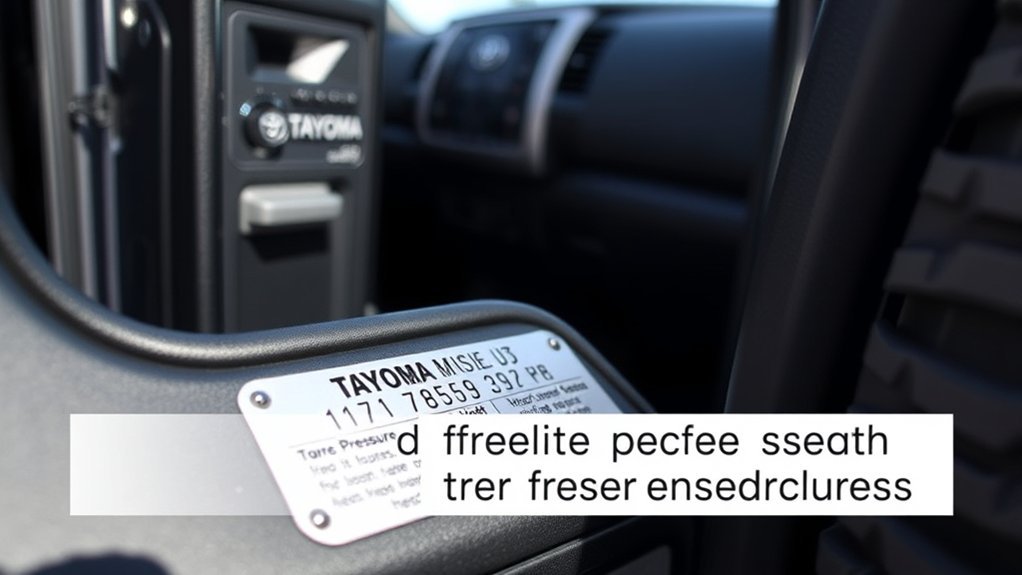
Checking cold tire pressure takes only a few minutes. Use a quality gauge and check all four tires before driving when possible.
- Park the Tacoma long enough for the tires to cool. For the most accurate reading, check before driving or after the truck has been parked for at least three hours.
- Find the recommended PSI. Read the driver’s door-jamb tire pressure placard and note the front and rear cold pressures.
- Remove the valve cap. Keep it somewhere clean so dirt does not get inside the valve.
- Press the gauge firmly onto the valve stem. A quick hiss is normal, but if air keeps leaking, reposition the gauge and try again.
- Compare the reading to the placard. Add air if the tire is low or release a small amount if it is too high.
- Recheck the pressure. Repeat until the tire matches the placard pressure.
- Replace the valve cap. Valve caps help keep dirt and moisture away from the valve core.
Pro Tip: Check the spare tire too if your Tacoma has one. Spare tires are often ignored until they are needed, and they can lose pressure over time just like the road tires.
[Products Worth Considering]
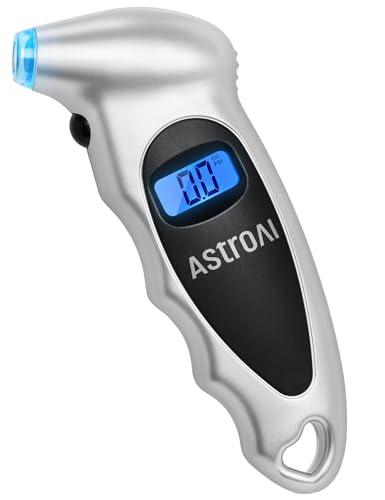
Accurate, Dependable Readings: Factory‑calibrated to ±1 PSI, so you can confidently match your vehicle’s recommended PSI (check the door jamb sticker). Ideal for monthly checks and road trips — consistent results every time, cold or warm.
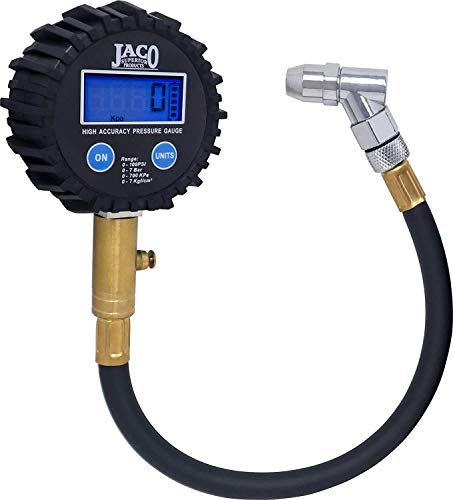
PRO ACCURACY - mechanic recommended, performance tested, & calibrated accurate to professional ANSI 2A standards - with dual pressure sensors certified to ±0.50% FS (0.50 PSI), offering reliable readings up to 100 PSI w/ precise readout resolution of 0.10 PSI - so you can now maintain your tires with a shop-grade mechanic trusted tool
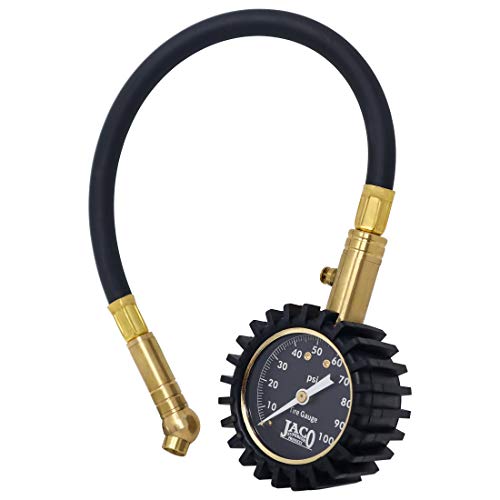
Mechanic Recommended - performance tested, certified, & calibrated accurate within ANSI Standards (±1.5%) at our ANSI accredited calibration facility, ensuring precise tire pressure readings without relying on batteries
Adjusting Tire Pressure: A Step-by-Step Guide
After you check the pressure, adjust each tire to the number on the placard. Add air in short bursts, then recheck with the gauge. If the tire is overinflated, press the small center pin inside the valve stem briefly to release air, then measure again.
[Products Worth Considering]

PROCESS LEVEL ACCURACY: Each ETENWOLF’s digital tire pressure gauge is calibrated manually to ANSI B40.7 Grade 2A(plus-minus 1 PSI).Presta valve adapter not included, if used for bicycles, it must be purchased separately

HIGH ACCURACY: Every ETENWOLF's pencil tire gauge is calibrated to ANSI B40.1 Grade B, it is accurate to 2% of span in the middle 50% of range and 3% of span in the lower and upper 25% of range. Each of ETENWOLF pencil tire pressure gauge is manually calibrated and has its unique calibration number printed on the pencil

RUGGED DESIGN: The stainless steel components prevent rust and corrosion while the precision-crafted nozzle seamlessly seals onto the valve stems for highly accurate readings (±2% span). We also provide 4 valve stem caps for convenient replacement.
Recommended Pressure Levels
Your exact Tacoma tire pressure depends on model year, trim, tire size, and load information. Many Tacoma placards list cold pressures around 30–35 psi, but the correct number is always the one printed on your own truck’s placard or listed in the official owner’s manual.
| Placard Information | What to Do |
|---|---|
| Same front and rear PSI | Set all four road tires to that cold pressure. |
| Different front and rear PSI | Set each tire by axle: front tires to the front PSI, rear tires to the rear PSI. |
| Multiple tire sizes or tire types | Match your tire size/type to the correct line before inflating. |
| Aftermarket tires or wheels | Confirm pressure with the tire maker or a qualified tire shop. |
Adjusting for Load Changes
The tire placard also helps you understand safe loading. Do not exceed the vehicle’s load limits, and do not guess at higher pressures for towing or hauling. If you are carrying heavy cargo, towing, or using different load-range tires, check your Tacoma owner’s manual and tire manufacturer guidance. A tire shop can also help you set pressure correctly for non-stock tires.
NHTSA recommends checking the tire information placard or owner’s manual for maximum recommended load and checking tire pressure before long trips: NHTSA tire safety checklist.
What Misunderstandings Exist About Tire Inflation?
Several tire pressure myths can lead Tacoma owners to inflate incorrectly. Clearing them up can help prevent uneven wear, rough ride quality, and safety problems.
- Myth: The tire sidewall number is the best pressure. The sidewall number is usually the tire’s maximum cold pressure, not Toyota’s recommended daily driving pressure.
- Myth: The TPMS light tells me everything. TPMS is a warning system, not a replacement for routine pressure checks.
- Myth: Tire pressure only matters in winter. Pressure matters year-round. Heat, cold, load, and normal air loss can all change readings.
- Myth: A tire is okay if it “looks full.” Modern truck tires can be low even when they do not visibly sag.
- Myth: More pressure always improves fuel economy. Correct pressure helps efficiency, but too much pressure can reduce comfort and cause uneven tread wear.
Monitoring Tire Pressure Effectively
The best tire pressure routine combines three tools: the door placard, a manual gauge, and the Tacoma’s TPMS or display features if equipped. Check pressure at least once a month, before long drives, and after major temperature swings. NHTSA tire guidance also recommends regular tire inspection for tread wear, cracks, objects in the tread, and valve cap condition.
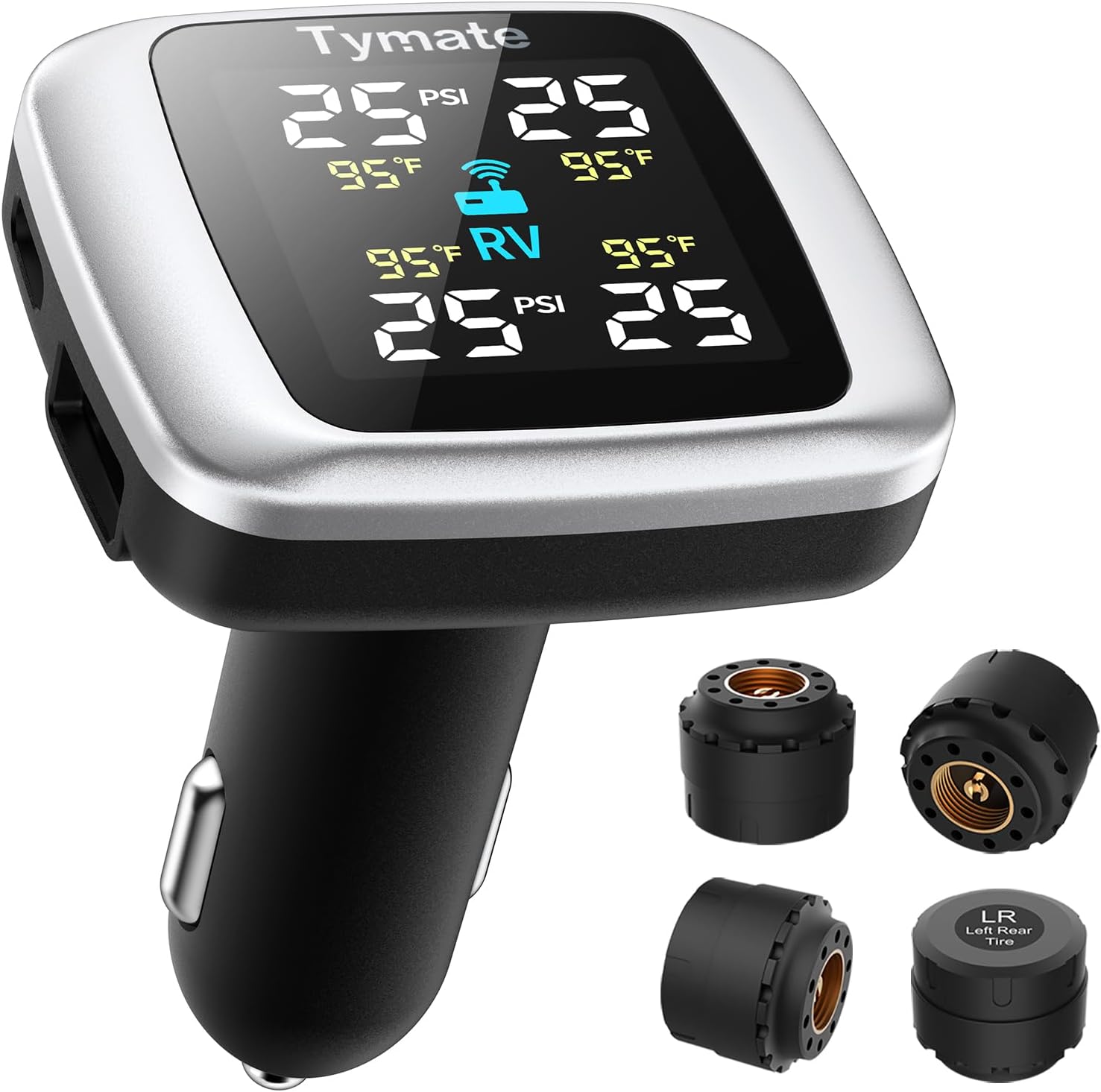
If your Tacoma has a tire pressure display in the multi-information display or the Toyota app, use it as a helpful monitor. Toyota describes the Toyota app as a way to check vehicle health and connected vehicle information where supported: Toyota App connected services. App features can vary by model year, trim, equipment, region, and subscription status, so a manual tire gauge is still the most dependable way to confirm exact pressure at the valve stem.
Note: Federal TPMS rules are designed to warn drivers about significant under-inflation. The system is valuable, but you should not wait for the light before checking your tires. The federal TPMS standard is published at 49 CFR § 571.138.
Troubleshooting Tire Pressure Problems
If your Tacoma tire pressure does not stay where it should, use the symptoms below to narrow down the likely issue.
| Problem | Likely Cause | What to Do |
|---|---|---|
| One tire keeps losing air | Nail, slow leak, valve stem issue, bead leak, or wheel damage | Inspect the tire and have a shop leak-test it. |
| All tires are low in the morning | Cold weather pressure drop or normal air loss | Set all tires to placard pressure while cold. |
| TPMS light stays on after inflation | Pressure still low, sensor issue, relearn needed, or spare/rotated sensor issue | Recheck pressure cold, then follow the owner’s manual or visit a service center. |
| Center tread wears faster | Possible overinflation or alignment/tire issue | Verify pressure and have tread wear inspected. |
| Outer tread edges wear faster | Possible underinflation, alignment issue, or aggressive cornering | Correct pressure and schedule a tire/alignment inspection. |
[Products Worth Considering]

FITMENTS: Please Use "Amazon Confirmed Fit" Above to Verify Fitment Before Purchasing. For:-Lexus CT200h 2011-2017, ES350 2007-2012, GS300 2005-2006, GS350 2007-2011, GS430 2005-2007, GS450h 2007-2011, GS460 2008-2011, GX460 2010-2015, GX470 2004-2009, HS250h 2010-2012, IS F 2008-2014, IS250 2006-2015, IS350 2006-2015, LFA 2012, LS460 2007-2012, LS600H 2008-2012, LX470 2005-2007, LX570 2008-2011, LX570 2013-2016, RX350 2007-2015, RX400h 2006-2008, SC430 2007

Immediate coverage for applications which cannot be programmed

[VEHICLE FITMENT-1]: Compatible with Toyota Avalon 2016-2022, bZ4X 2023-2024, Camry 2015-2024, Corolla 2020-2024, Corolla Cross 2022-2024, Crown 2023-2024, Grand Highlander 2024, Land Cruiser 2016-2021 2024, Mirai 2021-2023, Prius Prime 2019-2024, Sequoia 2020-2024, Tacoma 2016-2024, Tundra 2020-2024, Venza 2021-2024; Compatible with Subaru BRZ 2022-2024, Solterra 2023-2024
Frequently Asked Questions
How do I read my Toyota Tacoma tire pressure sticker?
Open the driver’s door and find the tire and loading information placard on the door jamb. Read the tire size first, then match it to the listed front and rear cold tire pressure. Inflate each tire to that PSI when the tires are cold.
What PSI should Toyota Tacoma tires be?
Many Tacoma configurations list recommended pressures around 30–35 psi, but the correct PSI is the number printed on your specific door-jamb placard. Tire size, model year, trim, and equipment can change the recommended pressure.
Should I use the PSI on the tire sidewall?
No. The sidewall usually shows the tire’s maximum cold inflation pressure, not the recommended everyday pressure for your Tacoma. Use the Toyota door placard or owner’s manual unless a tire professional gives different guidance for non-stock tires.
How do I check tire pressure on the Toyota app?
Open the Toyota app, choose your vehicle, and look for vehicle health, vehicle status, or tire pressure information if your Tacoma and connected-services plan support it. App screens and availability vary, so confirm pressure with a manual gauge when accuracy matters.
How often should I check Tacoma tire pressure?
Check tire pressure at least once a month, before long trips, and after sharp temperature changes. Also check after tire rotations, tire repairs, or any time the truck feels unstable, pulls, rides harshly, or triggers the TPMS warning light.
Why did my Tacoma TPMS light come on after cold weather?
Cold weather can lower tire pressure because the air inside the tire contracts as temperature drops. Check all tires cold and inflate them to the placard PSI. If one tire drops faster than the others, inspect it for a leak.
Conclusion
Your Toyota Tacoma tire pressure placard is the safest, fastest reference for setting the correct cold PSI. Find it on the driver’s side door jamb, match your tire size and axle position, and inflate the tires when they are cold. Use the sidewall only to understand the tire’s maximum limit, not your daily driving pressure. With a monthly pressure check and a good tire gauge, you can improve handling, tire life, safety, and fuel economy.
Sources
- Toyota Tacoma Manuals and Warranties — official owner manual reference for Tacoma maintenance and tire information.
- NHTSA TireWise — cold tire pressure, tire safety, inspection, and inflation guidance.
- NHTSA Tire Safety Checklist — monthly pressure checks, long-trip checks, and load-limit reminders.
- FuelEconomy.gov Gas Mileage Tips — fuel economy effect of under-inflated tires and where to find proper pressure.
- 49 CFR § 571.138 Tire Pressure Monitoring Systems — federal TPMS performance standard.
- U.S. Tire Manufacturers Association Tire Care and Safety Guide — tire markings, inflation concepts, and tire care basics.