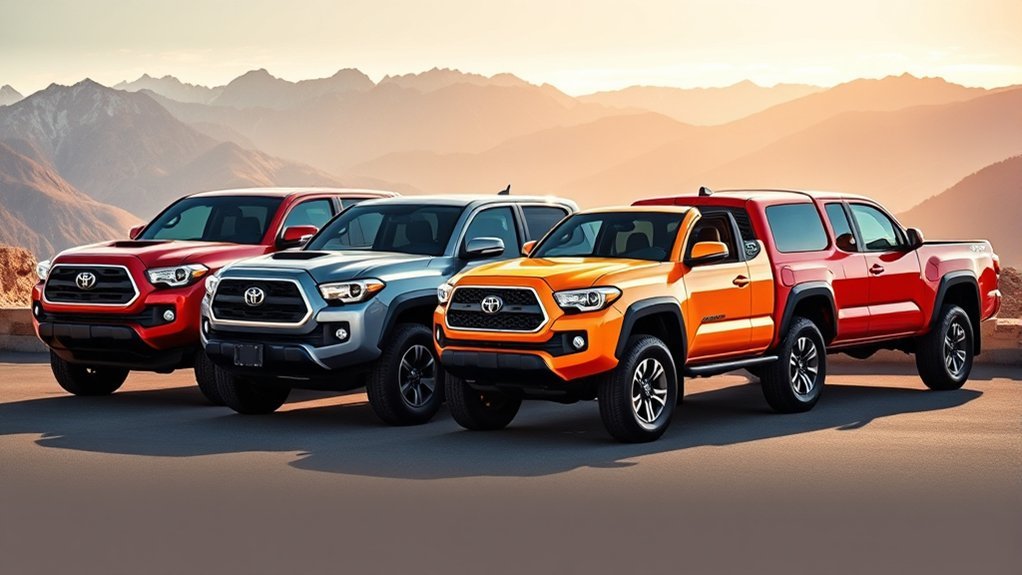
The Toyota Tacoma has changed a lot since Toyota introduced it at the 1995 Chicago Auto Show, but its core appeal has stayed the same: a practical midsize pickup with strong durability, useful off-road trims, and high owner loyalty. Across four generations, the Tacoma moved from a simple compact truck with available four-cylinder and V6 power to a modern turbocharged and hybrid truck with advanced driver-assistance tech, larger screens, and serious trail-focused trims.
Quick Answer
The Toyota Tacoma has four generations: 1995–2004, 2005–2015, 2016–2023, and 2024–present. The biggest changes are size, powertrains, safety tech, towing capability, and cabin technology. Older Tacomas are prized for simplicity, while current models offer turbocharged and hybrid power, Toyota Safety Sense 3.0, and up to 6,500 pounds of towing capacity.
Key Takeaways
- The first-generation Tacoma is the simplest and lightest, making clean examples popular with off-road and classic-truck buyers.
- The second generation brought the larger body, stronger 4.0L V6, and up to 6,500 pounds of towing when properly equipped.
- The third generation added modern styling, a 278-hp 3.5L V6, available manual transmission, and standard Toyota Safety Sense P from 2018 onward.
- The fourth generation replaced the V6 lineup with 2.4L turbocharged four-cylinder engines, including the i-FORCE MAX hybrid with up to 326 hp and 465 lb.-ft. of torque.
- For used buyers, condition, rust history, service records, and open recalls matter more than mileage alone.
The Evolution of the Toyota Tacoma: A Brief Overview
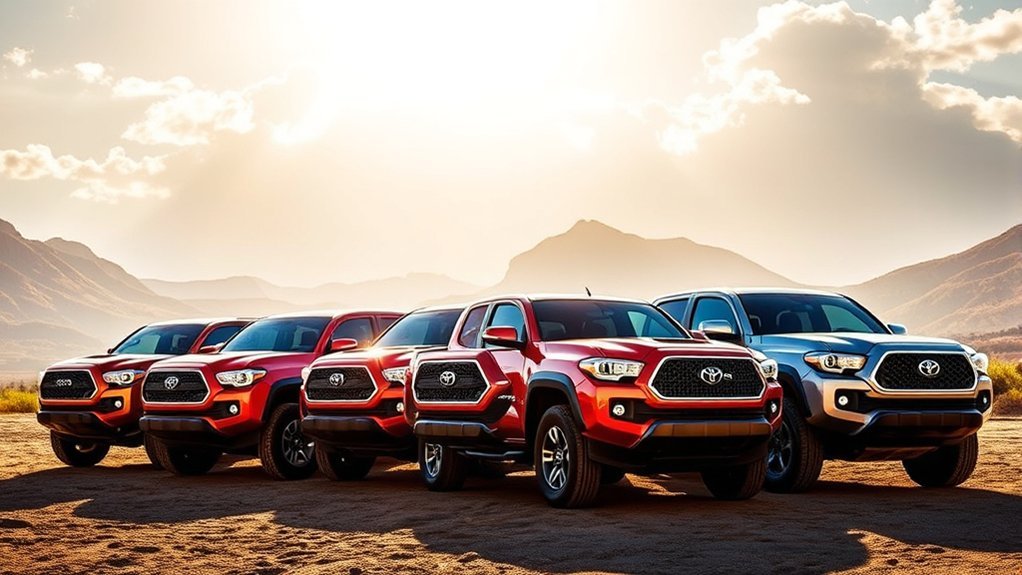
Toyota introduced the Tacoma in 1995 as its U.S.-market compact pickup, replacing the long-running Toyota Pickup nameplate in North America. Toyota’s launch announcement described the Tacoma as a new compact pickup with three engine choices, a redesigned chassis, updated suspension, and improved safety features for the U.S. market.
The Tacoma’s evolution can be broken into four major eras. The first generation focused on simplicity, light weight, and durability. The second generation grew larger and stronger, adding the popular 4.0L V6. The third generation brought sharper styling, better infotainment, and more driver-assistance features. The fourth generation, launched for 2024, moved to Toyota’s TNGA-F truck platform and introduced turbocharged and hybrid powertrains.
| Generation | Model Years | Main Personality | Best Known For |
|---|---|---|---|
| 1st Gen | 1995–2004 | Compact, simple, durable | 3.4L V6, low electronics, strong off-road following |
| 2nd Gen | 2005–2015 | Bigger and more powerful | 4.0L V6, improved cabin space, high resale value |
| 3rd Gen | 2016–2023 | Modern but still traditional | 278-hp 3.5L V6, Toyota Safety Sense P, improved infotainment |
| 4th Gen | 2024–present | Turbocharged and tech-forward | i-FORCE and i-FORCE MAX engines, TNGA-F platform, Trailhunter trim |
Best Used Toyota Tacoma Models: Value and Reliability
When shopping for a used Toyota Tacoma, the “best” model depends on what you value most: low purchase price, simple long-term ownership, off-road hardware, towing, or newer safety tech. Tacoma resale values are usually strong, so the cheapest truck is not always the smartest buy.
- 2012–2015 TRD Off-Road and TRD Sport: These late second-generation trucks are popular because they pair the proven 4.0L V6 with a mature platform. They feel more old-school than newer Tacomas but have enough comfort for daily use.
- 2005–2011 Base, SR5, and TRD models: These can be good value buys, especially if you want the 4.0L V6 without paying third-generation prices. The key is inspection quality, not just odometer mileage.
- 2020–2023 TRD Off-Road, TRD Sport, and Limited: These are strong picks if you want the third-generation Tacoma with newer tech. Toyota’s 2020 Tacoma update added Android Auto, Apple CarPlay, and Amazon Alexa compatibility across the lineup.
- 1998–2004 first-generation 4×4 or V6 models: Clean examples are increasingly desirable because they are smaller, simpler, and easier to modify. They can be great enthusiast trucks, but age-related issues matter.
Pro Tip: Before buying any used Tacoma, run the VIN through Toyota’s official recall lookup, check for frame corrosion, inspect service records, look underneath for off-road damage, and verify that the title, mileage, and maintenance history match the seller’s claims.
For older Tacomas, rust is the biggest deal-breaker. A clean frame is often worth more than a lower-mile truck with corrosion. For third-generation trucks, test-drive carefully and make sure the transmission behavior, infotainment system, driver-assistance features, and four-wheel-drive system work as expected.
[Products Worth Considering]

These custom-fit floor mats are designed for Toyota Tacoma Double Cab models with automatic transmission, offering edge-to-edge coverage for dependable interior protection. Made from durable TPE, they help trap mud, snow, spills, and debris while textured surfaces and secure clips keep the mats in place. Easy to install and simple to clean, they provide practical all-weather protection for daily driving and tough conditions.

Teeran’s 2-in-1 wireless adapter turns compatible factory wired CarPlay or Android Auto systems into a cable-free experience for both iPhone and Android users. It offers fast setup, automatic reconnection, and full support for your vehicle’s original controls so navigation, music, calls, and voice assistants work seamlessly. Its compact flush-fit design helps reduce clutter, while built-in protection and broad compatibility make it a practical everyday upgrade.

This wireless CarPlay screen adds modern smartphone connectivity to almost any vehicle with easy plug-and-play installation. It supports Apple CarPlay and Android Auto, online maps, voice control, phone mirroring, and multiple audio output options for safer, more convenient driving. The included night vision backup camera and OTA updates help improve visibility, compatibility, and long-term performance.
Distinct Features Across Tacoma Generations
Each Tacoma generation reflects what truck buyers wanted at the time. Early models emphasized toughness and simplicity. Later models added comfort, safety, connectivity, and more specialized off-road trims.
| Generation | Key Features | Best Fit |
|---|---|---|
| 1st Generation (1995–2004) | Available 2.4L and 2.7L four-cylinder engines, available 3.4L V6, simple controls, compact size, minimal electronics | Drivers who want a simple truck, trail build, or compact daily pickup |
| 2nd Generation (2005–2015) | Larger body, stronger 4.0L V6, improved cabin room, stronger towing capability, TRD packages | Buyers who want old-school durability with more space and power |
| 3rd Generation (2016–2023) | 3.5L V6 with 278 hp, available manual transmission, aggressive styling, Toyota Safety Sense P on 2018+ models, better infotainment | Families and commuters who still want a traditional V6 Tacoma |
| 4th Generation (2024–present) | TNGA-F truck platform, turbocharged 2.4L i-FORCE engine, available i-FORCE MAX hybrid, available 14-inch touchscreen, Toyota Safety Sense 3.0, Trailhunter and TRD Pro upgrades | Drivers who want the latest tech, stronger torque, and factory-built off-road trims |
The Tacoma has also shifted from a compact truck into a true midsize pickup. That matters if you are cross-shopping generations. A first-generation Tacoma feels narrow and nimble. A fourth-generation Tacoma feels more substantial, more powerful, and much more technology-heavy.
Performance: Engines and Towing Capacity
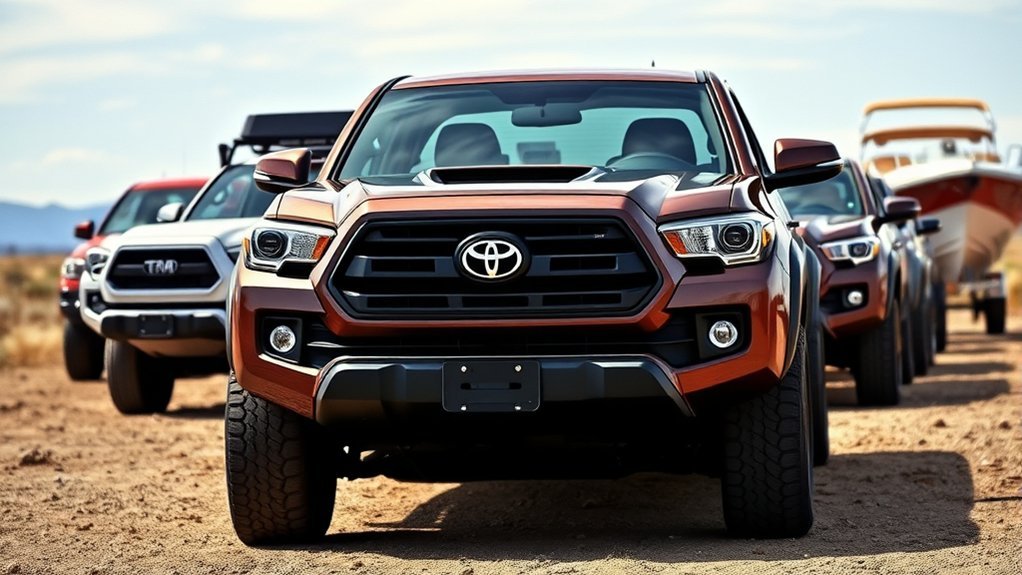
Performance is one of the clearest ways to see the Tacoma’s evolution. The first generation gave buyers a choice of practical four-cylinder engines or a stronger V6. The second generation’s 4.0L V6 became a favorite for towing and durability. The third generation switched to a 3.5L V6 rated at 278 hp and 265 lb.-ft. of torque in Toyota’s 2023 Tacoma brochure. The fourth generation moved to turbocharged four-cylinder power, including the i-FORCE MAX hybrid with up to 326 hp and 465 lb.-ft. of torque.
The fourth-generation Tacoma’s biggest performance change is not just horsepower. It is torque: the i-FORCE MAX hybrid produces up to 465 lb.-ft., far more than the previous V6.
| Generation | Notable Engines | Approximate Max Towing |
|---|---|---|
| 1st Gen | 2.4L I4, 2.7L I4, 3.4L V6 | Up to about 5,000 lbs when properly equipped |
| 2nd Gen | 2.7L I4, 4.0L V6 | Up to about 6,500 lbs when properly equipped |
| 3rd Gen | 2.7L I4, 3.5L V6 | Up to 6,800 lbs with the available V6 Tow Package |
| 4th Gen | 2.4L turbo i-FORCE, 2.4L turbo-hybrid i-FORCE MAX | Up to 6,500 lbs on current properly equipped models |
Note: Towing capacity depends on cab, bed, drivetrain, trim, engine, axle ratio, payload, hitch equipment, and tow package. Always confirm the exact rating in the owner’s manual, door-jamb labels, and Toyota towing information for the specific truck.
Inside the Cab: Technological Advances Over the Years
The Tacoma’s cabin has changed almost as much as its engines. Early Tacomas were simple workhorses with basic audio, straightforward climate controls, and few screens. Current models offer large displays, wireless smartphone integration, digital gauges, advanced camera systems, and more driver-assistance features.
Infotainment System Evolution
The Tacoma’s infotainment progression tracks the broader shift in pickup interiors:
- First Generation (1995–2004): Basic AM/FM audio, cassette or CD options, simple physical controls, and a cabin built more for utility than luxury.
- Second Generation (2005–2015): More comfortable seating, improved audio options, available navigation on some trims, and more convenience features as the generation matured.
- Third Generation (2016–2023): Touchscreen infotainment became central to the cabin. The 2020 refresh added Android Auto, Apple CarPlay, and Amazon Alexa compatibility across the lineup.
- Fourth Generation (2024–present): Current Tacoma models offer an 8-inch standard touchscreen or available 14-inch touchscreen, wireless Apple CarPlay and Android Auto, available digital gauge cluster, available JBL audio, and available Digital Key features.
This shift makes the right Tacoma generation easier to choose. If you like physical controls and fewer electronics, older trucks make sense. If you want better phone integration, cameras, and driver-assistance tools, the 2020–2023 models or fourth-generation Tacoma will feel much more modern.
Safety Feature Advancements
Safety tech is another major difference between Tacoma generations. First-generation trucks were built before today’s driver-assistance systems became common. The second generation improved crash structure and available safety equipment, but it still feels older by modern standards.
The third generation made the biggest safety leap. For 2018, Toyota made Toyota Safety Sense P standard on all Tacoma grades. That suite included features such as Pre-Collision System with Pedestrian Detection, Lane Departure Alert, Automatic High Beams, and High-Speed Dynamic Radar Cruise Control.
The fourth-generation Tacoma goes further with Toyota Safety Sense 3.0. For the 2026 model year, Toyota lists standard features including Pre-Collision System with Pedestrian Detection, Lane Departure Alert with Steering Assist, Full-Speed Range Dynamic Radar Cruise Control, Lane Tracing Assist, Road Sign Assist, Automatic High Beams, and Proactive Driving Assist. Blind Spot Monitor with Rear Cross-Traffic Alert is also listed as an added convenience feature.
Crash-test results vary by cab, model year, and test type. The Insurance Institute for Highway Safety notes that the 2016–2023 Tacoma Double Cab was re-engineered and restyled for 2016, with ratings that differ by test category. Always compare the exact body style and model year you plan to buy.
Current Fourth-Generation Innovations and 2026 Updates
The original “upcoming” fourth-generation Tacoma is now the current Tacoma. As of the 2026 model year, the Tacoma lineup is built around two main engine families: the standard 2.4L turbocharged i-FORCE engine and the available i-FORCE MAX hybrid powertrain. Toyota lists the standard i-FORCE engine at up to 278 hp and 317 lb.-ft. of torque, while the available hybrid produces up to 326 hp and 465 lb.-ft. of torque.
Key fourth-generation upgrades include:
- TNGA-F truck platform: The current Tacoma shares Toyota’s global truck platform with larger Toyota trucks and SUVs, giving it a stronger foundation than the previous generation.
- Turbocharged engines: The old V6 lineup is gone. In its place are turbocharged four-cylinder engines designed to deliver stronger low-end torque.
- i-FORCE MAX hybrid option: The hybrid powertrain is the strongest Tacoma powertrain Toyota has offered, with up to 326 hp and 465 lb.-ft. of torque.
- Eight-speed automatic transmission: The fourth generation uses an eight-speed automatic on automatic-equipped models, while a six-speed manual remains available on select non-hybrid i-FORCE models.
- Trailhunter trim: Trailhunter is aimed at overlanding, with hardware such as Old Man Emu shocks, all-terrain tires, underbody protection, and trail-focused equipment.
- More advanced towing aids: Current models can offer features such as Trailer Backup Guide, trailer camera support, digital rearview mirror, and an available trailer brake controller, depending on trim and equipment.
These updates make the newest Tacoma feel very different from older trucks. It is more powerful, more connected, and more specialized, but also more complex. That is why some buyers still prefer second- and third-generation models for long-term simplicity.
[Products Worth Considering]

These clip-on towing mirrors expand your rear view for safer towing, helping you see your trailer and blind spots more clearly when changing lanes or backing up. The dual-arm design adds stability and reduces vibration, while the adjustable fit and weather-resistant build support reliable use on trucks, SUVs, RVs, and trailers.

These custom-fit floor mats are designed for 2024-2026 Toyota Tacoma Double/Crew Cab models, offering reliable all-weather protection for daily driving and tough conditions. Made from non-toxic TPE with raised edges and a precision laser-scanned fit, they help block mud, water, snow, and debris while staying easy to clean and comfortable to use.
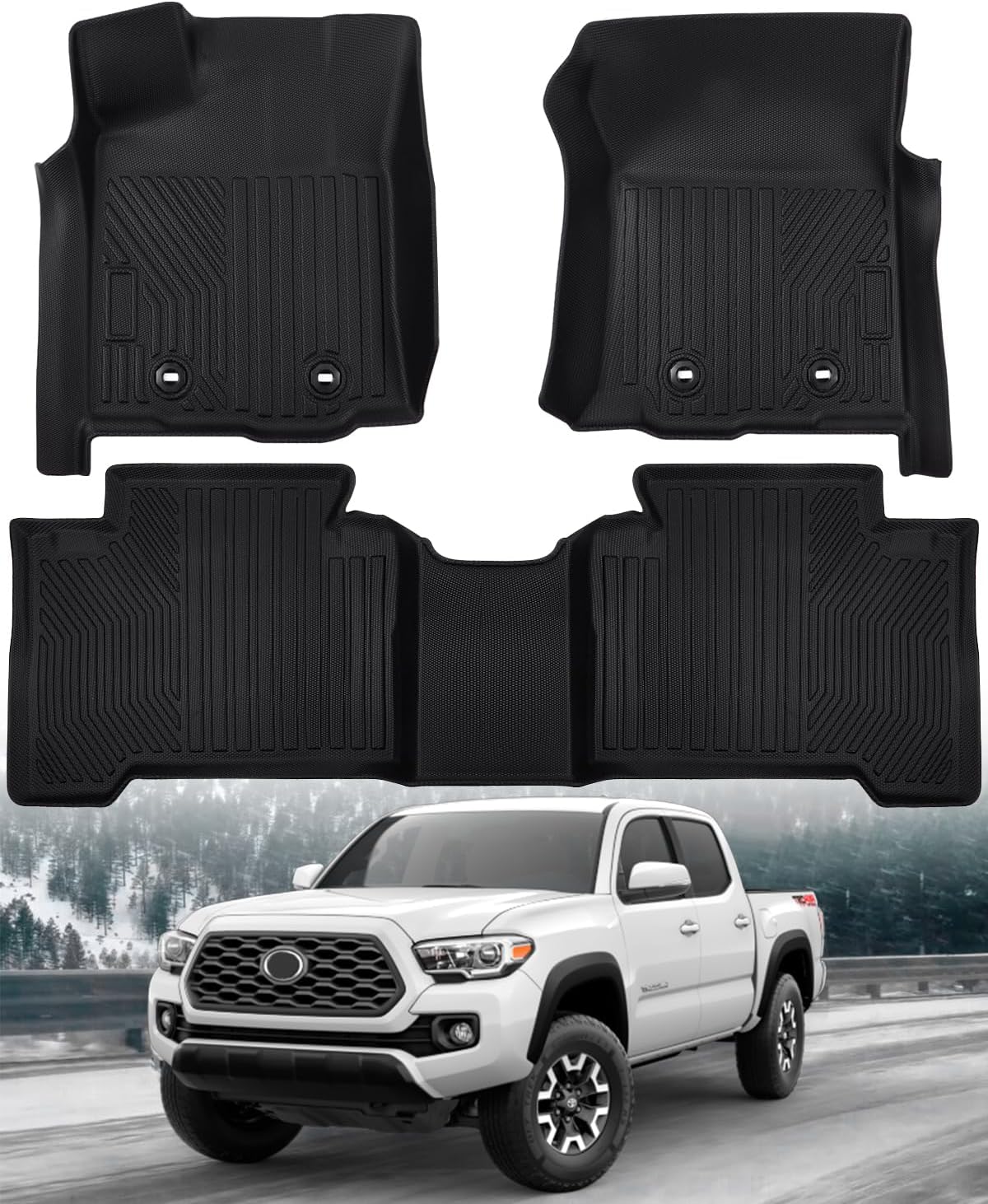
These custom floor mats are designed for Toyota Tacoma Double Cab models and provide a precise, full-coverage fit for the front and rear floors. Built for all-weather protection, they help block dirt, spills, and debris while staying securely in place and preserving safe pedal operation. The odorless TPE material is easy to clean and adds a stylish, durable layer of protection to your vehicle interior.
Which Tacoma Generation Should You Buy?
The best Tacoma generation depends on your budget and how you plan to use the truck.
- Choose a first-generation Tacoma if you want a compact, simple, enthusiast-friendly truck and are willing to inspect carefully for rust and age-related wear.
- Choose a second-generation Tacoma if you want the 4.0L V6, strong capability, and a more spacious truck without the cost of newer models.
- Choose a third-generation Tacoma if you want a traditional V6 Tacoma with modern safety features, better infotainment, and broad parts support.
- Choose a fourth-generation Tacoma if you want the newest platform, stronger torque, hybrid power, larger screens, advanced safety tech, and factory off-road trims like Trailhunter or TRD Pro.
If you are buying used, avoid choosing by generation alone. A well-maintained higher-mile Tacoma can be a better buy than a neglected low-mile one. Look for maintenance records, inspect the frame and suspension, test every electronic feature, and verify that all recalls and service campaigns have been completed.
[Products Worth Considering]

These custom-fit floor mats are designed specifically for Toyota Tacoma Double Cab models with automatic transmission, providing edge-to-edge coverage for reliable interior protection. Made from premium unscented TPE, they are waterproof, stain-resistant, anti-slip, and easy to clean while helping guard against rain, slush, mud, and everyday messes. Raised edges and a durable flexible build help keep spills contained and maintain a secure fit in all seasons.

These custom-fit all weather floor mats are designed for Toyota Tacoma Double Cab models to deliver full-floor coverage without trimming. Made from durable TPE material, they help protect against mud, water, snow, and debris while staying flexible, odorless, and easy to clean. The anti-slip design improves traction and helps keep the mats securely in place for safer everyday driving.
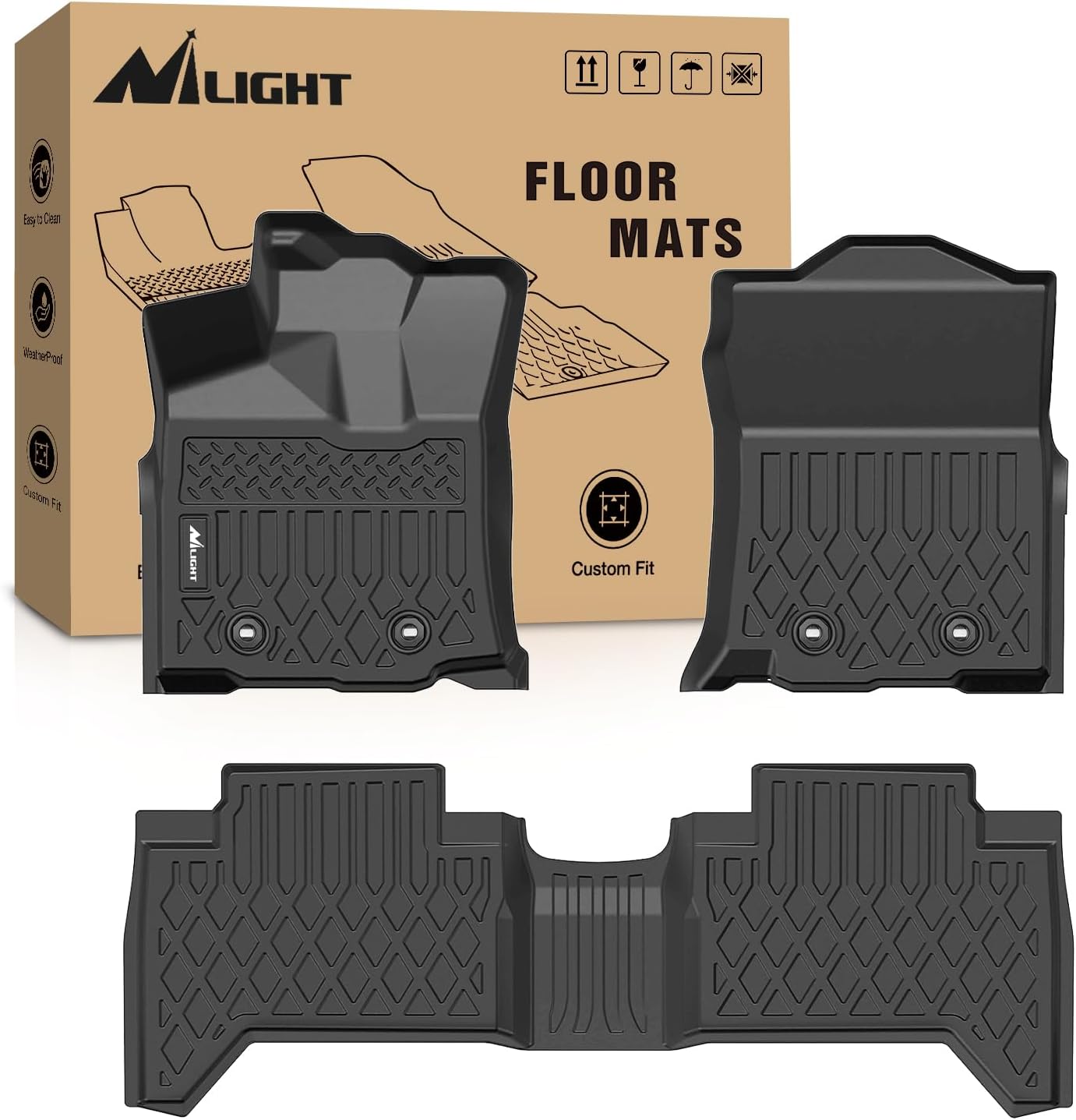
These custom-fit floor mats are designed to match compatible Toyota Tacoma Double Cab models, helping protect your interior from spills, mud, snow, dirt, sand, pet fur, and everyday debris. Made from durable TPE and cut with precision for a tailored fit, they offer dependable coverage and easy cleanup with just soap and water or a quick hose rinse.
Frequently Asked Questions
What are the main differences between Toyota Tacoma generations?
The main differences are size, engine choices, towing capability, interior technology, safety features, and off-road hardware. First-generation Tacomas are smaller and simpler. Second-generation trucks are larger and known for the 4.0L V6. Third-generation models added modern tech and safety. Fourth-generation models use turbocharged and hybrid engines on a newer truck platform.
Which used Toyota Tacoma years are the best?
Popular used Tacoma picks include 2012–2015 second-generation V6 models, 2020–2023 third-generation models with newer infotainment and safety tech, and clean first-generation 4×4 or V6 trucks for enthusiasts. The best choice depends on condition, rust history, service records, and price.
Did the Toyota Tacoma get rid of the V6?
Yes. The fourth-generation Tacoma, launched for 2024, replaced the previous V6 lineup with turbocharged 2.4L four-cylinder engines. The strongest current option is the i-FORCE MAX hybrid, which Toyota rates at up to 326 hp and 465 lb.-ft. of torque.
How much can a Toyota Tacoma tow?
Towing capacity depends on generation and configuration. First-generation models could tow up to about 5,000 pounds when properly equipped, second-generation models reached about 6,500 pounds, third-generation models reached up to 6,800 pounds, and current Tacoma models are listed at up to 6,500 pounds when properly equipped.
What should I check before buying a used Tacoma?
Check the frame for rust, confirm recall completion by VIN, review maintenance records, inspect the suspension and underbody for off-road damage, test the four-wheel-drive system, scan for warning lights, and confirm that towing equipment and electronic features work correctly.
Conclusion
The Toyota Tacoma has earned its reputation by evolving without abandoning the traits buyers value most: durability, off-road confidence, everyday usefulness, and strong resale demand. The first generation is the simple classic, the second generation is the V6 workhorse, the third generation is the modern traditional Tacoma, and the fourth generation is the high-tech turbocharged and hybrid era. Whether you want a used trail truck or a current model with the latest safety and infotainment features, the right Tacoma is the one with the cleanest history, the best condition, and the equipment that matches how you actually drive.
Sources
- Toyota Motor Corporation: 1995 Tacoma launch announcement — verifies the Tacoma’s 1995 introduction and original positioning.
- Toyota USA Newsroom: 2026 Toyota Tacoma — supports current engine, torque, technology, safety, trim, and platform details.
- Toyota: Vehicles for Towing — supports current Tacoma towing capacity information.
- Toyota 2023 Tacoma eBrochure — supports third-generation V6 horsepower, torque, transmission, and towing details.
- Toyota USA Newsroom: 2018 Tacoma Toyota Safety Sense P — verifies Toyota Safety Sense P becoming standard on all 2018 Tacoma grades.
- IIHS: 2016–2023 Toyota Tacoma Double Cab ratings — supports safety-rating context for the third-generation Tacoma.