Last updated: August 21, 2026. Reviewed by the AutoReviewNest editorial team. “
Yes — plan on a Toyota Genuine ATF WS drain-and-fill for your Tacoma’s 8-speed automatic transmission before problems appear, even though Toyota describes it as a sealed, long-life fluid. Normal driving supports a conservative 60,000–90,000-mile window; towing, heat, or off-road use calls for 30,000–60,000 miles. Your Tacoma’s 8-speed automatic transmission is expensive, heat-sensitive, and picky about fluid. Toyota’s WS fluid is designed for long service life, but “sealed” does not mean “ignore forever,” especially if you tow, crawl off-road, idle in heat, or keep the truck past the warranty period. The smartest plan is to follow Toyota’s manual first, then shorten the interval when your use is harder than normal commuting.
Quick Answer
Yes, plan on servicing your Tacoma’s Toyota Genuine ATF WS before problems show up. For normal driving, many owners choose a conservative drain-and-fill around 60,000–90,000 miles. For towing, heavy loads, hot climates, or off-road use, inspect sooner and consider 30,000–60,000-mile service intervals. Toyota’s own Warranty & Maintenance Guide does not publish a standard-duty mileage for this transmission — only a severe-duty note — so the ranges below reflect common independent-shop and long-term-owner practice, not a factory-mandated schedule. “
Key Takeaways
- Use the fluid Toyota specifies for your truck: Toyota Genuine ATF WS or the exact approved equivalent listed for your VIN.
- The 2024+ Tacoma 8-speed automatic is a sealed-style unit, so level setting depends on the correct overflow and temperature procedure, not a dipstick guess.
- A drain-and-fill is usually the safest routine service. Avoid high-pressure or chemical “flush” upsells unless the shop can document the correct Toyota procedure.
- Hard use changes the schedule. Towing, heavy payloads, low-speed crawling, deep sand, mud, and heat all shorten fluid life.
- If your 2024 Tacoma has warning lights, DTCs, slipping, or harsh engagement, check warranty, recalls, and TSB coverage before paying for routine fluid service.
At a Glance
| Time Required | 60–120 minutes for a careful drain-and-fill |
| Difficulty | Intermediate; level and temperature accuracy matter |
| Tools Needed | Fluid pump, drain pan, scan tool or data source for ATF temperature, level lift or jack stands, sockets, torque wrench, gloves, eye protection |
| Cost | DIY partial service often $80–$180; professional service commonly $250–$500+ depending on region and procedure |
Quick Answer: Should You Change the Tacoma’s WS Transmission Fluid?

Yes — but do it the right way. The 2024+ Tacoma automatic transmission is commonly discussed by owners as a “UA80F” 8-speed, while Toyota parts and service documentation lists 2WD 2.4L applications under the related AISIN AL80E family and other applications under adjacent 8-speed codes. Enthusiasts commonly shorten this to “UA80F” as a catch-all term. “ Either way, the service rule is the same: verify your truck by VIN, use the correct Toyota WS fluid, and follow the Toyota repair-manual level procedure.
Toyota’s 2024 Tacoma owner information lists Toyota Genuine ATF WS for the automatic transmission and treats the listed capacity as a reference quantity, not a casual fill amount. A normal drain-and-fill removes only part of the total fluid, so do not pour in the full system capacity unless the transmission has been removed, rebuilt, or completely emptied.
Warning: Do not use a universal ATF just because the bottle says “multi-vehicle.” Toyota warns that using the wrong automatic transmission fluid can cause abnormal noise, vibration, poor shift quality, or transmission damage.
What “Sealed” WS Fluid Really Means for Tacomas
“Sealed” means the transmission is not designed for casual driveway dipstick checks. It does not mean the fluid lasts forever under every driving condition. Toyota notes that many WS-equipped automatic transmissions are sealed and do not normally consume fluid, but it still tells owners to use the owner’s manual and warranty/maintenance guide to determine inspection needs.
Manufacturer Warranty Context
For U.S. 2024 Tacoma models, Toyota’s powertrain warranty coverage is generally 60 months or 60,000 miles, whichever comes first. That warranty is not the same thing as a lifetime fluid guarantee. It also does not mean dirty, overheated, contaminated, or incorrectly filled fluid can be ignored.
- Use Toyota’s maintenance guide as the baseline, not forum guesses.
- Keep service records, especially if the truck is used for towing, commercial work, or off-road driving.
- Do not confuse routine fluid aging with a warranty or TSB-related transmission defect.
- Have leaks, warning lights, or diagnostic trouble codes checked before doing preventive maintenance.
Practical Maintenance Reality
WS fluid can last a long time in gentle use, but heat and load are the enemies. Towing, high payload, repeated low-speed crawling, steep grades, stop-and-go traffic, sand, mud, and hot weather all raise transmission temperature and accelerate oxidation. If you want to keep the truck beyond the warranty window, a planned drain-and-fill is cheaper than waiting until shift quality changes.
Note: A fluid service will not repair an internal mechanical, solenoid, torque-converter, or valve-body problem. If the truck already has diagnostic codes, limp mode, delayed engagement, or slipping, diagnose the fault first.
Manufacturer vs. Third-Party Recommendations: Toyota, AISIN, and Owner Practice
Toyota is the source that matters for warranty and exact service procedure. Toyota says to follow the manufacturer guidelines for transmission fluid and filter maintenance because there is no one-size-fits-all answer. AISIN, a major automatic-transmission manufacturer and fluid supplier, also emphasizes using transmission-specific fluids rather than a generic product for all transmissions.
What should be removed from the old advice is the unsupported claim that AISIN officially recommends a 12,000-mile service interval for Tacoma UA80F WS fluid. That claim is too specific to repeat unless it is documented for your exact transmission and application. A safer, more accurate approach is this:
- Toyota baseline: Follow the owner’s manual, warranty/maintenance guide, and Toyota repair manual for your VIN. Toyota’s published maintenance schedule does not list a standard-duty change mileage for this transmission — only a severe-duty note appears in service documentation. “
- Normal use: Inspect as scheduled and consider a preventive drain-and-fill around 60,000–90,000 miles if you keep the truck long-term.
- Severe use: Consider 30,000–60,000-mile fluid service depending on towing frequency, off-road time, heat, and fluid condition.
- Problem symptoms: Diagnose first, then service. Fresh fluid does not fix a failing transmission.
The best Tacoma transmission-fluid interval is not a single magic number. It is the Toyota schedule adjusted for heat, load, towing, terrain, and how long you plan to keep the truck.
[Products Worth Considering]

6Qt Genuine 00289-ATFWS

For use in 95% of vehicles including most CVTs in operation with US registered light duty applications

Automatic Transmission Fluid WS is a world-spec fluid specifically designed for sealed, automatic transmissions.
Recommended Service Intervals by Use Case: Daily Driving, Towing, and Off-Roading
Use this table as a practical planning guide, based on common independent-shop and long-term-owner practice rather than a single published Toyota mileage figure, then verify the exact requirement in your Toyota maintenance guide. The harder the use, the shorter the interval should be.
| Use Case | Practical Drain-and-Fill Window | Why It Changes |
|---|---|---|
| Mostly highway commuting | 60,000–90,000 miles | Lower heat and fewer heavy-load events |
| City driving, heat, hills, or mixed use | 45,000–60,000 miles | More shifting, more converter heat, more stop-and-go load |
| Light towing or occasional payload | 40,000–60,000 miles | Extra heat and clutch workload during grades and acceleration |
| Frequent towing, heavy payload, off-road crawling, sand, mud, or desert use | 30,000–45,000 miles, or sooner after overheating | Low-speed torque multiplication and heat shorten fluid life |
| Unknown history, burnt odor, dark fluid, or shift complaint | Inspect and diagnose immediately | Condition matters more than mileage once symptoms appear |
How Driving Style and Off-Roading Change Service Needs
Aggressive acceleration, towing, steep climbs, deep sand, mud, and low-speed rock crawling all increase torque-converter heat and clutch workload. That heat breaks down additives, thins the fluid, and can make shift quality worse over time.
Driving Intensity Effects
If your driving includes hard acceleration, frequent downshifts, heavy payload, or mountain towing, shorten the interval. You do not need to panic-service the transmission after every hard weekend, but you should keep a log of towing trips, high-temperature events, and mileage. That record gives you a smarter service rhythm than a generic “lifetime” claim.
- Watch for harsh 1–2 or 2–3 shifts after hot driving.
- Pay attention to delayed engagement from Park or Reverse.
- Inspect for leaks after trail runs or underbody impacts.
- Use a scan tool or app that can read transmission temperature when towing or crawling.
Off-Road Cooling Needs
Off-road driving can be harder on ATF than highway miles. Low speed means less airflow, while 4WD, crawl control, steep grades, and repeated throttle inputs generate heat. If the transmission gets hot on trails, treat that as a reason to inspect the fluid sooner and check for packed mud or debris around coolers and underbody airflow paths.
Pro Tip: After towing or off-roading, note the highest transmission temperature you saw, the trailer weight or trail conditions, and the mileage. That simple log helps you choose a service interval based on real use instead of guessing.
Signs Your Tacoma WS Fluid Needs Service Now
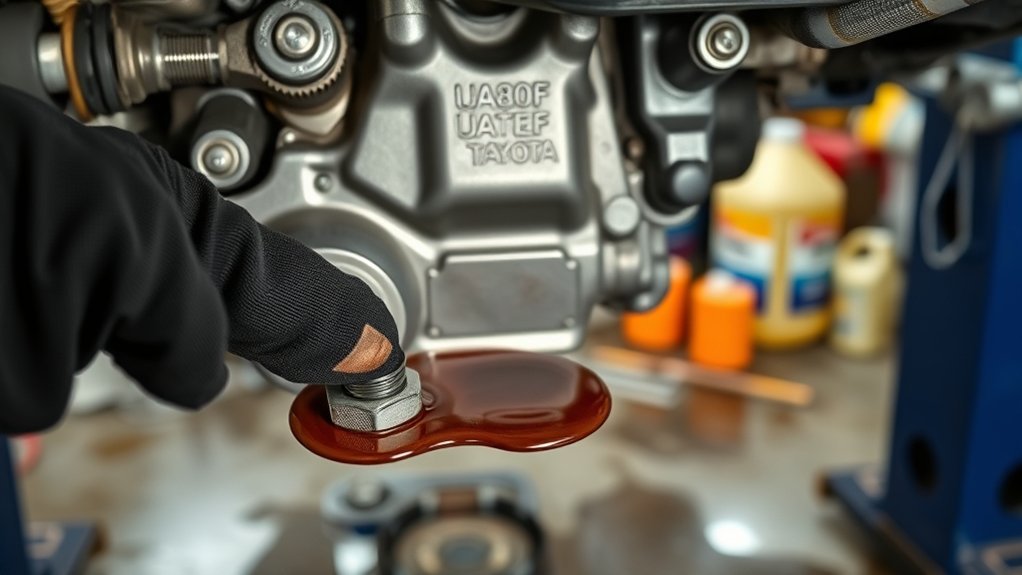
Do not wait for the odometer if the truck is already showing symptoms. Transmission-fluid condition, fluid level, temperature history, and diagnostic codes all matter.
- Burnt odor: A sharp burnt smell suggests overheated fluid.
- Dark or contaminated fluid: Some darkening is normal with age, but heavy discoloration, debris, or metallic material needs diagnosis.
- Harsh or delayed shifts: Rough engagement, flares, or hesitation may indicate fluid, level, adaptation, valve-body, or internal issues.
- Slipping or shudder: Stop treating it as routine maintenance and have the truck diagnosed.
- Leaks: A sealed transmission should not consume fluid. Wetness around lines, pan, plugs, or cooler connections needs repair.
- Warning lights or DTCs: Scan before servicing. A 2024 Tacoma with relevant transmission DTCs may fall under Toyota service-bulletin diagnosis rather than a normal fluid job.
Service Options: Drain-and-Fill, Multiple Fills, and Flush Risks
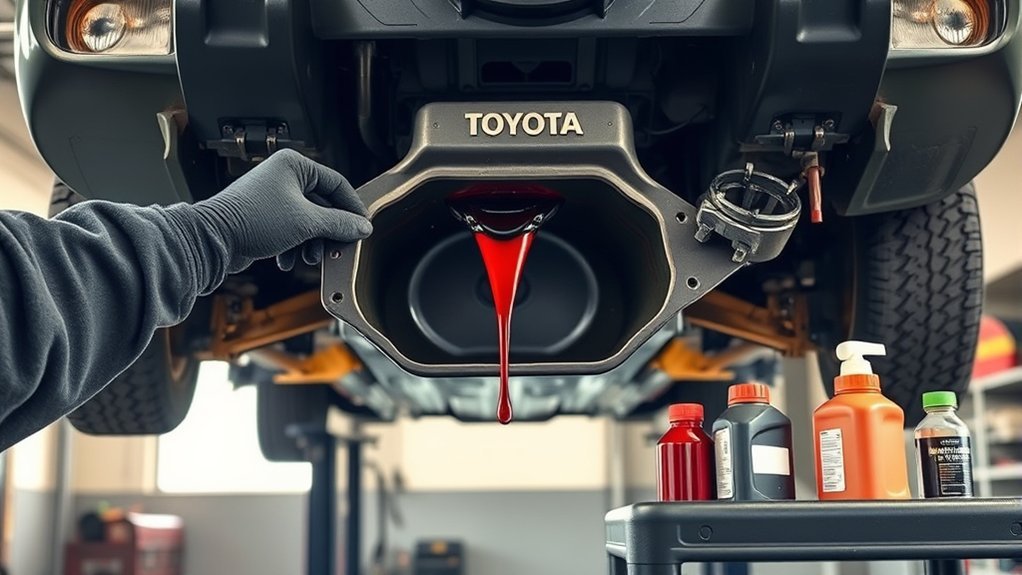
The safest routine service for a healthy Tacoma automatic transmission is usually a drain-and-fill performed with the correct fluid and level procedure. It replaces part of the old fluid without forcing debris through the valve body.
- Drain-and-fill: Best for routine preventive maintenance. It replaces a portion of the ATF and keeps the procedure controlled.
- Staged drain-and-fills: Good when you want more new fluid without a harsh exchange. Drive between services so the old and new fluid mix.
- Fluid exchange: Can be acceptable if the shop follows Toyota procedures and does not use aggressive pressure or chemicals.
- Chemical flush: Avoid unless there is a documented reason and a qualified Toyota technician approves it.
Warning: Overfilling, underfilling, using the wrong ATF, or setting the level at the wrong temperature can cause shift problems and damage. This is not a “pour until it looks good” job.
[Products Worth Considering]

Genuine Toyota 00279-000T4-01 ATF T-Iv Quart
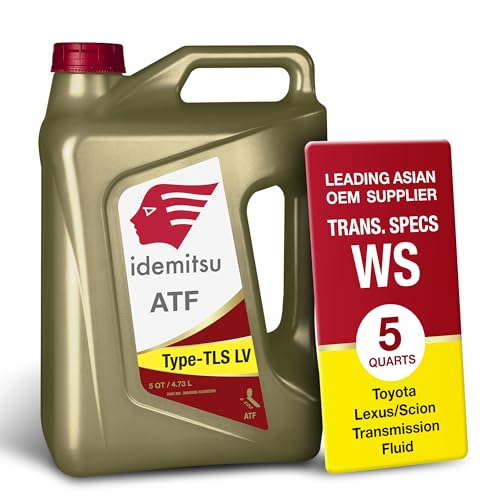
Optimized viscosity and advanced friction reducing additive technology provide exceptional fuel economy performance

For use in 95% of vehicles including most CVTs in operation with US registered light duty applications
Check Fluid Level: Temperature Procedure and Proper Steps
Older Tacoma advice often talks about a dipstick, but that does not apply to the 2024+ sealed-style 8-speed automatic. Toyota WS sealed transmissions require a temperature-sensitive overflow procedure. The truck must be level, the fluid must be at the specified temperature range in the repair manual — commonly cited around 115°F–130°F for this transmission family — and the overflow plug/standpipe method must be followed correctly. “
Sealed Transmission Level Procedure
- Confirm the exact transmission and fluid specification by VIN.
- Lift or support the truck so it is safely level.
- Use Toyota Genuine ATF WS or the exact approved equivalent.
- Measure how much fluid drains out during a routine service.
- Refill through the proper fill port using a fluid pump.
- Read ATF temperature through a scan tool or Toyota-compatible data source.
- Set the level using the Toyota overflow procedure at the specified temperature range (commonly cited around 115°F–130°F for this transmission family — “ by VIN).
- Install new washers or gaskets where required and torque plugs to the repair-manual spec.
- Road-test, recheck for leaks, and document the fluid amount and temperature used.
Why Temperature Matters
Automatic transmission fluid expands as it warms. If you set the level cold, hot, or without knowing the actual ATF temperature, the final level can be wrong. Too little fluid can cause pump starvation and clutch slip. Too much fluid can foam, aerate, and cause pressure or shift problems.
Cost, Parts, and DIY vs. Professional Service Checklist
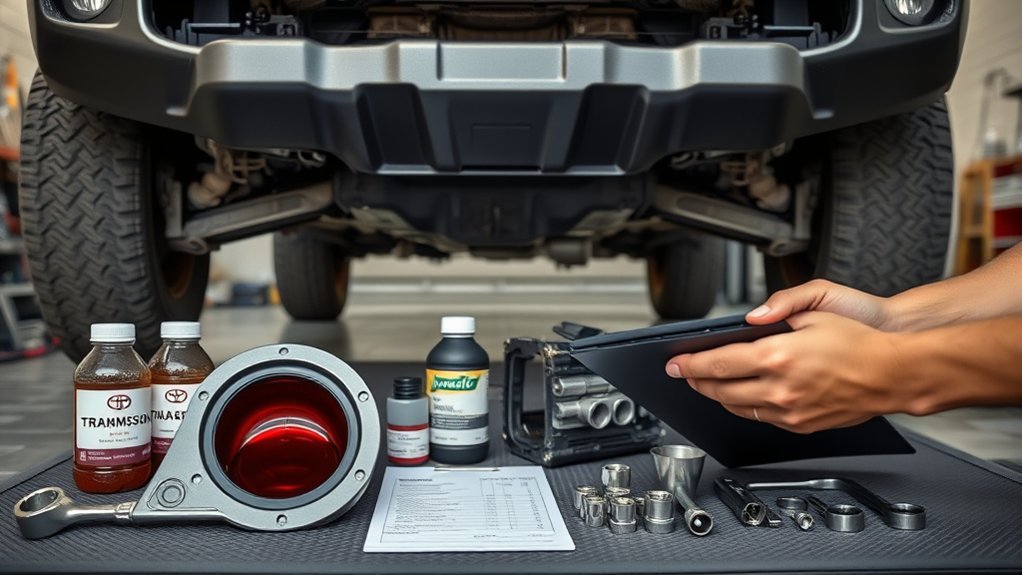
A Tacoma WS drain-and-fill can be a reasonable DIY job for an experienced owner, but the level-setting procedure is what separates a careful service from a risky one. If you do not have safe level lifting, ATF temperature data, and the correct fill tools, pay a qualified shop.
| Item | DIY | Professional Service |
|---|---|---|
| Typical cost | About $80–$180 for fluid and small parts | Often $250–$500+, depending on labor and region |
| Best for | Experienced DIYers with scan data and level lift access | Owners who want warranty-friendly documentation and inspection |
| Risk | Wrong level, wrong temperature, wrong fluid, unsafe lifting | Upsold flushes or non-OEM fluid unless you specify the job clearly |
| What to request | Toyota WS drain-and-fill, measured refill, temperature-set overflow level | Toyota WS drain-and-fill, no chemical flush, documented fluid type and temperature |
[Products Worth Considering]

For best performance, follow the manufacturer's recommendations in your vehicle owner’s manual.

5PCS ATF Adaptor Set Automatic Transmission Fluid Oil Filling Filler Adapter Replacement Tool Compatible with VW Audi 09G 01J 722.9 CVT DSG ATF Benz 722.9

Vehicle Fitment Notes: World Standard Transmission can be identified by: 1) Dipstick is No Longer Installed. 2) WS is stamped on the refill plug. NOT COMPATIBLE With any other TRANSMISSION FLUID 1 Quart Container Please refer to the owners manual to confirm this is the correct fluid Compatible with your s transmission.
Action Checklist: When to Change and What to Tell Your Shop
Use this script when scheduling service so the shop knows you want the correct job, not a generic flush package.
- Ask for a Toyota WS automatic transmission drain-and-fill, not a chemical flush.
- Confirm the shop will use Toyota Genuine ATF WS or an exact approved WS fluid.
- Ask them to set the fluid level using the Toyota temperature/overflow procedure.
- Request documentation of the fluid used, amount installed, ATF temperature, and leak inspection.
- Tell them about towing, off-road use, overheating, warning lights, or shift symptoms before service. “
- If your 2024 Tacoma has transmission DTCs, ask the dealer to check Toyota TSBs and warranty coverage first.
- Keep receipts with mileage, date, fluid type, and procedure notes.
Note: Used ATF should be collected in a clean drain pan and recycled according to local rules. Do not dump it on the ground, into a storm drain, or into household trash.
Frequently Asked Questions
How often should transmission fluid be changed in a Tacoma?
For normal driving, many long-term owners choose a preventive drain-and-fill around 60,000–90,000 miles. For towing, heavy payloads, hot climates, or off-road use, a 30,000–60,000-mile window is more realistic. Always verify your exact Toyota maintenance guide by model year and VIN.
Does Toyota list an official transmission fluid change interval for the Tacoma?
Toyota’s published Warranty & Maintenance Guide for the 2024+ Tacoma does not list a standard-duty fluid-change mileage for this transmission — it typically references a severe-duty condition instead. The intervals in this guide reflect common independent-shop and long-term-owner practice, not a factory-mandated normal-duty schedule. Check your own model-year guide for the current wording. “
Do Toyotas need a transmission flush?
Routine high-pressure or chemical flushes are usually not the best first choice. A Toyota WS drain-and-fill or properly performed fluid exchange is safer when the transmission is healthy. Avoid any shop that cannot explain the correct fluid, temperature, and level-setting procedure.
Do Toyota WS transmissions have lifetime fluid?
They are often described as sealed or long-life, but that does not mean the fluid is immune to heat, oxidation, contamination, or hard use. Toyota still expects owners to follow the owner’s manual and maintenance guide, and severe use can justify earlier service.
Can I check 2024+ Tacoma automatic transmission fluid with a dipstick?
No. The 2024+ Tacoma 8-speed automatic uses a sealed-style level system. Fluid level must be checked with the truck level and the ATF at the specified temperature using the Toyota overflow procedure.
Will changing WS fluid fix rough shifts?
Sometimes fresh fluid helps if the issue is mild fluid aging or an incorrect level, but it will not fix a mechanical failure, solenoid problem, valve-body issue, torque-converter fault, or TSB-related defect. Scan for codes and diagnose symptoms before treating the job as routine maintenance.
Conclusion
Toyota WS fluid is built for modern sealed automatic transmissions, but it is not magic. If your Tacoma lives an easy commuter life, a conservative drain-and-fill later in the mileage curve may be enough. If it tows, hauls, crawls, idles in heat, or sees dirt and sand, shorten the interval and monitor temperature. The best service is simple: correct Toyota WS fluid, no guesswork, no aggressive flush upsell, proper temperature-based level setting, and clear records.
Sources
- Toyota Owners Manuals & Warranty Guides: 2024 Tacoma — official owner, warranty, and maintenance guide access.
- Toyota 2024 Tacoma Maintenance Data — automatic transmission fluid type and fluid-capacity caution.
- Toyota World Standard Automatic Transmission Fluid #00289-ATFWS — official Toyota WS fluid product information.
- Toyota: How Often Should You Change Your Transmission Fluid? — manufacturer guidance to follow vehicle-specific maintenance requirements.
- AISIN Automatic Transmission Fluids — fluid-specific ATF guidance from a major transmission manufacturer.
- NHTSA/Toyota TSB Filing for 2024 Tacoma Transmission DTCs — why warning lights and DTCs should be diagnosed before routine fluid service. “