
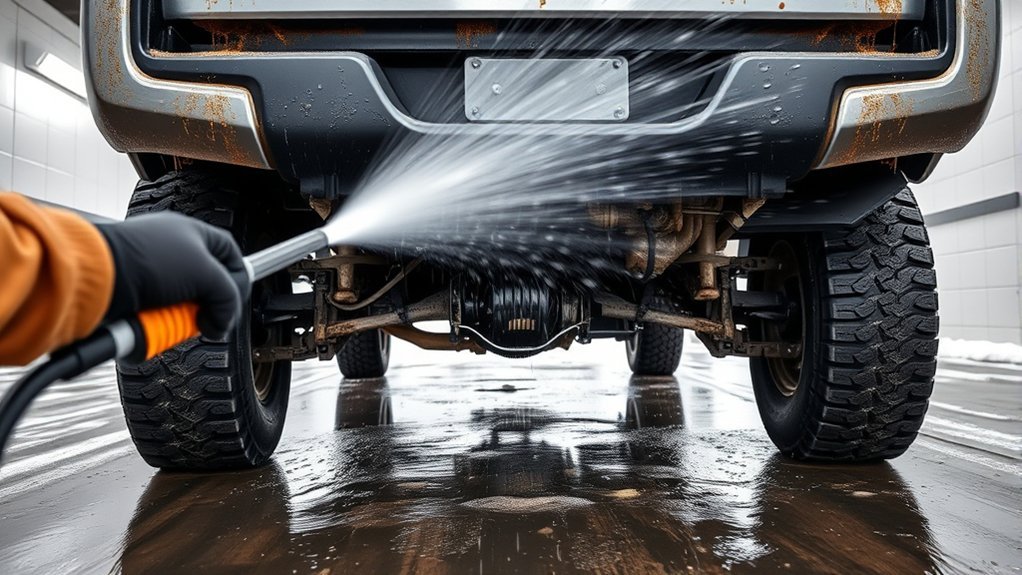
You should wash your Tacoma’s undercarriage regularly in winter because road salt, brine, sand, mud, and trapped moisture collect in the frame, suspension mounts, spare-tire area, brake-line brackets, and wheel wells. In heavy-salt regions, rinse the underside about once a week during active winter driving; in lighter salt or brine areas, aim for every 1–2 weeks; in dry, non-salted areas, a monthly rinse is usually enough. After off-road trips or long drives on freshly treated roads, rinse as soon as weather allows.
Quick Answer
For winter Tacoma undercarriage care, rinse salt and brine off weekly in harsh climates, every 1–2 weeks in mixed conditions, and after any salty or muddy trip. Use fresh water, a fan-spray underbody wand, safe cleaner dwell time, thorough rinsing, full drying, and a rust inhibitor on clean, dry metal.
Key Takeaways
- Toyota recommends washing after driving on salted roads and rinsing the wheel wells and underside to remove dirt and dust.
- The best winter routine is frequent light rinsing plus a deeper clean before and after the salt season.
- Use a wide spray pattern, keep pressure controlled, and avoid blasting seals, sensors, electrical connectors, brake parts, and hot exhaust components.
- Apply Fluid Film or another rust inhibitor only after the underside is clean, cool, and dry.
- Document washes and inspections so you can spot repeat rust zones before they become expensive repairs.
At a Glance
| Time Required | 20–30 minutes for a rinse; 45–90 minutes for a deep clean and inspection |
| Difficulty | Easy to moderate |
| Tools Needed | Garden hose or pressure washer, underbody sprayer, fan nozzle, cleaner, brush, wheel chocks, gloves, eye protection, leaf blower or towels |
| Cost | About $10–$30 per DIY wash after tools; more if buying a pressure washer, underbody wand, or rust inhibitor |
Why Tacoma Winter Undercarriage Washes Matter
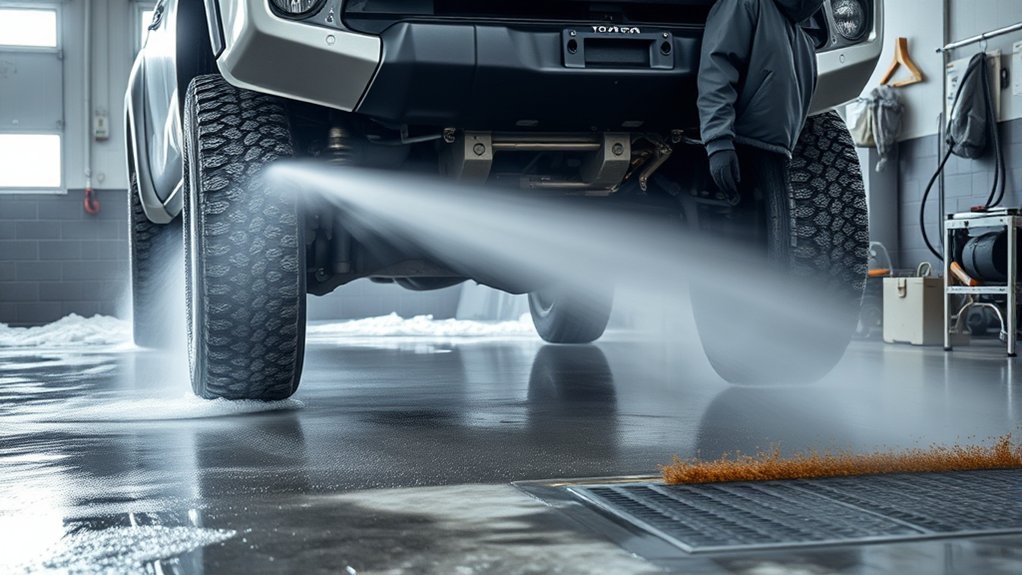
Road salt and brine help keep winter roads usable, but they also leave chloride-rich residue on exposed metal. The U.S. Environmental Protection Agency notes that deicing materials commonly include salts, sand, and gravel for winter road safety, and those materials can remain on vehicles after driving through slush and spray. On a Tacoma, the underside is where that residue hides longest.
Focus on the areas that hold moisture: frame rails, crossmembers, suspension mounts, skid-plate edges, leaf-spring hardware, spare-tire well, brake-line brackets, fuel-line brackets, weld seams, drain holes, and wheel wells. Salt is not magic rust dust by itself; the problem is salt plus moisture plus oxygen sitting against metal and damaged coatings. That is why frequent rinsing matters more than a once-a-season shine.
Toyota’s Tacoma exterior-care guidance says to wash the vehicle immediately after driving on salted roads and to apply water to the body, wheel wells, and underside when cleaning. That is the basic factory-backed principle: remove salt before it sits.
The goal is not to make the underside look showroom-clean every week. The goal is to flush salt, brine, mud, and grit out of the places where corrosion starts.
When to Wash: Frequency for Salt, Brine, and Dry Areas
Use your local road conditions, not the calendar alone. A Tacoma driven daily on salted roads needs more frequent rinsing than one that sits in a dry climate or only sees occasional winter moisture.
- Heavy salt areas: Rinse the undercarriage about once a week during active winter driving, and sooner after a major storm or long highway drive behind salt trucks.
- Brine-treated or mixed conditions: Wash every 1–2 weeks, especially after wet drives where brine spray coats the frame and suspension.
- Dry, non-salted areas: A monthly undercarriage rinse is usually enough unless you drive through mud, construction grime, coastal spray, or dust-control chemicals.
- Off-road or high-debris use: Rinse after each muddy trail run. Mud traps moisture against metal and can hide salt residue, rocks, and sticks.
- Seasonal deep clean: Do one thorough wash before winter protection and one deep spring wash after the last salt event.
Note: Toyota’s rust-through coverage is different from surface-rust prevention. Toyota lists rust-through coverage as 60 months with unlimited mileage for corrosion perforation of sheet metal, but that does not make routine cleaning optional. Keep maintenance records if you drive in corrosive winter conditions.
Tacoma Tools & Supplies for an Undercarriage Wash
You do not need a professional lift to keep the underside clean, but the right tools make the job faster and safer. A hose with an underbody attachment works for routine rinses. A pressure washer helps with packed mud and old salt film, but it must be used carefully.
[Products Worth Considering]

CAR GUYS Super Cleaner is a versatile multi-surface solution designed to lift dirt, grime, stains, and messes from your car’s interior and more. It works on upholstery, fabric, leather, vinyl, plastic, rubber, carpet, and other compatible surfaces, making detailing simpler with one all-purpose cleaner. Formulated for effective cleaning without unnecessary complexity, it is ideal for drivers who want a reliable interior care product in a refill size.

Rain-X Foaming Car Wash is a concentrated cleaner designed to lift dirt, grime, and road residue while helping reduce spots and streaks for a glossy finish. Its biodegradable formula is safe for waxed surfaces and delivers high-foaming cleaning action for an exceptional wash. Ideal for routine vehicle care, it helps leave your car looking clean and bright after every wash.

This digital tire tread depth gauge helps you check tire wear quickly and accurately with fractional inch, decimal inch, and millimeter readouts. Its large LCD screen, zero reset function, and automatic shutoff make it easy to use for cars, motorcycles, SUVs, trucks, and pickups. Designed for clear readings and dependable measurement, it is a practical tool for routine tire safety checks.
Essential Cleaning Tools
- Garden hose or pressure washer: Use fresh water whenever possible. For pressure washing, use a wide fan tip, not a zero-degree jet.
- Undercarriage sprayer or underbody wand: A wheeled sprayer or angled wand helps reach frame rails, wheel wells, and the spare-tire area without crawling under the truck.
- Foam cannon or pump sprayer: Useful for applying diluted cleaner evenly before the rinse.
- Long-handle soft brush: Helps loosen mud around skid plates, wheel wells, and exposed brackets.
- Wheel chocks and work light: Chocks keep the truck stable; light helps you inspect seams, lines, and mounts.
- Leaf blower or compressed air: Speeds drying in seams, frame openings, and the spare-tire area.
Recommended Chemicals & Accessories
For light salt residue, fresh water is often enough. For greasy grime, road film, or trail mud, use an automotive-safe cleaner and follow the product label. If you use Simple Green, check the current Simple Green dilution chart; its listed ratios vary by product and use, so do not assume every bottle is mixed the same way.
| Item | Purpose | Best Use |
|---|---|---|
| Fresh water | Salt and brine removal | Use first and last |
| Foam cannon or pump sprayer | Cleaner application | Apply diluted cleaner evenly |
| Underbody sprayer | Hard-to-reach rinsing | Move slowly under frame rails |
| Long-handle brush | Loosen mud and film | Use around wheel wells and brackets |
| Rust inhibitor | Corrosion protection | Apply only after drying |
| Leaf blower | Moisture removal | Blow out seams and pockets |
Warning: Do not spray cleaner or rust inhibitor onto brake rotors, brake pads, tire tread, hot exhaust parts, catalytic converters, oxygen sensors, belts, or electrical connectors. If your Tacoma is a hybrid model, be extra careful around orange high-voltage components and consult the owner’s manual before spraying nearby.
Prep Your Tacoma: Safety Checks and Pre-Wash Steps
Good prep prevents the two common mistakes: working under an unstable vehicle and blasting water into places it should not go. Do the safety check before you turn on the hose.
Safety Gear Check
- Wear waterproof boots, gloves, and eye protection.
- Use knee pads or a mat if you will work low around the truck.
- Keep electrical cords and pressure-washer hoses out of standing water.
- Use a work light rated for damp areas if you are washing in a garage bay or driveway at night.
Vehicle Securing Steps
Park on a flat, stable surface with good drainage. Set the parking brake and chock the wheels. If you need extra clearance, use properly rated ramps or jack stands on solid ground. Never rely on a jack alone while washing or inspecting underneath.
Let the exhaust, brakes, and drivetrain cool before you spray. Close the doors, windows, tailgate, and storage compartments. Remove loose cargo that could get soaked or fall while you work.
Pre-Wash Inspection
Before the first rinse, look for heavy buildup and existing damage. Mark the areas that need attention so you can target them during the wash.
- Check frame holes, crossmembers, seams, and welds for salt crust or packed mud.
- Inspect the spare-tire well and winch area, which often hold grime.
- Look at leaf-spring mounts, shock mounts, control arms, skid-plate edges, and brake-line brackets.
- Watch for bubbling paint, missing undercoating, loose clips, wet electrical connectors, or damaged lines.
Pro Tip: Take quick phone photos before and after your deep wash. Rust often starts small, and photos make it easier to see whether a spot is growing between seasons.
Deep Undercarriage Wash: Step-by-Step (Simple Green + Pressure Washer)
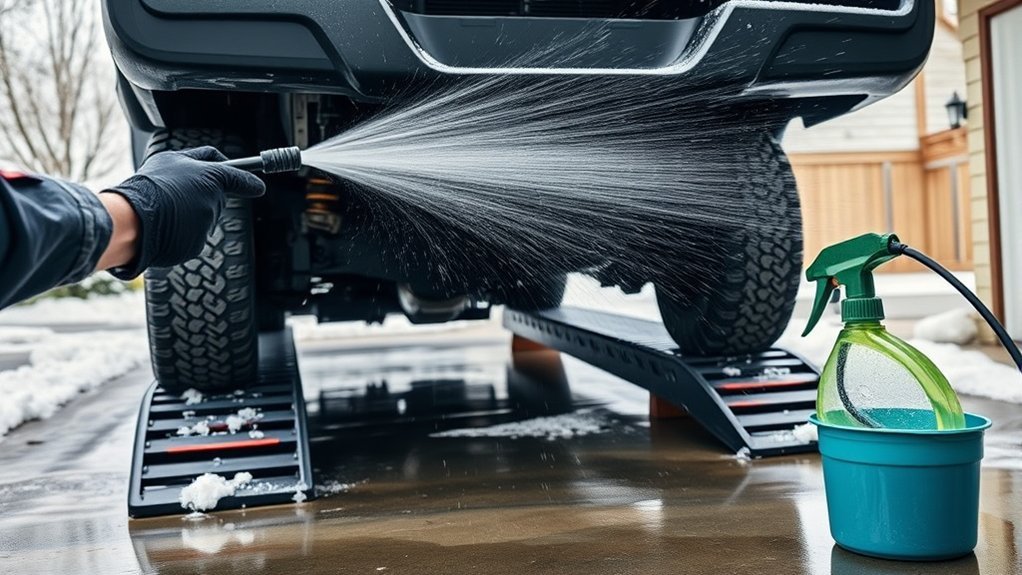
A deep wash is useful at the start of winter, after repeated salt exposure, after off-road trips, and before applying a rust inhibitor. For simple weekly salt removal, you can skip the cleaner and just rinse with fresh water.
- Start with a low-pressure rinse. Flush loose salt, grit, and mud from the wheel wells, frame rails, skid plates, and spare-tire area.
- Apply diluted cleaner where needed. Use Simple Green or another automotive-safe cleaner only according to its label. Apply it to cool surfaces and avoid brakes, exhaust sensors, and electrical connectors.
- Let the cleaner dwell briefly. Give it enough time to loosen grime, but do not let it dry on metal, plastic, rubber, or painted surfaces.
- Agitate stubborn areas. Use a long-handle brush around wheel wells, brackets, step mounts, skid-plate edges, and mud-caked spots.
- Rinse slowly and methodically. Use a fan spray and keep the nozzle moving. Work from front to rear and from higher areas down.
- Flush hidden pockets. Aim the underbody sprayer at frame openings, crossmember edges, the spare-tire area, leaf-spring mounts, and suspension pockets until runoff looks clean.
- Final rinse with fresh water. A final rinse helps remove cleaner residue and salt that loosened during the wash.
- Dry before coating. Drive briefly on dry roads, park in moving air, or use a leaf blower to remove water from seams and pockets. Wait until the underside is dry before applying rust inhibitor.
Warning: More pressure is not always better. Avoid spraying directly at wheel bearings, differential seals, pinion seals, CV boots, electrical connectors, parking sensors, breather lines, decals, and damaged undercoating. A wide fan spray at a sensible distance is safer than a close, concentrated jet.
[Products Worth Considering]

This heavy-duty car ramp set provides a stable, reliable lift for routine maintenance like oil changes, tire rotations, brake work, and undercarriage inspections. Built from high-impact poly with a non-skid tread and rubber feet, it helps keep vehicles secure while offering a lightweight, corrosion-resistant alternative to steel ramps. The wide, gradual design supports a broad range of vehicles, from compact cars to trucks, SUVs, and vans.

This automotive circuit tester checks low-voltage DC systems from 3-65V, making it useful for diagnosing headlights, taillights, fuses, sockets, and other vehicle wiring issues. The digital backlit display provides clear voltage readings with fine accuracy, while the bidirectional polarity indicator helps you test from either ground or positive. Built with a durable probe, insulated tip, and extra-long spring wire, it is designed for dependable everyday use in automotive and household electrical work.
Cleaning Hidden Spots: Frame Tubes, Spare Well, and Exhaust
Most winter rust problems do not start on the easy-to-see flat surfaces. They start in seams, holes, brackets, and pockets where salt water sits after the rest of the truck looks clean.
- Frame tubes and holes: Use the underbody sprayer angle to flush openings. Do not force tools into coated surfaces or damage drain holes.
- Spare-tire well: Lower the spare during a seasonal deep clean if you can do so safely. Rinse the wheel, cable, carrier, and surrounding frame area.
- Skid plates: Mud and salt can pack along skid-plate edges. Rinse from several angles instead of only straight up.
- Exhaust hangers: Rinse around hangers and brackets, but avoid spraying cold water onto a very hot exhaust.
- Brake and fuel-line brackets: Clean gently. These are important inspection points because brackets can trap salt against lines.
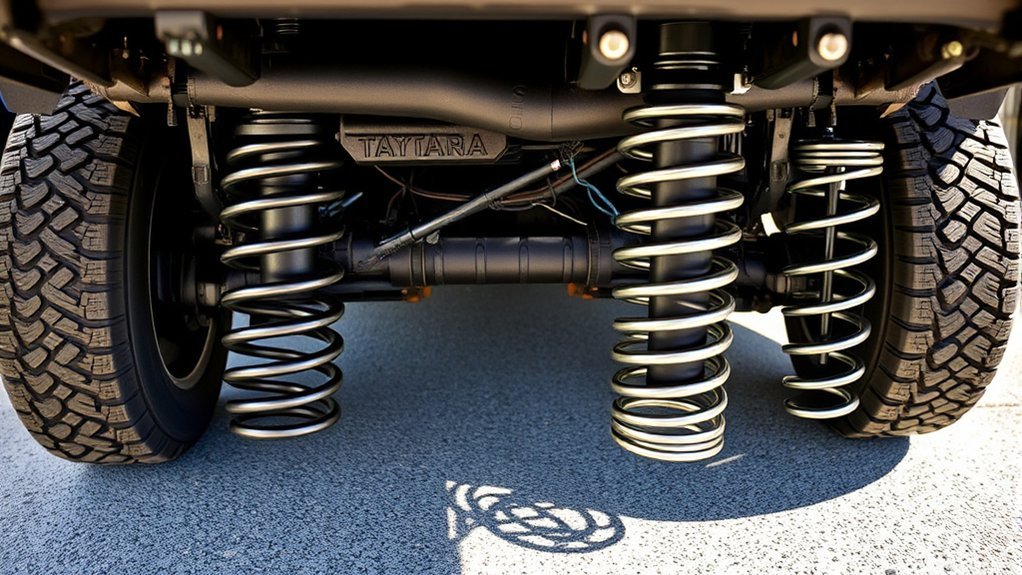
- Leaf springs and mounts: Rinse the pack edges, shackles, U-bolts, and mounts without driving high pressure into bushings.
After rinsing, inspect for bubbling paint, scaly rust, flaking undercoating, or orange stains returning from seams. Treat light surface rust early. If you see deep scaling, holes, cracked brackets, loose mounts, or brake-line corrosion, have a qualified technician inspect it.
Build a DIY Undercarriage Washer (PVC Rig Tips)
A DIY undercarriage washer can make winter rinses much easier. The basic idea is simple: a low rolling bar with spray nozzles aimed upward so you can move water under the truck without crawling beneath it.
Use sturdy PVC or metal pipe rated for the water pressure you plan to use, add a shut-off valve near the hose connection, and use quick-connect fittings so the rig is easy to remove and store. Keep the spray pattern wide enough to rinse, not cut. If you use a pressure washer, make sure every fitting, hose, and nozzle is pressure-rated for that machine.
- Keep the frame low enough to roll under the Tacoma but tall enough that the spray clears the ground.
- Use wheels or casters so you can move the sprayer slowly from front to rear.
- Place nozzles so they cover the centerline, frame rails, and wheel-well edges.
- Add a handle or rope so you can pull the rig without reaching under the truck.
- Test it away from the vehicle first to check leaks, pressure, and spray direction.
Note: A PVC washer is best for rinsing. It is not a substitute for inspection, spot brushing, or a careful deep clean when mud is packed into brackets and skid plates.
Post-Wash Protection: Applying Fluid Film and Inhibitors
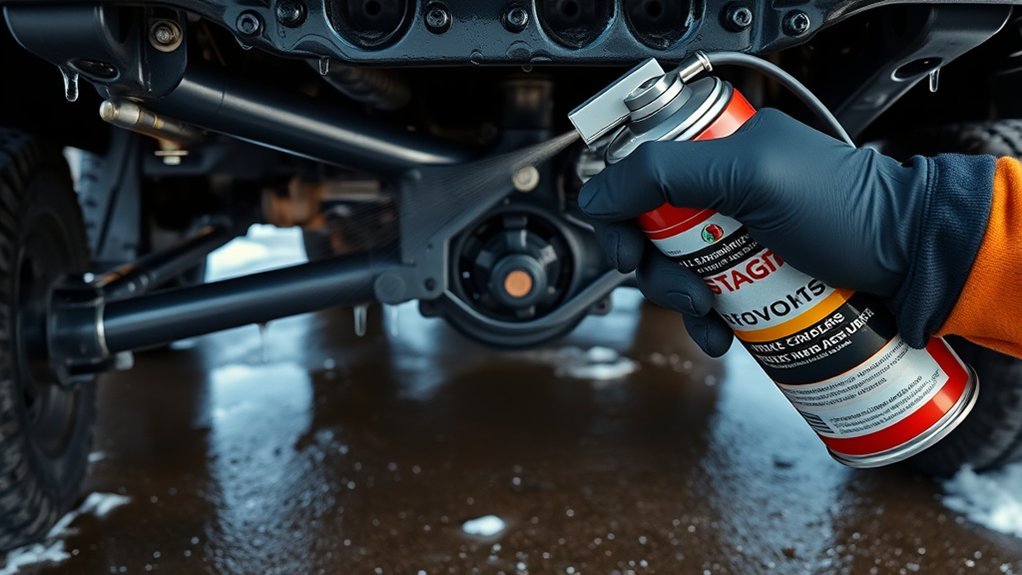
Once the undercarriage is clean and fully dry, apply a rust inhibitor to vulnerable metal areas. Fluid Film is a lanolin-based corrosion-prevention product commonly used on vehicles exposed to rain, snow, and salty air. Similar products include wool-wax, oil-based, and wax-based undercoatings. Each has different durability, smell, thickness, and reapplication needs, so follow the label.
Apply protection to exposed seams, frame rails, crossmembers, fasteners, spring mounts, brackets, and weld areas. Use a controlled spray pattern and wipe overspray from surfaces where it does not belong.
- Do not coat: brake rotors, brake pads, tire tread, exhaust, catalytic converters, oxygen sensors, belts, or hot parts.
- Do not trap dirt: wash first, dry fully, then coat. Spraying over wet salt or mud can seal the problem in place.
- Reapply as needed: touch up before winter and inspect again in spring. Heavy off-road use and frequent washing can shorten coating life.
- Keep records: note the date, product, areas treated, and any rust spots you found.
[Products Worth Considering]

Rust and Corrosion Prevention
Winter Challenges & Workarounds: Freezing, Recycled Water, Garages
Winter washing is helpful, but timing matters. If water freezes before it drains, you can create new problems such as frozen locks, frozen parking-brake parts, slippery driveway ice, or moisture trapped in seams. When possible, wash on a day above freezing with enough time for the truck to dry before the temperature drops again. Around 40°F or warmer is more comfortable and gives you more drying margin.
If it is below freezing, a heated touchless wash with an underbody rinse may be safer than a driveway wash. Choose a wash that has strong drying, and drive long enough afterward to sling water out of the brakes, wheels, and seams. If the wash uses reclaimed water, that is not automatically bad because many facilities filter and treat water, but a final fresh-water rinse is ideal when available.
Be careful with heated garages. A clean, dry Tacoma can be parked indoors without worry, but a salt-covered truck parked in a warm garage can keep salty moisture active longer. If you bring the truck inside after a salty drive, rinse and dry the undercarriage first when practical, or at least avoid letting packed salty snow melt and sit under the vehicle repeatedly.
Inspection Checklist, Troubleshooting, and Next Steps
Make inspection part of the wash, not a separate chore you forget. A two-minute look under the truck after each rinse can catch problems early.
Post-Wash Inspection Checklist
- Frame rails, crossmembers, weld seams, and drain holes are clear.
- Spare-tire carrier, cable, and wheel are clean and able to move.
- Brake lines, fuel lines, and brackets show no heavy scaling or wet corrosion.
- Leaf springs, shackles, U-bolts, shock mounts, and control arms are free of packed mud.
- Skid plates and rock sliders are not trapping debris at the edges.
- Rust inhibitor is intact and not sprayed onto brakes, tires, or exhaust.
Troubleshooting Common Undercarriage Wash Problems
| Problem | Likely Cause | Fix |
|---|---|---|
| White film returns after washing | Salt or cleaner residue remains in seams | Rinse again with fresh water from multiple angles |
| Cloudy runoff keeps appearing | Mud or brine is trapped in frame pockets or skid plates | Use a longer rinse, brush edges, and lower the spare for seasonal cleaning |
| Rust spots grow between washes | Damaged coating or bare metal is exposed | Clean, dry, treat surface rust, and apply protection; seek repair for heavy scaling |
| Water freezes after washing | Washed too close to freezing conditions | Use a heated wash, dry thoroughly, and choose warmer days when possible |
| Greasy rust inhibitor drips | Too much product or warm application area | Wipe excess, avoid hot parts, and apply thinner coats next time |
Frequently Asked Questions
How often should I wash my Tacoma undercarriage in winter?
Wash weekly in heavy-salt areas, every 1–2 weeks in brine or mixed winter conditions, and monthly in dry areas without salted roads. Always rinse after long drives on freshly treated roads or after muddy off-road trips.
Is an undercarriage wash really necessary?
Yes, if your Tacoma sees road salt, brine, coastal spray, mud, or dust-control chemicals. Toyota advises washing after salted-road driving, and the underside is where corrosive residue tends to sit longest.
Can I wash my truck when it is below freezing?
It is better to wait for a day above freezing, ideally with enough warmth and airflow for drying. If you must wash below freezing, use a heated touchless wash, dry thoroughly, and drive carefully afterward to clear water from brakes and seams.
Should I use soap, Simple Green, or only water?
For routine salt rinses, fresh water is often enough. Use an automotive-safe cleaner for greasy film or packed mud, and follow the product’s dilution chart and dwell-time instructions. Always rinse thoroughly so cleaner residue does not remain on the underside.
Can pressure washing damage the undercarriage?
Yes, if you use too much pressure too close to sensitive parts. Use a wide fan spray, keep the nozzle moving, and avoid blasting seals, bearings, connectors, sensors, brake parts, CV boots, and damaged undercoating.
When should I apply Fluid Film or another rust inhibitor?
Apply it after the undercarriage is clean, cool, and fully dry. For harsh winter regions, apply before the salt season and inspect or touch up in spring. Do not spray it on brakes, tire tread, hot exhaust parts, sensors, or catalytic converters.
Conclusion
You cannot stop winter road crews from using salt and brine, but you can stop that residue from sitting under your Tacoma for weeks. A smart routine is simple: rinse often, deep-clean before and after winter, dry the hidden pockets, inspect the same rust-prone areas each time, and apply a rust inhibitor only after the underside is clean and dry. Those 20–60 minutes of care can help protect the frame, brackets, suspension hardware, and resale value for years.
Sources
- Toyota 2025 Tacoma Owner’s Manual: Cleaning and protecting the vehicle exterior — supports washing after salted-road driving and rinsing wheel wells and underside.
- Toyota Support: Warranty coverage — supports rust-through coverage details.
- U.S. EPA: Deicing Material Application and Storage — supports the use of salts, gravel, and sand as winter deicing materials.
- U.S. EPA: Managing Highway Deicing to Prevent Contamination of Drinking Water — supports salt’s role in lowering freezing point and its corrosion concerns for vehicles and infrastructure.
- Simple Green: Concentrated Products Typical Dilution Chart — supports checking product-specific dilution ratios before use.
- Fluid Film: Automotive Applications — supports lanolin-based automotive corrosion protection use.

[…] For a dedicated winter cadence and wash workflow, see this Tacoma undercarriage wash routine. […]