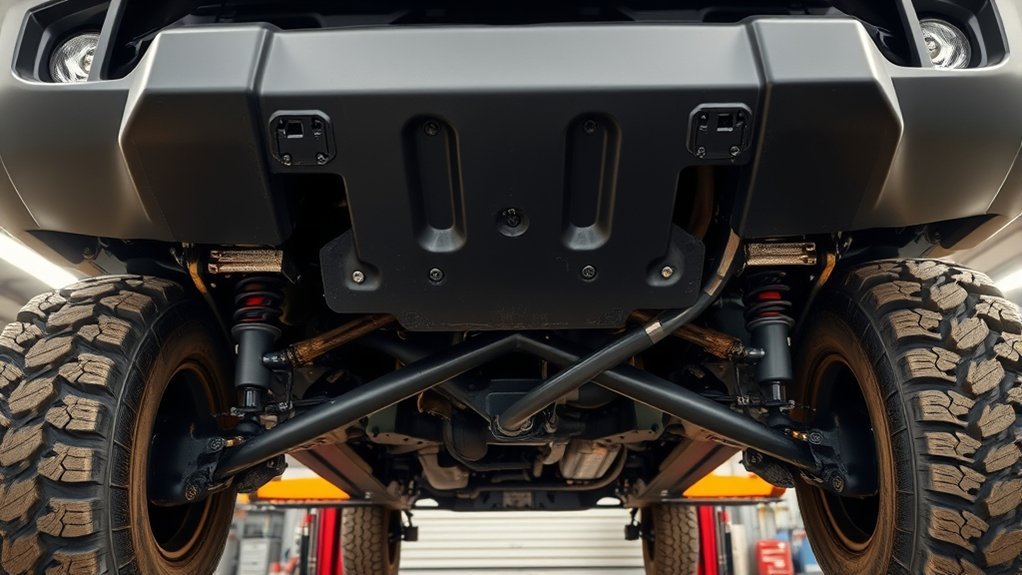
You need Tacoma skid plates that protect the parts most likely to stop your trip: the oil pan, front differential, transmission, transfer case, exhaust crossmember areas, and fuel tank. The best setup depends on how hard you wheel, your Tacoma generation, whether you drive a hybrid model, and how much weight you are willing to add.
Quick Answer
A Tacoma skid plate setup should cover the engine oil pan, front differential, transmission, transfer case, exhaust cross pipe, and fuel tank. Choose steel for hard rock trails and aluminum for lighter overlanding. Look for bolt-on fitment, service openings, factory mounting points, and hardware that matches the plate maker’s torque specs.
Key Takeaways
- For light trail use, start with engine and transmission protection; for rock crawling, add transfer-case and fuel-tank skids.
- 3/16-inch steel is a common heavy-duty choice, while 1/4-inch aluminum saves weight and resists rust better.
- Always confirm fitment by model year, cab, drivetrain, hybrid/non-hybrid layout, bumper, winch, and suspension setup.
- Drain access, removable panels, and bolt-on factory mounting points make skid plates easier to live with.
At a Glance
| Best First Plate | Engine/front skid plate |
| Best Full-Coverage Setup | Engine, transmission, transfer case, and fuel tank |
| Common Materials | 3/16-inch steel or 1/4-inch aluminum |
| Install Difficulty | Moderate DIY with jack stands, sockets, torque wrench, and a helper |
| Typical Cost Range | About $300 for a front skid to $1,500+ for a full multi-plate system |
What People Search For About Tacoma Skid Plate Coverage
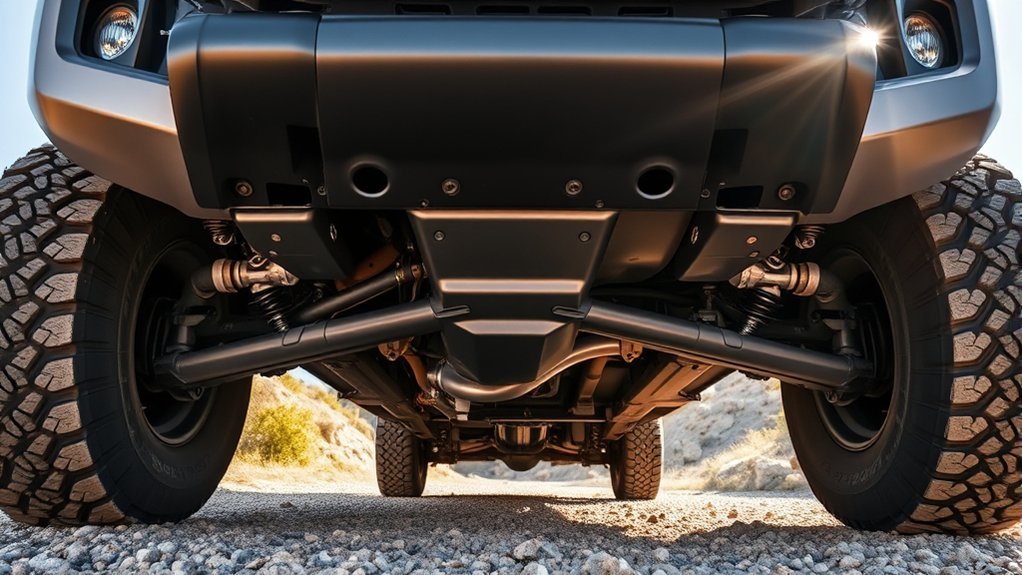
Most Tacoma owners are trying to answer one practical question: what should my skid plates actually cover? The answer depends on how you drive. Gravel roads and mild forest trails call for basic front-end protection. Rocky ledges, deep ruts, and remote trails call for a full underbody armor system.
The goal is not just to add metal under the truck. It is to protect the parts that can leak fluid, break drivetrain function, or leave you stranded. Toyota’s own owner information warns drivers to inspect the vehicle after off-road driving through rough terrain, sand, mud, or water, which is exactly where skid plates earn their keep.
A good Tacoma skid plate system should answer these questions before you buy:
- Does it protect the engine oil pan and front differential?
- Does it extend back to the transmission and transfer case?
- Does it offer fuel tank protection for rocky terrain?
- Can you change oil without removing the whole plate?
- Does it fit your exact Tacoma year, trim, drivetrain, and hybrid or non-hybrid layout?
- Does it work with your bumper, winch mount, lift kit, and exhaust clearance?
Tacoma Underbody Parts That Need Skid Plate Protection
Rocks, stumps, and trail debris hit the underside first. That is why the best Tacoma skid plate coverage starts with the parts that are expensive, exposed, or hard to repair on the trail.
Engine Oil Pan And Front Differential
The front skid plate is usually the first upgrade because it shields the engine area, oil pan zone, and front differential area. A sharp hit near the oil pan can cause a leak and force you to stop driving immediately. Toyota’s genuine TRD front skid plate is marketed as undercarriage protection against road debris, rocks, and uneven terrain, but many aftermarket options extend coverage farther back than a single factory-style front plate.
Transmission
The transmission sits in the midsection of the truck and can be exposed when the Tacoma drops onto a ledge or slides across a rock. Transmission skid plates help protect the pan, case, and nearby crossmembers from direct impact. This is especially important if you wheel in rocky terrain where the belly of the truck drags often.
Transfer Case
The transfer case is one of the most important 4WD components under your Tacoma. If you hit it hard enough to crack the case, damage a mount, or cause a fluid leak, you may lose drivetrain function far from pavement. Serious trail builds should not stop at a front skid plate; they should extend protection through the transfer case.
Fuel Tank
The fuel tank is large, low, and vulnerable on trails with rocks or deep ruts. A fuel-tank skid plate is not always part of a basic package, but it is smart insurance for rock crawling, remote travel, and loaded overlanding. Some 2024+ Tacoma fuel-tank skid options use 3/16-inch steel or 1/4-inch aluminum and may require specific fuel-tank straps or trim fitment, so verify the installation requirements before ordering.
Exhaust Cross Pipe And Hangers
Do not ignore exhaust clearance. A crushed exhaust cross pipe, bent hanger, or heat-shield interference can create noise, vibration, power loss, or service problems. Better full-coverage systems account for the exhaust path and provide smoother surfaces so the truck can slide over obstacles instead of catching on them.
Warning: Never assume a skid plate fits just because it says “Tacoma.” Fitment can change by generation, wheelbase, cab, engine, hybrid battery layout, transfer-case design, bumper, and factory crossmember configuration.
Steel vs. Aluminum Skid Plates For Tacoma: Pros And Cons
Steel and aluminum both work, but they serve different drivers. The right choice comes down to terrain, weight, corrosion, maintenance, and how often your Tacoma takes direct hits.
| Material | Best For | Pros | Trade-Offs |
|---|---|---|---|
| Steel | Rock crawling and hard trail use | High impact resistance, easier to repair, often lower cost | Heavier and needs coating maintenance to fight rust |
| Aluminum | Overlanding, daily driving, moderate trails | Lighter, corrosion resistant, easier on payload | Can gouge or dent more easily under sharp rock impacts |
Choose steel if your Tacoma regularly lands on rocks, drags over ledges, or needs maximum puncture resistance. Choose aluminum if you want protection without adding as much weight, especially on a daily-driven or overland Tacoma that carries camping gear, passengers, and recovery equipment.
Weight matters more than many owners expect. A full aftermarket 2024+ Tacoma skid package can be roughly twice as heavy in steel as in aluminum, depending on the brand and configuration. That extra weight affects payload, suspension feel, braking load, and fuel economy.
The best skid plate material is not the thickest one you can buy. It is the material that matches your terrain, payload, and tolerance for weight.
How Thick Should Tacoma Skid Plates Be? Material & Hardware Standards
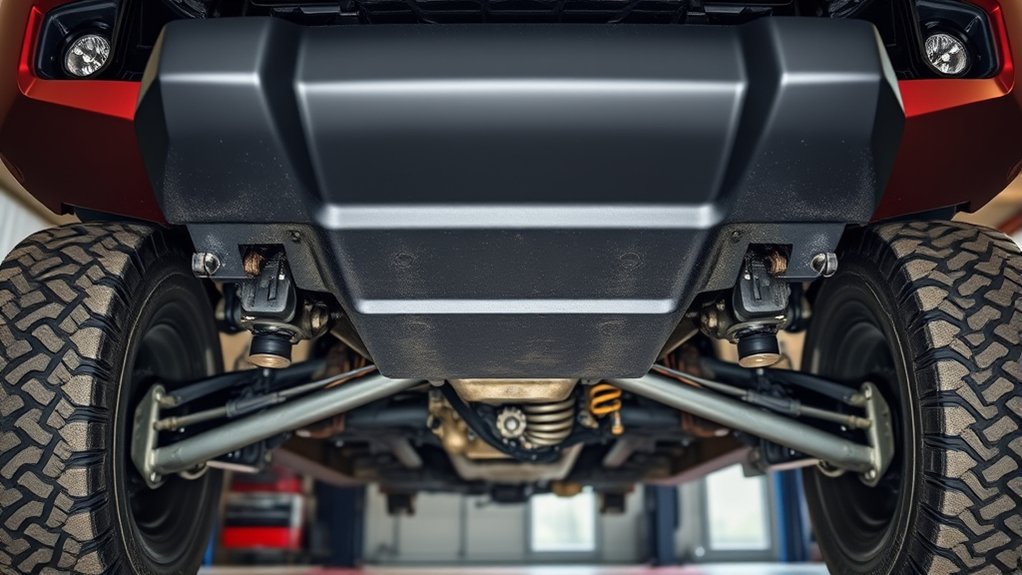
For most aftermarket Tacoma skid plates, 3/16-inch steel is a common heavy-duty baseline. For aluminum, 1/4-inch plate is common because aluminum needs more thickness to offer comparable trail protection. Some factory-style Toyota front skid plates are also 1/4-inch aluminum, while full aftermarket systems often use laser-cut 3/16-inch steel or 1/4-inch 5052 aluminum.
Material Thickness Standards
Use this as a practical guide:
- Light trail and daily driving: factory front skid or aftermarket aluminum front skid may be enough.
- Moderate off-roading: engine, transmission, and transfer-case skids in 3/16-inch steel or 1/4-inch aluminum.
- Rock crawling: full steel coverage, reinforced edges, bolt protection, and fuel-tank protection.
- Overlanding: aluminum or mixed-material coverage to save weight while protecting key components.
Hardware Grade Requirements
Hardware matters as much as plate thickness. A strong plate with weak or loose fasteners can rattle, shift, or tear away from its mounts. Use the hardware supplied by the skid plate manufacturer, follow the included torque specs, and replace damaged bolts instead of reusing them.
Many heavy-duty kits use high-strength fasteners. SAE J429 is the common standard covering mechanical and material requirements for inch-series steel bolts and related fasteners. If your kit specifies Grade 8 or equivalent hardware, do not substitute softer bolts from a random hardware bin.
Pro Tip: After your first trail day with new skid plates, recheck every mounting bolt. New plates can settle slightly after the first impacts, heat cycles, and vibration.
Full-Coverage vs Single-Plate: Exact Parts Each Protects
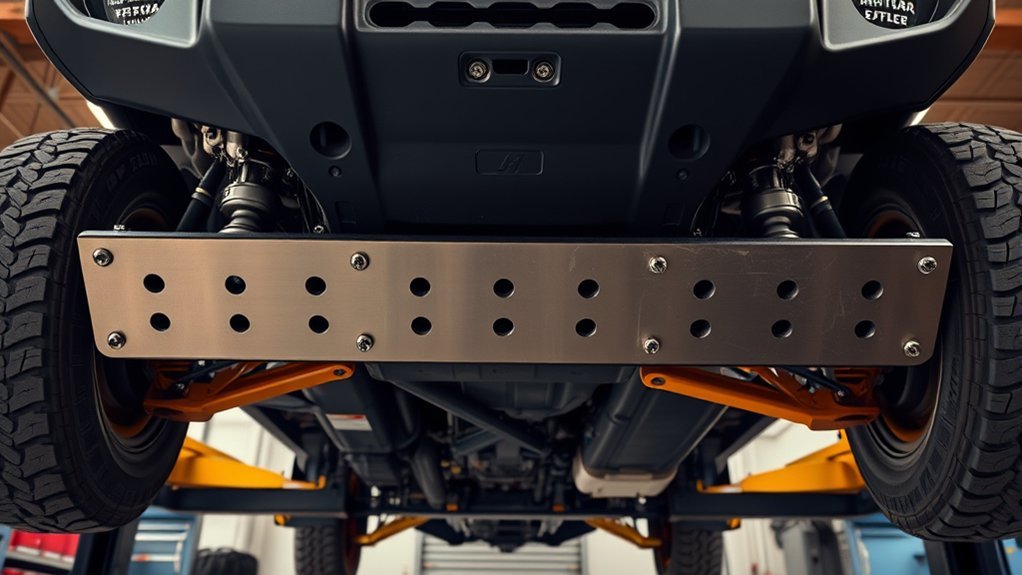
Think of skid plates as targeted insurance for the underside of your Tacoma. A single plate protects one high-risk area. A full-coverage package protects the drivetrain path from the front crossmember back toward the transfer case, and often adds fuel-tank protection as a separate piece.
| Setup | Parts Protected | Best For | Main Limitation |
|---|---|---|---|
| Front skid plate | Engine area, oil pan zone, front differential area | Daily drivers, mild trails, first upgrade | Leaves mid and rear drivetrain exposed |
| Transmission skid | Transmission pan/case and belly area | Moderate trails and ledges | Still needs transfer-case protection |
| Transfer-case skid | Transfer case and rear belly section | 4WD trail use | Fitment can vary by hybrid/non-hybrid layout |
| Fuel-tank skid | Fuel tank and straps | Rock crawling and remote travel | Often sold separately |
| Full package | Engine, transmission, transfer case, crossmembers, and sometimes exhaust cross pipe | Hard off-roading and overlanding | Higher cost and added weight |
If you mostly drive gravel roads, start with a front skid plate and add pieces as needed. If you wheel in rocks, skip the piecemeal approach and buy a matched system so the plates overlap properly and do not leave exposed gaps between sections.
Key Design Features: Modularity, Drain Access, Mounting
The best Tacoma skid plates protect without making every oil change a chore. Look for modular sections, clean service access, and mounting that does not require welding or guesswork.
| Feature | Benefit | Why It Matters |
|---|---|---|
| Modular design | Replace or remove one section | Less downtime after damage |
| Drain access | Oil changes without full removal | Easier maintenance |
| Bolt-on mounting | Uses factory attachment points | No welding or fabrication |
| Smooth underside | Slides over obstacles | Less catching on rocks |
| Bolt protection | Shields exposed bolt heads | Easier removal after trail impacts |
| Powder coat or corrosion protection | Slows rust on steel | Longer service life |
Integrated drain holes are useful, but they are not all equal. A poorly placed drain hole can still create messy oil changes or force you to loosen the plate. Before final tightening, confirm that the oil drain plug, oil filter service path, and any access panels line up with your exact Tacoma engine.
Fit And Compatibility: Stock Suspension, Bumpers, Winches
Skid plate fitment is where many Tacoma owners make expensive mistakes. You need to match the plate to your truck, not just to the word “Tacoma.”
Model Year And Generation
A 2005–2015 Tacoma, 2016–2023 Tacoma, and 2024+ Tacoma do not share identical underbody layouts. Even within the same generation, fitment can change by drivetrain, trim, engine, and factory equipment. Always choose plates listed for your exact model year and confirm with the manufacturer if your truck has unusual options.
Hybrid vs. Non-Hybrid Fitment
Hybrid Tacoma models can have different underbody packaging. Some aftermarket 2024+ transmission and transfer-case skid plates specifically note non-hybrid fitment only. If you have an i-FORCE MAX hybrid Tacoma, do not order non-hybrid skid plates unless the manufacturer confirms compatibility in writing.
Stock Suspension And Lift Kits
Most quality skid plates are designed to work with stock suspension and common lift kits, but control-arm skids, differential drops, long-travel kits, and aftermarket crossmembers can change clearance. If your truck has major suspension changes, measure first and ask the skid plate maker before buying.
Aftermarket Bumpers And Winches
Front bumpers and winch mounts can interfere with the front edge of a skid plate. Winch fairleads, lower bumper supports, and recovery points may also change the mounting path. Look for skid plates designed to work with common aftermarket bumpers, or buy from the same brand as your bumper when possible.
Note: If your Tacoma already has a factory TRD, Trailhunter, or aftermarket skid plate, check whether new plates replace it, overlap with it, or require removing it entirely.
Installation & Maintenance: Bolt-On Fitment, Common Issues, Oil Access
Most Tacoma skid plates are bolt-on, but “bolt-on” does not always mean “effortless.” Heavy steel plates can be awkward to lift, and factory holes may need careful alignment before the bolts thread smoothly.
Basic Installation Steps
- Park on level ground and let the exhaust and drivetrain cool.
- Support the truck safely if you need extra room. Never rely on a jack alone.
- Remove any factory splash shield or stock skid plate that the new kit replaces.
- Loosely install all brackets and bolts before tightening anything.
- Align the plate sections so they do not touch exhaust, steering, or driveline components.
- Torque fasteners to the skid plate manufacturer’s specs.
- Check oil drain access, tow hook clearance, and bumper clearance before driving.
Common Installation Issues
- Misaligned holes: Keep every bolt loose until all bolts are started.
- Cross-threaded bolts: Hand-thread bolts first, then tighten with tools.
- Rattles: Check for plate-to-exhaust contact and missing spacers.
- Oil mess: Confirm the drain hole is placed correctly before your next service.
- Hidden fitment conflict: Aftermarket bumpers, winches, and hybrid components can change clearance.
Maintenance After Trail Use
After rough trail days, wash mud and sand from the skid plates, inspect for dents, and recheck bolt torque. Toyota recommends maintenance inspection after off-road driving through rough terrain, sand, mud, or water, and skid plates should be part of that inspection. Look for rust on steel plates, bent brackets, cracked welds, missing fasteners, and sharp edges that could cut hoses or wiring.
Real-World Performance: RSG Offroad And Top Tacoma Skid Plate Options
RSG Offroad is often mentioned in Tacoma skid plate discussions because its Tacoma armor focuses on thick steel construction, modular sections, factory mounting points, and extended coverage for the oil pan, transmission, and transfer case. That makes it a strong example of what a serious trail skid plate system should include.
RSG Offroad-Style Three-Piece Coverage
A three-piece system is popular because it balances protection and serviceability. The front, middle, and rear sections can be installed, removed, or repaired separately. If you damage one panel, you do not necessarily need to replace the whole setup.
For hard trail use, the biggest benefits are:
- Coverage from the engine area through the transfer case
- Modular access for repairs and maintenance
- Steel construction for repeated rock contact
- Factory-point mounting for cleaner installation
RCI-Style Steel Or Aluminum Packages
Some full Tacoma skid plate packages, such as RCI-style systems for 2024+ trucks, give buyers a choice between 3/16-inch steel and 1/4-inch aluminum. That lets you tune the setup for strength or weight. These packages commonly include engine, transmission, and transfer-case protection, while fuel-tank skids may be sold separately.
Factory Toyota TRD Front Skid Plate
The Toyota Genuine TRD front skid plate is a good option for owners who want a factory-style front protection upgrade, clean fit, and Toyota accessory support. It is not the same as a full underbody armor system. If you plan to drag the truck over rocks, add transmission, transfer-case, and fuel-tank coverage.
Choose The Right Setup: Weekend Wheeler To Hardcore Trail Rider
Your ideal Tacoma skid plate setup depends on how far from pavement you go and how often the underside actually hits the trail.
| Driver Type | Recommended Coverage | Best Material Choice |
|---|---|---|
| Daily driver with occasional gravel roads | Front skid plate | Factory plate or aluminum |
| Weekend trail driver | Engine and transmission skids | Aluminum or 3/16-inch steel |
| Overlander | Engine, transmission, transfer case, and fuel tank | Aluminum or mixed steel/aluminum |
| Rock crawler | Full underbody and fuel-tank protection | 3/16-inch steel or reinforced steel |
| Hybrid Tacoma owner | Confirmed hybrid-compatible coverage only | Manufacturer-confirmed fitment |
If you are building in stages, start with the plate that protects the most expensive and exposed part for your terrain. For most Tacoma owners, that means front/engine protection first, transmission and transfer case second, and fuel tank protection when trails become rocky or remote.
Tacoma Skid Plate Buying Checklist
Before you buy, run through this checklist:
- Exact Tacoma year, generation, cab, bed, drivetrain, and trim confirmed
- Hybrid or non-hybrid compatibility confirmed
- Coverage area listed clearly by component
- Material and thickness stated by the manufacturer
- Drain access included for oil changes
- No-drill or factory-point mounting verified
- Hardware included and torque specs provided
- Compatible with your bumper, winch, lift, and exhaust setup
- Weight listed so you can plan payload and suspension needs
- Powder coat, raw aluminum, or rust-prevention plan understood
Frequently Asked Questions
What should a Tacoma skid plate cover?
A complete Tacoma skid plate setup should cover the engine oil pan area, front differential, transmission, transfer case, exhaust cross pipe, and fuel tank. A single front skid is fine for mild trails, but rocky terrain calls for full underbody coverage.
Do I need a skid plate on my Tacoma?
You need skid plates if you drive off-road often, especially on rocks, ruts, deep washouts, or remote trails. If your Tacoma only sees pavement and light gravel, a factory-style front skid may be enough. The more often the underside touches obstacles, the more coverage you need.
What is Toyota front skid plate service?
Toyota front skid plate service usually means inspecting, cleaning, tightening, removing, or replacing the front skid plate during maintenance. A technician may check for loose hardware, bent metal, corrosion, missing fasteners, and blocked access to maintenance points.
Are steel or aluminum skid plates better for a Tacoma?
Steel is better for repeated hard impacts and rock crawling. Aluminum is better when you want lower weight, corrosion resistance, and easier daily driving. Many overland builds use aluminum, while hard trail builds often use steel.
Can I install Tacoma skid plates myself?
Yes, many Tacoma skid plates are DIY-friendly bolt-on parts. You will usually need sockets, a torque wrench, safe vehicle support, and a helper for heavy steel plates. Always follow the manufacturer’s instructions and torque specs.
Will skid plates hurt fuel economy?
They can. Added weight may reduce fuel economy slightly, especially with full steel packages. Aluminum skid plates reduce that penalty, but any armor upgrade adds some weight. The trade-off is better protection against expensive trail damage.
Conclusion
You have plenty of Tacoma skid plate options, but the right setup is the one that matches your trails. A front skid plate is a smart first upgrade. A full engine, transmission, transfer-case, and fuel-tank system is the better choice when rocks, ruts, and remote routes are part of your normal driving.
Choose steel for maximum impact resistance, aluminum for lower weight, and modular bolt-on designs for easier service. Confirm fitment carefully, recheck hardware after trail use, and keep oil-change access in mind. Do that, and your Tacoma will be ready to take hits underneath without turning every trail day into a repair bill.
Sources
- Toyota Genuine TRD Front Skid Plate #PTR60-35190 — backs up Toyota accessory undercarriage protection claims.
- Toyota Tacoma Owner’s Manual: Off-road precautions — backs up post-off-road inspection and safety guidance.
- SAE J429 Mechanical and Material Requirements for Externally Threaded Fasteners — backs up the fastener standard reference.
- RSG Offroad Tacoma skid plate guide — backs up modular steel skid plate design and coverage examples.
- RCI Off Road 2024+ Tacoma skid plate package — backs up common 3/16-inch steel, 1/4-inch aluminum, component coverage, and fitment notes.
- RCI Off Road 2024+ Tacoma fuel tank skid plate — backs up fuel-tank skid material and mounting considerations.