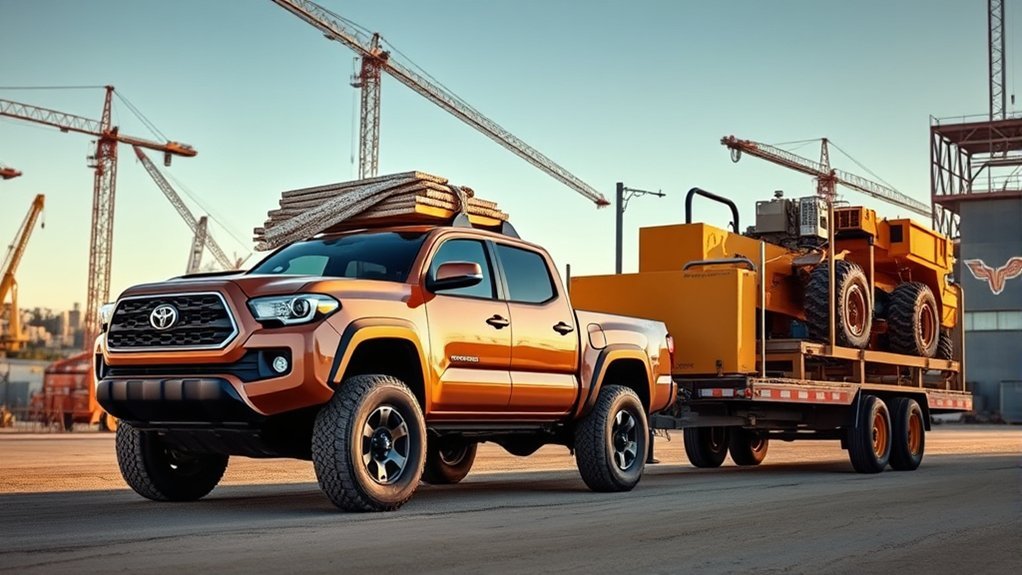
Understanding the difference between towing capacity and payload capacity is one of the most important parts of using a Toyota Tacoma safely. Towing capacity tells you how much trailer weight the truck can pull, while payload capacity tells you how much weight the truck itself can carry, including passengers, cargo, accessories, and trailer tongue weight.
Quick Answer
The 2024 Toyota Tacoma can tow up to 6,500 pounds and carry up to 1,705 pounds when properly equipped, according to Toyota’s published specs. Your real limit depends on trim, cab, bed, drivetrain, passengers, cargo, hitch equipment, tongue weight, GVWR, GAWR, and GCWR.
Key Takeaways
- Towing capacity is the maximum trailer weight your Tacoma can pull; payload is the weight the truck can carry.
- Trailer tongue weight counts against payload, so towing a heavy trailer can reduce how much cargo you can carry in the truck.
- Toyota lists 2024 Tacoma maximum towing weights from 3,500 to 6,500 pounds, depending on configuration.
- The door-jamb payload label and owner’s manual matter more than a general online maximum.
- Never exceed the truck’s towing rating, payload rating, GVWR, GAWR, GCWR, hitch rating, or tire ratings.
At a Glance
| Time Required | 10–20 minutes to check labels, ratings, and trailer weight |
| Difficulty | Easy, but accuracy matters |
| Tools Needed | Owner’s manual, driver-side door labels, trailer weight sticker, scale ticket or trailer scale |
| Cost | Usually free; a public scale may charge a small fee |
Understanding Toyota Tacoma’s Towing Capacity vs. Payload
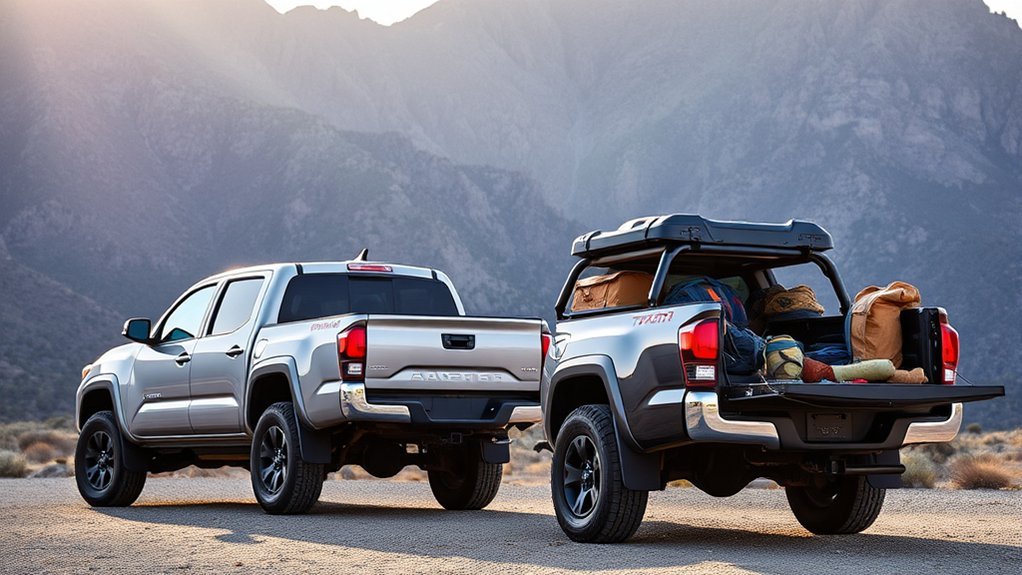
For the 2024 Tacoma, Toyota’s official eBrochure lists maximum towing weights from 3,500 to 6,500 pounds and maximum payload ratings up to 1,705 pounds, depending on the exact model. That means the headline number is not the number every Tacoma can tow.
Towing capacity is the maximum loaded trailer weight the truck can pull. Payload capacity is the maximum weight the truck can carry on its own frame, including people, cargo, accessories, fluids, dealer-installed equipment, and trailer tongue weight.
Many towing mistakes happen because owners treat towing and payload as separate limits. They are connected. If your trailer places 600 pounds of tongue weight on the hitch, that 600 pounds uses part of your Tacoma’s payload before you add passengers, coolers, tools, camping gear, or bed cargo.
| Term | What It Means | Why It Matters |
|---|---|---|
| Towing Capacity | Maximum loaded trailer weight the Tacoma can pull | Prevents overloading the engine, cooling system, transmission, brakes, frame, and hitch |
| Payload Capacity | Maximum weight the Tacoma can carry | Includes passengers, cargo, accessories, and trailer tongue weight |
| Tongue Weight | Downward force the trailer applies to the hitch | Affects steering, braking, rear suspension load, and trailer stability |
| GVWR | Gross Vehicle Weight Rating | Maximum allowed loaded weight of the Tacoma itself |
| GCWR | Gross Combined Weight Rating | Maximum allowed combined weight of the loaded truck and loaded trailer |
Warning: Do not rely only on the highest advertised towing number. Check your specific Tacoma’s owner’s manual, certification label, tire-and-loading label, hitch rating, and trailer weight before towing.
What Does Towing Capacity Mean for Your Tacoma?
Towing capacity tells you the heaviest loaded trailer your Tacoma can pull when the truck is properly equipped and loaded within all other limits. It is not just the empty trailer weight. It includes the trailer plus everything on or inside it, such as water, tools, fuel, motorcycles, camping gear, landscaping equipment, or cargo.
According to Toyota’s 2024 Tacoma owner’s manual, gross trailer weight, gross combination weight, gross vehicle weight, gross axle weight, and tongue weight must all stay within their limits. If one number is over the limit, the setup is overloaded even if the trailer is below the advertised tow rating.
Key Towing Terminology
Before you hitch up, know these numbers:
- TWR: Trailer Weight Rating, or the maximum trailer weight allowed for your Tacoma configuration.
- GTW: Gross Trailer Weight, or what the trailer actually weighs when loaded.
- TW: Tongue Weight, or the downward load on the hitch ball.
- GAWR: Gross Axle Weight Rating, or the maximum weight allowed on each axle.
- GCWR: Gross Combined Weight Rating, or the maximum total weight of the loaded truck and loaded trailer together.
Factors Impacting Towing Capability
Your Tacoma’s real towing capability depends on more than engine output. Trim, cab style, bed length, drivetrain, transmission, tow package equipment, axle ratings, tires, hitch rating, passengers, cargo, and accessories all affect the final number.
For example, Toyota lists some 2024 Tacoma SR configurations at 3,500 pounds of maximum towing weight, while properly equipped SR5 and TRD PreRunner configurations reach 6,500 pounds. Other trims often fall between those numbers.
A Tacoma can be under its trailer-weight rating but still overloaded if tongue weight, passengers, cargo, or accessories push the truck over its payload, GVWR, rear GAWR, or hitch rating.
Real-World Towing Scenarios
Real-world towing usually comes down to weight math. A 5,000-pound camper may sound safely below a 6,500-pound tow rating, but the full setup may still be too heavy after adding passengers, gear, water, propane, batteries, a weight-distribution hitch, and tongue weight.
Conventional bumper-pull trailers commonly need about 10–15% of loaded trailer weight on the tongue for stable handling. However, Toyota’s published maximum tongue weight for many 2024 Tacoma configurations is 640 or 650 pounds. That means a trailer that needs 750 pounds of tongue weight may overload the Tacoma’s tongue-weight or payload limits even if the trailer itself is below 6,500 pounds.
Understanding Your Tacoma’s Payload Capacity
Payload is the weight your Tacoma carries, not the weight it pulls. Toyota’s 2024 Tacoma specs list maximum payload ratings up to 1,705 pounds, but many configurations are lower. The payload label on the driver-side door jamb is the best place to check your truck because it reflects the vehicle as built.
Payload includes:
- Driver and passengers
- Bed cargo
- Cab cargo
- Dealer-installed or aftermarket accessories
- Bed racks, bed caps, toolboxes, sliders, bumpers, winches, and skid plates
- Trailer tongue weight
- Weight-distribution hitch hardware
If your Tacoma has a 1,400-pound payload rating and your loaded trailer adds 600 pounds of tongue weight, you have about 800 pounds left for people, cargo, and accessories. Four adults, camping gear, and a bed rack can use that remaining capacity quickly.
Note: Payload is not always the same across trucks that look similar. Two Tacomas with the same trim can have different payload ratings because of drivetrain, cab, bed, factory options, and installed equipment.
How Towing Packages Boost Your Tacoma’s Performance
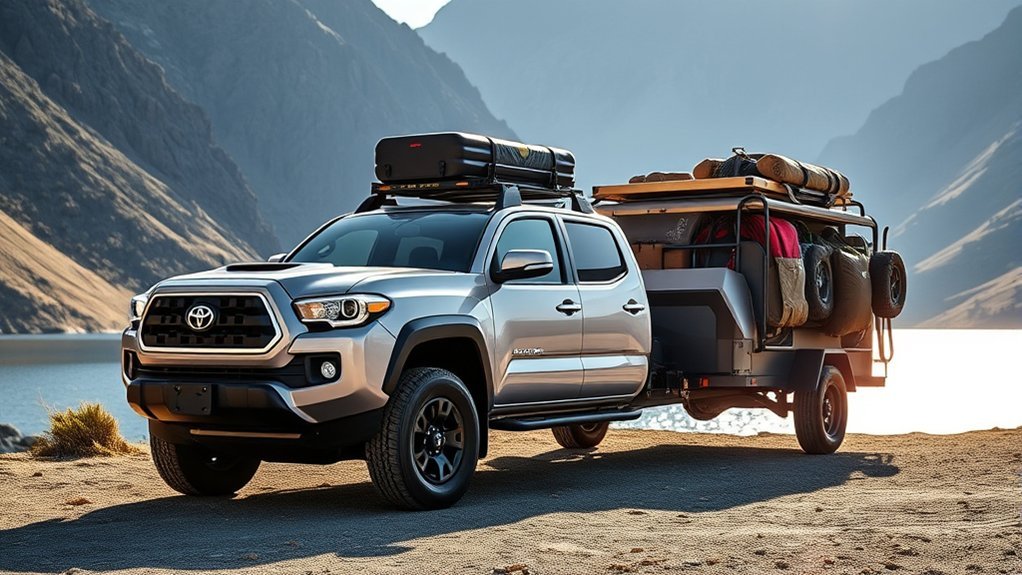
A towing package does not magically make every Tacoma tow 6,500 pounds. Instead, it gives the truck the hardware and technology needed to tow within its published rating. Depending on trim and package, Toyota lists towing-related features such as a Class-IV towing hitch receiver, 7-pin/4-pin connector, Trailer Backup Guide, Trailer Blind Spot Monitor, and Integrated Trailer Brake Controller.
[Products Worth Considering]

This frameless convex blind spot mirror helps expand your field of view for safer lane changes, passing, and merging. The HD glass design offers a clear, wide-angle rear view, while the swivel mount supports flexible positioning for cars, SUVs, trucks, vans, and RVs. Easy to install and built for all-weather use, it is a practical upgrade for everyday driving confidence.

This Toyota hitch cover helps protect your trailer hitch receiver from dirt and debris while adding a clean factory-style look to your vehicle's rear end. Designed for easy use, it offers a simple way to finish off your towing setup when the hitch is not in use. Its lightweight design makes it convenient to handle and install.

This custom-fit 4-pin trailer wiring harness adds reliable towing light connectivity for compatible Toyota RAV4 and RAV4 Prime models, with plug-and-play installation into the vehicle's rear wiring. It powers trailer tail lights, brake lights, and turn signals, while the included dust cover helps protect the connector when not in use. Built with durable bonded wire and corrosion-resistant terminals, it is designed for dependable performance on everyday towing setups.
Enhanced Towing Stability
The right hitch and wiring setup help create a safer connection between the Tacoma and the trailer. A Class-IV receiver and proper wiring harness make it easier to connect compatible trailer lights and brakes, but every component still has to be rated for the load.
Check the rating stamped on the hitch, ball mount, hitch ball, coupler, safety chains, and weight-distribution hitch. The lowest-rated component becomes the limit.
Increased Safety Features
Available towing technology can make trailering easier, especially when backing up, changing lanes, or managing trailer brakes. An Integrated Trailer Brake Controller can help operate a trailer equipped with electric brakes, while trailer blind-spot features can improve awareness around longer loads.
These systems support the driver, but they do not replace safe loading, correct tongue weight, conservative speed, proper tire pressure, working trailer brakes, and a careful pre-trip inspection.
Optimized Engine Performance
The 2024 Tacoma uses turbocharged 2.4-liter i-FORCE gas and available i-FORCE MAX hybrid powertrains. The i-FORCE MAX hybrid powertrain is rated up to 326 horsepower and 465 lb-ft of torque in Toyota’s published materials, but torque alone does not determine towing safety.
Cooling capacity, gearing, curb weight, brakes, axle ratings, tire ratings, hitch equipment, GCWR, and payload are just as important. That is why your exact configuration matters more than the engine badge alone.
Essential Factors Influencing Your Tacoma’s Towing Capacity
To tow safely, you need to look at the whole setup. The Tacoma, trailer, hitch, cargo, and passengers all work together as one loaded combination.
- Truck configuration: Trim, cab, bed, drivetrain, and transmission affect Toyota’s published towing and payload numbers.
- Trailer weight: Use the loaded trailer weight, not the empty dry weight.
- Tongue weight: Tongue weight must be stable enough for towing but still below the Tacoma’s tongue-weight, payload, hitch, and axle limits.
- Passenger and cargo weight: Every person and item in the Tacoma reduces remaining payload.
- Hitch equipment: The hitch, ball, coupler, safety chains, wiring, and brake controller must match the trailer.
- Trailer brakes and sway control: Toyota’s owner’s manual states that trailer service brakes are required above the unbraked trailer weight rating, a sway control device is required above 2,000 pounds, and a weight-distributing hitch is required above 5,000 pounds.
- Terrain and conditions: Hills, heat, wind, rain, traffic, and off-road grades increase stress on the truck and driver.
Pro Tip: Weigh the loaded truck and loaded trailer at a public scale before a long trip. A scale ticket helps confirm the real truck weight, trailer weight, axle loads, and combined weight.
Real-World Scenarios: What You Can Actually Tow With Your Tacoma
Here is how towing and payload can play out in everyday use. These are examples only; always use your own door label, manual, hitch rating, and trailer scale weight.
| Trailer Type | Typical Concern | What to Check |
|---|---|---|
| Small utility trailer | Cargo placed too far rearward can cause sway | Loaded trailer weight, tongue weight, safety chains, lights |
| Boat trailer | Wet weight can be much higher than dry boat weight | Boat, motor, fuel, gear, trailer brakes, ramp conditions |
| Travel trailer | Tongue weight and cargo can consume payload quickly | Loaded camper weight, water tanks, batteries, propane, WDH setup |
| Motorcycle or ATV trailer | Tie-down placement can shift load balance | Axle load, strap security, tongue weight, tire pressure |
| Work trailer | Tools and materials often exceed estimates | Actual scale weight, brake controller, rear axle weight |
A common mistake is using a trailer’s “dry weight” as the towing number. Dry weight usually excludes cargo and may exclude water, fuel, dealer-installed options, batteries, propane, or personal gear. For safe towing, use the trailer’s actual loaded weight.
[Products Worth Considering]

These round blind spot mirrors add a wider viewing angle to help improve lane changes, passing, and everyday driving safety. The frameless convex HD glass design offers a slim, clear rear view while the adjustable swivel mount makes positioning quick and easy. Compatible with cars, SUVs, vans, and trucks, this two-pack is a simple upgrade for reducing blind spots.

This coolant thermostat is a direct replacement designed for a wide range of Toyota, Lexus, and Scion vehicles. It helps maintain proper engine temperature, supports reliable cooling system performance, and installs easily without special tools or programming. Built to meet OEM standards, it offers durable, stable operation and dependable fitment for compatible models.

These tricolor door sill protectors help guard your vehicle’s entry points from scratches, scuffs, and everyday wear while adding a bold color accent. Made from abrasion-resistant, waterproof PU leather, they are designed for easy peel-and-stick installation and a clean finish that helps protect the original paint.
Ensuring Safe Towing With Your Tacoma
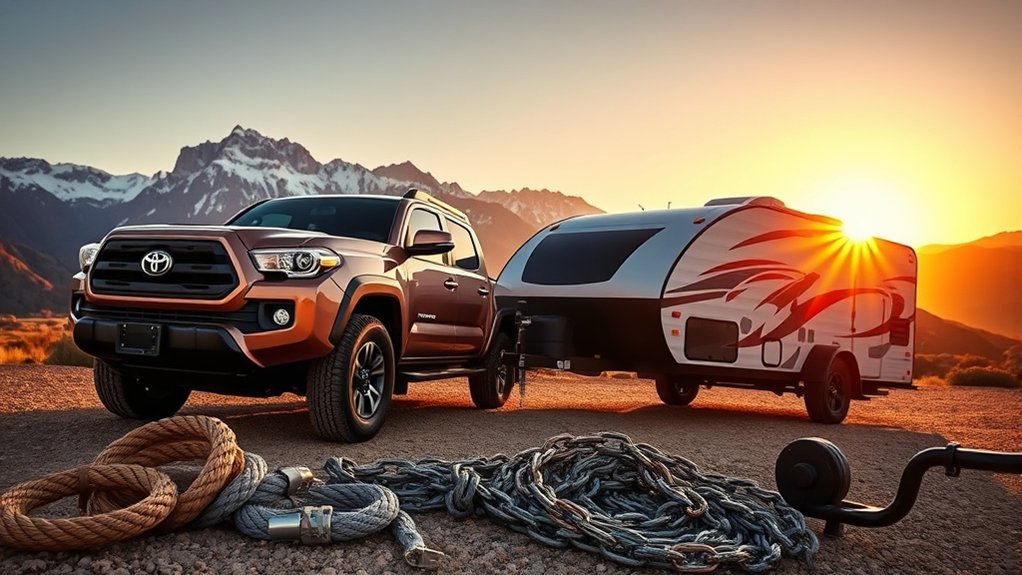
Safe towing starts before you drive. You need the right ratings, correct loading, working equipment, and realistic expectations for how the truck will handle with a trailer attached.
| Safety Check | Why It Matters | What To Do |
|---|---|---|
| Truck ratings | Prevents overloading the Tacoma | Check towing capacity, payload, GVWR, GAWR, and GCWR |
| Trailer weight | Dry weight can be misleading | Use actual loaded trailer weight |
| Tongue weight | Too little can cause sway; too much can overload the rear axle | Measure it and stay within all ratings |
| Hitch components | The weakest part sets the limit | Confirm ratings for receiver, ball mount, ball, coupler, and chains |
| Trailer brakes | Heavy trailers need more stopping power | Use and test brakes when required |
| Tires | Underinflated tires can overheat and fail | Check truck and trailer tire pressure when cold |
| Mirrors and lights | Visibility and signaling are critical | Test brake lights, turn signals, hazards, and mirrors |
Warning: If the trailer sways, do not accelerate and do not make sharp steering inputs. Reduce speed gradually, keep the wheel steady, and inspect load balance, tongue weight, tires, and hitch setup before continuing.
[Products Worth Considering]

These grille retainer clips provide a reliable replacement for the OEM Toyota 90467-12040 part number, helping restore secure body panel attachment on compatible vehicles. Designed for a tight push-in fit, they are made from durable black nylon to resist wear, corrosion, and cracking during everyday use. This set of 10 is ideal for keeping spare clips on hand for grille and trim repairs.

This coolant electric water pump is designed as a replacement for select Toyota vehicles, helping maintain proper engine cooling performance and reliable temperature control. Built to OE specifications, it offers fitment support for compatible Avalon, Camry, and RAV4 models with 2.5L L4 engines. It also includes cross-reference part numbers for easier matching and comes with after-sales support for covered defects.
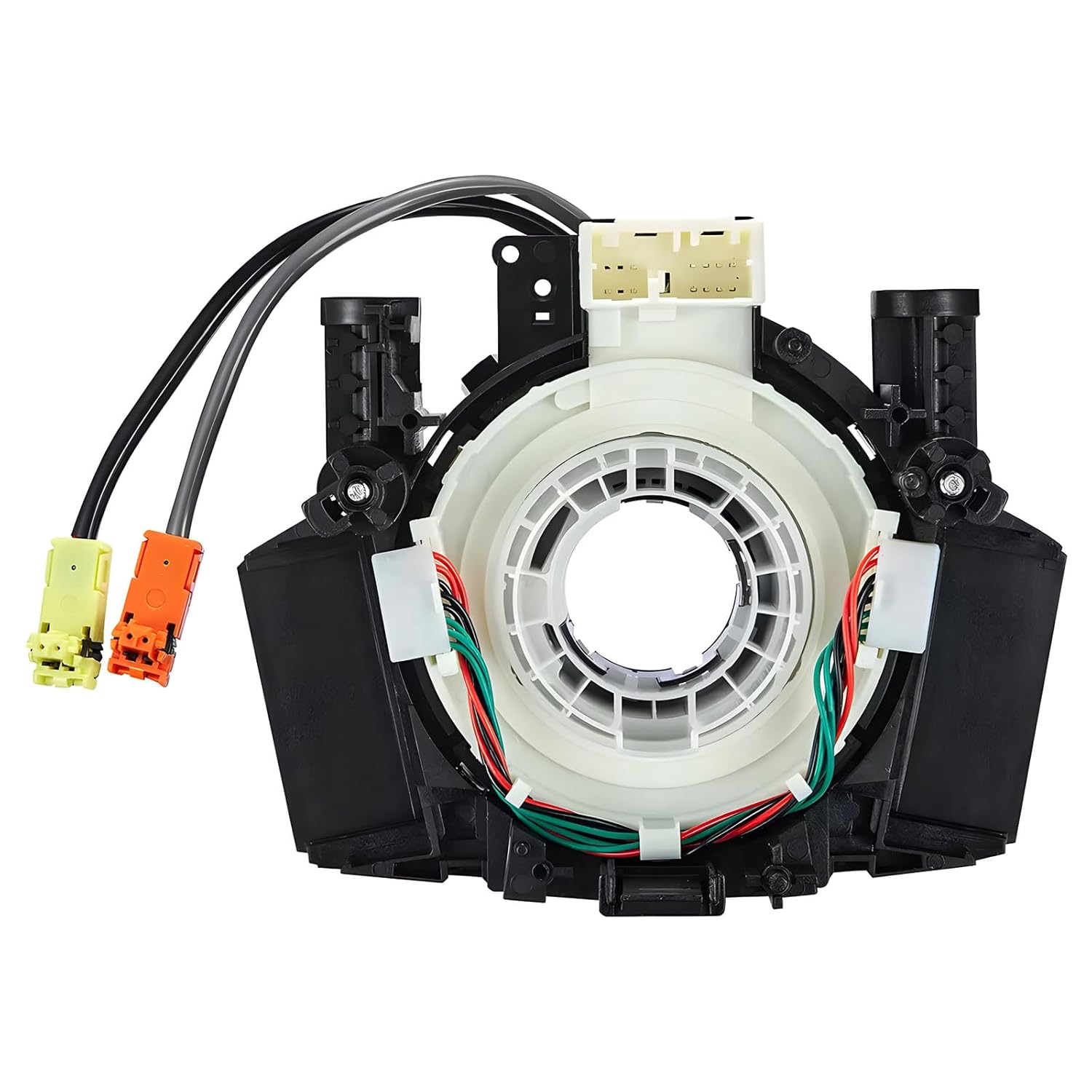
This steering clock spring assembly is an OEM-style replacement designed to restore steering wheel controls and related electronic functions in compatible Nissan vehicles. It supports audio, cruise control, and multi-function button operation while matching multiple factory part numbers for a reliable fit. Built for direct installation with vehicle-specific connectors, it helps return steering column electronics to proper working order.
How to Calculate Your Tacoma’s Payload and Towing Limits
Use this process before towing. It is simple, but it keeps you from guessing.
- Find your Tacoma’s payload label. Look at the driver-side door jamb for the tire-and-loading label. This tells you how much occupant and cargo weight your specific truck can carry.
- Find the Tacoma’s towing rating. Use Toyota’s owner’s manual or official towing table for your exact model code, cab, bed, trim, drivetrain, and transmission.
- Find GVWR and GAWR. Check the certification label on the door jamb. These ratings limit total truck weight and axle weight.
- Find the loaded trailer weight. Use a certified scale when possible. Include everything in or on the trailer.
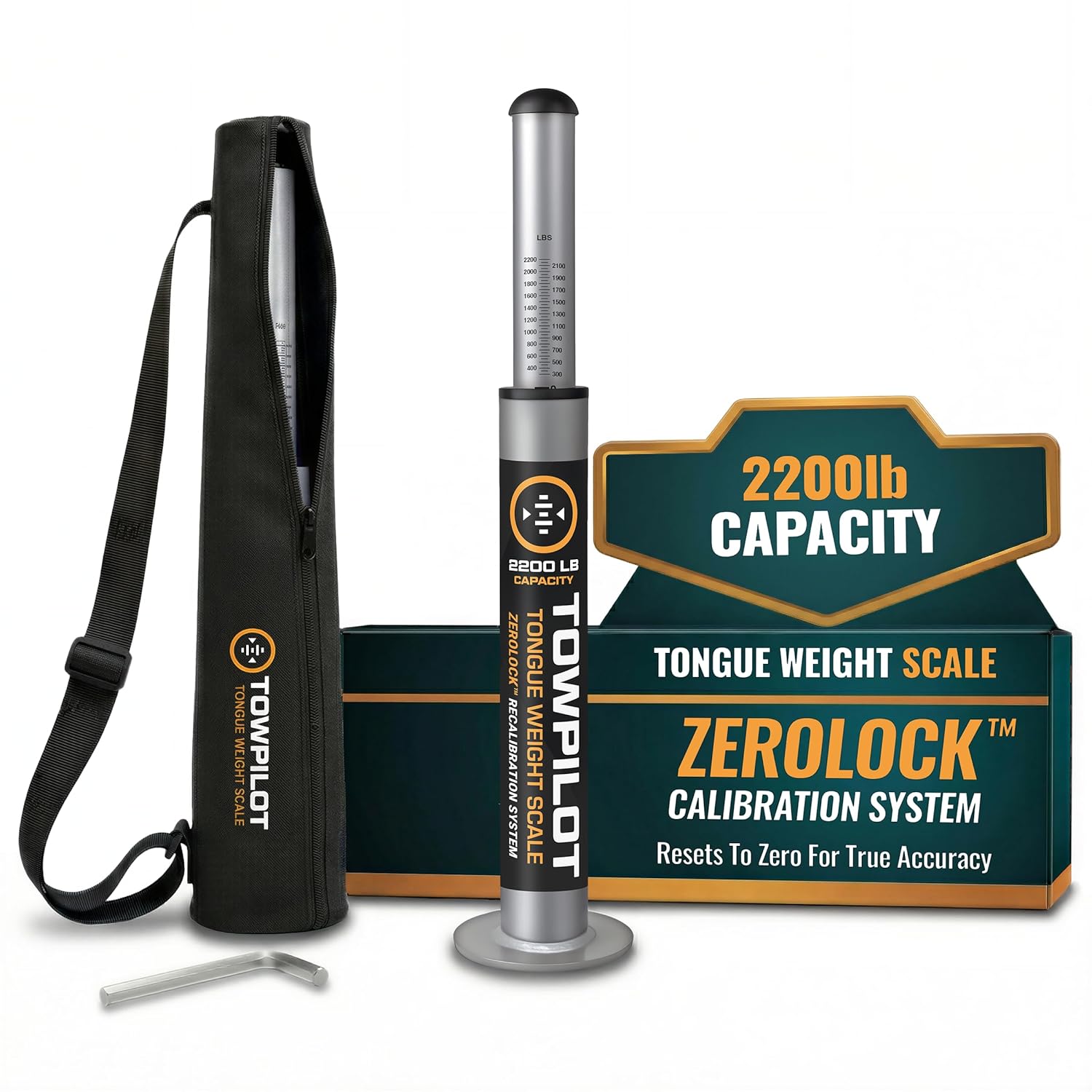
- Measure tongue weight. Use a tongue-weight scale, public scale method, or a proper measuring method for lighter trailers. CURT’s tongue weight guide explains common measurement methods.
- Add passenger and cargo weight. Include the driver, passengers, pets, tools, bed cargo, cooler, recovery gear, and aftermarket accessories.
- Compare every limit. Confirm towing capacity, payload, GVWR, GAWR, GCWR, hitch rating, tongue-weight rating, and tire ratings are all within spec.
Example Payload Calculation
Suppose your Tacoma’s payload label says 1,500 pounds. You add:
- Driver and passengers: 500 pounds
- Bed cargo and cooler: 200 pounds
- Aftermarket gear: 100 pounds
- Trailer tongue weight: 600 pounds
Your total payload use is 1,400 pounds. That leaves only 100 pounds of remaining payload. Even if the trailer is under the towing rating, adding more cargo could overload the truck.
Example Tongue Weight Calculation
If your loaded trailer weighs 5,000 pounds, a common bumper-pull tongue-weight range of 10–15% equals 500–750 pounds. But if your Tacoma, hitch, or trailer component is rated for a lower tongue weight, you must stay below the lowest rating. Stable trailer balance does not override the truck’s published limits.
Safety Implications of Exceeding Your Tacoma’s Limits
Exceeding your Tacoma’s towing or payload limits can affect steering, braking, suspension control, tire temperature, trailer stability, and drivetrain durability. The truck may feel normal at low speeds but become unstable during braking, lane changes, crosswinds, downhill grades, or emergency maneuvers.
Too much payload can overload the rear axle and tires. Too much tongue weight can make the rear of the truck squat and reduce steering response. Too little tongue weight can allow trailer sway. Too much combined weight can make the engine, transmission, cooling system, and brakes work harder than intended.
The safest approach is to build in a margin. Staying below the maximum rating gives the Tacoma more room to handle heat, hills, wind, traffic, and emergency stops.
Frequently Asked Questions
What is the difference between towing capacity and payload capacity?
Towing capacity is how much loaded trailer weight your Tacoma can pull. Payload capacity is how much weight the truck can carry, including passengers, cargo, accessories, and trailer tongue weight. A truck can be within its tow rating but still over payload.
What is the payload capacity for a 2024 Toyota Tacoma?
Toyota lists 2024 Tacoma maximum payload ratings up to 1,705 pounds, but the exact number varies by trim, cab, bed, drivetrain, powertrain, and options. Use the payload label on your driver-side door jamb for your specific truck.
Can every 2024 Tacoma tow 6,500 pounds?
No. The 6,500-pound number applies only to certain properly equipped configurations. Toyota’s published towing table shows some 2024 Tacoma models rated as low as 3,500 pounds. Always check your exact model and equipment.
Does trailer tongue weight count against payload?
Yes. Tongue weight is carried by the Tacoma through the hitch, so it uses part of the truck’s payload capacity. This is one of the most common reasons a towing setup becomes overloaded.
Do I need trailer brakes when towing with a Tacoma?
It depends on trailer weight and local rules. Toyota’s 2024 Tacoma owner’s manual says trailer service brakes are required if the gross trailer weight exceeds the unbraked trailer weight rating. Many states also have their own trailer brake requirements.
Conclusion
Understanding your Tacoma’s towing capacity and payload capacity is not just about chasing the biggest number. It is about matching the truck, trailer, hitch, cargo, and passengers so the entire setup stays within Toyota’s published limits.
Start with your door-jamb labels and owner’s manual, then verify the actual loaded trailer weight and tongue weight. Keep payload, GVWR, GAWR, GCWR, hitch rating, tire ratings, and trailer brake requirements in mind. When every number checks out, your Tacoma is far better prepared for a stable, confident, and safer towing experience.
Sources
- Toyota 2024 Tacoma eBrochure — official towing, payload, tongue weight, powertrain, and towing equipment specifications.
- Toyota 2024 Tacoma Owner’s Manual: Trailer Towing — official trailer towing limits, trailer brake guidance, sway control guidance, and weight-distributing hitch guidance.
- SAE J2807 — tow-vehicle GCWR and trailer weight rating performance standard.
- CURT Tongue Weight Guide — tongue weight definition, 10–15% general guideline, and measurement methods.