Tacoma Jack and Spare Tool Sizes for 1995 to 2019
What’s in This Article
- Tacoma Jack and Spare Tool Size Chart for 1995 to 2019
- Before You Begin: Safety, Tools, and Time
- Identify Your Tacoma Jack, Crank, and Winch Parts
- How to Lower the Spare and Use the Jack Step by Step
- Fix Seized Winches and Make a Replacement Lowering Rod
- What to Measure Before You Buy Used Parts
- Where to Buy or Salvage Tacoma Spare Tool Kits
- Frequently Asked Questions
- Conclusion
A flat tire feels simple until the spare tool does not fit the winch. On a 1995 to 2019 Toyota Tacoma, you need the right jack, wheel-nut wrench, crank handle, extension, and spare-lowering end-piece before you lift the truck. This guide explains the common sizes, safe lift points, spare-lowering steps, seized-winch fixes, and buying checks you should use before roadside work.
Quick Answer
Most 1995 to 2019 Tacoma spare kits use a jack, wheel-nut wrench, jack handle end, and jack handle extension. Many Tacoma wheel nuts use a 21 mm or 13/16-inch wrench, but you should verify your exact model year and wheel type. Use the factory lift point, keep the truck on firm level ground, and tighten lug nuts with a torque wrench after lowering the truck.
Key Takeaways
- Match the spare-lowering end-piece to your Tacoma winch before you need it on the road.
- Use the factory jack points and never crawl under a truck held only by the emergency jack.
- Use a 21 mm or 13/16-inch wrench only after you confirm your wheel nuts match that size.
- Check your owner’s manual for the correct torque value because model years and wheel types can differ.
- Test used or aftermarket tool kits on your actual truck before you store them as emergency gear.
Tacoma Jack and Spare Tool Size Chart for 1995 to 2019
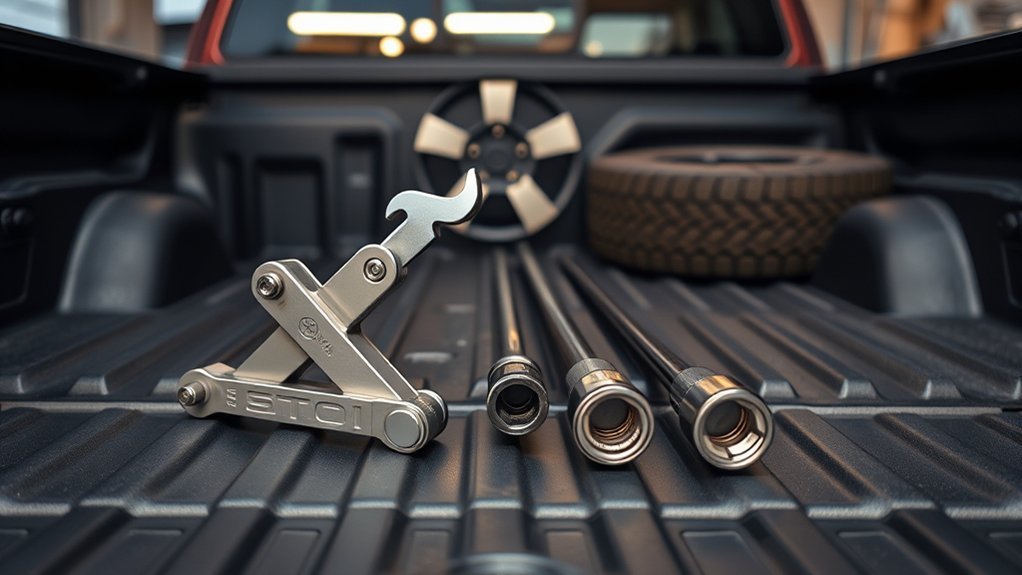
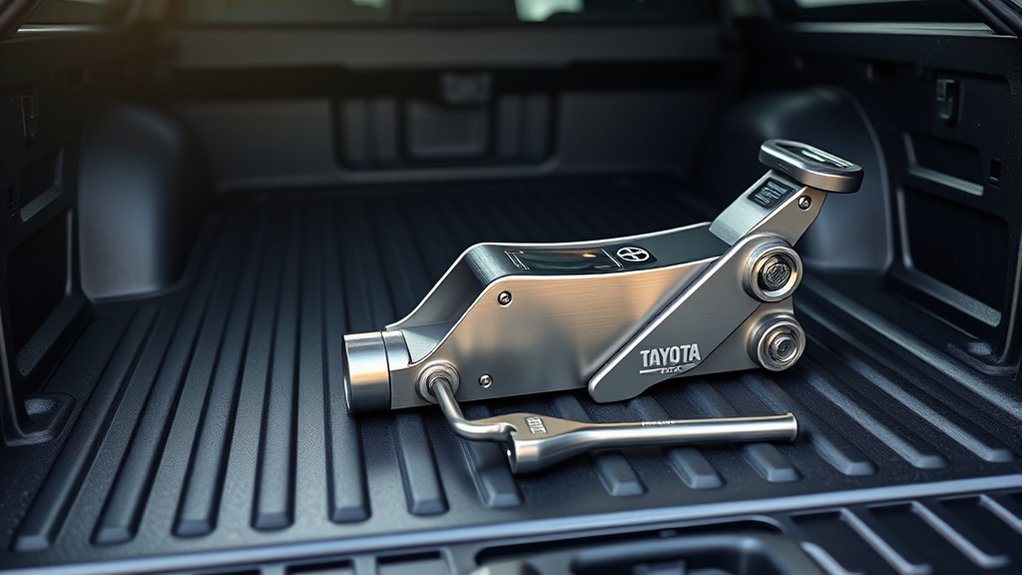
Most Tacoma spare-tool kits from this range include four core pieces: the jack, wheel-nut wrench, jack handle end, and jack handle extension. Toyota owner manual instructions for a verified Tacoma manual year show these pieces working together to lower the spare and operate the jack.
The wheel-nut wrench commonly fits 21 mm lug nuts, also listed as 13/16 inch in many tool descriptions. Toyota service guidance lists 83 ft-lb (113 N·m) for 2005 to 2013 Tacoma lug nuts. Some owner manual copies round the same 113 N·m value differently, so check your exact owner’s manual before final torque.
| Part | Common Fit or Size | What You Should Verify |
|---|---|---|
| Wheel-nut wrench | 21 mm or 13/16 inch | Socket fit on your actual lug nuts |
| Lug nut thread | Often M12x1.5 on 1995 to 2019 models | Wheel type, seat style, and stud condition |
| Jack handle parts | Handle end plus extension | Secure screw fit and straight shaft |
| Spare-lowering end-piece | Winch-specific end shape | Clean engagement with the lowering screw |
| Factory jack | Emergency wheel-change jack | Correct truck, clean threads, and stable base |
Note: Do not treat a marketplace fitment chart as final proof. Test the tool on your Tacoma before you rely on it.
[Products Worth Considering]

This click torque wrench delivers accurate, repeatable tightening for automotive and home repair tasks, helping prevent over-tightening and fastener damage. Its dual-range scale, knurled non-slip grip, and durable ratchet head make it easy to use, while the included extension bar and storage case add extra convenience.
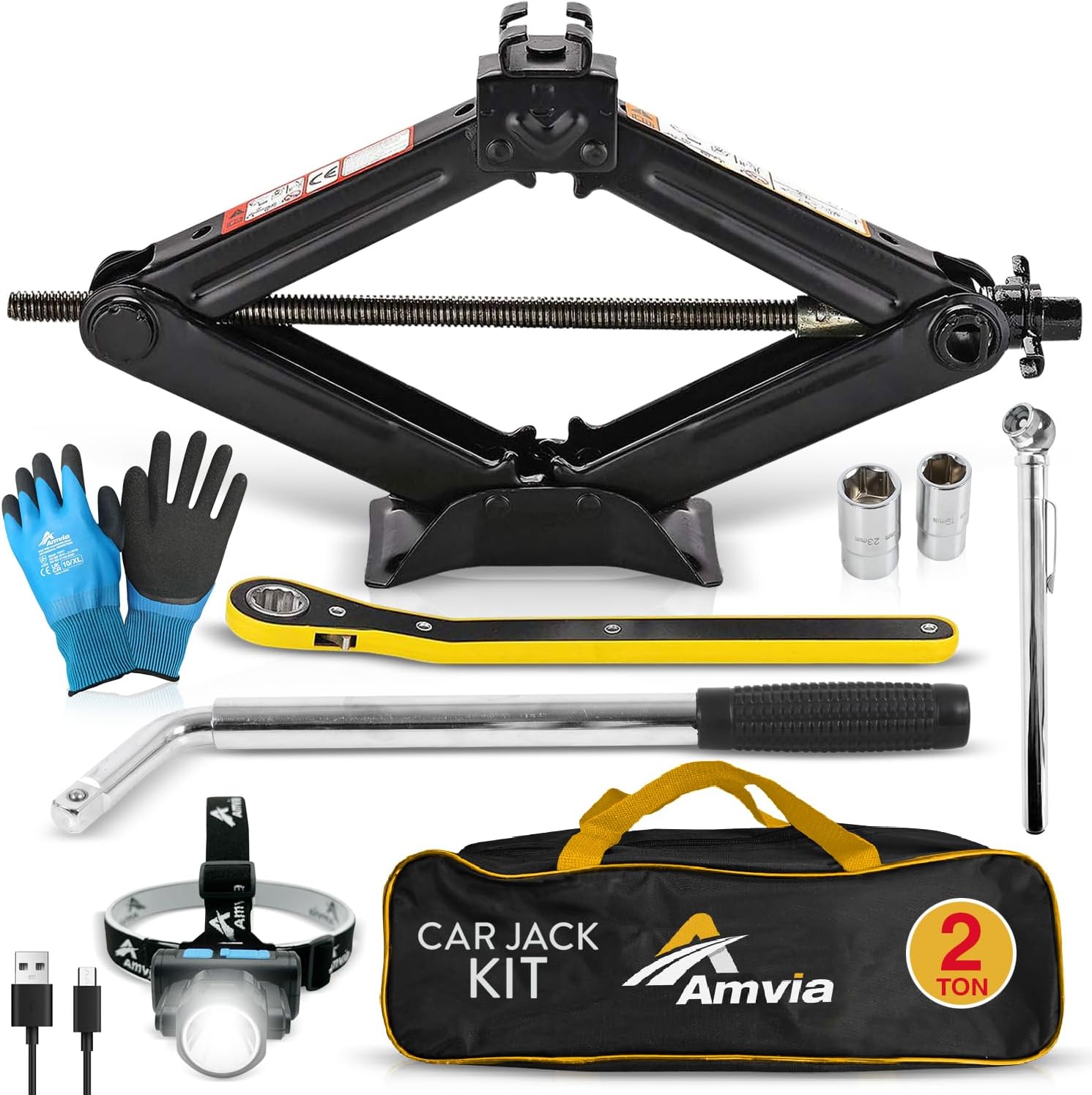
This all-in-one car jack kit is built to help drivers handle flat tire emergencies quickly and safely. It includes a 2 ton scissor jack, telescopic lug wrench, USB rechargeable LED headlamp, tire pressure gauge, gloves, and a storage bag for organized trunk storage. Designed for a wide range of vehicles, it offers a compact, portable solution for roadside tire changes day or night.
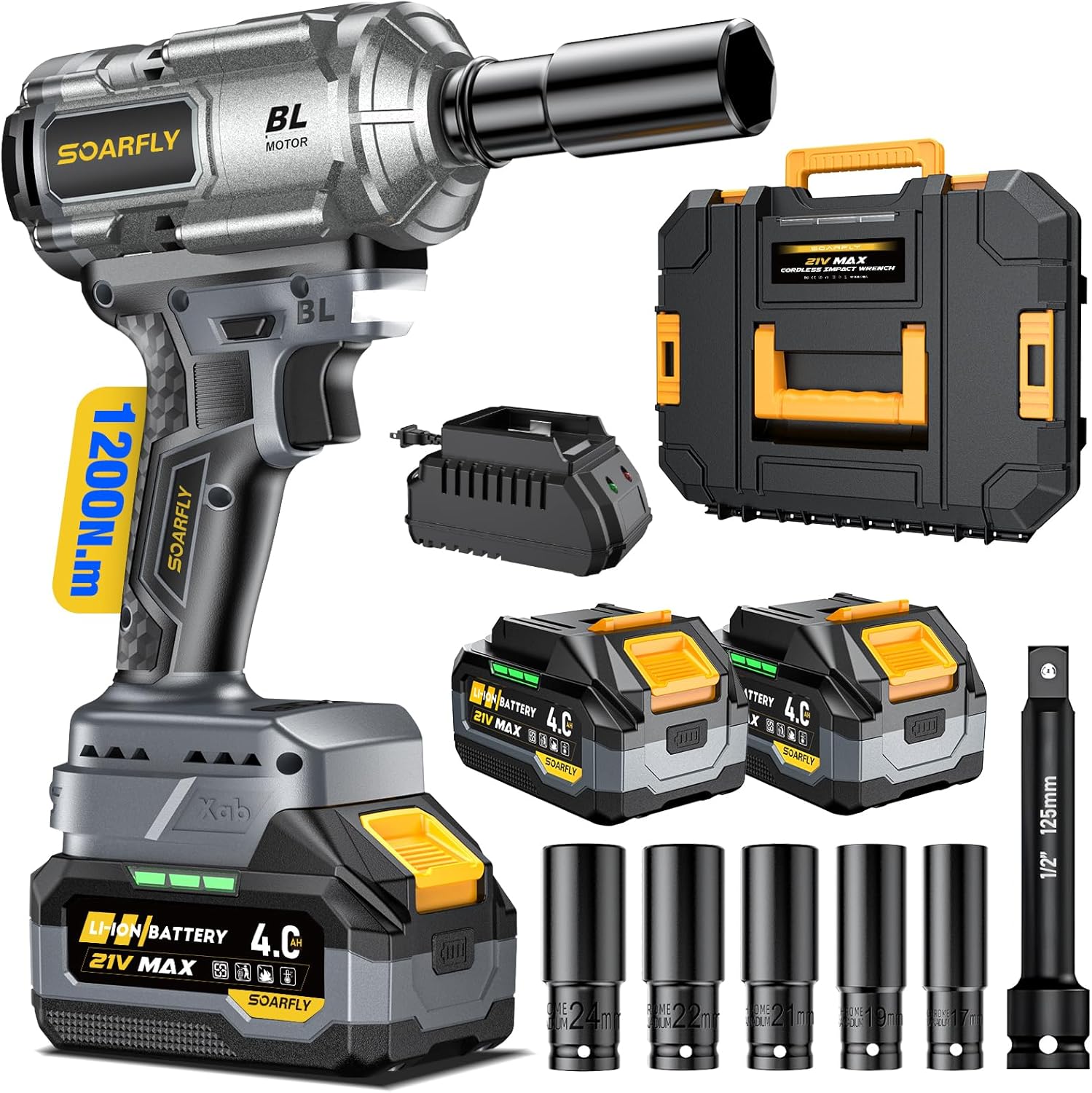
This cordless impact wrench delivers powerful high-torque performance for tire changes, stubborn lug nuts, and heavy-duty repairs around the garage or job site. Its brushless motor, three-speed control, LED work light, and included dual batteries provide reliable runtime, precision, and convenience for automotive and maintenance tasks. The complete kit comes with sockets, an extension bar, charger, and carry case for easy transport and storage.
Before You Begin: Safety, Tools, and Time
Estimated time: Plan 20 to 35 minutes for a normal tire change. Add more time if the spare winch has rust, the truck sits on soft ground, or the tool kit has missing parts.
Gather the factory jack, wheel-nut wrench, jack handle end, jack handle extension, wheel chocks, gloves, flashlight, and a torque wrench. Park on firm level ground, set the parking brake, turn on hazard lights, and keep passengers away from traffic.
Warning: Never place any part of your body under the Tacoma while only the emergency jack holds it.
Toyota guidance tells you to loosen wheel nuts before you raise the vehicle. It also tells you not to use oil or grease on the wheel bolts or nuts because that can lead to unsafe tightening.
Identify Your Tacoma Jack, Crank, and Winch Parts
Open the rear storage area, unfasten the strap, and remove the tool kit. Check the jack, crank handle, extension arm, wheel-nut wrench, and end-piece that engages the spare-tire winch.
Confirm the crank handle stays straight, the extension slides smoothly, and the screws hold the tool sections tight. Inspect the jack screw for dirt, rust, bent threads, or stiff movement. Clean the screw and apply light lubricant only to the jack threads and moving joints, not to wheel studs or lug nuts.
Test-fit the end-piece into the spare-tire lowering screw before you need the spare. A tool from a T100, 4Runner, or another Tacoma generation may look close but still fail if the shaft length, head shape, or engagement depth differs.
How to Lower the Spare and Use the Jack Step by Step
Follow these steps in order. Stop if the truck shifts, the jack leans, or the spare winch binds hard enough to twist the tool.
- Park on firm level ground, set the parking brake, and turn on your hazard lights.
- Chock the wheel diagonally opposite the flat tire so the truck cannot roll.
- Assemble the wheel-nut wrench, jack handle extension, and jack handle end so each screw connection stays tight.
- Insert the jack handle end into the spare-tire lowering screw under the rear of the truck.
- Turn the handle counterclockwise until the spare tire reaches the ground and the cable has enough slack.
- Remove the holding bracket, then pull the spare out from under the truck.
- Loosen each wheel nut about one-half turn while the flat tire still touches the ground.
- Position the jack at the correct lift point for your model year. Verified Toyota instructions list the front point under the frame side rail and the rear point under the rear axle housing for the referenced manual year.
- Raise the Tacoma only high enough to remove the flat tire and install the spare.
- Install the spare, hand-tighten each lug nut, and lower the truck fully to the ground.
- Tighten the lug nuts a little at a time in a star pattern with a torque wrench set to your owner manual’s specification.
- Store the flat tire, jack, and tools securely before you drive.
Check the spare tire pressure as soon as you can. Drive slowly if your Tacoma uses a temporary spare or if the spare tire has age cracks, low tread, or uneven wear.
Fix Seized Winches and Make a Replacement Lowering Rod
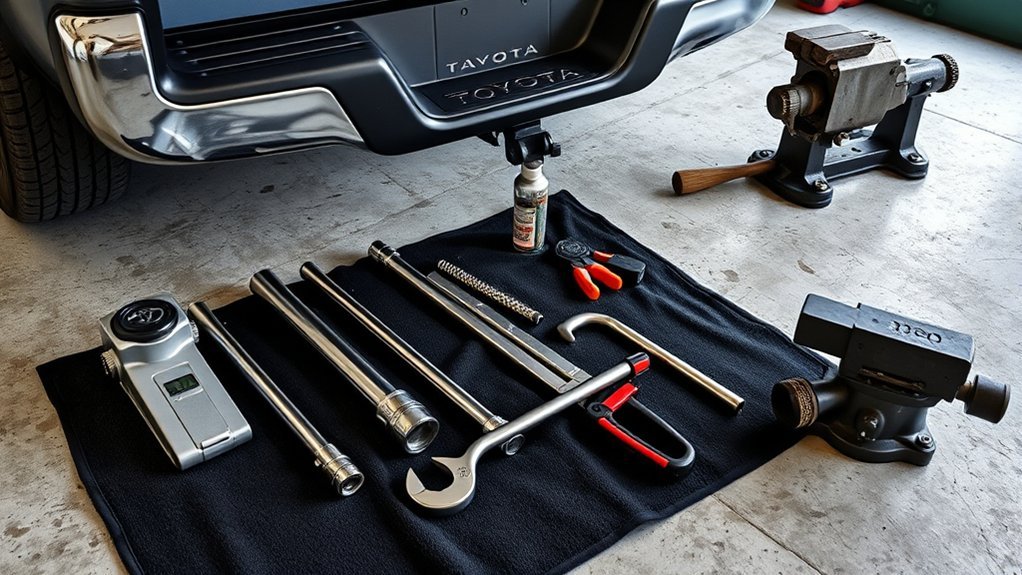
Start with a visual check of the spare winch, cable, lowering screw, and bracket. If the winch binds, apply penetrating oil to the winch mechanism and work the crank back and forth with steady pressure.
If the cable still does not move, stop before you round the tool end or kink the cable. Treat surface rust, remove packed dirt, and replace a badly corroded winch instead of forcing it.
Warning: Do not stand under the spare tire path while you free a stuck winch because the tire can drop when the cable releases.
You can fabricate a replacement lowering rod only if you match the original geometry. Use steel or 6061 aluminum with enough strength, match the shaft diameter, match the end-piece shape, and test the tool under controlled conditions before roadside use.
| Task | Material | Checkpoint |
|---|---|---|
| Free seized winch | Penetrating oil | Smooth rotation |
| Replace mechanism | OEM or matched unit | Cable movement |
| Make rod | Steel/Aluminum | Correct fit & leverage |
A complete replacement kit often makes more sense than one handmade rod if you depend on the truck for long trips, work routes, or off-road travel.
What to Measure Before You Buy Used Parts
Measure the pieces you already have before you buy used parts online or from a salvage yard. A small mismatch can stop the lowering rod from reaching the winch or keep the jack handle from locking into place.
- Measure the lug wrench socket size across the flats.
- Measure the lowering rod length and shaft diameter.
- Compare the end-piece shape that fits the spare winch.
- Check the jack saddle shape against your Tacoma lift point.
- Confirm the storage tray or bag fits your cab layout.
Ask sellers for clear photos of each connection point, not just the full kit. Match part numbers when you can, and avoid tools with twisted ends, heavy rust, cracked welds, or missing screws.
[Products Worth Considering]

This wheel lock key set is designed to help remove and replace compatible Toyota and Lexus wheel locks with confidence. It includes four wheel lock nuts and one key, offering a practical replacement solution for many popular models while supporting secure wheel protection and reliable fitment. Built for durability and corrosion resistance, it is a useful choice when matching OE reference numbers and vehicle compatibility is important.

This wheel lock lug nut set adds an extra layer of theft protection for compatible Toyota and Lexus vehicles by securing wheels with a unique key pattern that resists common removal tools. Built to OEM-standard fitment with corrosion-resistant, triple-chrome finished construction, it is designed for direct replacement and long-lasting performance. The set includes locking nuts and a matching key for easy installation on compatible vehicles with the correct thread and cone seat specifications.
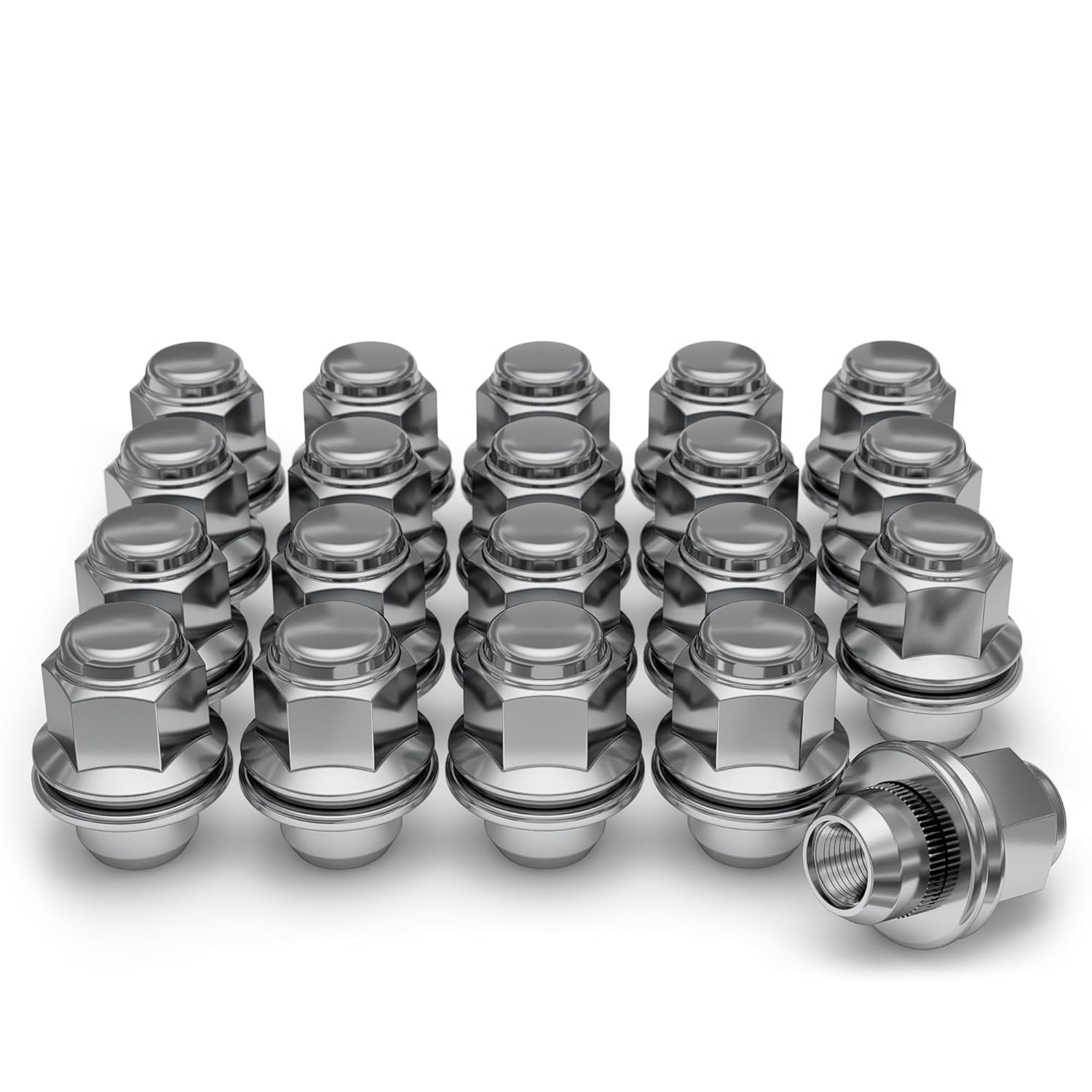
These White Knight mag-style lug nuts are designed for select Toyota, Lexus, Kia, and Genesis vehicles, delivering a secure fit and a clean factory-inspired look. Made from heat-treated cold forged carbon steel with a chrome finish, they offer durable strength, reliable corrosion resistance, and easy installation with a traditional hex-body, flat-seat design. Use them to replace worn or damaged lug nuts while maintaining proper wheel fitment and dependable performance.
Where to Buy or Salvage Tacoma Spare Tool Kits
Start with Toyota parts sources if you want the cleanest match. You can also check salvage yards, u-pull-it yards, eBay, Amazon, and Tacoma specialty sellers for used or aftermarket kits.
Search with exact phrases such as “Tacoma spare tool kit,” “Tacoma jack handle extension,” and your model year. For a 2000 Tacoma, search the year with the phrase because early trucks can use different storage layouts and tool pieces than later trucks.
At a salvage yard, inspect Tacoma, T100, and early 4Runner tools only as possible matches. Confirm the shaft size, screw fit, end-piece shape, and wrench size before you buy. If reliability matters more than price, choose a complete kit instead of mixing loose parts from several vehicles.
Pro tip: Test the kit at home by lowering the spare a few inches, then raise it back into place before your next long drive.
[Products Worth Considering]
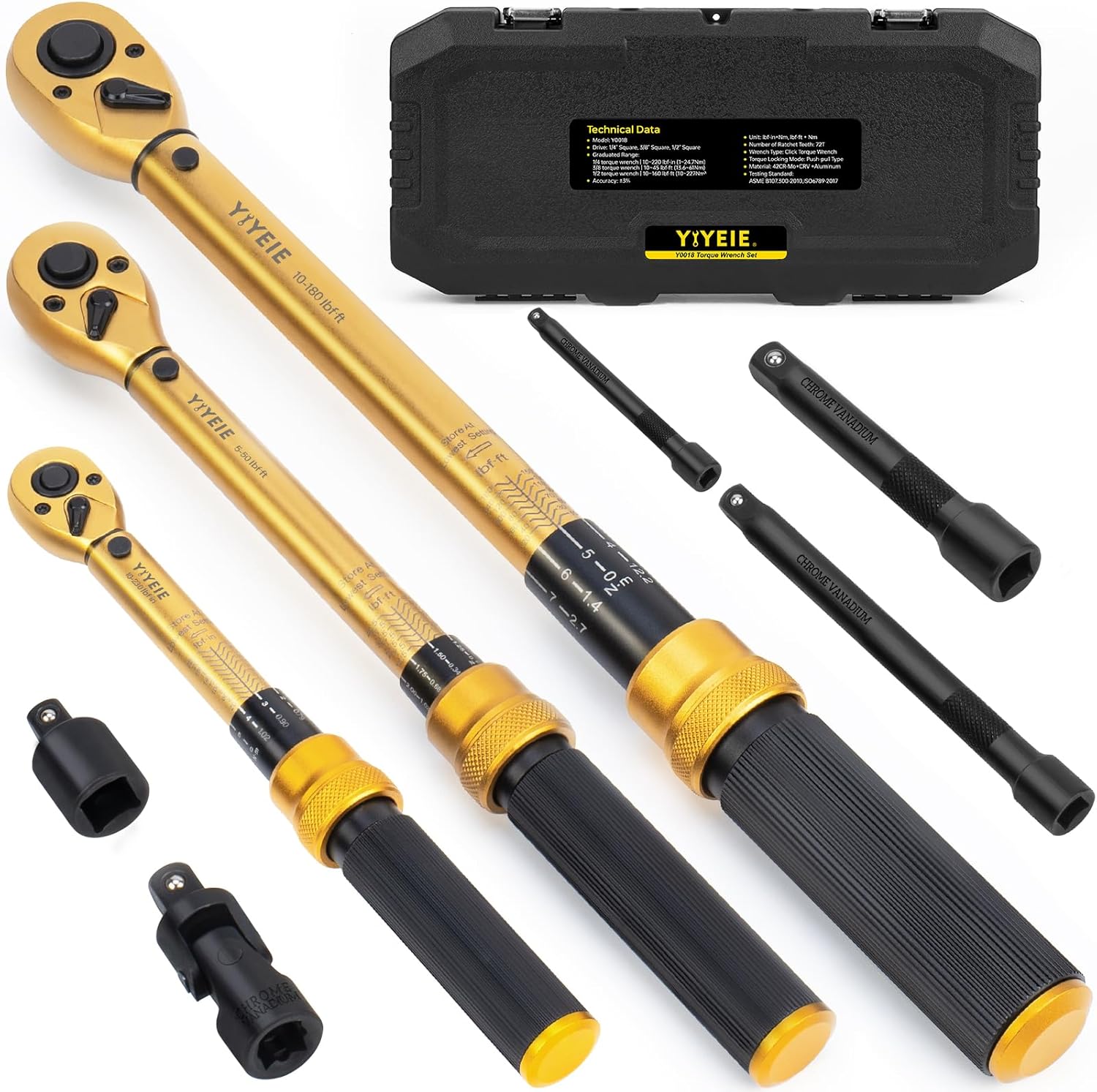
This 8-piece torque wrench set covers multiple drive sizes and torque ranges to handle bicycle, motorcycle, car, and truck maintenance with confidence. Dual-scale readouts, quick-release heads, reversible ratchets, and included adapters make it versatile and easy to use, while ±3% accuracy and a calibration certificate help ensure dependable results. Built with durable materials and stored in a sturdy case, it is designed for organized transport and long-lasting performance.

This professional car tool kit set is designed to help with everyday automotive repairs and maintenance, offering a practical assortment of essential tools in one convenient carrying bag. Built for durability and ease of use, it is a solid choice for drivers, DIYers, and anyone who wants a reliable auto repair kit on hand. The compact bag makes storage and transport simple so the tools stay organized and ready when needed.

This GM TPMS relearn tool helps reset tire sensors, clear warning lights, and match tire positions after rotation quickly at home. Designed for Chevrolet, GMC, Cadillac, and Buick vehicles, it offers one-button operation, fast activation, and broad compatibility with many GM models. It is best suited for OE/OEM sensors and includes paper instructions plus video guidance for easier DIY use.
Frequently Asked Questions
What size are the wheel nuts on a Toyota Tacoma?
Many 1995 to 2019 Tacoma lug nuts use M12x1.5 threads and a 21 mm or 13/16-inch wrench. Verify your wheel type and model year before buying replacement lug nuts because aftermarket wheels can use different seat styles.
What torque should you use on Tacoma lug nuts?
Use the torque value in your owner’s manual for your exact truck. Toyota service guidance lists 83 ft-lb (113 N·m) for 2005 to 2013 Tacoma models, but you should confirm the final number for your year and wheel type.
What size tool box fits a Toyota Tacoma?
A common crossover tool box range is about 36 to 48 inches long, 18 to 24 inches wide, and 12 to 15 inches high. Measure your bed width, rail height, tonneau cover clearance, and cab style before you buy.
What size are the threads on a Toyota Tacoma?
Many 1995 to 2019 Tacoma wheel studs use M12x1.5 threads. If you fabricate or replace jack and spare-tool parts, measure the actual tool connection points instead of assuming the same thread or shaft size across every model year.
Can you use a 4Runner or T100 spare tool on a Tacoma?
Some parts may fit, but you should not assume they will. Test the lowering rod, wrench, jack handle, and storage fit on your Tacoma before you count the kit as road-ready.
Safety Disclaimer: This article is for informational purposes only and does not replace your Toyota owner’s manual or professional vehicle service. Always use the correct lift point, work on firm level ground, and contact roadside help or a qualified technician if the truck feels unstable or the spare system does not work smoothly.
Conclusion
The right Tacoma spare-tool kit matters because one wrong rod, wrench, or jack point can turn a simple tire change into a safety risk. Match the tool geometry to your truck, test the spare winch before a trip, and follow your owner manual’s lift and torque guidance. Store the kit securely after every use. A few minutes of checking now can save you from a long delay on the roadside.
References
- 2005 Tacoma Owner’s Manual — Toyota Motor Sales, 2005.
- Tech Tip T-TT-0124-11: Best Practice for Tire Rotation / Nitrogen Filling — Toyota Motor Sales via NHTSA, 2013.
- 2019 Toyota Tacoma Owner’s Manual — Toyota Motor Sales, 2019.
- Genuine 2019 Toyota Tacoma Lug Nuts — ToyotaPartsDeal parts catalog, 2026.