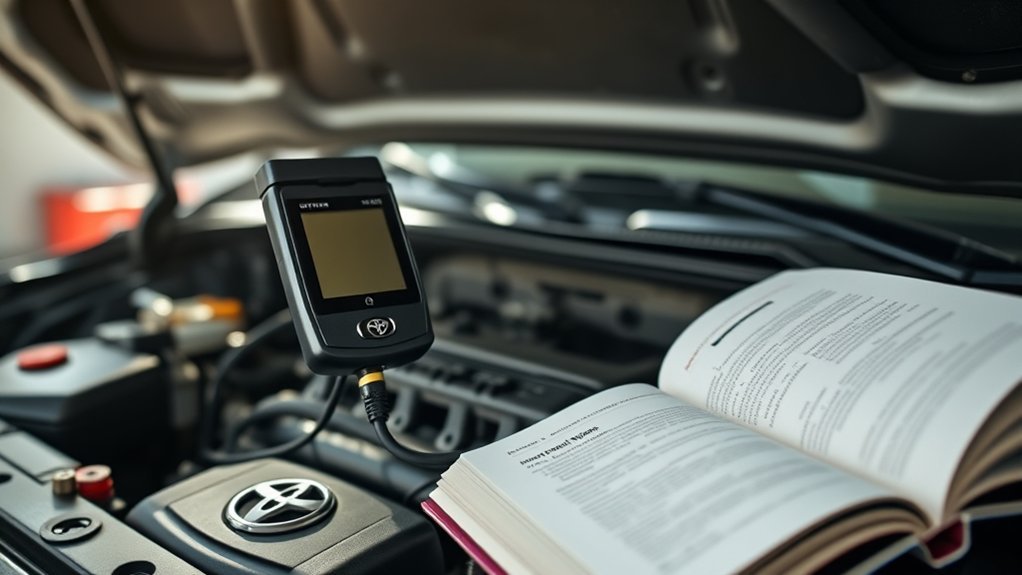
If your Toyota Tacoma has a check engine light, an OBD2 code reader can give you the first clue about what is wrong. The code does not replace diagnosis, but it does point you toward the affected system so you can inspect the right parts, avoid guessing, and decide whether a repair is safe to handle yourself.
Quick Answer
To read Toyota Tacoma OBD2 codes, plug an OBD2 scanner into the 16-pin diagnostic port under the driver-side dashboard, turn the ignition to ON, scan for stored and pending codes, record freeze-frame data, then diagnose the cause before clearing anything.
Key Takeaways
- OBD2 codes identify the system that set a fault, but they do not automatically name the failed part.
- Common Tacoma codes include P0420/P0430 for catalyst efficiency, P0171/P0174 for lean fuel trim, P0441 for EVAP purge flow, and P2004 for intake runner control on equipped engines.
- Always record the code, freeze-frame data, and symptoms before clearing the check engine light.
- For flashing check engine lights, overheating, low oil pressure, or drivability problems, stop driving and get professional help.
At a Glance
| Time Required | 5–15 minutes to read codes; diagnosis time varies |
| Difficulty | Easy for reading codes; moderate for troubleshooting |
| Tools Needed | OBD2 scanner or Bluetooth adapter, phone app if needed, flashlight, basic hand tools for inspection |
| Cost | Often free at parts stores; about $20–$150+ for a DIY scanner |
Understanding OBD2 Codes: What They Are and Why They Matter
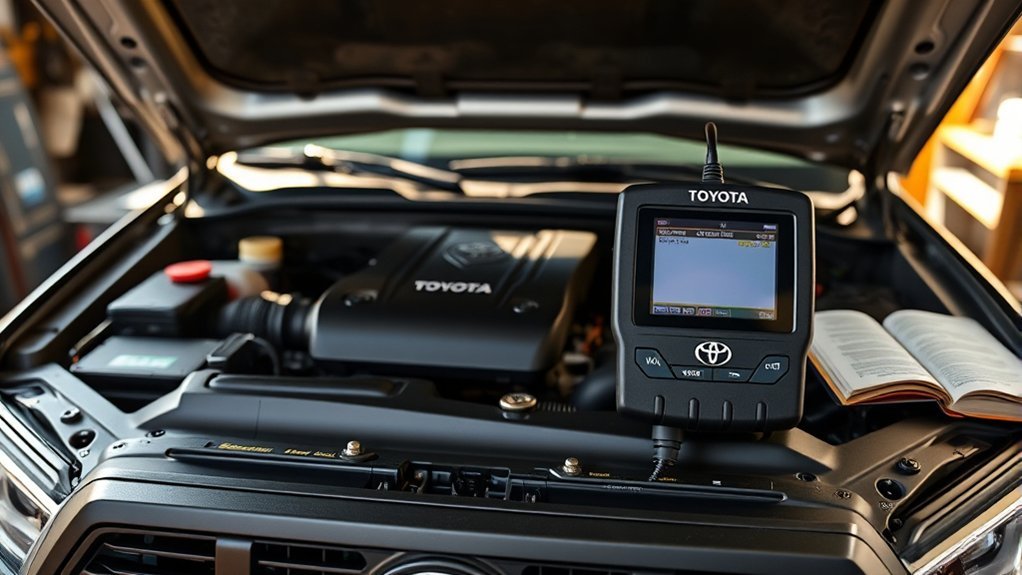
OBD2 stands for On-Board Diagnostics, the vehicle system that monitors emissions-related and engine-control components. U.S. OBD rules require the system to detect certain emission-control malfunctions, store diagnostic trouble codes, and alert the driver through the malfunction indicator lamp, commonly called the check engine light. You can read more about federal OBD requirements in 40 CFR 86.1806-17.
Most Toyota Tacoma check engine codes are powertrain codes, which begin with the letter “P.” The remaining digits narrow the fault area. For example, P0171 points to a lean condition on Bank 1, while P0420 points to catalyst system efficiency below threshold on Bank 1. The standardized DTC system is defined by SAE J2012, although Toyota-specific codes and diagnostic procedures should always be checked against Toyota service information.
The most important rule is simple: a code gives you a direction, not a complete diagnosis. Replacing the part named in the code can waste money if the real cause is a wiring fault, vacuum leak, exhaust leak, dirty sensor, software issue, or failed connector.
Warning: If the check engine light is flashing, the engine is overheating, oil pressure is low, or the truck is shaking badly, stop driving as soon as it is safe. A flashing check engine light can indicate a misfire severe enough to damage the catalytic converter.
How to Read Toyota Fault Codes Like a Pro
Reading Toyota fault codes is straightforward, but reading them well means saving the right information before you erase anything. Your Tacoma’s owner’s manual explains that dashboard warning lights alert the driver to system status or possible malfunctions; Toyota also recommends inspection when warning lights continue to come on or flash. See Toyota’s current Tacoma warning-light guidance at Toyota Owners.
[Products Worth Considering]
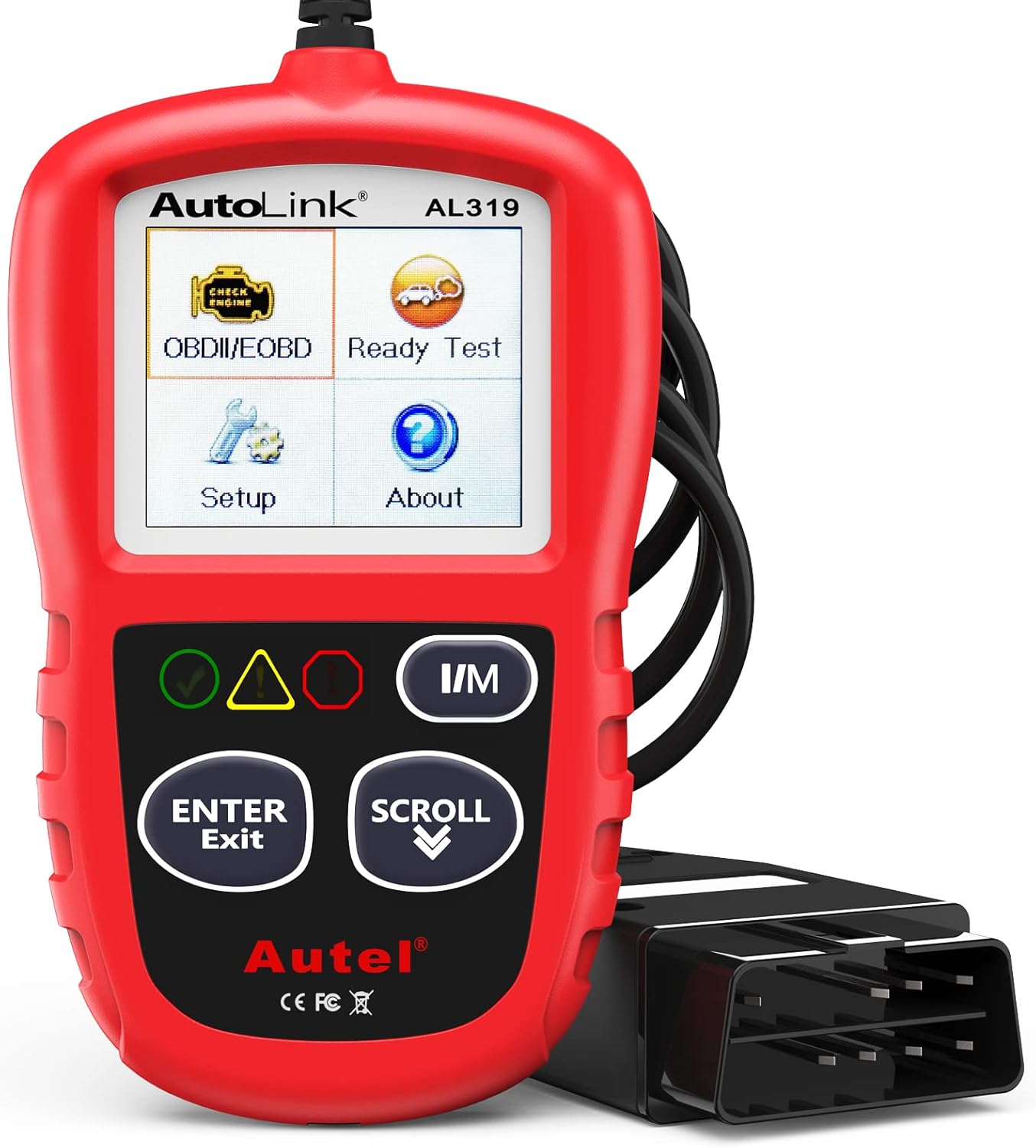
The Autel AL319 is a user-friendly OBD2 scan tool designed to help drivers quickly diagnose check engine light issues and understand vehicle fault codes. It supports reading and clearing DTCs, live data, freeze frame, I/M readiness, and vehicle information, making it a practical choice for DIYers and everyday car owners. With plug-and-play operation, a color display, built-in speaker, and broad vehicle compatibility, it delivers fast, reliable diagnostics without complicated setup.

The ANCEL AD410 helps drivers quickly read and clear engine-related fault codes, view live data, and understand why the check engine light is on before heading to a repair shop. With built-in code definitions, readiness checks, and support for common OBD2 functions, it makes basic diagnostics straightforward for beginners and DIY users. Powered directly from the vehicle and easy to use with no app required, it offers practical value for everyday vehicle troubleshooting.

The ANCEL AD410 PRO combines engine diagnostics and 12V battery testing in one easy-to-use tool, helping you read and clear check engine codes while checking battery health, cranking, and charging performance. It also provides live data, freeze frame details, and I/M readiness checks to help you diagnose issues faster and prepare for emissions testing. With plug-and-play operation, a clear screen, and broad vehicle compatibility, it is a practical solution for home mechanics and everyday drivers.
Tools Needed for Reading
You can use a basic OBD2 scanner, a Bluetooth adapter with a phone app, or a Toyota-capable diagnostic tool. Basic readers are fine for generic P0 codes, but Toyota-enhanced scanners can access more vehicle modules, live data, pending codes, and manufacturer-specific information.
| Tool Type | Features | Best Use |
|---|---|---|
| Basic OBD2 Reader | Reads and clears generic powertrain codes | Quick check engine light scans |
| Bluetooth OBD2 Adapter | Works with mobile apps and can show live data | DIY monitoring and fuel-trim checks |
| Toyota-Capable Scanner | More Toyota-specific data and module access | Deeper diagnosis beyond generic codes |
| Professional Scan Tool | Bidirectional controls, service functions, advanced data | Shop-level troubleshooting |
| Toyota TIS | Factory service information and repair procedures | Confirming exact diagnostic steps |
The OBD2 connector is usually under the driver-side dashboard near the steering column or parking-brake area. Use a flashlight if needed. Do not force the plug; the connector is shaped to fit only one way.
Step-By-Step Reading Process
- Park the Tacoma on a level surface, set the parking brake, and turn off accessories.
- Find the OBD2 port under the driver-side dash.
- Plug in the scanner firmly.
- Turn the ignition to ON without starting the engine, unless your scanner instructs otherwise.
- Select “Read Codes,” “Scan,” or “DTCs” on the tool.
- Write down stored codes, pending codes, permanent codes, and freeze-frame data.
- Check live data such as fuel trims, oxygen sensor activity, MAF readings, coolant temperature, and battery voltage when relevant.
- Diagnose and repair the cause before clearing codes.
- Clear the codes only after repair, then test-drive the truck and recheck for pending or returning codes.
Pro Tip: Take a photo of the scanner screen before clearing anything. Freeze-frame data shows the engine conditions when the fault set, which can be more useful than the code itself.
Decoding Common Toyota Fault Codes You Might Encounter
Tacoma trouble codes often fall into several groups: emissions, fuel mixture, misfire, sensor, EVAP, and intake-control faults. Use this table as a starting point, then confirm the exact procedure for your model year, engine, and trim.
| Code | Common Meaning | Possible Causes | First Checks |
|---|---|---|---|
| P0171 | System too lean, Bank 1 | Vacuum leak, dirty MAF sensor, fuel delivery issue, exhaust leak | Fuel trims, intake hoses, MAF sensor, vacuum lines |
| P0174 | System too lean, Bank 2 | Shared vacuum leak, MAF issue, weak fuel pump, intake leak | Compare Bank 1 and Bank 2 fuel trims |
| P0420 | Catalyst efficiency below threshold, Bank 1 | Aging catalyst, exhaust leak, oxygen sensor issue, rich/lean running | Exhaust leaks, O2 sensor data, misfire history |
| P0430 | Catalyst efficiency below threshold, Bank 2 | Similar to P0420, but on Bank 2 | Bank 2 O2 sensor pattern and exhaust condition |
| P0441 | EVAP purge flow incorrect | Faulty purge valve, blocked line, loose fuel cap, leak or wiring issue | Fuel cap, purge valve, EVAP hoses |
| P2004 | Intake manifold runner control stuck open, Bank 1 | Runner actuator, vacuum control, wiring, carbon or mechanical sticking | Actuator movement, wiring, vacuum supply |
Some codes may appear together. For example, a lean condition can contribute to misfires, and repeated misfires can damage a catalytic converter. Diagnose the root cause first instead of clearing codes and hoping they stay gone.
[Products Worth Considering]

Masoll’s TPMS sensor set includes four advanced sensors and a relearn tool to help GM vehicle owners replace factory tire pressure sensors at home. Designed for broad compatibility with GM vehicles after 2006, it supports dual-frequency operation for easier fitment across Chevy, GMC, Buick, Cadillac, Pontiac, and select trucks. With low power use, high accuracy, and DIY installation, it offers a convenient way to clear TPMS warnings and restore proper tire pressure monitoring.

This automotive circuit tester checks low-voltage DC systems from 3-65V, making it useful for diagnosing headlights, taillights, fuses, sockets, and other vehicle wiring issues. The digital backlit display provides clear voltage readings with fine accuracy, while the bidirectional polarity indicator helps you test from either ground or positive. Built with a durable probe, insulated tip, and extra-long spring wire, it is designed for dependable everyday use in automotive and household electrical work.
P0420 and P0430: Understanding Catalyst System Issues
P0420 and P0430 usually mean the engine computer sees the catalytic converter working below the expected efficiency threshold. P0420 refers to Bank 1, and P0430 refers to Bank 2. On V-style engines, Bank 1 is the side that includes cylinder No. 1; Bank 2 is the opposite side.
These codes are often blamed on the catalytic converter, but the converter is not the only possible cause. Exhaust leaks, aging oxygen sensors, wiring faults, engine misfires, oil consumption, coolant contamination, and long-term rich or lean operation can all affect catalyst readings.
How to Check P0420 and P0430 Before Replacing a Catalytic Converter
- Inspect the exhaust system for leaks, cracks, missing hardware, or damage near the upstream and downstream oxygen sensors.
- Check for misfire codes, fuel-trim codes, or oxygen sensor codes. Fix those first.
- Use live data to compare upstream and downstream oxygen sensor behavior.
- Confirm the engine reaches normal operating temperature.
- Check for oil or coolant consumption that could shorten catalyst life.
- Follow Toyota service information before condemning the converter.
Note: Clearing P0420 or P0430 right before an emissions test can reset readiness monitors. The truck may need a drive cycle before the monitors show ready again.
P2004 OBD2 Code: Symptoms and Solutions for Intake Manifold Runner Control
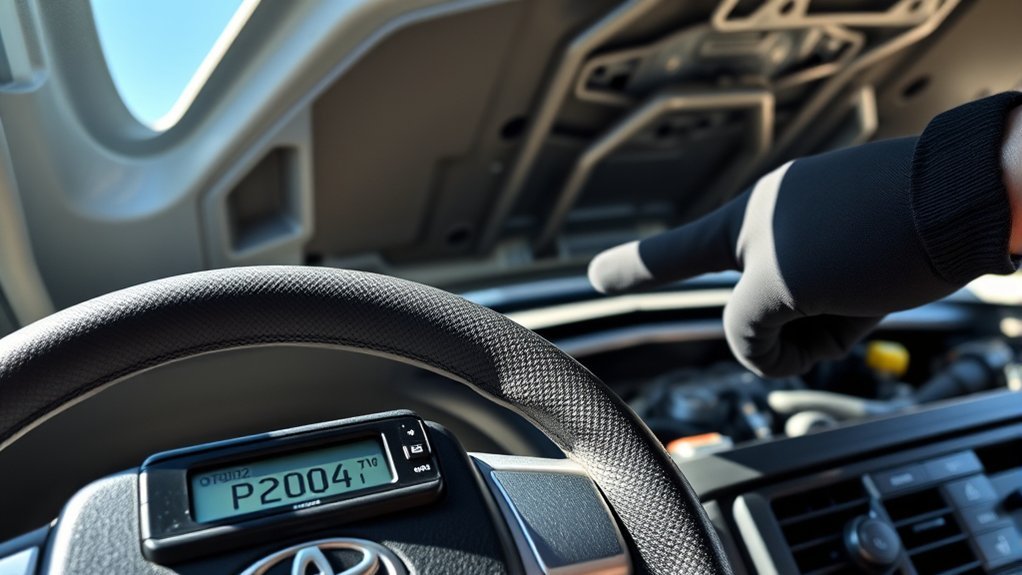
The P2004 code points to an intake manifold runner control issue on Bank 1. This system changes airflow inside the intake manifold to improve drivability and efficiency at different engine speeds. When the runner stays open when it should move, the engine computer may set P2004.
Common Symptoms
- Check engine light
- Rough idle
- Hesitation during acceleration
- Reduced low-end torque
- Poor fuel economy
- Occasional stalling or surging
Troubleshooting Steps
- Inspect the intake runner linkage or actuator for binding, damage, or disconnected parts.
- Check vacuum hoses if your engine uses vacuum control for the runner system.
- Inspect the electrical connector and wiring for corrosion, loose pins, or rub-through damage.
- Command the actuator with a capable scan tool if available.
- Check for carbon buildup or mechanical sticking inside the intake system.
- Clear the code only after repair and confirm that the runner operates normally.
If you are not sure whether your Tacoma engine uses an intake runner control system, look up the exact engine and model year in Toyota Technical Information System or a trusted repair database.
How to Fix Fuel Trim Problems: Addressing P0171 and P0174
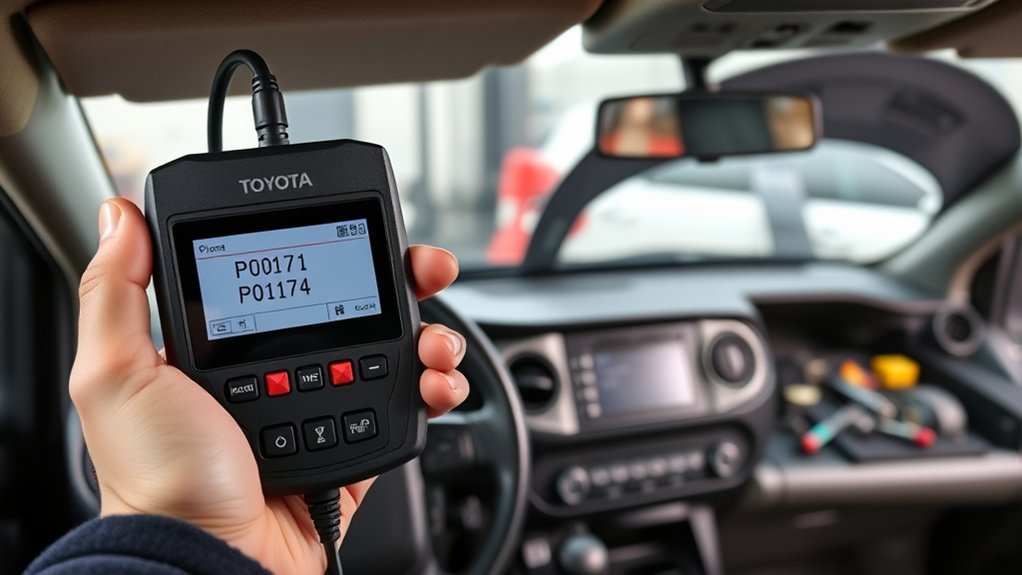
P0171 and P0174 mean the engine computer has added fuel because it sees the mixture running too lean. P0171 applies to Bank 1, while P0174 applies to Bank 2. If both codes appear together, look for a shared cause such as unmetered air entering the engine, a dirty MAF sensor, low fuel pressure, or an exhaust leak ahead of the oxygen sensors.
Common Causes of Lean Codes
- Cracked or loose intake boot
- Vacuum hose leak
- Dirty or faulty mass airflow sensor
- Weak fuel pump or restricted fuel filter
- Clogged or underperforming fuel injectors
- Exhaust leak before the oxygen sensor
- Incorrect aftermarket intake parts
- PCV system leak
Fuel Trim Diagnostic Shortcut
Use live data if your scanner supports it. High positive fuel trims at idle that improve at higher rpm often suggest a vacuum leak. High positive trims at idle and at higher rpm can point toward a MAF sensor problem, restricted fuel delivery, or unmetered air that affects the engine under all conditions.
- Inspect the air intake tube from the air box to the throttle body.
- Check vacuum hoses and PCV hoses for cracks or loose connections.
- Clean the MAF sensor only with MAF-safe cleaner.
- Check fuel pressure if the lean condition remains.
- Inspect for exhaust leaks near the manifolds and front oxygen sensors.
- Repair the cause, clear the code, then test-drive and recheck fuel trims.
Warning: Do not spray flammable cleaners around a hot engine while searching for vacuum leaks. Use safe diagnostic methods such as visual inspection, smoke testing, or professional leak-detection equipment.
What to Do About P0441: Fixing Evaporative Emission System Issues
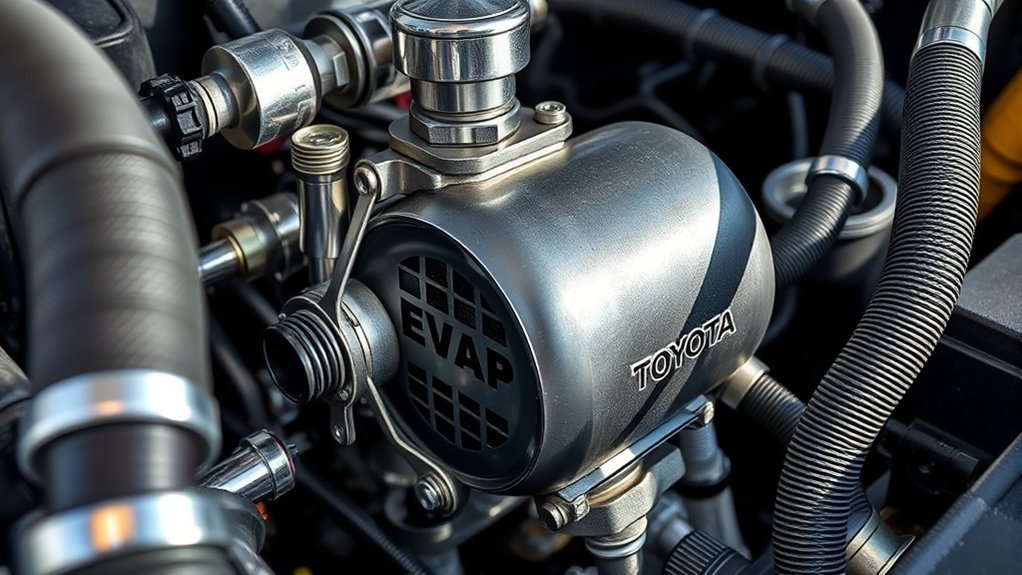
P0441 means the evaporative emission system detected incorrect purge flow. The EVAP system captures fuel vapors and routes them back into the engine to be burned instead of venting them to the atmosphere. A purge-flow problem can come from a valve issue, blocked hose, leak, fuel cap problem, wiring fault, or control issue.
| Step | Action |
|---|---|
| 1. Check the Fuel Cap | Make sure it is tight, clean, and not cracked. |
| 2. Inspect Hoses | Look for cracked, disconnected, pinched, or fuel-soaked EVAP lines. |
| 3. Test the Purge Valve | A stuck-open or stuck-closed valve can trigger incorrect purge flow. |
| 4. Check Wiring | Inspect the purge valve connector and wiring for damage or corrosion. |
| 5. Confirm the Repair | Clear the code after repair, then allow readiness monitors to run. |
EVAP codes may not return immediately after clearing because the system runs its self-tests only under certain fuel-level, temperature, and driving conditions. Be patient and recheck for pending codes after a few normal drives.
Tips for Effectively Using Your Launch Code Reader
A Launch code reader can be a helpful tool for Tacoma diagnostics when used correctly. Make sure it is fully seated in the OBD2 port, the battery is healthy, and the tool software is up to date before scanning.
A code reader is best used as a starting point: read the code, save the data, diagnose the system, then clear the light only after the fault is fixed.
- Use auto-detect when available: This helps the scanner identify the Toyota model, year, and supported modules.
- Read pending codes: Pending codes can show faults that have not yet matured into a stored check engine code.
- Save freeze-frame data: Engine load, rpm, coolant temperature, speed, and fuel trim can reveal when the fault happened.
- Check live data: Fuel trims, oxygen sensor activity, MAF readings, and coolant temperature are often more useful than the code alone.
- Update the scanner: Wi-Fi or computer updates may improve coverage and code definitions.
- Do not clear codes too early: Clearing codes resets useful information and may reset emissions readiness monitors.
[Products Worth Considering]

📢⚠️【Please Read Carefully before Purchasing】- ▶ This is just a 22Pin to 16Pin converter cable ONLY, not a diagnostic scanner. ▶Please comfirm that your cars support the OBD2 protocol, and your scanner being compatible with your cars with the functions you need – none of which is related to our cable. ▶ This 22pin OBD port does not provide a power supply. Any question, pls conta.ct us via 📩Autelchoice @ outlook . com📩.

✅ 𝟐𝟎𝟐𝟔 𝐄𝐧𝐡𝐚𝐧𝐜𝐞𝐝 𝐎𝐁𝐃𝟐 + 𝐂𝐀𝐍 𝐃𝐢𝐚𝐠𝐧𝐨𝐬𝐭𝐢𝐜 𝐒𝐜𝐚𝐧 𝐓𝐨𝐨𝐥 】: The V519 is a powerful 2026-upgraded scanner supporting both OBD2 and CAN protocols with full access to all 10 OBDII modes. Go beyond basic code reading with advanced Mode 6 (component-level monitoring) and Mode 8 (active tests) — allowing you to uncover hidden issues like misfires, EVAP leaks, or O2 sensor failures. This complete diagnostics suite gives you the same capabilities trusted by professionals to accurately analyze engine health in 1996 and newer vehicles.

【AI-Powered Vehicle Diagnosis】Experience smarter car diagnostics with the V800 AI OBD2 Scanner. Featuring AI fault code analysis and intelligent Q&A, it helps explain diagnostic results, analyze possible causes, and provide repair suggestions. With a built-in database of 200,000+ fault codes, V800 makes complex vehicle problems easier to understand for both DIY users and professionals.
When to DIY and When to Call a Pro
DIY code reading is smart for simple inspection and maintenance, but some faults need professional tools. You can usually handle basic checks such as tightening the fuel cap, inspecting hoses, cleaning a MAF sensor with the correct cleaner, or checking for obvious wiring damage.
Call a professional technician if the truck has a flashing check engine light, repeated misfires, fuel-pressure concerns, catalytic converter codes that keep returning, advanced EVAP leaks, or codes that require bidirectional scanner tests. Factory repair information from Toyota TIS can also help confirm the correct procedure before parts are replaced.
Frequently Asked Questions
What is the best code reader for a Toyota Tacoma?
The best code reader depends on how deep you want to go. A basic OBD2 reader is fine for reading and clearing generic P-codes. A Toyota-capable scanner is better if you want enhanced Toyota data, live data, pending codes, freeze-frame data, and access to more modules.
How do you read a Toyota Tacoma error code?
Plug an OBD2 scanner into the diagnostic port under the driver-side dashboard, turn the ignition to ON, choose the scan or read-code function, and write down stored, pending, and permanent codes. Save freeze-frame data before clearing anything.
Can I drive my Tacoma with the check engine light on?
You may be able to drive briefly if the light is steady and the truck runs normally, but you should scan it soon. Do not keep driving if the light is flashing, the engine runs rough, temperatures rise, oil pressure is low, or power is severely reduced.
Does clearing a code fix the problem?
No. Clearing a code only turns off the warning light and erases stored information. If the fault is still present, the code will return after the system runs its self-test again.
Why did my Tacoma fail emissions after I cleared the code?
Clearing codes can reset OBD readiness monitors. Until the required monitors run and show ready, the vehicle may fail or be rejected during an OBD-based emissions inspection. Normal driving under the right conditions is usually needed before monitors reset.
Conclusion
Understanding Toyota Tacoma OBD2 codes helps you move from guessing to focused troubleshooting. Start by reading the code correctly, saving freeze-frame data, and checking the basics before replacing parts. Codes such as P0420, P0430, P0171, P0174, P0441, and P2004 all point to common problem areas, but the real fix comes from confirming the cause. Use your code reader as a diagnostic guide, follow safe repair practices, and rely on Toyota service information or a qualified technician when the fault requires deeper testing.
Sources
- Electronic Code of Federal Regulations: 40 CFR 86.1806-17 — federal OBD requirements for detecting malfunctions, storing codes, and alerting drivers.
- U.S. EPA: On-Board Diagnostic Regulations and Requirements — overview of how OBD monitors emission-related components and illuminates the check engine light.
- Toyota Owners: 2026 Tacoma Warning Lights and Indicators — Tacoma warning-light guidance and malfunction indicator context.
- Toyota Technical Information System — factory Toyota service information for model-specific diagnostics and repair procedures.
- SAE J2012 Diagnostic Trouble Code Definitions — standardized diagnostic trouble code definitions and DTC structure.