Last updated: July 31, 2026
Your Toyota Tacoma’s evaporative emission control (EVAP) system captures gasoline vapors, stores them in a charcoal canister, and sends them to the engine when the powertrain control module commands purge. A loose fuel cap, split vapor hose, stuck purge valve, failed switching valve, damaged canister, or electrical fault can turn on the check engine light even when the truck drives normally. Start by saving the diagnostic trouble codes and freeze-frame data, then inspect the cap and visible lines. Do not replace a valve or canister until a model-year-specific test confirms the fault.
Quick Answer
The Toyota Tacoma EVAP system keeps fuel vapor from escaping into the air. The charcoal canister stores vapor, the purge valve meters it into the intake, and the vent or canister-pump side helps the system breathe and run leak checks. The exact valves, sensor arrangement, and test procedure vary by model year, so use the trouble code as a starting point and verify the diagnosis with the correct Toyota service information.
Key Takeaways
- A code identifies the failed test or circuit, not automatically the part to replace.
- Leak codes, purge-flow codes, and electrical circuit codes require different checks.
- The fuel cap is a sensible first inspection for leak codes, but it will not explain every EVAP code.
- Tacoma EVAP hardware and valve names change across model years and engines.
- A bidirectional scan test, low-pressure leak test, or smoke test can confirm faults that a visual inspection misses.
How Does the Toyota Tacoma EVAP System Work?
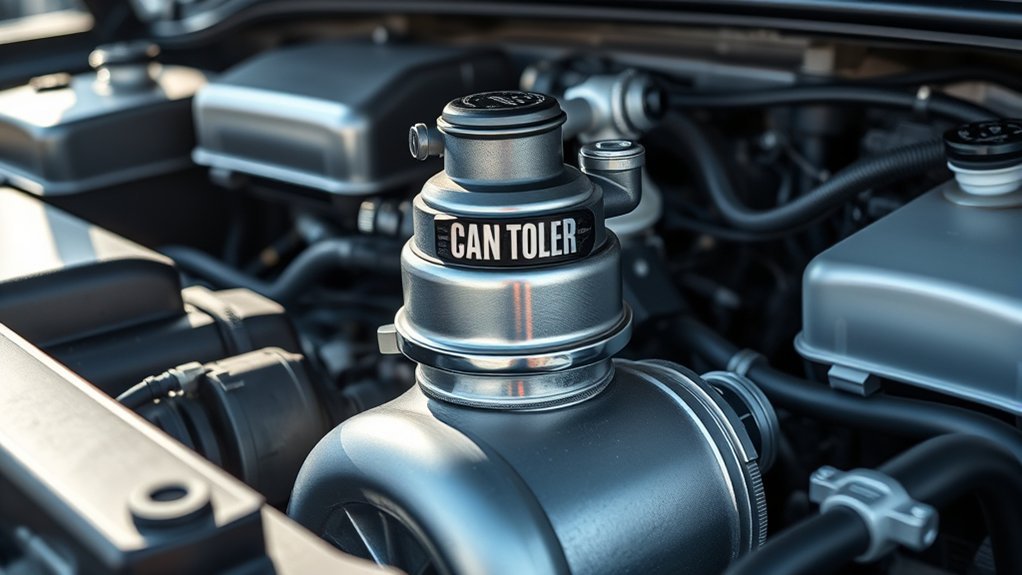
The EVAP system routes fuel vapors from the fuel tank to an activated-charcoal canister instead of releasing them into the atmosphere. Heat, fuel movement, and refueling create vapor inside the tank. Vapor lines carry it to the canister, where the charcoal holds it until the engine can use it.
When operating conditions are suitable, the engine control module commands the purge valve, also called a purge vacuum switching valve on some Toyotas. Intake vacuum then draws stored vapor into the engine to burn. The vent side admits filtered air during purge and seals the system when a leak check requires it.
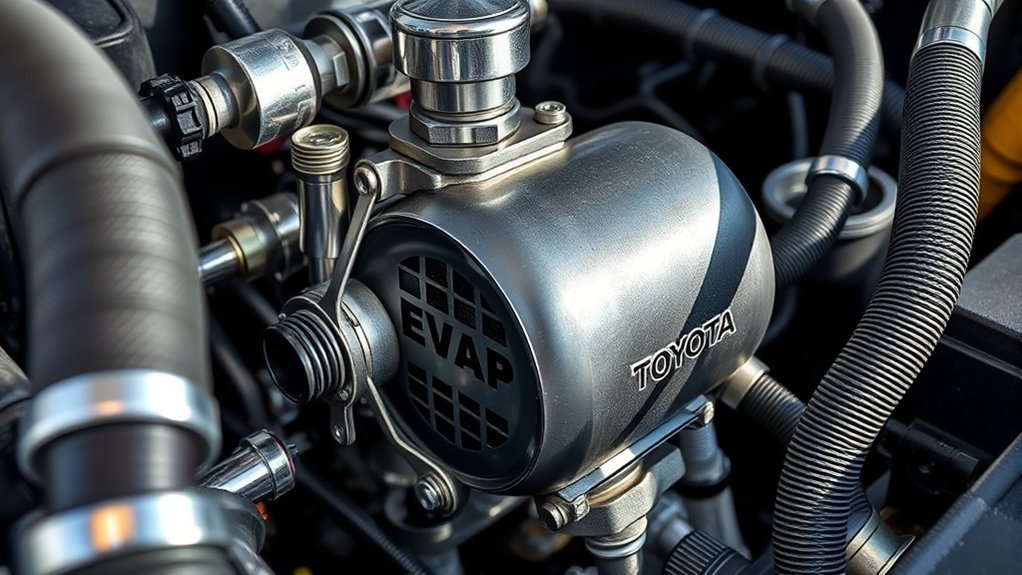
Depending on the model year, the Tacoma may use separate vacuum switching valves and a vapor-pressure sensor or a canister pump module with a leak-detection pump and switching valve. Toyota service information for an older Tacoma and later service procedures show different hardware and test sequences, so a diagram for one generation should not be used as a universal Tacoma diagram. Use Toyota Technical Information System or the correct repair manual for the truck’s VIN, year, engine, and emissions specification.
What Are the Main Toyota Tacoma EVAP Parts?
These are the main functions you may see in a Tacoma EVAP diagram. The component name and whether it is separate or integrated can change by model year.
| Component | What It Does | Possible Fault Clues |
|---|---|---|
| Fuel Cap and Filler Seal | Seals the tank’s refueling opening | Leak code after refueling, damaged or dirty seal |
| Charcoal Canister | Stores fuel vapor until purge occurs | Cracks, liquid-fuel saturation, restricted venting, fuel odor |
| Purge Valve or Purge VSV | Meters vapor from the canister into the intake | Incorrect purge flow, rough or extended start after refueling |
| Vent or Switching Valve | Controls fresh-air flow and sealing during system tests | Vent-control or switching-valve circuit code, hard refueling |
| Vapor-Pressure Sensor or Canister Pump Module | Measures pressure changes or creates vacuum for leak detection | Leak-detection, pressure-sensor, or pump-control code |
| Vapor Hoses, Tank Valves, Wiring, and Connectors | Carry vapor and connect the control components | Cracks, loose fittings, corrosion, open or short circuit |
Do not order a “Tacoma EVAP valve” by description alone. Match the part to the VIN and confirm whether the valve is sold separately or as part of the canister or pump assembly.
[Products Worth Considering]

The CRAFTSMAN CMXCESM258 is a versatile 4-in-1 battery charger and maintainer designed to charge, maintain, test, and restore a wide range of vehicle batteries. Its microprocessor-controlled operation, auto voltage detection, reverse hook-up protection, and multi-stage charging help support reliable starts and extend battery life for cars, motorcycles, ATVs, trucks, SUVs, and boats.

The ANCEL AD310 is a compact, easy-to-use OBD II code reader designed to help drivers quickly identify check engine light causes, read and clear fault codes, and review key vehicle data. It supports major OBD2 protocols and works with many 1996-and-newer cars, light trucks, SUVs, and other OBD2 vehicles. Built for fast diagnostics at home or on the go, it runs directly from the vehicle and provides clear results on a large screen.
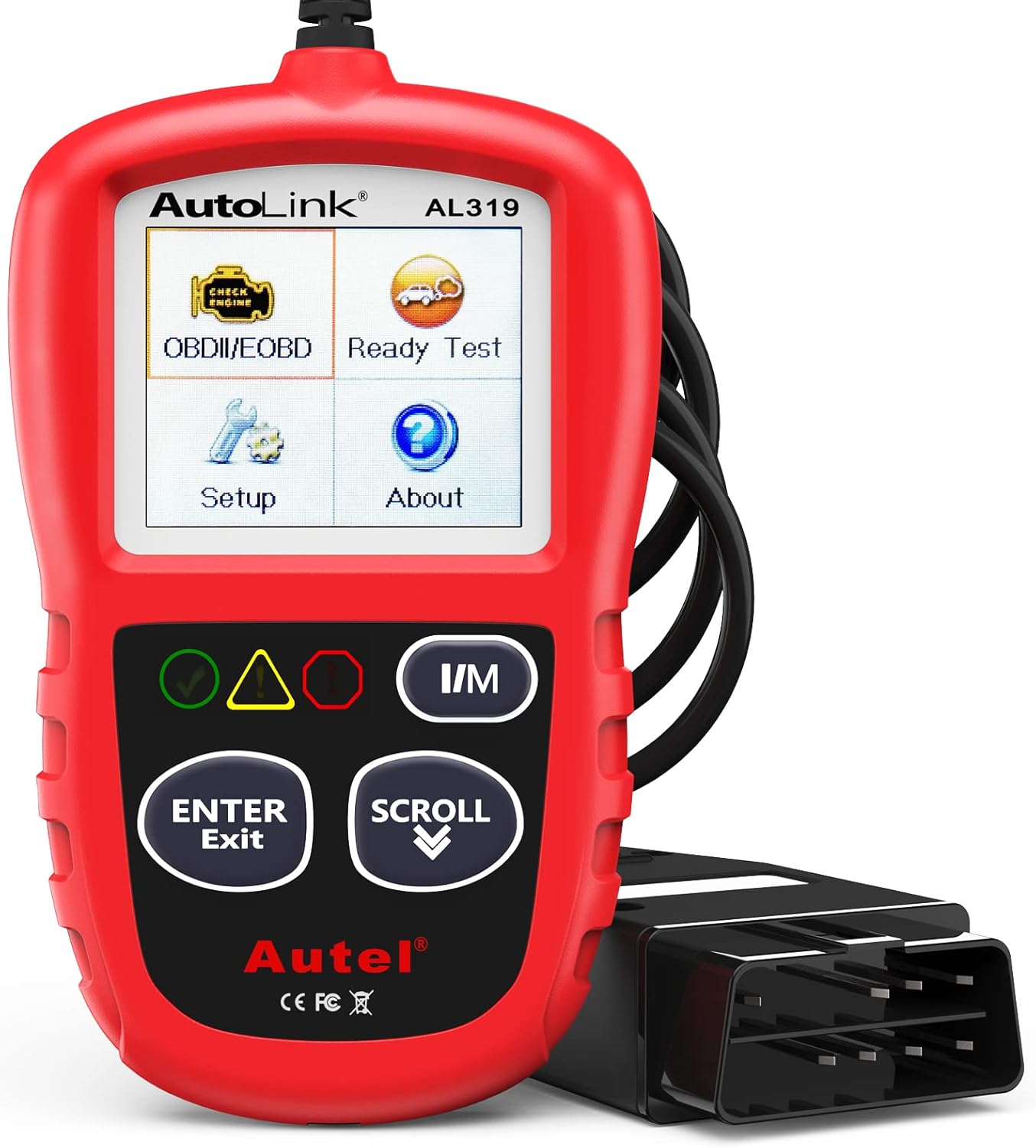
The Autel AL319 is a user-friendly OBD2 scan tool designed to help drivers quickly diagnose check engine light issues and understand vehicle fault codes. It supports reading and clearing DTCs, live data, freeze frame, I/M readiness, and vehicle information, making it a practical choice for DIYers and everyday car owners. With plug-and-play operation, a color display, built-in speaker, and broad vehicle compatibility, it delivers fast, reliable diagnostics without complicated setup.
Which Toyota Tacoma EVAP Codes Are Common?
The code tells you which monitor test failed. It does not prove that the fuel cap, purge valve, or charcoal canister is bad. Save all stored, pending, and permanent codes before clearing them because code combinations can narrow the test path.
| Code or Code Family | General Meaning | First Checks |
|---|---|---|
| P0440 | General EVAP system malfunction | Look for companion codes and inspect the cap, hoses, and connectors |
| P0441 | Incorrect purge flow | Test purge-valve sealing and operation; check hose routing and blockage |
| P0442 or P0456 | Small or very small EVAP leak | Inspect and test the cap, then perform a controlled leak or smoke test |
| P0446 | Vent-control circuit or system fault | Check model-year wiring, switching valves, pressure response, and vent path |
| P0455 | Large or gross EVAP leak | Check for a loose cap, disconnected hose, damaged canister, or large sealing fault |
| P2401, P2402, or P2420 | Leak-detection pump or switching-valve control fault | Inspect the rear connector and wiring, then follow the model-year active-test procedure |
Code definitions and supported tests can vary with the truck’s calibration. Confirm the exact definition shown by the scan tool against Toyota service information before testing or buying parts.
[Products Worth Considering]

Masoll’s TPMS sensor set includes four advanced sensors and a relearn tool to help GM vehicle owners replace factory tire pressure sensors at home. Designed for broad compatibility with GM vehicles after 2006, it supports dual-frequency operation for easier fitment across Chevy, GMC, Buick, Cadillac, Pontiac, and select trucks. With low power use, high accuracy, and DIY installation, it offers a convenient way to clear TPMS warnings and restore proper tire pressure monitoring.

This engine air filter is designed to fit select Lexus and Toyota hybrid models, helping maintain clean airflow to the engine for reliable performance. Built with high-fiber filter paper and a fine filtration layer, it offers strong dust capture while minimizing airflow resistance. It is a direct replacement for multiple OEM part numbers and is backed by warranty support.
What Usually Causes a Tacoma EVAP Leak Code?
Start with the fuel cap when the code indicates a system leak. Remove the cap, inspect the sealing surface for dirt, damage, or a flattened seal, and reinstall it fully. Toyota service procedures for some Tacomas specify tightening the cap until several clicks are heard and testing the cap with an EVAP pressure tester if available.
Next, inspect accessible vapor hoses, quick-connect fittings, the canister housing, and the wiring near underbody EVAP components. Look for split plastic, impact damage, corrosion, loose connectors, or a hose that was disturbed during fuel-tank, bed, exhaust, spare-tire, or underbody work.
A purge valve that does not seal can create an incorrect-flow code and may contribute to a hard or rough start after refueling. A blocked vent path or failed switching valve can make the fuel nozzle shut off repeatedly. These symptoms guide testing, but they do not confirm a failed part by themselves.
Which Tools Help Diagnose a Tacoma EVAP Fault?
An OBD-II scanner should read stored, pending, and permanent codes, freeze-frame data, monitor status, and live EVAP data when the vehicle supports it. A bidirectional scan tool can command the purge valve, switching valve, or leak-detection pump on supported model years.
A hand vacuum pump can check whether a serviceable valve holds vacuum when closed and passes flow when commanded. A multimeter can check power, ground, resistance, and circuit continuity only when you have the correct connector pinout and specification.
A professional smoke machine or approved low-pressure EVAP tester is usually the fastest way to locate a leak that cannot be seen. Do not feed unrestricted shop air into the fuel system, and do not use a homemade smoke source around gasoline vapor.
Warning: Fuel vapor can ignite. Work outdoors or in a properly ventilated area, keep sparks and flames away, and stop if you see liquid fuel or smell a strong raw-fuel odor.
How Do You Diagnose a Toyota Tacoma EVAP Problem?
- Identify the truck. Record the model year, engine, drivetrain, and emissions label. Use the VIN to find the correct EVAP diagram and test procedure.
- Save the evidence. Read stored, pending, and permanent codes. Record freeze-frame data and monitor status before clearing anything.
- Classify the code. Separate leak codes from purge-flow, vent-control, pressure-sensor, pump, and electrical circuit codes.
- Inspect simple sealing faults. Check the fuel cap, filler sealing surface, accessible hoses, quick-connects, canister housing, and underbody wiring.
- Run the correct functional test. Use a bidirectional scan tool, vacuum pump, and multimeter only with the correct service specifications.
- Confirm leaks safely. Use an approved EVAP pressure or smoke test. Isolate sections of the system when the repair procedure instructs you to do so.
- Repair the confirmed fault. Replace or repair the cap, hose, connector, valve, sensor, pump module, or canister only after the test identifies it.
- Verify the repair. Clear codes after repair, run the model-year EVAP system check or drive cycle, and confirm that no pending code returns.
Toyota service procedures for some Tacomas use Techstream active tests to switch the purge VSV and canister pump module while monitoring pressure. That is more reliable than judging a valve only by sound. For inspection preparation, follow the model-specific process in this Toyota Tacoma OBD2 readiness guide, but repair active EVAP faults before expecting the monitor to complete.
How Can You Reduce Tacoma EVAP Problems?
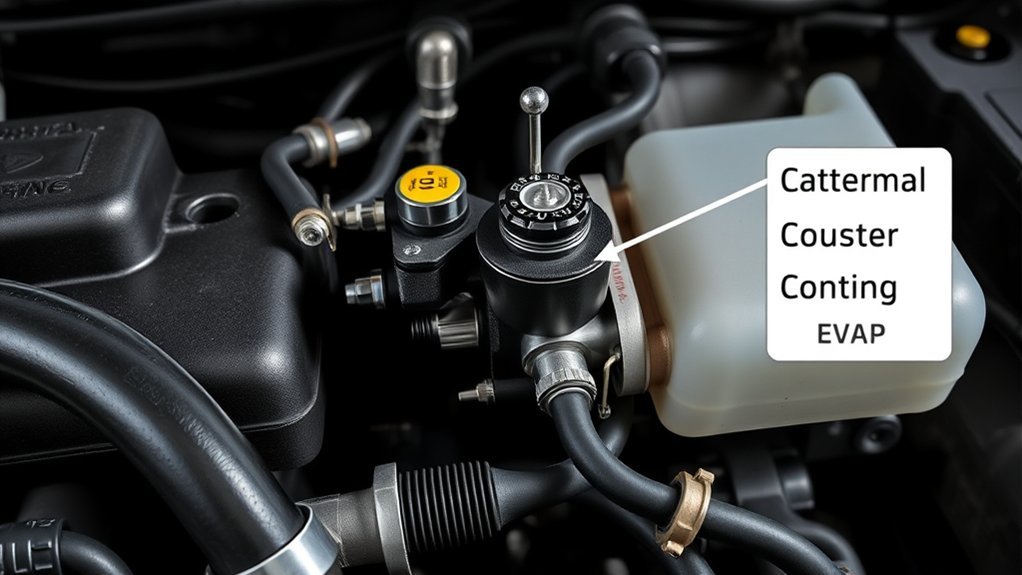
There is no universal Toyota maintenance interval that requires replacing EVAP parts on every Tacoma. Instead, protect the system during refueling, inspect it when symptoms or codes appear, and check exposed components after underbody work or off-road impact.
Use These Practical Inspection Triggers
| When to Check | What to Inspect |
|---|---|
| After an EVAP code appears | Fuel cap, code family, freeze-frame data, visible hoses, connectors, and canister area |
| After fuel-tank, bed, exhaust, spare-tire, or rear-underbody work | Pinched hoses, disconnected fittings, damaged wiring, and disturbed mounts |
| After off-road impact or road-debris contact | Canister housing, brackets, lines, and connector damage |
| When the pump nozzle repeatedly clicks off | Vent path, canister condition, and refueling valves using the correct repair procedure |
| When raw-fuel odor is present | Liquid leaks and vapor leaks before continued driving |
During refueling, stop when the nozzle automatically clicks off and do not top off the tank. Repeated overfilling can send liquid fuel where the vapor-control system is designed to handle vapor.
Replace Only the Part the Test Confirms
A replacement fuel cap must fit the truck’s model year and seal correctly. A purge valve must pass the specified sealing and command test. A canister or pump-module replacement should follow a confirmed leak, failed pressure response, failed active test, or verified internal valve fault.
Inspect wiring before replacing an expensive rear canister assembly when the code describes a circuit problem. Corrosion, impact damage, an open wire, or a loose connector can imitate a failed module.
Pro tip: Keep the original code report and test results. If the repair does not work, those records prevent the next diagnostic step from starting over.
How Does an EVAP Fault Affect Emissions and Performance?
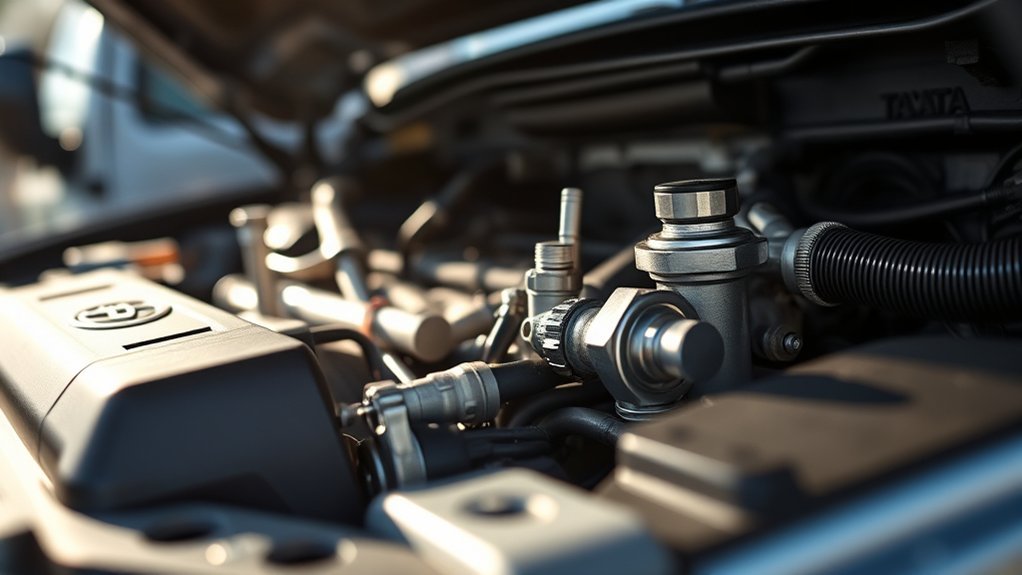
The Tacoma’s EVAP system limits hydrocarbon emissions by keeping gasoline vapor inside a sealed control system. The canister stores vapor and the purge circuit sends it to the engine under controlled conditions.
Many EVAP faults do not cause an obvious loss of power. They can still illuminate the malfunction indicator lamp, store pending or permanent codes, and prevent the EVAP monitor from showing ready for an emissions inspection. A stuck-open purge valve can also affect starting after refueling, while a restricted vent path can make refueling difficult.
OBD-II EVAP systems can be calibrated to detect very small leaks. U.S. EPA material describes a phased requirement for detecting a leak equivalent to a hole about 0.020 inch in diameter on later OBD-II vehicles, and Toyota service data for some Tacomas uses a 0.02-inch leak criterion. That is why a leak too small to see can still set a code. See the EPA OBD evaporative-emissions technical guidance.
What Does Advanced Tacoma EVAP Diagnosis Include?
Advanced diagnosis compares commanded valve operation with the pressure change the control module expects. The technician may use active tests to close or open a valve, run a leak-detection pump, monitor tank pressure, and isolate the tank, canister, purge line, or vent side.
For a leak code, a controlled pressure or smoke test can reveal a split hose, damaged canister, cap leak, or tank-side fault. For a purge-flow code, the test should confirm whether the purge valve seals when off and flows when commanded. For a circuit code, the test must check power, ground, wiring integrity, connector condition, and the specified component resistance or current.
Do not replace the canister, purge valve, or switching valve from a code description alone. The most useful evidence is a repeatable failed test: smoke escaping at a specific point, vacuum that will not hold, no pressure response during an active test, or an electrical reading outside the model-year specification.
Can You Drive a Tacoma With an EVAP Code?
You can often drive a Tacoma with an EVAP code for a short period when the truck runs normally and there is no strong fuel odor, visible liquid fuel, or drivability problem. Diagnosis should still be scheduled because the warning light can mask a new fault and the EVAP monitor may not pass inspection.
Stop the engine and arrange professional help if you see fuel leaking, smell a strong raw-fuel odor, feel dizzy from fumes, or the truck becomes hard to start or runs poorly. Do not park a vehicle with a suspected fuel leak in an enclosed garage.
Frequently Asked Questions
How Does the Toyota EVAP System Work?
The EVAP system captures fuel vapor from the tank and stores it in a charcoal canister. When operating conditions allow, the purge valve sends the vapor into the engine to burn. The vent, pressure-sensing, and leak-detection hardware varies by Tacoma model year.
What Are the Symptoms of a Bad EVAP System on a Toyota?
Common signs include a check engine light, fuel odor, hard or rough starting after refueling, repeated fuel-nozzle shutoff, or an EVAP monitor that will not set ready. Some faults cause no noticeable driving symptom.
How Do I Get My Toyota EVAP Monitor Ready?
Repair active faults first, avoid clearing codes immediately before inspection, and follow the drive-cycle conditions for the exact model year. Fuel level, coolant temperature, ambient conditions, soak time, and driving pattern can affect whether the monitor runs.
Can a Loose Gas Cap Cause an EVAP Code on a Tacoma?
Yes. A loose, damaged, dirty, or incorrect fuel cap can cause a leak code because the system cannot seal. It is less likely to explain an electrical circuit code, so match the first check to the code family.
Should You Drive a Tacoma With an EVAP Code?
Short-term driving is often possible when the truck runs normally and there is no strong fuel odor or visible leak. Arrange diagnosis soon, and stop driving if liquid fuel, heavy fumes, or drivability problems appear.
Does an EVAP Code Mean the Charcoal Canister Is Bad?
No. An EVAP code can come from the fuel cap, a hose, purge valve, switching valve, pressure sensor, pump module, canister, connector, or wiring. Replace the canister only after a model-specific test confirms it.
Conclusion
The Toyota Tacoma EVAP system stores fuel vapor and meters it into the engine instead of releasing it. The best diagnostic order is to identify the exact truck, save all code data, classify the fault, inspect the cap and visible components, and then run the correct valve, circuit, pressure, or smoke test. Avoid parts swapping. A confirmed diagnosis is safer, cheaper, and more likely to restore emissions readiness on the first repair.