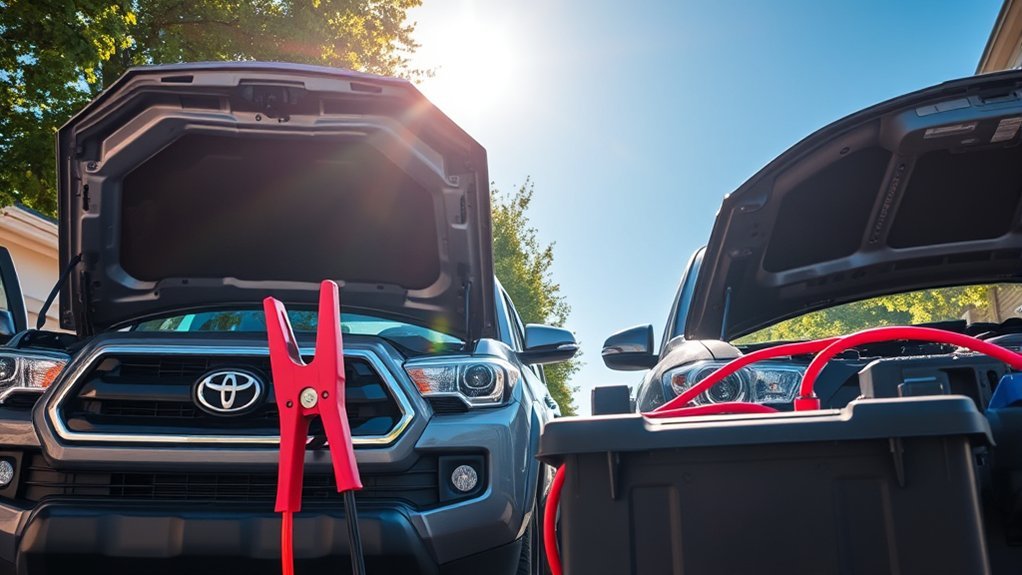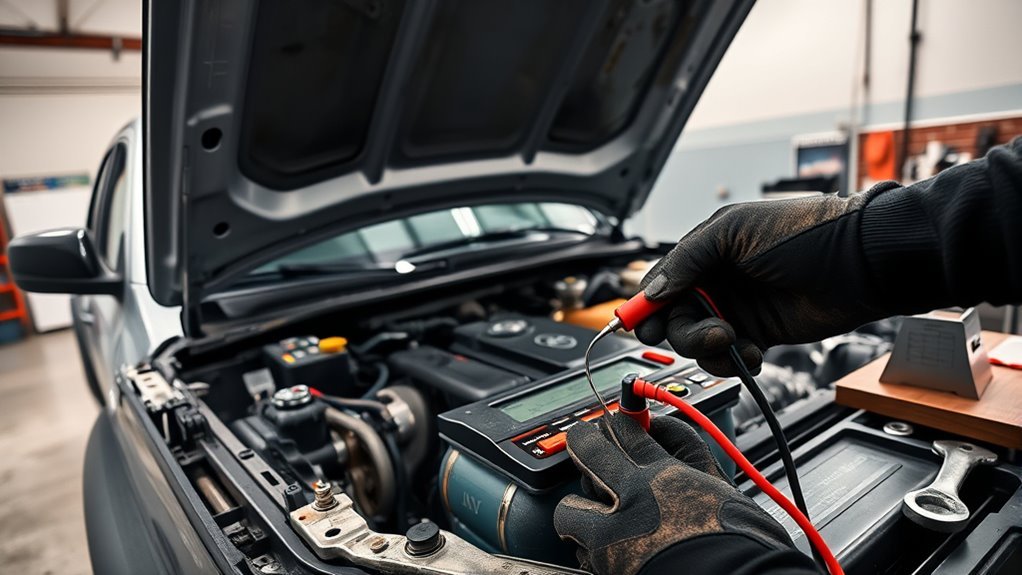
A 2021 Toyota Tacoma 12-volt battery typically lasts about 3–5 years, so an original battery is now old enough to deserve testing even if the truck still starts normally. Heat, frequent short trips, long parking periods, corrosion, vibration, and chronic undercharging can shorten battery life. Use age as a reason to test—not as the only reason to replace—and confirm a weak battery with a load or conductance test before buying parts.
Last updated: September 16, 2026 — rechecked battery-life guidance, Toyota replacement-battery specifications and warranty terms, fitment cautions, testing advice, and internal-link overlap.
Quick Answer
A 2021 Toyota Tacoma battery usually lasts about 3–5 years. If yours is still the original battery, test it now because it is beyond or near the end of that typical range. A resting voltage near 12.6 volts can show a good state of charge, but it does not prove the battery can deliver enough current to crank the engine; a load or conductance test is the better health check.
Key Takeaways
- Most Tacoma batteries last 3–5 years, but heat and stop-and-go driving can shorten life.
- Slow cranking, dim lights, repeated jump-starts, and corrosion are warning signs.
- A healthy, fully charged 12-volt battery is commonly around 12.6 volts at rest, but voltage alone does not confirm cranking capacity.
- Verify battery size, terminal layout, CCA, and warranty before buying a replacement.
- If the battery is 4–5 years old—or still original on a 2021 truck—test it before a long trip or a season of extreme heat or cold.
At a Glance
| Typical Battery Life | About 3–5 years |
| Original 2021 Battery | Test now, even if starting still feels normal |
| Slow Crank / Repeat Jumps | Fully charge, then load- or conductance-test the battery and check charging output |
| New Battery Goes Flat | Check charging system, cables, and parasitic draw before replacing another battery |
| Replacement Fitment | Verify VIN, group size, terminal layout, CCA, chemistry, and hold-down fit |
| Replacement Cost | Varies by battery type and seller; compare battery price, core charge, tax, installation, and warranty |
How Long Does a 2021 Toyota Tacoma Battery Last?
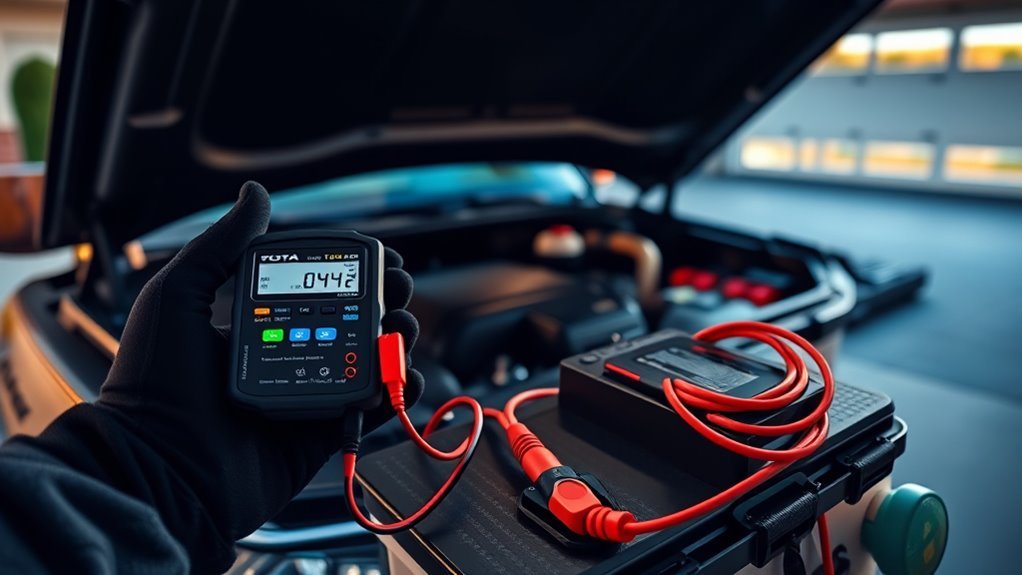
A 2021 Toyota Tacoma battery usually lasts about 3–5 years under normal driving conditions. AAA gives the same 3–5 year general range and identifies time, heat, vibration, and usage patterns as major factors in battery aging.
Some batteries fail earlier, especially in hot climates or on trucks that make mostly short trips. Others last longer when the truck is driven regularly, stored in mild temperatures, and kept on a maintainer during long parking periods.
Because a 2021 Tacoma is now about five model years old, an original battery should be tested even if it still starts the truck. Batteries can lose reserve and cranking capacity before a complete failure, so age plus a load or conductance test is more useful than age alone.
If your Tacoma battery is more than 4 years old, treat battery testing as preventive maintenance. Replace it when testing, symptoms, or physical condition show it is no longer reliable.
What Makes a Tacoma Battery Wear Out Faster?
Heat is one of the biggest battery killers. High under-hood temperatures speed up chemical aging inside a lead-acid battery. That is why a Tacoma in a hot climate may need a battery sooner than the same truck in a mild climate.
Short trips are another common problem. Starting the engine uses a burst of power, and a 5- or 10-minute drive may not give the alternator enough time to fully restore the charge. Over time, repeated undercharging can lead to sulfation and weak starts.
Other battery-life killers include:
- Corroded terminals: White, green, or blue buildup can increase resistance and reduce starting power.
- Loose battery hold-downs: Vibration can damage internal plates and shorten battery life.
- Parasitic drain: A light, accessory, aftermarket alarm, dash camera, or module draw can slowly discharge the battery while parked.
- Long storage: A parked truck can drain a battery even when everything is working normally.
- Poor replacement quality: A cheap battery with low reserve capacity or weak warranty support may fail sooner.
Pro Tip: If your Tacoma sits for weeks at a time, use a smart maintainer that is compatible with the installed battery type instead of relying on occasional idling. A properly selected maintainer can keep the battery charged during storage without the repeated discharge-and-recharge cycle that accelerates wear.
How to Spot a Failing Tacoma Battery
A weak Tacoma battery usually gives warning signs before it fails. Watch for these symptoms:
- Slow cranking: The starter turns slower than usual, especially after the truck sits overnight.
- Clicking when you turn the key: Rapid clicking often means the battery cannot deliver enough current.
- Dim headlights or interior lights: Lights may dim during startup or when accessories are on.
- Repeated jump-starts: If the battery needs frequent jumps, it is no longer reliable.
- Battery or charging warning light: This can point to a battery, alternator, belt, cable, or charging-system issue.
- Electrical glitches: Power windows, dashboard electronics, or accessories may act oddly when voltage is low.
- Heavy corrosion: Powdery buildup around the terminals can reduce current flow and signal leakage or poor maintenance.
Do not assume every starting problem is the battery. A weak alternator, loose cable, bad starter, failing ground strap, or parasitic draw can mimic a bad battery. Test the battery and charging system before replacing parts.
Quick Battery Check: 4 Steps You Can Do Now
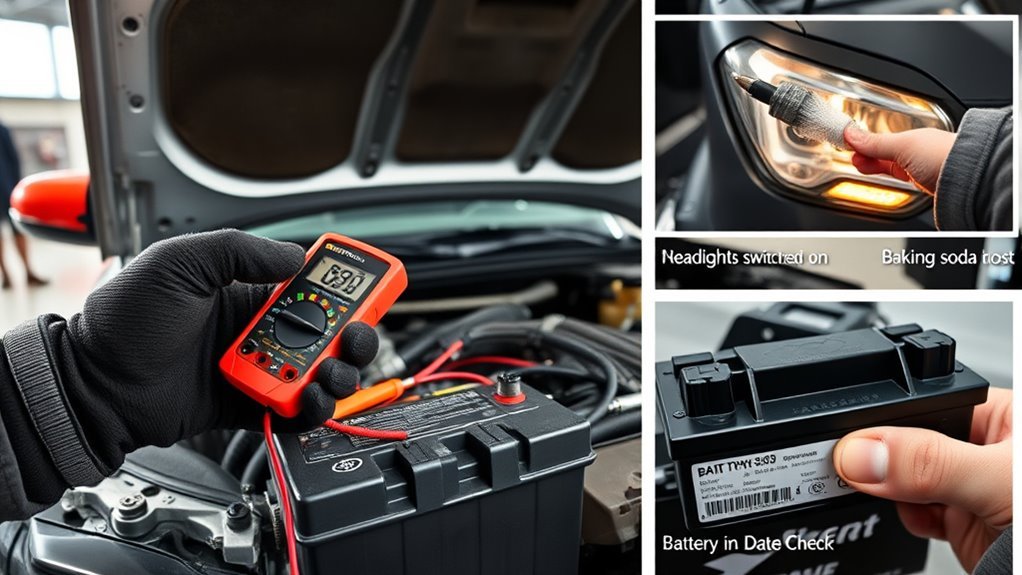
You can do a basic Tacoma battery check in a few minutes. This will not replace a professional load test, but it can tell you whether the battery needs attention.
Warning: Lead-acid batteries contain corrosive electrolyte and can release flammable gas while charging. Wear eye protection and gloves, keep sparks and open flames away, and charge only in a well-ventilated area. Do not test, charge, or move a battery with a cracked, leaking, swollen, or frozen case.
Step 1: Inspect the terminals
Look for white, green, or blue corrosion on the posts and cable ends. Also check that the battery is secure in the tray and the clamps do not move by hand.
Step 2: Check resting voltage
With the engine off, use a digital multimeter directly on the battery posts. Let the truck sit with electrical loads off before measuring; a longer rest gives surface charge more time to settle. Treat voltage as a state-of-charge check, not a pass/fail battery-health test.
- About 12.6 volts: Commonly indicates a fully charged conventional 12-volt lead-acid battery after resting.
- About 12.4 volts: Partially charged; recharge and retest before judging battery condition.
- About 12.2 volts or lower: Low state of charge; charge first, then test for battery health or a key-off drain if the voltage falls again.
- Below 12.0 volts: Deeply discharged; use an appropriate charger and have the battery tested before relying on it.
Step 3: Clean light corrosion
Disconnect the negative cable first, then the positive cable. Use a baking-soda-and-water paste with a terminal brush to neutralize and remove corrosion. Rinse lightly, dry the area, reconnect the positive cable first, then the negative cable.
Step 4: Get a load test
A battery can show acceptable resting voltage and still fail under starting load. If your Tacoma cranks slowly, the battery is older than 3 years, or voltage falls again after charging, ask for a battery load or conductance test plus a charging-system check. If the battery fails, follow a year-appropriate Tacoma battery replacement procedure rather than replacing parts by guesswork.
How Climate and Driving Affect Tacoma Battery Life
Your Tacoma’s battery life depends heavily on where and how you drive. A truck used for long drives in mild weather usually gives the battery a better life than one used for short trips in extreme heat.
Climate Impact on Longevity
Hot climates shorten battery life because heat speeds internal chemical degradation and can increase water loss in serviceable flooded batteries. Cold weather creates a different problem: it reduces available cranking power and makes an already weakened battery more likely to show symptoms. AAA notes that heat is a major aging factor even though many drivers first notice failure during cold weather.
That means a battery that seemed fine in fall may fail on the first cold morning because it no longer has enough reserve capacity. In hot areas, the same battery may age faster and fail during summer.
Driving Patterns and Charge
Short trips, stop-and-go traffic, and long accessory use with the engine off can keep the battery below full charge. Regular longer drives help restore charge, but highway driving is not a cure for a battery that is already old or damaged.
If you drive only a few miles at a time, test the battery more often and consider using a maintainer when the truck sits. This is especially helpful if you have added lights, audio equipment, camping accessories, or a dash camera.
Temperature-Related Battery Stress
Temperature swings can expose a weak battery quickly. Heat ages the battery, then cold weather demands more cranking power from a battery that may already be weakened. That combination is why preventive testing before summer and winter is smart.
Maintenance That Extends Tacoma Battery Life
Good maintenance cannot make a worn-out battery new again, but it can help a healthy Tacoma battery last longer and reduce surprise failures.
Regular Terminal Cleaning
Inspect the battery terminals every few months. Clean corrosion early, keep the clamps snug, and make sure the battery hold-down is secure. A loose or dirty connection can make a good battery act weak.
After cleaning, you can apply a battery terminal protector to slow future corrosion. Do not overtighten the clamps; snug and secure is the goal.
Proper Charging Habits
Keep the battery near full charge whenever possible. If your Tacoma sits, use a smart maintainer that matches the installed battery chemistry. When charging manually, follow both the battery and charger instructions; AGM, EFB, and flooded batteries can have different charging requirements.
Do not rely on idling as your only charging method. Idling may not restore much charge, and it does not load-test the battery. A proper charger or maintainer is safer for long storage.
Battery Types for Tacoma: OEM, EFB, AGM, and Aftermarket Pros and Cons
When replacing a 2021 Tacoma battery, you will see Toyota-branded replacements, conventional flooded batteries, enhanced flooded batteries (EFB), and AGM options in fitment catalogs. Do not assume those chemistries are interchangeable for every truck. First confirm the exact fit, terminal layout, required cranking performance, and battery type for your VIN or current validated specification; then compare warranty, accessory load, vibration exposure, and budget.
| Battery Type | Best For | Watch Out For |
|---|---|---|
| Toyota TrueStart / OEM-style | Correct fit, dealer support, and Toyota-backed warranty options. | Dealer pricing varies, and installation may cost extra. |
| EFB | Better cycling durability than a basic flooded battery in many applications. | Must match the correct size, terminals, and charging requirements. |
| AGM | Vibration resistance, strong cranking, low maintenance, and accessory-heavy trucks. | Costs more, needs AGM-compatible charging equipment, and is not automatically the correct replacement for every flooded/EFB application. |
| Aftermarket flooded | Lower upfront cost and easy availability. | Quality, warranty, reserve capacity, and cold-cranking amps vary by brand and model. |
AGM batteries hold electrolyte in fiberglass mats rather than as free-flowing liquid, a design that improves vibration resistance and supports high current output. Interstate also cautions that AGM is not a valid drop-in replacement in every application. For a 2021 Tacoma, verify fitment and charging compatibility before choosing AGM simply because it is marketed as an upgrade.
[Products Worth Considering]

The ANCEL AD410 PRO combines engine diagnostics and 12V battery testing in one easy-to-use tool, helping you read and clear check engine codes while checking battery health, cranking, and charging performance. It also provides live data, freeze frame details, and I/M readiness checks to help you diagnose issues faster and prepare for emissions testing. With plug-and-play operation, a clear screen, and broad vehicle compatibility, it is a practical solution for home mechanics and everyday drivers.

The TOPDON BT100 helps you quickly check the health and charge status of 12V lead-acid batteries with clear analytical results, including state of health, state of charge, voltage, and cranking performance. It supports a wide range of battery types and vehicles, making it a practical tool for diagnosing starting and charging issues at home or in the shop. Compact and easy to use, it provides fast, reliable testing without needing to charge the device first.

This POWOXI solar battery maintainer helps keep 12V batteries charged and protected with intelligent charging and built-in safety features. Its durable tempered glass construction, scratch-resistant frame, and easy installation make it a practical solution for cars, motorcycles, boats, tractors, ATVs, and other battery-powered equipment. An LED indicator helps show charging status at a glance, while the waterproof design supports low-maintenance use.
How to Choose the Right Replacement Battery
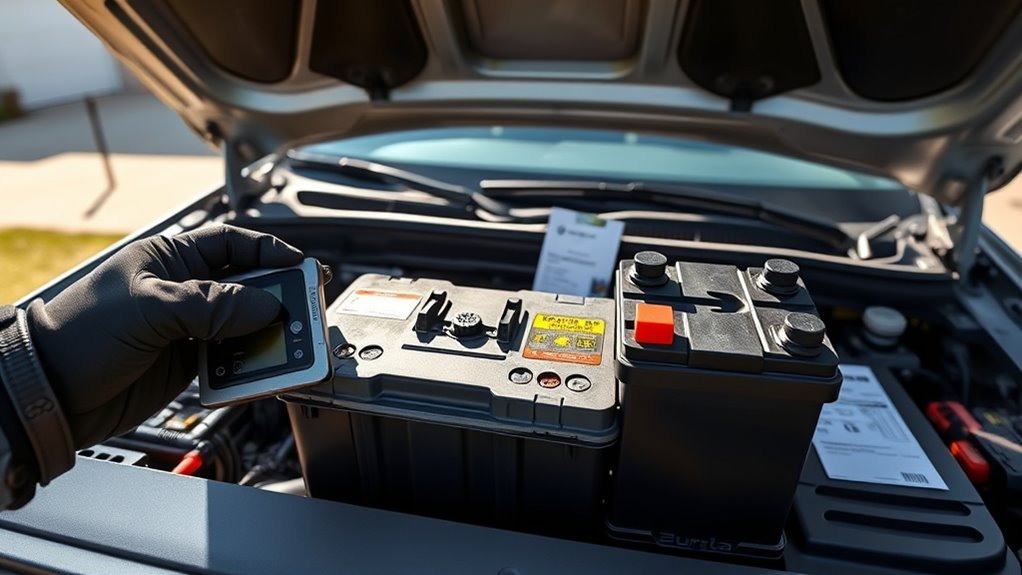
Start with fitment. Check the current battery label, your 2021 Toyota Tacoma owner resources, or a Toyota parts counter using the VIN. Toyota dealer catalogs for 2021 Tacoma applications commonly show Group 24F replacements, but fitment catalogs also surface alternatives in some configurations. Do not buy on group size alone.
Confirm these details before you pay:
- BCI group size: The case must fit the tray and hold-down correctly. Toyota currently lists a TrueStart Group 24F EFB battery rated at 750 CCA, but the product page still requires a vehicle-fitment check. Verify your 2021 Tacoma by VIN and current validated specification before ordering.
- Terminal orientation: The positive and negative posts must be on the correct sides so the cables reach without strain.
- Cold cranking amps: Match or exceed the original battery’s CCA rating, especially if you live in a cold climate.
- Reserve capacity: Higher reserve capacity can help if you run accessories or sit in traffic often.
- Battery type: Match the approved battery chemistry and charging requirements for your application; do not assume flooded, EFB, and AGM are universally interchangeable.
- Warranty: Compare free-replacement coverage and prorated coverage, not just the total number of months.
- Freshness: Buy a battery with a recent date code. A battery sitting on a shelf for a long time may already be partially aged.
Verified Toyota warranty note: Toyota’s current U.S. TrueStart warranty states free exchange for 24 months from purchase, then prorated battery-only coverage up to 84 months. Taxes, installation labor, and towing are excluded from the prorated coverage. Confirm the written terms for the exact battery and dealer at purchase.
[Products Worth Considering]
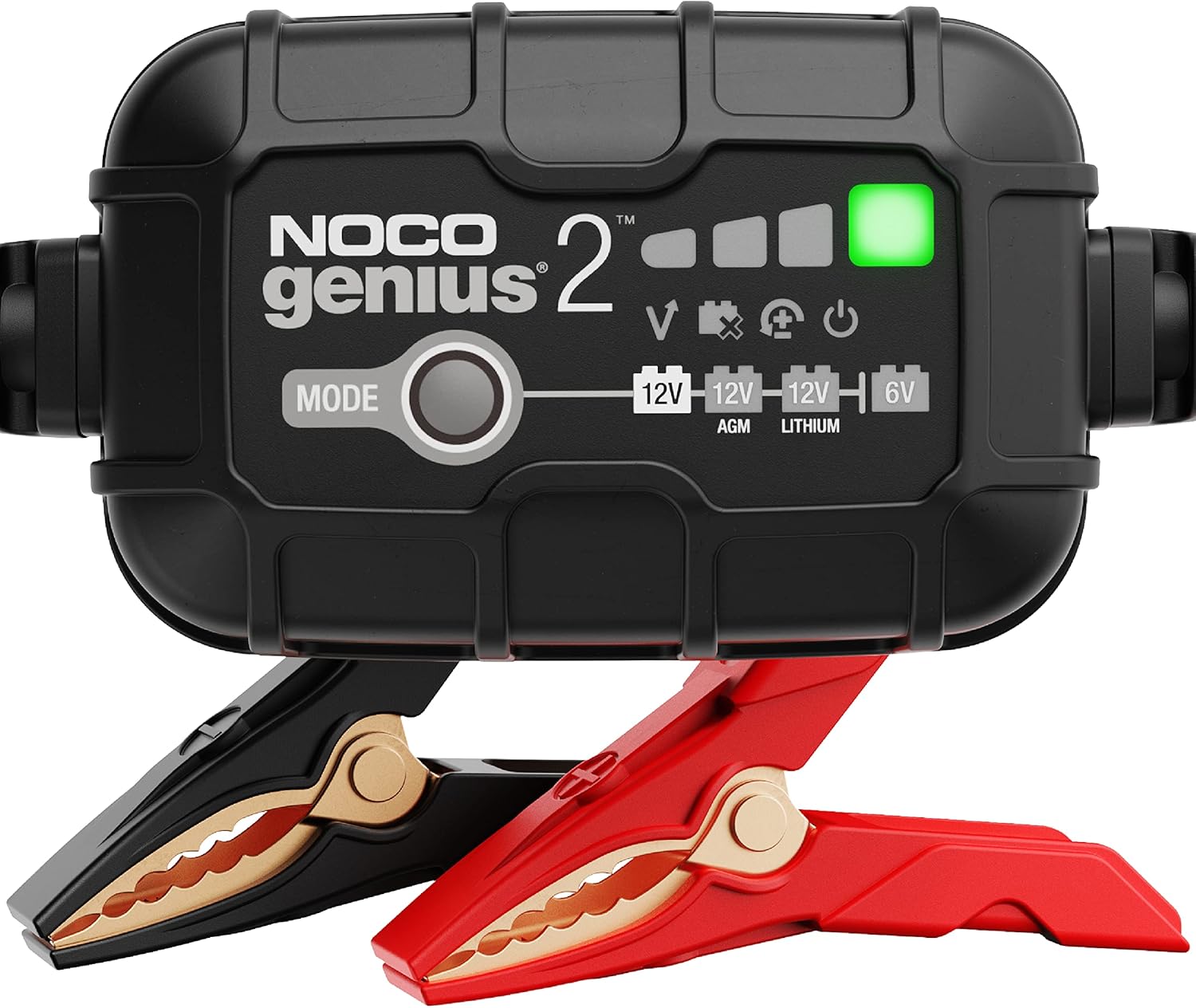
The NOCO GENIUS2 is a compact, all-in-one smart charger that automatically charges, maintains, and restores 6V and 12V lead-acid and lithium batteries. It features temperature compensation, overcharge protection, pulse desulfation, and Force Mode for reviving deeply discharged batteries, making it ideal for long-term battery care across many vehicle types. Designed for safe indefinite connection, it helps extend battery life and keep batteries ready to go.

This automotive circuit tester checks low-voltage DC systems from 3-65V, making it useful for diagnosing headlights, taillights, fuses, sockets, and other vehicle wiring issues. The digital backlit display provides clear voltage readings with fine accuracy, while the bidirectional polarity indicator helps you test from either ground or positive. Built with a durable probe, insulated tip, and extra-long spring wire, it is designed for dependable everyday use in automotive and household electrical work.

AUTOMOTIVE PURE LEAD AGM: Download the Compatibility Guide below under Product Guides & Documents to learn more and verify fit. Interstate's MTX AGM design packs more lead into the battery, giving you the longest life possible for your start-stop vehicle
Replacement Costs, Installation Options, and When to Replace Proactively
A Tacoma battery replacement is usually a parts-plus-labor job. The final cost depends on the battery type, brand, warranty, core charge, taxes, shop labor, and whether the charging system needs diagnosis.
As a practical budget, a basic flooded battery usually costs less than a premium EFB or AGM battery. In a live check on September 16, 2026, AutoZone’s 2021 Tacoma fitment page showed vehicle-specific examples from roughly $100 for an entry flooded battery to more than $400 for premium AGM options, before refundable core charges and any tax or installation. Treat that as a current-market snapshot, not a fixed quote; local inventory and pricing change.
[Products Worth Considering]

**Please confirm compatibility using the fitment guide located in the product images**

KEY FOB BATTERY INSTALLATION: This kit includes [qty 2] CR2016 batteries for an easy and secure replacement of your key fob battery for Toyota vehicles.

CONFIRM FIT **Please confirm compatibility using the fitment guide located in the product images** This battery will only fit your key fob if it exactly matches one of the examples in the compatibility guide.
DIY Installation
You can replace the battery yourself if you are comfortable working around lead-acid batteries and have basic tools. The basic order is negative cable off first, positive cable off second; after the new battery is secured, positive cable on first and negative cable on last. For the complete sequence, safety checks, and post-installation checks, use the dedicated Toyota Tacoma battery replacement guide.
Shop or Dealer Installation
A shop or Toyota dealer can install the battery, test the battery and charging system, clean the terminals, and diagnose a key-off electrical draw when needed. This is the better option if the truck has repeated dead-battery problems, damaged cables, unusual electrical symptoms, or a new battery that keeps going flat.
When to Replace Before It Fails
Replace proactively when an older battery tests weak, needs repeated jump-starts, has physical damage, or shows slow cranking before a long trip. If your 2021 Tacoma still has its original battery, test it now; replace it if the test or symptoms show declining reliability rather than replacing it on age alone.
When It Might Not Be the Battery
A dead or weak battery is common, but it is not the only cause of starting problems. Before buying another battery, consider these possibilities:
- Weak alternator: The battery may not recharge while driving.
- Loose or damaged cables: Corroded grounds and loose terminals can block current.
- Bad starter: A failing starter can drag even with a good battery.
- Parasitic draw: An electrical load may drain the battery while parked; use a proper Tacoma parasitic-draw test if a charged, tested-good battery repeatedly goes flat.
- Accessory drain: Aftermarket lights, stereos, fridges, and dash cameras can overload the system if not wired correctly.
If a new battery dies again within days or weeks, stop replacing batteries and diagnose the cause. Start with the charging system, cable condition, and a Tacoma battery-drain diagnosis. If the starter cranks but the engine does not fire, use the separate Tacoma cranks-but-won’t-start guide because that symptom is not the same as a dead battery.
Frequently Asked Questions
How long should a battery last in a Toyota Tacoma?
Most Toyota Tacoma batteries last about 3–5 years. Heat, short trips, vibration, corrosion, long storage, and electrical drain can shorten that range. Mild weather, clean terminals, regular driving, and proper charging can help extend it.
How much does it cost to replace a battery in a Toyota Tacoma?
The cost depends on the battery type, brand, warranty, labor, taxes, and core charge. A standard flooded battery usually costs less than an EFB or AGM battery. Dealer pricing also varies, so compare the total installed price, not just the shelf price.
How do I know if my Tacoma battery is going bad?
Common warning signs include slow cranking, rapid clicking, dim lights, repeated jump-starts, heavy terminal corrosion, and a battery or charging-system warning light. A professional load test is the best way to confirm battery health.
What voltage should a Tacoma battery read?
A fully charged conventional 12-volt lead-acid battery is commonly around 12.6 volts at rest. Around 12.4 volts indicates partial charge, while roughly 12.2 volts or lower indicates a low state of charge. Resting voltage does not prove cranking capacity, so recharge and load-test a battery that shows symptoms.
Should I choose an AGM battery for a 2021 Tacoma?
AGM can offer strong cranking power and vibration resistance, but it is not automatically the right replacement for every 2021 Tacoma. Verify the approved fitment, battery chemistry, terminal layout, CCA, and charging compatibility before switching from a flooded or EFB battery.
Can I drive after jump-starting a dead Tacoma battery?
You can drive after a successful jump-start, but that does not mean the battery is fixed. If the battery is old, deeply discharged, or the alternator is weak, it may die again. Charge the battery fully and have it tested as soon as possible.
What battery size does a 2021 Toyota Tacoma use?
Group 24F is the most consistently listed fitment for the 2021 Tacoma in Toyota dealer catalogs and major fitment databases, while some catalogs also show Group 35 alternatives for certain configurations. Confirm the exact battery by VIN, current validated battery label, terminal orientation, hold-down fit, and required CCA before buying.
Should I replace a five-year-old Tacoma battery even if it still starts?
Test it now, but do not replace it on age alone. A five-year-old battery is at or beyond the common 3–5 year service-life range, so a load or conductance test can show whether it still has reliable cranking capacity. Replace it if it tests weak, needs repeated jump-starts, cranks slowly, or has physical damage.
Conclusion
A 2021 Toyota Tacoma battery commonly lasts about 3–5 years, but heat, driving pattern, storage, corrosion, vibration, and charging history can shorten or extend that range. Test yearly after year 3, keep the terminals clean and the hold-down secure, and use a compatible maintainer during long storage.
If your Tacoma still has its original battery, test it now. Use resting voltage to check state of charge, then rely on a load or conductance test to judge cranking health. If the battery passes but keeps going flat, diagnose the charging system or parasitic draw before buying another battery.
Sources
- AAA — How Long Do Car Batteries Last? — supports the 3–5 year typical battery-life range and the role of heat, time, vibration, and usage.
- AAA — Car Battery Warning Signs — supports common failure symptoms and the importance of testing after year 3.
- Toyota Owners — 2021 Tacoma Manuals and Warranties — official Toyota owner and warranty resources for the 2021 Tacoma.
- Toyota 2021 Tacoma Warranty & Maintenance Guide — official Toyota maintenance and warranty reference.
- Toyota Genuine Parts — TrueStart Group 24F EFB Battery — supports Toyota replacement battery example, CCA listing, and dealer-price variability.
- OSHA — 1926.441 Batteries and Battery Charging — supports battery-charging safety guidance on ventilation, acid exposure, and explosive-gas control.
- Interstate Batteries — What Is an AGM Battery? — supports AGM construction, vibration resistance, charger compatibility, and the caution that AGM is not interchangeable in every application.
- AutoZone — 2021 Toyota Tacoma Battery Fitment — supports current fitment examples, battery-type choices, and the September 2026 market-price snapshot.