Last updated: August 31, 2026 · By: [VERIFY: add the real author name and relevant automotive or vehicle-recovery credentials]
A Tacoma tow hitch is not automatically a recovery point. Never attach a recovery strap or kinetic rope to a tow ball or ordinary ball mount. For a 2026 Tacoma, Toyota identifies factory front recovery hooks across the lineup and rear recovery points on TRD Pro and Trailhunter. Toyota also places specific limits on the factory rear points: the pull must be straight toward the rear, the load must not exceed the truck’s GVWR, and the recovery strap must have no slack before the pull. A receiver-mounted shackle block is not automatic approval to recover through a trailer hitch; the receiver, insert, pin, mounting system, and recovery method all need explicit manufacturer approval.
Quick Answer
Use a Toyota-designated recovery point or a properly rated aftermarket recovery point for Tacoma vehicle recovery. Never recover from a tow ball or ordinary ball mount. On a 2026 Tacoma with factory rear recovery points, Toyota instructs you to pull straight rearward, stay at or below GVWR load on the points, remove slack from the recovery strap before pulling, and keep bystanders clear. Do not treat a trailer receiver or receiver shackle insert as recovery-rated unless the manufacturers explicitly approve the complete setup and recovery method.
Key Takeaways
- Tow hitches and recovery points are not the same. A hitch towing rating does not establish a vehicle-recovery rating.
- Never recover from a tow ball or ordinary ball mount. Remove trailer-towing hardware before considering any approved recovery setup.
- Follow model-year-specific Toyota instructions. For the 2026 Tacoma’s factory rear recovery points, Toyota specifies a straight rearward pull, no strap slack before pulling, and a load no greater than GVWR.
- A receiver shackle insert is only one component. The insert does not certify the receiver, hitch pin, frame mounting, truck, or recovery method.
- Reduce resistance before adding force. Dig, clear obstacles, use traction boards, and choose a slow controlled method whenever practical.
At a Glance
| Recovery Time | Varies with terrain, vehicle position, available anchors, and whether digging, traction boards, or winching are required |
| Difficulty | Moderate to high; stop if the vehicle is unstable, the pull angle is unsafe, or the attachment point cannot be verified |
| Minimum Gear | Recovery gear intended for the planned method, compatible rated connection hardware, gloves, traction tools, and a verified recovery point |
| 2026 Factory Rear-Point Rule | Straight rearward pull, no strap slack before pulling, load no greater than GVWR, and bystanders kept clear |
| Stop Conditions | Rollover risk, people in the line of pull, damaged gear, unknown attachment suitability, or a pull that exceeds the approved method or load |
Can You Use Each Tacoma Attachment Point for Recovery?
Use this decision table before connecting a strap, rope, or winch line. The owner’s manual and the component manufacturer’s instructions matter more than how strong an attachment point looks.
| Tacoma Attachment Point | Use for Recovery? | Decision Rule |
|---|---|---|
| Tow ball | No | Do not attach a recovery strap, kinetic rope, or winch line to a tow ball. |
| Ordinary ball mount or drop hitch | No | Trailer-towing hardware and towing capacity are not proof of recovery suitability. |
| Trailer safety-chain loop | Usually no | Use only if the hitch manufacturer explicitly identifies and approves that loop for the planned recovery method. |
| Toyota-designated front recovery hook or point | Yes, conditionally | Confirm Toyota identifies the component for recovery on your exact model year and follow the stated procedure, connectors, and pull direction. |
| 2026 Tacoma factory rear recovery point, if equipped | Yes, within Toyota’s limits | Use for off-road or slippery-condition recovery only. Pull straight toward the rear, keep load at or below GVWR, remove strap slack before pulling, and keep bystanders clear. |
| Rated aftermarket recovery point | Yes, conditionally | Verify exact Tacoma fitment, installation, hardware torque, rating, connector compatibility, condition, and permitted pull direction. |
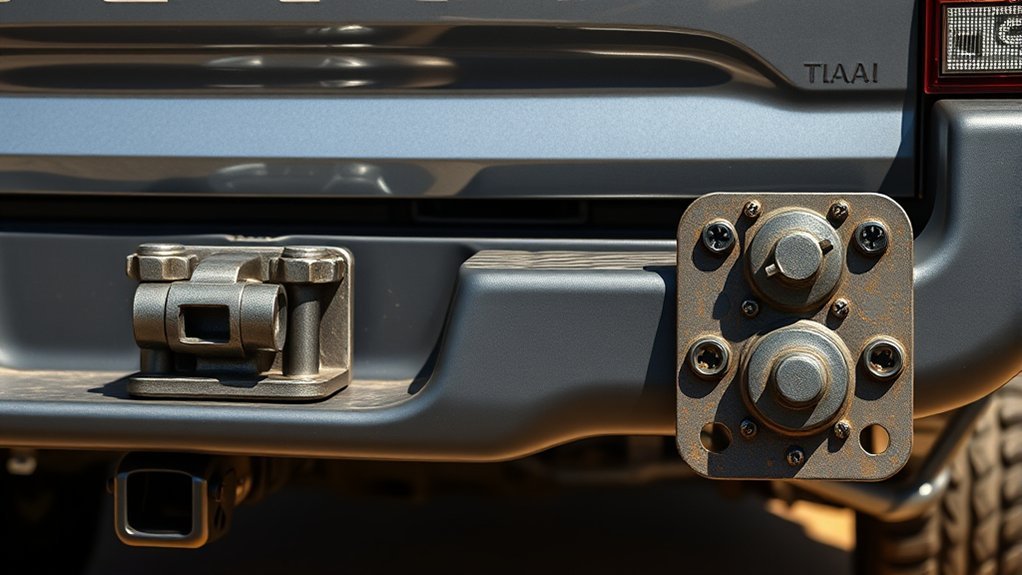
| Receiver recovery shackle block | Only with explicit approval | The insert alone is not enough. Use the setup only when the receiver or hitch manufacturer and recovery-accessory manufacturer approve the receiver, insert, pin, mounting system, load direction, and planned recovery. |
| Transport or tie-down eye | No, unless designated | Do not assume a shipping or tie-down point is a recovery point unless Toyota or the component manufacturer explicitly says so. |
What Does Toyota Say About 2026 Tacoma Recovery Points?
Toyota’s 2026 Tacoma information gives owners more useful detail than a generic hitch rating. Toyota states that front recovery hooks are standard across the 2026 Tacoma lineup, while TRD Pro and Trailhunter receive additional rear recovery points. Toyota lists maximum Tacoma towing capacity at up to 6,500 pounds, depending on configuration, but that towing number is separate from recovery-point instructions.
The 2026 Tacoma owner’s manual gives specific rules for the factory rear recovery points, if equipped. Toyota says they are intended to recover the vehicle when it is stranded in an off-road or slippery condition. They are not intended for towing items behind the truck or for towing the Tacoma on-road.
- Pull straight toward the rear. Align the recovery vehicle so the strap does not create a sharp side load.
- Stay within Toyota’s load instruction. Toyota says not to apply a load greater than the Tacoma’s GVWR to the rear recovery points.
- Remove strap slack first. Toyota tells owners to ensure the recovery strap has no slack before pulling.
- Keep bystanders out of the recovery path. People should remain safely away from both vehicles and the line of pull.
- Do not convert this into a towing point. Toyota distinguishes off-road/slippery-condition recovery from ordinary on-road towing.
Important: Toyota’s no-slack instruction for the 2026 factory rear recovery points should not be treated as approval for a slack-start kinetic or snatch recovery. If a recovery method requires different loading than Toyota describes, use a different method or a recovery system whose manufacturers explicitly approve that use.
Why Understanding Tow Hitches and Recovery Points Matters
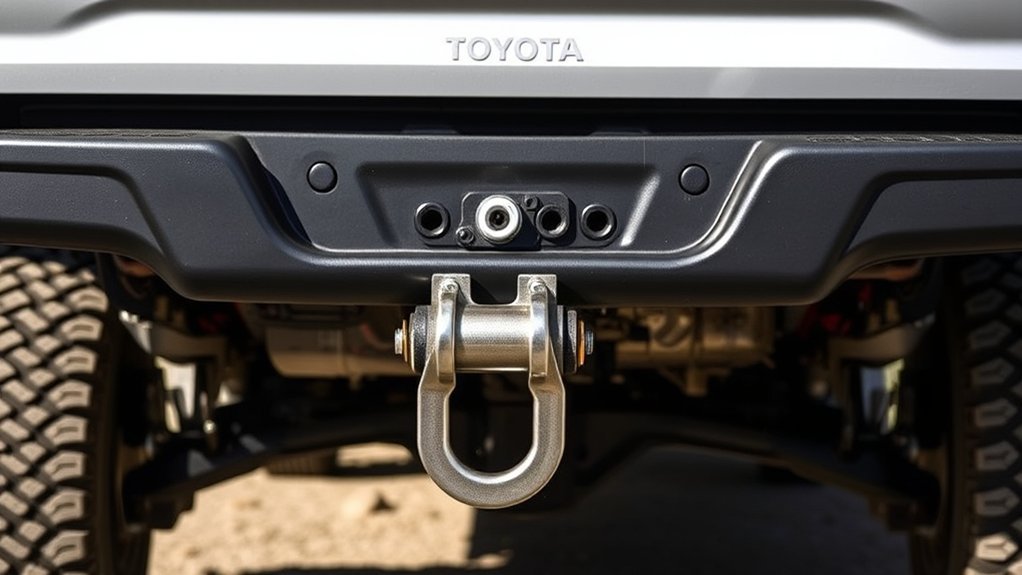
Understanding the difference between tow hitches and recovery points is essential for anyone who drives a Tacoma off-road. A tow hitch is designed primarily to connect approved trailer hardware. A recovery point is intended to provide a structural attachment for recovering a stuck vehicle under the conditions its manufacturer specifies.
Toyota’s 2026 Tacoma information lists maximum towing capacity at up to 6,500 pounds, depending on configuration. Toyota also states that front recovery hooks are standard across the lineup, with additional rear recovery points on TRD Pro and Trailhunter. Those factory statements do not give a tow ball, ordinary ball mount, trailer safety-chain loop, or unidentified aftermarket hook a recovery rating.
Warning: Never attach a recovery strap or kinetic rope to a tow ball. A tow ball, ordinary ball mount, or unrated attachment can fail during vehicle recovery and create a dangerous flying component.
The safest approach is to use a Toyota-designated recovery point or a recovery-rated aftermarket point and follow its exact procedure. A receiver-mounted recovery shackle block should be used only when the manufacturers approve the complete receiver-based recovery system. If you cannot confirm the mounting method, condition, rating, pull direction, or intended use of any load-bearing component, do not use that setup.
What’s the Real Difference Between Tow Hitches and Recovery Points?
A Tacoma tow hitch and a Tacoma recovery point can both connect to structural parts of the truck, but they serve different jobs. Trailer towing places loads through an engineered hitch, ball mount, ball, and coupler system. Vehicle recovery can add resistance from mud, sand, snow, rocks, grades, or a high-centered chassis, and the loading can change quickly as the truck begins to move.
Tow Hitch vs. Recovery Point Comparison
| Feature | Tow Hitch | Recovery Point |
|---|---|---|
| Primary purpose | Connecting approved trailer-towing equipment | Attaching approved gear for vehicle recovery |
| Rating proves | Permitted trailer and tongue loads under the hitch and vehicle instructions | Only the recovery use, direction, connectors, and loads stated by the recovery-point manufacturer |
| Safe attachment | Correct trailer coupler, ball, ball mount, receiver, and towing hardware | Manufacturer-designated recovery hook, recovery point, shackle tab, or explicitly approved receiver recovery system |
| Common mistake | Treating a tow ball or towing rating as proof of recovery suitability | Ignoring pull direction, installation limits, connector compatibility, or damage |
| Best use on a Tacoma | Tow within the limits for the exact Tacoma, hitch, trailer, payload, and towing equipment | Recover a stuck Tacoma only under the approved procedure for the specific point and equipment |
Design and Purpose
Tow hitches are engineered around trailer towing. Their limits depend on the Tacoma configuration, hitch, mounting hardware, trailer tongue weight, payload, axle limits, and Gross Combined Weight Rating. Recovery points are different: their manufacturer should define the recovery purpose, compatible vehicle, attachment method, permitted loading, and pull direction.
On the 2026 Tacoma, Toyota identifies factory front recovery hooks across the lineup and rear recovery points on TRD Pro and Trailhunter. Older Tacoma generations, other markets, and aftermarket bumper setups differ, so use the owner’s manual for your exact model year rather than assuming a similar-looking hook serves the same purpose.
Why Does Kinetic Recovery Create Different Loads?
A steady winch pull applies force progressively. A kinetic rope intentionally stretches and stores energy as the recovery vehicle moves, then releases that energy as it helps free the stuck vehicle. That loading method is different from ordinary trailer towing and from a controlled strap pull that begins without slack.
Use kinetic recovery only when the recovery-point manufacturers, connectors, rope instructions, vehicle weights, pull direction, and available safety zone all support that method. For Toyota’s 2026 factory rear recovery points, follow Toyota’s instruction to remove slack before pulling; the existence of a factory rear recovery point does not itself authorize a kinetic or snatch recovery.
Strength and Safety
Strength is not just a large number stamped on one component. A recovery system includes the vehicle structure, mounting bolts, recovery point, connector, strap or rope, hitch pin when applicable, pull direction, and the resistance holding the vehicle. The system is limited by the weakest component and by the most restrictive manufacturer instruction.
WARN’s Basic Guide to Winching tells users to read the specific product literature, inspect the winch rope and rigging before use, verify the anchor, keep people clear, and avoid damaging shock loads. Apply the same system-level mindset to Tacoma recovery: inspect every component and follow the exact instructions for the equipment you are using.
Note: “Rated” does not mean “safe in every direction.” A component may be approved only for a straight pull or a particular connector. Never assume a side pull, bridle, vertical load, kinetic pull, or different shackle is allowed unless the relevant instructions permit it.
Best Practices for Using Recovery Points on Your Tacoma
Using the right recovery points on your Tacoma starts before the truck gets stuck. Identify the approved points for your exact year and trim, understand which other hooks or loops are for towing or transport only, and carry recovery equipment that matches the recovery method you actually plan to use.
Proper Recovery Point Use
Before connecting a recovery strap, rope, or winch line, confirm that the attachment is approved for the intended recovery and inspect its mounting area. Look for bent metal, corrosion, cracked welds, loose hardware, elongated holes, damaged threads, or missing identification. Follow the aftermarket manufacturer’s installation, torque, retorque, and inspection instructions where applicable.
- Use a bridle only when the manufacturers permit it. Both points must be approved for equalized loading, and the bridle angle must stay within the applicable equipment limits.
- Keep the pull in the approved direction. Toyota specifically requires a straight rearward pull when using the 2026 Tacoma’s factory rear recovery points.
- Use soft shackles only on compatible surfaces. Protect synthetic material from sharp edges, burrs, heat, and abrasion.
- Use metal shackles within their instructions. Seat the load correctly and avoid prohibited side loading.
- Inspect after every demanding recovery. Look for stretched fibers, cuts, bent hardware, cracked paint around mounts, loosened bolts, or deformation.
Safety First During Recovery
Every recovery should start by identifying why the Tacoma is stuck and whether pulling it could cause a rollover, collision, slide, or component failure. If the truck is badly high-centered, close to water, unstable on a slope, damaged, or positioned where a safe attachment cannot be verified, professional recovery may be the better option.
For less severe situations, reducing the resistance can avoid a high-load pull altogether. The site’s Tacoma mud-driving guide and Tacoma off-road traction guide cover traction management in more detail.
Pro Tip: Reduce resistance before you pull. Clear material from the tires and underbody, remove obstacles, and position traction boards correctly. If you adjust tire pressure for terrain, stay within the limits of the tire, wheel, vehicle load, and terrain, then restore suitable road pressure before normal-speed driving.
Basic Tacoma Recovery Checklist
- Stop unnecessary wheelspin. Spinning can dig the tires deeper and increase the force needed to recover the truck.
- Identify what is holding the vehicle. Check the tires, frame, axles, skid plates, differential, mud, snow, sand, rocks, and slope.
- Reduce resistance. Dig, clear obstacles, build a path, or use traction boards before increasing recovery force.
- Choose the safest permitted direction. Avoid side loading unless the vehicle and recovery equipment are designed for it.
- Select a verified recovery point. Use a Toyota-designated point or properly rated aftermarket point under its approved procedure.
- Match the recovery gear to the method. Follow the strap, rope, winch, connector, and vehicle instructions rather than sizing one component from truck weight alone.
- Clear the danger area. Keep bystanders away from vehicles, connectors, and tensioned lines.
- Use clear communication. Agree on hand signals, radio calls, or another method before applying load.
- Apply only the method the equipment permits. Do not add speed, slack, or shock load when the vehicle or recovery-point instructions require a controlled pull.
- Inspect after recovery. Remove damaged or questionable equipment from service.
The safest recovery usually starts by reducing the resistance holding the Tacoma, then using the lowest-force method that the vehicle and recovery equipment actually permit.
Safety Considerations When Using Tow Hitches for Recovery
A rear hitch receiver looks like a natural recovery point because it is connected to the truck’s structure, but the critical question is whether the complete receiver assembly is approved for the planned recovery. A trailer towing rating establishes towing capacity under its stated conditions; it does not automatically establish a recovery rating.
Never loop recovery gear over a tow ball or ordinary ball mount. Do not use a trailer safety-chain loop unless its manufacturer specifically approves that recovery use. If you are considering a receiver-mounted recovery block, verify the instructions for the receiver or hitch, insert, pin, connector, frame mounting, vehicle, recovery method, and pull direction.
[Products Worth Considering]

Built for towing, winching, and off-road recovery, this D-ring shackle set delivers dependable strength in a compact, easy-to-use design. The drop-forged steel construction and protective coated finish help provide reliable performance and resistance to rust in demanding outdoor conditions. Compatible with Jeeps, ATVs, UTVs, trucks, trailers, and SUVs, it is a practical recovery accessory for everyday trail and rescue use.

This recovery tow strap kit is built for dependable vehicle recovery and towing in demanding conditions. The heavy-duty strap features fortified reinforced loops and high break strength for secure pulls, while the included D-ring shackles add versatility and reliable connection options. Designed for trucks, SUVs, ATVs, UTVs, and boats, it also includes protective isolators and a storage bag for safer, quieter transport and easy organization.
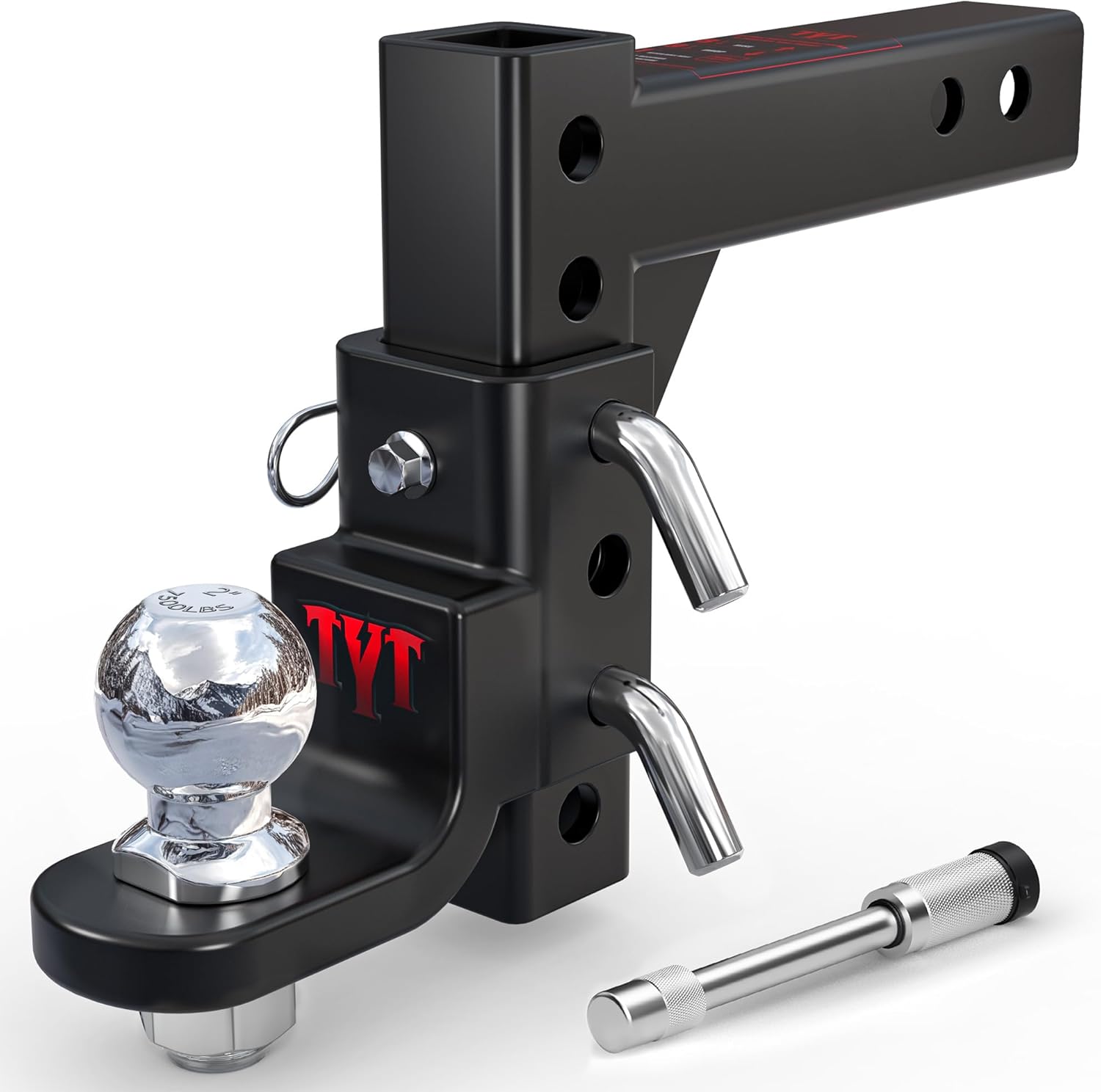
This adjustable trailer hitch ball mount is built for dependable towing with a standard 2-inch receiver and a high-capacity design suited for trucks, campers, boats, and utility trailers. Its adjustable rise and drop settings help you achieve a level tow, while the anti-rattle design supports a smoother, quieter ride. Complete with pins, clips, and a premium pin lock, it offers an easy installation and secure connection for everyday hauling needs.
When Can a Receiver Hitch Be Used for Recovery?
A Tacoma receiver hitch should be part of a recovery setup only when its manufacturer or vehicle documentation explicitly supports the intended recovery use and the recovery insert manufacturer approves the same setup. The receiver-mounted shackle block merely provides a connection interface; it does not increase or certify the receiver’s allowable load or recovery use.
Use the lowest applicable limit in the complete system. Keep the pull within every stated directional restriction, and never substitute the Tacoma’s published trailer-towing capacity for a recovery rating.
When Should a Receiver Hitch Not Be Used?
- Do not use a tow ball, ordinary ball mount, or drop hitch as a recovery attachment.
- Do not use a receiver when the manufacturer provides only trailer-towing information and recovery use cannot be confirmed.
- Do not assume adding a rated receiver shackle block makes an undocumented receiver recovery-rated.
- Do not use a bent, cracked, heavily corroded, loose, collision-damaged, or visibly distorted receiver.
- Do not use an unknown or damaged hitch pin.
- Do not make a sharp-angle pull when the receiver or recovery accessory does not approve that direction.
- Do not recover through trailer safety-chain loops unless their manufacturer explicitly approves the planned recovery use.
Choosing the Right Recovery Gear for a Tacoma
Recovery equipment should match your Tacoma, terrain, recovery method, connection points, and manufacturer instructions. A road-towing strap, kinetic rope, winch line, recovery board, shackle, and receiver insert are not interchangeable tools. Choose the recovery method first, then make sure every part of the system is compatible with that method.
[Products Worth Considering]
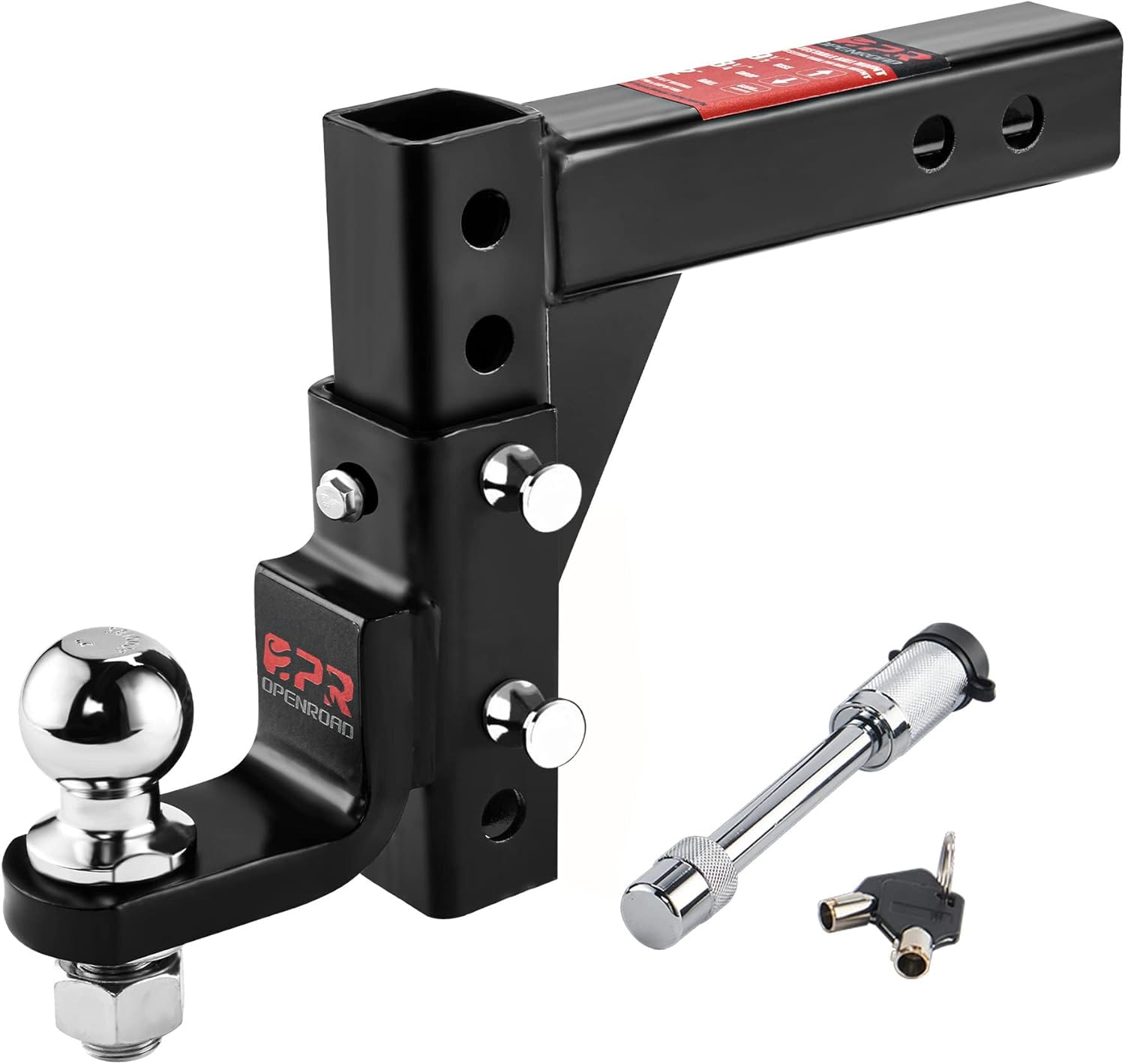
This adjustable trailer hitch ball mount is built for dependable towing with a strong steel construction and a versatile fit for 2-inch receivers. Its adjustable drop and rise settings help you dial in the right towing height, while the lock and keyed anti-theft design add security. A black powder-coated finish helps resist rust and wear for lasting performance on trucks and other towing setups.
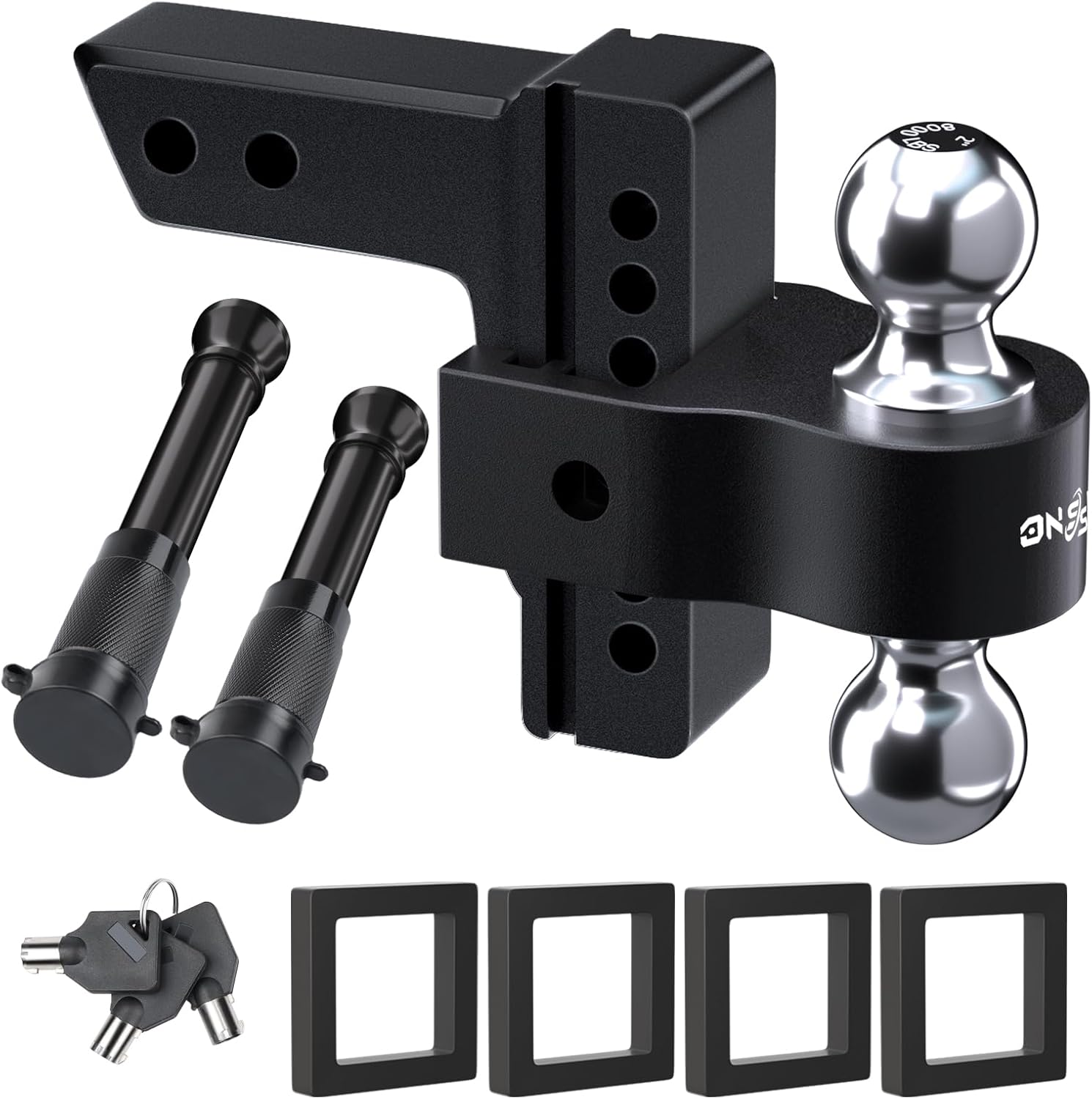
This adjustable trailer hitch is designed for 2-inch receivers and offers flexible towing with a 6-inch drop and rise range. Dual ball sizes help support different trailer setups, while the high-strength aluminum construction is built for dependable performance on tough jobs. Included hitch locks and silencers add security and help reduce noise for a smoother towing experience.

This synthetic soft shackle set is designed for safer, easier off-road recovery with a simple loop-and-tighten setup that helps make vehicle pulls more straightforward. Built as a lightweight alternative to traditional metal shackles, it uses anti-scratch synthetic fiber to help protect your vehicle during recovery tasks. The two-pack format adds convenience for trail use, and Rhino USA backs the product with lifetime replacement support.
Recovery Strap vs. Kinetic Rope vs. Winch Line
| Gear Type | Best For | Avoid When |
|---|---|---|
| Static recovery strap | Controlled vehicle-assisted pulls when the strap and attachment instructions permit them | The strap is meant only for road towing, has unsafe hooks, is damaged, or lacks usable identification |
| Kinetic rope | Dynamic recovery only when both vehicles, recovery points, connectors, rope, and operators support that method | A vehicle or attachment requires a no-slack controlled pull, either recovery point is unverified, or the safety zone cannot be controlled |
| Winch line | Slow, controlled self-recovery and technical pulls | The anchor, rigging, winch mounting, recovery point, or rope condition is unsafe or unverified |
| Recovery boards | Restoring traction and reducing resistance before a high-load recovery | Placement would cause them to eject toward a person or vehicle |
Which Recovery Method Should You Use?
| Situation | Lower-Risk Starting Point | Escalate When |
|---|---|---|
| Minor loss of traction | Stop wheelspin, clear the tire path, and use traction boards if appropriate | The truck remains stuck after resistance is reduced |
| Sand or snow | Dig, straighten the exit path, manage tire pressure within safe limits, and use traction boards | A controlled approved pull or winch is needed |
| Mud | Clear packed mud and determine whether the tires, axles, or chassis are creating resistance | Use an approved controlled recovery after reducing suction and drag |
| High-centered truck | Remove material or obstacles and rebuild support beneath the tires where safe | Specialized lifting, winching, or professional recovery is required |
| Controlled self-recovery | Properly rigged winch using an approved vehicle point and anchor | Stop if the anchor, line direction, vehicle stability, or mounting system becomes unsafe |
| Rollover risk, deep water, major damage, or dangerous slope | Professional recovery | Do not escalate with improvised attachment points or additional pulling force |
WARN’s Basic Guide to Winching emphasizes reading the product-specific literature, inspecting rope and rigging, verifying the anchor, keeping people clear, and planning the pull before applying load. Use those principles with the instructions for the exact winch and Tacoma recovery points involved.
Debunking Myths About Recovery Gear and Tow Hitches
Tacoma owners hear conflicting advice about factory hooks, receivers, shackles, tie-down loops, and recovery straps. These are the assumptions most likely to create a bad recovery setup.
Myth: Any Tow Hook Is a Recovery Hook
No. The part’s name, appearance, or paint color does not establish its permitted use. Toyota itself uses different terms for emergency towing eyelets, front recovery hooks, and rear recovery points. Identify the exact component in the vehicle or accessory documentation before loading it.
Myth: The Hitch Rating Is the Recovery Rating
No. A trailer-hitch rating describes approved trailer towing under specified conditions. It does not establish that the same receiver, ball mount, ball, safety-chain loop, or mounting system can handle a stuck-vehicle recovery.
Myth: A Receiver Shackle Block Makes Any Hitch Recovery-Rated
No. A rated insert can provide a better attachment interface than a tow ball, but it cannot certify the receiver behind it. The receiver or hitch, mounting system, pin, recovery insert, connector, vehicle, and planned recovery method must all be compatible and approved.
Myth: Metal Shackles Are Always Better Than Soft Shackles
Neither connector is automatically better for every point. A soft shackle needs a smooth compatible surface without sharp edges. A metal shackle must fit and load correctly without prohibited side loading. Follow the instructions for the recovery point and connector rather than choosing by material alone.
Myth: A Hard Snatch Is the Fastest Solution
Adding speed or shock load can increase risk without solving the cause of the stuck vehicle. Reduce resistance first. Then use the approved recovery method with the least force necessary. If the vehicle does not move as expected, stop and reassess instead of immediately pulling harder.
Upgrade Your Tacoma With Aftermarket Recovery Gear
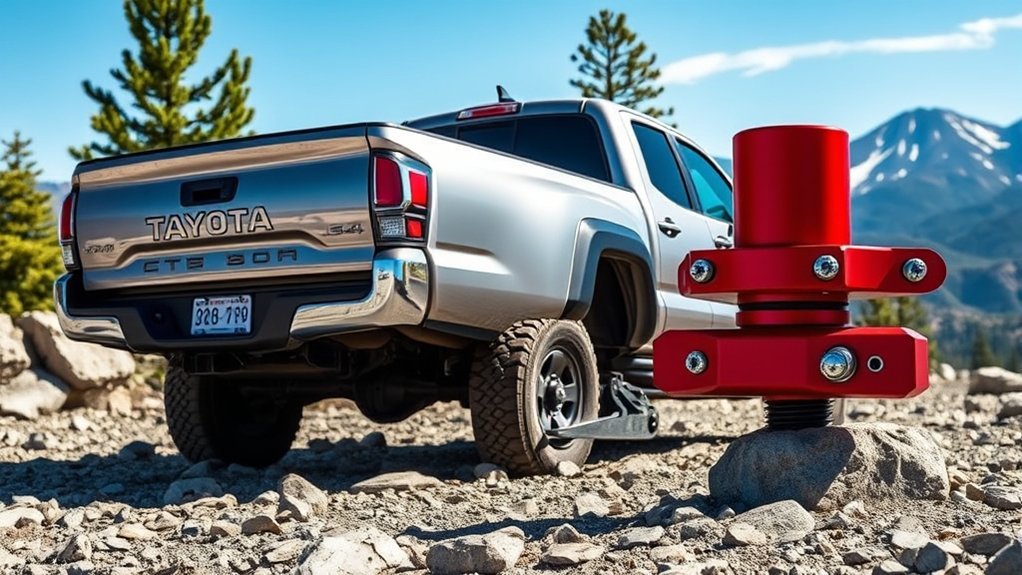
Upgrading your Tacoma with aftermarket recovery gear can improve recovery options when the parts are designed for your exact truck, installed correctly, and approved for the method you intend to use. Possible upgrades include vehicle-specific recovery points, bumpers with engineered recovery attachments, winch mounts, receiver-based recovery systems with explicit approval, and traction equipment.
Look for documentation that identifies the Tacoma generation or model year, intended recovery use, mounting method, supplied hardware, connector compatibility, permitted pull direction, and operating limits. Avoid relying on vague terms such as “heavy duty” or on a large advertised number without instructions explaining what that number represents.
[Products Worth Considering]

This heavy-duty 2-inch shackle hitch receiver adds dependable recovery capability to trucks, SUVs, ATVs, and UTVs. Built from carbon steel with corrosion-resistant finishing and protective isolators, it helps prevent scratches while delivering strong towing support for rugged recovery and hauling tasks. The dual pin-hole design allows flexible positioning for easier use in demanding conditions.

This adjustable tri-ball trailer hitch gives you flexible towing support with three hitch ball sizes and a 4.5-inch rise and drop for level hauling across different vehicles and trailers. Built for durability and convenience, it includes a tow hook, D-ring shackle, and a secure locking system for dependable towing, recovery, and off-road versatility.

This heavy duty recovery kit is built for safer vehicle extraction with a high-elasticity nylon snatch strap and reinforced loops for dependable performance. It includes two heavy duty D-ring shackles and a storage bag, giving you a complete setup for off-road, towing, and emergency recovery situations. Designed for strength and durability, it offers a high breaking strength and a generous working load limit for rugged use.
Best Tacoma Recovery Upgrades to Consider
- Vehicle-specific recovery points: Useful where additional approved front or rear recovery attachments are needed.
- Explicitly approved receiver recovery system: An option only when the receiver or hitch and the recovery accessory manufacturers approve the complete setup.
- Off-road bumper with engineered recovery points: Can combine protection, winch mounting, and recovery attachments but may add significant vehicle weight.
- Winch and compatible mounting system: Useful for controlled self-recovery when the winch, mount, electrical system, anchor, and recovery points are suitable.
- Compatible soft or metal shackles: Select connectors according to the recovery point’s shape and instructions.
- Recovery boards and shovel: Often reduce the required pull force or eliminate the need for a vehicle-assisted pull.
Note: Aftermarket bumpers, winches, skid plates, and recovery hardware add weight. Recheck payload and axle limits when adding heavy equipment, and make sure an accessory does not block airflow, sensors, approved recovery points, or required vehicle components.
Maintenance and Inspection Before Every Recovery
Mud, sand, water, corrosion, UV exposure, abrasion, and previous recovery loads can damage equipment. Inspect the recovery system before a trail trip, before applying a major load, and again after a demanding recovery.
- Straps and ropes: Follow the maker’s retirement criteria for cuts, melted fibers, severe abrasion, chemical contamination, damaged stitching, or unreadable identification.
- Soft shackles: Check for abrasion, cuts, damaged knots, contamination, and heat damage.
- Metal shackles: Inspect the body, pin, threads, identification, corrosion, bending, and deformation.
- Receiver recovery equipment: Inspect the insert, pin, receiver tube, mounting bolts, and surrounding structure for bending, cracking, elongation, looseness, or poor fit.
- Recovery points: Look for loose hardware, cracked welds, bent tabs, rust, frame damage, and fresh paint cracking or movement around the mount.
- Winch rope and rigging: Follow the winch manufacturer’s inspection procedure and replace damaged components before another pull.
Do not rely on appearance alone. If a component’s identification, intended use, mounting condition, or permitted load cannot be established, remove it from the planned recovery system until the manufacturer’s instructions can be confirmed.
Frequently Asked Questions
Can I use my Tacoma tow hitch as a recovery point?
Do not use a tow ball or ordinary ball mount for recovery. A receiver-mounted recovery shackle block does not automatically make the receiver recovery-rated. Use a receiver-based setup only when the receiver or hitch manufacturer and recovery-accessory manufacturer explicitly approve the complete system, loading method, and pull direction.
What recovery points does the 2026 Toyota Tacoma have?
Toyota states that front recovery hooks are standard across the 2026 Tacoma lineup, with additional rear recovery points on TRD Pro and Trailhunter. Equipment can still vary by configuration and market, so confirm the exact truck and owner’s manual before recovery.
What is the difference between a tow hook and a recovery point?
The name alone does not establish the allowed use. A hook or eye may be intended for emergency towing, transport, positioning, or vehicle recovery. A recovery attachment should be identified for the planned recovery by the vehicle or component manufacturer and used only within its stated procedure and load direction.
What limits apply to the 2026 Tacoma’s factory rear recovery points?
Toyota says the factory rear recovery points, if equipped, are for recovering the Tacoma when stranded off-road or on a slippery surface. Align the recovery vehicle for a straight rearward pull, do not apply a load greater than GVWR, remove slack from the recovery strap before pulling, and keep bystanders out of the recovery path.
Can I use the 2026 Tacoma rear recovery points for a kinetic or snatch recovery?
Do not treat the factory rear points as automatic approval for kinetic recovery. Toyota’s 2026 manual instructs owners to remove slack from the recovery strap before pulling and to keep the pull straight rearward and within the stated load limit. Follow Toyota’s procedure unless Toyota or the applicable recovery-equipment documentation explicitly approves another method.
What should I do if I am not sure a Tacoma attachment point is rated for recovery?
Do not use it for recovery. Check the owner’s manual or the component manufacturer’s instructions. If no verified recovery point is available, reduce resistance with digging or traction boards where safe, use another approved method, or call a professional recovery service.
Can I use a receiver shackle insert on my Tacoma?
Only when the complete receiver-based recovery system is approved for that use. Verify the receiver or hitch, mounting hardware, recovery insert, hitch pin, connector, truck configuration, permitted load direction, and recovery method. A rated insert by itself does not give an ordinary trailer receiver a recovery rating.
Can I recover from a Tacoma trailer safety-chain loop?
Do not use a trailer safety-chain loop for vehicle recovery unless the hitch manufacturer explicitly identifies and approves that loop for the intended recovery method and pull direction. A trailer-chain attachment is not automatically a recovery point.
Conclusion
A Tacoma tow hitch and a Tacoma recovery point are not interchangeable. Never use a tow ball or ordinary ball mount for vehicle recovery. Use a Toyota-designated or properly rated aftermarket recovery point and follow the instructions for that exact point.
For the 2026 Tacoma’s factory rear recovery points, Toyota gives a clear procedure: use them for off-road or slippery-condition recovery, pull straight toward the rear, do not exceed GVWR load on the points, remove slack from the recovery strap before pulling, and keep people out of the recovery path. Treat a receiver-based recovery setup as unverified unless every load-bearing component and the planned method are explicitly approved. Reduce resistance first, use the lowest-force suitable method, and call a professional when the vehicle, attachment points, terrain, or recovery system cannot be made safe.
Sources
- Toyota USA Newsroom: 2026 Toyota Tacoma — 2026 towing capacity, standard front recovery hooks, and trim-specific rear recovery points.
- Toyota Owners: 2026 Tacoma — If Your Vehicle Needs to Be Towed — Toyota’s factory rear recovery-point purpose, straight-pull requirement, GVWR load limit, no-slack instruction, and bystander warning.
- Toyota: 2026 Tacoma Brochure — factory equipment and recovery-point configuration information.
- WARN Basic Guide to Winching — winch preparation, inspection, anchor selection, rigging, load control, and exclusion-zone safety principles.