
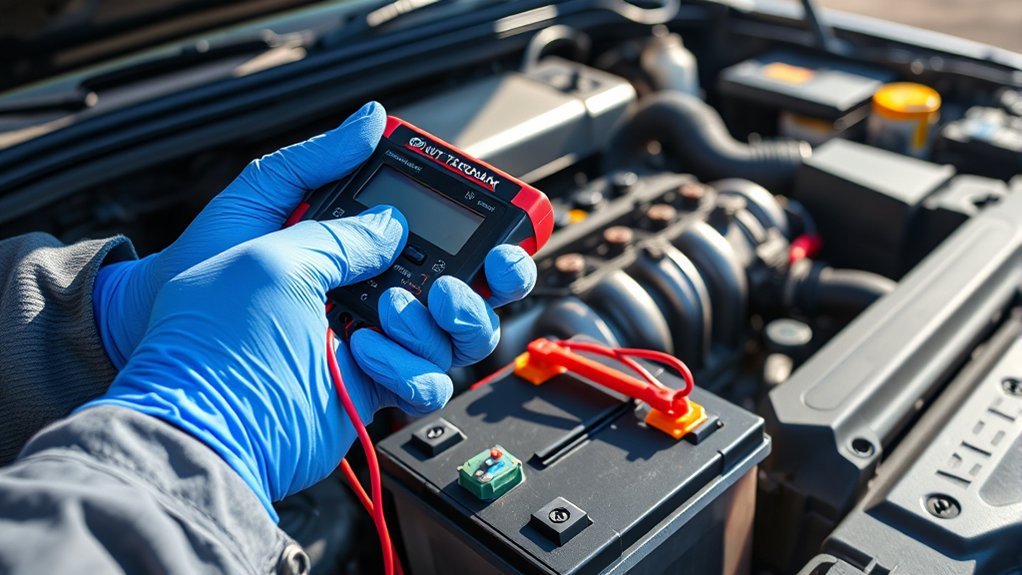
A Tacoma can have a small key-off draw for normal memory functions, but a battery that goes dead overnight or after a few days needs a proper parasitic draw test. Fully charge and test the 12-volt battery first, let the truck reach sleep mode, then measure key-off current. If the draw remains excessive, isolate the circuit with a fuse voltage-drop check or a careful fuse-pull test without repeatedly waking the truck.
Quick Answer
To find a parasitic battery drain on a Tacoma, fully charge and test the battery first, let the truck sit with all modules asleep, then measure key-off current with a DC amp meter. As a general diagnostic benchmark, a sleeping vehicle below about 50 mA is commonly considered normal, while a steady draw above about 100 mA deserves investigation. These are not universal Tacoma specifications. If the draw stays high, check voltage drop across the fuses or pull fuses one at a time until you identify the circuit causing the draw.
12-Volt System Only: This guide covers parasitic-draw diagnosis on the Tacoma’s 12-volt electrical system. On Tacoma Hybrid/i-FORCE MAX models, do not probe, disconnect, remove, or service high-voltage components or orange high-voltage wiring. Refer high-voltage diagnosis to Toyota service information or a qualified hybrid technician.
Key Takeaways
- A healthy 12-volt battery should be charged and tested first; low charge or a weak battery can look like a parasitic drain.
- Below about 50 mA after sleep mode is a common general benchmark, while a steady draw above about 100 mA is commonly considered suspect. Use service information for your exact Tacoma year, trim, and equipment.
- Do not open doors, press the key fob, or switch on electrical loads during the test because this wakes modules and can skew the reading.
- Checking millivolt drop across fuses can identify an active circuit without removing the fuse and waking modules.
- Common drain sources include interior lights, stuck relays, aftermarket stereos, dash cams, alarms, trailer wiring, alternator leakage, and modules that do not go to sleep.
At a Glance
| Time Required | Varies; module sleep alone may take several minutes, and circuit isolation can take much longer if the drain is intermittent |
| Difficulty | Moderate DIY electrical diagnosis |
| Tools Needed | Digital multimeter with fused DC amp input, fuse puller, wrench, battery charger or maintainer, safety glasses, and your Tacoma fuse diagram |
| Cost | No added cost if you already own the required tools; meter, battery, wiring, module, and professional diagnostic costs vary |
How to Read the Sleeping Current
| Below about 50 mA | Common general benchmark for a sleeping vehicle. Confirm against service information for your exact Tacoma. |
| 50–100 mA | Gray area. Consider model equipment, telematics, battery condition, periodic module wakeups, and whether the truck actually has a repeated discharge problem. |
| Above about 100 mA | Commonly treated as suspect once the vehicle is fully asleep. Isolate the active circuit before replacing parts. |
These ranges are general diagnostic guidance, not universal Toyota Tacoma factory specifications.
What Are the Signs of Parasitic Battery Drain?
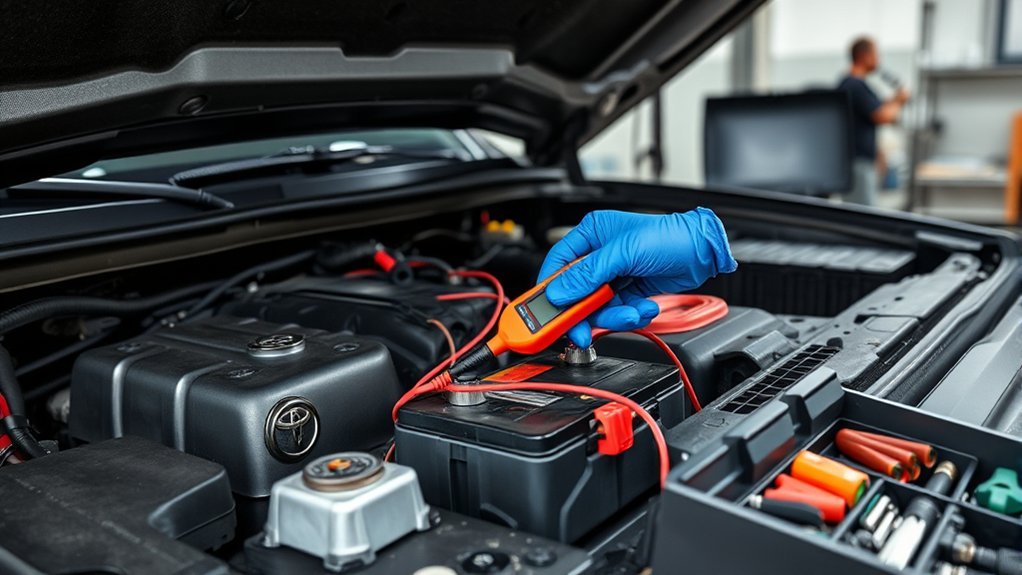
A parasitic battery drain is current that continues flowing after the ignition is off and the truck should be asleep. It is different from a weak battery, a loose terminal, or a charging-system problem. If you have not yet confirmed a key-off draw, the broader Tacoma battery-drain troubleshooting guide can help separate battery, charging, and parked-drain problems.
Watch for these signs:
- Dead battery after sitting: The Tacoma starts normally after charging but is dead again after one night or several parked days.
- Frequent jump-starts: You need a jump even when no lights were knowingly left on.
- Dim lights with the engine off: Interior lights or headlights look weak before startup.
- Clicking or no crank: The starter clicks rapidly or the dash goes dark when you turn the key or press Start.
- Battery tests good but keeps discharging: A proper battery test says the battery is healthy, but it still loses charge while parked.
- Aftermarket equipment was recently added: Stereos, amplifiers, remote starts, dash cams, GPS trackers, bed lighting, alarms, and trailer brake wiring can stay connected to constant power.
Note: A battery warning light while driving usually points more toward a charging-system problem than a parked parasitic draw. Check the battery and charging system before chasing a hidden key-off load.
Check the Battery and Charging System First
Before measuring parasitic draw, confirm the battery is fully charged and capable of holding that charge. Open-circuit voltage shows state of charge; it does not prove that the battery can deliver enough current under load. A discharged or aging battery can mimic a drain and send the diagnosis in the wrong direction.
- Fully charge the battery. Use a charger or maintainer suitable for the installed 12-volt battery.
- Check resting voltage. A conventional fully charged automotive battery is commonly in the upper-12-volt range. Battery chemistry, temperature, recent charging, and surface charge affect the exact reading. Interstate Batteries, for example, lists 12.88 volts for a fully charged conventional automotive battery in its state-of-charge guidance.
- Load-test or conductance-test the battery if no-starts continue. A battery can show acceptable open-circuit voltage and still fail when a starter load is applied.
- Check the charging system. Compare running-system voltage and charging behavior with the specification for your exact Tacoma. Do not condemn an alternator or charging component from one generic voltage number alone.
- Inspect the terminals and grounds. Clean corrosion, tighten loose clamps, and inspect ground cables before testing anything else.
Warning: Wear eye protection, remove metal jewelry, and never place a meter set to amps directly across the battery terminals. That can blow the meter fuse, damage the meter, create a short circuit, or cause injury.
Essential Tools for Measuring Parasitic Draw
To measure parasitic draw in your Tacoma, use equipment that can read low DC current safely and accurately. You do not need a specific brand, but the meter must support the type and range of automotive current you are measuring.
- Digital multimeter with a fused high-current DC amp input: This is the standard tool for an in-series test. Confirm the lead positions and fuse rating before connecting it.
- Low-amp DC clamp meter: A capable clamp meter can measure current without disconnecting the battery, which helps preserve module sleep state. Verify that the meter can resolve low DC current; many basic clamp meters cannot.
- Multimeter that reads millivolts: This lets you check voltage drop across accessible fuse test points without removing each fuse.
- Fuse puller or needle-nose pliers: Use this if you need to isolate circuits by removing fuses.
- Battery charger or maintainer: A fully charged battery gives cleaner diagnostic results.
- Owner’s manual or fuse-box diagram: Use the Tacoma-specific fuse map so you know what each circuit powers.
- Insulated wrench and safety glasses: These help protect you while working at the 12-volt battery.
A handheld multimeter is often enough, but preserving battery continuity can prevent unnecessary module wakeups. If your meter has a separate milliamp jack, do not move to that input until you know the current is safely below that jack’s fuse rating. For an in-series test, start on the meter’s highest appropriate fused current range.
[Products Worth Considering]

The ANENG SZ301 digital multimeter is a versatile testing tool for measuring AC/DC voltage, current, resistance, continuity, diode, capacitance, and live wire detection. It features a clear display, precise readings, and built-in safety protections including double fuses and overload protection, making it useful for electronics, automotive work, and household electrical troubleshooting. The kit includes a protective silicone case, test leads, and pre-installed batteries for convenient use right out of the box.
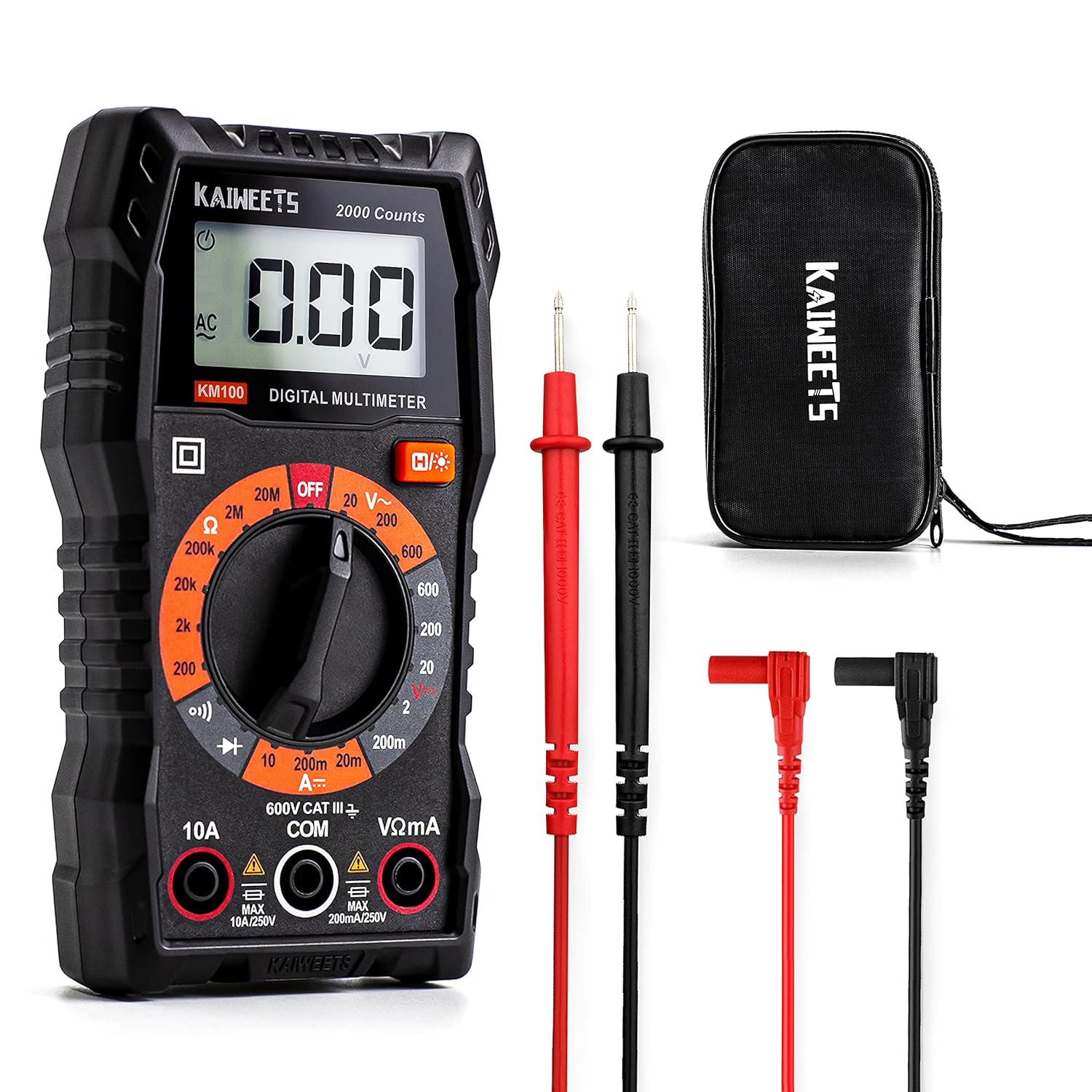
This KAIWEETS digital multimeter is a versatile tool for measuring AC/DC voltage, DC current, resistance, continuity, and diodes in home, automotive, and electrical applications. It includes pre-installed batteries, a carrying case, test leads, data hold, backlight, and overload protection for easier and safer everyday testing. Built with double fuses and rated for broad household and light professional use, it helps users diagnose electrical issues with confidence.

The TOPDON BT100 helps you quickly check the health and charge status of 12V lead-acid batteries with clear analytical results, including state of health, state of charge, voltage, and cranking performance. It supports a wide range of battery types and vehicles, making it a practical tool for diagnosing starting and charging issues at home or in the shop. Compact and easy to use, it provides fast, reliable testing without needing to charge the device first.
How Do You Prepare a Tacoma for a Parasitic Draw Test?
Accurate parasitic-draw testing depends on letting the Tacoma enter its normal sleep state and then keeping it there. Modern vehicle modules may remain active after shutdown or wake when you unlock the truck, open a door, press the key fob, reconnect a fuse, or disturb a monitored circuit.
- Turn everything off. Switch off lights, climate controls, chargers, accessories, and aftermarket electronics.
- Remove plug-in devices. Disconnect phone chargers, dash cams, adapters, coolers, and other removable loads from 12-volt and USB outlets.
- Open the hood before the sleep period. If the hood has a monitored latch or switch, use the vehicle-specific procedure needed to prevent it from keeping modules awake.
- Prepare any door you need open. If accessing an interior fuse panel requires an open door, correctly latch or otherwise satisfy the door-ajar switch so the truck can shut down its interior-light and body-control activity.
- Move the key fob away from the truck. On smart-key models, proximity communication can keep systems active or trigger wakeups.
- Wait for a stable sleep-state reading. Fluke advises allowing roughly 10–45 minutes for vehicle modules to enter sleep mode. Some vehicles can take longer, so judge the final draw only after the current has settled. Use year-specific Tacoma service information when available.
Pro Tip: Take a photo of each fuse panel before pulling fuses. It makes reinstallation faster and helps prevent mixing up fuse locations.
Battery-Disconnect Note: Disconnecting the 12-volt battery may reset stored settings or require certain systems to be initialized afterward. Toyota lists post-reconnection initialization requirements for some 2024 Tacoma systems. Check the procedure for your exact model year before disconnecting the battery.
How Do You Measure Parasitic Draw on a Tacoma?
The traditional DIY method puts a multimeter in series with the 12-volt battery so all key-off current passes through the meter. A capable low-amp DC clamp meter can check the same basic condition without breaking battery continuity.
[Products Worth Considering]

This smart automatic battery charger and maintainer helps keep automotive batteries charged and ready by delivering a full charge before switching to float mode for long-term maintenance. It supports 6V and 12V batteries with broad compatibility for lead-acid, AGM, gel, and lithium types, while built-in safety features like reverse polarity detection and spark-proof connection help ensure reliable use. Compact construction, included connection cables, and indicator lights make it a convenient choice for cars, SUVs, trucks, and storage maintenance.

The V500 Pro is an all-in-one automotive electrical diagnostic tool that combines circuit testing, wire tracing, oscilloscope analysis, multimeter functions, injector testing, relay and fuse checks, and component activation in one device. It helps technicians and DIY users quickly find open circuits, short circuits, broken wires, and current leaks while reducing disassembly and guesswork. With a rotating screen, built-in flashlight, and adjustable low-voltage power supply, it is designed to speed up troubleshooting in tight and low-light work areas.

This automotive circuit tester checks low-voltage DC systems from 3-65V, making it useful for diagnosing headlights, taillights, fuses, sockets, and other vehicle wiring issues. The digital backlit display provides clear voltage readings with fine accuracy, while the bidirectional polarity indicator helps you test from either ground or positive. Built with a durable probe, insulated tip, and extra-long spring wire, it is designed for dependable everyday use in automotive and household electrical work.
Multimeter In-Series Method
- Charge and test the battery first. Do not begin with a deeply discharged or known-failing battery.
- Set the multimeter to DC amps. Start on the meter’s highest appropriate fused current input.
- Prepare the Tacoma for sleep mode. Turn off loads, satisfy the door and hood switches as required, and keep the key away.
- Disconnect the negative 12-volt battery cable. Working on the negative side reduces the chance of accidentally shorting a positive connection to body ground.
- Connect the meter in series. Place one meter lead on the negative battery post and the other on the disconnected negative cable end so current flows through the meter.
- Do not operate high-current loads. Do not crank the engine, switch on headlights, operate powered accessories, or deliberately wake the truck while the meter is carrying the key-off load.
- Keep the meter connection stable. If the connection breaks, modules may reset or wake and the sleep period may need to start again.
- Wait for the current to settle. Ignore the initial awake-state current and record the stabilized sleeping value.
- Interpret the result. Below about 50 mA is a common general benchmark, while a steady draw above about 100 mA is commonly considered suspect. Compare the reading with service data for your exact Tacoma before declaring a fault.
A 50 mA draw is 0.05 amps, which uses about 1.2 amp-hours in 24 hours. A 100 mA draw uses about 2.4 Ah per day, while a 350 mA draw uses about 8.4 Ah per day. How quickly that causes a no-start still depends on battery capacity, state of charge, age, temperature, and how much reserve is needed to start the truck.
DC Clamp Meter Method
If you have a low-amp DC clamp meter with enough resolution, clamp it around the appropriate 12-volt battery cable, zero the meter as its instructions require, and monitor current while the Tacoma enters sleep mode. This avoids breaking the battery connection and helps preserve module state. The limitation is accuracy: many general-purpose clamp meters are designed for much larger currents and may not resolve a 20–100 mA change reliably.
How Do You Find the Circuit Causing the Battery Drain?
Once you confirm an excessive sleep-state draw, the next job is to identify which branch of the electrical system is still consuming power. On a modern Tacoma, start with a method that disturbs the truck as little as possible.
[Products Worth Considering]

The CRAFTSMAN CMXCESM258 is a versatile 4-in-1 battery charger and maintainer designed to charge, maintain, test, and restore a wide range of vehicle batteries. Its microprocessor-controlled operation, auto voltage detection, reverse hook-up protection, and multi-stage charging help support reliable starts and extend battery life for cars, motorcycles, ATVs, trucks, SUVs, and boats.

This AstroAI digital multimeter is designed for accurate troubleshooting of automotive and household electrical systems. It measures AC/DC voltage and current, resistance, continuity, capacitance, frequency, duty cycle, diode, and temperature, while the True RMS and auto-ranging functions help deliver reliable readings. A backlit LCD, data hold, kickstand, and safety-focused fuse protection make it practical and dependable for everyday diagnostics.

This Nilight truck bed light kit adds bright white illumination to cargo areas, side markers, undercarriage spaces, and foot wells for safer work and easier loading after dark. With eight connected pods and flexible wiring, it supports custom installs on trucks, vans, and off-road vehicles. The waterproof design and included switch help deliver dependable lighting in tough weather and daily use.
Preferred on Modern Vehicles: Check Voltage Drop Across Fuses
A fuse has a very small amount of resistance. When current flows through it, a sensitive multimeter can detect a tiny voltage drop across the fuse’s exposed test points. Checking that drop lets you identify circuits carrying current without removing the fuse and waking the module behind it.
- Keep the Tacoma in its established sleep state. Do not unlock it or operate accessories.
- Set the multimeter to a suitable DC millivolt range. Follow your meter instructions.
- Probe the two exposed test points on an accessible fuse. A sleeping circuit with no current flow should show essentially no measurable drop.
- Record fuses that show measurable voltage drop. The millivolt value alone is not a universal amp reading because fuse type and rating affect the relationship between voltage drop and current.
- Use the Tacoma wiring diagram or service information. Identify every component powered by each suspect fuse.
- Narrow the circuit. Disconnect or test the loads on that branch one at a time while preserving the established baseline whenever possible.
Fluke and ALLDATA both describe voltage-drop testing across fuses as a way to isolate a parasitic load without repeatedly removing fuses and disturbing module sleep.
Traditional Fuse-Pull Method
If voltage-drop testing is not practical on a particular fuse or with your equipment, remove one fuse at a time while watching the current. A large drop identifies the circuit that deserves further diagnosis; it does not prove that the fuse itself is defective.
- Keep the meter connected and the Tacoma asleep. Avoid opening doors or using the remote.
- Use the fuse diagram for your exact model year. Work methodically through the appropriate fuse panels.
- Pull one fuse and watch the current. If the draw does not change meaningfully, reinstall it before moving on.
- Let the baseline recover after a wakeup. Reinstalling a fuse can wake a control module. If current spikes, wait until it returns to the established sleep-state baseline before judging the next fuse.
- Look for a major change. For example, if a stable 350 mA draw falls to 35 mA when one circuit is disabled, that branch becomes the lead suspect.
- Identify everything supplied by that circuit. One fuse may power several devices, relays, or modules.
- Inspect the individual loads. Check for stuck relays, lights staying on, damaged wiring, water intrusion, aftermarket equipment, and modules being kept awake by another input.
Do not assume the fuse itself is bad. The fuse is only a diagnostic marker that points you toward a branch of the circuit. The actual cause may be a component, relay, module, switch, wiring harness, accessory, or another device keeping a networked module awake.
What Commonly Causes Parasitic Battery Drain on a Tacoma?
After confirming excessive key-off current, focus first on equipment that can remain connected to battery power while the truck is parked.
- Interior, cargo, glove-box, vanity, or bed lights: A lamp that remains on can create a significant continuous load.
- Aftermarket electronics: Stereos, amplifiers, dash cams, alarms, remote starts, GPS trackers, lighting kits, and other accessories are common suspects when connected to unswitched power.
- Stuck relays: A relay that stays closed can keep a normally switched circuit energized after shutdown.
- Trailer wiring and brake-controller circuits: Corrosion, moisture, damaged connectors, or poor splices can create unwanted current paths.
- Power seat or window circuits: Faulty switches, control modules, or motors can sometimes remain active.
- Alternator rectifier leakage: A failing diode can allow key-off current through the charging system even though the engine is stopped.
- Modules that do not sleep: Body, telematics, security, infotainment, or other networked modules can remain awake because of a module fault, software issue, switch input, wiring problem, or repeated network wake signal.
Note: A temporary current level above the sleeping benchmark immediately after shutdown is not automatically a fault. Diagnose the current that remains after the Tacoma reaches its stable sleep state.
What Should You Do After Finding the Draining Circuit?
When one circuit clearly accounts for the excess draw, narrow the fault before buying parts.
- Check simple loads first. Look for lamps, switches, chargers, and removable accessories on that circuit.
- Disconnect aftermarket equipment. If the excessive draw disappears, repair or rewire that accessory using the correct switched power source, fuse protection, and ground.
- Test suspect relays. A sticking relay can keep a load powered even though the truck is off.
- Inspect for water and corrosion. Moisture in connectors, trailer plugs, bed-light wiring, or fuse areas can create unintended current paths.
- Use the circuit diagram. A single fuse can supply several components, so wiring information helps prevent parts swapping.
- Treat module circuits carefully. A module may be staying awake because another switch, sensor, accessory, or network message is commanding it to remain active.
- Check the charging system if the alternator branch is implicated. A leaking rectifier diode can create key-off draw. Have alternator leakage and charging-system operation tested using the correct service procedure instead of casually disconnecting high-current alternator output wiring.
- Verify the repair. Repeat the complete sleep-state test and confirm that the abnormal portion of the draw is gone.
Do not replace an expensive control module merely because removing its fuse reduces current. First determine why that module is awake.
How Can You Reduce Future Tacoma Battery Problems?
Good Tacoma battery diagnosis and maintenance reduces false parasitic-draw diagnoses and surprise no-starts. Toyota battery-maintenance guidance notes that storage time, temperature, parasitic drain, and battery load can reduce battery performance and service life.
- Use a suitable maintainer during long storage. This is especially useful for trucks that sit for extended periods or have legitimate always-on equipment.
- Test the battery before severe weather. Temperature affects battery output and starting reserve.
- Keep terminals and grounds clean and tight. Poor connections can imitate battery or charging faults.
- Avoid relying on short idle periods to recover a discharged battery. A properly discharged battery should be charged and tested rather than repeatedly jump-started.
- Disconnect unnecessary plug-in accessories. Remove chargers, dash cams, coolers, inverters, and adapters when they do not need constant power.
- Test an aging battery rather than replacing it on age alone. Battery lifespan varies with chemistry, climate, vibration, usage, storage, and maintenance.
When Should You Call a Professional?
Get professional help if the suspect circuit involves airbags, security systems, hybrid high-voltage equipment, smart-key electronics, body-control modules, infotainment networks, or wiring you cannot identify safely. Also consider professional diagnosis if the current changes unpredictably over hours, a fuse points to several networked modules, the truck has water damage, or extensive non-factory wiring makes the circuit difficult to trace.
A technician can use scan data to see which modules remain awake, check applicable Toyota service information, monitor intermittent current over time, inspect communication-network activity, and test circuits without repeatedly disturbing module sleep. That is usually more useful than replacing batteries, alternators, relays, or modules by guesswork.
Frequently Asked Questions
What is a normal parasitic draw on a Toyota Tacoma?
As a general automotive benchmark, a sleeping vehicle below about 50 mA is commonly considered normal, while a steady draw above about 100 mA is commonly considered suspect. These are not universal Tacoma specifications. The correct limit depends on model year, equipment, battery condition, factory systems, and aftermarket accessories, so use service information for your exact truck when available.
How long should I wait before checking parasitic draw?
Wait until the Tacoma reaches a stable sleep-state reading rather than relying only on a timer. Fluke advises allowing roughly 10–45 minutes for vehicle modules to sleep, but some vehicles can take longer. Keep the key away, avoid opening doors or operating accessories, and use year-specific Tacoma service information when available.
What is the most common cause of parasitic battery drain?
Common causes include lights that stay on, aftermarket electronics connected to constant power, stuck relays, trailer-wiring faults, alternator leakage, and control modules that do not enter sleep mode. Start with recently installed accessories and simple visual checks before replacing expensive parts.
Can I find a parasitic drain without pulling fuses?
Yes. A sensitive multimeter can measure millivolt drop across accessible fuse test points while the fuses remain installed. Current flowing through a fuse creates a tiny voltage drop, which can identify an active circuit without repeatedly removing fuses and waking sleeping modules. A suitable low-amp DC clamp meter can also measure total battery-cable current without disconnecting the battery.
Can a bad alternator drain my Tacoma battery overnight?
Yes. A leaking alternator rectifier diode can create key-off current even while the engine is stopped. If circuit testing points toward the alternator, have alternator leakage and charging-system operation tested with the correct service procedure rather than casually disconnecting high-current alternator wiring.
Should I disconnect the positive or negative battery cable for a parasitic draw test?
Most DIY in-series tests use the negative 12-volt battery cable and place the meter between the negative battery post and disconnected cable end. Working on the ground side reduces the chance of accidentally shorting a positive connection to body ground. Follow the meter instructions and the service procedure for your exact Tacoma.
Why did my current reading jump when I opened the door?
Opening a door can switch on lights and wake body-control modules, so current can jump sharply. Restore the correct door-latch condition, keep the key fob away, and wait until the truck returns to its established sleep-state baseline before judging the reading.
Will replacing the battery fix parasitic drain?
Only if the battery itself is weak or failing. If a circuit continues drawing excessive current while the Tacoma is parked, a new battery can eventually discharge too. Fully charge and test the battery, verify the charging system, then measure sleep-state key-off current.
Conclusion
Finding a parasitic battery drain on a Tacoma is a measurement problem, not a parts-swapping problem. First prove that the 12-volt battery and charging system are healthy. Then let the truck reach a stable sleep state and measure key-off current. If the draw is excessive, preserve that sleep state when possible by checking voltage drop across fuses before resorting to repeated fuse removal. Once you identify the circuit, test its lights, relays, accessories, wiring, charging components, and modules individually. Finish by repeating the sleep-state test so you know the abnormal draw is actually gone.
Sources
- Fluke: How to Find Parasitic Battery Drain with a Multimeter — supports meter setup, sleep-mode timing, general current benchmarks, fuse isolation, and voltage-drop testing.
- ALLDATA DIY: Parasitic Draw Test — supports the risk of waking modules by pulling fuses and the millivolt voltage-drop method across fuses.
- Interstate Batteries: How to Charge Your Car Battery — supports resting-voltage/state-of-charge context.
- AAA: Bad Alternator vs. Bad Battery — supports separating battery faults from charging-system faults.
- Toyota Owners: 2024 Tacoma Items to Initialize — supports the warning that battery reconnection can require initialization of certain systems.
- Toyota T-SB-0021-24 Rev1 via NHTSA: Battery Inspection and Maintenance During PDS — supports the effect of storage time, temperature, parasitic drain, and battery load on battery performance and service life.





[…] Measure parasitic draw only after the battery is fully charged and tested, the ignition is off, accessories are disconnected, doors are closed or latched, and the truck has entered sleep mode. For a more detailed instrument setup and test sequence, see the full Tacoma parasitic battery drain test guide. […]
[…] Conductance test battery; test for parasitic battery drain […]
[…] guide shows what working in a fuse box involves, and if your battery starts dying overnight, this parasitic drain test guide explains how to track down the […]