
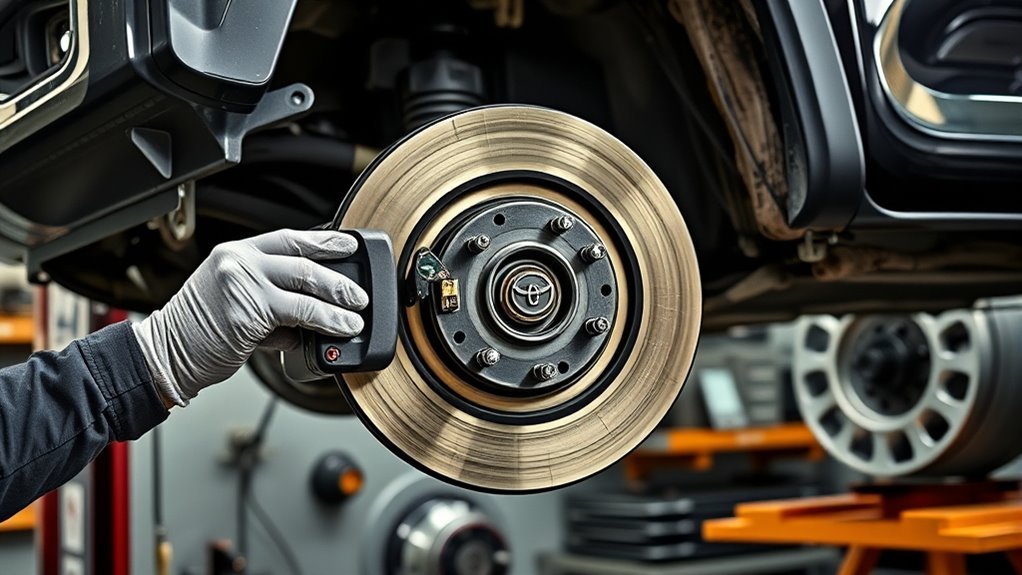
A bad Tacoma wheel bearing usually makes a humming, growling, or rumbling noise that rises with vehicle speed (typically starting noticeable shifts around 35 to 45 mph), not engine speed. The sound may change during gentle left or right curves as weight shifts across the truck. Confirm the fault by ruling out tire and brake noise, checking wheel play while watching the joints, comparing both sides by hand, and inspecting the hub or axle area. A turn test can suggest a side, but it cannot prove the exact corner.
Last updated: July 31, 2026. This revision adds current Tacoma recall checks, a two-clue confirmation rule, a lifted-4WD false-positive warning, and clearer front-versus-rear localization guidance.
What’s in This Article
- Check Recalls and Tacoma-Specific False Positives
- Quick Answer: How to Tell If Your Tacoma Has a Bad Wheel Bearing
- Tacoma Wheel Bearing Diagnosis at a Glance
- What a Bad Tacoma Wheel Bearing Sounds Like
- Safety and Prep Before You Start Diagnosing
- Visual Checks for Obvious Bearing Problems
- Check Wheel Play: Where and How to Test
- Spin Both Wheels to Compare Feel
- Road Tests That Reveal Bearing Symptoms
- How to Tell Bearing Noise From Other Problems
- Tools and Tricks for Better Diagnosis
- Parts, DIY vs Shop, and What to Tell Your Mechanic
- When to Stop Driving and Call a Shop
- Frequently Asked Questions
- Conclusion
Scope note: Tacoma bearing, hub, axle, brake, and four-wheel-drive arrangements vary by model year, axle, and drivetrain. Use this guide to narrow the symptom, then verify the repair procedure and parts for your exact year, trim, 2WD or 4WD configuration, and front or rear axle.
Check Recalls and Tacoma-Specific False Positives
Before calling a wheel-end noise a bad bearing, check the Tacoma’s VIN for open safety recalls. Toyota has issued axle- and brake-related campaigns for some recent Tacomas that can create looseness, leakage, braking changes, or instability near a wheel. These campaigns are not wheel-bearing recalls, but their symptoms can overlap with a wheel-end complaint.
Model-Year Safety Checks
- Certain 2022–2023 Tacomas: NHTSA campaign 24V152000 covers a rear axle retaining-nut condition that can affect stability and brake performance.
- Certain 2024–2025 Tacomas: NHTSA campaign 25V058000 covers rear brake hoses that can be damaged by mud or dirt buildup inside affected wheel combinations.
- Every model year: Use Toyota’s VIN recall lookup because campaign coverage depends on the individual truck.
On a lifted 4WD Tacoma, a buzz or vibration near the driver-side front can also come from the front differential or CV support area and be mistaken for a wheel bearing. Treat that pattern as a Tacoma-specific false positive, not a diagnosis. Do not engage 44WD on an unsuitable surface only to test the noise. Report whether the symptom began after lift work or changes during normal, owner-manual-permitted 4WD use, then inspect the front differential and CV axle area before replacing a hub.
Quick Answer: How to Tell If Your Tacoma Has a Bad Wheel Bearing
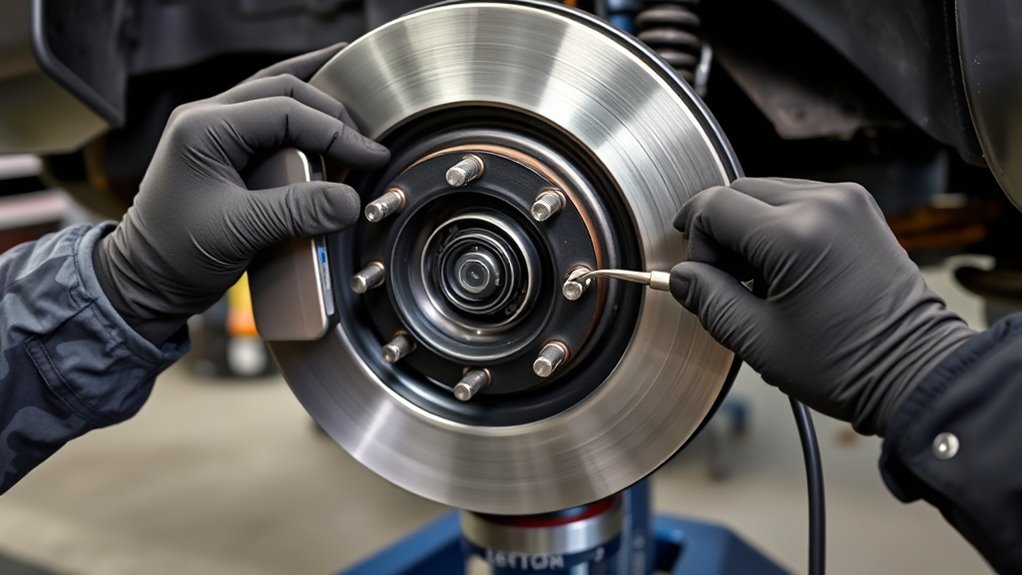
Use a five-step sequence instead of replacing a hub from sound alone:
- Confirm that the noise follows road speed: A bearing hum or growl usually becomes faster or louder as the Tacoma speeds up, even when engine rpm changes.
- Check the simple causes first: Inspect tire pressure, tread cupping, loose or damaged lug hardware, brake drag, and a bent brake dust shield.
- Listen during gentle turns: A louder left-turn noise often raises suspicion of the right side, while a louder right-turn noise often raises suspicion of the left side. Treat this as a clue, not proof.
- Lift and inspect safely: Check wheel play, rotate the wheel by hand, and compare the same axle’s opposite side.
- Confirm before ordering parts: Rule out tires, brakes, constant velocity (CV) joints, suspension joints, and differential or driveline noise.
Use a two-clue rule: Do not condemn a bearing from one symptom. Look for one driving clue, such as road-speed hum or a turning-load change, plus one stationary clue, such as rough hand rotation, hub movement relative to the knuckle, or professional chassis-ear localization.
A bearing can be noisy before it develops obvious wheel play. Noise can also travel through the axle housing or body, so a road test may identify only the general side of the truck. Confirm the exact corner through physical inspection or professional chassis-ear testing.
Tacoma Wheel Bearing Diagnosis at a Glance
| Symptom | More Likely Source | Confirming Clue | What It Does Not Prove |
|---|---|---|---|
| Hum, rumble, or growl that rises with road speed | Wheel bearing, tire, or driveline | Noise remains while coasting and may change during gentle turns | The exact wheel corner |
| Noise changes sharply with pavement texture | Tire tread or cupping | Visible uneven wear or noise that moves after tire rotation | That the bearing is healthy |
| Clicking or popping during tight turns under power | Outer CV joint | Torn boot or grease sprayed near the axle | That no bearing wear exists |
| Scraping that changes with brake pressure | Brake pad, caliper, rotor, or dust shield | Hot brake, visible shield contact, or uneven pad wear | A failed wheel bearing |
| Growl or whine that changes between acceleration and coast | Differential or driveline | Noise follows throttle load more than steering load | Which internal driveline component is worn |
| Wheel play, wobble, grinding, or hub heat | Advanced wheel-end, suspension, brake, or lug-hardware problem | Movement visible at the hub or joint during inspection | That it is safe to keep driving |
Key Takeaways
- A bearing-related hum usually follows vehicle speed, not engine rpm.
- Turning-load changes can suggest a side, but sound can travel through the truck and mislead you.
- No wheel play does not rule out an early bearing failure.
- Brake drag, tire cupping, CV joints, loose lug hardware, and differential noise can mimic a bearing.
- Stop driving if you find grinding, wheel wobble, major looseness, braking changes, heavy vibration, or instability.
What a Bad Tacoma Wheel Bearing Sounds Like
A failing Tacoma wheel bearing commonly produces a steady hum, rumble, roar, or growl. The frequency usually rises with vehicle speed. It may remain present while you coast, which helps separate it from a sound caused only by engine rpm or a transmission shift.
Timken’s wheel-hub bearing diagnostic guide identifies humming, rumbling, growling, grinding, wheel vibration, and wobble as possible wheel-end symptoms. It also warns that tires, CV joints, suspension parts, brakes, alignment, and loose lug hardware can create similar sensations.
You may feel vibration through the steering wheel, floor, seat, or body. A front wheel-end problem may be easier to feel through the steering, while a rear problem may travel through the floor or axle housing. That pattern is not reliable enough to identify the corner by itself.
During a safe road test, note whether the pitch changes during gentle left and right curves. If the noise gets louder on a left curve, the additional load often raises suspicion of the right side. If it gets louder on a right curve, the left side becomes more suspicious. Noise can travel through the chassis, so confirm the suspected side with an inspection.
Safety and Prep Before You Start Diagnosing
Park the Tacoma on firm, level ground. Set the parking brake, chock the wheels that will stay on the ground, and keep people and pets away from the truck. Use the model-specific lifting and support points in your Toyota Tacoma owner information.
Use rated jack stands whenever you work around a raised wheel. The Australian Competition and Consumer Commission’s vehicle support stand guidance calls for a hard, level surface, properly rated stands, fully engaged locks, and wheel chocks. Never place any part of your body beneath a vehicle supported only by a jack.
Gather safety glasses, gloves, a floor jack, rated jack stands, wheel chocks, a flashlight, and basic hand tools before lifting. A mechanic’s stethoscope can help with hand-spin checks, but it must touch only a stationary knuckle, axle housing, or other non-rotating part.
Secure the Tacoma on level ground, chock the wheels, use rated jack stands, and keep your body outside the truck’s fall zone during every wheel test.
- Park on firm, level ground and set the parking brake.
- Chock the wheels that remain on the ground in the direction the truck could roll.
- Loosen no structural fasteners during a basic diagnosis.
- Lift only from the approved point for your Tacoma.
- Place rated stands at approved support points and confirm stability before touching the wheel.
- Record the speed, turn direction, throttle condition, and road surface where the noise occurs.
Warning: Never work beneath or reach far under a raised vehicle unless it is securely supported on rated stands. Never use the engine or drivetrain to spin a raised wheel during this diagnosis.
Visual Checks for Obvious Bearing Problems
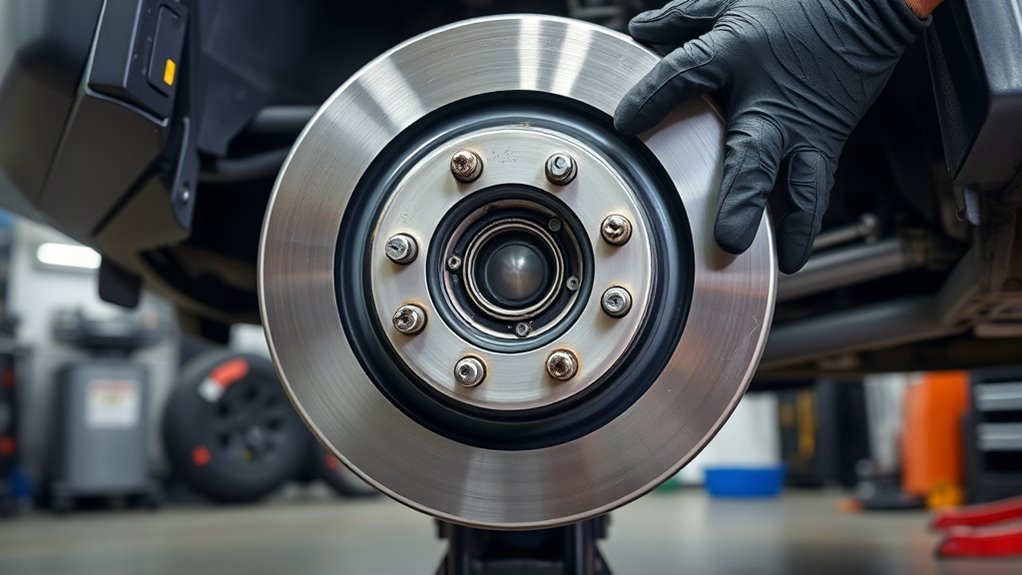
With the truck lifted and supported, inspect the wheel, tire, lug hardware, brake parts, hub area, axle seal area, and nearby suspension components. Look for corrosion, damaged seals, loose hardware, heat discoloration, rubbing marks, and fluid or grease contamination.
Do not treat leakage as automatic proof of a bad bearing. Tacoma front and rear designs differ, and fluid near a wheel can come from an axle seal, brake component, CV boot, or another nearby source. Fluid on brake friction surfaces requires prompt repair even when the bearing is not the cause.
Inspect the tire for low pressure, tread cupping, separated tread, embedded objects, or irregular wear. NHTSA’s TireWise guidance recommends using the vehicle manufacturer’s pressure information and addressing irregular wear rather than relying on the pressure molded into the tire sidewall.
Inspect Hub And Seal
Inspect the hub and nearby seal area for rust, cracks, looseness, damaged sealing surfaces, or fluid tracks. A damaged seal can allow water and dirt into a bearing or permit lubricant to reach surrounding components.
- Check the wheel studs and lug seats for damage or movement.
- Look for corrosion, impact marks, or heat discoloration around the hub.
- Check whether the visible seal area sits evenly and remains dry.
- Watch the rotor-to-hub area as you rotate the wheel by hand.
- Inspect the backing plate or dust shield for contact with the rotor.
Do not drill, pry open, or inject grease into a sealed hub assembly. Tacoma bearing service procedures differ by axle and model year. If the seal, hub, or axle area is damaged, verify the correct Toyota service procedure before disassembly.
Check For Fluid or Grease Leakage
Use a flashlight to trace fresh fluid or grease to its highest wet point. Grease sprayed in a circular pattern near a front axle often points toward a damaged CV boot. Oil around a rear backing plate may point toward an axle-seal issue. Brake fluid, gear oil, and grease each require different repairs.
Dirt stuck to a wet area suggests the leak has existed for some time. Clean only enough to identify the source. Do not drive if the leak has contaminated brake pads, shoes, a rotor, or a drum.
Check Wheel Play: Where and How to Test

A wheel-play test can reveal looseness in a hub, bearing, ball joint, tie rod, steering part, or suspension connection. It does not identify the failed part unless you watch where the movement occurs.
Before lifting, make sure the lug nuts are present and there is no obvious loose-wheel condition. Do not continue a road test with loose or damaged lug hardware.
Ask a helper to watch the hub, steering knuckle, ball joints, and tie rod while you rock the tire. If the tire moves but the hub does not, the looseness may be in a suspension or steering joint. If the hub and rotor move relative to the knuckle, the bearing or hub becomes more suspicious.
Check procedure:
- Support the Tacoma on rated jack stands and keep your hands away from pinch points.
- Hold the tire at 12 and 6 o’clock, then rock it firmly but smoothly.
- Ask a helper to watch the upper and lower joints and the hub-to-knuckle area.
- Repeat at 3 and 9 o’clock while watching the tie rod and steering connections.
- Rotate the wheel by hand and feel for rough, notchy, or grinding movement.
- Repeat the same checks on the opposite side of the axle.
A bearing can make noise before measurable wheel play develops. Conversely, visible play can come from a ball joint, tie rod, loose fastener, or another suspension part. Use movement as a reason for immediate inspection, not as automatic proof that the bearing is the only failed component.
Spin Both Wheels to Compare Feel
Compare both wheels on the same axle because the quieter side gives you a baseline. Apply similar hand force to each wheel and compare roughness, vibration, scraping, and uneven resistance. Do not judge the bearing only by how many turns the wheel completes.
Brake-pad contact, parking-brake adjustment, CV axles, differential gears, seals, and drivetrain position can all change hand-spin resistance. One wheel may stop sooner without having a failed bearing.
Front-Wheel Comparison
When checking the front axle, keep the rear wheels chocked and the parking brake applied. A 4WD front wheel may have more normal driveline resistance than a 2WD front wheel. Compare texture and noise rather than expecting the wheel to spin freely for a set number of revolutions.
Rear-Wheel Comparison
A rear-wheel comparison may require the parking brake to be released. Do not release it unless both rear sides are securely supported and the front wheels are chocked in both directions. Differential type and transmission position can affect how the wheels move. If the wheels will not rotate safely by hand, stop rather than forcing them.
Never run the engine, select a gear, or power the drivetrain while the Tacoma is supported on ordinary jack stands for this test.
On a front corner, place one hand lightly on a stationary coil spring or steering knuckle while turning the wheel with the other hand. On a rear corner, vibration may be felt at a safe, accessible part of the axle housing. Keep fingers, clothing, hair, tools, and the stethoscope probe away from rotating parts.
Pro tip: Compare vibration texture and sound—not free-spin time. Brake and driveline drag can make a healthy wheel stop sooner.
Road Tests That Reveal Bearing Symptoms
A short road test can reveal symptoms that do not appear while the truck is lifted. Choose a smooth, familiar road with light traffic. Avoid sharp steering, abrupt braking, high speed, and any maneuver that affects nearby traffic.
Focus on vehicle speed rather than engine speed. A bearing-related hum usually changes as the wheels turn faster. A noise that changes mainly with engine rpm, transmission gear, or throttle load may come from another system.
- Accelerate gradually: Listen for a hum, rumble, or growl that rises with road speed.
- Hold a steady speed: Note whether the sound remains constant or pulses once per wheel rotation.
- Coast safely: Check whether the noise remains when you lift off the accelerator.
- Use gentle curves: Note whether the noise changes as weight shifts left and right.
- Compare pavement: A major change between smooth and coarse pavement raises suspicion of tire tread noise.
- Test light brake pressure only when safe: A scraping sound that changes immediately may involve the brakes or dust shield.
A passenger can record the sound and note speed, road surface, and turn direction. The driver should not hold or operate a phone while the Tacoma is moving.
Do not engage or change four-wheel-drive modes only to diagnose a wheel bearing. Tacoma 4WD systems and permitted road-surface modes vary by model year and configuration. Follow the owner’s manual. If the noise changes with a proper, permitted drivetrain-mode change, inspect the CV axles, front differential, transfer case, driveshafts, and related driveline parts rather than assuming the wheel bearing is responsible.
Note: A turn test often narrows the problem to one side of the Tacoma, but it may not distinguish the front bearing from the rear bearing on that side.
How Do You Tell a Front Tacoma Bearing From a Rear Bearing?
Use location clues only to choose the next inspection point. Steering-wheel vibration and roughness felt at a front knuckle raise suspicion of a front wheel end. Floor, seat, or axle-housing vibration may point rearward. Neither pattern proves the corner because sound travels through the frame and axle housing.
For a better comparison, check both front wheels and both rear wheels separately. Watch the hub relative to the knuckle at the front and the axle or backing-plate area at the rear. If hand checks remain inconclusive, a shop can place chassis microphones at all four wheel ends and the differential, then compare the sound under the same road condition.
How to Tell Bearing Noise From Tires, CV Joints, or the Differential
Match the sound to the condition that triggers it. A wheel bearing commonly creates a steady, road-speed hum or growl that may intensify as steering load changes. Tire noise often changes more with pavement texture, pressure, tread pattern, or rotation position.
A worn CV joint often clicks or pops during tight turns under power. Differential or driveline noise more often changes between acceleration, steady throttle, and coast. For Tacoma-specific axle symptoms, see the site’s Tacoma CV axle guide and Tacoma differential guide.
Lifted 4WD Tacoma False Positive
If the hum or vibration began after a suspension lift, do not assume the nearby front hub is bad. Changed CV angles can make a front differential or CV-support problem easier to feel, especially near the driver-side front. A true wheel-bearing noise usually remains tied to wheel speed and may react to steering load. A driveline-support vibration may react more to drivetrain load, lift height, or permitted 4WD operation.
Do not change 4WD modes on dry, high-traction pavement or outside the owner’s manual instructions to force a diagnosis. Record when the vibration began, which drivetrain mode was already in use, and whether the symptom changes under acceleration or coast. Ask the shop to compare the hub, CV axle, front differential support, and driveshaft before ordering a bearing.
Tire Noise Clues
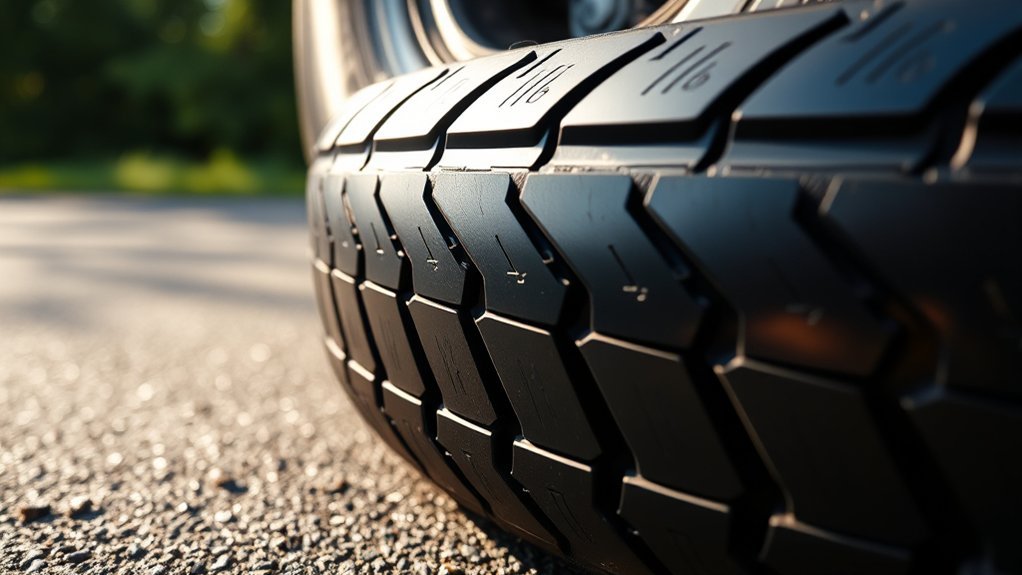
Cupped, feathered, or uneven tread can sound almost identical to a wheel bearing. Run a hand carefully across the tread while the truck is parked and look for alternating high and low blocks, edge wear, or damage.
- Check pressure when the tires are cold.
- Inspect for cupping, feathering, separated tread, or embedded objects.
- Listen for a sound that changes sharply with pavement texture.
- Check whether the noise moves after a permitted tire rotation.
If the noise moves with a tire, the tire or wheel becomes the leading suspect. If it remains at the same corner, continue checking the brake, bearing, hub, and suspension.
CV Joint Indicators
A CV-joint problem often produces clicking, popping, or rhythmic clacking during a tight turn, especially while accelerating. A torn boot may spray grease around the axle, control arm, or inner fender.
A bearing more often creates a smoother hum, roar, or growl that follows road speed. However, clicking can also occur during advanced wheel-end damage, so inspect both systems when symptoms overlap.
Brake Drag, Dust Shield, and Loose-Wheel Clues
Brake drag can make a wheel difficult to turn and create heat, scraping, vibration, or pulling. A bent dust shield can scrape the rotor once per revolution. Loose lug hardware can produce wobble or vibration and requires immediate correction.
- Look for a dust shield touching the rotor.
- Check whether light brake pressure changes the sound.
- Compare brake heat only after a short, gentle drive and without touching hot parts.
- Inspect wheel studs, lug nuts, and lug seats for damage or movement.
A hot corner does not prove a bearing is bad. A sticking caliper or parking-brake problem can create the same heat and resistance.
Differential Sound Signs
Differential noise may sound deeper or more centered than a wheel-bearing growl. It often changes with acceleration, coast, towing load, or driveline torque rather than only with steering load.
- Hum or growl that changes during gentle curves: Check the wheel bearings, tires, and wheel-end parts.
- Roar that changes with pavement: Check tire pressure, tread, balance, and wear.
- Low growl or whine that changes between throttle and coast: Inspect the differential and driveline.
- Clicking during tight powered turns: Inspect the CV joint and boot.
- Scraping that changes with braking: Inspect the rotor, pads, caliper, and dust shield.
Tools and Tricks: Coil Spring, Stethoscope, and Phone Recordings
A mechanic’s stethoscope can help compare vibration at a stationary steering knuckle, hub carrier, or axle housing while a wheel is turned by hand. Never touch the probe to the rotor, wheel, axle shaft, CV joint, or another rotating part.
You can also place a hand lightly on a safe, stationary coil spring or knuckle during a front-wheel hand-spin test. Rough bearing vibration may travel through the suspension. Compare both sides because the quieter side establishes the normal feel for that truck.
Phone recordings can help document a road-speed noise. Have a passenger record short clips at a steady speed, during a gentle left curve, during a gentle right curve, and while coasting. Label each recording with speed, road surface, throttle condition, and turn direction.
A professional shop may use wireless chassis microphones or electronic ears at several wheel-end and driveline locations. That method is useful when the sound travels through the body and cannot be localized from the driver’s seat.
[Products Worth Considering]

This master ball joint removal kit gives you the tools needed to remove and install ball joints, tie rod ends, Pitman arms, and other front-end components. It is designed for broad compatibility with many GM, Chevrolet, Ford, and Dodge vehicles, including a range of light trucks, vans, and SUVs. Built from forged steel and stored in a molded ABS case, it offers durable performance and organized portability for garage or shop use.
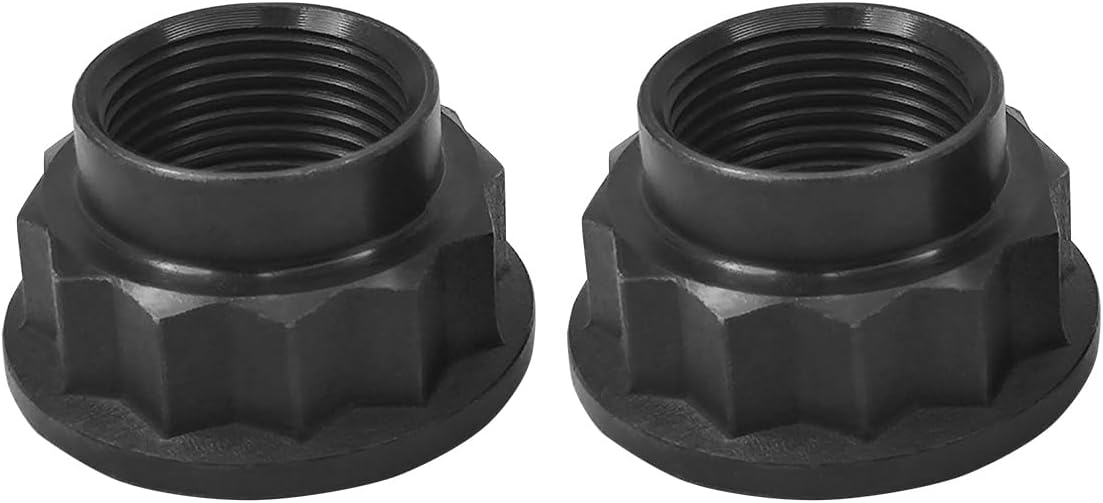
This pair of front axle shaft nuts is designed to secure CV joints and wheel bearings on compatible Toyota and Lexus front drive axles. Built from heat-treated carbon steel for durability and corrosion resistance, it helps maintain proper torque and reliable power transfer. It is a direct replacement for several factory part numbers and is recommended for paired replacement.

This bearing press kit makes it easy to install bearing races and seals quickly without damaging the axle housing. It includes nine dual-sided adapters to fit a wide range of standard races and seals, plus a knurled handle for controlled, slip-resistant use. Built from durable aluminum alloy and stored in a compact case, it is a practical solution for automotive bearing installation jobs.
Parts, DIY vs Shop, and What to Tell Your Mechanic
Identify the exact Tacoma before buying a bearing or hub. Model year, front or rear axle, 2WD or 4WD, ABS configuration, wheel style, and axle design can change the correct part and repair procedure.
Some Tacoma repairs involve a hub or hub-and-bearing assembly. Others require bearing pressing, seals, retainers, snap rings, or axle work. Do not assume that a part listed for one Tacoma generation or drivetrain fits another.
If diagnosis confirms a bearing problem, the site’s Tacoma wheel bearing replacement guide covers the separate repair-planning stage. Keep this page focused on identifying the failed system and corner before parts are ordered.
- Describe the sound: Hum, growl, roar, grind, scrape, click, pop, or clunk.
- Name the condition: Speed, turn direction, pavement, acceleration, coast, braking, towing, or drivetrain mode.
- Report physical clues: Wheel play, rough rotation, heat, seal leakage, tire wear, brake drag, or warning lights.
- Give the truck details: Model year, trim, 2WD or 4WD, front or rear location, mileage, and VIN when requesting parts.
- Report recent changes: Tire or wheel installation, lift or suspension work, brake service, pothole impact, curb strike, towing, mud, or water exposure.
Ask the shop to check the wheel bearing, hub, lug hardware, brakes, tires, CV axle, ball joints, tie rods, and differential or driveline before replacing parts. If one side has failed, inspect the opposite side but replace it only when its condition supports replacement.
[Products Worth Considering]
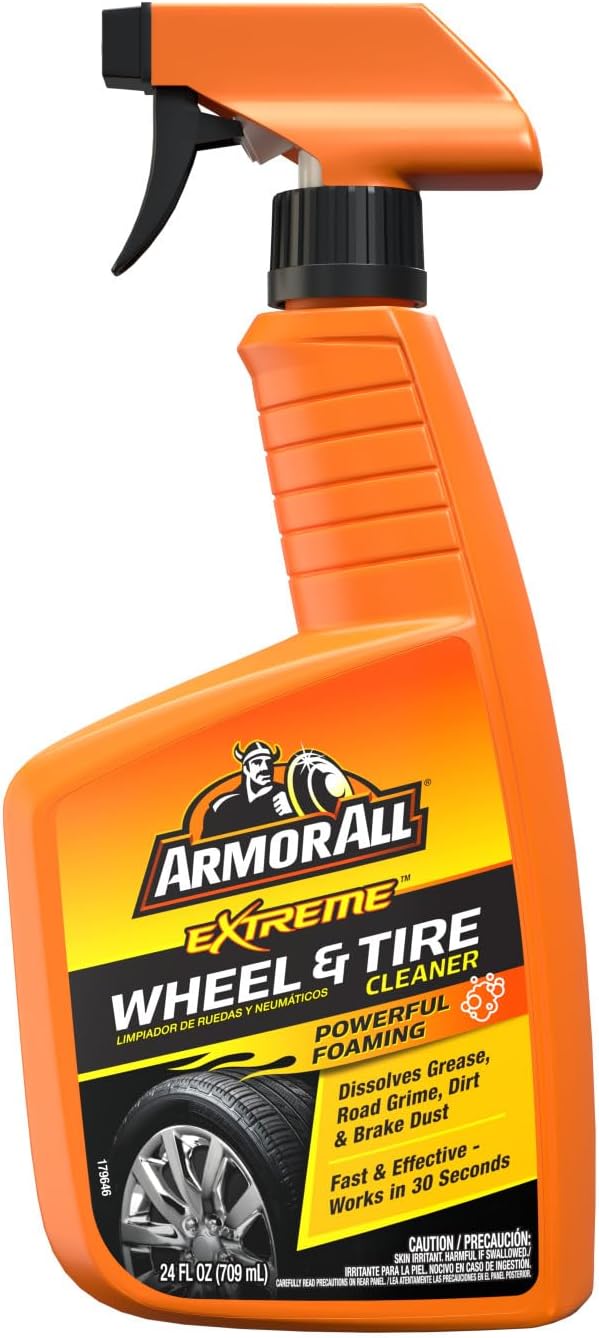
Armor All Extreme Wheel and Tire Cleaner is a powerful spray designed to cut through stubborn dirt, grease, tar, and brake dust on wheels and tires. It is safe for use on factory and aftermarket finishes, including alloy, steel, chrome, and plastic wheel trims, while its fast-acting formula works in just seconds. The deep-cleansing action helps reach hard-to-clean areas and leaves wheels looking clean and shiny.

This all-in-one front end service kit is designed to help remove stubborn ball joints, tie rod ends, and pitman arms on a wide range of vehicles. Built from hardened alloy and organized in a portable ABS case, it offers reliable performance for both professional mechanics and DIY repairs.

Bosch QuietCast premium ceramic rear brake pads are engineered for quiet, reliable stopping power with low dust performance. Featuring pre-attached multilayer shims, corrosion-resistant backing plates, and OE-style slots and chamfers, this set is designed for smooth fitment and long-lasting durability. It includes pads for one axle, plus hardware and lubricant where available, making installation easier for compatible Lexus, Pontiac, and Toyota vehicles.
When to Stop Driving and Call a Shop
A faint, unconfirmed hum with stable steering still needs prompt inspection, but it does not establish that the bearing is the cause. Avoid unnecessary driving until tires, brakes, lug hardware, and the wheel end have been checked.
Stop driving and arrange a tow if you find any of these symptoms:
- Loud grinding or metal-on-metal noise
- Visible wheel wobble or major wheel play
- Heavy vibration or unstable steering
- A wheel that pulls, binds, or changes braking behavior
- Strong heat or a burning smell at one wheel
- Loose or damaged lug hardware
- An ABS or stability warning combined with wheel noise, looseness, or braking changes
Timken identifies grinding, wheel vibration, wobble, and severe wheel-end looseness as symptoms that can involve mechanical bearing damage or another serious wheel-end fault. Do not continue a diagnostic road test after the truck feels unstable.
[Products Worth Considering]

This smart tire tread depth gauge provides quick, accurate readings from 0 to 1 inch in 1/32-inch increments, helping drivers assess tire wear with confidence. Its color-coded display makes it easy to see tread condition at a glance, while the pocket clip adds convenient portability for garages, glove boxes, and on-the-go inspections. Designed for use on trucks, motorcycles, automobiles, and other passenger vehicles, it is a simple tool for safer tire maintenance.

This dial type tire tread depth gauge helps you quickly check tread wear on motorcycles, cars, trucks, and buses with easy-to-read 1/32-inch increments. Its colorful zone markings make it simple to assess tire condition for safer driving in different weather, while the durable zinc cast body and legible dial provide dependable everyday use.

This digital tire tread depth gauge helps you check tire wear quickly and accurately with fractional inch, decimal inch, and millimeter readouts. Its large LCD screen, zero reset function, and automatic shutoff make it easy to use for cars, motorcycles, SUVs, trucks, and pickups. Designed for clear readings and dependable measurement, it is a practical tool for routine tire safety checks.
Frequently Asked Questions
How do you test for Tacoma wheel bearing noise?
Listen for a hum, rumble, roar, or growl that follows vehicle speed. Check whether it changes during gentle curves or remains while coasting. Then inspect the tires, brakes, and lug hardware, test wheel play, rotate the wheel by hand, and compare the opposite side. Confirm the failed corner before replacing a hub or bearing.
Can a Tacoma wheel bearing be bad with no wheel play?
Yes. A bearing can develop damaged rolling surfaces and make noise before it becomes loose enough to feel at the tire. No play reduces evidence of advanced looseness, but it does not rule out an early noisy bearing.
Which bearing is bad if the noise gets louder when turning left?
A louder noise during a gentle left curve often raises suspicion of the right-side bearing because that side carries more load. However, sound can travel through the axle housing and body. Confirm whether the problem is at the right front or right rear through physical inspection.
What can mimic a wheel bearing noise?
Cupped tires, uneven tire wear, brake drag, a bent dust shield, loose lug hardware, CV joints, differential noise, driveshaft parts, and loose suspension components can mimic a bad bearing. Match the sound to pavement, braking, throttle, steering load, and physical inspection results.
How long do Toyota Tacoma wheel bearings last?
There is no reliable Tacoma replacement mileage that applies to every truck. Bearing life depends on impacts, water and dirt exposure, towing or payload, wheel offset, tire condition, installation quality, seal condition, and use. Inspect symptoms instead of replacing bearings only because the odometer reached a particular number.
Can a bad wheel bearing trigger an ABS light?
It can on designs where looseness or bearing damage affects the wheel-speed sensor, encoder, or tone-ring signal. An ABS light can also come from wiring, a sensor, or another brake-system fault. Scan the code and inspect the hub area before replacing the sensor or bearing.
Should you replace both Tacoma wheel bearings at the same time?
Not automatically. Replace the confirmed failed side and inspect the opposite side for noise, roughness, play, seal damage, or similar use-related wear. Replace both only when inspection supports both repairs.
Can you drive a Tacoma with a bad wheel bearing?
Do not continue normal driving after a bearing failure is confirmed. Arrange prompt repair for a mild but confirmed symptom. Stop and tow the Tacoma if there is grinding, wobble, major looseness, hub heat, heavy vibration, braking changes, or unstable steering because the condition can worsen without a predictable warning period.
How can you tell a front Tacoma wheel bearing from a rear bearing?
Steering-wheel vibration and roughness felt at a front knuckle raise suspicion of a front bearing. Floor, seat, or axle-housing vibration may point toward the rear. These are location clues, not proof. Compare all four wheel ends by hand and use chassis microphones when the sound travels through the frame.
Can a lifted Tacoma sound like it has a bad wheel bearing?
Yes. A lift can change CV and driveline angles, and a front differential or CV-support vibration may feel like a nearby hub problem. If the symptom began after lift work, compare the bearing, CV axle, front differential support, and driveshaft before replacing parts.
Safety Disclaimer: This article is for informational purposes only and does not replace Toyota service information or a professional vehicle inspection. If you feel wheel wobble, loud grinding, brake changes, heavy vibration, or unstable steering, stop driving safely and contact a qualified mechanic.
Conclusion
A failing Tacoma wheel bearing usually creates a pattern rather than one conclusive symptom. Look for road-speed noise, turning-load changes, rough hand rotation, vibration, wheel play, seal problems, or related warning lights. Then rule out tires, brakes, lug hardware, CV joints, suspension parts, and differential or driveline noise.
Use the turning test only to choose where to inspect first. Apply the two-clue rule, check the VIN for open axle or brake campaigns, and confirm the exact corner before ordering parts. Verify every part and repair procedure by model year, axle, drivetrain, and VIN. Stop driving if the wheel grinds, wobbles, overheats, affects braking, or makes the Tacoma feel unstable.
References
- Toyota Tacoma Manuals and Warranties — Toyota
- Vehicle Support Stands Guide — Australian Competition and Consumer Commission Product Safety
- Symptoms of a Worn Wheel Hub Bearing — Timken
- Tire Safety Ratings and Awareness — National Highway Traffic Safety Administration
- Safety Recalls and Service Campaigns by VIN — Toyota
- 2024–2025 Tacoma Rear Brake Hose Recall — Toyota USA Newsroom


[…] the movement appears to come from the hub instead of the ball joint, use the site’s Tacoma wheel-bearing diagnosis guide before ordering suspension […]
[…] wheel-play checks, tire comparisons, brake inspection, and side-to-side diagnosis, use the complete Tacoma wheel-bearing noise diagnosis […]