
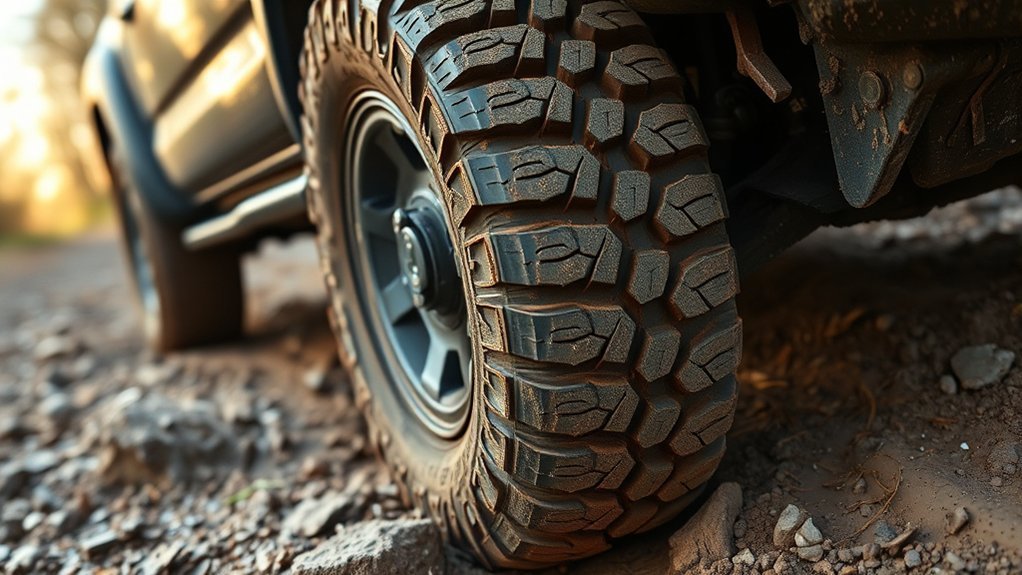
Your Tacoma’s off-road traction is not controlled by one switch. It comes from the full system: tire type, tire pressure, terrain choice, differential setup, traction-control settings, vehicle weight, and smooth driver inputs. Four-wheel drive helps distribute torque, but tires and contact patch decide whether that torque turns into forward motion or wheel spin.
Quick Answer
To improve Tacoma traction, start with tires matched to your terrain, set tire pressure safely for the surface, use 4WD Low, A-TRAC, Multi-Terrain Select, Crawl Control, or the rear locker only when your truck is equipped for it, and drive with slow, smooth throttle and steering. Reinflate before highway driving.
Key Takeaways
- Tires matter more than 4WD because they create the grip that the drivetrain can only distribute.
- Airing down can improve flotation and comfort off-road, but underinflation on pavement can overheat tires and cause failure.
- A-TRAC, Auto LSD, Multi-Terrain Select, Crawl Control, and the rear locker vary by Tacoma year, trim, and package.
- Use lockers and electronic traction aids deliberately; they help in specific terrain but do not replace good line choice.
- Smooth throttle, balanced cargo, regular tire checks, and drivetrain inspections prevent most avoidable traction problems.
At a Glance
| Time Required | 15 minutes for basic pressure and tire checks; 1–3 hours for trail setup and testing |
| Difficulty | Beginner to intermediate |
| Tools Needed | Tire-pressure gauge, air compressor, tread-depth gauge, flashlight, torque wrench, recovery gear |
| Cost | $0 for technique and pressure tuning; higher for tires, lockers, suspension, or armor |
How to Improve Tacoma Traction Today
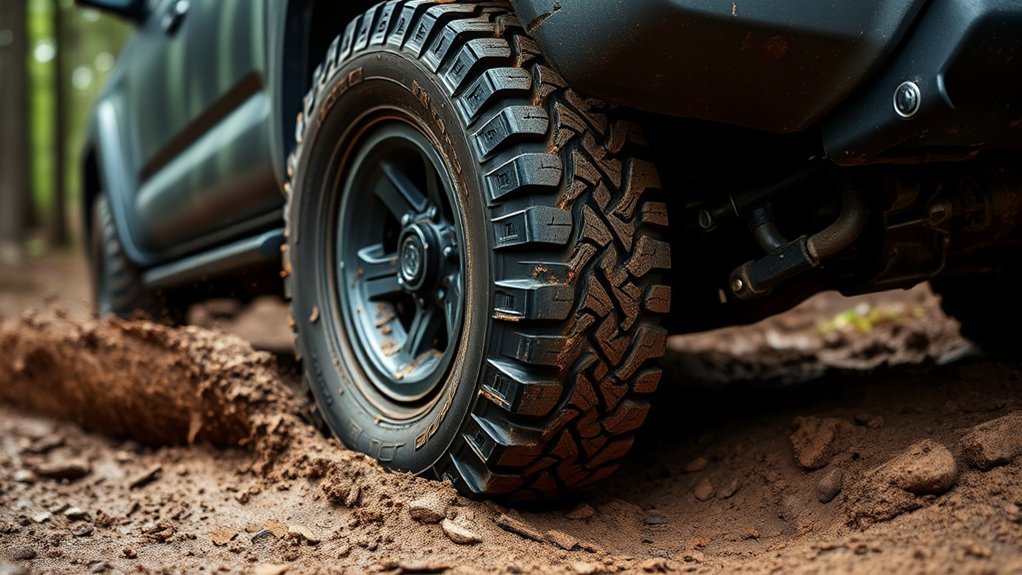
Start with the basics before buying parts. Check your tire pressure cold, inspect tread depth, look for cuts or bulges, confirm your cargo is secure, and choose the right drive mode before the obstacle. Toyota’s owner resources are clear that traction systems help maintain drive power and reduce wheel spin, but the driver still has to match the setting to the surface and conditions.
Use this sequence before a trail, beach, muddy road, or rocky climb:
- Choose the right tire: highway tires are quiet but limited off-road; all-terrain tires are the best daily-driver compromise; mud-terrain tires bite harder in sloppy terrain but can be louder and less efficient on pavement.
- Set pressure for the surface: lower pressure can improve flotation in sand and comfort on washboard roads, but stay within what your tire, wheel, load, and speed can safely handle.
- Select the correct drivetrain mode: use 2WD on normal pavement, 4H for loose surfaces at moderate speed, and 4L for slow technical terrain when your Tacoma is equipped with it.
- Use traction aids only when they fit the job: A-TRAC, Auto LSD, rear locker, Multi-Terrain Select, Crawl Control, and Downhill Assist Control are not all available on every Tacoma trim.
- Drive smoothly: sudden throttle, braking, and steering unload tires and make even good equipment perform badly.
Warning: Any tire pressure used off-road is a trail-only setting. Reinflate to the vehicle placard pressure before highway driving, and never exceed the tire’s load, speed, or pressure limits. NHTSA’s tire-safety guidance emphasizes correct pressure, load limits, tread checks, and inspection for cuts, bulges, and irregular wear.
Why Your Tacoma’s Tires Matter More Than 4WD
Four-wheel drive sends torque to more wheels, but it does not create grip by itself. Grip comes from the rubber, tread pattern, contact patch, sidewall, and how much weight is pressing each tire into the ground. That is why a 2WD Tacoma with the right tires and careful throttle can sometimes move better than a 4WD Tacoma on worn street tires.
When comparing tires, look at these traction factors:
- Tread voids: large gaps clear mud and snow better but can reduce on-road quietness.
- Siping: small cuts in tread blocks help on wet pavement, snow, and slick rock.
- Sidewall strength: stronger sidewalls help resist cuts and punctures on rocks and roots.
- Load rating: the tire must safely carry the truck, passengers, cargo, armor, camper shell, and recovery gear.
- Diameter and width: taller tires can improve clearance, but oversized tires may rub, affect gearing, and increase stress on steering and suspension parts.
Think of 4WD as a torque distributor, not a traction generator. Tires create the grip; the drivetrain decides where to send power.
Toyota Traction Control: How It Affects Tacoma Traction
Toyota’s standard traction control, usually labeled TRAC, helps reduce drive-wheel spin when starting or accelerating on slippery surfaces. Vehicle Stability Control, or VSC, helps reduce skids by managing engine output and braking. Toyota’s Star Safety System includes systems such as VSC, TRAC, ABS, Electronic Brake-force Distribution, Brake Assist, and Smart Stop Technology on many Tacoma models.
On the trail, the important point is simple: traction control can either help or hinder depending on the surface. On slick hardpack, snow, or wet rock, reducing spin can help the tire regain bite. In deep mud or soft sand, too much power reduction can kill momentum. Toyota notes that if a vehicle is stuck in snow or mud, the driver may need to turn off TRAC and VSC to rock the vehicle free.
Traction Control Basics
When the system detects a spinning drive wheel, it can reduce engine power and apply brake force to help the tires regain control. In normal driving, leave TRAC and VSC on. They are designed for everyday stability, wet roads, loose gravel, and surprise traction loss.
For off-road recovery, use the switch behavior described in your exact owner’s manual. Toyota’s general guidance says pressing and releasing the VSC OFF button can turn TRAC off, while holding it for about three seconds can turn off both TRAC and VSC on many Toyota vehicles. Switch names, indicator lights, and available modes vary by model year and trim, so rely on the manual for your truck.
A-TRAC, Auto LSD, and Electronic Brake Intervention
A-TRAC, or Active Traction Control, is a Toyota off-road traction feature on equipped 4WD models. It uses brake intervention to slow a spinning wheel so torque can move toward the wheel with more grip. Auto LSD, available on some 2WD configurations, uses brake pressure to limit rear-wheel differential slip and help the other rear wheel move the truck.
| System | Best Use | Important Limit |
|---|---|---|
| TRAC | Slippery pavement, gravel, mild wheel spin | May reduce momentum in deep mud or sand |
| A-TRAC | Slow 4WD Low crawling on equipped trucks | Not a full substitute for a locking differential |
| Auto LSD | 2WD rear-wheel slip on equipped trucks | Less effective than 4WD or a locker in severe terrain |
| Rear Locker | Low-speed uneven terrain where one rear wheel lifts | Can reduce turning ability and should not be used on high-traction pavement |
Note: Tacoma Sport, SR5, TRD Off-Road, Limited, Trail Edition, and TRD Pro configurations do not all share the same traction hardware. Before following any button sequence, confirm whether your truck has A-TRAC, Auto LSD, a rear locker, Multi-Terrain Select, Crawl Control, or Downhill Assist Control.
2WD Off-Roading: What Works and What Doesn’t
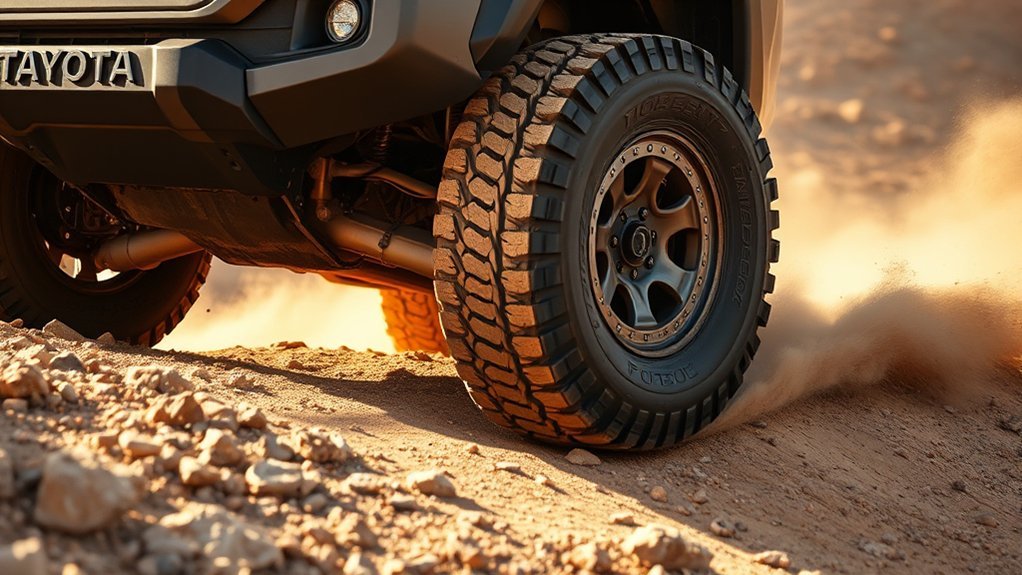
A 2WD Tacoma can handle graded dirt roads, dry trails, mild sand, and light mud when it has good tires and enough clearance. It struggles when the rear tires lose load, one wheel hangs in the air, or the surface requires slow, controlled torque at all four wheels. That is where 4WD Low, A-TRAC, and locking differentials make a major difference.
[Products Worth Considering]

This MagSafe car mount charger keeps your phone securely in view with ultra-strong N55 magnets and auto-alignment for reliable hands-free navigation, calls, and music playback. It delivers 15W wireless charging with enhanced heat dissipation to help maintain performance on long drives, while the adjustable arm and multiple mounting options make it easy to fit dashboards, vents, or windshields. Included magnetic rings and accessories support broad compatibility with MagSafe and non-MagSafe phones alike.

HYVOHEX digital tire pressure gauge delivers fast, highly accurate readings with an easy-to-read LED backlit display for convenient checking in any lighting. Its valveless one-click operation, 360-degree rotating valve, and wide PSI range make it a practical tool for cars, bikes, and trucks. Built with a durable aluminum nozzle and rubberized shell, it is designed for everyday use and easy storage in your vehicle or tool bag.

This automotive circuit tester checks low-voltage DC systems from 3-65V, making it useful for diagnosing headlights, taillights, fuses, sockets, and other vehicle wiring issues. The digital backlit display provides clear voltage readings with fine accuracy, while the bidirectional polarity indicator helps you test from either ground or positive. Built with a durable probe, insulated tip, and extra-long spring wire, it is designed for dependable everyday use in automotive and household electrical work.
Traction Control Limits
In 2WD, traction control can reduce wheel spin, but it cannot pull with the front tires. If the rear axle is lightly loaded or one rear tire is on slick ground, the system has limited options. Auto LSD can help on equipped trucks by braking the spinning rear wheel, but it still depends on tire grip and vehicle momentum.
What works in 2WD:
- airing down carefully for soft surfaces at low speed;
- using steady momentum instead of hard throttle;
- keeping useful weight over the rear axle without overloading the truck;
- choosing a firmer line around deep ruts or mud holes;
- turning around early before the trail demands 4WD traction.
What does not work well in 2WD:
- deep mud with a hard bottom you cannot reach;
- soft sand climbs without enough flotation;
- cross-axle rock obstacles that unload one rear tire;
- steep loose climbs that require low-range gearing;
- spinning the tires until they dig holes under the rear axle.
Weight Transfer Techniques
Weight transfer controls how much force presses each tire into the ground. When climbing, weight shifts rearward and can help a 2WD Tacoma’s rear tires bite. When braking or cresting an obstacle, weight shifts forward and can unload the rear axle. Smooth inputs keep that transfer predictable.
| Action | Effect | Use Case |
|---|---|---|
| Rear cargo balanced low and secure | Adds rear normal force without raising center of gravity too much | Loose climbs, washboard roads |
| Smooth throttle | Reduces sudden wheel spin | Sand, gravel, mud |
| Gentle brake release | Avoids unloading the rear axle suddenly | Hill starts, ledges |
| Low-speed line choice | Keeps more tire on the ground | Ruts, rocks, diagonal holes |
Traction and Differential Basics for Tacomas: Open, LSD, and Lockers
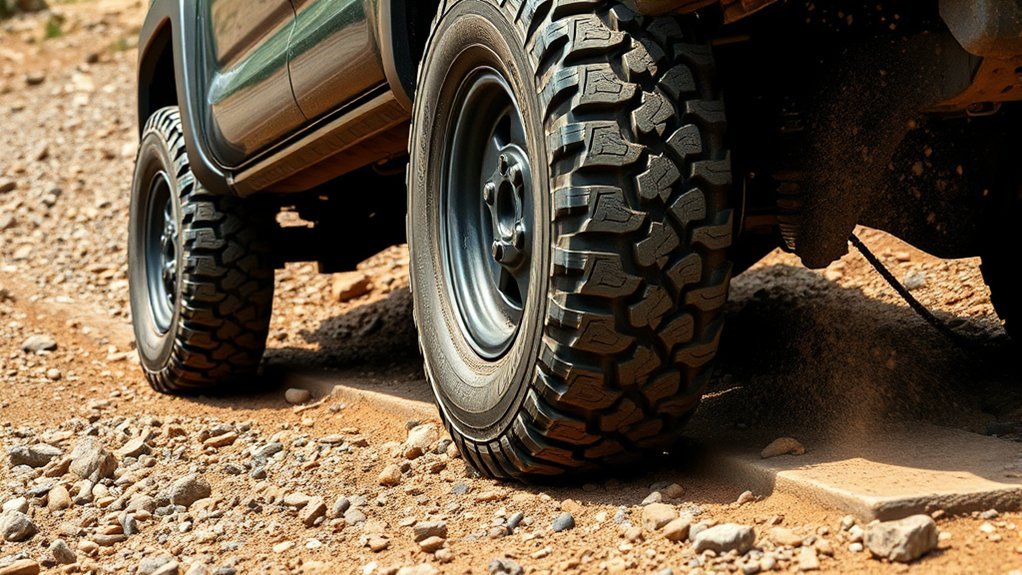
Differentials allow wheels on the same axle to rotate at different speeds while turning. That is good for normal driving, but it can hurt traction when one tire loses grip. The tire with the least resistance can spin while the tire with grip gets less useful torque.
- Open differential: smooth and simple on pavement, but weak when one wheel loses traction.
- Limited-slip differential: biases some torque toward the tire with better grip, depending on design and condition.
- Auto LSD: uses braking to mimic some limited-slip behavior on equipped 2WD Tacomas.
- Rear locking differential: locks both rear wheels together so they rotate at the same speed for maximum low-speed rear traction.
A locker is powerful, but it is not something to leave on everywhere. Use it for slow, loose, uneven terrain where one rear tire may lift or spin. Turn it off when you regain normal traction or need tighter steering. Do not use a locked rear differential on high-traction pavement because drivetrain binding can occur.
Pro Tip: If your Tacoma has both A-TRAC and a rear locker, try the least aggressive aid first. Good tires, 4L, and A-TRAC may clear an obstacle without locking the rear axle. Save the locker for situations where one rear tire keeps unloading or spinning.
Using Traction Modes, Hill Descent, and Crawl Control
Some Tacoma trims include off-road controls that adjust throttle response, braking, and wheel-slip behavior. Toyota describes Multi-Terrain Select as a system that improves drivability in off-road situations by optimizing brake control, steering feel, and drive-force control for selected terrain. Toyota also describes Crawl Control as a system that automatically modulates throttle and brakes at low speed so the driver can focus on steering through difficult terrain.
Multi-Terrain Select
Multi-Terrain Select is designed for equipped off-road models. It lets you choose a terrain mode that best matches the surface, such as mud, sand, rock, or similar conditions depending on model year. The system changes how much wheel slip it allows and how the brakes and throttle respond.
Use it like this:
- Stop and assess the surface before the obstacle.
- Select the drivetrain range required by your truck’s manual for that mode.
- Pick the mode closest to the actual terrain.
- Use smooth throttle and let the system work; do not fight it with rapid pedal changes.
- Change modes if the truck is digging, hopping, or losing momentum.
Downhill Assist Control
Downhill Assist Control, when equipped, helps control low-speed descents by applying braking so the driver can focus on steering. It is most useful on loose downhill grades where manual braking could lock or slide the tires. It is not a license to descend too fast; choose the line first, then use the system as a stabilizer.
Off-Road Crawl Control
Crawl Control works like low-speed off-road cruise control on equipped Tacomas. It manages engine output and selective braking so the truck can crawl over rocks, ruts, sand, or mud at a steady pace. It is especially helpful when pedal modulation is difficult, such as on a bumpy ledge or steep loose descent.
Use Crawl Control when you want slow, controlled motion. Do not use it to charge through an obstacle. The point is to reduce wheel spin, protect the drivetrain, and free your attention for steering and tire placement.
Tire Pressure and Tread: Mud, Sand, and Rock
Tire pressure changes the shape of the contact patch. Lower pressure lets the tire flex more, which can improve flotation and ride comfort off-road. Higher pressure supports load and protects the tire at road speeds. The correct pressure depends on tire construction, wheel width, vehicle weight, speed, terrain, temperature, and whether you have beadlock wheels.
| Terrain | Traction Goal | Setup Guidance |
|---|---|---|
| Sand | Float on top instead of digging | Air down cautiously, keep momentum steady, avoid sharp steering |
| Mud | Clear tread and reach firmer ground | Use self-cleaning tread, moderate wheel speed, and avoid burying the axles |
| Rock | Wrap tread around edges while protecting sidewalls | Use controlled low speed and enough pressure to avoid pinch damage |
| Snow | Bite without polishing the surface | Use winter-rated or severe-snow-rated tires when conditions demand it |
For mud, deep tread voids help eject material. For sand, flotation matters more than digging. For rocks, sidewall protection and precise placement matter more than wheel speed. For snow and ice, tire compound and siping can matter more than aggressive lugs.
Warning: Do not drive at highway speeds while aired down. Underinflation creates heat, damages internal tire structure, and can lead to failure. Carry an air compressor and reinflate before returning to pavement.
[Products Worth Considering]

This heavy-duty car ramp set provides a stable, reliable lift for routine maintenance like oil changes, tire rotations, brake work, and undercarriage inspections. Built from high-impact poly with a non-skid tread and rubber feet, it helps keep vehicles secure while offering a lightweight, corrosion-resistant alternative to steel ramps. The wide, gradual design supports a broad range of vehicles, from compact cars to trucks, SUVs, and vans.

The ROCGORLD R8 is a compact 12V tire inflator designed for fast, convenient inflation of car, EV, motorcycle, bicycle, and sports ball tires. It features a dual digital display, auto-stop pressure control, and durable construction with a long power cord and hose for dependable roadside or home use. The included accessories, carrying bag, and emergency light modes make it a practical all-in-one inflation tool.

⛰️U design--- The unique u-shaped surface strengthening design increases the stability of the product, and the pointed design effectively prevents the sideslip when the vehicle is stuck
Safe Recovery Basics When Traction Isn’t Enough
Sometimes the best traction decision is to stop before you make the situation worse. If the Tacoma stops moving, do not keep spinning the tires. Spinning digs holes, polishes snow, packs mud into tread, and can overheat drivetrain parts.
Use a safe recovery sequence:
- Stop early: if forward progress stalls, lift off the throttle before the tires dig.
- Clear the tires: remove packed mud, snow, or sand from in front of the tires.
- Lower pressure only if safe: air down further only within your tire and wheel limits.
- Use traction boards: place them firmly under the drive tires, not loosely in front of them.
- Use rated recovery points: never pull from a ball hitch, bumper cover, suspension arm, or tie-down loop not rated for recovery.
- Control the area: keep bystanders away from straps, winch lines, and vehicles under load.
Recovery gear should match the truck’s weight and the terrain. At minimum, carry a real shovel, tire gauge, compressor, gloves, traction boards, and properly rated soft shackles or recovery straps. A winch adds options, but only when mounted and used correctly.
Diagnosing Noises: Quick Drivetrain and Suspension Checks
If you hear ticking, clunking, popping, grinding, or creaking during off-road driving, inspect the truck before pushing farther. Traction problems often start as mechanical looseness, worn bushings, damaged tires, or leaking drivetrain components.
Start with this checklist:
- Tires: look for cuts, bulges, missing tread chunks, uneven wear, stones, and sidewall damage.
- Wheels: check for bent rims, missing wheel weights, loose lug nuts, and packed mud causing vibration.
- CV boots and axles: inspect for torn boots, grease spray, clicking, and binding while turning.
- U-joints and driveshafts: listen for clunks during throttle changes and look for play or rust dust near joints.
- Differentials and transfer case: check for leaks, impact damage, and abnormal whining or grinding.
- Suspension: inspect shocks, struts, bushings, ball joints, sway-bar links, and skid plates for contact marks or looseness.
Reproduce the sound slowly if it is safe. Note whether it happens while turning, braking, accelerating, flexing the suspension, or shifting between drive modes. That pattern helps narrow the source.
Simple Upgrades and Settings to Boost Tacoma Traction
Spend money in the order that gives the most real traction benefit. For most Tacoma owners, tires and recovery basics come before suspension lifts, cosmetic armor, or oversized wheels.
| Upgrade or Setting | Benefit | Best For |
|---|---|---|
| All-terrain tires | Balanced grip, durability, and road manners | Daily drivers, gravel, snow, mild trails |
| Mud-terrain tires | Aggressive bite and self-cleaning tread | Mud, deep ruts, sloppy trails |
| Portable air compressor | Allows safe airing down and reinflation | Sand, rocks, washboard roads |
| Skid plates | Protects parts that keep the truck moving | Rocks, ledges, ruts |
| Rear locker | Forces both rear wheels to pull together | Slow uneven terrain |
| Quality shocks | Keeps tires controlled over bumps | Washboard roads, loaded travel, rough trails |
A lift alone does not create traction. It can add clearance for larger tires, but it can also change geometry, increase wear, and raise the center of gravity. Build for the terrain you actually drive.
[Products Worth Considering]

Product Overview: The Venom Power Terra Hunter X/T are 265/65R17 112T SL-Standard Load, 4 Ply Rated Extreme Terrain Tires Manufactured For Trucks & SUVs

Size: 265/70R17,Tire Only - Wheel/Rim Not Included,Dimension (inch): 31.65 X 10.71 X 31.65,weight (lbs): 38.78,Max Pressure (psi): 51; Load Index: 115 ( 2679 lbs for single tire),Speed Rating: T (118 mph); Load Range: SL (Standard Load)

Backed by an up to 65,000-mile limited treadwear warranty
Driving Techniques and Maintenance for Reliable Traction
The best traction upgrade is often your right foot. Smooth inputs keep the tires hooked up, protect the drivetrain, and make traction systems work better.
- Use gentle throttle: if the tires spin, reduce throttle before they dig.
- Look farther ahead: choose a line that keeps the truck level and tires loaded.
- Avoid sudden steering: sharp steering in sand or mud increases drag and can stop momentum.
- Brake early and lightly: hard braking unloads tires and can start a slide.
- Keep momentum, not speed: steady movement beats aggressive acceleration.
- Walk unknown obstacles: checking depth, rocks, and exits prevents recovery problems.
Maintenance matters just as much:
- Check tire pressure cold before long drives and before trail use.
- Inspect tread depth and sidewalls after each off-road trip.
- Rotate tires on schedule to keep traction even across all four corners.
- Retorque wheels after tire changes or wheel service.
- Inspect skid plates, suspension bolts, and recovery points after hard impacts.
- Service differential, transfer case, and transmission fluids according to the maintenance schedule, especially after water crossings or heavy use.
Pro Tip: Keep a small trail log. Record tire pressure, terrain, load, weather, and what worked. After a few trips, you will have better Tacoma-specific traction data than any generic pressure chart can provide.
Frequently Asked Questions
How does traction control work on a Toyota Tacoma?
Tacoma traction control detects wheel spin and can reduce engine power or apply brake force to help the tires regain grip. Standard TRAC is aimed at everyday slippery-surface control, while A-TRAC on equipped 4WD models is more useful for low-speed off-road traction.
Should I turn traction control off in mud or sand?
Sometimes. Leave traction control on for normal slippery driving, but if the truck is stuck and the system keeps cutting power, Toyota’s guidance says turning off TRAC and VSC may help you rock the vehicle free. Use the switch procedure in your exact owner’s manual.
Is A-TRAC the same as a locking differential?
No. A-TRAC uses brake intervention to slow spinning wheels and help torque move to tires with grip. A locking differential mechanically locks both wheels on an axle together. A-TRAC is helpful, but a locker is stronger in severe cross-axle or wheel-lift situations.
What tire pressure should I use off-road in a Tacoma?
There is no universal number. Pressure depends on tire size, load rating, wheel setup, vehicle weight, speed, and terrain. Many drivers air down for sand, rocks, or washboard roads at low speed, but you must reinflate to the placard pressure before highway driving.
Can a 2WD Tacoma go off-road?
Yes, within limits. A 2WD Tacoma can handle dirt roads, dry trails, light sand, and mild mud with good tires and careful driving. It struggles when terrain requires front-wheel pull, low-range gearing, or traction when one rear wheel unloads.
Conclusion
Your Tacoma gets more reliable traction when you treat grip as a system, not a switch. Start with the tires, pressure, and driver inputs. Then use 4WD, A-TRAC, Auto LSD, Multi-Terrain Select, Crawl Control, Downhill Assist Control, or the rear locker only when your truck is equipped and the terrain calls for it. The best setup is the one that keeps the tires planted, the drivetrain protected, and the driver in control.
Sources
- Toyota Owners: 2018 Tacoma Manuals and Warranties — owner-manual reference for model-specific switch behavior and equipment availability
- Toyota Support: Multi-Terrain Select and Crawl Control — official explanation of terrain modes, throttle, and brake modulation
- Toyota Support: VSC OFF and TRAC Guidance — official guidance for turning off TRAC/VSC when stuck in snow or mud
- Toyota Owners: Tacoma Driving Assist Systems — Toyota description of TRAC, VSC, and related driving-support systems
- Toyota Owners: Tacoma Multi-Terrain Select — official description of how Multi-Terrain Select optimizes off-road drivability
- NHTSA TireWise — tire pressure, tread, load, inspection, and tire-safety guidance

[…] 4WD is best used when the surface allows tire slip, such as loose Tacoma trails, snow, ice, sand, mud, or […]
[…] the more relevant tool — it adjusts wheel spin, braking, and engine torque to the surface. Tacoma traction and off-road systems cover mud, sand, rocks, snow, or technical terrain in more […]