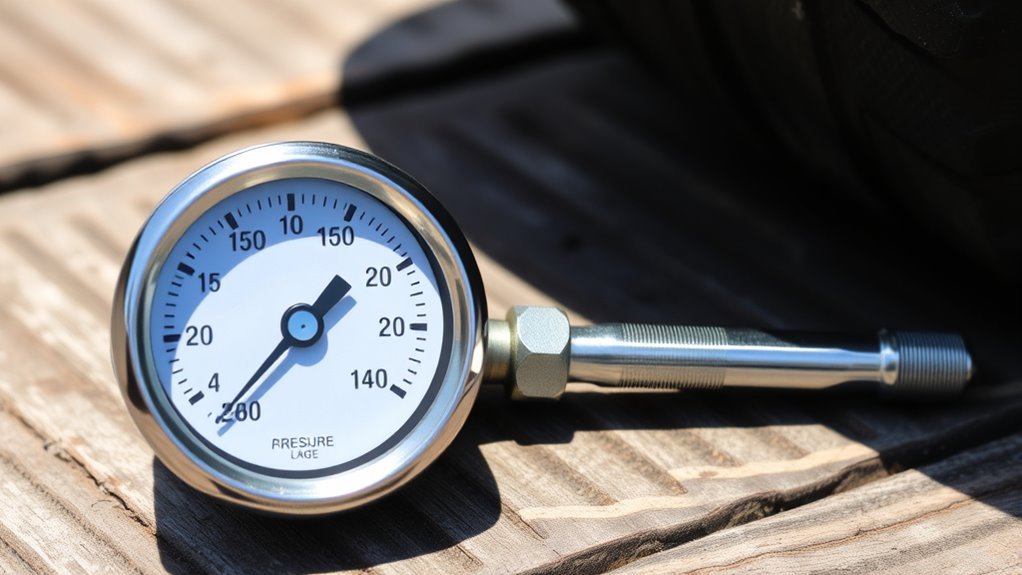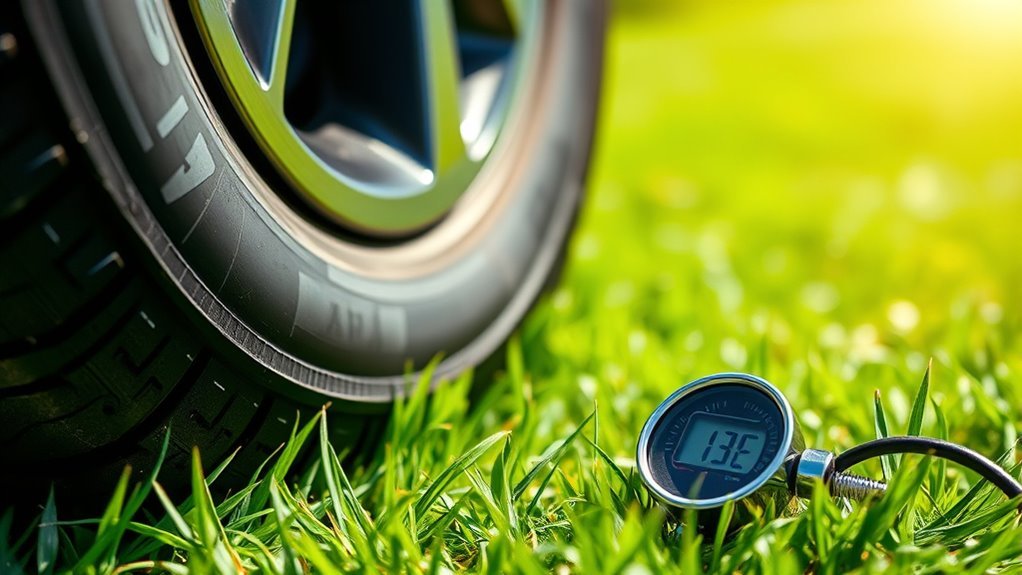
You should check your tire pressure at least once a month, and more often before long trips, after big temperature swings, when carrying heavy loads, or whenever your tire pressure warning light turns on. A two-minute cold-tire check can improve safety, help your tires wear evenly, and protect fuel economy.
Quick Answer
Check tire pressure at least once a month when the tires are cold. Also check before long trips, before towing or carrying heavy loads, after sharp temperature drops, and any time the TPMS light comes on. Use the PSI listed on the driver-side door placard or owner’s manual, not the number printed on the tire sidewall.
Key Takeaways
- A monthly tire pressure check is the minimum for most drivers.
- Check pressure when tires are cold, ideally before driving or after the vehicle has been parked for at least three hours.
- Use the recommended cold PSI on the vehicle placard or owner’s manual, not the maximum PSI molded into the tire sidewall.
- Check all tires, including the spare if your vehicle has one.
- A tire that keeps losing pressure should be inspected for a puncture, valve leak, rim damage, or other problem.
At a Glance
| Time Required | About 2–5 minutes |
| Difficulty | Easy |
| Tools Needed | Accurate tire pressure gauge and access to an air pump or compressor |
| Cost | Usually free at home if you own a gauge; many service stations and tire shops can help |
Why Checking Tire Pressure Is Essential For Safety
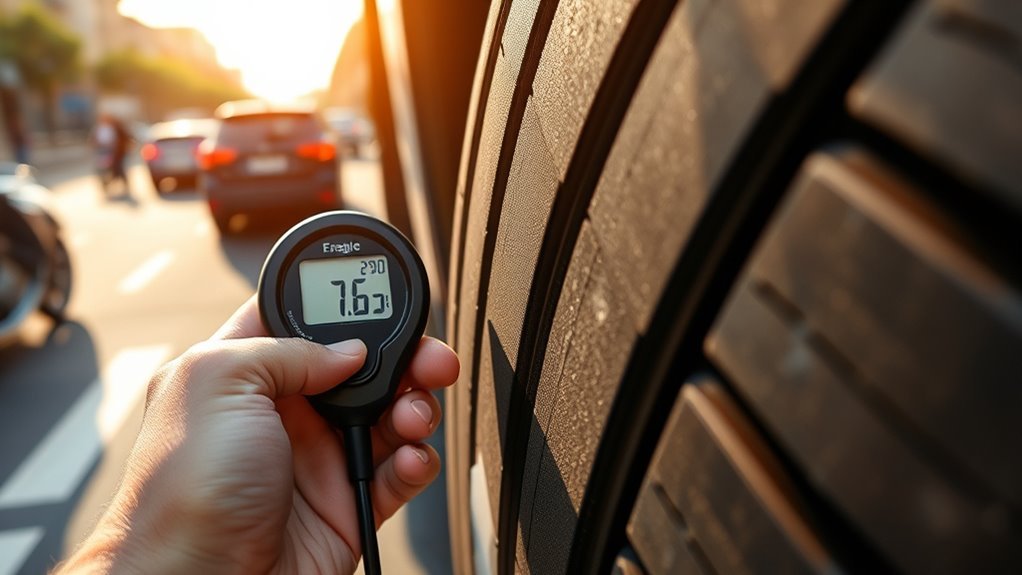
Correct tire pressure is one of the simplest ways to protect your vehicle’s safety, handling, tire life, and fuel economy. According to the National Highway Traffic Safety Administration, poor tire maintenance can lead to flats, blowouts, and tread separation.
Under-inflated tires flex more as they roll. That extra flex creates heat, can increase wear, and may make the vehicle feel sluggish or less stable. Over-inflated tires are also a problem because they can wear unevenly and may be more vulnerable to impact damage from potholes or road debris.
Warning: Do not judge tire pressure by looking at the tire. A radial tire can be dangerously under-inflated and still look normal. Use a tire pressure gauge.
Where To Find Your Vehicle’s Recommended Tire Pressure
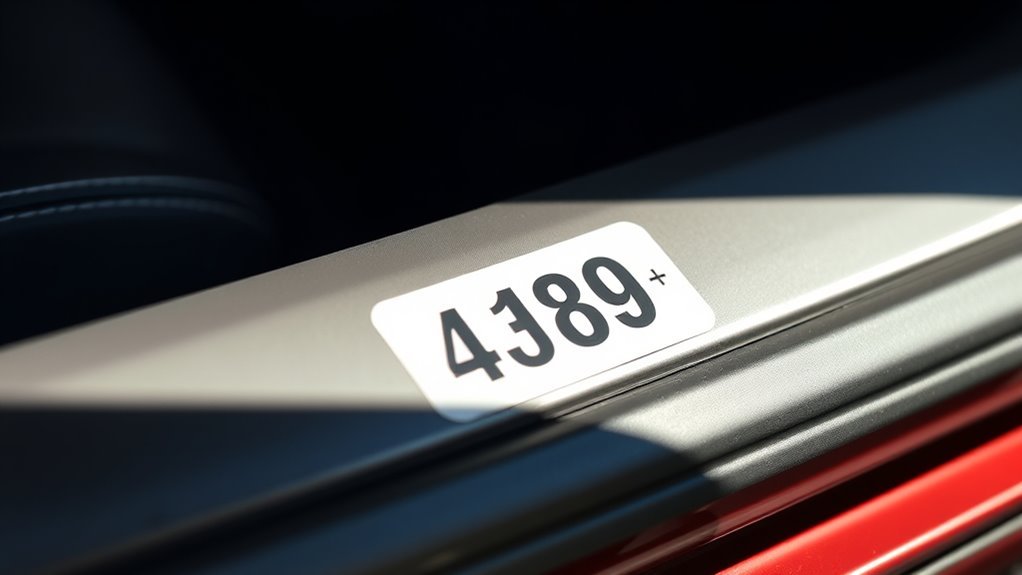
You can usually find the correct tire pressure on the Tire and Loading Information Label on the driver-side door edge or doorjamb. You can also find it in your owner’s manual. Many vehicles list different pressures for front and rear tires, so check the label carefully.
The PSI printed on the tire sidewall is not the target pressure for everyday driving. It is usually the tire’s maximum inflation pressure, not the vehicle manufacturer’s recommended cold inflation pressure. The correct pressure is the number listed by your vehicle manufacturer.
Note: If you changed tire size, drive a heavily loaded vehicle, tow a trailer, or operate a fleet/commercial vehicle, confirm the proper pressure with the vehicle manual, tire placard, tire manufacturer, or a qualified tire professional.
How Often Should You Check Tire Pressure For Optimal Performance?
For most passenger vehicles, the best routine is simple: check tire pressure once a month. The Tire Industry Association also recommends checking before long trips.
Use this schedule as a practical guide:
- Once a month: Check all tires as part of regular maintenance.
- Before long trips: Check pressure before highway driving, road trips, or extended travel.
- Before heavy loads or towing: Extra load creates extra heat and stress, so confirm the proper PSI before you leave.
- After major temperature changes: Tire pressure can change noticeably during cold snaps and seasonal shifts.
- When the TPMS light turns on: Stop when safe, inspect the tires, and check pressure with a gauge.
- More often for high-use vehicles: Fleet, delivery, rideshare, and commercial vehicles may need checks weekly, daily, or according to company and regulatory inspection procedures.
Passenger and light truck tires may lose 1 to 2 PSI per month under normal conditions, and pressure can also drop about 1 to 2 PSI for every 10°F temperature decrease.
[Products Worth Considering]

The JACO ElitePro Digital Tire Pressure Gauge delivers shop-grade accuracy with a clear digital readout, making it easy to maintain proper tire pressure for safer driving and better performance. Built with rugged brass and steel components, a protective guard, and a flexible air hose, it is designed for reliable use across cars, trucks, motorcycles, bikes, RVs, and trailers. The lock-on display, built-in bleeder valve, and bright backlit screen add convenience in any lighting condition.

Turn your iPhone, Android device, or Windows PC into a professional-grade diagnostic scan tool with this Bluetooth OBD2 adapter. It is designed for broad vehicle compatibility and supports popular apps for deeper diagnostics, live data, and code clearing. Built-in protections and firmware updates help keep your vehicle and scanner safe while delivering reliable performance.

The ANCEL AD410 PRO combines engine diagnostics and 12V battery testing in one easy-to-use tool, helping you read and clear check engine codes while checking battery health, cranking, and charging performance. It also provides live data, freeze frame details, and I/M readiness checks to help you diagnose issues faster and prepare for emissions testing. With plug-and-play operation, a clear screen, and broad vehicle compatibility, it is a practical solution for home mechanics and everyday drivers.
How To Check Your Tire Pressure Like A Pro
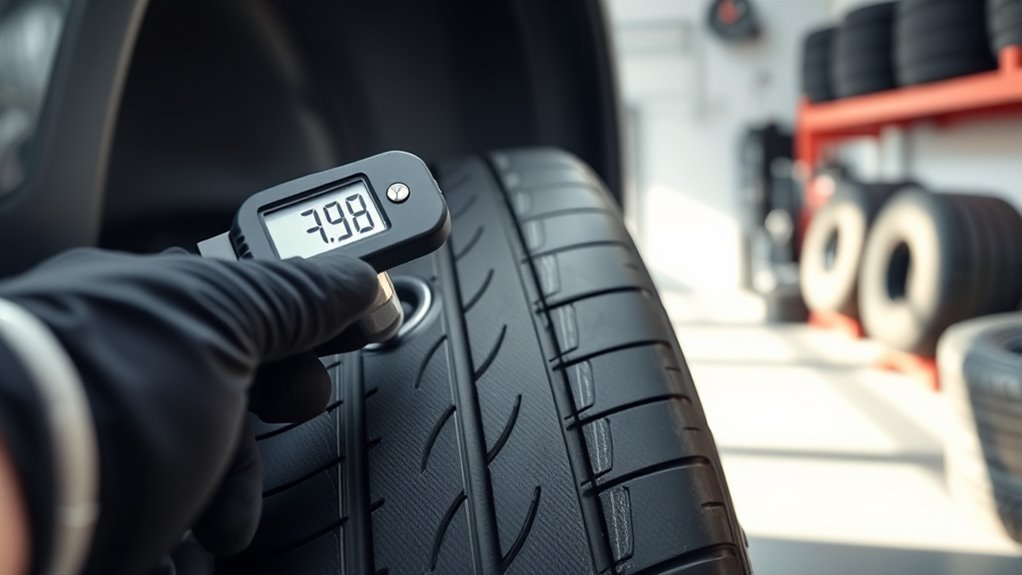
The most accurate tire pressure reading comes from cold tires. A tire is generally considered cold when the vehicle has been parked for at least three hours or has been driven less than about one mile at moderate speed.
- Find the recommended PSI. Check the driver-side door placard or owner’s manual.
- Use a reliable gauge. A digital, dial, or stick gauge can work if it is accurate and in good condition.
- Remove the valve cap. Keep it in your hand or pocket so it does not get lost.
- Press the gauge firmly onto the valve stem. A quick hiss is normal, but a long hiss means the gauge is not sealed correctly.
- Read the PSI. Compare the reading with the recommended cold PSI.
- Add or release air as needed. If the tire is low, add air in short bursts and recheck. If it is high, release small amounts of air and recheck.
- Repeat for every tire. Check front, rear, and spare tires if your vehicle has a spare.
- Replace the valve cap. The cap helps keep dirt and moisture out of the valve core.
Pro Tip: Keep a tire gauge in the glove box and set a monthly phone reminder. Do not rely only on gas-station gauges, because they can be dropped, damaged, or inaccurate.
[Products Worth Considering]
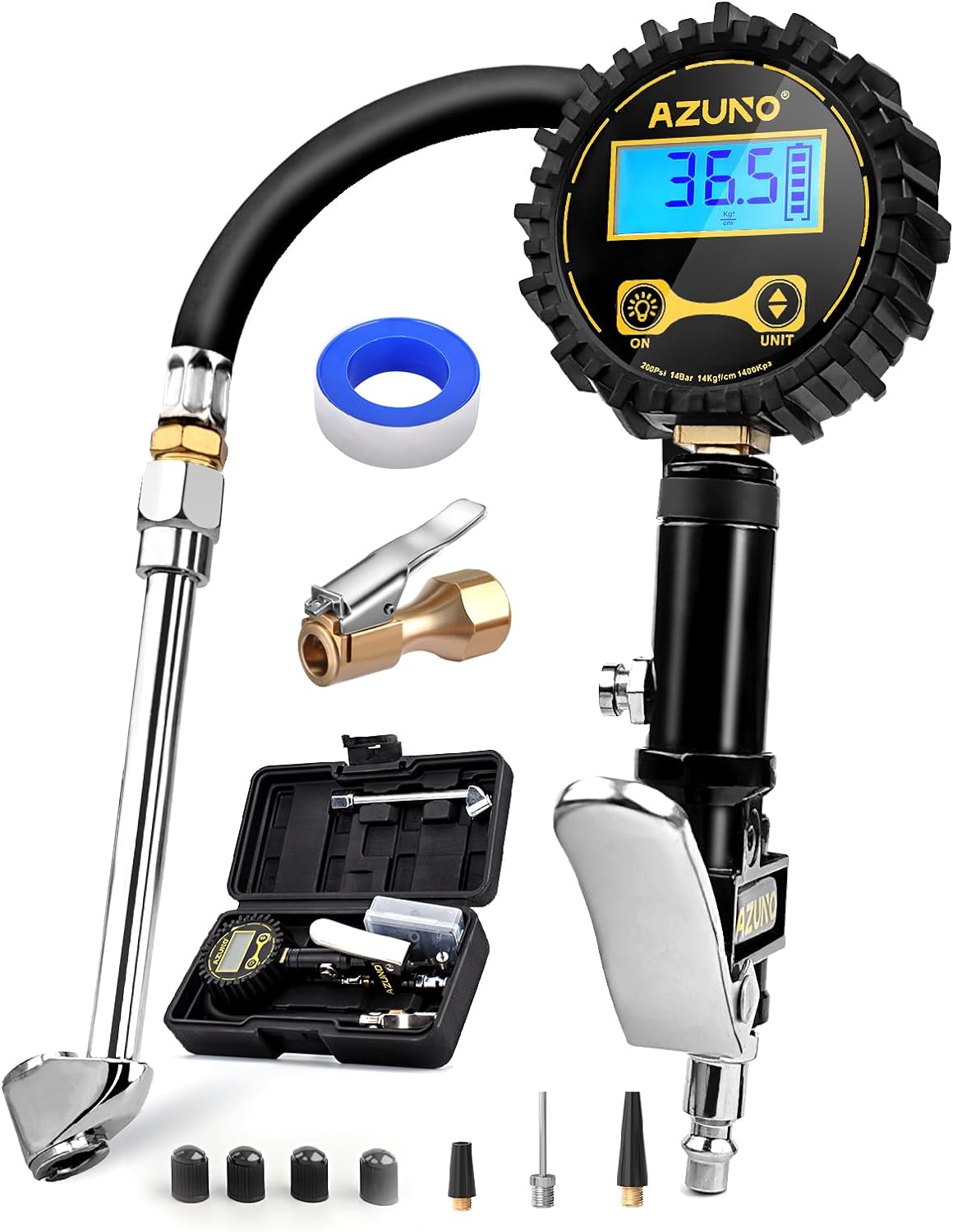
This digital tire inflator delivers accurate, easy-to-read pressure measurements with a bright backlit LCD and precise 0.1 resolution for confident inflation. Designed for single-handed use, it makes it simple to inflate or deflate tires while staying organized in the included portable carrying box. Built for a wide range of vehicles, it is a practical air compressor accessory for cars, trucks, SUVs, motorcycles, and more.
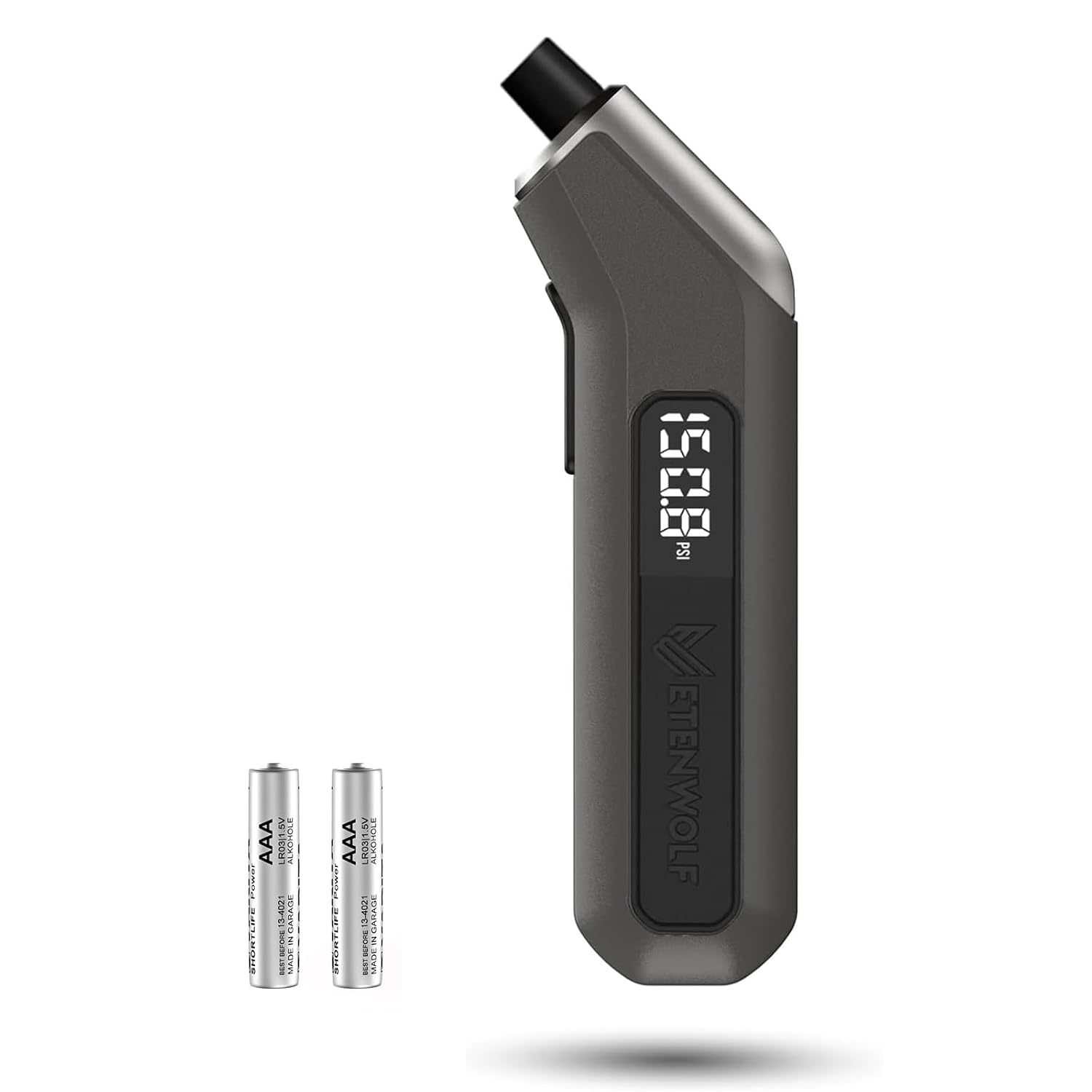
The ETENWOLF T300 digital tire pressure gauge delivers precise readings for cars, RVs, trucks, bikes, and heavy-duty vehicles with a wide measuring range and consistent accuracy. It is built to perform in extreme temperatures, includes a bright LED light for low-visibility use, and uses replaceable AAA batteries for convenient long-term operation. Durable enough to withstand rugged use, it is a practical tool for maintaining proper tire pressure across a variety of vehicles.

Accurate, Dependable Readings: Factory‑calibrated to ±1 PSI, so you can confidently match your vehicle’s recommended PSI (check the door jamb sticker). Ideal for monthly checks and road trips — consistent results every time, cold or warm.
Common Tire Pressure Checking Mistakes To Avoid
Checking tire pressure is easy, but a few small mistakes can lead to wrong readings or unsafe inflation.
Ignoring Cold Tires
Checking pressure after a long drive can give a higher reading because tires warm up as they roll. If you check hot tires and release air to match the cold PSI number, the tires may end up under-inflated once they cool.
If you must add air to a warm tire because it is clearly low, add enough to make it safe, then recheck and adjust the pressure when the tire is cold.
Using The Sidewall PSI As The Target
The PSI molded into the sidewall is usually the tire’s maximum pressure, not the recommended pressure for your vehicle. Always follow the vehicle placard or owner’s manual unless a qualified tire professional gives a specific adjustment for your setup.
Forgetting The Spare Tire
A spare tire does not help if it is flat when you need it. Full-size and temporary spare tires should be checked regularly. Some temporary spare tires require much higher pressure than standard tires, so check the label or owner’s manual.
Relying Only On TPMS
A Tire Pressure Monitoring System is helpful, but it is not a replacement for manual checks. TPMS warnings usually appear only when a tire is significantly under-inflated, and some systems may not catch every slow or equal pressure loss across all tires.
Top Benefits Of Regular Tire Pressure Checks For Your Vehicle
Regular tire pressure checks help your vehicle perform the way the manufacturer intended. They also help you spot slow leaks before they become roadside problems.
Enhanced Vehicle Safety
Proper inflation helps tires maintain their designed shape and contact patch. That supports steering response, braking performance, heat control, and overall stability. It also reduces the risk of damage caused by running under-inflated tires for too long.
- Better handling: Tires respond more predictably when inflated correctly.
- Lower heat buildup: Under-inflated tires flex more and can overheat.
- More even tread wear: Correct pressure helps the tread wear more evenly.
- Earlier problem detection: A tire that repeatedly loses pressure may have a leak or damage.
Improved Fuel Efficiency
Under-inflated tires create more rolling resistance, which can waste fuel. FuelEconomy.gov reports that properly inflated tires can improve gas mileage by 0.6% on average and up to 3% in some cases. It also notes that under-inflated tires can lower gas mileage by about 0.2% for every 1 PSI drop in the average pressure of all tires.
| Tire Pressure Status | What It Means | Potential Result |
|---|---|---|
| Below vehicle placard PSI | Under-inflated | More heat, more wear, reduced fuel economy |
| At vehicle placard PSI | Correct cold pressure | Best balance of safety, handling, tire life, and efficiency |
| Above vehicle placard PSI | Over-inflated unless specifically recommended | Uneven wear, harsher ride, and possible impact damage risk |
How Seasonal Changes Affect Tire Pressure
Seasonal temperature changes can shift tire pressure even when the tire has no leak. Cold air contracts, which lowers pressure. Warm air expands, which raises pressure. This is why many drivers see the TPMS light on the first cold morning of the season.
- Winter: Check more often during cold snaps because PSI can drop quickly.
- Spring: Recheck after large day-to-night temperature swings.
- Summer: Do not bleed hot tires just because pressure reads higher after driving.
- Fall: Recheck as temperatures start dropping, especially before road trips.
Note: If your tire loses more than about 2 PSI per month, or one tire is consistently lower than the others, have it inspected by a tire professional.
What To Do If The TPMS Light Comes On
If the tire pressure warning light comes on, slow down and pull over when it is safe. Walk around the vehicle and look for a visibly flat tire, damage, bulges, or objects in the tread. Then check the pressure with a gauge.
- If one tire is very low: Do not continue driving far on it. Add air only if the tire appears safe, then get it inspected.
- If all tires are slightly low: Inflate them to the placard PSI when cold.
- If the light flashes and then stays on: The TPMS may have a malfunction. Have the system inspected.
- If the light comes and goes on cold mornings: Check pressure manually. The tires may be near the warning threshold.
[Products Worth Considering]

🌟KEEP YOUR TIRES IN TOP SHAPE: VXDAS GM TPMS Relearn Tool Plus is a 2 in 1 tool that resets your sensor and maintains tire pressure. Works for GM vehicles (Chevy / Buick / GMC / Opel /Cadillac etc)equipped with 315/433 MHz.

[Accurate Real-time Monitoring & Multi-Alert System]: Tymate TM7 tpms sensor can be used to monitor your tires’ pressure and temperature data within robust accuracy of ±1.5 PSI or ±3°F (The units can be displayed as ℃ or ℉ & BAR or PSI). Designed with six distinct alarm modes: high/low pressure, fast leakage, high temperature, sensor low battery, and sensor signal lost. This system is a reliable tool for maintaining tire health, and it is especially beneficial for DIY enthusiasts and pre-owned vehicle markets, where constant vigilance on tire conditions is paramount for safety and vehicle longevity

【Wide Application】The Masoll M13 Tyre Pressure Monitoring System commonly used on the vehicles with 4 tires include but no limited to Sedan, SUV, Pick-up truck, RV, Travel Trailer less than 38ft. When the trailer is longer than 38ft, a Masoll signal booster recommended to install to enhance the transmission signal.
Resources For Tire Pressure Assistance And Monitoring
If you are not comfortable checking or filling tires yourself, most tire shops, service centers, and many repair facilities can help. For general safety guidance, use trusted resources such as NHTSA TireWise, FuelEconomy.gov, the U.S. Tire Manufacturers Association Tire Care and Safety Guide, and your vehicle owner’s manual.
For commercial or fleet vehicles, tire inspections may also be part of required vehicle inspection and maintenance procedures. The FMCSA Safety Planner notes that commercial motor vehicle tires must meet safety standards, including load restrictions, inflation pressure, and freedom from specified defects.
Frequently Asked Questions
How often should a driver check tire pressure?
Most drivers should check tire pressure at least once a month. You should also check before long trips, after major temperature changes, before towing or carrying heavy loads, and whenever the TPMS light turns on.
How long does air last in a tire?
Air does not last forever in a tire. Passenger and light truck tires may lose about 1 to 2 PSI per month under normal conditions. Temperature drops can also reduce pressure. If one tire keeps losing pressure faster than the others, have it inspected for a leak or damage.
How often should you fill air in your tires?
Do not fill tires on a fixed schedule without checking them first. Check the PSI monthly and add air only when the reading is below the vehicle’s recommended cold pressure. If you need to add air repeatedly, the tire may have a slow leak.
What is the 3% tire rule?
The 3% tire rule is a general idea that tire pressure should stay very close to the manufacturer’s recommended pressure. For everyday driving, the safest approach is simpler: use an accurate gauge and keep each tire at the cold PSI listed on the vehicle placard or owner’s manual.
Should I check tire pressure when tires are hot or cold?
Check tire pressure when the tires are cold. A cold reading is taken before driving, after the vehicle has been parked for at least three hours, or after only a very short drive at moderate speed. Hot tires can give higher readings.
Can I rely on my TPMS instead of checking manually?
No. TPMS is a helpful warning system, but it is not a substitute for monthly checks with a tire pressure gauge. Some systems warn only when a tire is significantly under-inflated, and they may not catch every slow leak early.
Conclusion
Checking tire pressure once a month is a small habit that can make a big difference. Use the vehicle placard or owner’s manual for the correct cold PSI, check all tires including the spare, and add extra checks before long trips, towing, heavy loads, or cold-weather swings. If a tire keeps losing air, do not keep topping it off and ignoring it—have it inspected before it becomes a safety problem.
Sources
- National Highway Traffic Safety Administration — TireWise — monthly pressure checks, cold tire guidance, TPMS limitations, tire safety risks.
- FuelEconomy.gov — Keeping Your Vehicle in Shape — fuel economy effect of proper tire inflation and correct PSI location.
- Tire Industry Association — Tire Inflation Pressure — monthly checks, before-trip checks, and checking cold tires.
- U.S. Tire Manufacturers Association — Tire Care and Safety Guide — pressure loss, temperature effects, spare tire checks, TPMS cautions, and slow-leak warnings.
- AAA Club Alliance — How to Check and Correct Tire Pressure — practical tire pressure checking steps.
- FMCSA Safety Planner — Tires (393.75) — commercial vehicle tire safety standards and inflation-pressure compliance context.