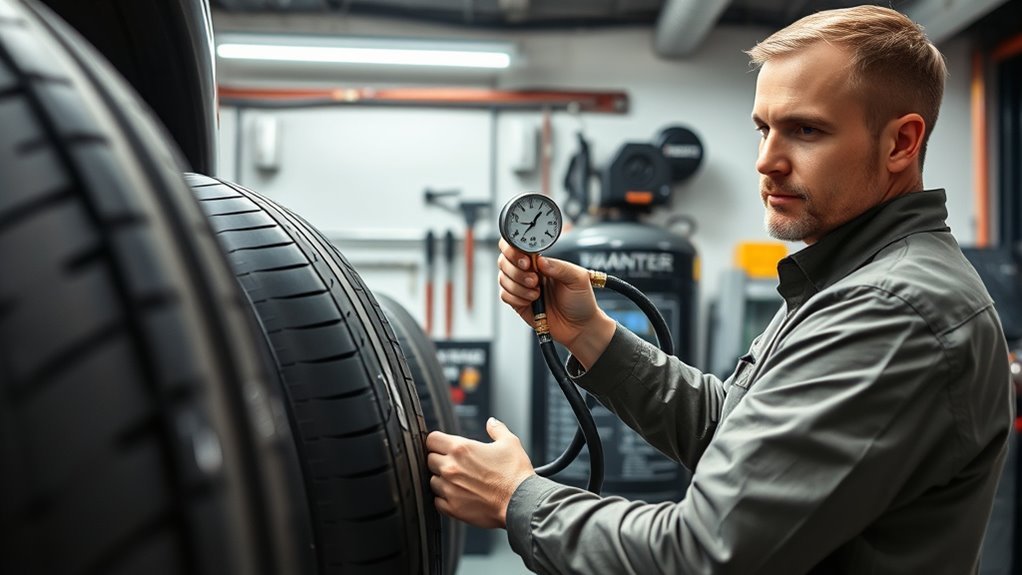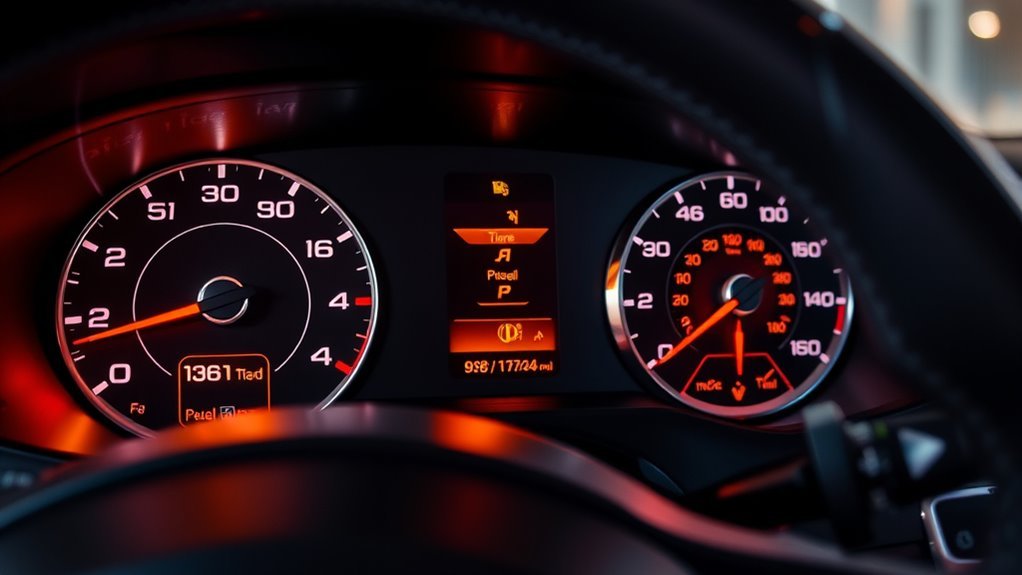
When your tire pressure warning light comes on, treat it as a safety alert—not just a dashboard annoyance. Slow down, avoid hard braking or sharp turns, and check your tires as soon as you can safely stop. In most cases, the fix is simple: confirm the correct PSI, inflate the low tire, and inspect for damage or a slow leak.
Quick Answer
If the tire pressure warning light is on, pull over safely, check all tires with a gauge, and inflate them to the PSI listed on the driver-side door label or in your owner’s manual. If the light flashes for about a minute and then stays on, the TPMS itself may have a malfunction.
Key Takeaways
- A solid TPMS light usually means one or more tires are significantly underinflated.
- A flashing TPMS light that later stays on usually points to a system malfunction, not just low air.
- Always use the vehicle’s recommended cold PSI, not the maximum pressure printed on the tire sidewall.
- Cold weather can lower tire pressure by about 1 PSI for every 10°F drop, so seasonal checks matter.
- Do not drive on a visibly flat tire, sidewall bulge, exposed cords, or rapid air loss.
At a Glance
| Time Required | 5–15 minutes for a pressure check and inflation; longer if a tire or sensor needs service |
| Difficulty | Easy for checking PSI; professional help recommended for leaks, damaged tires, or TPMS sensor faults |
| Tools Needed | Tire pressure gauge, air pump, valve-stem caps, owner’s manual or driver-side tire placard |
| Cost | Often free to a few dollars for air; about $10–$30 for a basic gauge; TPMS sensor repair varies by vehicle and shop |
Warning: If a tire looks flat, has a sidewall bulge, shows exposed cords, loses air quickly, or the vehicle pulls hard or vibrates, do not keep driving. Pull over safely and call roadside assistance or a tire professional.
What Does the TPMS Light Mean?

The Tire Pressure Monitoring System, or TPMS, is designed to warn you when one or more tires are significantly underinflated. Under the federal TPMS standard, the system must warn drivers when tire pressure in one or more tires is at or below 25% below the vehicle manufacturer’s recommended cold inflation pressure, or the minimum pressure listed in the standard, whichever is higher.
TPMS is a warning system, not a replacement for monthly tire pressure checks.
The icon usually looks like a horseshoe-shaped tire with an exclamation point inside. Some vehicles also show a message such as “Low Tire Pressure,” “Check Tire Pressure,” or the exact tire that needs air. More advanced systems may show the pressure for each wheel, while older or simpler systems may only show the warning light.
According to NHTSA tire safety guidance, all passenger cars, light trucks, and vans from model year 2008 and newer are required to have TPMS. Some 2006 and 2007 vehicles also have it.
Solid vs. Flashing TPMS Light
The way the light behaves matters:
- Solid TPMS light: Usually means at least one tire is significantly underinflated. Check tire pressure as soon as it is safe.
- Light comes on, then turns off: Often happens on cold mornings when pressure dips below the warning threshold overnight and rises as the tires warm up. Still check the PSI.
- Flashing light for about 60–90 seconds, then solid: Usually means the TPMS has a malfunction. The system may not be able to warn you correctly until it is repaired.
Note: A flashing TPMS light does not automatically mean the tire is safe. Check the tire pressure manually first, then troubleshoot the monitoring system.
What to Do First When the Tire Pressure Light Comes On
- Stay calm and slow down. Avoid sudden steering, hard braking, and high speeds until you know the tire condition.
- Pull over safely. Choose a parking lot, wide shoulder, or gas station if possible.
- Look at all four tires. Check for a visibly flat tire, puncture, nail, cracked sidewall, bulge, or damaged valve stem.
- Check pressure with a gauge. Do not rely only on the dashboard light or a visual inspection.
- Inflate to the correct PSI. Use the pressure listed on the driver-side door label or in the owner’s manual.
- Recheck the light. Some vehicles clear the light after driving, while others need a reset through a button, menu, or relearn procedure.
If a tire is very low, inflate it only if it still looks safe and holds air. If it drops again soon after inflation, you likely have a leak that needs repair.
[Products Worth Considering]

The JACO ElitePro Digital Tire Pressure Gauge delivers shop-grade accuracy with a clear digital readout, making it easy to maintain proper tire pressure for safer driving and better performance. Built with rugged brass and steel components, a protective guard, and a flexible air hose, it is designed for reliable use across cars, trucks, motorcycles, bikes, RVs, and trailers. The lock-on display, built-in bleeder valve, and bright backlit screen add convenience in any lighting condition.
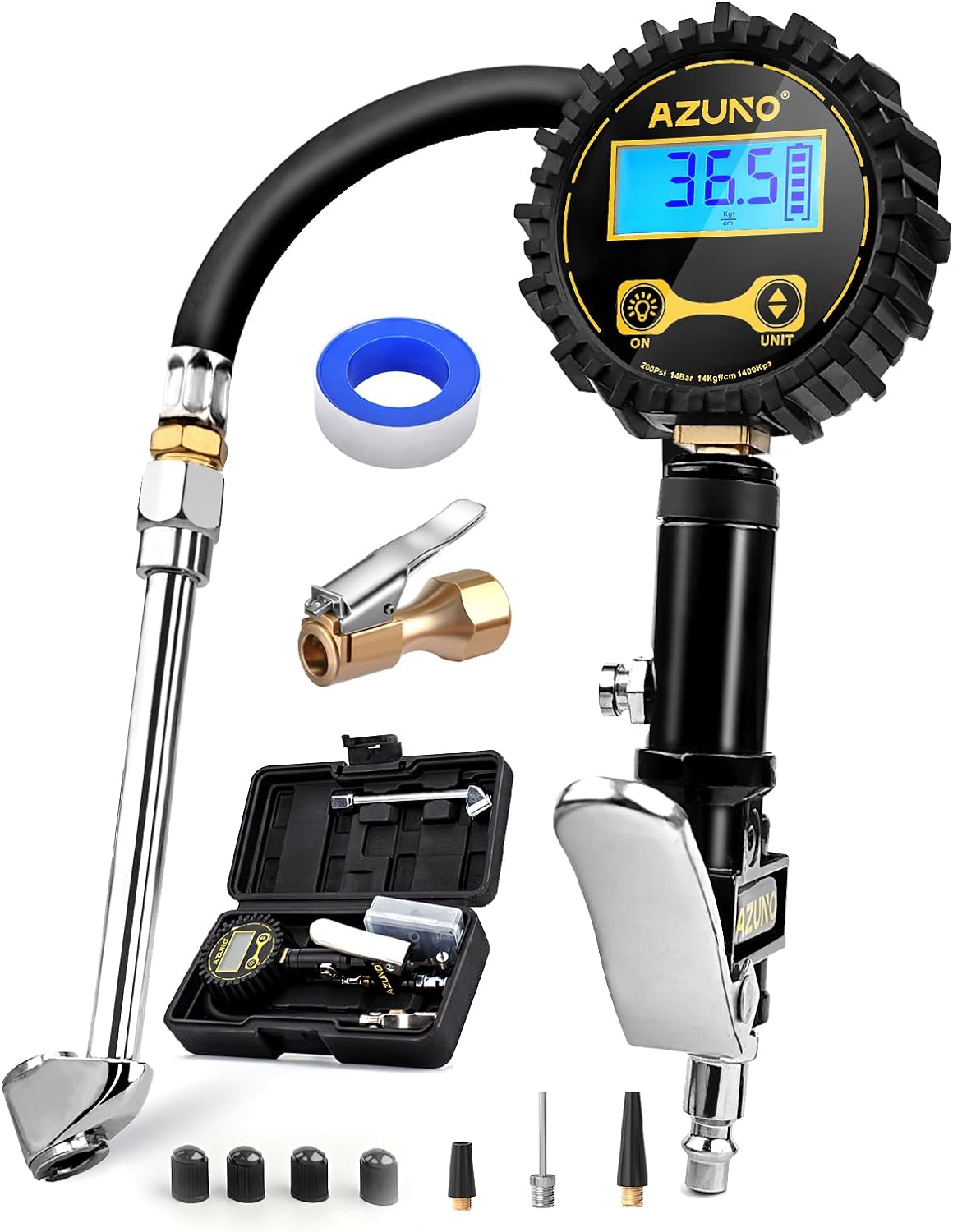
This digital tire inflator delivers accurate, easy-to-read pressure measurements with a bright backlit LCD and precise 0.1 resolution for confident inflation. Designed for single-handed use, it makes it simple to inflate or deflate tires while staying organized in the included portable carrying box. Built for a wide range of vehicles, it is a practical air compressor accessory for cars, trucks, SUVs, motorcycles, and more.

This heavy-duty car ramp set provides a stable, reliable lift for routine maintenance like oil changes, tire rotations, brake work, and undercarriage inspections. Built from high-impact poly with a non-skid tread and rubber feet, it helps keep vehicles secure while offering a lightweight, corrosion-resistant alternative to steel ramps. The wide, gradual design supports a broad range of vehicles, from compact cars to trucks, SUVs, and vans.
Checking and Adjusting Your TPMS Tire Pressure
For the most accurate reading, check tire pressure when the tires are cold. NHTSA defines cold tires as tires that have not been driven on for at least three hours. Driving heats the tires and temporarily raises the pressure, which can make the reading look higher than it really is.
Follow these steps:
- Find the correct PSI. Look for the Tire and Loading Information Label on the driver-side door edge or doorjamb, or check the owner’s manual.
- Remove the valve cap. Keep it in your pocket so it does not roll away.
- Press the gauge firmly onto the valve stem. A brief hiss is normal, but a long hiss usually means the gauge is not sealed correctly.
- Compare the reading with the recommended PSI. If front and rear tires have different recommended pressures, inflate each to its own number.
- Add or release air as needed. Add air in short bursts, then recheck with the gauge.
- Replace the valve cap. It helps keep dirt and moisture out of the valve stem.
- Check the spare if your vehicle has one. Some spare tires are not monitored by TPMS, but they still need correct pressure for emergencies.
Pro Tip: Do not use the PSI printed on the tire sidewall as your target pressure. That number is usually the tire’s maximum pressure, not the correct pressure for your vehicle.
If you had to inflate a warm tire because you were already driving, fill it to the recommended pressure as a temporary safety step, then recheck and adjust it again when the tire is cold.
[Products Worth Considering]

This TPMS relearn tool helps GM vehicle owners quickly activate and reset tire pressure monitoring sensors after tire changes, sensor replacements, or warning light issues. Designed for many Chevy, Buick, GMC, Cadillac, and Opel models, it works with common sensor frequencies and can save time compared with dealer visits. Its simple one-button operation makes tire sensor relearning fast and easy for everyday maintenance.
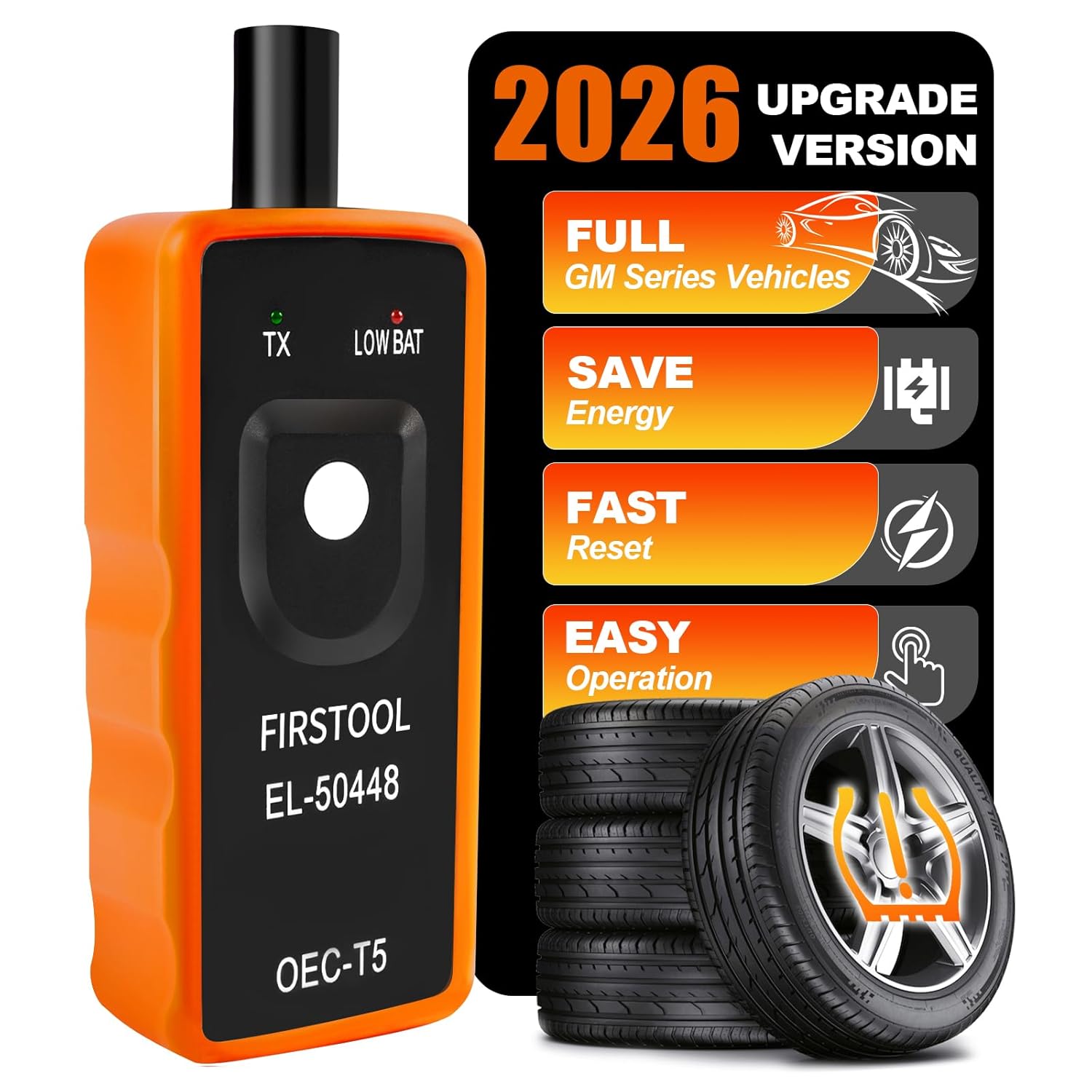
This EL-50448 TPMS relearn tool helps quickly activate and reset tire pressure sensors so your vehicle’s monitoring system stays accurate after tire rotations, sensor replacement, or seasonal tire changes. Designed for many GM-related vehicles and compatible with common 315 and 433 MHz TPMS systems, it offers simple one-button operation and reliable performance for clearing warning lights and relearning sensor positions.
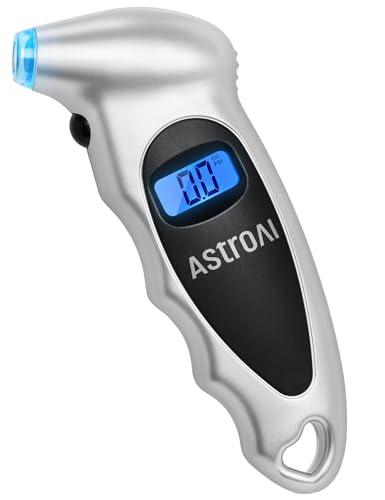
Accurate, Dependable Readings: Factory‑calibrated to ±1 PSI, so you can confidently match your vehicle’s recommended PSI (check the door jamb sticker). Ideal for monthly checks and road trips — consistent results every time, cold or warm.
What Causes Your TPMS Light to Activate?
A TPMS light can come on for several reasons. The most common is simple underinflation, but the cause is not always obvious.
- Cold weather: Tire pressure decreases by about 1 PSI for every 10°F drop in temperature, so a cold morning can trigger the light.
- Normal air loss: Tires naturally lose small amounts of air over time.
- Puncture or slow leak: Nails, screws, glass, or bead leaks can cause gradual pressure loss.
- Valve-stem problem: A loose core, cracked stem, or missing valve cap can contribute to leaks.
- Recent tire rotation or replacement: Some vehicles need a TPMS relearn after tire service.
- Wheel or tire changes: Replacement wheels or tires that do not work well with the system can affect TPMS operation.
- Sensor battery or sensor failure: Direct TPMS sensors use batteries that eventually fail.
Direct TPMS uses pressure sensors mounted in or near the wheels. Indirect TPMS estimates tire pressure changes using wheel-speed data from the ABS system. Both can trigger a warning, but the reset and diagnosis steps can differ by vehicle.
Troubleshooting Persistent TPMS Light Issues

If the TPMS light stays on after you adjust tire pressure, work through the issue in order. Do not assume the sensor is bad until you verify the tires first.
- Recheck all tires with a reliable gauge. Include the spare if your vehicle has one and your manual says it is monitored.
- Confirm the correct PSI. Use the door placard or owner’s manual, not the tire sidewall.
- Inspect the tread and sidewalls. Look for nails, cuts, bulges, cracking, uneven wear, or a tire that looks lower than the others.
- Check for repeated pressure loss. If the same tire keeps dropping, a tire shop can test it for leaks.
- Follow your vehicle’s reset procedure. Some vehicles reset automatically after correct inflation and driving; others require a dashboard menu, reset button, or TPMS relearn tool.
- Watch the light pattern. If it flashes for about 60–90 seconds and then stays on, the system likely has a malfunction.
There is no universal “drive above 25 mph” reset rule that applies to every vehicle. Your owner’s manual is the best source for the exact reset or relearn procedure.
When to Call in the Pros for TPMS Help?
Call a tire shop, mechanic, or roadside assistance if the light stays on after you set the correct pressure, if the same tire keeps losing air, or if the TPMS light flashes and then remains solid. You should also get professional help if you see tire damage, have a flat, feel vibration, or hear unusual tire noise.
A technician can check for punctures, bead leaks, cracked valve stems, damaged wheels, and failed sensors. For sensor issues, the shop may use a diagnostic scan tool or TPMS tool to identify which wheel is not communicating. RepairPal notes that TPMS sensor replacement often requires separating the tire from the wheel and then driving the vehicle a short distance or performing a manual relearn.
How Much Does TPMS Sensor Repair Cost?
The cost depends on your vehicle, the sensor type, labor rates, and whether the sensor needs programming. As a current reference point, RepairPal estimates TPMS sensor replacement at about $246–$313, while Kelley Blue Book lists an average of about $314–$368. Your actual quote may be lower or higher, especially if the sensor is replaced during a tire change or if multiple sensors are failing.
If your vehicle is older, ask whether replacing all sensors during a tire replacement makes sense. Many direct TPMS sensors have sealed batteries, so when the battery dies, the entire sensor is usually replaced.
Frequently Asked Questions
Why is my tire pressure light on if my tires look fine?
A tire can be significantly underinflated without looking flat. The light can also come on because of cold weather, a slow leak, a valve-stem issue, recent tire service, or a TPMS sensor malfunction. Check each tire with a gauge before assuming the tires are fine.
Can I still drive if my tire pressure light is on?
You can usually drive slowly to a safe place to check the tires if the vehicle feels normal and no tire looks flat or damaged. Do not keep driving at highway speed, and do not drive on a visibly flat tire, sidewall bulge, exposed cords, or rapid air loss.
How much would it cost to fix a tire pressure sensor?
Installed TPMS sensor repair costs vary widely by vehicle and shop. Current repair estimates from major pricing guides commonly fall in the low-to-mid hundreds for sensor replacement. Ask for an itemized quote that separates the sensor, labor, valve-stem kit, and programming or relearn fee.
What is the first thing you should do when a low air pressure warning comes on?
Slow down, avoid sudden steering or braking, and pull over when it is safe. Then inspect the tires and check the pressure with a gauge. Inflate low tires to the vehicle’s recommended cold PSI and get professional help if a tire is damaged or will not hold air.
Why does my tire pressure light come on in cold weather?
Cold air contracts, which lowers tire pressure. A common rule of thumb for passenger vehicles is about 1 PSI lost for every 10°F drop in temperature. If your tires were already close to the warning threshold, a cold morning may be enough to turn the light on.
Do I need to reset the TPMS after adding air?
Sometimes. Many vehicles turn the light off automatically after correct inflation and driving, but others require a reset button, dashboard menu, or relearn procedure. Check your owner’s manual because the process is vehicle-specific.
Conclusion
When the tire pressure warning light comes on, the safest response is simple: slow down, check your tires, and confirm the pressure with a gauge. Inflate each tire to the recommended cold PSI on the vehicle placard, inspect for visible damage, and do not rely on TPMS as your only tire-maintenance tool. If the light flashes, stays on after correct inflation, or returns soon after you add air, have the tire or TPMS system inspected by a professional.
Sources
- eCFR — 49 CFR § 571.138, Tire Pressure Monitoring Systems — federal TPMS detection threshold and malfunction indicator requirements
- NHTSA TireWise tire safety guidance — cold-tire pressure checks, correct PSI location, TPMS meaning, and tire safety steps
- AAA Club Alliance — How Temperature Changes Affect Your Tire Pressure — cold-weather pressure changes and seasonal tire checks
- RepairPal TPMS Sensor Replacement Cost Estimate — repair cost estimate and professional diagnostic process
- Kelley Blue Book TPMS Sensor Replacement Cost — current TPMS sensor replacement cost reference