

By: Merrick Vaughn · Last updated: July 31, 2026 · Reviewed for accuracy: Auto Review Nest Editorial Team
If your tire inflator smells like burning, stop it immediately. Disconnect its power only when you can do so without touching a hot, melted, sparking, or damaged plug, cord, socket, clamp, charger, or battery. Let the unit cool for the period stated in its manual, then inspect the vents, hose, plug, cord, socket, clamps, charger, and battery area.
Do not restart an inflator that produced smoke, sparks, melting, battery swelling, unusual sounds, a repeatedly blown fuse, or a burning odor that returned after cooling. Those signs can point to an electrical, mechanical, connection, or battery fault that requires manufacturer-authorized service or replacement.
Quick Answer
If your tire inflator smells like burning, switch it off immediately. Disconnect it only when the plug, cord, socket, battery clamps, charger, and housing are safe to touch. Follow the model-specific cool-down period in the owner’s manual and wait until the unit is no longer unusually hot. Do not use it again after smoke, sparks, melting, battery swelling, a hot power connection, a repeatedly blown fuse, or a repeated burning smell.
Key Takeaways
- Stop the inflator immediately when you smell burning or notice smoke, sparks, swelling, melting, or unusual noise.
- Disconnect power only when you can do so without touching a hot or damaged plug, cord, socket, clamp, charger, or battery.
- Follow your model’s duty cycle and cool-down instructions because no single time applies to every inflator.
- Inspect the vents, hose, nozzle, cord, plug, vehicle socket, wall outlet, battery clamps, charger, and battery area before considering another use.
- Do not restart the inflator when the odor returns, a correctly rated fuse blows again, or the source remains uncertain.
How this guide was checked: On July 31, 2026, the safety steps and model examples were rechecked against U.S. Consumer Product Safety Commission extension-cord guidance, U.S. Fire Administration lithium-ion battery guidance, National Highway Traffic Safety Administration tire guidance, and current Kogan, TANYO, and VIAIR documentation. This is a source-based safety guide, not a teardown or laboratory test. Your inflator’s manual remains the controlling source for its duty cycle, approved power supply, fuse rating, disconnect procedure, and cool-down period.
Tire Inflator Burning Smell: What the Clues Mean
A smell cannot identify the failed part by itself. Use three clues together: when the smell started, where the heat or odor is strongest, and what other symptoms appeared. An odor after a long run suggests a different risk from one that begins immediately at startup or is concentrated at a plug, socket, clamp, charger, or battery.
| What You Notice | Possible Source | Immediate Action | Restart? |
|---|---|---|---|
| Hot odor after a long run, with no smoke, melting, abnormal sound, or power-connection heat | Exceeded duty cycle, restricted ventilation, high ambient temperature, or an undersized inflator | Stop, cool it according to the manual, and clean the external vent area | Only after every safe-restart condition below is met |
| Odor strongest at a cord, plug, extension connection, outlet, battery clamp, or 12V socket | Loose connection, damaged insulation, incorrect power source, excessive current draw, or electrical overloading | Turn off power and disconnect only if the connection is safe to touch | No, until the overheating connection and circuit compatibility are checked |
| Burning odor with weak airflow, grinding, rattling, repeated shutdowns, or repeated fuse failure | Internal wear, a jammed pump, damaged fan, overload, or electrical failure | Stop using the unit and contact the manufacturer or an authorized repair provider | No |
| Cordless unit with swelling, leaking, discoloration, hissing, popping, or excessive battery heat | Damaged or failing lithium-ion battery | Stop using and charging it. Move away if smoke, sparks, or severe heat make handling unsafe | No |
| Smoke, sparks, melted plastic, flame, or a hot and discolored outlet | Active electrical or battery failure | Do not touch or move the equipment when doing so is unsafe. Move away and call local emergency services | No |
Why Does a Tire Inflator Smell Like Burning?
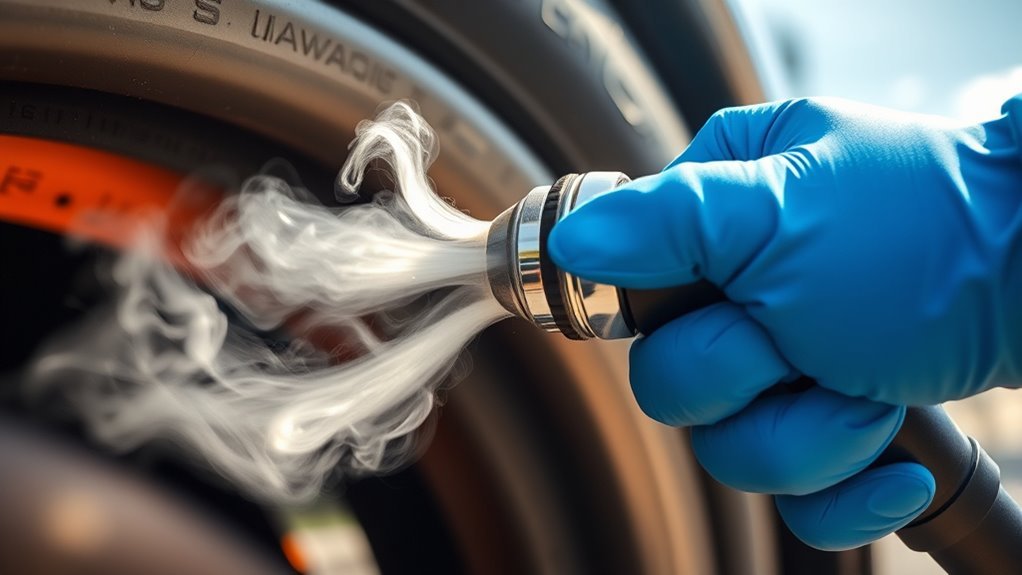
A tire inflator can smell like burning when it generates heat faster than it can release it. Common sources include operation beyond its duty cycle, blocked ventilation, a hot or loose power connection, excessive current draw, internal mechanical wear, and battery damage in cordless models.
The Inflator Exceeded Its Duty Cycle
A duty cycle tells you how long the compressor may run before it needs to rest. Compact inflators can heat quickly when they fill a very low tire, several tires in a row, or a tire larger than the unit was designed to handle.
A thermal shutoff may stop some models when they overheat, but you should not depend on that feature. Stop early if the unit becomes unusually hot, slows down, changes sound, or produces an odor. An automatic thermal shutdown is a warning that the unit reached its protection threshold, not proof that the underlying cause has been corrected.
The Airflow Is Restricted
Dust, fabric, luggage, or debris around the intake and cooling openings can trap heat. Running the inflator inside a closed storage compartment or against soft upholstery can also restrict ventilation.
Clean only the external vent area after disconnecting power. Do not open a sealed housing or insert tools through a vent unless the manufacturer’s instructions expressly permit it.
The Power Connection Is Overheating
A loose plug, worn socket, damaged cord, poor clamp connection, or underrated extension cord can produce heat outside the inflator. The U.S. Consumer Product Safety Commission warns that extension cords can overheat when overloaded and that overheating may occur at the plug, socket, or anywhere along the cord.
For a 12V accessory-outlet model, compare the inflator’s maximum current draw with the outlet and fuse rating in the vehicle manual. A direct-battery model must be connected and disconnected in the exact order stated by its manual. Do not improvise a connection or replace a fuse with a higher rating.
For more connector-specific checks, see the guide for when a tire inflator cord or plug gets hot.
An Internal Part Is Worn or Jammed
Grinding, rattling, weak airflow, repeated fuse failure, or repeated shutdowns can accompany internal wear, an electrical fault, or a restricted pump. Stop using the unit rather than continuing until it fails. The related unusual tire inflator noise guide covers sound-specific checks.
A Cordless Inflator Has a Battery Problem
The U.S. Fire Administration advises users to stop using lithium-ion batteries after an unusual odor, excessive heat, a color or shape change, leaking, or odd noises. Do not use or charge a cordless inflator again after swelling, leaking, discoloration, hissing, popping, smoke, or excessive battery heat.
What Overheating Signs Should You Watch For?
A warm pump body, hose, or metal hose connection can occur during normal operation because compression creates heat. Normal warmth should level off within the model’s permitted run time. Rapidly increasing heat, a burning odor, heat at the power connection, changed performance, or a surface that is unsafe to touch is not normal.
Stop the unit when you notice any of these changes:
- Inflation becomes much slower than normal
- The motor pitch rises, falls, grinds, or rattles
- The inflator shuts down before reaching the set pressure
- A correctly rated fuse blows again or the vehicle circuit repeatedly trips
- The hose connection, battery clamp, plug, socket, or cord becomes too hot to touch safely
- The housing changes color, softens, warps, or begins to melt
- A cordless battery swells, leaks, hisses, pops, or produces an unusual odor
- Smoke or sparks appear anywhere around the unit or power source
Do not assume that an automatic shutdown has corrected the cause. It may indicate that a thermal-protection system has reacted to excessive temperature.
Warning: If you see smoke, sparks, flame, melted plastic, battery swelling, or a hot and discolored outlet, do not touch or move the equipment when doing so would expose you to heat, toxic smoke, or electrical danger. Move away and contact local emergency services.
What Should You Do When a Tire Inflator Smells Like Burning?
- Stop inflation. Switch the inflator off immediately.
- Shut down the power source. For an accessory-socket unit, turn off the inflator and vehicle. For a wall-powered unit, switch off the outlet or circuit when that can be done safely. For a direct-battery model, follow the manual’s shutdown and clamp-disconnection order only when the leads and clamps are not hot, melted, or sparking.
- Disconnect only when safe. Do not grip a hot, melted, sparking, or damaged plug or clamp. Do not remove a swollen, smoking, or severely overheated battery.
- Keep clear of combustible material. If the unit is merely warm and safe to handle, place it on a dry, noncombustible surface with open airflow. Do not move a smoking, sparking, or severely overheated device.
- Let it cool fully. Follow the manual’s cool-down period and wait until the housing, hose connection, clamps, and plug are no longer unusually hot.
- Inspect external parts. Check the vents, hose, nozzle, power cord, inline fuse housing, plug, vehicle socket, wall outlet, battery clamps, charging port, charger, and battery case.
- Decide whether reuse is allowed. Apply every condition in the next section. When in doubt, do not restart it.
Do not apply water to an inflator that remains connected to a wall outlet, vehicle circuit, charger, or battery clamps. If a battery-powered unit smokes or burns, move away, call local emergency services, and follow the dispatcher’s instructions rather than attempting to handle the device. Do not bypass a fuse, thermal cutoff, battery-protection circuit, or damaged connector.
[Products Worth Considering]
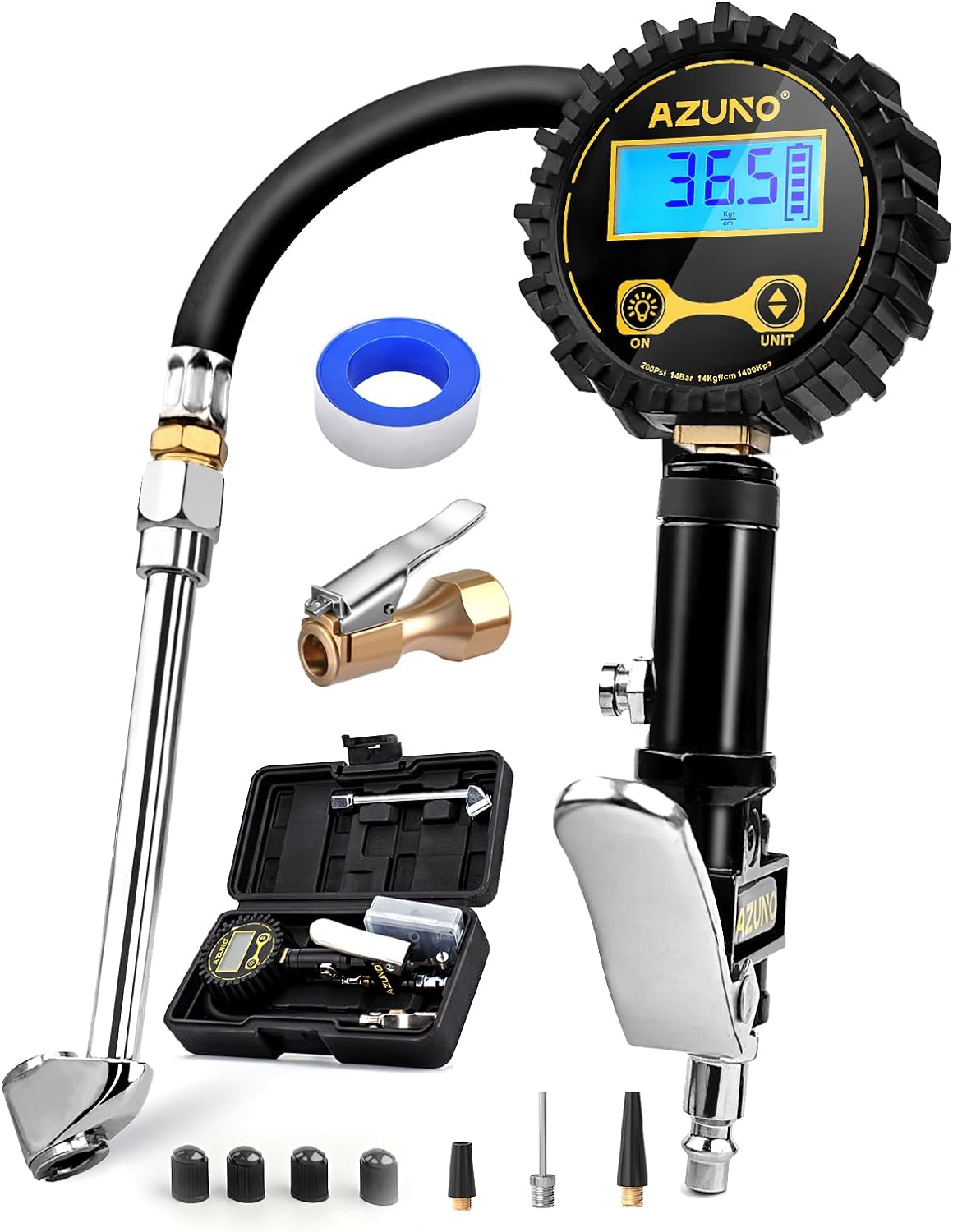
This digital tire inflator delivers accurate, easy-to-read pressure measurements with a bright backlit LCD and precise 0.1 resolution for confident inflation. Designed for single-handed use, it makes it simple to inflate or deflate tires while staying organized in the included portable carrying box. Built for a wide range of vehicles, it is a practical air compressor accessory for cars, trucks, SUVs, motorcycles, and more.

This portable tire inflator delivers fast, convenient inflation for cars, bikes, motorcycles, and balls with dual power options from a rechargeable battery or a 12V car cord. Its digital LCD pressure gauge and automatic shutoff help prevent over-inflation, while multiple preset modes and a custom setting make it easy to use for different inflation tasks. Built-in flashlight and USB power ports add extra emergency utility on the road.

This portable air compressor makes it easy to inflate car tires and other inflatables from a standard vehicle power outlet. It features automatic shutoff, a digital pressure display, and bright LED lighting for convenient use day or night. With multiple nozzle adapters and a long power cord, it is designed for fast, versatile inflation on the go.
Can You Safely Use the Inflator Again?
Consider one fully attended test only when every statement below is true:
- The unit produced no smoke, sparks, flame, melting, swelling, leakage, or discoloration.
- The plug, cord, outlet, vehicle socket, battery clamps, charger, and battery case show no damage.
- No correctly rated fuse blew and no vehicle or household circuit repeatedly tripped.
- The smell appeared only after a long operating period, not immediately after startup.
- The housing, hose connection, battery clamps, and power plug have cooled fully.
- The external vents and intake area are clear.
- The tire, hose, and nozzle do not have an obvious air leak that would extend the run time.
- The manual permits another operating cycle after the required cooling period.
Keep the inflator attended during the test and stop at the first sign of renewed odor, abnormal heat, weak airflow, changed sound, shutdown, or fuse failure. Do not test it again when the burning smell returns.
Do not restart the unit when the odor was sharp and electrical, appeared immediately, came from a hot plug, socket, clamp, charger, or fuse housing, or accompanied any battery warning sign. Contact the manufacturer, use an authorized service provider, or replace the inflator.
How Long Should a Tire Inflator Cool Down?
No universal cool-down time applies to every tire inflator. The motor, pressure, tire size, ambient temperature, current draw, airflow, and product design all affect the duty cycle. Follow the exact instructions for your brand and model.
| Model-Specific Example | Published Guidance | What It Shows |
|---|---|---|
| Kogan KAPTAIRCPSA guide | Automatic stop after 10 minutes of continuous use, followed by a recommended 10-minute cool-down | Some compact cordless models use matching run and rest periods |
| TANYO FD09S manual | Cool the unit for 15 minutes after prolonged use | Another model specifies a different rest period |
| VIAIR 88P specifications | Published duty cycle of 25 minutes at 30 PSI | Run-time ratings can depend on operating pressure |
These examples do not replace your manual. They show why a fixed 30-minute recommendation should not be applied to every inflator. The 12V versus 120V tire inflator guide explains how power source, current draw, connection type, and duty cycle affect normal use.
How to Maintain Your Tire Inflator to Prevent Issues

Basic inspection can reduce avoidable heat and extended run times. Perform these checks only when the inflator has no power and has cooled fully.
- Keep ventilation openings clear. Wipe the exterior and use a soft, dry brush around vents. Do not insert tools into the housing.
- Inspect the hose and nozzle. Cracks, loose fittings, and leaks force the compressor to run longer.
- Check the power connection. Look for looseness, bent contacts, clamp damage, discoloration, damaged insulation, or a hot inline fuse housing.
- Confirm current and circuit compatibility. For an accessory-outlet model, compare its maximum current draw with the vehicle socket and fuse rating. Use battery clamps only on a model designed for that connection.
- Use the specified power source. Follow the manual’s voltage, outlet, fuse, clamp, adapter, charger, and extension-cord requirements.
- Keep the unit dry and ventilated. Do not operate it in rain, standing water, a closed container, or against fabric that blocks airflow.
- Match the inflator to the job. A compact unit designed for occasional tire top-offs may not support large tires or repeated long inflation sessions.
- Store it only after cooling. A hot hose or housing can damage a storage bag and trap heat.
For cordless models, use the original charger or a manufacturer-approved adapter with the correct rating. Stop charging if the battery area develops an unusual odor, excessive heat, swelling, leakage, discoloration, or odd noise.
Use the correct cold tire pressure from the vehicle’s tire-and-loading label or owner’s manual. The National Highway Traffic Safety Administration recommends checking tire pressure at least monthly while the tires are cold. Correct pressure and prompt repair of leaks also reduce unnecessary inflator run time.
[Products Worth Considering]
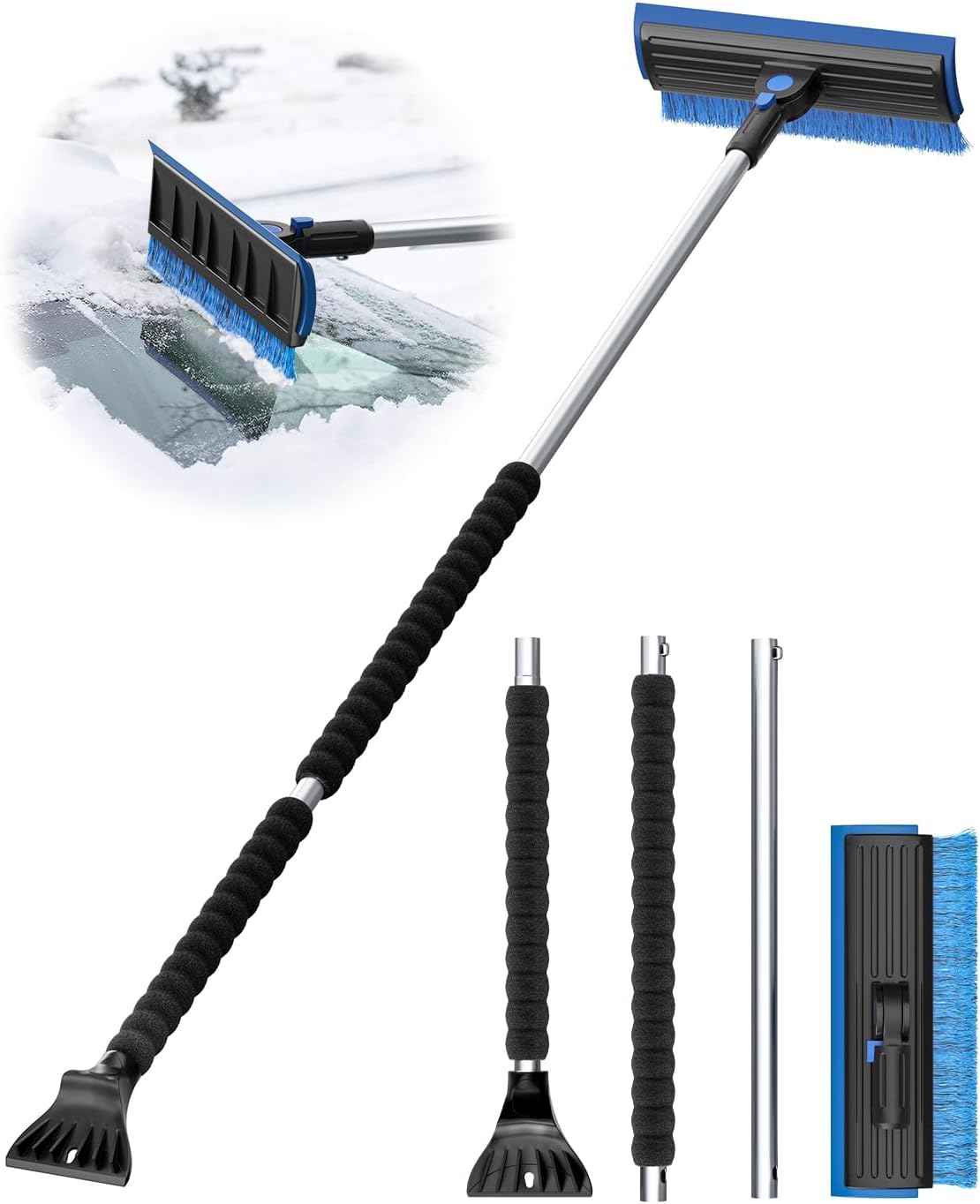
This three-in-one winter tool combines a snow brush, ice scraper, and snow shovel to help clear windshields, roofs, hoods, and hard-to-reach edges with less effort. Its 270-degree rotating head and adjustable telescoping length make it versatile for cars, SUVs, and home glass surfaces, while the soft PVC bristles and foam grip help protect paint and improve comfort in cold weather.
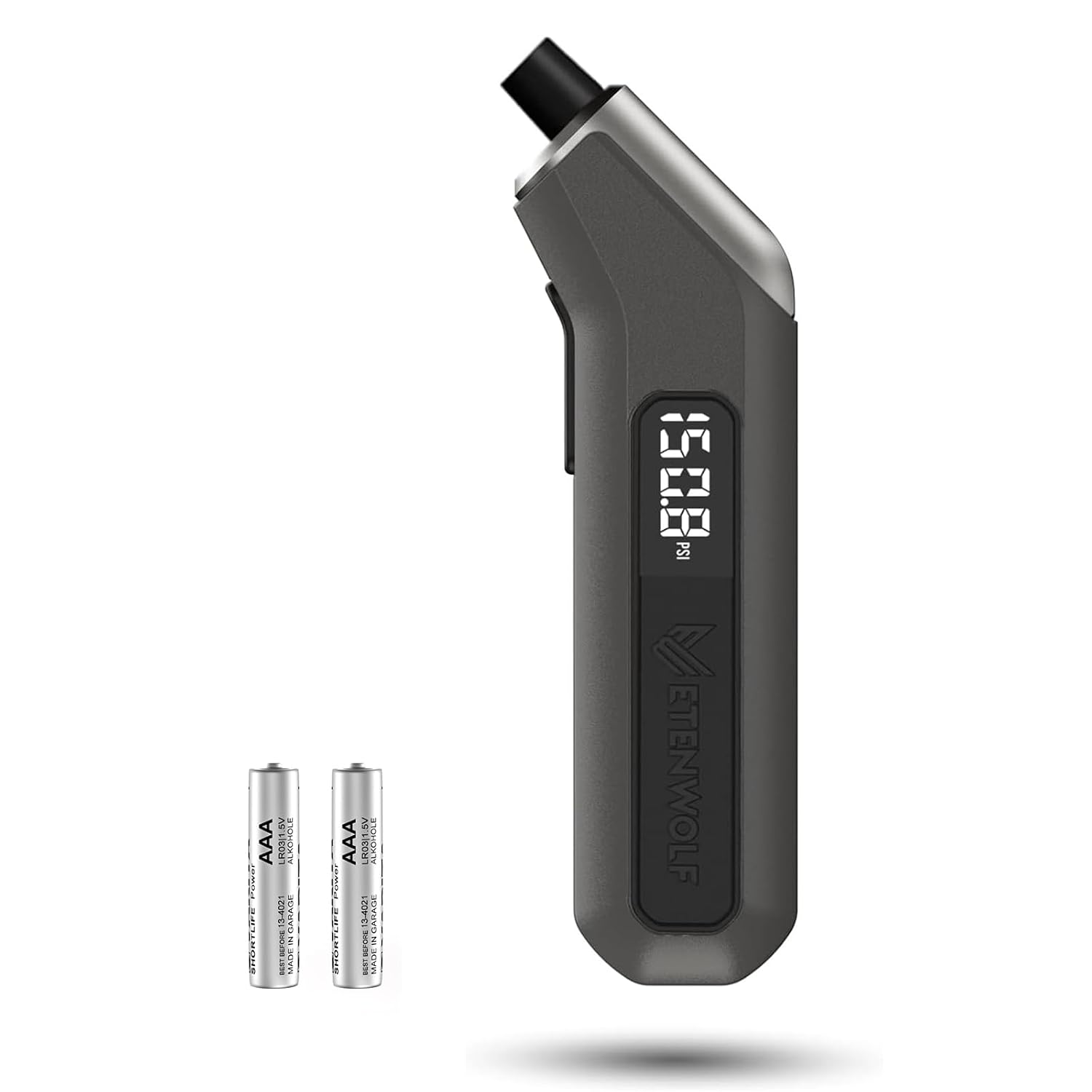
The ETENWOLF T300 digital tire pressure gauge delivers precise readings for cars, RVs, trucks, bikes, and heavy-duty vehicles with a wide measuring range and consistent accuracy. It is built to perform in extreme temperatures, includes a bright LED light for low-visibility use, and uses replaceable AAA batteries for convenient long-term operation. Durable enough to withstand rugged use, it is a practical tool for maintaining proper tire pressure across a variety of vehicles.
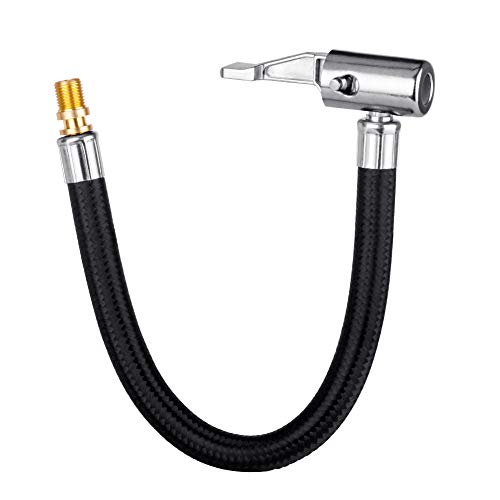
Please Note Before You Buy This:this is only an inflator hose adapter, was designed to convert screw-on(twist-on) air chuck to lock-on air chuck, not for connecting to tire inflator/pump directly, please refer to the left second&third product image.Hose end thread is standard us fine thread connection(0.305"x32TPI), the same as the thread on all USA standard car valve stems, compatible with screw-on(twist-on) air chuck's inner thread.
When to Stop Using or Replace Your Tire Inflator
Stop using the inflator when external cleaning, correct power, and the required cooling period do not resolve the problem. Do not open the housing while the warranty applies or when you lack the service instructions and electrical training for that model.
Replace the unit or seek manufacturer-authorized service after any of these signs:
- Smoke, sparks, flame, melted plastic, or a sharp electrical odor
- A swollen, leaking, discolored, hissing, popping, or excessively hot battery
- A cord, plug, wall outlet, vehicle socket, battery clamp, charger, or inline fuse housing that overheats
- A correctly rated fuse that blows again or a power circuit that repeatedly trips
- Grinding, rattling, weak airflow, or repeated shutdowns during normal use
- A burning smell that returns during a short, permitted operating cycle
- Cracked insulation, exposed conductors, loose plug contacts, damaged clamps, or heat discoloration
- A manufacturer stop-use notice or safety recall covering the brand and model
Never install a higher-rated fuse because the specified fuse keeps blowing. A repeated failure may indicate overload, a short circuit, a seized motor, or another internal defect.
Before disposing of the inflator, search the CPSC recalls and product-safety-warning database using the brand and model number. A recall may provide specific stop-use, refund, repair, or replacement instructions.
Follow local battery-disposal rules for a cordless inflator. Do not place a damaged or recalled lithium-ion device in household trash or a general recycling bin.
Frequently Asked Questions
Why Does My Tire Inflator Smell Like It Is Burning?
A tire inflator may smell like burning after it exceeds its duty cycle, loses cooling airflow, develops a hot power connection, suffers internal wear, draws more current than its approved circuit supports, or has a cordless-battery fault. Stop it immediately and inspect the external parts after it has cooled. Do not restart it after smoke, sparks, melting, swelling, repeated fuse failure, or a repeated odor.
Is It Safe to Use a Tire Inflator Again After It Cools?
Only consider one attended test when the unit has no visible damage, battery warning signs, abnormal sound, hot plug, hot clamp, fuse failure, or repeated odor. The vents must be clear, every external connection must be undamaged, and the manual must permit another operating cycle. Do not test it again if the smell returns.
Is It Normal for a Tire Inflator to Get Hot?
Some warming of the pump body, hose, or metal hose connection can be normal during inflation. Stop the unit when heat rises rapidly, a plug, socket, clamp, charger, or fuse housing becomes hot, performance slows, the unit shuts down, plastic softens or discolors, or a burning odor appears. Follow the model’s duty cycle even when it has automatic thermal protection.
Can Low Tire Pressure Make a Tire Inflator Overheat?
Low tire pressure does not directly create a burning smell inside the inflator. However, a very low or leaking tire can require a longer inflation time. That longer run can push a small inflator beyond its duty cycle, especially when filling a large tire or using a unit with low airflow.
What Does a Burning Rubber or Plastic Smell Indicate?
Smell alone cannot identify the failed part. The source may be a hot hose, plastic housing, wire insulation, power connector, battery clamp, or internal component. Check where the odor is strongest and look for melting, discoloration, abnormal heat, weak airflow, unusual noise, or battery swelling. Do not restart the unit when the source remains uncertain.
What Should I Do If the 12-Volt Plug Gets Hot?
Stop the inflator and turn off the vehicle. Disconnect the plug only when it is safe to touch. Inspect the plug, inline fuse housing, cord, and vehicle socket for looseness, discoloration, melting, or damaged contacts. Confirm that the inflator’s maximum current draw does not exceed the outlet or circuit rating. Do not use it again until the overheating connection has been identified and corrected.
Why Does My Tire Inflator Keep Blowing a Fuse?
A fuse may blow because the inflator draws more current than the socket supports, the motor or pump is overloaded, the cord or plug has a fault, or an internal short exists. Replace a fuse only with the exact type and rating specified by the manufacturer. If the correct fuse blows again, stop using the inflator. Do not install a higher-rated fuse or bypass the fuse.
How Long Should a Tire Inflator Cool Down?
Follow the model’s owner’s manual because run and rest periods vary. Some compact units specify 10 minutes of cooling, while another cited manual specifies 15 minutes after prolonged use. Wait longer when necessary for the housing, hose connection, battery clamps, and plug to return to a normal temperature.
Can a Cordless Tire Inflator Battery Catch Fire?
A damaged or overheated lithium-ion battery can create a fire and burn hazard. Stop using and charging the inflator after swelling, leakage, discoloration, unusual odor, popping, hissing, smoke, or excessive heat. Do not move a smoking or sparking device when handling it would be unsafe. Move away and contact local emergency services.
Safety Disclaimer: This article provides general information and does not replace your inflator’s manual, manufacturer instructions, emergency guidance, or advice from a qualified repair professional. Stop using equipment that smokes, sparks, melts, swells, repeatedly blows the correct fuse, or continues to smell burned.
Conclusion
A burning smell from a tire inflator requires an immediate stop and a careful check of both the unit and its power source. Follow the model-specific duty cycle, let every hot part cool, and inspect the vents, hose, cord, plug, socket, clamps, charger, fuse housing, and battery area.
One controlled restart is reasonable only when no damage, fuse failure, or battery warning signs exist and the manual permits another cycle. Replace the inflator or seek authorized service when the odor returns, a power connection overheats, airflow weakens, or the unit produces smoke, sparks, melting, swelling, repeated shutdowns, or abnormal noise. Review how to use a 12V tire inflator safely before the next roadside inflation.
References
- Household Extension Cords Can Cause Fires, U.S. Consumer Product Safety Commission, 2012
- Battery Fire Safety, U.S. Fire Administration
- Electrical Home Fire Safety, National Fire Protection Association
- Lithium-Ion Battery Safety, National Fire Protection Association
- Tire Safety Ratings and Awareness, National Highway Traffic Safety Administration
- FD09S Tire Inflator Instruction Manual, TANYO
- Portable Air Compressor Pump Tyre Inflator User Guide, Kogan
- Compressor Duty Cycle FAQ, VIAIR
- 88P Portable Compressor Specifications, VIAIR
- Recalls and Product Safety Warnings, U.S. Consumer Product Safety Commission



[…] if it pulls to one side, has an off-center steering wheel, or shows uneven tire wear. Check tire pressure, tread depth, tire damage, and tire size first, since tire issues can copy alignment trouble. If […]
[…] You notice a hot electrical or burning smell. […]