
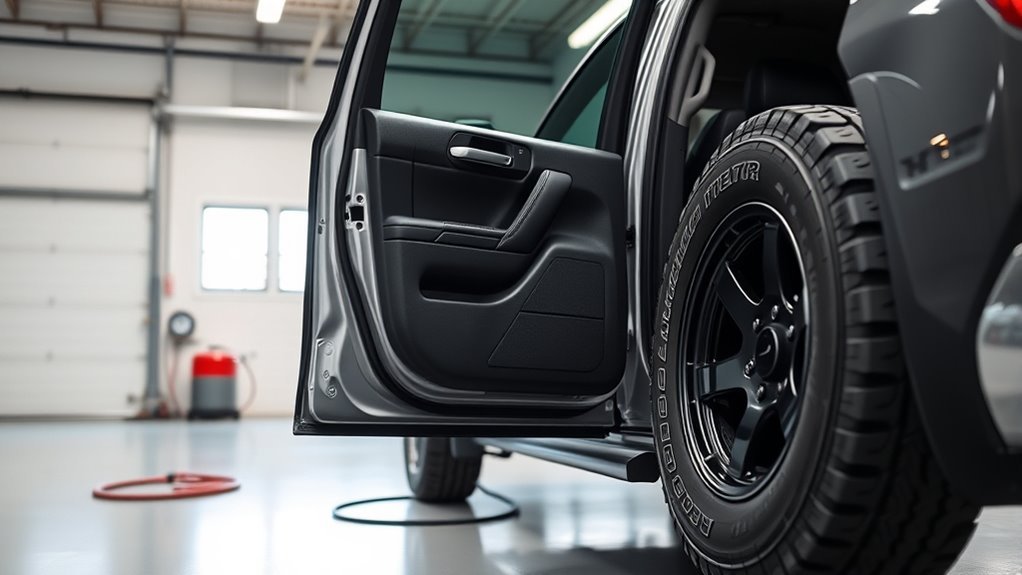
Toyota Tundra tire pressure Guide: Daily Driving, Towing, and Loads
Your Toyota Tundra can feel planted one day and vague the next when tire pressure drifts from spec. A few pounds per square inch can change ride feel, tire heat, steering response, and towing stability. Use this guide to check cold pressure, adjust for load, and avoid unsafe guesswork.
Quick Answer
Set your Toyota Tundra tire pressure from the tire placard on the driver’s door jamb first. Some Tundra placards list about 30 psi front and 33 psi rear, but your exact truck may need a different cold pounds per square inch (PSI). For towing or heavy payloads, use your tire maker’s load and inflation chart, then stay within the tire sidewall and vehicle load limits.
Key Takeaways
- Start with the cold tire pressure on your Tundra’s door placard.
- Check pressure before driving or after the truck sits for at least three hours.
- Raise pressure for towing only when your tire load chart supports it.
- Use Tire Pressure Monitoring System (TPMS) alerts as a backup, not your only check.
- Call a tire shop or Toyota dealer if you changed tire size, load range, or wheel setup.
Before You Begin: What You’ll Need
Estimated total time: Plan 10 to 15 minutes for a normal pressure check, or longer if you tow or haul heavy loads. Park on level ground and let the tires cool before you start.
- A calibrated tire pressure gauge
- A portable inflator or air compressor
- Your Tundra’s tire placard and owner’s manual
- Your tire maker’s load and inflation chart for non-stock tires
- A notepad or phone note to track each tire reading
Read Your Toyota Tundra Tire Placard and Chart
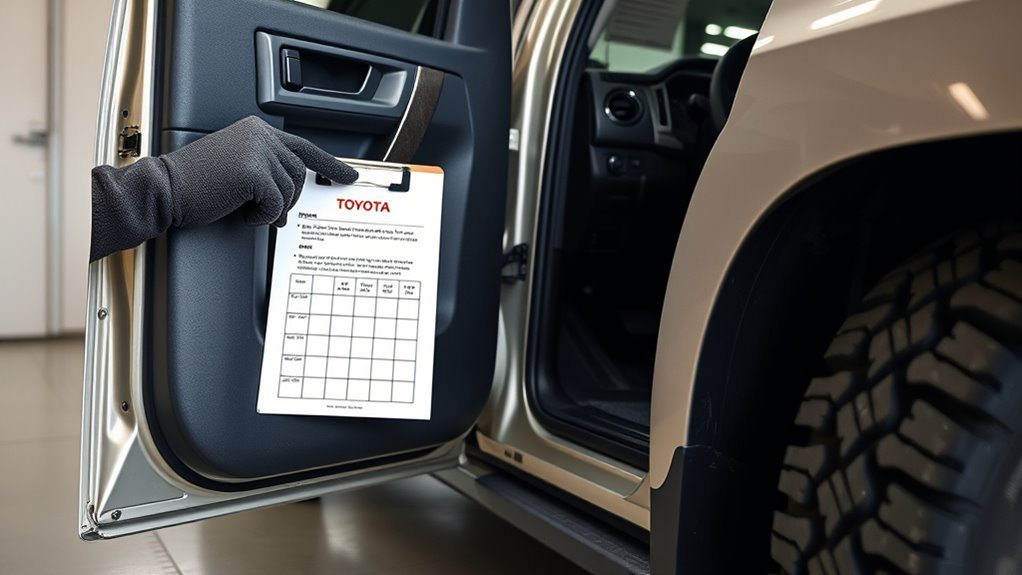
Find the tire placard on the driver’s door jamb before you add air. Toyota owner guidance points you to the door-jamb load label, driver’s door sticker, or owner’s manual for the correct tire inflation specification.
The placard lists the factory tire size and the recommended cold pressure for that exact setup. Some Tundra placards show about 30 psi front and 33 psi rear, but trim, model year, wheel size, and tire package can change the number.
Use the placard as your baseline for normal driving. If you run aftermarket tires, larger tires, or light truck (LT) tires, check the tire maker’s load chart before you copy the factory PSI.
Quick Toyota Tundra PSI Guide for Daily Driving, Towing, and Loads
Use this table as a safe starting point, not as a replacement for your placard. Your exact pressure depends on the truck, tire size, tire load range, and real weight on each axle.
| Scenario | Cold PSI Guidance |
|---|---|
| Factory setup | Use the exact door-placard PSI |
| Daily driving or light loads | Use placard pressure in most cases |
| Towing | Use the tire load chart and raise rear PSI only within limits |
| Heavy payloads | Use axle weight and tire load charts |
| Some older or specific Tundra placards | About 30 front and 33 rear |
Never use the tire sidewall maximum as your normal target pressure. That number shows the tire’s pressure limit under a rated load, not the best pressure for your truck.
Cold tire pressure gives you the cleanest reading because driving heats the tire and raises PSI. Check pressure before you drive, or wait at least three hours after driving.
[Products Worth Considering]

The JACO ElitePro Digital Tire Pressure Gauge delivers shop-grade accuracy with a clear digital readout, making it easy to maintain proper tire pressure for safer driving and better performance. Built with rugged brass and steel components, a protective guard, and a flexible air hose, it is designed for reliable use across cars, trucks, motorcycles, bikes, RVs, and trailers. The lock-on display, built-in bleeder valve, and bright backlit screen add convenience in any lighting condition.
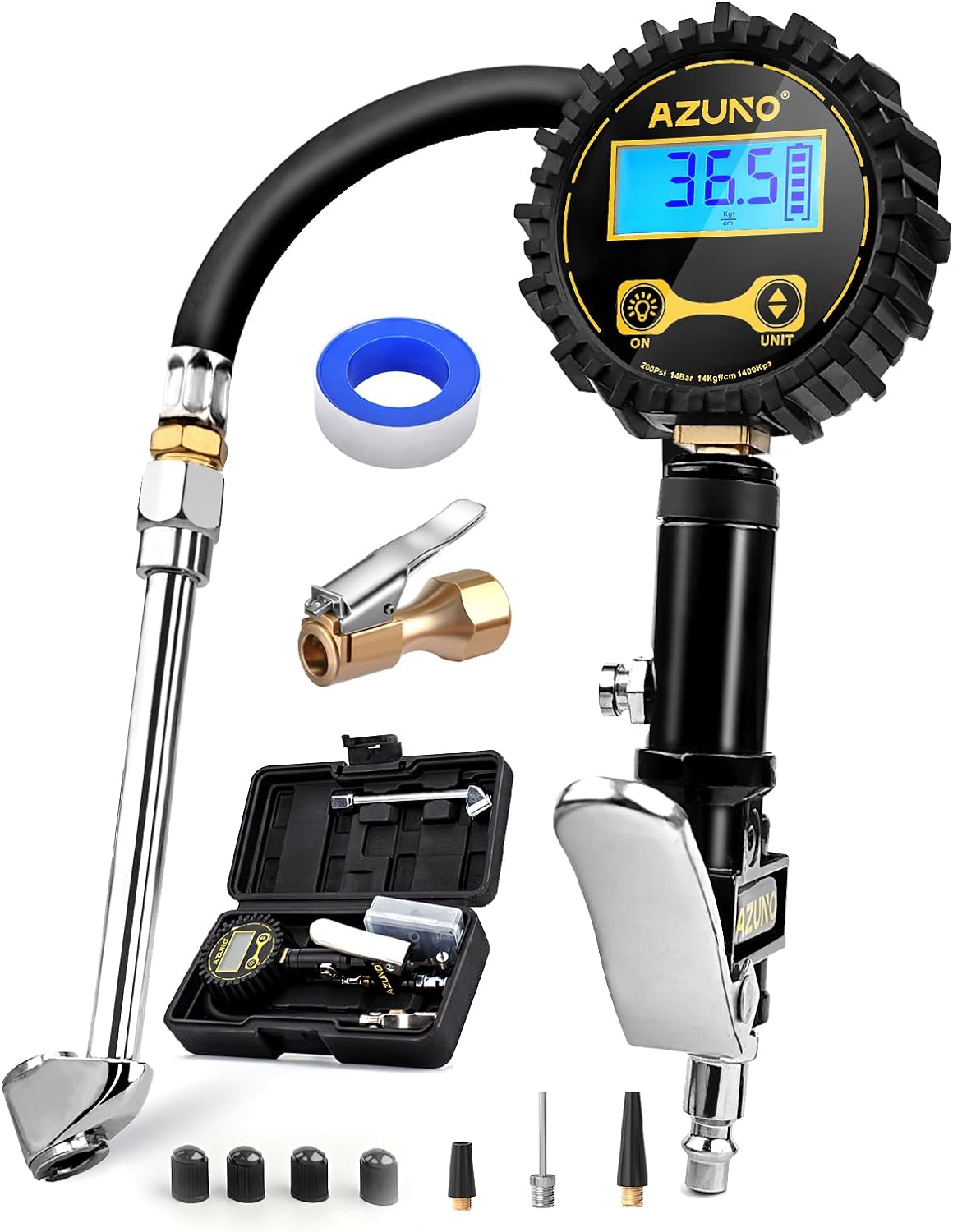
This digital tire inflator delivers accurate, easy-to-read pressure measurements with a bright backlit LCD and precise 0.1 resolution for confident inflation. Designed for single-handed use, it makes it simple to inflate or deflate tires while staying organized in the included portable carrying box. Built for a wide range of vehicles, it is a practical air compressor accessory for cars, trucks, SUVs, motorcycles, and more.

This all-in-one recovery kit provides a reliable towing solution for roadside emergencies and off-road adventures. It includes a heavy-duty tow strap, two D-ring shackles, and a storage bag for convenient transport and quick access. Built for demanding recovery tasks, it is designed to help with towing trucks, SUVs, ATVs, UTVs, and boats in tough weather conditions.
Adjust Toyota Tundra Tire Pressure by Load and Tongue Weight
Towing adds tongue weight to the rear of your Tundra. Cargo in the bed can also shift weight toward the rear axle.
Use these steps to adjust pressure without guessing:
- Weigh the trailer tongue and cargo so you know the real load.
- Check your truck’s payload and gross vehicle weight rating before you load more.
- Find your tire size, load index, and load range on the tire sidewall.
- Match that tire information to the tire maker’s load and inflation chart.
- Set cold pressure to support the load without exceeding the tire or vehicle limit.
- Drive a short distance, then recheck handling, tire heat, and pressure when safe.
Warning: Do not tow with a soft rear tire because underinflation can build heat, weaken handling, and raise failure risk.
Do not raise rear pressure by a fixed number just because you hooked up a trailer. A small utility trailer and a heavy camper can place very different loads on the rear tires.
[Products Worth Considering]

This portable 12V tire inflator delivers fast, convenient inflation for cars, SUVs, trucks, motorcycles, and other inflatables. It features a digital display, bright LED lighting, auto shutoff, and multiple nozzle adapters to help you inflate accurately and safely, even in low-light situations. The long power cord and air hose make it easy to reach all tires and handle roadside emergencies or routine maintenance.
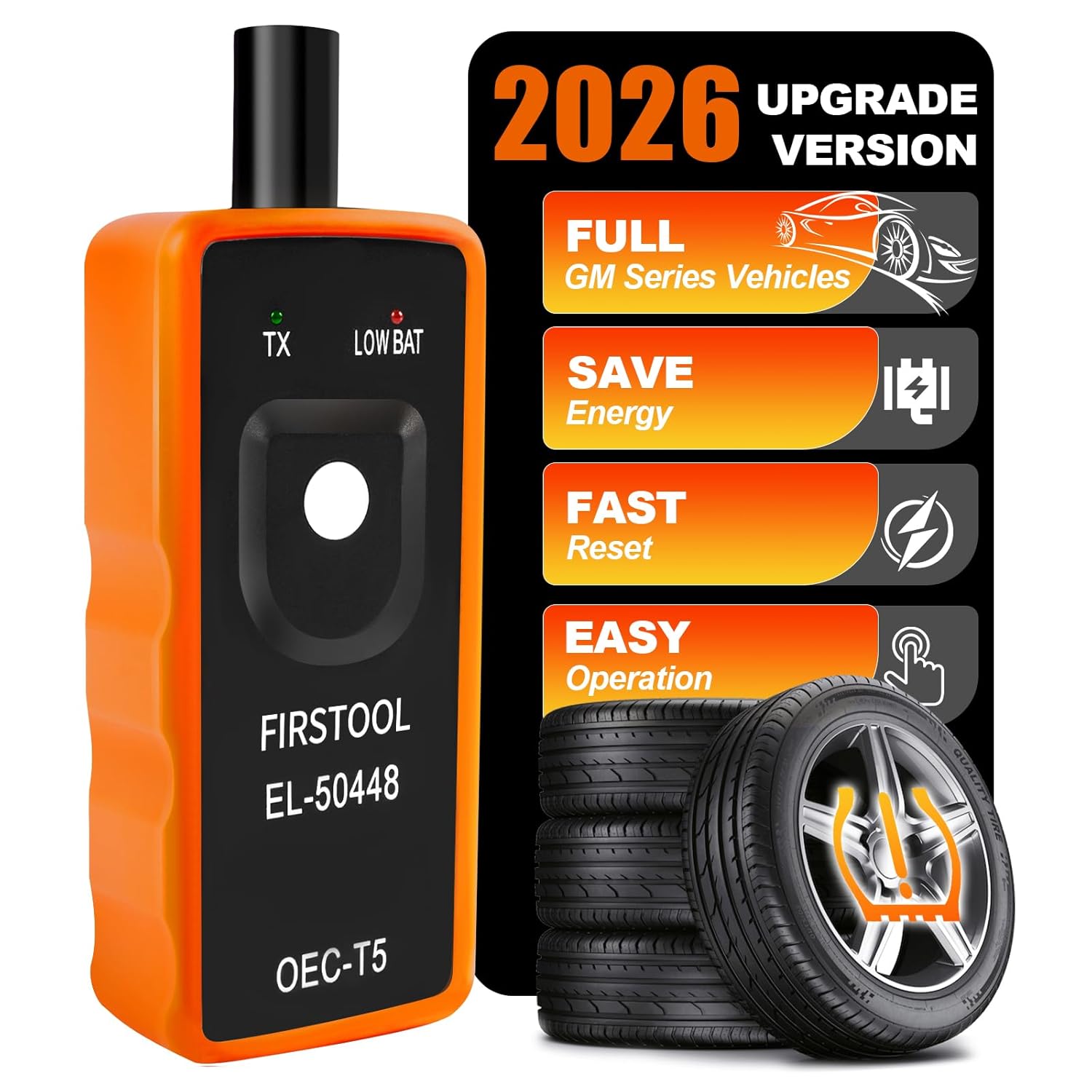
This EL-50448 TPMS relearn tool helps quickly activate and reset tire pressure sensors so your vehicle’s monitoring system stays accurate after tire rotations, sensor replacement, or seasonal tire changes. Designed for many GM-related vehicles and compatible with common 315 and 433 MHz TPMS systems, it offers simple one-button operation and reliable performance for clearing warning lights and relearning sensor positions.

[Fast & Efficient Inflation] The OlarHike tire inflator features a high-performance motor that delivers rapid airflow—inflate a standard car tire (195/65 R15) from 30 to 35 PSI (+5 PSI) in just 55 seconds, or a larger SUV tire (235/65 R17) from 30 to 35 PSI (+5 PSI) in only 2.2 minutes. Ideal for cars, SUVs, light Pickup(Within 51 PSI), motorcycles, bicycles, and sports balls. Its practical everyday usefulness also makes it a thoughtful car gift for men who value reliable tools for their vehicles. Important Note: The unit can only inflate car and pickup truck tires up to 51 PSI and is not compatible with heavy-duty pickup trucks or RVs.
How to Check Toyota Tundra Tire Pressure the Right Way
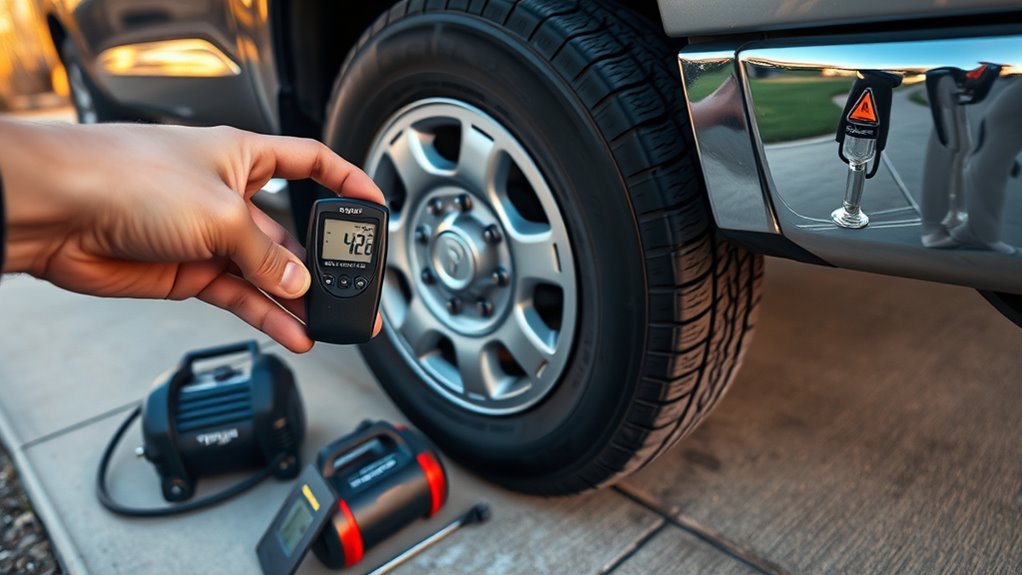
Check the tires before driving or after the truck sits for at least three hours. Remove the valve cap, press the gauge firmly onto the valve stem, and record the reading for each tire.
Compare each reading with the placard or load-chart target. Add air in short bursts, then recheck with the same gauge so each tire reaches the right cold PSI.
Check the spare tire too if your Tundra carries one. A spare loses pressure over time, and it may not help you when you need it most.
Note: NHTSA says TPMS helps warn you about low pressure, but it does not replace a monthly gauge check.
[Products Worth Considering]
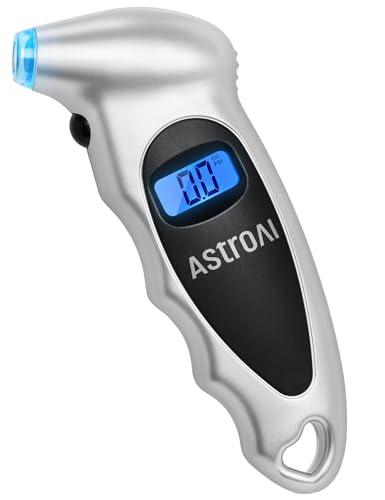
Accurate, Dependable Readings: Factory‑calibrated to ±1 PSI, so you can confidently match your vehicle’s recommended PSI (check the door jamb sticker). Ideal for monthly checks and road trips — consistent results every time, cold or warm.

PROCESS LEVEL ACCURACY: Each ETENWOLF’s digital tire pressure gauge is calibrated manually to ANSI B40.7 Grade 2A(plus-minus 1 PSI).Presta valve adapter not included, if used for bicycles, it must be purchased separately

HIGH ACCURACY: Every ETENWOLF's pencil tire gauge is calibrated to ANSI B40.1 Grade B, it is accurate to 2% of span in the middle 50% of range and 3% of span in the lower and upper 25% of range. Each ETENWOLF pencil tire pressure gauge is manually calibrated and has its unique calibration number printed on the pencil
What should you do if the tires are warm?
If you must check warm tires, do not release air to reach the cold placard number. Note the reading, fix any clearly low tire for safe driving, and recheck pressure after the truck cools.
You can use a chalk test as a rough tread-contact check, but do not treat it as a load-rating tool. If the chalk line wears unevenly, inspect tire pressure, alignment, suspension, and tire condition.
After you adjust pressure or rotate tires, follow your owner’s manual for TPMS reset steps if your Tundra requires them. If the warning light flashes or stays on, schedule service.
Safety Checks for Underinflation, Overinflation, and Tire Changes
Underinflation creates extra sidewall flex, heat, poor handling, and faster wear. NHTSA research links low pressure with heat buildup, tread separation, blowouts, and loss of control risk.
Overinflation can also cause problems. A hard tire can reduce ride comfort, wear unevenly, and lose contact patch on rough pavement.
Check pressure any time you change tire size, wheel size, load rating, or tire type. The factory placard may no longer match your new tire setup.
- Follow the door placard for stock tires and normal loads.
- Use tire load charts for towing, payload, or LT tires.
- Inspect tread, sidewalls, valve stems, and spare tire pressure monthly.
- Use TPMS as a warning aid, not as your only pressure check.
- Ask a Toyota dealer or tire professional when specs conflict.
When to Ask a Tire Professional or Toyota Dealer
Call a tire professional if one tire keeps losing air faster than the others. You should also ask for help when you switch to LT tires, change wheel size, tow near the truck’s limits, or see uneven tread wear.
Ask the shop to match the new tire size, load index, and load range to your Tundra’s actual axle loads. That check matters more than a forum number or a quick guess at the air pump.
Frequently Asked Questions
What is the proper tire pressure for a Toyota Tundra?
The proper tire pressure is the cold PSI listed on your truck’s tire placard. Some Tundras list about 30 psi front and 33 psi rear, but your exact truck may differ.
Is 40 PSI good tire pressure for a Toyota Tundra?
Forty PSI may work for some towing or load setups, but you should not use it as a universal target. Confirm the right PSI with your door placard, tire load chart, and actual cargo or trailer weight.
How do you read a tire pressure chart?
Match your tire size, load index, and load range to the chart from the tire maker. Then choose the cold PSI that supports the weight carried by each axle.
Should you use the sidewall max PSI on a Tundra?
No. The sidewall max PSI shows the tire’s pressure limit under a rated load, not the normal pressure for your truck.
How often should you check Tundra tire pressure?
Check pressure at least once a month and before long trips, towing, or heavy hauling. Check more often when temperatures swing because tire pressure can change with weather.
Safety Disclaimer: This article is for informational purposes only and does not replace your Toyota owner’s manual, tire manufacturer guidance, or professional service. Ask a qualified tire professional or Toyota dealer before towing, hauling heavy loads, or changing tire size, wheel size, or load range.
Conclusion
Your Tundra’s best tire pressure starts with the door placard, not a one-size-fits-all number. Check pressure cold, adjust only with real load data, and use TPMS as a backup alert.
If you tow, haul, or run non-stock tires, match your setup to a tire load chart before you add pressure. Build the habit now, and your truck will feel steadier on every drive.
References
- 2026 Tundra Owner’s Manual, Toyota, 2026
- How To Check Tire Pressure, Toyota
- 2023 Toyota Quick Reference Guide, Toyota, 2023
- Tire Safety Ratings and Awareness, TireWise, National Highway Traffic Safety Administration
- Evaluation of the Effectiveness of TPMS in Proper Tire Pressure Maintenance, National Highway Traffic Safety Administration, 2012

[…] to Reset a Toyota Tundra Traction-Control and ABS […]
[…] your Tundra for heavy rain by checking tire tread, setting cold Toyota Tundra tire pressure from the driver-side door placard, testing the wipers and lights, and securing all cargo. Use 2WD […]
[…] unless the maintenance guide for your exact model year says otherwise. Check cold pressure and Toyota Tundra tire pressure monthly, measure tread at the inside, center, and outside of each tire, and rotate sooner when […]
[…] trailer weight, tongue weight, payload, axle loads, and Tundra tire pressure within their applicable […]
[…] the door placard for original-equipment cold tire pressure, not the maximum pressure molded into the […]