
High-Mileage Tundra Maintenance Checklist
What’s in This Article
- Identify Your Tundra’s Model Year and Engine First
- Quick 10-Point Pre-Purchase & Maintenance Checklist
- Immediate Fluid, Leak, Radiator & Hose Checks
- Timing Belt, Water Pump & Engine Tasks
- Transmission, Differentials & Transfer Case
- Brakes, Lines & Suspension
- Battery, Starter & Charging System
- Exhaust, Catalytic Converter & Emissions
- Body, Frame & Rust Inspection
- Maintenance Intervals & Fluid-Change Cheat Sheet
- Red Flags, Cost Ranges & When to Walk Away
- When You Should Use a Professional Mechanic
- Frequently Asked Questions
- Final Checks Before You Decide
A high-mileage Tundra can still serve you well, but mileage alone does not tell the full story. Check the expensive systems first: fluids, leaks, timing parts, brakes, rust, and drivetrain service.
This checklist helps you inspect a used Tundra before purchase or plan smart maintenance for one you already own. Use it with your owner’s manual, service records, and a qualified mechanic’s inspection.
Quick Answer
Prioritize fluids, leaks, timing components if your engine uses them, brakes, rust, suspension, and drivetrain service on any high-mileage Tundra. Confirm the model year, engine, and drivetrain first because service needs can change by engine family. Walk away from trucks with serious frame rust, slipping transmission symptoms, weak maintenance records, or repair costs that exceed the truck’s value.
Key Takeaways
- Confirm the model year, engine, and drivetrain before you apply any service interval.
- Check fluids and leaks first because low or dirty fluids can damage major systems fast.
- Inspect rust closely, especially on older trucks from salted-road areas.
- Use maintenance records to verify timing service, coolant service, spark plugs, and drivetrain fluids.
- Get a written repair estimate before you buy a high-mileage Tundra with visible red flags.
Identify Your Tundra’s Model Year and Engine First
Before you buy parts or approve work, confirm the model year, engine, drivetrain, and service history. Toyota used timing belts on some older Tundra engines, while many later engines use timing chains.
Use the owner’s manual or Toyota maintenance schedule for your exact truck as the baseline. Shorten service intervals if you tow, haul heavy loads, idle often, drive in dust, or run the truck on salted winter roads.
Write down the vehicle identification number (VIN), engine size, mileage, and service history before you inspect the truck. This helps you compare the truck’s real needs against Toyota’s schedule instead of relying on guesswork.
Quick 10-Point Pre-Purchase & Maintenance Checklist for High-Mileage Tundras
Use this 10-point check before you buy or keep investing in a high-mileage Tundra. Start with safety, then drivetrain health, then comfort and cost items.
- Review the vehicle history report, service receipts, and owner maintenance records.
- Confirm timing belt service if the engine uses a belt.
- Check engine oil, coolant, brake fluid, transmission fluid, and power steering fluid.
- Look for leaks at valve covers, power steering lines, axle seals, and the rear main area.
- Inspect brake pads, rotors, calipers, brake hoses, steel brake lines, and brake-fluid condition.
- Check shocks, struts, bushings, ball joints, and steering linkage for wear.
- Test lights, charging voltage, starter response, windows, locks, and accessories.
- Measure tire tread, check pressure, and look for uneven wear patterns.
- Inspect the radiator, coolant hoses, clamps, and overflow tank for age or leaks.
- Road-test the truck for vibration, delayed shifts, steering pull, brake noise, and clunks.
Immediate Checks: Fluids, Leaks, Radiator & Hoses
Start by checking all fluid levels: engine oil, coolant, transmission fluid, power steering fluid, and brake fluid. Low fluid can point to a leak, past neglect, or a system that needs service before you drive far.
Inspect the radiator and coolant hoses for cracks, swelling, soft spots, loose clamps, and dried coolant residue. A weak hose or low coolant level can turn a short drive into an overheating problem.
Look for leaks around valve covers, the rear main area, transmission housings, differential covers, steering lines, and air conditioning lines. Fix active leaks early so one small seal problem does not damage a larger system.
[Products Worth Considering]

This color coded tire tread depth gauge helps you quickly check tire wear and monitor when replacement is needed. Calibrated in easy-to-read 32nds with clear red, yellow, and green ranges, it offers fast visual results for cars, trucks, motorcycles, and other passenger vehicles. The pocket clip makes it simple to keep on hand for routine maintenance and safety checks.

This smart tire tread depth gauge provides quick, accurate readings from 0 to 1 inch in 1/32-inch increments, helping drivers assess tire wear with confidence. Its color-coded display makes it easy to see tread condition at a glance, while the pocket clip adds convenient portability for garages, glove boxes, and on-the-go inspections. Designed for use on trucks, motorcycles, automobiles, and other passenger vehicles, it is a simple tool for safer tire maintenance.

The ANCEL BA101 helps diagnose 12V batteries quickly with clear readings for battery health, charge level, voltage, CCA, cranking, and charging system performance. Designed for a wide range of vehicles and battery types, it offers easy-to-read results, reliable clamp connections, and built-in protection to make testing safer and more convenient.
Check All Fluid Levels
Check each dipstick and reservoir on level ground with the truck parked safely. Note the level, color, smell, and any grit or metal shine in the fluid.
Use only the fluid type your owner’s manual lists. Wrong fluid can hurt seals, shift quality, steering feel, and long-term reliability.
Keep a simple log with the date, mileage, fluid type, filter part numbers, and notes. Good records help you spot patterns before they become expensive repairs.
Inspect Radiator Hoses
Inspect radiator hoses only after the engine cools. Squeeze the hoses gently and look for spongy spots, cracks, bulges, collapsed sections, or crust near the clamps.
Check the radiator, cap, overflow tank, and hose connections for dried coolant marks. Replace weak hoses and corroded clamps before they fail on the road.
Use coolant that meets Toyota’s specification for your truck. Mixing the wrong coolant types can reduce corrosion protection and create cooling-system problems.
Timing Belt, Water Pump & Top-End Engine Tasks to Prioritize
Treat timing-belt advice as model-specific. Older belt-equipped Tundras need belt service at the factory interval, while chain-equipped engines do not need a timing belt job.
Toyota’s 2009 Tundra Scheduled Maintenance Guide lists timing-belt replacement every 90,000 miles or 108 months for engines that use a belt. If records do not prove a shop replaced the belt, budget for the job before you trust the truck on long trips.
Ask your mechanic whether the water pump, idlers, tensioner, cam seals, crank seal, thermostat, and drive belts make sense during the same visit. Combining related work can save labor because the front of the engine already needs access.
Check spark plug timing by engine and model year. Many schedules place spark plugs around 100,000 to 120,000 miles, but your manual should guide the final interval.
| Task | Why it matters | Action |
|---|---|---|
| Timing belt, if equipped | Reduces belt-related breakdown risk | Follow the engine-specific interval |
| Water pump | Shares labor with belt service | Inspect or replace during belt access |
| Spark plugs | Protects power and smooth running | Check the 100k to 120k range by model |
| Coolant and hoses | Reduces overheating risk | Flush or replace when due |
You protect the engine best when you match the service to the exact truck. Guessing by mileage alone can waste money or miss a critical item.
[Products Worth Considering]

This smart color coded tire tread depth gauge makes it easy to check tread wear at a glance with clear red, yellow, and green ranges. Calibrated from 0 to 1 inch in 1/32 inch increments, it helps you quickly assess tire condition for safer driving and timely replacements. The pocket clip design makes it convenient to carry and use on trucks, motorcycles, cars, and other passenger vehicles.

This engine water pump kit is designed to help maintain reliable cooling performance across a wide range of compatible Toyota, Lexus, Scion, and Pontiac vehicles. Built with aluminum and tested for leak-free operation, it offers a direct replacement solution that supports engine efficiency and long-term service life. The kit includes a professional water pump and gasket for a convenient installation-ready repair.

This coolant electric water pump is designed as a replacement for select Toyota vehicles, helping maintain proper engine cooling performance and reliable temperature control. Built to OE specifications, it offers fitment support for compatible Avalon, Camry, and RAV4 models with 2.5L L4 engines. It also includes cross-reference part numbers for easier matching and comes with after-sales support for covered defects.
Transmission, Differentials & transfer case: Service Schedule
The transmission, differentials, and transfer case carry heavy load in a high-mileage truck. Inspect fluid level and condition, then compare the service history with Toyota’s schedule for your model.
On 4WD models, check front differential oil, rear differential oil, and transfer case oil. If you tow, haul, or drive off-road, service these fluids sooner than a light-use truck.
Dark, burnt, milky, or metallic-looking fluid needs attention. Delayed shifts, slipping, whining, clunks, or shuddering during shifts can point to wear that needs professional diagnosis.
Confirm the exact fluid specification before you top off or replace anything. Wrong fluid can hurt seals, clutch packs, bearings, and shift quality.
Tundra Brakes, Lines & Suspension: Inspection Checklist
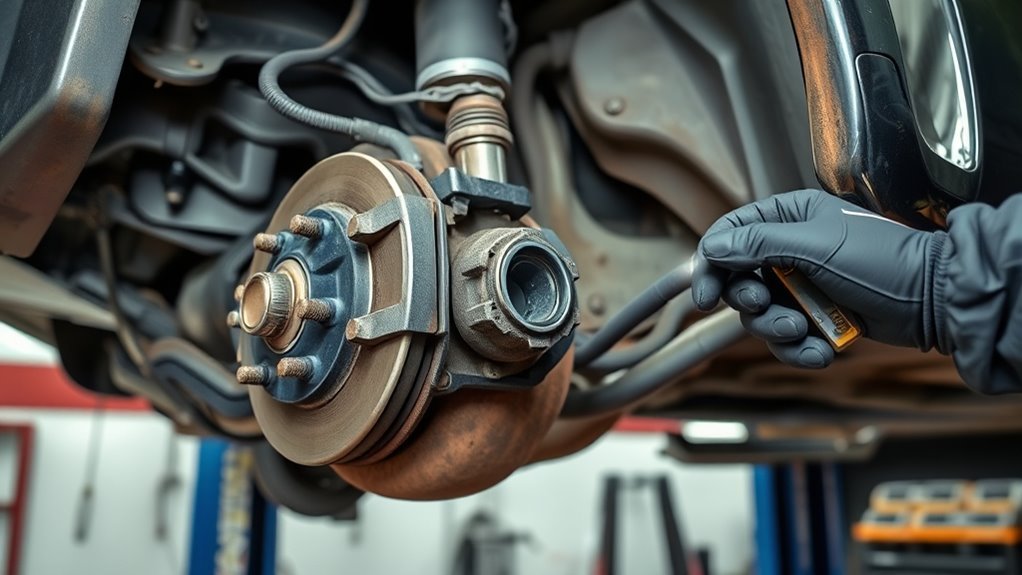
Reliable stopping power matters more than cosmetic condition. Inspect pad thickness, rotor wear, calipers, brake hoses, steel brake lines, and brake-fluid level before you trust a high-mileage Tundra.
Check the brake pedal feel during the road test. A soft pedal, pulling, grinding, pulsing, or fluid loss should move the truck to the top of your repair list.
Inspect shocks, struts, bushings, ball joints, mounts, and steering parts for leaks, play, torn boots, or loose movement. Finish with tire tread, pressure, and uneven-wear checks because tire wear often reveals suspension and alignment problems.
Warning: Do not drive a Tundra with leaking brake lines, a soft brake pedal, or severe frame rust near brake-line mounts.
Battery, Starter & Charging System: Tests and Replacement Tips
Check battery health with a multimeter before you blame the starter or alternator. A healthy 12-volt battery often reads about 12.4 to 12.6 volts at rest, while a running engine often shows about 13.7 to 14.7 volts.
Replace the battery about every 3 to 5 years, or sooner if it tests weak. Heat, cold, short trips, corrosion, and long storage can shorten battery life.
Inspect terminals, cables, grounds, and hold-down hardware. Loose or corroded connections can mimic a weak battery, bad alternator, or failing starter.
[Products Worth Considering]

This dial type tire tread depth gauge helps you quickly check tread wear on motorcycles, cars, trucks, and buses with easy-to-read 1/32-inch increments. Its colorful zone markings make it simple to assess tire condition for safer driving in different weather, while the durable zinc cast body and legible dial provide dependable everyday use.
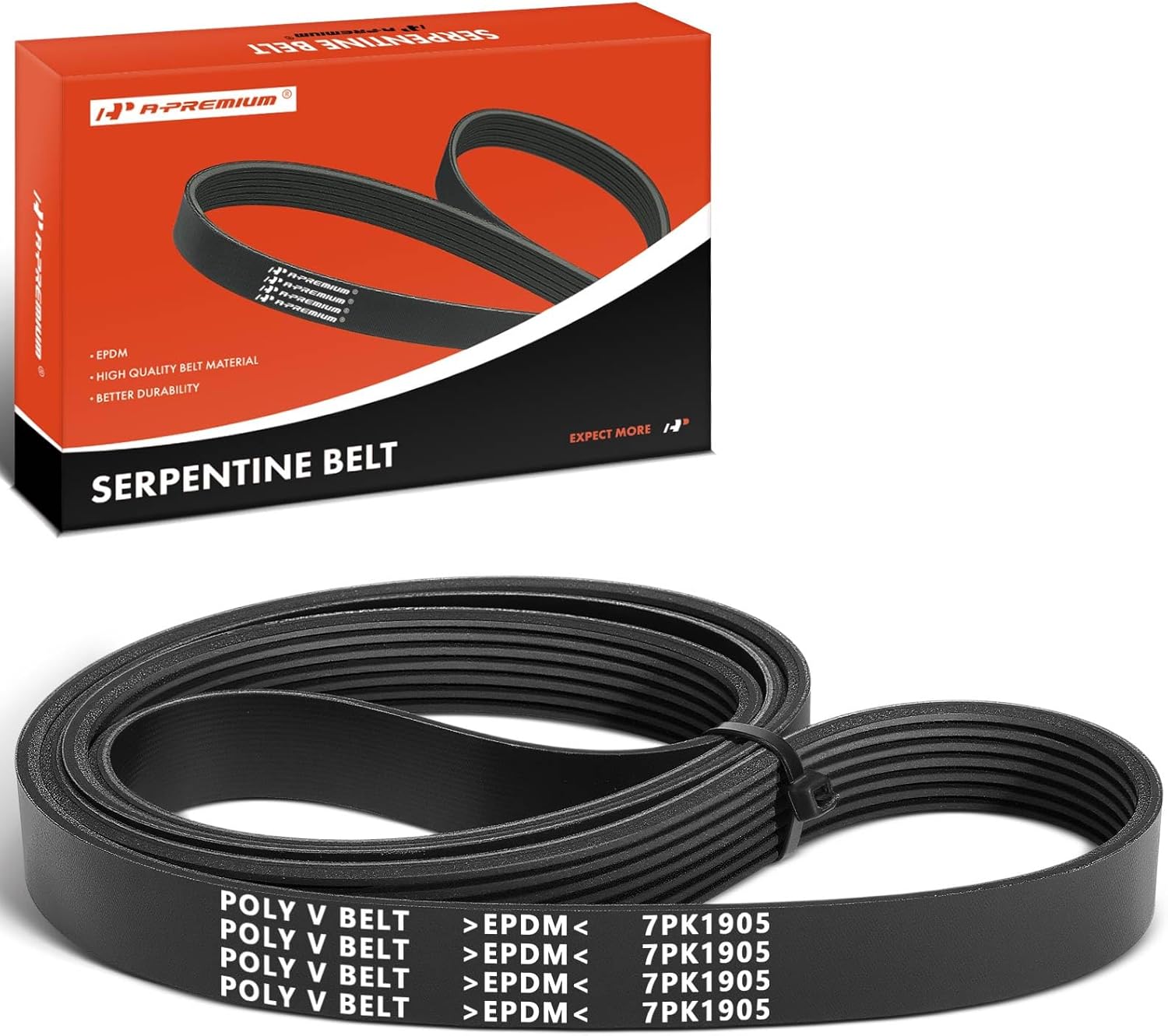
This A-Premium serpentine belt is engineered for select Toyota, Scion, and Pontiac vehicles with the L4 2.4L gas engine, delivering dependable air conditioning drive performance. Made with durable EPDM and precision dimensions, it helps resist cracking, reduce noise, and maintain stable tension for smooth operation. It's designed for straightforward installation and backed by a one-year unlimited-mileage guarantee for added confidence.

The TOPDON BT100 helps you quickly check the health and charge status of 12V lead-acid batteries with clear analytical results, including state of health, state of charge, voltage, and cranking performance. It supports a wide range of battery types and vehicles, making it a practical tool for diagnosing starting and charging issues at home or in the shop. Compact and easy to use, it provides fast, reliable testing without needing to charge the device first.
Battery Health Testing
Measure resting voltage after the truck has sat long enough for the surface charge to settle. Then measure voltage with the engine running and major electrical loads turned off.
Record the readings over time. A slow drop in resting voltage or unstable charging voltage can warn you before the truck leaves you stranded.
Clean corrosion with the battery disconnected and follow safe battery-handling steps. Wear eye protection and avoid sparks near the battery.
Alternator and Starter
Test the battery, alternator, starter, cables, and grounds as one system. Replacing one part without testing the rest can waste money.
Clicking, slow cranking, dim lights, or a battery warning light can point to more than one cause. Use a load test and charging-system test before you replace parts.
If voltage rises above the normal charging range or stays too low while running, get the alternator and voltage regulator checked. Overcharging can damage the battery and electrical parts.
Exhaust, Catalytic Converter & Emissions Checks
The exhaust system affects performance, noise, fuel use, and emissions compliance. Inspect it for rust, loose hangers, crushed pipes, leaks, rattles, and hissing sounds.
A clogged or damaged catalytic converter can reduce power, raise emissions, and trigger a check-engine light. Scan the diagnostic codes before you replace parts.
Follow your local emissions rules and keep repair records. Good records help you prove maintenance and make smarter repair decisions.
Body, Frame & Rust Inspection: Spots to Focus On
Rust deserves a careful inspection on any high-mileage Tundra. Focus on the undercarriage, wheel wells, frame rails, cross-members, brake lines, fuel lines, bed mounts, and body seams.
Look for bubbling paint, flaking metal, swelling seams, holes, heavy scale, and fresh undercoating that may hide damage. Probe suspect areas gently with a screwdriver or inspection pick.
For certain 2000 through 2003 Tundras in cold-climate areas, Toyota campaign material addressed rear cross-member corrosion that could affect the spare tire mount, brake lines, and fuel tank straps. Check the vehicle identification number (VIN) for open recalls or campaigns, and ask a Toyota dealer to inspect the frame if you see severe corrosion.
Treat surface rust, clean drain paths, and use proper rust prevention products where the metal still has strength. Walk away from frame perforation, repaired-over structural rust, or brake-line corrosion unless a qualified shop gives you a safe repair plan in writing.
Maintenance Intervals & Fluid-Change Cheat Sheet for Long Life
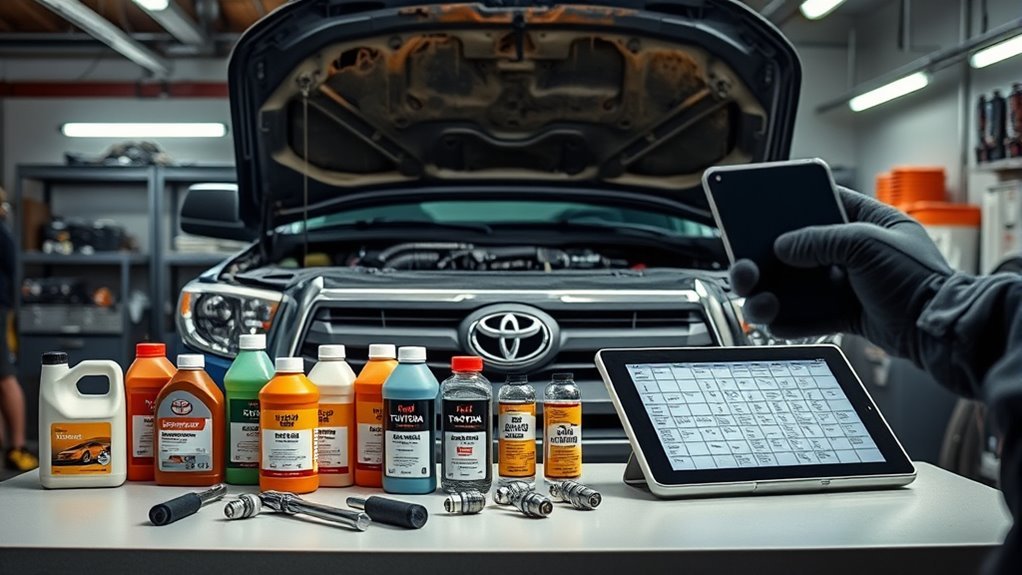
A clear mileage-based service rhythm improves your odds of long truck life. Use Toyota’s schedule first, then tighten the interval when the truck works harder than normal.
- Change engine oil and filter on schedule, often 5,000 to 10,000 miles depending on use and model guidance.
- Rotate tires regularly and inspect brakes during routine service visits.
- Inspect and adjust fluid levels at each scheduled service.
- Check transmission, differential, and transfer case fluid condition at major service intervals.
- Replace coolant, spark plugs, belts, filters, and hoses when your schedule or inspection calls for it.
- Lubricate and re-torque 4WD propeller shaft parts where your schedule requires it.
- Keep a log with date, mileage, fluid type, filter part numbers, and receipts.
High mileage does not ruin a Tundra by itself. Missed maintenance, hidden rust, overheating, dirty fluids, and delayed repairs create most of the expensive problems.
Red Flags, Cost Ranges, and When to Walk Away
Before you spend more time or money, check for red flags that usually point to major repair risk. Active fluid leaks, frame perforation, corroded brake lines, slipping shifts, overheating, heavy smoke, and loud engine knocks need immediate attention.
Ask a shop for a written estimate before you buy a truck with serious faults. Small hoses or gaskets may stay manageable, but brake-line repairs, transmission work, frame repair, and engine labor can climb fast.
Set repair priorities in this order: brakes and steering, frame and rust, cooling system, engine leaks, drivetrain service, then comfort items. Walk away when the repair estimate approaches the truck’s fair value or when the seller cannot prove critical maintenance.
When You Should Use a Professional Mechanic
Use a qualified mechanic when you find brake leaks, frame rust, transmission slipping, overheating, fuel leaks, electrical charging faults, or unknown timing-belt history. These items can affect safety and long-term repair cost.
Ask for a pre-purchase inspection before you buy a high-mileage Tundra. A lift inspection can reveal rust, leaks, worn ball joints, and frame damage that you may miss on the ground.
Do not rely only on a short test drive. A professional inspection gives you repair priorities and stronger price negotiation power.
Frequently Asked Questions
What maintenance does a Tundra need around 100K miles?
Around 100,000 miles, check fluids, brakes, suspension, cooling parts, spark plugs, drivetrain fluids, and timing components if the engine uses a belt. Use your model’s maintenance guide because intervals vary by engine and use.
Does every high-mileage Tundra need a timing belt?
No. Some older Tundra engines use timing belts, while many later engines use timing chains. Confirm your engine first, then follow the correct Toyota service interval.
How often should you change fluids on a high-mileage Tundra?
Follow Toyota’s schedule for your exact model, then shorten intervals for towing, hauling, dust, heat, off-road use, or frequent idling. Inspect fluid level and condition at every service so you can catch leaks early.
When should you walk away from a used Tundra?
Walk away if you find serious frame rust, leaking brake lines, slipping transmission symptoms, overheating, engine knock, or missing records for critical maintenance. You can still consider the truck if a qualified shop gives you a safe repair plan and the price reflects the work.
Should you check recalls before buying a used Tundra?
Yes. Run the VIN through Toyota’s recall lookup or the National Highway Traffic Safety Administration (NHTSA) recall tool before you buy. A recall check can show safety repairs that still need dealer service.
Safety Disclaimer: This article is for informational purposes only and does not replace advice from a qualified mechanic. Always have a trained professional inspect brake, steering, frame, fuel, electrical, and drivetrain concerns before you drive or buy a high-mileage truck.
Final Checks Before You Decide
A high-mileage Tundra deserves a careful inspection, not a quick glance at the odometer. Confirm the engine, check the fluids, verify timing service if equipped, inspect the brakes, and look hard for rust.
Your next step is simple: build a repair list and price the safety items first. If the records look strong and the repairs make financial sense, you may have a solid truck.
If the frame, brakes, or drivetrain show major warning signs, walk away before the truck becomes a money pit. A clean inspection protects your budget and helps you choose the right truck with more confidence.
References
- 2009 Tundra Scheduled Maintenance Guide – Toyota, 2009
- 2026 Tundra Hybrid Warranty & Maintenance Guide – Toyota, 2026
- 2026 Toyota Tundra Owner’s Manuals – Toyota, 2026
- Toyota Tundra Service: Recommended Maintenance Schedule – Beaman Toyota, 2026
- Toyota Tundra Maintenance Schedule – Galaxy Toyota
- Toyota Tundra Corrosion-Resistant Compound Campaign BXD Q&A – NHTSA/Toyota, updated 2012
- Corrosion-Resistant Compound Campaign BXD Dealer Material – NHTSA/Toyota, 2013
- Check for Recalls: Vehicle, Car Seat, Tire, Equipment – NHTSA, 2026
- Look Up Safety Recalls & Service Campaigns by VIN – Toyota, 2026
- Everything You Need to Know About Car Battery Voltage – Firestone Complete Auto Care, 2025





[…] Tundra Dimensions: Length, Bed Size, Cab Space, and Garage […]
[…] with the center-console knob in seconds on equipped models. Normal keeps the truck balanced for daily driving. Eco softens throttle response and can adjust climate operation to support fuel economy. Sport […]
[…] Tundra Tire Pressure Guide: Daily Driving, Towing, and […]