What CCA Battery Does a Toyota Tundra Need?
What’s in This Article
- Quick Answer: What CCA Your Toyota Tundra Needs
- What CCA Measures and Why It Matters for Tundras
- How to Match CCA by Tundra Model, Engine, and Group Size
- How CCA Affects Cold Starts, Towing, and Accessory Loads
- CCA vs CA, MCA, HCA, and Peak Amps: What Tundra Owners Should Know
- Which Battery to Choose for Your Tundra: AGM, Lead-Acid, or Lithium?
- Tundra Battery Installation, Heat, and Maintenance Tips to Extend Life
- Picking a Replacement: CCA, Group Size, Warranty, and Real-World Brands
- Frequently Asked Questions
A weak battery can make a good Toyota Tundra feel unreliable on the coldest morning of the year. The right cold cranking amps (CCA) rating helps your starter get enough current when low temperatures slow battery chemistry and thicken engine oil. This guide explains how much CCA your Tundra may need, how to match group size, and when a higher-rated battery makes sense.
Quick Answer: What CCA Your Toyota Tundra Needs
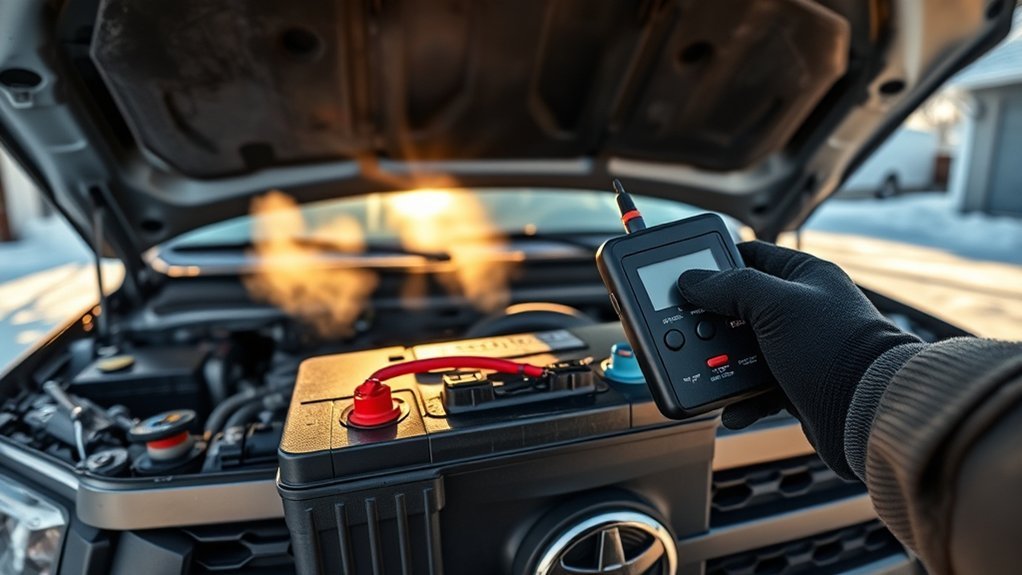
Most Toyota Tundra owners should start by matching the battery size, terminal layout, and CCA rating listed in the owner’s manual or on the original battery label. Many common Tundra replacement batteries fall around 710 to 850 CCA, depending on year, engine, trim, and climate. A battery with about 800 CCA gives strong cold-start margin for many Tundras, but you should not treat it as one fixed factory rule for every model.
If you tow, run extra lights, use a winch, or drive in freezing weather, choose a battery that meets or exceeds the original equipment rating. Also confirm the Battery Council International (BCI) group size, because proper fit and terminal orientation matter as much as the CCA number. A battery that fits poorly can move, strain cables, or create hard-start issues.
Key Takeaways
- Match your Tundra’s battery to the owner’s manual, original label, or dealer parts lookup first.
- Use about 800 CCA as a strong cold-weather target for many Tundra applications.
- Confirm the correct BCI group size, hold-down fit, and terminal layout before buying.
- Choose AGM when you need stronger vibration resistance and steady power for heavy use.
- Test the battery and charging system before long trips, towing, or winter driving.
What CCA Measures and Why It Matters for Tundras
Cold cranking amps (CCA) measure how much current a fully charged 12-volt lead-acid battery can deliver for 30 seconds at 0°F (-17.8°C) while staying at or above 7.2 volts. Interstate Batteries describes this as the Battery Council International definition for low-temperature starting power.
You should care because cold weather makes the engine harder to crank. Low temperatures slow the battery’s chemical reaction and increase the effort needed to turn the engine. A higher CCA rating gives your Tundra more starting margin when the battery works under stress.
CCA Definition and Testing
CCA gives you a standard way to compare starting batteries. It does not tell you the full health of the battery, but it shows how much cold-start current the battery can supply under a fixed test condition.
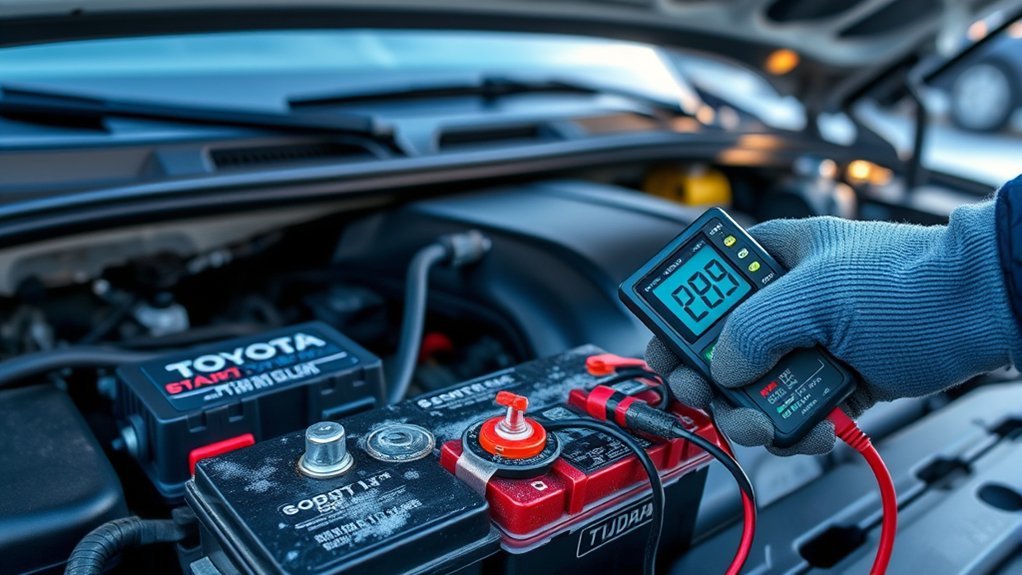
A shop can use a battery tester to estimate measured CCA, state of charge, and battery health. That test helps you decide whether the battery still has enough power for winter starts.
- CCA: Current delivered for 30 seconds at 0°F.
- Voltage threshold: At least 7.2 volts for a 12-volt battery.
- Cold-weather target: About 800 CCA for many Tundra owners who need extra margin.
- Test tool: A quality battery tester or load tester.
- Best use: Compare batteries that fit your exact model and climate.
Cold Starts and Starter Load
Your Tundra’s starter needs high current to spin the engine fast enough for ignition. Cold oil, low battery temperature, and repeated short trips can make that job harder.
A battery with too little CCA may crank slowly, click, or fail to start the truck after a cold night. A battery that meets the original rating, or exceeds it within the correct group size, gives the starter a better chance to work without deep voltage sag.
| Parameter | Practical Guidance |
|---|---|
| Common cold-weather target | About 800 CCA for many Tundra owners |
| CCA test condition | 0°F for 30 seconds |
| Voltage threshold | At least 7.2 volts |
How to Match CCA by Tundra Model, Engine, and Group Size
You should not buy a Tundra battery by CCA alone. Toyota has used different engines, trims, and electrical packages across Tundra generations, and parts catalogs can show more than one battery group size for the same nameplate.
The safest method starts with three checks. Read the owner’s manual, inspect the original battery label, and confirm the replacement part by year, engine, trim, and production market. If those sources disagree, ask a Toyota parts department to verify the original equipment specification.
[Products Worth Considering]
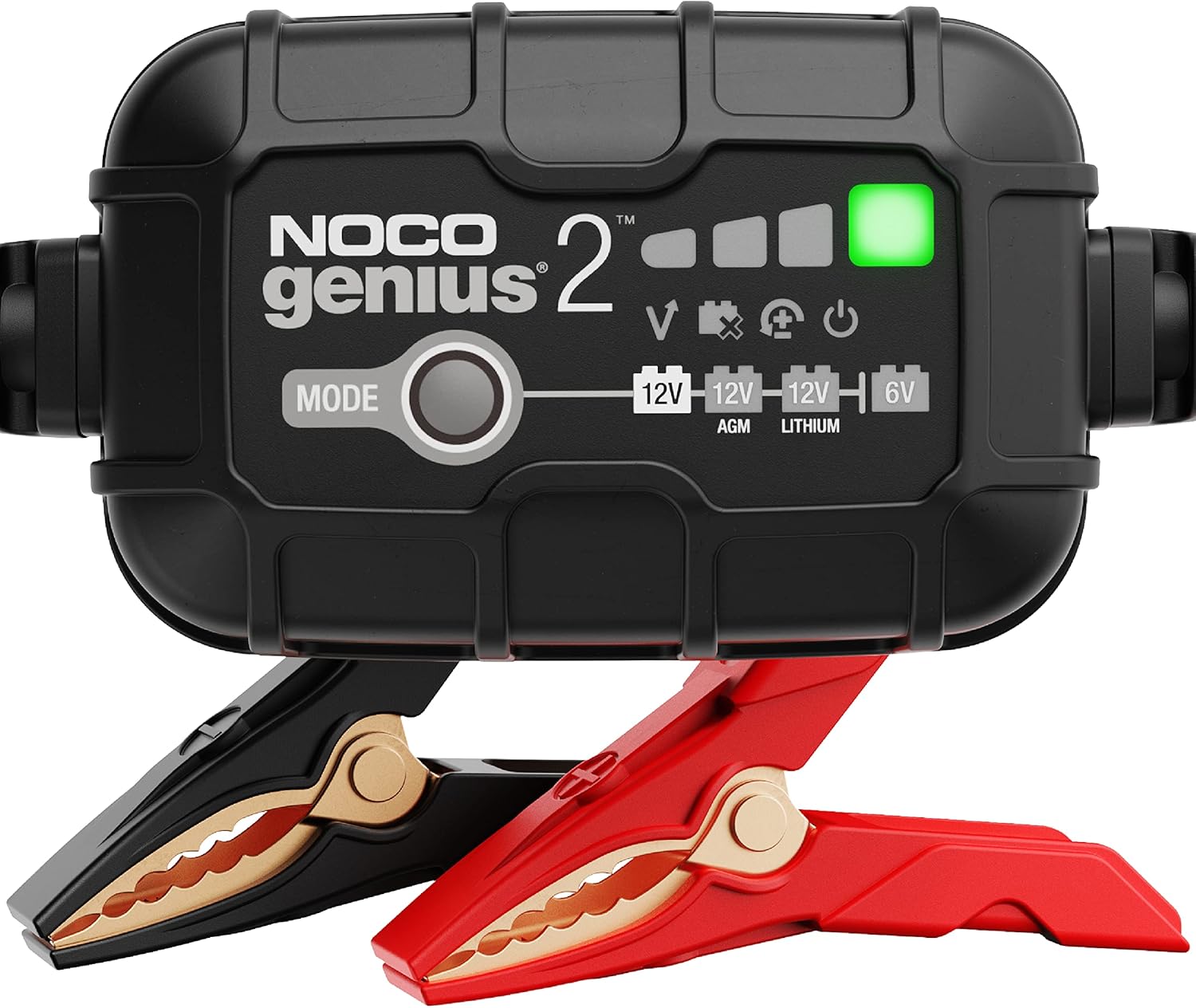
The NOCO GENIUS2 is a compact, all-in-one smart charger that automatically charges, maintains, and restores 6V and 12V lead-acid and lithium batteries. It features temperature compensation, overcharge protection, pulse desulfation, and Force Mode for reviving deeply discharged batteries, making it ideal for long-term battery care across many vehicle types. Designed for safe indefinite connection, it helps extend battery life and keep batteries ready to go.

The NOCO GENIUS5 is an all-in-one battery charging and maintenance solution for 6V and 12V lead-acid and lithium batteries. It features temperature compensation, dead-battery recovery, desulfation, and safe long-term maintenance to help extend battery life and performance. Compact and versatile, it works with a wide range of vehicles and comes with mounting accessories and a warranty.

The NOCO GENIUS10 is an all-in-one smart charger, maintainer, trickle charger, and desulfator designed to keep 6V and 12V batteries performing at their best. It supports lead-acid and lithium batteries, charges deeply discharged batteries, and uses temperature compensation for safer, more accurate charging in changing conditions. Compact and versatile, it is ideal for a wide range of vehicles and long-term battery maintenance.
Common Group 27F Replacement Specs
Many Tundra replacements use a Group 27F battery, but you should not assume every Tundra uses that size. Toyota’s TrueStart Group 27F replacement battery lists 710 CCA, while aftermarket listings for Tundra applications can show 24F, 27F, 35, and 94R/H7 options depending on fitment.
That range means fitment matters. A higher CCA battery helps only when it also matches the tray, hold-down, case size, terminal position, and cable reach.
- Check the BCI group size before you compare CCA numbers.
- Confirm terminal orientation so the cables reach without strain.
- Use the original battery label as a starting point.
- Choose a higher CCA rating when cold weather or heavy use justifies it.
- Ask a Toyota parts counter to confirm hybrid and trim-specific needs.
CCA by Engine Type
Older V6 and V8 Tundras, newer twin-turbo V6 models, and i-FORCE MAX hybrid models can have different 12-volt battery requirements. Engine size affects starting demand, but electronics, climate package, stop-start behavior, and accessory loads can also affect the best replacement choice.
Use the owner’s manual and original battery rating as your base. If you live in a cold climate, tow often, or run added electrical gear, pick a battery that meets the same fitment rules with more CCA and enough reserve capacity.
Cold-Weather Performance Ratings
A higher CCA rating helps most when the truck sits outside in freezing weather. The rating gives you more current reserve during the first crank, when the battery faces the hardest load.
Do not chase the biggest number without checking fit. A correct-size battery with strong CCA, clean terminals, and a healthy charging system will serve you better than an oversized battery installed poorly.
- Choose more CCA if you often start the truck below freezing.
- Test the battery before winter if it is more than three years old.
- Check reserve capacity if you use lights, radios, or other accessories while parked.
- Replace corroded cables before blaming the battery alone.
- Confirm hybrid 12-volt service details before you install a replacement yourself.
How CCA Affects Cold Starts, Towing, and Accessory Loads
CCA matters most during engine start. Your battery must deliver a short, strong burst of current while the starter, fuel system, ignition system, and control modules come online.
Towing does not increase CCA demand after the engine runs, but it can make battery health more important. A truck that tows may also use trailer lights, brake controllers, air compressors, coolers, winches, or work lights. Those loads can weaken the battery before the next start if the alternator or charging routine does not restore charge.
Accessory loads can also create voltage sag. If you run electronics while parked, give reserve capacity and state of charge the same attention you give CCA. A battery with strong CCA but poor reserve capacity may still leave you short on power during long accessory use.
Note: CCA helps with starting, while reserve capacity helps power accessories when the engine stays off.
CCA vs CA, MCA, HCA, and Peak Amps: What Tundra Owners Should Know
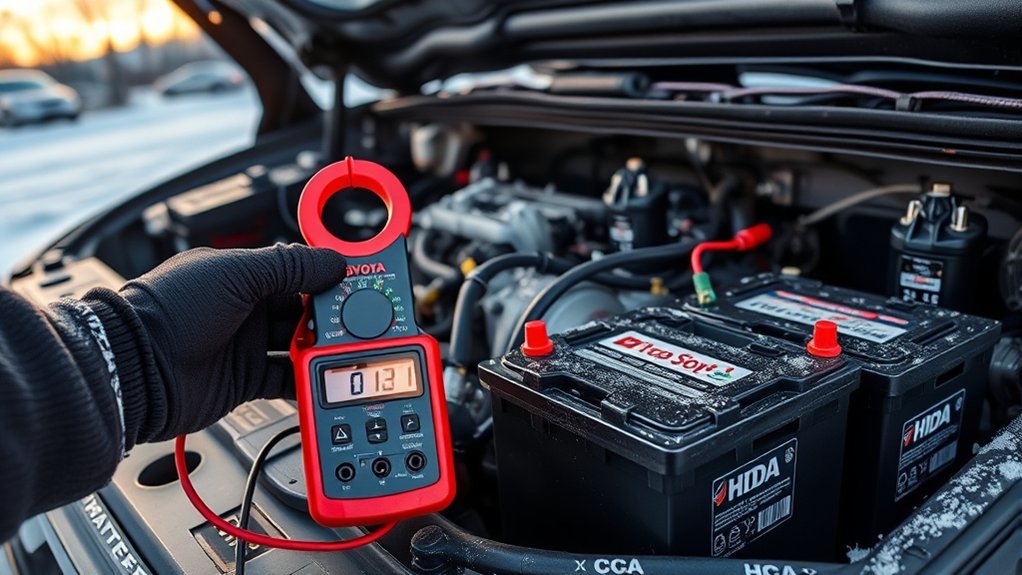
You may see several amp ratings on batteries, jump packs, and marketing labels. CCA matters most for cold starts because it uses the coldest common test condition. Other ratings can help, but they do not replace a correct CCA rating for winter use.
- CCA: Measures starting current at 0°F for 30 seconds.
- CA: Measures cranking amps at 32°F, so the number often looks higher than CCA.
- MCA: Measures marine cranking amps at 32°F and appears more often on marine batteries.
- HCA: Measures hot cranking amps at 80°F, so it does not show cold-start strength.
- Peak amps: Shows a short burst rating on jump starters, not sustained battery performance.
Use CCA for cold-start confidence, reserve capacity for accessory runtime, and group size for physical fit. That simple split helps you compare batteries without getting distracted by inflated amp claims.
Which Battery to Choose for Your Tundra: AGM, Lead-Acid, or Lithium?
The best battery chemistry depends on how you use your Tundra. Standard flooded lead-acid batteries cost less and work well when they meet the correct CCA, size, and reserve capacity. They need clean terminals, a secure hold-down, and a healthy charging system to last.
Absorbed glass mat (AGM) batteries often suit Tundras that tow, drive rough roads, or power more accessories. AGM batteries resist vibration better than many flooded batteries and can deliver strong cranking performance with lower maintenance.
Lithium starting batteries need more caution. Some save weight and support deep cycling, but they must match the truck’s charging system, cold-weather needs, battery management system, and safety requirements. Do not install a lithium battery unless the manufacturer lists it as compatible with your exact Tundra use case.
Warning: A wrong battery type or poor fit can damage cables, cause no-start issues, or create electrical safety risks.
[Products Worth Considering]

The NOCO GENIUS1 is an all-in-one smart charger, maintainer, trickle charger, and desulfator designed to help restore and keep batteries ready for use. It supports 6V and 12V lead-acid and lithium batteries, uses temperature compensation for safer charging, and can recover deeply discharged batteries with advanced charging modes. Compact and easy to leave connected, it is built for cars, motorcycles, ATVs, boats, and other vehicles that need reliable battery care.

The TOPDON BT100 helps you quickly check the health and charge status of 12V lead-acid batteries with clear analytical results, including state of health, state of charge, voltage, and cranking performance. It supports a wide range of battery types and vehicles, making it a practical tool for diagnosing starting and charging issues at home or in the shop. Compact and easy to use, it provides fast, reliable testing without needing to charge the device first.

AUTOMOTIVE PURE LEAD AGM: Download the Compatibility Guide below under Product Guides & Documents to learn more and verify fit. Interstate's MTX AGM design packs more lead into the battery, giving you the longest life possible for your start-stop vehicle
Tundra Battery Installation, Heat, and Maintenance Tips to Extend Life
When you replace a Tundra battery, turn the truck off, secure the work area, and disconnect the negative cable first. Toyota’s battery replacement guidance also tells you to consult the owner’s manual because battery service can involve risk and vehicle-specific steps.
Lift the battery carefully, keep metal tools away from both terminals at the same time, and secure the hold-down after installation. A loose battery can vibrate, damage the case, loosen terminals, and shorten service life.
- Disconnect the negative terminal first during removal.
- Clean corrosion from posts, clamps, and the battery tray.
- Confirm the hold-down locks the battery in place.
- Use a charger mode that matches the battery chemistry.
- Test battery health and charging voltage before winter or long towing trips.
Heat also shortens battery life. Keep the battery area clean, replace missing shields or covers if your model uses them, and avoid repeated deep discharge. Use a smart maintainer during long storage, especially if the truck sits with alarms, trackers, or accessories drawing power.
Picking a Replacement: CCA, Group Size, Warranty, and Real-World Brands
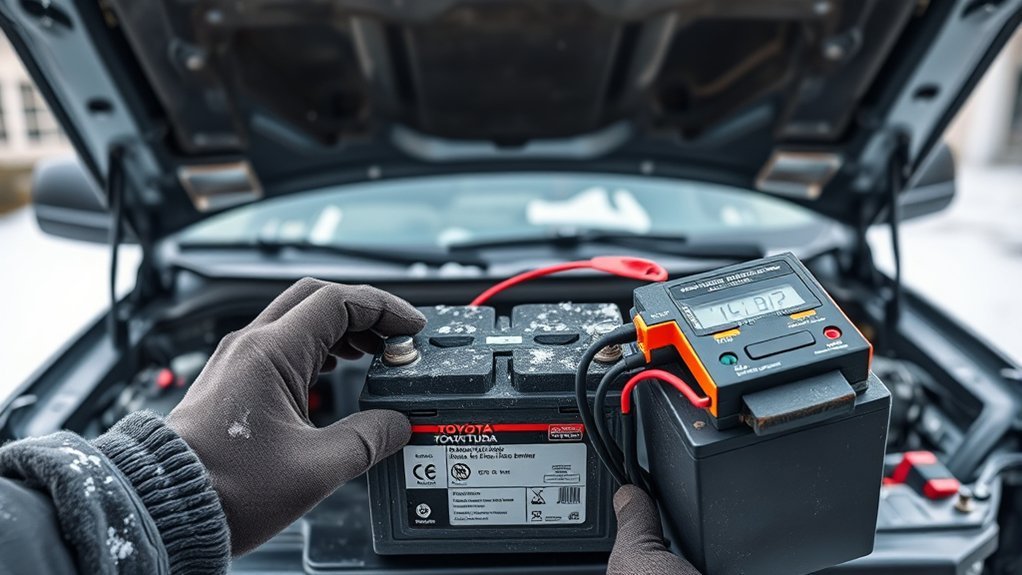
Pick your replacement battery by fit first, then CCA, reserve capacity, chemistry, and warranty. The correct BCI group size keeps the battery secure and places the terminals where the cables expect them.
For many Tundra owners, about 800 CCA gives a strong starting target, especially in cold climates. If the original battery or manual lists a lower or higher rating, follow that vehicle-specific rating instead. You can choose more CCA within the correct fitment range, but you should not choose less than the original requirement.
Warranty matters because batteries face heat, vibration, and deep discharge. Compare free-replacement terms, local availability, return policy, and whether the seller can test the old battery and charging system. Brands such as Toyota TrueStart, Interstate, Optima, Odyssey, Duralast, and Duracell appear often in replacement discussions, but fitment and verified specs should guide your final choice.
Pro tip: Bring your old battery label or VIN when you shop, so the seller can match size and CCA accurately.
Frequently Asked Questions
How many cold cranking amps do I need to start my truck?
Many full-size truck owners should look for a battery near 700 to 850 CCA, depending on the engine, climate, and factory spec. For a Toyota Tundra, about 800 CCA gives many owners a strong cold-weather target, but your manual or original battery label should guide the final number.
How do you explain cold cranking amps?
Cold cranking amps tell you how much current a battery can deliver for 30 seconds at 0°F while staying at or above 7.2 volts. A higher CCA rating usually means better starting strength in cold weather, as long as the battery fits your truck correctly.
Is a higher CCA battery bad for a Toyota Tundra?
A higher CCA battery is usually fine when it matches the correct group size, terminal layout, reserve capacity, and charging requirements. Problems start when the battery does not fit well or the chemistry does not match the truck’s electrical system.
Does group size matter more than CCA?
Group size and CCA both matter. Group size controls fit, hold-down security, and terminal location, while CCA controls cold-start current. Choose a battery that gets both right.
When should I replace my Tundra battery?
Replace the battery when testing shows weak CCA, poor state of health, slow cranking, swollen case damage, or repeated no-start problems. Many vehicle batteries last about three to five years, but heat, short trips, towing, and accessory use can shorten that range.
Safety Disclaimer: This article is for informational purposes only and does not replace professional automotive advice. Car batteries can create sparks, leak acid, and damage electronics if handled incorrectly. Consult your owner’s manual or a qualified technician before replacing or charging a battery.
Conclusion
Your Toyota Tundra needs a battery that matches the factory fitment and delivers enough CCA for your climate. For many owners, about 800 CCA gives a strong cold-start target, but the owner’s manual and original label should make the final call. Check group size, terminal layout, reserve capacity, chemistry, and warranty before you buy. Test the battery and charging system before winter or heavy towing, and your Tundra will start with far fewer surprises.
References
- Interstate Batteries Glossary: Cold Cranking Amps, Interstate Batteries.
- How To Replace a Car Battery, Toyota.
- Toyota TrueStart Battery Grp27F 60 Mo, 710 CCA, Toyota Genuine Parts.
- Toyota Tundra Battery Replacement Fitment Listings, AutoZone.
- Choosing the Right Car Battery for Your Vehicle, AAA Club Alliance, 2026.
- Cold Cranking Amps (CCA), AutoBatteries by Clarios.