
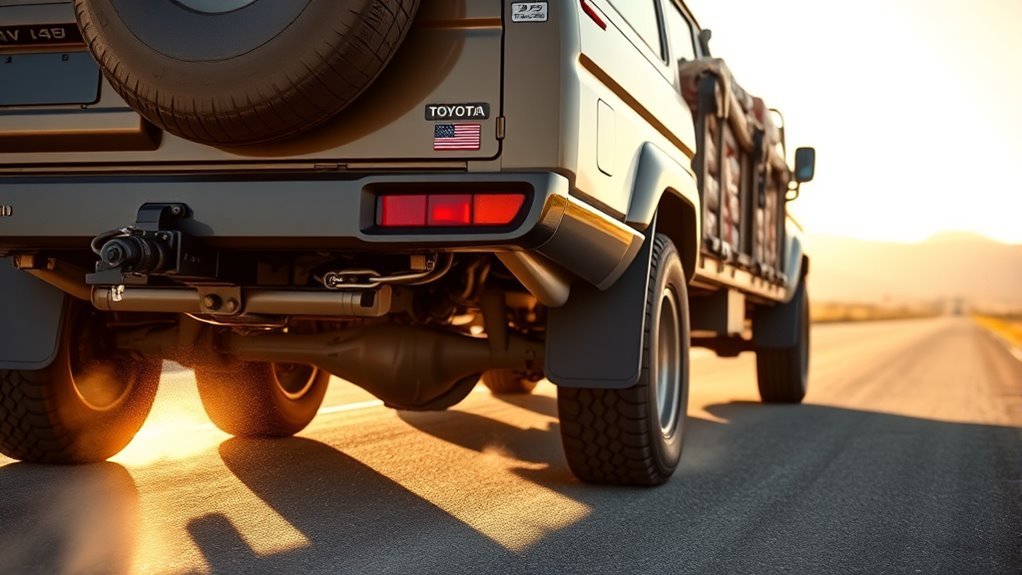
The current U.S.-market 2027 Toyota Land Cruiser towing capacity is 6,000 pounds when properly equipped. Toyota’s recommended tongue-weight target for this Land Cruiser is 9%–11% of loaded trailer weight. At the 6,000-pound maximum, that equals about 540–660 pounds pressing on the hitch before you add passengers, cargo, accessories, or roof-mounted gear.
Last updated: July 14, 2026. This update verifies the 2027 U.S. model, Toyota-specific tongue-weight guidance, factory towing equipment, hitch-control recommendations, and payload calculations.
Quick Answer
The 2027 Toyota Land Cruiser can tow up to 6,000 pounds when properly equipped. Toyota’s 9%–11% tongue-weight target equals about 540–660 pounds for a fully loaded 6,000-pound conventional trailer. Your practical limit may be lower once tongue weight, passengers, cargo, accessories, axle ratings, hitch limits, and the door-jamb payload label are considered.
Key Takeaways
- Toyota lists the current U.S.-market 2027 Land Cruiser with a maximum towing capacity of 6,000 lb.
- Toyota’s recommended tongue-weight range is 9%–11%, or about 540–660 lb at the maximum trailer weight.
- Passengers, cargo, accessories, and trailer tongue weight all count against the payload printed on your vehicle’s door-jamb label.
- Toyota recommends sway-control equipment above 2,000 lb and a properly rated weight-distribution hitch above 5,000 lb.
- The 2027 model includes an integrated trailer brake controller, but you must configure and test the system according to the owner’s manual.
- The safe limit is always the lowest applicable rating for the vehicle, axles, hitch, ball mount, coupler, chains, tires, brakes, and trailer.
Verified 2027 Towing Facts
| Maximum Trailer Weight | 6,000 lb when properly equipped |
| Toyota Tongue-Weight Target | 9%–11% of loaded trailer weight |
| Tongue Weight at 6,000 lb | About 540–660 lb |
| Powertrain Output | 326 hp and 465 lb-ft of torque |
| Factory Brake Controller | Standard integrated controller |
| Additional Hitch Guidance | Sway control above 2,000 lb; weight-distribution hitch above 5,000 lb |
Pre-Trip At a Glance
| Inspection Time | About 15–30 minutes; allow longer when visiting a public scale |
| Difficulty | Beginner to moderate |
| Tools Needed | Owner’s manual, door-jamb load label, tire-pressure gauge, hitch pin or lock, required torque tools, and access to a scale for heavy loads |
| Main Numbers to Check | Loaded trailer weight, tongue weight, payload, GVWR, GAWR, GCWR, hitch rating, and tire limits |
What Is the 2027 Land Cruiser Towing Capacity?
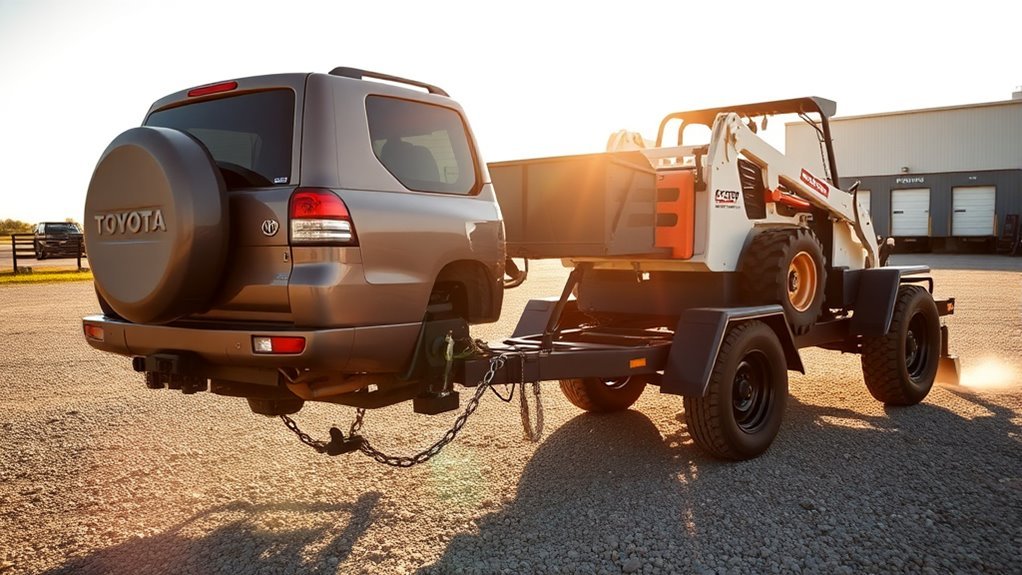
The 2027 Toyota Land Cruiser has a maximum towing capacity of 6,000 pounds. Toyota pairs that rating with its TNGA-F body-on-frame platform, i-FORCE MAX hybrid powertrain, full-time four-wheel drive, and an integrated trailer brake controller.
Toyota’s 2027 Land Cruiser information lists 326 net combined horsepower and 465 lb-ft of torque. The electric motor sits between the turbocharged engine and the 8-speed automatic transmission, which supports responsive low-speed pull when starting, climbing, or positioning a trailer.
The 6,000-pound number is a ceiling, not a complete approval for every trailer at that weight. Toyota explains that occupants, cargo, and added equipment affect how much the vehicle can safely carry and tow. Your setup must remain within every applicable vehicle, axle, hitch, tire, and trailer rating.
Warning: Never approve a towing setup from the 6,000-pound rating alone. Confirm the exact owner’s manual, door-jamb load label, axle ratings, hitch rating, loaded trailer weight, tongue weight, tire pressures, trailer brakes, and local legal requirements.
Which Towing Rating Controls What?
A safe combination must pass several independent limits. The maximum trailer rating does not replace payload, axle, combined-weight, tire, or hitch limits.
| Term | What It Means | Why It Matters |
|---|---|---|
| Maximum trailer weight | The highest loaded trailer weight allowed under Toyota’s stated conditions | The 2027 Land Cruiser ceiling is 6,000 lb |
| Payload | The weight the vehicle can carry, including occupants, cargo, accessories, hitch equipment, and tongue weight | Often becomes the practical limit before the trailer reaches 6,000 lb |
| GVWR | Maximum permitted weight of the loaded Land Cruiser itself | The tow vehicle must remain below this value |
| GAWR | Maximum permitted load on each axle | Tongue weight can overload the rear axle even when total payload appears acceptable |
| GCWR | Maximum combined weight of the loaded vehicle and loaded trailer | The whole combination must remain below this value |
| Tongue weight | The downward load the trailer applies to the hitch | Counts against payload and affects trailer stability |
For more detail, compare towing capacity versus GCWR and review how tongue weight differs from hitch weight.
What Tongue Weight Does Toyota Recommend?
Toyota’s recommended tongue-weight target for this Land Cruiser is 9%–11% of the loaded trailer weight. Tongue weight is the part of the trailer load carried by the vehicle, so it must be included in the Land Cruiser’s payload calculation.
General loading guidance for many light- and medium-duty trailers often cites 10%–15%. However, the vehicle and trailer manufacturers’ instructions control your combination. Trailer Safety Week also advises readers to treat its percentages as general guidance and follow the trailer manual when it specifies a different value.
At Toyota’s 9%–11% target, a 6,000-pound loaded trailer places about 540–660 pounds on the Land Cruiser’s hitch.
The following table uses a hypothetical 1,200-pound door-label payload. It is an arithmetic example, not a published payload rating for every Land Cruiser.
| Loaded Trailer Weight | Toyota 9%–11% Tongue Weight | Payload Left From a Hypothetical 1,200 lb |
|---|---|---|
| 3,000 lb | 270–330 lb | 870–930 lb before passengers, cargo, and accessories |
| 4,500 lb | 405–495 lb | 705–795 lb before passengers, cargo, and accessories |
| 6,000 lb | 540–660 lb | 540–660 lb before passengers, cargo, and accessories |
Actual payload can vary by configuration and installed equipment. In one independent test, the same-generation Land Cruiser’s door label showed 957 pounds of payload. That figure applies only to the tested vehicle and must not replace the label on your Land Cruiser.
NHTSA advises drivers to use the tire-information placard or owner’s manual for the vehicle’s load and cold-pressure limits. It also notes that part of a loaded trailer’s weight transfers to the tow vehicle.
Note: Roof racks, skid plates, steps, recovery equipment, cargo drawers, refrigerators, tools, passengers, pets, and luggage all reduce the payload available for trailer tongue weight.
How Do You Calculate a Safe Land Cruiser Towing Setup?
Treat the calculation as a series of limits. The combination must pass every step, not just the 6,000-pound trailer-weight check.
- Read the exact manual and labels. Record the vehicle’s payload, GVWR, front and rear GAWR, tire limits, and Toyota’s towing instructions.
- Confirm the trailer’s loaded weight. Include water, propane, fuel, batteries, food, tools, luggage, options, spare parts, and dealer-installed equipment.
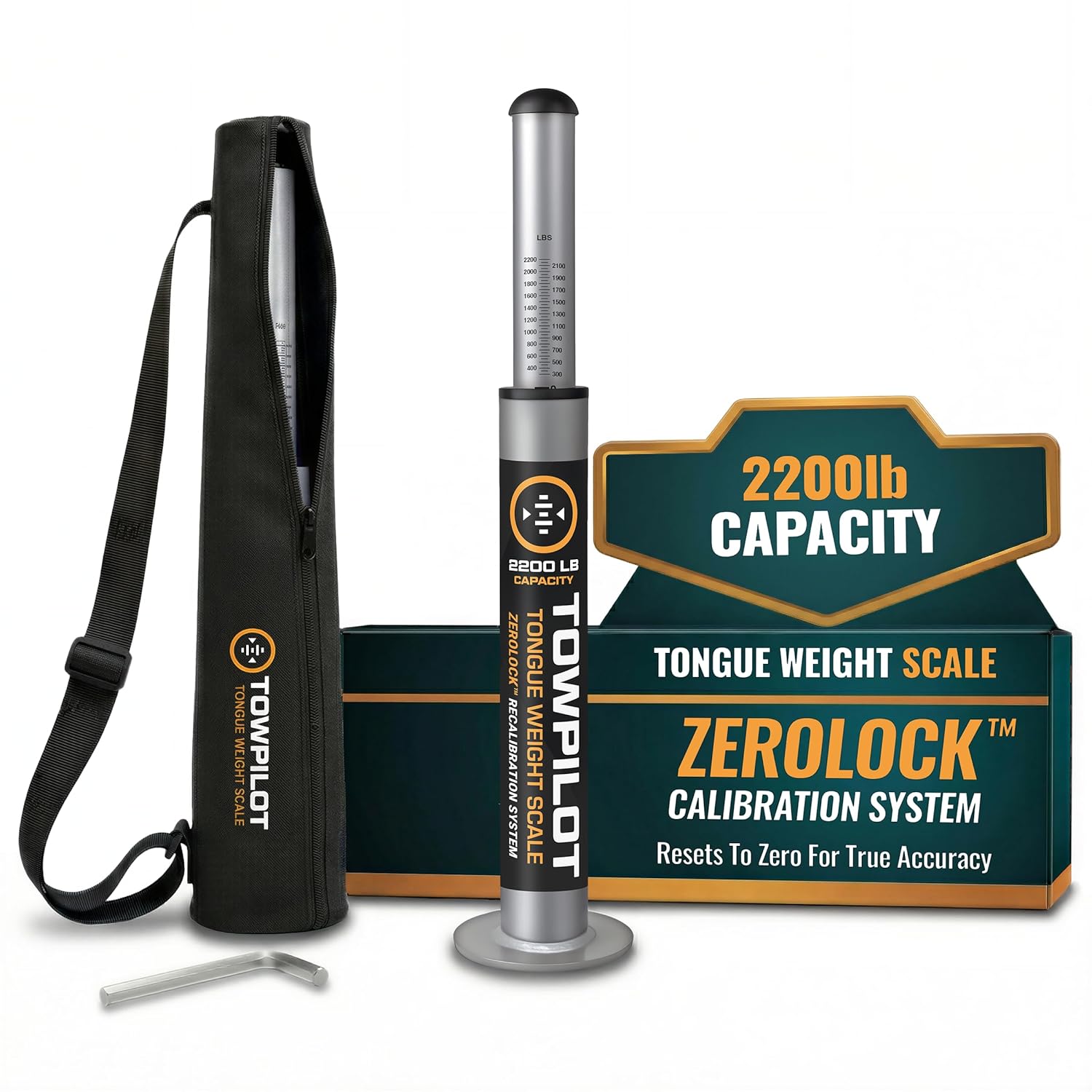
- Calculate Toyota’s tongue-weight target. Use 9%–11% of loaded trailer weight, then measure the actual value with suitable equipment.
- Check payload. Subtract tongue weight, occupants, pets, cargo, accessories, and hitch equipment from the door-label payload.
- Check axle and combined ratings. Make sure the loaded vehicle stays below GVWR and each GAWR, while the full combination remains below GCWR.
- Apply hitch-equipment requirements. Toyota recommends sway control above 2,000 lb and a properly rated weight-distribution hitch above 5,000 lb.
- Check every component. Confirm the ratings for the receiver, ball mount, hitch ball, coupler, safety chains, trailer frame, axles, wheels, tires, and brakes.
- Use the lowest result. Your usable limit is no higher than the lowest vehicle, axle, component, tire, or trailer rating.
Pro Tip: Weigh the Land Cruiser and trailer in their real travel condition. Include the same passengers, water, fuel, food, tools, and cargo you will carry on the trip.
[Products Worth Considering]

This AUTOBOO windshield wiper blade set is designed to fit Toyota RAV4 models from 2013 to 2018 with an OE-style replacement fit. It includes front and rear blades for clear visibility, quiet operation, and dependable all-weather performance, while the easy J/H arm installation helps make replacement quick and simple.

This custom-fit 4-pin trailer wiring harness adds reliable towing light connectivity for compatible Toyota RAV4 and RAV4 Prime models, with plug-and-play installation into the vehicle's rear wiring. It powers trailer tail lights, brake lights, and turn signals, while the included dust cover helps protect the connector when not in use. Built with durable bonded wire and corrosion-resistant terminals, it is designed for dependable performance on everyday towing setups.

This Toyota hitch cover helps protect your trailer hitch receiver from dirt and debris while adding a clean factory-style look to your vehicle's rear end. Designed for easy use, it offers a simple way to finish off your towing setup when the hitch is not in use. Its lightweight design makes it convenient to handle and install.
Does the Land Cruiser Include a Trailer Brake Controller?
Yes. Toyota lists an integrated trailer brake controller as standard equipment on the 2027 Land Cruiser. The same generation also uses a factory receiver hitch and four-pin and seven-pin trailer wiring.
Do not assume the controller is active because the trailer plug is connected. In a same-generation Cars.com test, the controller did not operate until the driver selected a trailer in the gauge-cluster settings. Check your 2027 owner’s manual, select or configure the trailer profile, confirm that the vehicle recognizes the connection, adjust gain, and perform a low-speed brake test before entering traffic.
Toyota recommends sway-control equipment for a trailer above 2,000 pounds and a properly rated weight-distribution hitch above 5,000 pounds. The hitch, receiver, trailer frame, and installation method must all permit the equipment being used.
Warning: Trailer-brake laws vary by state and province. Check every jurisdiction on your route and do not rely on one nationwide weight threshold.
[Products Worth Considering]

Designed for Toyota RAV4 models from 2013 through 2018, this three-piece windshield wiper set delivers clear, quiet performance for dependable visibility in changing weather. The precision-fit blades provide streak-free wiping, simple installation, and durable all-season use with reduced wind noise and consistent pressure across the windshield.

This 4-piece inner roof ceiling pull handle set is designed to replace worn or broken interior grab handles in compatible Toyota vehicles. It fits multiple models across Corolla, 4Runner, Yaris, Prius, RAV4, and other listed applications, helping restore convenient passenger support and interior functionality. Built with quality materials and backed by a one-year service commitment, it offers a reliable replacement solution for front and rear use.

This KSaAuto short antenna is a factory replacement designed to fit a wide range of Toyota, Scion, and select hatchback models. It helps improve AM/FM reception while adding a clean, stylish look to your vehicle. The flexible, weather-resistant design and easy screw-on installation make it a simple upgrade for everyday driving.
Which Trailers Can a Land Cruiser Tow?
The Land Cruiser can handle many utility, powersports, camper, boat, and overland trailers when their actual loaded numbers remain within every rating. Trailer category alone does not prove compatibility.
| Trailer Type | What Must Be Included | Common Decision Point |
|---|---|---|
| Utility trailer | Trailer, cargo, ramps, toolboxes, spare tire, and tie-down equipment | Cargo placement and securement can change tongue weight quickly |
| ATV, side-by-side, or motorcycle trailer | Machines, fuel, accessories, ramps, tools, and protective gear | Vehicle position on the trailer affects tongue weight and axle balance |
| Travel trailer | Water, propane, batteries, solar equipment, food, bedding, cookware, and options | Payload, frontal area, sway control, and weight-distribution requirements |
| Boat trailer | Boat, trailer, fuel, batteries, motor, safety gear, coolers, and equipment | Actual package weight, tongue weight, brakes, and wet-ramp traction |
| Overland trailer | Water, batteries, rooftop equipment, spare tires, recovery tools, and camp gear | Vehicle payload may run out before the 6,000-pound trailer ceiling |
Never select a camper from dry weight alone. Use its actual loaded scale weight or a conservative loading calculation that includes every item added after manufacture. Trailer GVWR can help screen a candidate, but the real setup still needs payload, axle, tongue-weight, hitch, and combined-weight checks.
[Products Worth Considering]

This front left door lock actuator assembly is a direct replacement for select Toyota and Lexus models, helping restore reliable power door locking and latch operation. Built as an OEM-quality aftermarket part, it includes the latch assembly and is factory tested for dependable performance. It is designed for driver-side front door fitment across a wide range of compatible vehicles and comes with replacement support for added peace of mind.

This custom-designed cargo net helps keep the rear trunk of a 2026 Toyota RAV4 neat, secure, and organized. Its stretchable elastic mesh construction helps prevent groceries, tools, and sports gear from sliding around, while the built-in bottom pocket and smart clips add extra storage control. A top pull tab makes installation and removal quick and easy for everyday convenience.
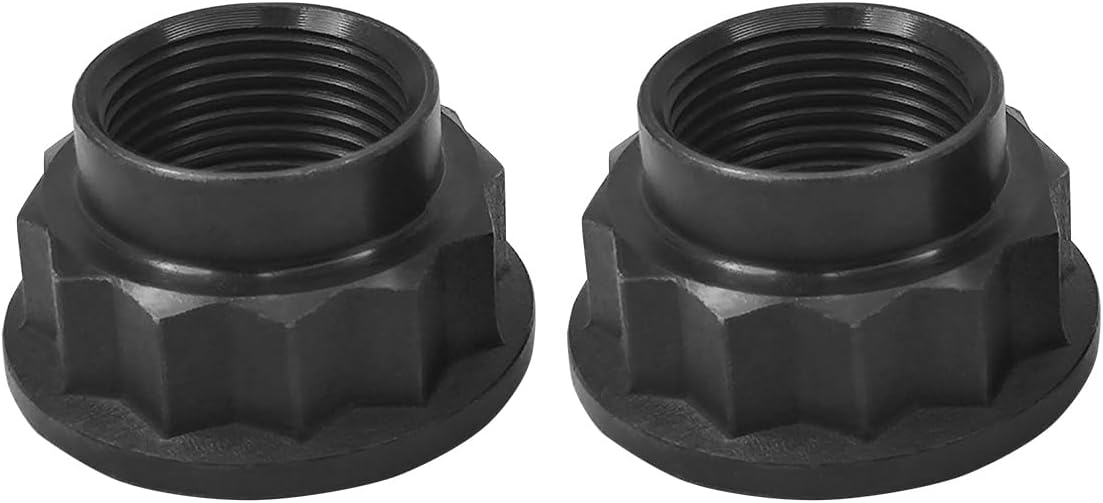
This pair of front axle shaft nuts is designed to secure CV joints and wheel bearings on compatible Toyota and Lexus front drive axles. Built from heat-treated carbon steel for durability and corrosion resistance, it helps maintain proper torque and reliable power transfer. It is a direct replacement for several factory part numbers and is recommended for paired replacement.
What Does an Independent Land Cruiser Towing Test Show?
Published test benchmark, not an AutoReviewNest test: Cars.com tested a 2024 Land Cruiser from the same generation with a travel trailer weighing about 4,700 pounds and carrying approximately 490 pounds of tongue weight. The trailer was about 22 feet long, 8 feet wide, and 10 feet tall.
The route covered nearly 25 miles and included highway driving, curves, steep climbs, and elevations from about 4,550 to 6,170 feet. The mountain section averaged roughly a 6% grade, with shorter steeper portions.
The reviewer reported minimal sway once at speed and no difficulty maintaining the route’s 45-mph climbing speed. However, one uphill freeway merge required full throttle, and additional acceleration at full throttle was limited. That is a useful reminder that remaining under a tow rating does not guarantee strong passing reserve in every condition.
The test vehicle displayed 11.4 mpg over the short route. The reviewer treated that figure as a rough observation because the route was brief and the value came from the trip computer. Do not use it as a promised towing fuel-economy figure for another trailer, route, altitude, or weather condition.
Read the complete Cars.com Land Cruiser towing test for its setup and route details.
How Does the i-FORCE MAX Powertrain Affect Towing?
The Land Cruiser’s i-FORCE MAX system combines a turbocharged engine with an electric motor positioned between the engine and 8-speed automatic transmission. Toyota rates the system at 326 net combined horsepower and 465 lb-ft of torque.
The electric assistance supports smooth low-speed pull when moving a trailer from a stop, climbing, or maneuvering at a campsite or launch ramp. The 8-speed transmission can also select a more useful ratio as speed and grade change.
Acceleration reserve still depends on trailer weight, frontal area, altitude, temperature, headwind, tire size, and road grade. A tall camper can demand more power at highway speed than a lower trailer of the same weight because it creates more aerodynamic drag.
Full-time four-wheel drive continuously supports traction at the front and rear. That can help on gravel, damp ramps, loose approaches, and low-speed grades, but it does not raise the towing, payload, axle, hitch, or tire limits.
Which Off-Road Features Help When Towing at Low Speed?
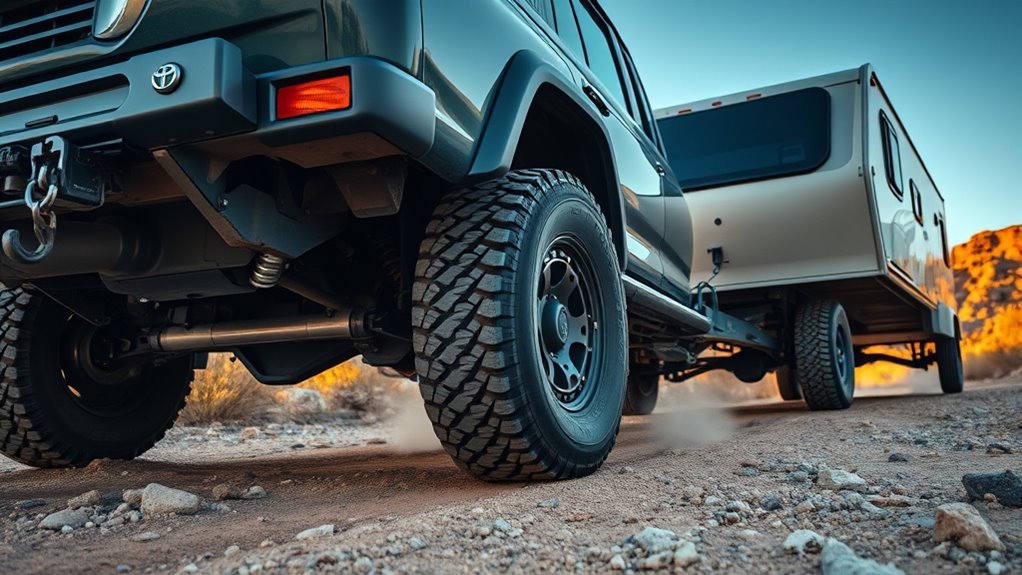
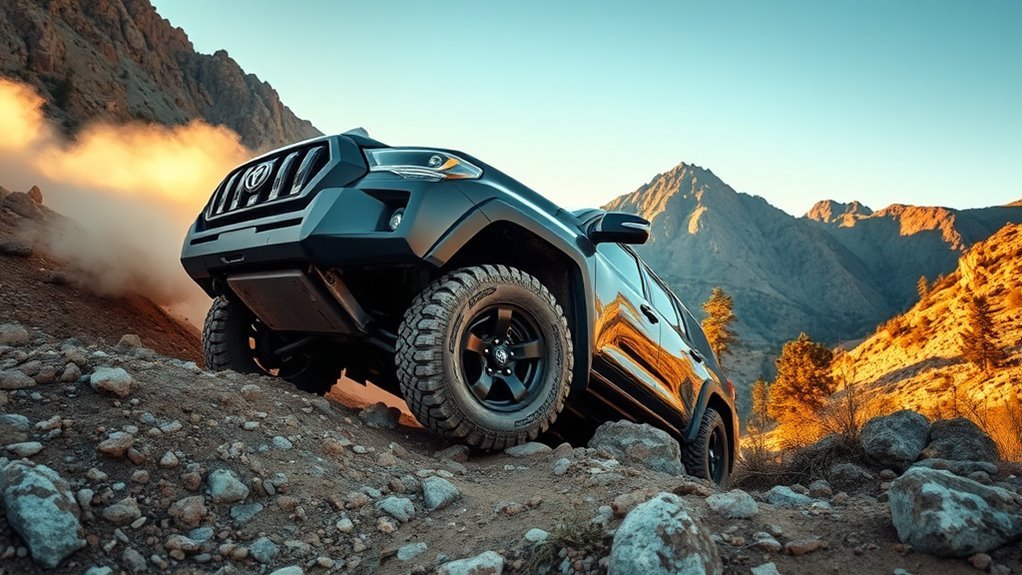
Toyota equips the 2027 Land Cruiser with full-time four-wheel drive, a two-speed transfer case, locking center and rear differentials, CRAWL Control, and Downhill Assist Control. Multi-Terrain Select and the Stabilizer Disconnect Mechanism are available depending on grade and equipment.
These systems can improve traction or reduce driver workload at low speed. They do not make a heavy trailer safer on a side slope, increase braking capacity, or raise any published weight rating.
Use locking differentials only in conditions described by Toyota. They are not intended for ordinary high-traction highway towing. Engaging a locker on a firm surface can make turning less natural and increase driveline stress.
CRAWL Control can manage low-speed throttle and braking while the driver steers through rough terrain. Downhill Assist Control can help regulate speed on a steep descent. Trailer weight still increases the combination’s momentum and stopping distance, so trailer brakes, low speed, and careful line selection remain essential.
The available stabilizer disconnect mechanism increases front-suspension articulation. It is a traction aid, not permission to tow a heavier trailer.
Warning: Off-road towing adds side-load, clearance, traction, heat, and recovery risks. Reduce speed, avoid steep side slopes, use a spotter when needed, and turn around before the trailer places the combination in an unstable position.
Can You Tow During the First 500 Miles?
Check the break-in section of the manual supplied with your exact Land Cruiser before towing. Toyota’s 2025 U.S. owner’s manual for this same generation instructed owners not to tow a trailer during the first 500 miles.
Model-year instructions can change, so the manual delivered with your 2027 vehicle is the final authority. Do not assume an older manual’s break-in period automatically applies without checking.
Land Cruiser Towing Checklist and Safety Tips
Use the same checklist before every towing trip. Repeating the process makes it easier to catch a changed tire pressure, shifted load, loose fastener, damaged cable, or incorrect controller setting.
- Confirm all weights: Check loaded trailer weight, tongue weight, vehicle payload, GVWR, front and rear GAWR, GCWR, and the 6,000-pound maximum.
- Inspect the hitch system: Verify the receiver, ball mount, hitch ball, coupler, hitch pin, safety chains, breakaway cable, and weight-distribution equipment.
- Configure the trailer: Select the correct trailer profile and confirm that the integrated brake controller recognizes the connection.
- Test lights and wiring: Check brake lights, turn signals, running lights, hazards, plug condition, and breakaway-system battery.
- Set cold tire pressures: Use the vehicle placard, owner’s manual, and trailer or tire-manufacturer guidance. Inspect tread, sidewalls, valve stems, and spare tires.
- Verify trailer brakes: Adjust controller gain according to the manual and test braking at low speed before entering traffic.
- Balance the trailer: Load for Toyota’s 9%–11% tongue-weight target unless the trailer manufacturer specifies otherwise.
- Secure the load: Use correctly rated tie-down equipment and prevent cargo from shifting forward, rearward, or side to side.
- Check mirrors and clearance: Confirm rearward visibility, trailer tracking, roof clearance, and turning room.
- Perform a short test: Pull forward, turn, and brake gently. Stop after a short distance and recheck the hitch, straps, wiring, tires, and load.
On the road, leave more following distance, brake earlier, reduce speed in crosswinds, and avoid abrupt steering. Stop to investigate sway, unusual tire heat, warning messages, brake odor, shifting cargo, or a change in trailer tracking.
Should You Follow the 80% Towing Rule?
The 80% towing rule is an unofficial planning guideline, not a Toyota requirement. Applying it to the Land Cruiser’s 6,000-pound rating gives a trailer target of 4,800 pounds.
That extra margin can be useful for long trips, mountains, heat, headwinds, tall campers, inexperienced drivers, and rough-road travel. It may also leave more acceleration and cooling reserve.
The rule does not guarantee a safe combination. A 4,800-pound trailer can still overload payload, the rear axle, the hitch, or a tire. Conversely, Toyota permits towing up to the published rating when every condition and limit is satisfied.
If you tow near 6,000 pounds, weigh the combination, measure tongue weight, verify axle loads, follow Toyota’s hitch-control guidance, and confirm that the trailer brakes and controller are working correctly.
Frequently Asked Questions
How much can a 2027 Toyota Land Cruiser tow?
The 2027 U.S.-market Toyota Land Cruiser can tow up to 6,000 pounds when properly equipped. Your practical limit may be lower because payload, tongue weight, GVWR, GAWR, GCWR, hitch ratings, tires, passengers, cargo, and accessories must also remain within their limits.
What tongue weight does Toyota recommend for the Land Cruiser?
Toyota’s recommended tongue-weight target is 9%–11% of loaded trailer weight. A 6,000-pound loaded trailer would therefore place about 540–660 pounds on the hitch. Measure the actual value and follow the trailer manufacturer’s instructions as well.
Does the 2027 Land Cruiser have a trailer brake controller?
Yes. Toyota lists an integrated trailer brake controller as standard. After connecting an electric-brake trailer, configure or select the trailer in the vehicle settings, confirm that the controller recognizes it, adjust gain according to the owner’s manual, and test braking at low speed.
When does a Land Cruiser need sway control or a weight-distribution hitch?
Toyota recommends sway-control equipment above 2,000 pounds and a properly rated weight-distribution hitch above 5,000 pounds. Confirm that the receiver, trailer frame, hitch components, and installation method permit the equipment.
Does payload reduce how much the Land Cruiser can tow?
Payload can lower the practical towing limit because trailer tongue weight, occupants, cargo, accessories, pets, roof gear, and hitch equipment all load the Land Cruiser. Use the payload printed on your driver-side door-jamb label and confirm the axle ratings as well.
Can a Land Cruiser tow a camper?
Yes, it can tow many campers that remain within the vehicle, axle, hitch, tire, and trailer ratings. Use loaded weight rather than dry weight, and include water, propane, batteries, food, options, luggage, and outdoor equipment.
Do I need trailer brakes with a Toyota Land Cruiser?
Trailer-brake requirements vary by state, province, trailer type, and weight. Check the laws for every jurisdiction on your route, the trailer manufacturer’s instructions, and the Land Cruiser owner’s manual. Test the integrated controller before entering traffic.
Can I tow during the first 500 miles?
Check the break-in instructions for your exact model year. Toyota’s 2025 U.S. manual for this generation instructed owners not to tow during the first 500 miles, but the manual supplied with your 2027 Land Cruiser is the final authority.
Can I tow off-road with the Land Cruiser?
Yes, but off-road towing increases side-load, clearance, traction, and recovery risks. Drive slowly, avoid steep side slopes, keep the load balanced, and use a spotter when needed. Traction features do not increase the published towing or payload limits.
What is the 80% towing rule for a Land Cruiser?
The 80% rule is an unofficial margin that would limit trailer weight to about 4,800 pounds for a 6,000-pound Land Cruiser. It is not a Toyota requirement and does not replace payload, axle, combined-weight, hitch, tire, or brake checks.
Conclusion
The 2027 Toyota Land Cruiser can tow up to 6,000 pounds, but that number is only one part of the decision. Toyota’s 9%–11% tongue-weight target, the door-label payload, axle ratings, GCWR, hitch limits, tires, trailer brakes, passengers, and cargo all affect the safe result.
Before a heavy trip, weigh the loaded combination, measure tongue weight, configure and test the integrated brake controller, and use Toyota’s recommended sway-control or weight-distribution equipment when required. If every rating passes with a useful margin, the Land Cruiser can be matched to many campers, boats, utility trailers, and adventure trailers.
Sources
- Toyota USA Newsroom: 2027 Toyota Land Cruiser — model-year availability, 6,000-pound towing capacity, i-FORCE MAX output, full-time 4WD, trailer brake controller, and off-road equipment.
- Toyota Vehicles for Towing — Toyota guidance on occupants, cargo, added equipment, and model-specific towing instructions.
- Toyota Owner’s Manual: Trailer Towing — towing precautions, loading, equipment, and overload warnings.
- Toyota 2025 Land Cruiser Owner’s Manual — same-generation break-in and trailer-towing instructions.
- Cars.com: 2024 Toyota Land Cruiser Towing Test — factory hardware, Toyota’s 9%–11% tongue-weight guidance, hitch recommendations, measured trailer setup, route, handling observations, and displayed fuel economy.
- Trailer Safety Week: Loading a Trailer — general loading, cargo balance, tongue weight, sway, securement, and weighing guidance.
- NHTSA Tire Safety Guidance — cold tire pressure, load placards, overload prevention, and trailer weight transferred to the tow vehicle.

[…] circuit, and turn signals work there, focus on your Tundra’s trailer plug, fuse, harness, or towing […]
[…] oil, and driving stays normal. Switch to 5,000 miles or 6 months for flex-fuel models, heavy towing, repeated short trips, dusty roads, off-road use, or extended idling. If you own a 2010-2013 Tundra […]
[…] hydraulically assisted, self-leveling ride-height system. It can lower a Lexus LX or equipped Toyota Land Cruiser for access, maintain the designed stance under load, and raise the body for slow off-road […]