You need both towing capacity and GCWR to choose a trailer safely. Towing capacity tells you the maximum trailer weight the manufacturer says your vehicle can pull when properly equipped. GCWR, or Gross Combined Weight Rating, limits the total loaded weight of the tow vehicle and trailer together. The safest answer is not one number; it is the lowest limit after you check tow rating, GCWR, payload, tongue weight, GAWR, hitch rating, tire limits, and real scale weights.
Quick Answer
Towing capacity is the maximum loaded trailer weight your vehicle can tow when properly equipped. GCWR is the maximum combined weight of the loaded tow vehicle and loaded trailer. Use the manufacturer tow rating as a cap, then calculate your real limit by subtracting the tow vehicle’s actual loaded weight from GCWR.
Key Takeaways
- GCWR is not the same as towing capacity. GCWR covers the loaded vehicle and loaded trailer together.
- Do not use “GCWR minus GVWR” as a universal tow-rating formula. Real available trailer weight is GCWR minus the tow vehicle’s actual loaded weight, then limited by published tow rating, payload, hitch, axle, and tire limits.
- Tongue weight counts against payload. For most conventional trailers, target about 10–15% of loaded trailer weight unless your vehicle or trailer maker specifies otherwise.
- Dry trailer weight is not enough. Use the trailer’s loaded weight or GVWR when sizing a camper, boat, utility trailer, or equipment trailer.
- Weigh the loaded rig. Door labels, owner’s manuals, and towing guides set the limits; a public scale confirms whether your setup actually stays inside them.
At a Glance
| Time Required | 20–40 minutes to gather ratings; 15–30 minutes at a public scale |
| Difficulty | Moderate; basic math and label reading |
| Tools Needed | Owner’s manual, towing guide, door labels, hitch label, tire placards, calculator, and a public scale |
| Cost | Usually low; public scale fees are typically modest |
Towing Capacity vs GCWR: What Each Number Means
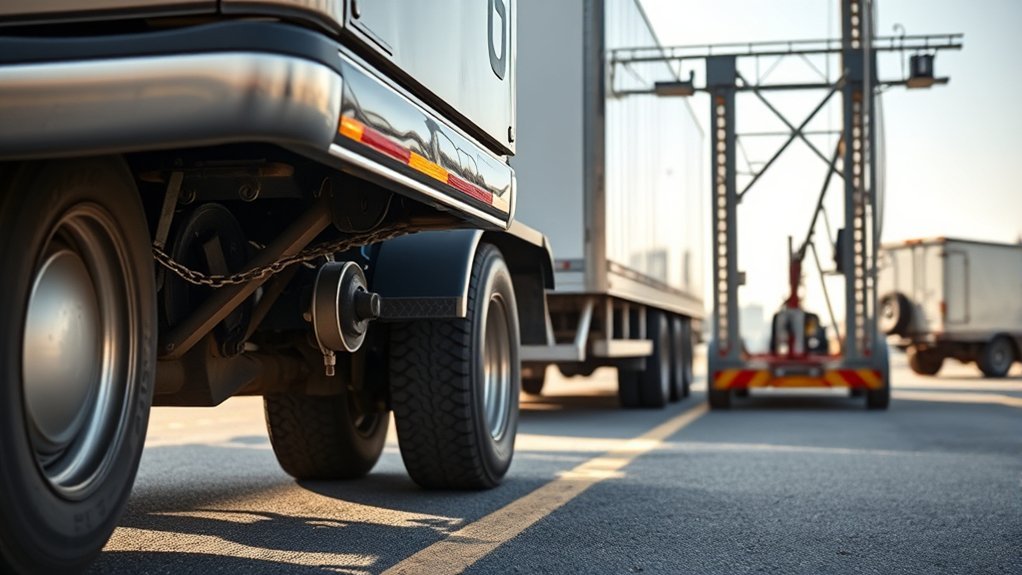
Towing capacity is the highest loaded trailer weight your vehicle can tow when it has the required engine, axle ratio, hitch, cooling, brake controller, and towing package. It is usually listed in the owner’s manual, towing guide, manufacturer towing calculator, or vehicle-specific trailering label.
GCWR stands for Gross Combined Weight Rating. Under 49 CFR § 571.3, GCWR means the manufacturer-specified loaded weight of a combination vehicle. In plain language, it is the most the tow vehicle and trailer can weigh together when both are loaded.
GVWR stands for Gross Vehicle Weight Rating. It is the maximum loaded weight of the tow vehicle by itself. This includes the vehicle, fuel, passengers, cargo, accessories, aftermarket parts, and the trailer’s tongue weight pressing down on the hitch.
GAWR stands for Gross Axle Weight Rating. It is the maximum load allowed on each axle. A truck can be under GVWR and still overload the rear axle if tongue weight, cargo, and passengers are too far back.
| Term | What It Limits | Where to Check |
|---|---|---|
| Towing capacity | Maximum loaded trailer weight | Owner’s manual, towing guide, VIN-based towing calculator, trailering label |
| GCWR | Tow vehicle + trailer combined | Owner’s manual, towing guide, trailering label |
| GVWR | Tow vehicle loaded by itself | Driver-door certification label |
| GAWR | Each axle’s loaded weight | Driver-door certification label |
| Hitch rating | Trailer weight and tongue weight at the receiver | Hitch label, owner’s manual, hitch manufacturer specs |
| Tire/load rating | How much weight the tires can safely carry at the correct pressure | Tire sidewall, tire placard, owner’s manual |
The Correct Math: GCWR, Actual Weight, and Tow Rating
The most common towing mistake is using one simple formula and ignoring the rest of the limits. A safer way is to use two checks.
Check 1: Manufacturer tow rating. Do not exceed the vehicle’s published maximum loaded trailer weight for your exact configuration. Ford’s towing guidance, for example, says towing capacity should be taken from the Ford Towing Calculator or RV Towing Guide, and that guide numbers may not include added accessories, premium trim packages, aftermarket equipment, passengers, or payload.
Check 2: Real-world GCWR math. Use this formula after the vehicle is loaded for the trip:
Available trailer weight by GCWR = GCWR − actual loaded tow-vehicle weight before hitching the trailer.
Then compare that result with the published tow rating, payload capacity, hitch rating, rear GAWR, tire ratings, and trailer brake requirements. The safe trailer weight is the lowest number left after all of those checks.
Warning: “GCWR minus GVWR” is only useful for one specific scenario: when the tow vehicle is already loaded to its full GVWR. It is not the universal formula for advertised towing capacity, and it can make the article’s math look more certain than it really is.
How to Find the Ratings Before You Tow
Start with the exact vehicle, not a generic model name. Two trucks with the same badge can have very different tow ratings because of engine, axle ratio, drivetrain, cab, bed, tires, cooling package, trailer brake controller, and trim weight.
- Open the driver door and read the certification label. This is where GVWR and front/rear GAWR appear. Federal certification rules require GVWR and GAWR to be shown on the label for motor vehicles.
- Check the tire placard. Confirm tire size, cold inflation pressure, and load limits. NHTSA recommends checking tire pressure before long trips and avoiding vehicle overload.
- Use the owner’s manual or official towing guide. Find GCWR, maximum loaded trailer weight, and any required towing equipment.
- Read the hitch receiver label. Many receivers have separate ratings for weight-carrying and weight-distributing setups.
- Read the trailer data plate. Use trailer GVWR and loaded trailer weight, not only dry weight or UVW.
Note: State towing rules can also affect brake requirements, breakaway devices, lighting, speed limits, and maximum lengths. Check your state DMV or a current state-law resource before towing across state lines.
Sizing a Trailer With GCWR and Your Tow Rating
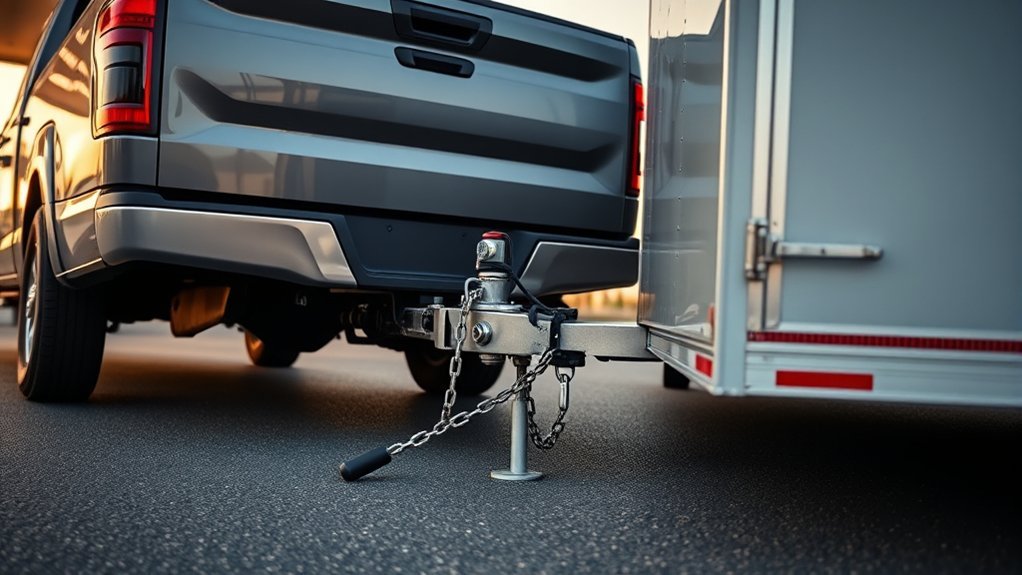
When shopping for a trailer, do not size it from dry weight alone. Dry weight, also called UVW, usually excludes water, propane, batteries, food, tools, camping gear, dealer-installed accessories, and personal cargo. Instead, look at the trailer’s GVWR and estimate the actual loaded weight you will tow.
[Products Worth Considering]

Sturdy steel frame construction for long life 1,200-lb. GVWR with a maximum load capacity of 1,060 lbs. to handle a variety of cargo 1-7/8in. coupler assembly with safety...
Step 1: Set the hard trailer cap
Write down the manufacturer’s maximum loaded trailer weight for your exact vehicle. This is your starting cap. Do not exceed it even if the GCWR math appears to allow more.
Step 2: Calculate available weight by GCWR
Load the tow vehicle with fuel, people, cargo, tools, pets, accessories, and anything else that will be in it during the trip. Weigh it if possible. Then subtract that loaded vehicle weight from GCWR.
Step 3: Estimate tongue weight
For most conventional bumper-pull trailers, a common target is about 10–15% of loaded trailer weight on the tongue, unless your vehicle, trailer, or hitch maker specifies a different range. Fifth-wheel and gooseneck trailers usually place a higher percentage on the truck.
Step 4: Check payload, GVWR, GAWR, and hitch limits
Tongue weight is not “free.” It presses down on the tow vehicle and uses payload. Add passengers, cargo, accessories, and tongue weight. The result must stay under GVWR, rear GAWR, hitch tongue-weight rating, and tire limits.
Step 5: Leave a real buffer
A 10–15% margin below the lowest relevant limit is a practical target for many noncommercial towing setups. More buffer is better for hills, heat, headwinds, family cargo, water tanks, and last-minute gear. Avoid building a setup that is technically under the number by only a few pounds.
Pro Tip: If you are choosing between two trailers, compare their loaded weights, not their brochure dry weights. A lighter dry-weight trailer with a higher cargo load can still become too heavy once packed.
Step-by-Step Example: Truck + Camper Calculation
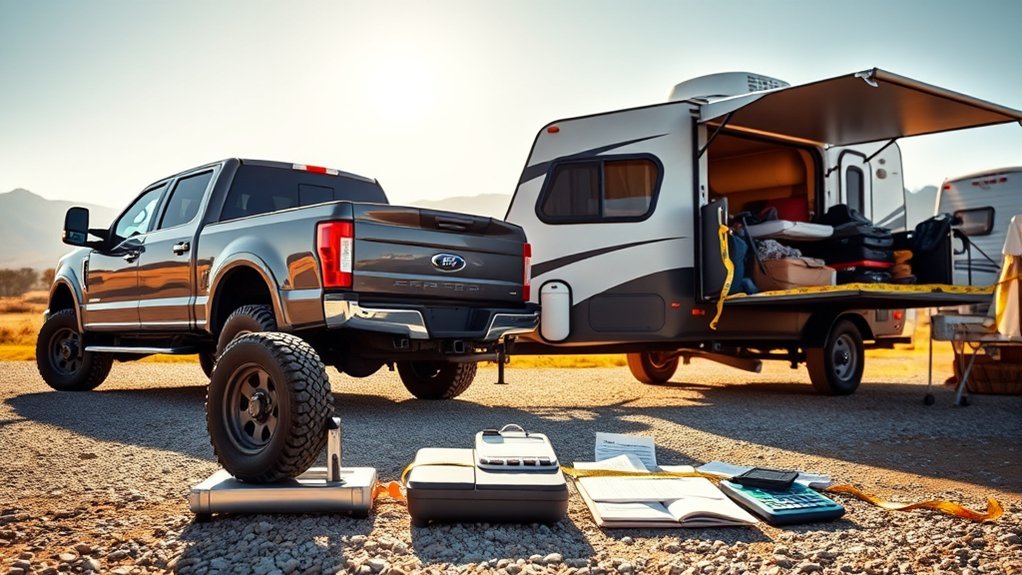
Use this example as a method, not as a rating for your vehicle. Your numbers must come from your own labels, manual, towing guide, and scale tickets.
| Item | Example Value | Result |
|---|---|---|
| GCWR | 16,400 lb | Combined truck + trailer limit |
| GVWR | 7,200 lb | Loaded truck limit |
| Published max loaded trailer rating | 9,200 lb | Do not exceed this rating |
| Actual loaded truck before hitching | 6,000 lb | Includes fuel, passengers, and cargo |
| GCWR-based trailer allowance | 16,400 − 6,000 = 10,400 lb | Still capped by 9,200 lb published tow rating |
| Chosen loaded camper weight | 7,600 lb | Below both GCWR allowance and tow rating |
| Estimated tongue weight | 12% × 7,600 = 912 lb | Counts against truck payload and rear axle |
| Estimated loaded truck after hitching | 6,000 + 912 = 6,912 lb | Under 7,200 lb GVWR, but rear GAWR still must be checked |
In this example, the trailer passes the first checks, but it is not approved until the loaded truck, trailer axles, rear axle, hitch tongue weight, and tire pressures are verified on a scale. The rear axle is often the limiting number because tongue weight and cargo both load the back of the vehicle.
Safety Constraints: Tongue Weight, Payload, and GAWR
Tongue weight is the downward force the trailer applies to the hitch. Too little tongue weight can contribute to sway. Too much tongue weight can overload the rear axle, reduce front-end steering authority, aim headlights upward, and increase stopping distance.
Payload is everything added to the tow vehicle after its empty weight: people, bags, bed cargo, tools, running boards, tonneau covers, bike racks, the weight-distribution hitch itself, and trailer tongue weight. If your payload sticker says 1,350 lb and your family, cargo, and hitch hardware already use 600 lb, you do not have 1,350 lb left for tongue weight.
GAWR matters because weight is not always evenly spread. A truck can be under GVWR but over rear GAWR. That is why a proper scale check should capture front axle weight, rear axle weight, trailer axle weight, and total combined weight.
Does a Weight Distribution Hitch Increase Towing Capacity?
A weight distribution hitch can improve how weight is shared across the tow vehicle and trailer axles. It can help restore front-axle load, reduce rear sag, and improve control when used correctly. However, it does not raise the vehicle’s GCWR, GVWR, GAWR, tire ratings, hitch rating, or published tow rating.
Use a weight distribution hitch only when it is allowed by the vehicle and hitch manufacturer. Some vehicles, receivers, and trailers have specific instructions or restrictions. Always follow the setup process in the owner’s manual and hitch instructions.
[Products Worth Considering]

WEIGHT DISTRIBUTION: Hardened steel chains connect the hitch arms to your trailer frame for improved load distribution. The result is improved steering, braking control, and helping to reduce stressful towing situations.

LEVEL TOWING — Distributes trailer tongue weight across the tow vehicle and trailer to help level the load, improve control and smooth the ride; includes sway control kit #17200 to help reduce trailer sway.

Allows for easy leveraging of weight distribution hookup brackets
How to Weigh Your Tow Setup
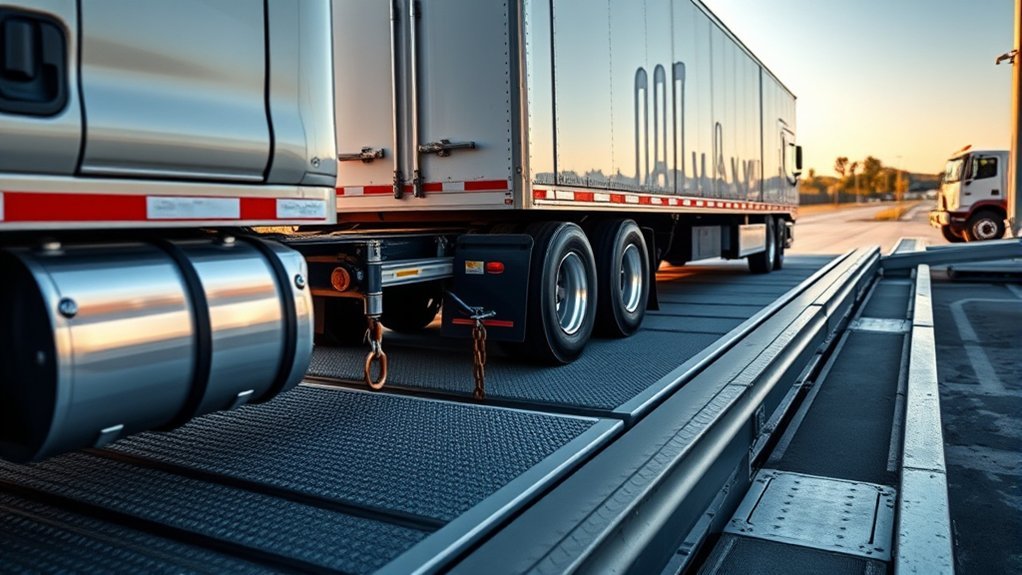
The best way to confirm your numbers is to weigh the rig loaded exactly as it will travel. Fill fuel, load passengers, pack cargo, set water tanks the way you actually tow, and connect the trailer with the hitch adjusted.
- Weigh the loaded tow vehicle by itself. Record front axle, rear axle, and total weight.
- Weigh the connected rig. Record steer axle, drive axle, trailer axle, and combined weight.
- Compare front and rear axle weights to GAWR. Do not exceed either axle rating.
- Compare loaded vehicle weight to GVWR. Tongue weight is part of this number.
- Compare combined weight to GCWR. The loaded truck plus loaded trailer must stay under GCWR.
- Compare trailer weight to tow rating and trailer GVWR. The trailer must stay within both the vehicle’s tow rating and the trailer manufacturer’s rating.
Note: NHTSA’s tire safety guidance reminds drivers not to overload the vehicle and to remember that some loaded trailer weight transfers to the towing vehicle. That transferred weight is why tongue weight must be included in payload and axle checks.
Common Mistakes and a Pre-Tow Checklist
Most towing problems start before the trailer moves. Use this checklist after choosing the trailer and again before a long trip.
Common Weight Calculation Errors
- Using dry trailer weight instead of loaded trailer weight. Water, batteries, propane, food, tools, and cargo add up fast.
- Assuming advertised towing capacity applies to every trim. It may require a specific axle ratio, tow package, engine, tires, or brake controller.
- Ignoring payload. Tongue weight, people, and bed cargo all compete for the same payload capacity.
- Forgetting rear GAWR. The rear axle may overload before GVWR or GCWR is reached.
- Trusting estimates without scale tickets. A loaded rig often weighs more than expected.
- Assuming a weight distribution hitch raises ratings. It redistributes load; it does not increase manufacturer limits.
Pre-Tow Vehicle Inspection
- Confirm GVWR, GCWR, GAWR, payload, tow rating, hitch rating, and trailer GVWR.
- Check tow-vehicle and trailer tire pressure when the tires are cold.
- Inspect tire tread, cracks, sidewall damage, and valve stems.
- Confirm lug nuts are torqued to the manufacturer specification.
- Test trailer lights, brake lights, turn signals, and marker lamps.
- Test trailer brakes and brake controller operation where equipped.
- Cross safety chains under the coupler and attach them to rated points.
- Confirm coupler latch, hitch pin, breakaway cable, and safety clips are secured.
- Load heavy cargo low and forward enough to maintain stable tongue weight without overloading the rear axle.
- Recheck mirrors, stopping distance, and state towing rules before highway driving.
Frequently Asked Questions
Is GCWR the same as towing capacity?
No. GCWR is the maximum combined weight of the loaded tow vehicle and loaded trailer. Towing capacity is the maximum loaded trailer weight the vehicle can pull when properly equipped. You must stay under both numbers, along with GVWR, GAWR, hitch rating, payload, and tire limits.
Does a 4,000-pound trailer need a weight distribution hitch?
Maybe. A 4,000-pound conventional trailer often has about 400–600 pounds of tongue weight if loaded in the common 10–15% range. Whether you need a weight distribution hitch depends on the tow vehicle manual, receiver label, trailer design, tongue weight, rear sag, front-axle load, and hitch manufacturer instructions.
Can I calculate towing capacity by subtracting GVWR from GCWR?
Not as a universal rule. GCWR minus GVWR shows how much trailer weight could remain if the tow vehicle is loaded all the way to GVWR. For real-world towing, use GCWR minus the tow vehicle’s actual loaded weight before hitching, then do not exceed the manufacturer’s published tow rating or any other limit.
Should I use trailer dry weight or trailer GVWR when shopping?
Use loaded trailer weight or trailer GVWR for planning. Dry weight is useful for comparison, but it usually excludes water, propane, batteries, dealer options, food, gear, and cargo. A trailer that looks safe by dry weight can become too heavy when packed.
How much towing safety buffer should I leave?
A 10–15% buffer below the lowest relevant limit is a practical target for many personal towing setups, but more is better for mountains, heat, headwinds, rough roads, and changing cargo. Never plan a trip where the trailer is only a few pounds under the limit.
Where do I find GVWR, GAWR, GCWR, and towing capacity?
GVWR and GAWR are usually on the driver-door certification label. GCWR and towing capacity are usually in the owner’s manual, official towing guide, VIN-based towing calculator, or vehicle-specific trailering label. Hitch ratings are on the hitch label, and tire/load information is on the tire placard and tire sidewalls.
Conclusion
GCWR and towing capacity work together, but they are not the same. Towing capacity limits the loaded trailer your vehicle can pull, while GCWR limits the loaded tow vehicle and loaded trailer together. For the safest result, start with the manufacturer’s tow rating, subtract your actual loaded tow-vehicle weight from GCWR, then verify payload, tongue weight, GVWR, GAWR, hitch rating, tire pressure, and trailer laws. If the numbers are close, weigh the rig and choose a lighter trailer or lighter load.
Sources
- 49 CFR § 571.3 — Definitions — official definitions for GVWR, GCWR, and GAWR.
- 49 CFR § 567.4 — Motor Vehicle Certification Labels — certification label requirements, including GVWR and GAWR.
- Ford Towing Guides and Towing Capacity Guidance — manufacturer guidance on towing capacity, payload, GCWR, GAWR, and tongue weight.
- SAE J2807_202411 — tow-vehicle GCWR and trailer weight rating performance methodology.
- NHTSA Tire Safety — tire pressure, load, and trailer weight transfer safety guidance.
- AAA Digest of Motor Laws — state-by-state motor vehicle law resource for towing-related requirements.