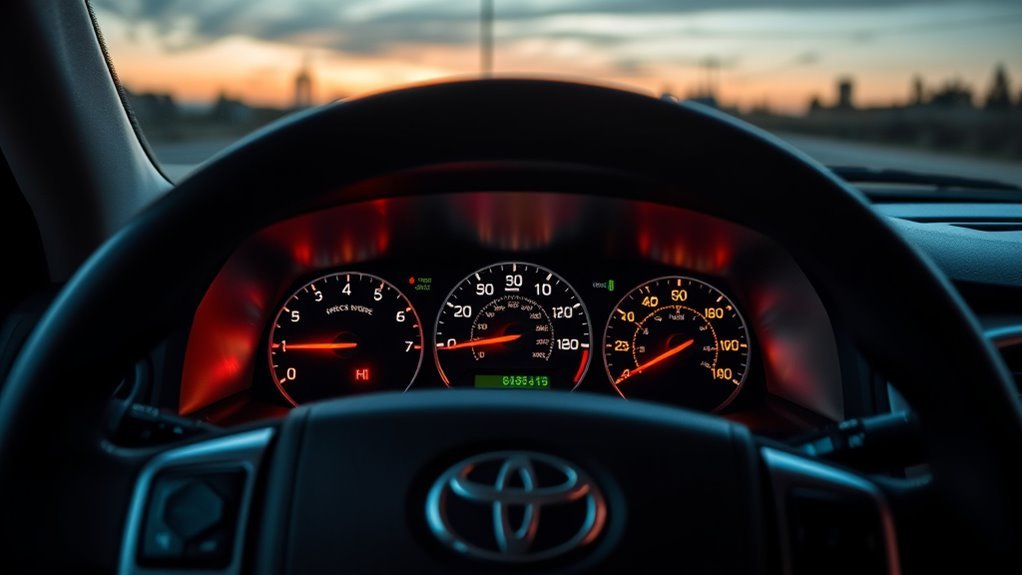
Your Toyota Tundra dashboard warning lights are a quick safety language: the color, icon, and message tell you whether to stop now, drive cautiously, or schedule service. Use this guide to understand the common red and amber lights, what to check first, and when a tow truck or Toyota technician is the safer choice.
Quick Answer
Red Toyota Tundra warning lights usually need immediate attention, especially brake, oil pressure, battery/charging, or overheating warnings. Amber lights, such as TPMS, maintenance reminders, ABS, or check engine, usually mean inspect soon. If a warning flashes, a buzzer sounds, or the truck drives abnormally, pull over safely and get help.
Key Takeaways
- Red or flashing warnings are urgent. Stop in a safe place and do not keep driving with oil pressure, brake, charging, or overheating warnings.
- Amber warnings still matter. They may not require an immediate stop, but they should be checked before a small fault becomes an expensive repair.
- TPMS means verify tire pressure manually. Inflate tires to the pressure shown on the driver-door label, not the number molded into the tire sidewall.
- Maintenance reminders are not fault codes. Toyota recommends scheduled maintenance every 5,000 miles or six months for the 2026 Tundra.
At a Glance
| Time Required | 2–10 minutes for basic checks; same day for urgent diagnosis |
| Difficulty | Easy for tire pressure and fluid-level checks; professional diagnosis for fault codes |
| Tools Needed | Tire-pressure gauge, owner’s manual, OBD-II scanner if available |
| Cost | Free for simple checks; diagnostic fees or repairs vary by fault |
Red Warning Lights That Need Immediate Action
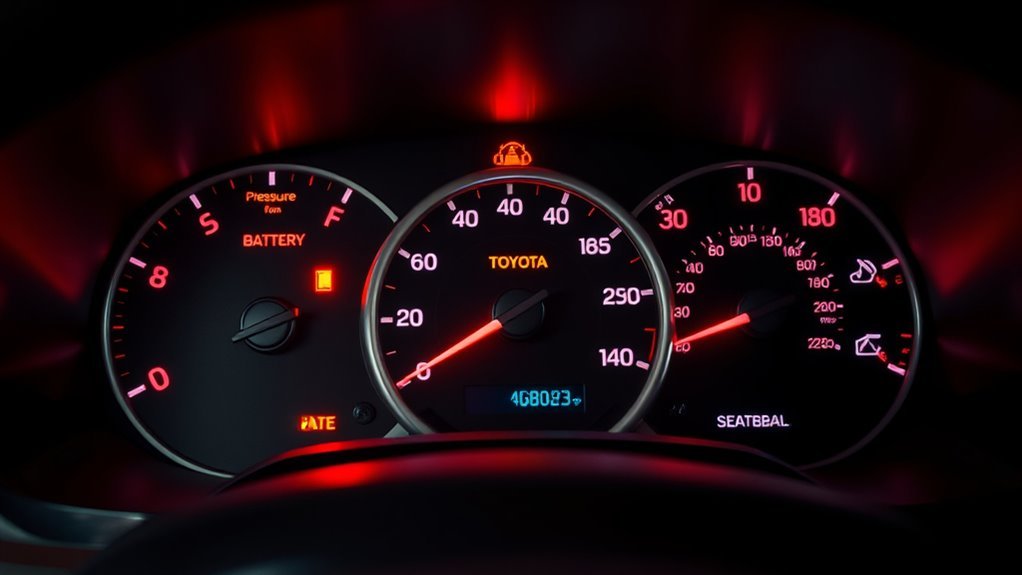
If a red warning light appears, treat it as a safety warning until you know otherwise. Toyota explains that red icons indicate a condition that requires immediate attention, while yellow icons usually indicate an item of importance. You can review Toyota’s general warning-light guidance here: Toyota Owners Warning Lights.
Warning: If the brake system, low oil pressure, charging system, coolant temperature, or a flashing master warning appears, pull over only when it is safe, shift to Park, turn off the engine if instructed, and arrange service or towing. Do not open a hot cooling system or keep driving to “see if it goes away.”
The Brake System Warning Light can point to an engaged parking brake, low brake fluid, or a brake-system malfunction. First, confirm the parking brake is fully released. If the light stays on, stop driving and have the brake system inspected.
The Low Engine Oil Pressure Light is more urgent than a routine oil-change reminder. If it comes on, pull over safely and shut off the engine. Continuing to drive with low oil pressure can damage the engine quickly.
The Battery/Charging System Light means the truck may not be charging properly. Electrical power can drop while driving, so avoid long trips and get the charging system checked right away.
The SRS/Airbag Warning Light means the supplemental restraint system, occupant classification system, or seat belt pretensioner system may not work normally. Wear seat belts and schedule inspection promptly; do not assume airbags will deploy correctly until the fault is repaired.
[Products Worth Considering]

This CARORAV TPMS sensor set provides reliable tire pressure monitoring for a wide range of Toyota and Lexus vehicles with 315MHz compatibility. It is pre-programmed for easier setup, but still requires relearning or reset procedures after installation. Designed for accurate real-time pressure tracking, these sensors help support safer driving and long-lasting performance across many model years.

This GM TPMS relearn tool helps reset tire sensors, clear warning lights, and match tire positions after rotation quickly at home. Designed for Chevrolet, GMC, Cadillac, and Buick vehicles, it offers one-button operation, fast activation, and broad compatibility with many GM models. It is best suited for OE/OEM sensors and includes paper instructions plus video guidance for easier DIY use.

This plug-and-play OBD2 scanner helps drivers quickly read and clear engine error codes while providing live data, freeze frame information, I/M readiness, and MIL status for more confident troubleshooting. It adds a built-in voltage test and clear status indicators to support electrical checks and faster diagnostics, making it a practical choice for home users, car enthusiasts, and repair professionals. Compatible with most OBDII vehicles since 1996 and designed with an easy-to-use interface, it offers broad coverage and simple operation in one compact tool.
Tundra Amber/Yellow Warning Lights: Meanings & When to Service
Amber or yellow dashboard lights usually mean “pay attention soon,” not “ignore it.” They may let you drive cautiously for a short distance, but they still need a real check. Common examples include TPMS, maintenance required, check engine, ABS, cruise-control warnings, and driver-assist system messages.
| Amber/Yellow Light | Likely Meaning | What To Do |
|---|---|---|
| TPMS / tire pressure | One or more tires may be low, or the TPMS system may have a fault. | Check pressure with a gauge and inflate to the driver-door label. If the light blinks first, have the TPMS system inspected. |
| Maintenance Required | Scheduled maintenance is due or near due. | Schedule service. Toyota’s 2026 Tundra maintenance guide recommends service every 5,000 miles or six months, whichever comes first. |
| Check Engine / MIL | The onboard diagnostics system detected a powertrain or emissions-related fault. | If steady and the truck drives normally, diagnose soon. If flashing or the engine runs rough, pull over safely and arrange service. |
| ABS | Anti-lock braking or brake-assist system fault. | Drive cautiously only if braking feels normal and schedule inspection. If the red brake warning is also on, stop safely. |
| Cruise / driver-assist warning | System unavailable, sensor blocked, or a system fault. | Follow the multi-information display message. Clean sensors only if safe, and schedule service if the warning persists. |
[Products Worth Considering]

This TPMS sensor training tool is designed for Ford, Lincoln, and Mercury vehicles with compatible tire pressure sensors, helping activate sensors after tire rotations or sensor replacement. It supports relearning and warning light reset workflows with a simple one-button operation, making tire pressure maintenance easier and faster. Built for reliable use and broad vehicle compatibility, it is a practical accessory for TPMS service and sensor activation.
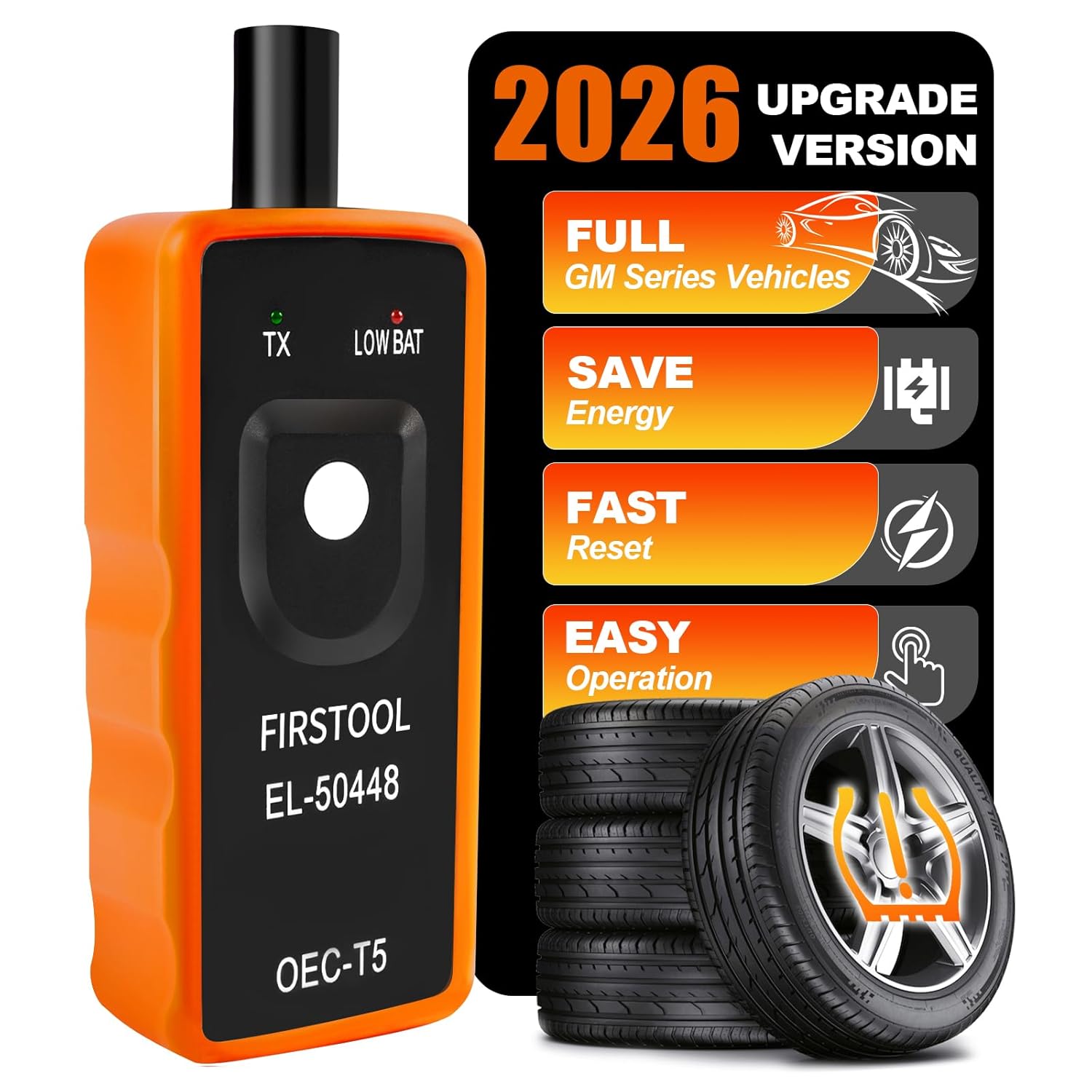
This EL-50448 TPMS relearn tool helps quickly activate and reset tire pressure sensors so your vehicle’s monitoring system stays accurate after tire rotations, sensor replacement, or seasonal tire changes. Designed for many GM-related vehicles and compatible with common 315 and 433 MHz TPMS systems, it offers simple one-button operation and reliable performance for clearing warning lights and relearning sensor positions.

The ANCEL AD410 PRO combines engine diagnostics and 12V battery testing in one easy-to-use tool, helping you read and clear check engine codes while checking battery health, cranking, and charging performance. It also provides live data, freeze frame details, and I/M readiness checks to help you diagnose issues faster and prepare for emissions testing. With plug-and-play operation, a clear screen, and broad vehicle compatibility, it is a practical solution for home mechanics and everyday drivers.
Respond Now: Step-by-Step Actions for the Top 6 Lights
Use this table as a quick triage guide. Your owner’s manual and the message on the multi-information display take priority, especially if your Tundra has hybrid, towing, off-road, or driver-assist features.
| Light | Immediate Action | Next Step |
|---|---|---|
| Check Engine (amber) | If steady, drive gently and avoid towing or hard acceleration. If flashing, pull over safely. | Read diagnostic trouble codes. OBD systems are designed to store codes and alert drivers to detected malfunctions: 40 CFR §86.1806-17. |
| Oil Pressure (red) | Pull over safely and shut off the engine. | Check the oil level only when safe. If the light remains on, tow to a shop. |
| Brake System (red) | Stop in a safe place and confirm the parking brake is released. | If the light stays on, do not continue driving. Check brake fluid only if you can do so safely and call a technician. |
| Battery/Charging (red) | Turn off nonessential electrical loads and avoid continuing a long drive. | Have the battery, alternator, belt, and charging circuit tested. |
| TPMS (horseshoe) | Slow down, avoid sharp steering, and check tires when safe. | Inflate or repair the tire. TPMS rules are meant to warn about significant underinflation and safety risks: 49 CFR §571.138. |
| SRS / Airbag | Drive cautiously only if the truck otherwise operates normally. | Schedule airbag-system inspection soon. Do not rely on the SRS system operating normally until repaired. |
[Products Worth Considering]
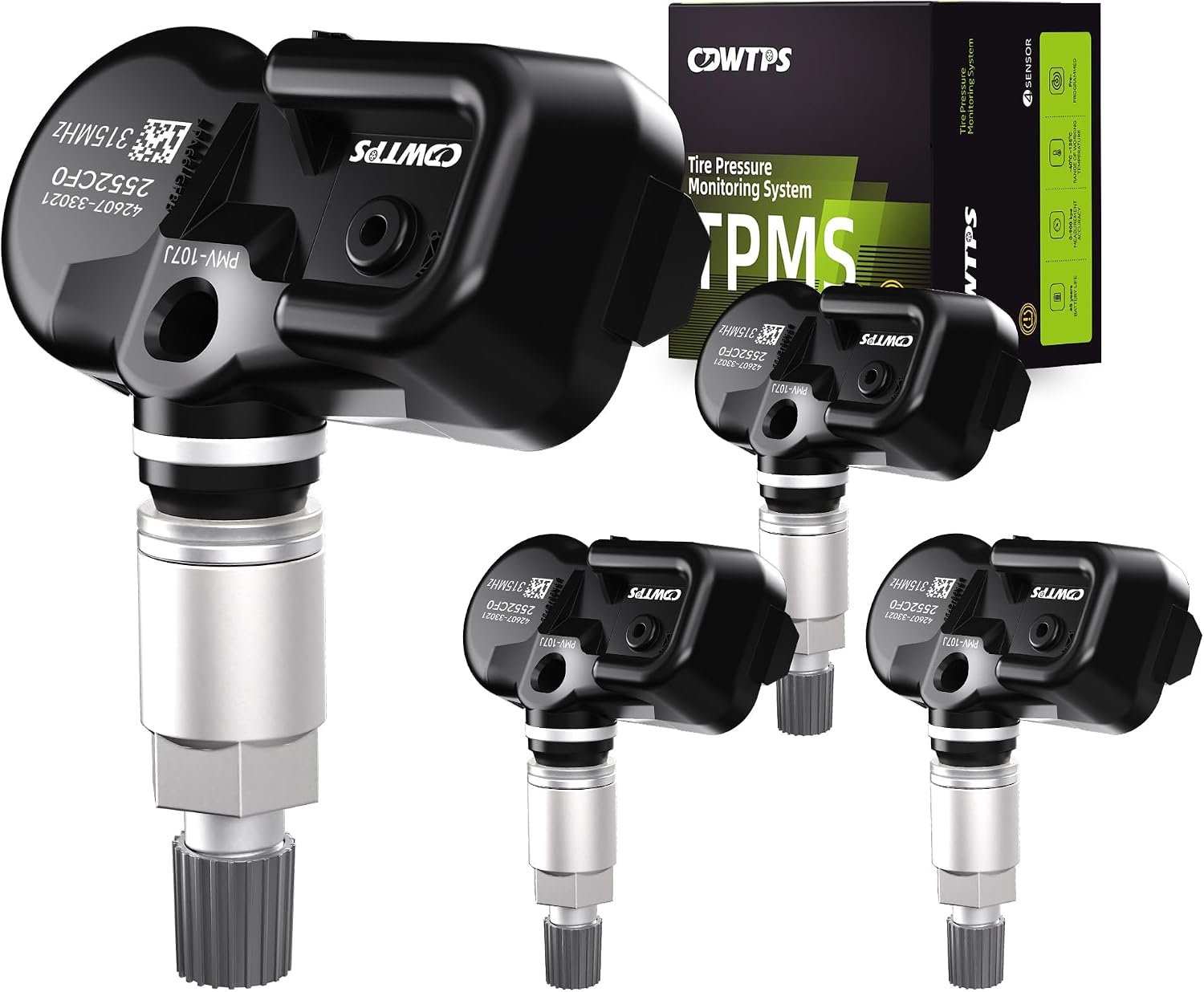
This set of four pre-programmed TPMS sensors is designed as a direct-fit replacement for compatible Toyota, Lexus, and Scion vehicles. It helps restore accurate tire pressure monitoring without sensor programming, and each unit is factory-tested for dependable performance. Built for long service life, these sensors offer a convenient solution for replacing worn or failed tire pressure monitors.

This brake bleeder bottle is designed to make fluid bleeding easier for one-person use with a built-in check valve and magnetic mount. The flexible hose fits most bleeder valves and helps reduce the chance of air entering the system during service. With a practical fluid capacity and universal fit, it is a handy tool for brake maintenance and repair.

The ANCEL BA101 helps diagnose 12V batteries quickly with clear readings for battery health, charge level, voltage, CCA, cranking, and charging system performance. Designed for a wide range of vehicles and battery types, it offers easy-to-read results, reliable clamp connections, and built-in protection to make testing safer and more convenient.
Routine Reminders vs. Fault Codes: Maintenance Required, Check Engine, TPMS
The Maintenance Required, Check Engine, and TPMS indicators can all appear on the dash, but they do not mean the same thing.
- Maintenance Required is a service reminder, not proof that something has failed. Use the mileage and time interval in the Toyota maintenance guide.
- Check Engine means the truck’s computer has detected a fault and stored information a technician or scan tool can use.
- TPMS means the tire-pressure warning system detected low tire pressure or a TPMS system problem.
Pro Tip: Set tire pressure when the tires are cold and use the pressure label on the driver’s door jamb. The pressure molded into the tire sidewall is the tire’s maximum rating, not the Tundra’s recommended inflation pressure.
Proper tire pressure matters for safety, tire life, and fuel economy. FuelEconomy.gov says underinflated tires can lower gas mileage by about 0.2% for every 1 psi drop in the average pressure of all tires, and proper inflation can improve gas mileage by 0.6% on average and up to 3% in some cases: FuelEconomy.gov maintenance tips.
How Technicians Diagnose Tundra Warning Lights (What to Expect)
A warning light is a starting point, not the final diagnosis. When you bring a Tundra in, a technician usually connects a scan tool to read stored diagnostic trouble codes, freeze-frame data, and live sensor readings. That helps narrow the system involved, but it does not replace inspection.
Expect targeted checks such as fluid-level inspection, battery and charging-system testing, brake-system inspection, tire-pressure verification, and wiring or connector checks. A technician may also compare results with Toyota service information and the vehicle’s multi-information display message.
After diagnosis, ask for the code numbers, the test results, and the reason for the recommended repair. That helps you understand whether the repair is urgent, preventive, or simply scheduled maintenance.
Preventing Warning Lights: Easy Checks to Avoid Surprises
A few simple habits reduce surprise dashboard alerts and help you catch small problems early.
- Check tire pressure monthly and after big temperature changes.
- Check engine oil level on the dipstick as described in the owner’s manual.
- Look for fluid leaks under the truck after parking overnight.
- Watch battery health if starts become slow or electronics behave strangely.
- Do scheduled maintenance on time using Toyota’s 5,000-mile/six-month interval as your baseline.
- Do not ignore recurring lights that turn off and return. Intermittent faults can still leave stored codes.
Quick Reference: Icons, Colors, and What They Signal
Use color first, then the icon, then the message on the display.
| Color / Pattern | What It Usually Means | Best Response |
|---|---|---|
| Red | Immediate attention, safety issue, or critical system warning. | Stop safely, read the display message, and get help if the warning remains. |
| Amber / Yellow | Important system notice, maintenance reminder, or fault that needs diagnosis. | Drive cautiously if the truck feels normal, then diagnose soon. |
| Flashing light or buzzer | More urgent condition or active system warning. | Reduce speed, avoid heavy load, follow the display message, and pull over if needed. |
| Green / blue / white indicators | Usually shows a feature is on, such as high beams, cruise, or drive mode. | Confirm the feature is intended; no repair is usually needed unless a warning message appears. |
Frequently Asked Questions
Can a dashboard light reset itself after a repair?
Yes. Some lights turn off after the system sees normal readings again. Others need a scan tool, a completed drive cycle, or a manual reset. Do not clear a warning light just to hide it; confirm the cause is repaired first.
Do aftermarket parts affect warning light behavior?
They can. Quality aftermarket parts can work properly, but incompatible sensors, poor wiring, incorrect calibration, or low-quality components may trigger warning lights or make diagnosis harder. Use parts that match the vehicle specification.
Will extreme temperatures cause false warnings?
Temperature changes can affect tire pressure and battery performance, so they may trigger warnings that seem sudden. Do not assume the warning is false. Check tire pressure, battery condition, and the display message before continuing.
Is towing a Tundra with a warning light safe?
It depends on the light. Do not tow with active brake, oil pressure, charging, overheating, transmission, or trailer-brake warnings until the fault is identified. Towing adds load, heat, and braking demand, so diagnose the warning first.
Can software updates fix recurring warning lights?
Sometimes, but only when Toyota or a technician confirms the cause is software or calibration related. Many recurring lights are caused by sensors, wiring, low voltage, leaks, worn parts, or system faults that need physical repair.
Can I drive with the check engine light on?
If the light is steady and the truck drives normally, you can usually drive cautiously to a safe place or repair shop. If it flashes, the engine runs rough, power drops, or other warnings appear, pull over safely and arrange service.
What should I do if the TPMS light stays on after adding air?
Recheck all tires when cold, including the spare if your model monitors it. Drive for several minutes if the manual says the system needs time to update. If the light blinks first or keeps returning, have the tire and TPMS sensors inspected.
Conclusion
Your Tundra’s dashboard lights are easiest to handle when you sort them by urgency. Red warnings, flashing lights, buzzers, and abnormal driving behavior call for immediate caution. Amber lights still deserve prompt attention, but many can be diagnosed after you reach a safe place. Keep up with tire pressure, fluid checks, battery health, and Toyota’s scheduled maintenance interval, and you’ll prevent many alerts before they interrupt your drive.
Sources
- Toyota Owners — Dashboard Warning Lights Explained — supports color meaning and safety-system warning guidance.
- Toyota Owners — 2026 Tundra Manuals and Warranties — official Toyota manual source for model-year-specific owner information.
- Toyota 2026 Tundra Warranty & Maintenance Guide — supports 5,000-mile/six-month scheduled maintenance interval.
- 49 CFR §571.138 — Tire Pressure Monitoring Systems — supports TPMS purpose and underinflation safety context.
- 40 CFR §86.1806-17 — Onboard Diagnostics — supports OBD fault detection, stored codes, and driver alerting.
- FuelEconomy.gov — Keeping Your Vehicle in Shape — supports tire-pressure fuel-economy claims.