For a conventional bumper-pull trailer, tongue weight and hitch weight usually mean the same thing: the downward vertical load the loaded trailer places on the hitch ball. The biggest source of confusion is dry hitch weight, which is an unloaded brochure specification rather than your real loaded tongue weight. Hitch hardware such as a ball mount or weight-distribution hitch is a separate load that also uses tow-vehicle payload. For safe towing, measure the loaded trailer, compare the result with every applicable rating and GVWR and GCWR limit, then adjust cargo until the trailer is stable and within limits.
By: [VERIFY: add the real author name and towing qualifications] · Last updated: August 31, 2026
Quick Answer
For most conventional bumper-pull trailers, hitch weight and tongue weight are two names for the same vertical load at the coupler and hitch ball. Do not confuse that measured loaded value with a brochure’s dry hitch weight or with the separate weight of hitch hardware. A common conventional-trailer starting range is about 10–15% of actual loaded trailer weight, but the instructions and ratings for your tow vehicle, trailer, receiver, hitch and coupler always control.
Key Takeaways
- Tongue weight is the loaded bumper-pull trailer’s downward force at the coupler or hitch ball.
- Hitch weight commonly means the same vertical load for a conventional trailer, while dry hitch weight is usually an unloaded manufacturer specification.
- A common bumper-pull guideline is 10–15% of actual loaded trailer weight, but a vehicle, trailer or component manufacturer may specify a different range.
- Hitch hardware adds separate weight to the tow vehicle and must be included when checking payload and axle limits.
- Too little tongue weight can contribute to sway; too much can overload the tow vehicle, rear axle, receiver or hitch equipment.
At a Glance
| Time Required | 10–30 minutes once the trailer is loaded |
| Difficulty | Easy to moderate |
| Tools Needed | Tongue weight scale, public truck scale, or bathroom-scale setup for suitable small trailers; wheel chocks; tape measure; owner’s manuals |
| Cost | Varies by facility or by the type of tongue-weight scale you use; check current fees before you go |
Tongue Weight vs Hitch Weight at a Glance
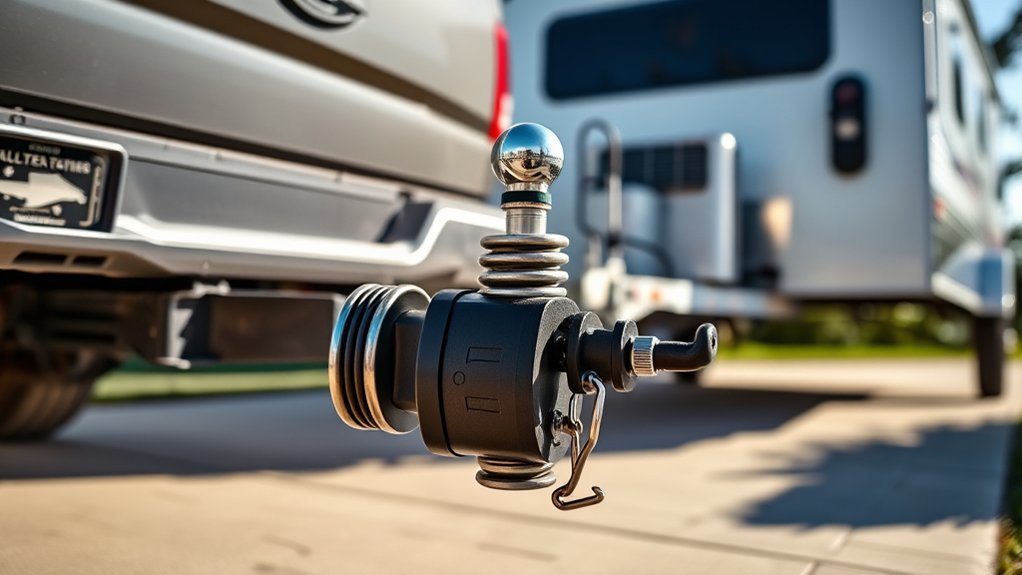
For a conventional bumper-pull trailer, tongue weight and hitch weight normally describe the same physical load: the downward vertical force transferred from the trailer coupler to the hitch ball. The terminology becomes confusing when an RV brochure lists dry hitch weight, because that number describes an unloaded factory condition and may be very different from the trailer’s real loaded tongue weight on a trip.
| Term | What it usually means | Why it matters |
|---|---|---|
| Tongue weight | Downward vertical force from a conventional trailer coupler at the hitch ball. | Affects trailer stability and the load carried by the tow vehicle. |
| Hitch weight | Commonly another name for tongue weight on a conventional trailer; on an RV spec sheet it may refer to a published dry hitch-weight figure. | The context tells you whether you are looking at an actual loaded measurement or only a brochure specification. |
| Pin weight / kingpin weight | Downward load from a fifth-wheel kingpin or gooseneck connection carried in the truck-bed area. | Uses different manufacturer guidance and can consume a large share of truck payload. |
| Dry hitch weight | Published hitch/tongue load for the trailer in the manufacturer’s specified unloaded condition. | Useful for comparison shopping, but not a substitute for measuring the trailer as actually loaded for travel. |
Note: The weight of a ball mount, weight-distribution hitch, sway-control hardware or other equipment is not automatically part of the trailer’s tongue-weight definition. It is separate physical weight carried by the tow vehicle and must still be counted when you check payload and axle limits.
Three Hitch-Weight Numbers People Commonly Confuse
Before doing any towing math, identify which number you actually have. Three different numbers are often discussed as though they were interchangeable:
| Number | Where it comes from | How to use it |
|---|---|---|
| Published dry hitch weight | Trailer brochure or manufacturer specification | Use for early comparison only. Do not treat it as your final trip load. |
| Actual loaded tongue / hitch weight | Measured with the trailer packed as it will travel | Use for tongue-weight percentage, receiver checks and real towing decisions. |
| Hitch-hardware weight | Ball mount, weight-distribution hitch, sway-control parts and related equipment | Add separately when calculating how much tow-vehicle payload is being used. |
Loading position matters as much as total cargo weight. Moving the same item forward or rearward changes the trailer’s center of gravity and therefore the load at the coupler, even if the trailer’s total weight barely changes.
What Is Tongue Weight and Why Does It Matter?
Tongue weight is the downward vertical force a conventional trailer coupler applies at the hitch ball when the trailer is loaded for travel. Chevrolet’s 2026 trailering guidance uses 10–15% of actual loaded trailer weight for conventional trailering. Treat that as a common guideline rather than a universal specification because your exact tow vehicle, trailer or hitch instructions may require a different range.
If tongue weight is too low, the trailer may become more prone to sway or fishtailing. If tongue weight is too high, the rear of the tow vehicle can sag, front-axle loading can decrease, steering can feel less secure, headlights may aim upward, and the vehicle, rear axle, tires, receiver or hitch equipment can be overloaded. An acceptable percentage never overrides a lower component or vehicle rating.
For a 5,000 lb loaded conventional trailer, 10–15% equals 500–750 lb of tongue weight. That calculation is a planning range, not proof that your tow vehicle is rated to carry it.
Is Hitch Weight the Same as Tongue Weight?
For most conventional bumper-pull trailers, yes: hitch weight and tongue weight are commonly used for the same downward trailer load at the coupler and hitch ball. The distinction that matters in practice is whether the number is a dry brochure specification or the actual loaded measurement.
A trailer listed with a 500 lb dry hitch weight may have a substantially different hitch load after batteries, propane, water, tools, food, bikes, accessories and other cargo are added. Cargo position also matters. That is why you should measure the trailer in its real traveling condition instead of approving a combination from the dry specification alone.
Your tow vehicle must also carry the physical weight of hitch equipment. A ball mount, weight-distribution hitch and related hardware use part of the vehicle’s carrying capacity even though they are not the trailer’s tongue weight. Chevrolet’s current trailering guidance states that trailer tongue weight contributes to the loaded vehicle weight used when checking GVWR, and the complete combination must also remain within axle and combined-weight ratings.
Warning: Never use a tongue-weight percentage alone to approve a towing setup. The combination must satisfy every applicable limit for the tow vehicle, payload, front and rear axles, tires, receiver, hitch ball, ball mount, weight-distribution hitch, coupler, trailer and GCWR. The lowest applicable rating or more restrictive manufacturer instruction controls.
Which Ratings Should You Check Before Measuring?
Before measuring tongue weight or hitch weight, collect the numbers that define the safe operating range. Depending on the vehicle and trailer, you can find them on the driver-door labels, owner’s manual, receiver label, hitch equipment, trailer certification plate and trailer manual.
- Trailer GVWR: maximum permitted loaded trailer weight.
- Actual loaded trailer weight: what the trailer really weighs with cargo, fluids, accessories and travel gear.
- Tow vehicle payload: the vehicle’s available carrying capacity for occupants, cargo, added equipment, hitch hardware and trailer load carried by the vehicle.
- Front and rear GAWR: maximum permitted load on each tow-vehicle axle.
- Receiver tongue-weight rating: maximum vertical load permitted by the receiver, sometimes with different weight-carrying and weight-distributing limits.
- Ball mount, hitch ball and coupler ratings: each part must be suitable for the actual load and configuration.
- GVWR: maximum permitted loaded weight of the tow vehicle itself.
- GCWR: maximum permitted combined loaded weight of the tow vehicle and trailer.
For planning, use both of these formulas:
Payload used by the towing setup = actual tongue or pin weight + hitch hardware + occupants + vehicle cargo + applicable added accessories.
Remaining payload = door-label payload allowance − actual tongue or pin weight − hitch hardware − occupants − vehicle cargo − applicable added accessories.
A positive remaining-payload result is only one test. You still need to verify actual vehicle weight, axle loads, tire limits, receiver limits, trailer weight and combined weight. If the numbers do not fit, do not try to solve the problem by simply loading the back of the trailer heavily. Reduce cargo, redistribute it only within the trailer maker’s instructions, choose a lighter trailer or use a properly rated tow vehicle.
What Tongue-Weight Percentage Should a Trailer Have?
There is no single percentage that safely applies to every vehicle, hitch and trailer. For conventional bumper-pull trailers, 10–15% of actual loaded trailer weight is a common guideline. Manufacturer instructions come first, and some vehicles or trailer designs specify a narrower or different range.
| Trailer type | Example guidance | Important caveat |
|---|---|---|
| Conventional bumper-pull / travel trailer | Often about 10–15% of actual loaded trailer weight | Use the range in the exact tow-vehicle and trailer instructions when it differs. |
| Fifth-wheel | Chevrolet lists 15–25% of loaded trailer weight in its current general trailering guidance | Other manufacturers or component makers may publish a different percentage or use GVWR instead of actual loaded weight as the denominator. |
| Gooseneck | Manufacturer-specific | Chevrolet and Lippert publish different examples and use different rating contexts, so follow the exact truck, trailer and coupler instructions. |
| Boat trailer | Manufacturer-specific | Engine position, hull layout, axle position and trailer design can change the recommended tongue load. |
Chevrolet’s current trailering guide states that conventional tongue weight should generally be 10–15% of loaded trailer weight and gooseneck/fifth-wheel load 15–25%. Lippert’s component document uses different hitch-load percentages based on trailer GVWR, including 9–15% for its coupler example, 15–20% for a pin box and 10–15% for its gooseneck example.
Important: Do not compare two percentage ranges until you check the denominator. One source may calculate against actual loaded trailer weight, while another component rating may use trailer GVWR. Those numbers are not automatically interchangeable.
How Do You Measure Trailer Tongue Weight?
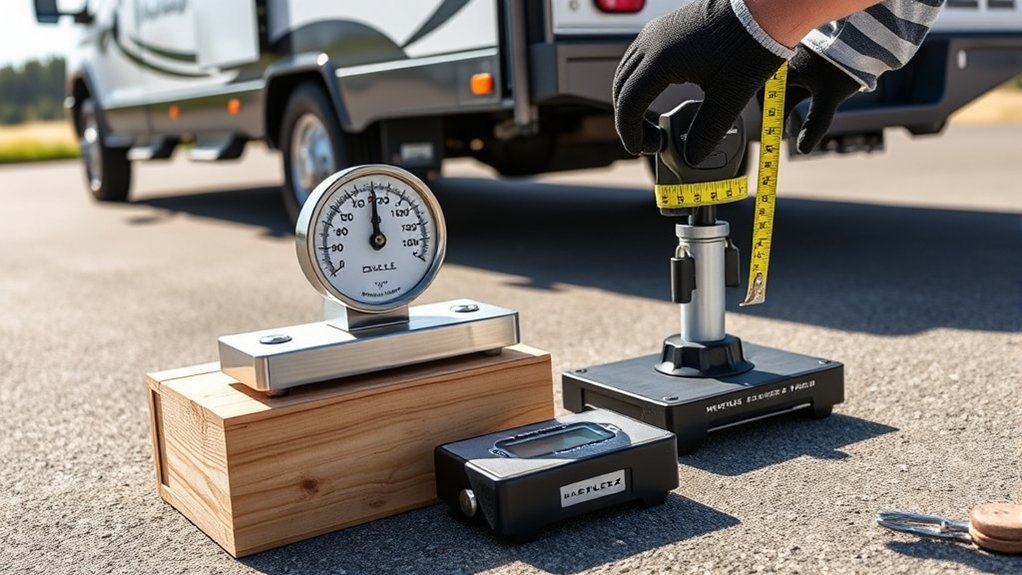
Measure tongue weight with the trailer packed exactly as it will travel. Include the fluids, batteries, propane, accessories, food, tools and cargo you intend to carry. Work on firm level ground, chock the trailer wheels, use the trailer’s normal towing attitude, and keep hands and feet clear of the coupler, jack and other pinch points.
[Products Worth Considering]

This trailer tongue hitch coupler lock helps secure latch-type couplers and deter theft with a padlock-style design. Its high-strength construction, corrosion-resistant finish, and simple locking action make it a practical choice for trailer owners who want dependable protection and easy everyday use. Two keys are included for added convenience.
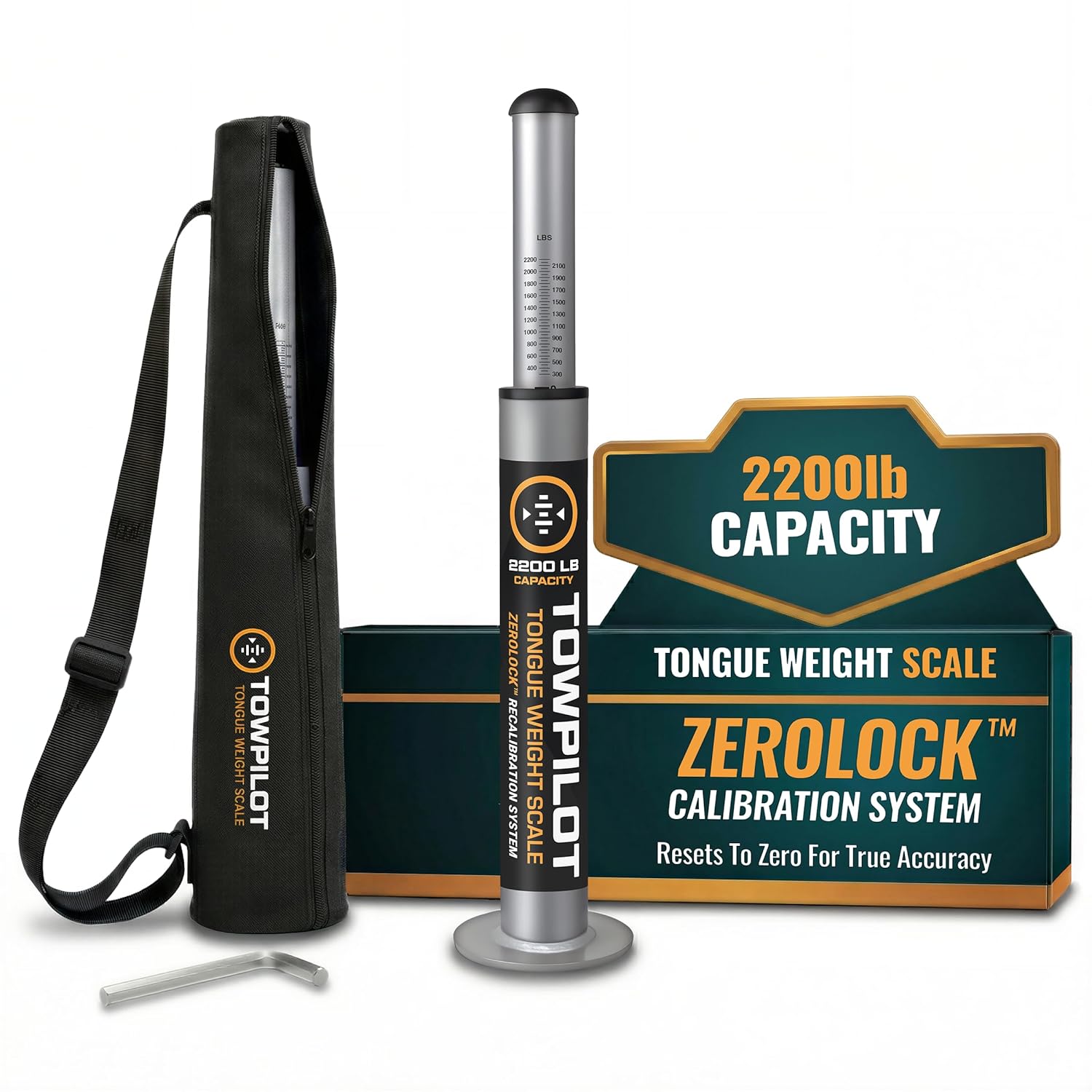
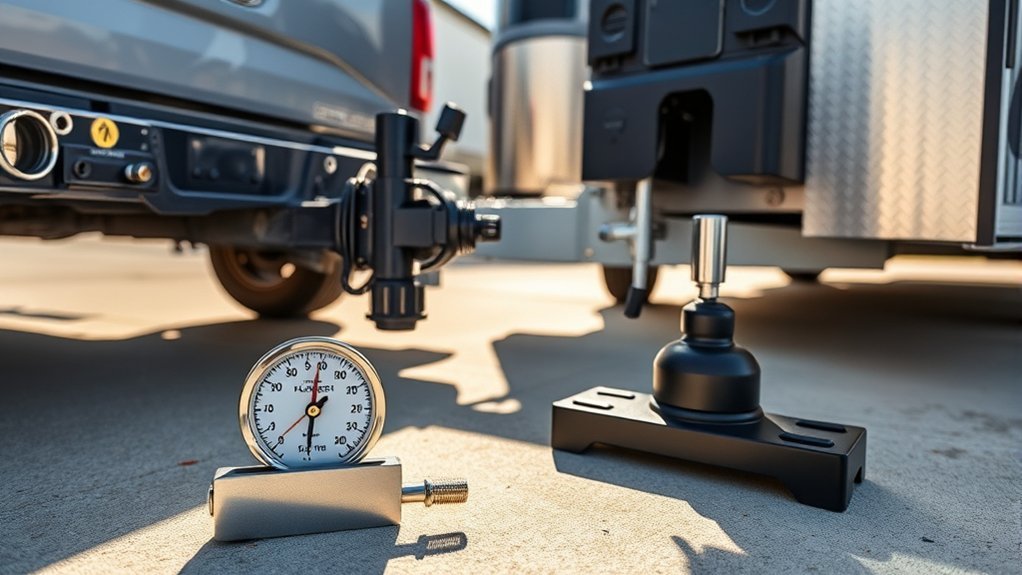
This trailer tongue weight scale helps you check hitch weight quickly and accurately before towing, reducing sway and improving overall safety. Built with durable steel and a spring mechanism, it works without batteries and includes a recalibration feature to maintain true-zero accuracy over time. It is designed for RVs, campers, and utility trailers, with a top plate that helps protect your coupler during use.

This Andersen Hitches weight distribution hitch kit is designed to improve towing stability with a grease-free friction cone and tension chain system that helps reduce sway and bounce. It features a universal setup with a 2-inch ball and 4-inch drop/rise to suit many bumper-pull trailer applications, while making hitching and unhitching faster and easier than traditional spring bar systems. Built in the USA, it offers dependable performance for travelers, workers, and outdoor enthusiasts who need confident towing control.
Method 1: Dedicated Tongue Weight Scale
- Load the trailer for travel, including fluids, cargo, batteries, propane and accessories.
- Park on level ground and chock the trailer wheels.
- Position the rated tongue-weight scale where its manufacturer instructs, usually under the coupler or another approved support point.
- Set the coupler at the normal towing height specified for the setup.
- Lower the trailer until the intended tongue load rests on the scale.
- Record the reading and calculate the percentage against actual loaded trailer weight.
- Compare the result with the trailer, tow vehicle and hitch instructions and ratings.
- Adjust cargo if needed and measure again.
Method 2: Bathroom Scale for Small Trailers
A bathroom scale can be suitable for a light trailer only when the expected load and setup remain within the scale and supporting materials’ capacities. For a direct reading, support the coupler at normal towing height over the scale. For a heavier tongue load, published DIY methods use a strong beam, supports and a known lever ratio so only a fraction of the tongue load reaches the bathroom scale.
The dimensions and math must be exact. eTrailer describes direct bathroom-scale and lever-assisted tongue-weight methods. Do not improvise a lever arrangement if the materials, scale capacity or geometry are uncertain.
Method 3: Public Truck Scale
A public truck scale is especially useful because it can show tow-vehicle axle loads, trailer-axle load and gross combination weight. CAT Scale’s current instructions say a truck-and-trailer combination should normally place the steer axle on platform 1, the drive or rear axle on platform 2 and the trailer axle group on platform 3. See CAT Scale’s positioning instructions before arriving.
For useful comparison passes, keep the tow vehicle’s passengers, cargo and other removable load conditions the same:
- Truck-only pass: weigh the loaded tow vehicle without the trailer and record front/steer and rear/drive axle weights.
- Hitched pass: weigh the complete loaded combination and record the front/steer, rear/drive and trailer-axle weights.
- For raw tongue-load analysis: if your hitch instructions permit the required configuration, a comparison with weight-distribution tension disengaged can help separate the trailer’s raw load on the tow vehicle from the axle redistribution created by the WDH.
- WDH verification pass: after the weight-distribution hitch is adjusted exactly as the vehicle and hitch manufacturers require, reweigh and check the resulting front axle, rear axle, trailer axle and total combination against their limits.
Do not disconnect a trailer on a commercial scale unless the facility allows it. Also remember that once a weight-distribution hitch is tensioned, the change in tow-vehicle axle totals is not a simple substitute for the trailer’s original static tongue-weight measurement because some load has been redistributed among the axles.
Pro Tip: A dedicated tongue-weight scale is usually the simplest tool for checking the trailer’s loaded coupler force. A public scale adds the information a tongue scale cannot give you: actual tow-vehicle axle loads, trailer-axle load and gross combination weight. Frequent towers can benefit from using both.
How Do You Calculate Tongue Weight and Payload?
Use actual loaded trailer weight rather than dry brochure weight for final tongue-weight calculations.
| Calculation | Formula | Example |
|---|---|---|
| Tongue weight percentage | Tongue weight ÷ loaded trailer weight × 100 | 650 ÷ 5,000 × 100 = 13% |
| 10% planning figure | Loaded trailer weight × 0.10 | 5,000 × 0.10 = 500 lb |
| 15% planning figure | Loaded trailer weight × 0.15 | 5,000 × 0.15 = 750 lb |
| Tongue + hitch hardware | Actual tongue weight + hitch hardware | 650 lb tongue + 90 lb hitch = 740 lb before people and other cargo |
| Remaining payload | Payload allowance − people − cargo − accessories − hitch hardware − tongue/pin weight | Use the actual numbers from your own tow vehicle and loaded setup |
For a 10,000 lb loaded conventional trailer, 10–15% equals 1,000–1,500 lb. That may be an appropriate planning band for a trailer whose manufacturer uses that guidance, but it is safe only if the tow vehicle, receiver, hitch components, tires, payload, axle ratings and combined-weight rating all permit the actual load.
How Do You Adjust Trailer Load Distribution?
If measured tongue weight falls outside the range specified for your setup, adjust the cargo before driving. Move weight in small steps, keep dense items low and near the trailer centerline, secure every item, and re-measure after a meaningful change. For a more detailed SUV-focused process, see the trailer tongue-weight adjustment guide.
- If tongue weight is too light: move appropriate cargo forward in small increments, reduce unapproved rear-mounted load, and check whether rear tanks or cargo are unloading the tongue.
- If tongue weight is too heavy: reduce unnecessary front cargo or move an appropriate amount rearward toward the axle area without making the trailer rear-heavy; then re-measure.
- If side-to-side balance is uneven: redistribute cargo so left and right tire loads are as balanced as the trailer manufacturer requires.
- If cargo can move: use suitable tie-downs, straps, bins and restraints so the load cannot shift during braking, acceleration or cornering.
U-Haul recommends a 60/40 loading starting point for its conventional cargo-trailer guidance, with about 60% of cargo weight in the front half and 40% in the rear half. Use that only as a loading starting point. The actual tongue-weight measurement and the instructions for your trailer and tow vehicle still control.
Note: A weight-distribution hitch does not make the trailer’s static tongue load disappear and does not increase towing capacity, GVWR, GAWR, GCWR, payload or component ratings. It redistributes part of the applied load among the tow vehicle’s front and rear axles and the trailer axles. For the distinction between load distribution and sway control, see the weight-distribution hitch vs sway-control guide.
Tongue & Hitch Weight Troubleshooting Checklist
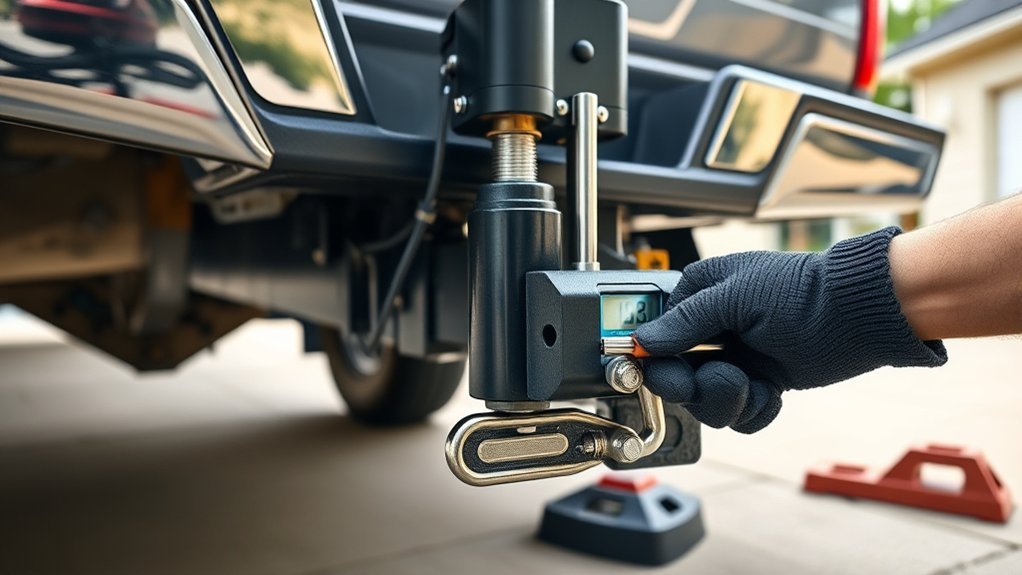
Run this checklist before a trip whenever you change cargo, water level, propane, bikes, generators, tools, accessories or hitch equipment.
| Problem | Possible cause | What to check |
|---|---|---|
| Trailer sways or fishtails | Tongue weight too light, cargo too far rearward, tire problem, excessive speed, wind or a mechanical issue | Reduce speed safely, stop in a safe location, inspect the rig, verify tires and re-measure the loaded trailer balance. |
| Rear of tow vehicle sags | High hitch load, excess vehicle cargo, overloaded axle/vehicle or an incorrectly configured towing setup | Check actual vehicle and axle weights, payload, tongue weight and hitch instructions before continuing. |
| Steering feels light | Rearward hitch leverage has reduced front-axle loading | Recheck front and rear axle weights and adjust the load or WDH only according to the vehicle and hitch manuals. |
| Receiver or hitch part exceeds its rating | Actual load exceeds a component limit | Do not tow in that condition. Reduce the load or use properly rated compatible equipment without exceeding vehicle limits. |
| Tongue weight changes after loading | Water, fuel, tools, coolers, bikes or other cargo changed total weight or center of gravity | Re-measure after meaningful loading changes. |
Warning: If trailer sway begins on the road, avoid abrupt steering corrections. Reduce speed in a controlled way, stop when it is safe, and inspect the towing combination before continuing. Do not assume sway control can compensate for an incorrectly loaded or overloaded trailer.
[Products Worth Considering]
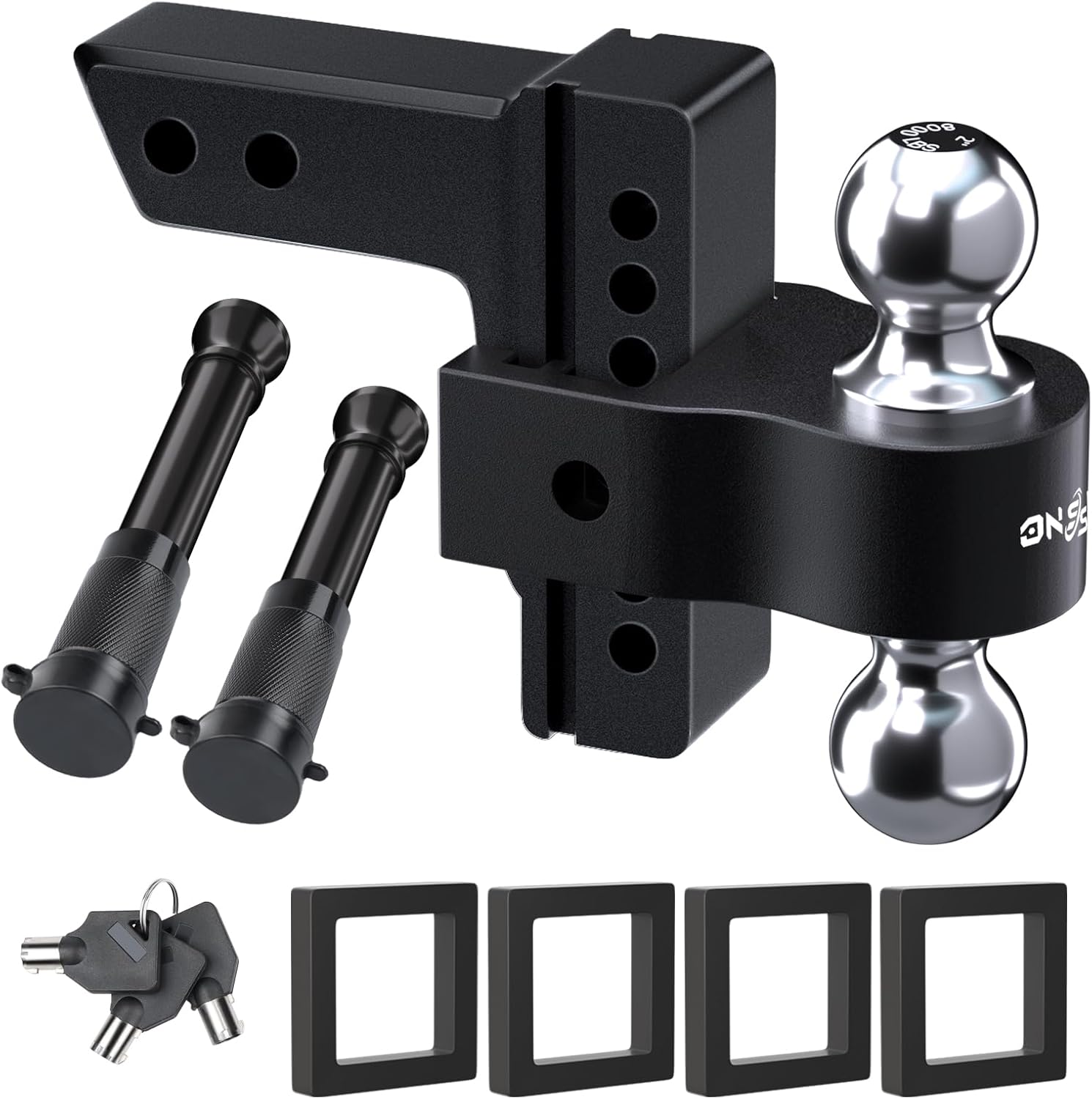
This adjustable trailer hitch is designed for 2-inch receivers and offers flexible towing with a 6-inch drop and rise range. Dual ball sizes help support different trailer setups, while the high-strength aluminum construction is built for dependable performance on tough jobs. Included hitch locks and silencers add security and help reduce noise for a smoother towing experience.
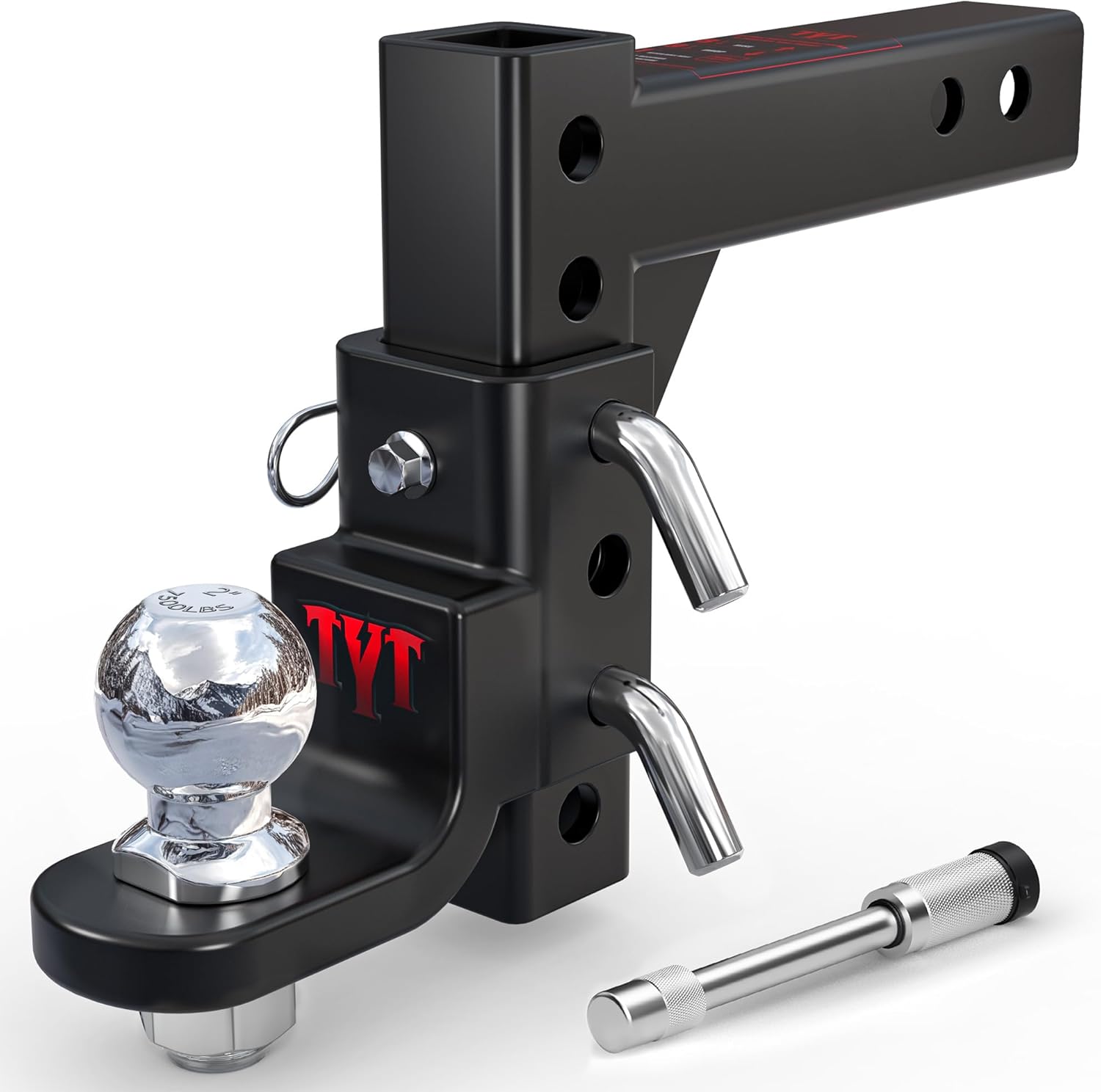
This adjustable trailer hitch ball mount is built for dependable towing with a standard 2-inch receiver and a high-capacity design suited for trucks, campers, boats, and utility trailers. Its adjustable rise and drop settings help you achieve a level tow, while the anti-rattle design supports a smoother, quieter ride. Complete with pins, clips, and a premium pin lock, it offers an easy installation and secure connection for everyday hauling needs.

The CURT 17200 Trailer Sway Control Kit helps limit lateral trailer movement to improve towing stability and control. It is designed to work with most weight distribution hitches or a sway tab mount, and includes a weld-on tab, spacer plate, and adjustable hardware for flexible installation. Built for smoother, straighter towing, it helps reduce sway and makes towing more confident on the road.
Pre-Trip Tongue and Hitch Weight Checklist
- Load the trailer exactly as it will travel.
- Measure actual tongue weight or pin weight.
- Calculate tongue-weight percentage using the correct denominator.
- Check tow-vehicle payload, GVWR and front/rear GAWR.
- Check receiver, ball mount, hitch ball, coupler and weight-distribution-hitch ratings.
- Confirm trailer GVWR and actual loaded trailer weight.
- Confirm GCWR with the loaded combination when applicable.
- Set the trailer at the towing attitude required by the vehicle, trailer and hitch instructions.
- Secure all cargo so it cannot shift.
- Check tow-vehicle and trailer tire pressures against the applicable labels/manuals.
- Verify lights, brakes, breakaway equipment, safety chains and hitch attachment before departure.
- Take a controlled test drive and stop if sway, excessive sag, unusual steering or braking problems appear.
[Products Worth Considering]

These replacement support brackets are designed to secure the spring bars on a trailer frame for CURT TruTrack weight distribution hitches. Their adjustable mounting holes help achieve precise leveling while the rigid construction supports integrated sway control for a steadier towing experience. A durable powder coat finish adds long-lasting protection, and the package includes two replacement brackets.
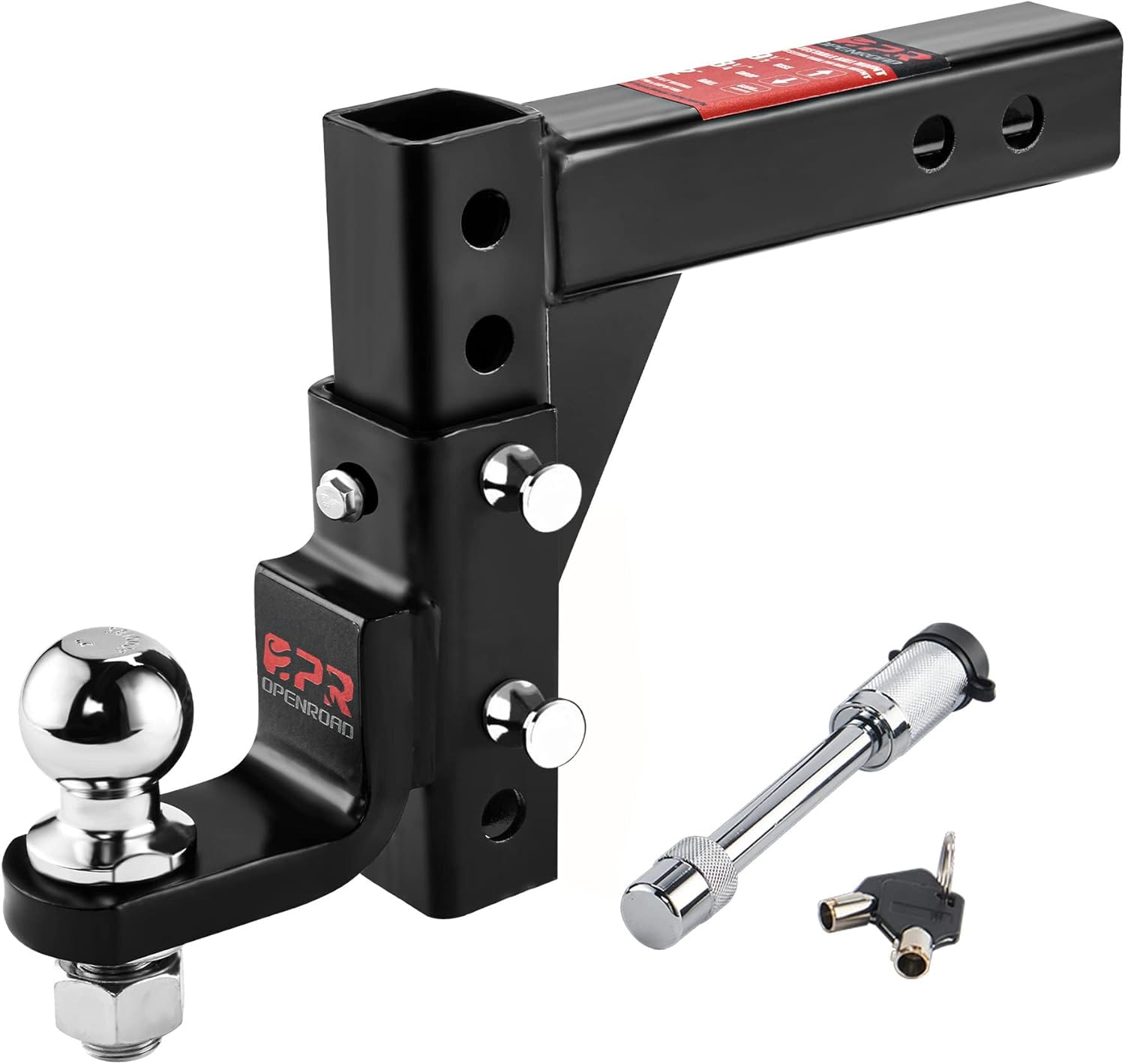
This adjustable trailer hitch ball mount is built for dependable towing with a strong steel construction and a versatile fit for 2-inch receivers. Its adjustable drop and rise settings help you dial in the right towing height, while the lock and keyed anti-theft design add security. A black powder-coated finish helps resist rust and wear for lasting performance on trucks and other towing setups.

This adjustable tri-ball trailer hitch gives you flexible towing support with three hitch ball sizes and a 4.5-inch rise and drop for level hauling across different vehicles and trailers. Built for durability and convenience, it includes a tow hook, D-ring shackle, and a secure locking system for dependable towing, recovery, and off-road versatility.
Frequently Asked Questions
Is tongue weight and hitch weight the same thing?
Usually, yes, for a conventional bumper-pull trailer. Both terms commonly describe the downward vertical load the trailer applies at the coupler and hitch ball. The main exception is wording such as “dry hitch weight,” which is a manufacturer’s unloaded specification rather than your actual loaded tongue weight.
How much tongue weight is a 5,000 lb trailer?
If your conventional trailer and tow-vehicle instructions use a 10–15% range, a 5,000 lb loaded trailer would have a planning range of 500–750 lb. That does not prove the setup is safe; the actual load must also fit the vehicle, axle, tire, receiver, hitch, coupler and payload limits.
What does 200 lb tongue weight mean?
A 200 lb tongue weight means the trailer is applying about 200 lb of downward vertical load at the coupler/hitch connection in the measured condition. Whether that is appropriate depends on the trailer’s actual loaded weight and the manufacturer’s specified range. For example, 200 lb is 10% of 2,000 lb but only 4% of 5,000 lb.
What is the tongue weight of a 10,000 lb trailer?
If a conventional trailer’s approved guidance is 10–15%, a 10,000 lb loaded trailer would correspond to 1,000–1,500 lb. A tow vehicle must have enough payload, axle, tire, receiver and hitch capacity for the actual load; the percentage alone does not approve the combination.
Does tongue weight count against payload?
The load the trailer places on the tow vehicle uses part of the vehicle’s carrying capacity. Hitch hardware, occupants, cargo and added accessories also add vehicle weight. Check the door-label payload allowance, GVWR and axle ratings with the real loaded setup instead of relying on tow rating alone.
What is the difference between dry hitch weight and loaded tongue weight?
Dry hitch weight is a manufacturer specification for the trailer in its stated unloaded condition. Loaded tongue weight is the real downward load after the trailer is packed for travel. Batteries, propane, water, accessories, cargo and where those items are positioned can make the loaded value significantly different from the dry figure.
Does a weight-distribution hitch reduce tongue weight?
A weight-distribution hitch does not make the trailer’s static tongue load disappear or increase any official vehicle or component rating. When tensioned, it redistributes part of the load among the tow vehicle’s front and rear axles and the trailer axles. Follow the vehicle and hitch manufacturers’ setup procedure and verify the resulting axle loads.
How often should I measure tongue weight?
Measure when you first set up a trailer, change tow vehicles or hitch equipment, add major accessories, carry a substantially different load, fill or empty important tanks, or notice sway, sag or steering changes. Recheck before a long trip when the loading arrangement has changed.
Conclusion
For a conventional bumper-pull trailer, tongue weight and hitch weight usually describe the same downward trailer load at the coupler and hitch ball. The numbers you should not confuse with that measurement are a brochure’s dry hitch weight and the separate physical weight of your hitch hardware. Load the trailer exactly as it will travel, measure the real tongue or pin load, calculate the percentage using the correct weight basis, and then check payload, GVWR, GAWR, GCWR, tires, receiver, hitch equipment and trailer limits. If any rating is exceeded or the trailer shows sway, excessive sag or poor steering behavior, correct the loading or equipment before towing.
Sources
- 2026 Chevrolet Trailering Guide — supports conventional 10–15% tongue-weight guidance, 15–25% gooseneck/fifth-wheel guidance and vehicle-weight-limit checks.
- Lippert Trailer Tongue Weight Load Ratings — shows component-specific hitch-load percentages calculated from trailer GVWR.
- CAT Scale: How to Weigh — supports public truck-scale axle positioning and separate axle-weight measurements.
- eTrailer: Determining Trailer Tongue Weight — supports tongue-weight scale, bathroom-scale and vehicle-scale measurement methods.
- U-Haul Trailer Loading Tips — supports the 60/40 cargo-loading starting point and cargo securement guidance.
- Blue Ox: Weight Distribution Hitches — supports the distinction between redistributing tongue load and increasing towing capacity.