

GVWR and GCWR both matter when you tow, but they do different jobs. GVWR limits how much one vehicle can weigh when loaded, while GCWR limits the actual combined weight of the loaded tow vehicle and loaded trailer. To tow safely, you need to check both ratings plus axle, hitch, tire, trailer, payload, and tongue-weight limits.
Quick Answer
GVWR is the maximum loaded weight of one vehicle. GCWR is the maximum combined loaded weight of the tow vehicle and trailer together. Your safe trailer setup is not simply the lower of those two numbers; it is limited by the first rating you hit, including payload, axle, hitch, trailer, and tongue-weight limits.
Key Takeaways
- GVWR applies to one vehicle’s loaded weight: vehicle, passengers, cargo, fuel, accessories, and trailer tongue or pin weight when towing.
- GCWR applies to the loaded tow vehicle and loaded trailer together.
- The real tow limit is the lowest remaining limit across GCWR, GVWR, GAWR, hitch rating, tire rating, trailer rating, payload, and tongue weight.
- For many conventional trailers, tongue weight should be about 10% to 15% of loaded trailer weight; fifth-wheel and gooseneck pin weight is commonly higher.
- The only reliable way to confirm your numbers is to weigh the loaded vehicle and trailer on a certified scale.
At a Glance
| Time Required | 15–30 minutes with a public scale |
| Difficulty | Moderate |
| Tools Needed | Owner’s manual, door labels, hitch label, trailer label, calculator, certified scale |
| Cost | Usually a small public-scale fee |
Quick Towing Decision Rules: GVWR vs GCWR

When you decide whether a trailer is safe for your vehicle, do not compare GVWR and GCWR as if they are interchangeable. They measure different things. GVWR protects the loaded weight of the vehicle itself. GCWR protects the loaded weight of the whole combination.
Use this rule instead: the lowest applicable rating wins. A trailer may be too heavy even if you are under GCWR, because its tongue weight could push the tow vehicle over GVWR, rear GAWR, payload, or hitch limits.
| Rating | What It Limits | Where to Check |
|---|---|---|
| GVWR | Maximum loaded weight of one vehicle | Certification label, owner’s manual |
| GCWR | Maximum loaded tow vehicle + loaded trailer combination | Owner’s manual, towing guide, trailering label if equipped |
| GAWR | Maximum load on each axle | Certification label |
| Hitch / receiver rating | Maximum trailer weight and maximum tongue weight for the hitch hardware | Receiver label, hitch manual, vehicle manual |
| Trailer GVWR | Maximum loaded weight of the trailer itself | Trailer VIN/certification label |
Warning: Do not use the advertised tow rating by itself. Maximum tow ratings often assume a specific vehicle configuration and limited passengers or cargo. Extra passengers, tools, accessories, bed cargo, and tongue weight can reduce the trailer weight you can actually tow.
What GVWR Covers and Where to Find It
GVWR stands for Gross Vehicle Weight Rating. It is the maximum loaded weight the manufacturer allows for a single vehicle. For a tow vehicle, that loaded weight includes the vehicle, passengers, cargo, fuel, installed accessories, and the trailer’s tongue weight or pin weight pressing down on the hitch.
Federal definitions describe GVWR as the manufacturer-specified loaded weight of a single vehicle, and NHTSA notes that a manufacturer certification label must show GVWR and that GVWR should not be exceeded by overloading the vehicle. You can review NHTSA’s vehicle certification guidance here: NHTSA Importation and Certification FAQs.
Where GVWR Is Posted
Start with the certification label on the driver’s door jamb or door edge. That label usually lists GVWR and front/rear GAWR. Your owner’s manual may also repeat those ratings or explain where to find them.
Some vehicles also have a tire and loading label that lists combined occupant and cargo capacity. Certain trucks include a separate trailering information label with vehicle-specific towing data such as GCWR, maximum payload, maximum tongue weight, and curb weight. Do not assume every vehicle has that extra trailering label.
What GVWR Includes
GVWR includes the vehicle as loaded for the trip. Count these items before towing:
- Driver and passengers
- Fuel and fluids
- Tools, luggage, coolers, camping gear, and bed cargo
- Aftermarket bumpers, racks, caps, winches, steps, and permanently installed equipment
- Weight-distribution hitch hardware
- Trailer tongue weight or fifth-wheel/gooseneck pin weight
Note: The full trailer weight does not count against the tow vehicle’s GVWR. Only the part of the trailer weight carried by the tow vehicle, such as tongue weight or pin weight, counts against the tow vehicle’s GVWR and axle ratings.
Verifying Curb Weight
Curb weight is the vehicle’s weight before people and cargo are added, but exact definitions can vary by manufacturer. You may find it in the owner’s manual, manufacturer specifications, window sticker, towing guide, or a vehicle-specific trailering label. If you need the real number, weigh the vehicle as it will be used.
The practical payload formula is:
Payload available for the trip = GVWR − actual loaded tow-vehicle weight before hitching the trailer.
If your truck weighs 6,100 lb with people, fuel, tools, and cargo already inside, and its GVWR is 7,200 lb, you have 1,100 lb left for trailer tongue weight and any additional cargo. If your trailer places 1,200 lb on the hitch, that setup is over the truck’s GVWR even if the combined weight is under GCWR.
Who Sets GCWR and How It’s Calculated
GCWR stands for Gross Combination Weight Rating. For normal towing decisions, use the GCWR published by the vehicle manufacturer for your exact vehicle configuration. It represents the maximum allowable loaded weight of the tow vehicle and trailer together.
Do not calculate your tow rating by simply adding the tow vehicle’s GVWR to the trailer’s GVWR. That may appear in some regulatory definitions for commercial-vehicle classification, but it is not the right way to decide how heavy a trailer your specific pickup, SUV, van, or car can tow.
Many modern light-duty tow ratings are influenced by SAE J2807, a recommended practice that establishes performance criteria at GCWR and a calculation method for trailer weight rating for passenger cars, multipurpose passenger vehicles, and trucks up to 14,000 lb GVWR. Still, the number you should use is the one published for your exact model, engine, axle ratio, drivetrain, cab/bed setup, trim, and towing equipment.
The basic GCWR calculation for a loaded trip is:
Maximum trailer weight by GCWR = GCWR − actual loaded tow-vehicle weight.
That result is only one limit. You must still check GVWR, rear GAWR, hitch rating, trailer GVWR, tire ratings, brake requirements, and tongue or pin weight.
GVWR vs GCWR: Practical Differences That Matter for Towing
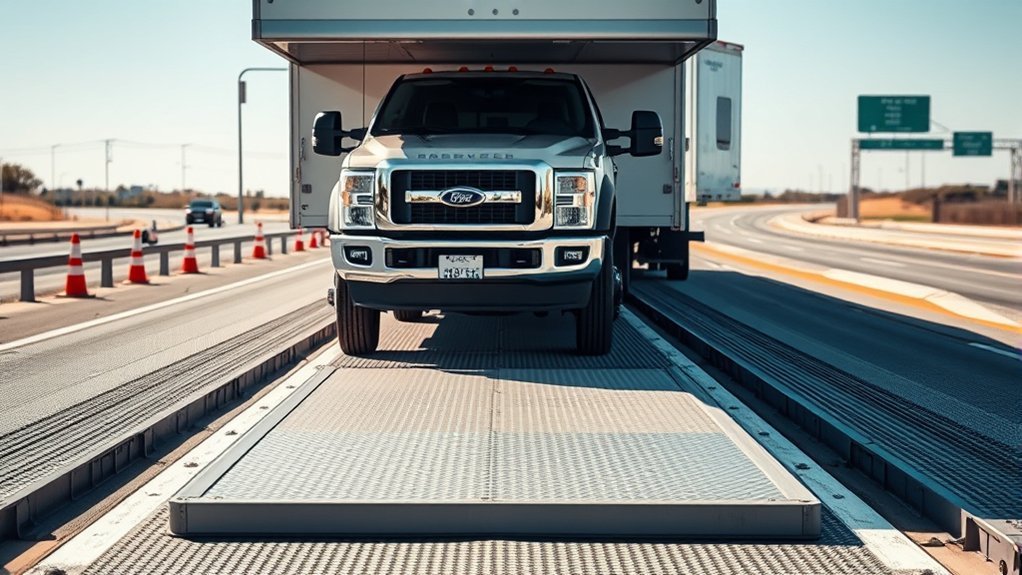
The easiest way to separate GVWR from GCWR is to ask two different questions:
- GVWR question: Is my tow vehicle itself overloaded?
- GCWR question: Is my loaded vehicle-and-trailer combination overloaded?
Both answers must be “no.” A heavy trailer can overload the whole combination. A lighter trailer can still overload the truck if its tongue weight is too high or if the bed is already full of passengers, tools, and cargo.
| Situation | Likely Limiting Rating | What to Do |
|---|---|---|
| Truck bed is full before hitching | GVWR / rear GAWR / payload | Remove cargo or use a trailer with lower tongue weight |
| Trailer is heavy but balanced | GCWR / maximum trailer rating | Reduce trailer load or choose a lighter trailer |
| Rear of vehicle sags badly | Tongue weight / rear GAWR / hitch rating | Weigh the axle, adjust load, and use proper equipment |
| Trailer sways at speed | Weight distribution / tongue weight / speed / equipment | Slow down, stop safely, reload, and inspect hitch setup |
Pro Tip: Build a small “tow sheet” for your vehicle with GVWR, front GAWR, rear GAWR, GCWR, maximum trailer rating, maximum tongue weight, receiver rating, and payload. Keep it in your glove box or notes app so you do not have to hunt for labels every time you tow.
Calculate Payload Capacity
Payload capacity tells you how much weight you can add to the tow vehicle without exceeding GVWR. It includes people, cargo, accessories, hitch equipment, and the trailer’s tongue or pin weight.
Use either the payload number on your vehicle’s loading label or this formula:
Payload capacity = GVWR − vehicle weight.
For trip planning, the most useful version is:
Remaining payload = GVWR − actual loaded vehicle weight before trailer tongue weight is added.
Example:
- GVWR: 7,200 lb
- Loaded vehicle before hitching: 6,100 lb
- Remaining payload: 1,100 lb
- Loaded conventional trailer: 7,000 lb
- Expected tongue weight at 10% to 15%: 700–1,050 lb
In that example, tongue weight might fit within remaining payload, but you still need to verify rear GAWR, hitch rating, tire ratings, and GCWR. If the same trailer had 1,250 lb of tongue weight, it would exceed the remaining payload even though the trailer itself might be within the advertised tow rating.
[Products Worth Considering]

This proportional trailer brake controller provides smooth, responsive braking by automatically matching your tow vehicle’s stopping force for safer trailer control. The bright LED digital display makes it easy to monitor voltage output in real time, while adjustable braking and sync settings help tailor performance to different trailers and road conditions. Designed for quick installation and broad compatibility, it supports 1 to 4 axle trailers for dependable towing confidence.
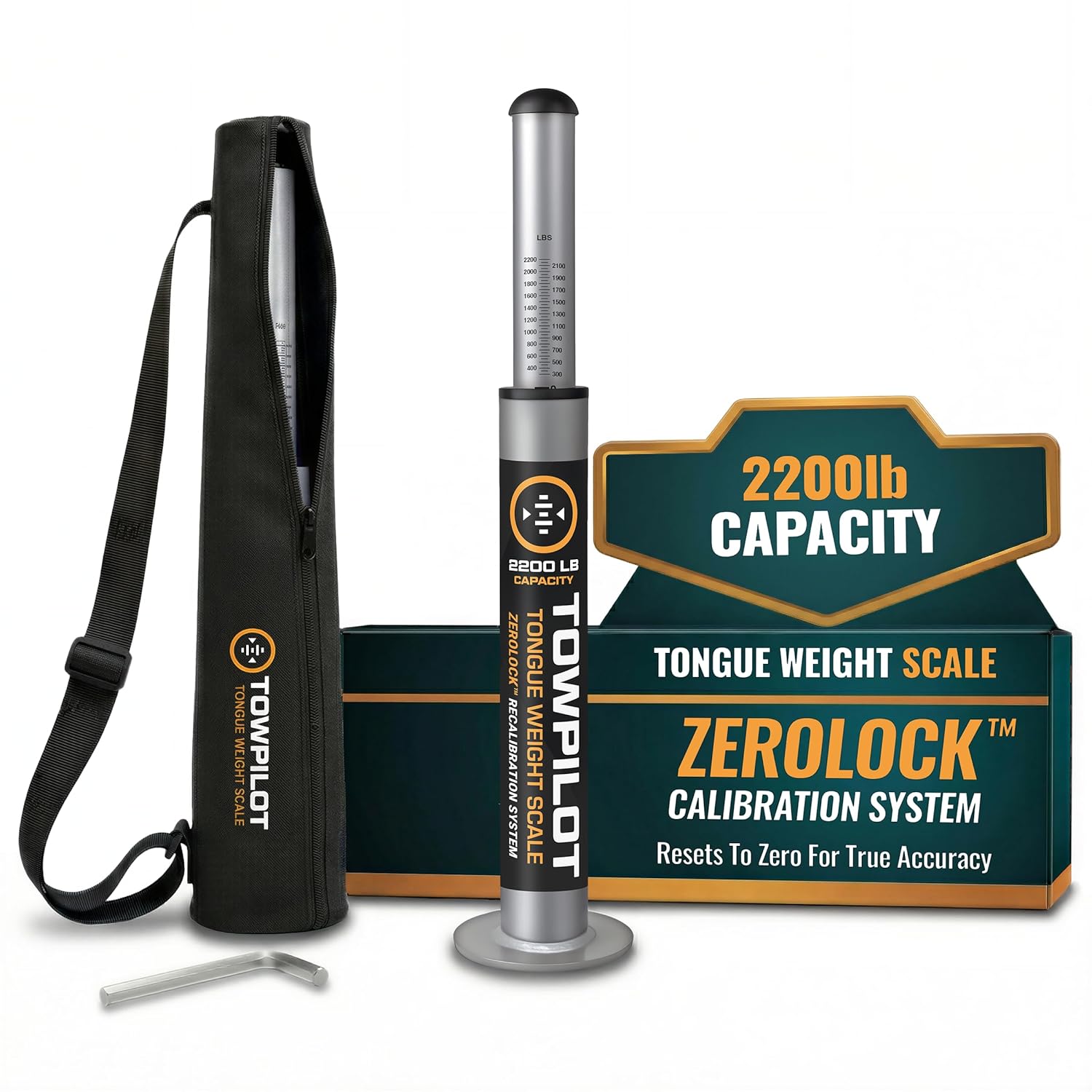
This trailer tongue weight scale helps you check hitch weight quickly and accurately before towing, reducing sway and improving overall safety. Built with durable steel and a spring mechanism, it works without batteries and includes a recalibration feature to maintain true-zero accuracy over time. It is designed for RVs, campers, and utility trailers, with a top plate that helps protect your coupler during use.

This Andersen Hitches weight distribution hitch kit is designed to improve towing stability with a grease-free friction cone and tension chain system that helps reduce sway and bounce. It features a universal setup with a 2-inch ball and 4-inch drop/rise to suit many bumper-pull trailer applications, while making hitching and unhitching faster and easier than traditional spring bar systems. Built in the USA, it offers dependable performance for travelers, workers, and outdoor enthusiasts who need confident towing control.
Compute Tongue Weight and Safe Tow Limit (Step-by-Step Example)
Tongue weight is the downward force a conventional trailer places on the hitch ball. Fifth-wheel and gooseneck trailers use pin weight, which is usually a larger share of loaded trailer weight. Either way, that downward load counts against the tow vehicle’s payload, GVWR, rear GAWR, tires, and hitch limits.
[Products Worth Considering]

These replacement support brackets are designed to secure the spring bars on a trailer frame for CURT TruTrack weight distribution hitches. Their adjustable mounting holes help achieve precise leveling while the rigid construction supports integrated sway control for a steadier towing experience. A durable powder coat finish adds long-lasting protection, and the package includes two replacement brackets.

The CURT 52010 Trailer Breakaway Switch helps keep towing safer by automatically engaging trailer brakes if the trailer disconnects from the tow vehicle. It features silver contact points for a dependable electrical connection, plus a nylon case and pull pin assembly designed to handle outdoor use and secure activation. The included metal mounting tab makes installation simple on trailers with electric brakes.

This proportional electric brake controller automatically applies trailer brakes based on your vehicle's braking force and speed for smoother, more responsive stopping. It is compatible with a wide range of tow vehicles and trailer setups, and includes an LED display for easy setup, diagnostics, and manual braking control. The included mounting hardware and plug-and-play port help make installation simple and convenient.
Calculating Tongue Weight
For conventional bumper-pull trailers, a common target is 10% to 15% of the loaded trailer weight. For fifth-wheel and gooseneck trailers, 15% to 25% is a common range. Always follow the trailer and vehicle manufacturer’s instructions if they give a specific requirement.
Use this formula for a quick estimate:
Estimated tongue weight = loaded trailer weight × 0.10 to 0.15.
Example for a conventional trailer:
- Loaded trailer weight: 7,000 lb
- 10% tongue weight: 700 lb
- 15% tongue weight: 1,050 lb
Measure tongue weight with a tongue-weight scale, a public scale method, or a manufacturer-approved weighing process. Do not guess by how much the rear suspension squats.
Determining Safe Tow Limit
Use this step-by-step method to find the practical limit for your setup:
- Find your GCWR. Use the owner’s manual, manufacturer towing guide, or trailering label if equipped.
- Weigh the loaded tow vehicle. Include people, fuel, cargo, accessories, and hitch equipment.
- Subtract loaded tow-vehicle weight from GCWR. This gives your trailer limit by GCWR.
- Check remaining payload. Make sure tongue or pin weight will not push the vehicle over GVWR.
- Check axle weights. Rear GAWR is often the first limit reached on pickups and SUVs.
- Check hitch and receiver ratings. The hitch may have separate ratings for weight-carrying and weight-distributing setups.
- Check trailer GVWR and trailer axle ratings. The trailer must be within its own limits too.
- Use the lowest limit. That is your real-world cap.
| Example Item | Value | Result |
|---|---|---|
| GCWR | 15,000 lb | Combination cannot exceed this |
| Loaded tow vehicle before hitching | 6,100 lb | Includes people, fuel, cargo, and hitch gear |
| Trailer limit by GCWR | 8,900 lb | 15,000 − 6,100 |
| Receiver trailer rating | 8,000 lb | Receiver now limits trailer to 8,000 lb |
| Remaining payload | 1,100 lb | Tongue weight must fit here and stay under rear GAWR |
In this example, GCWR allows up to 8,900 lb of trailer, but the receiver rating limits the trailer to 8,000 lb before you even check tongue weight, rear axle weight, or trailer ratings.
How to Weigh Your Vehicle and Trailer
A public truck scale is the best way to confirm your actual weights. Load the vehicle and trailer exactly as they will travel: passengers, fuel, water, tools, luggage, food, bikes, cargo, and hitch equipment included.
- Weigh the tow vehicle by itself. Record front axle, rear axle, and total vehicle weight if the scale allows axle readings.
- Weigh the full combination. Pull onto the scale with the trailer hitched and record the combined weight.
- Compare combined weight to GCWR. The loaded combination must be under GCWR.
- Compare tow vehicle weight to GVWR. The loaded vehicle, including tongue or pin weight, must be under GVWR.
- Compare each axle to GAWR. Pay close attention to the rear axle.
- Compare trailer axle weight and total trailer weight to trailer ratings. The trailer must be under its GVWR and axle limits.
If any number is over its rating, reduce cargo, move weight carefully, use a lighter trailer, or choose a more capable tow vehicle. Do not rely on air bags or helper springs to “increase” GVWR or GCWR; they may improve ride height, but they do not legally change the manufacturer’s ratings.
[Products Worth Considering]
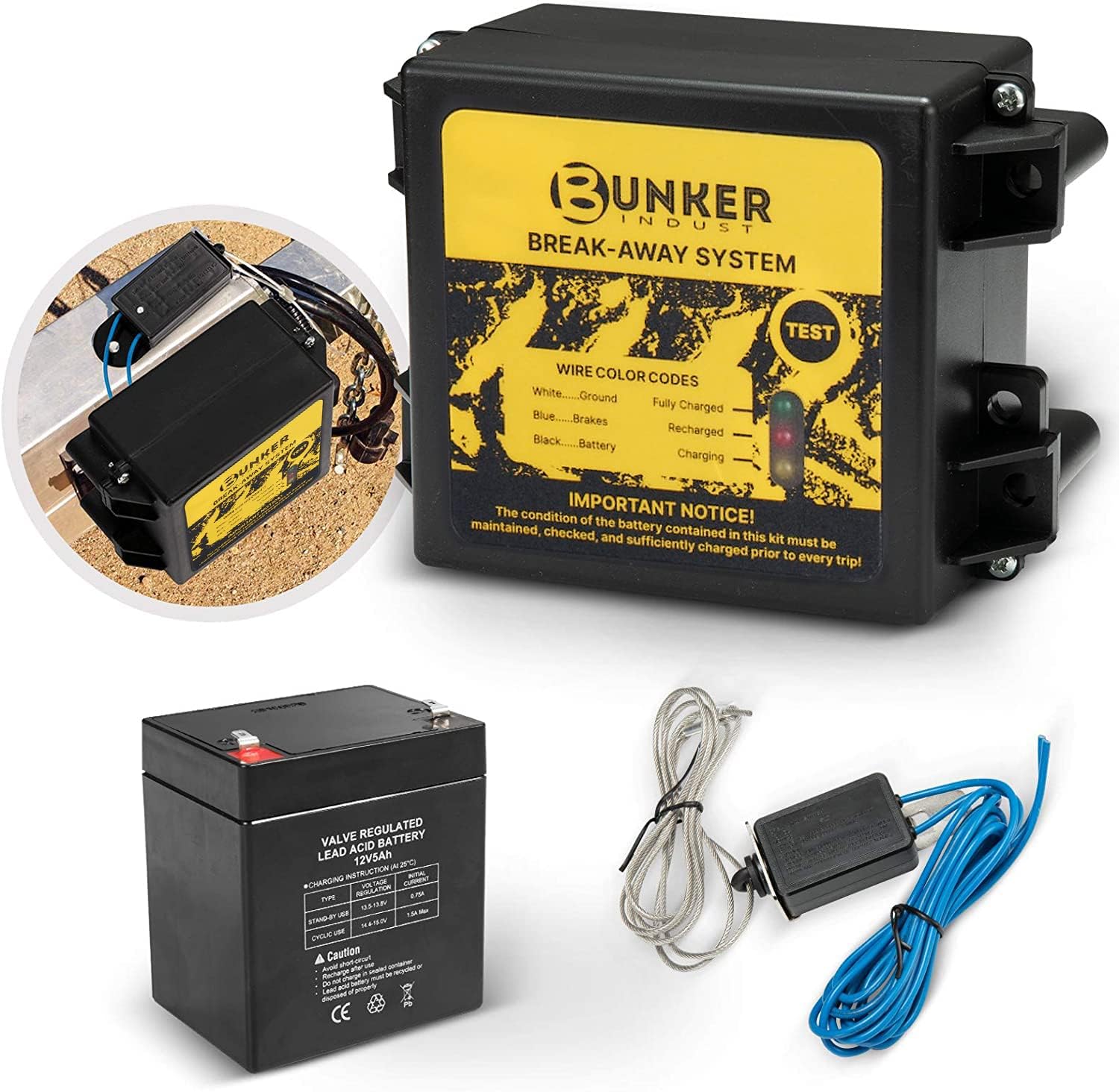
This trailer breakaway kit is designed for trailers with an existing electric brake system, helping activate the brakes if the trailer separates from the tow vehicle. It includes a battery, breakaway switch, and charger with an LED display for easy status checks, making it a practical safety upgrade for caravans and trailers. The side-mount design supports quick installation, while weather and corrosion resistance help it stand up to outdoor use.

The CURT Venturer NEXT is a compact, time-delay electric trailer brake controller designed for dependable braking control from inside your vehicle. Its low-profile design, adjustable power and ramp time, and plug-and-play friendly setup make it a practical choice for towing with confidence. Built for 12-volt systems and compatible with electric over hydraulic brakes, it offers flexible installation without leveling or internal moving parts.
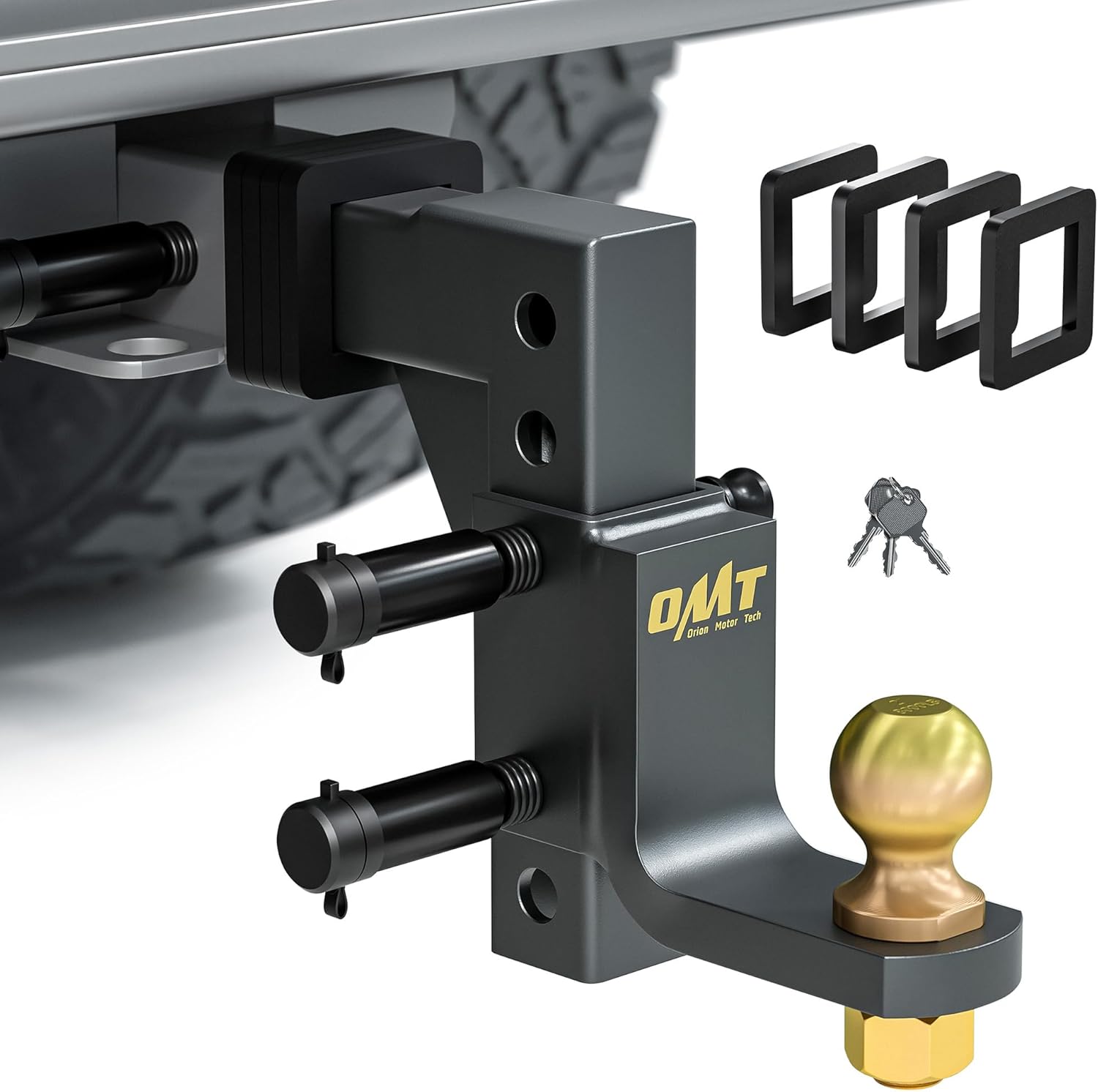
This adjustable trailer hitch ball mount is built for secure, versatile towing with a standard 2 inch receiver, a 2 inch ball, and both drop and rise adjustment for better fitment. Rated for heavy-duty towing and designed with anti-theft locking pins, it helps keep your trailer secure while resisting harsh weather and road conditions. The pre-assembled design makes installation fast and tool-free, so you can get hooked up and ready to tow with confidence.
Common Towing Weight Mistakes
- Using advertised tow capacity only: Published tow ratings may not match your trim, axle ratio, passengers, cargo, or accessories.
- Forgetting tongue weight: Tongue or pin weight counts against payload and rear axle load.
- Ignoring rear GAWR: A setup can be under GVWR but still overload the rear axle.
- Loading the trailer too far back: Too little tongue weight can increase sway risk.
- Loading the trailer too far forward: Too much tongue weight can overload the hitch, rear axle, or tow vehicle.
- Assuming a weight-distribution hitch raises ratings: It may be required for certain loads, but it does not automatically increase vehicle ratings.
- Skipping tire pressure and tire load ratings: Tires are part of the weight-carrying system on both the tow vehicle and trailer.
Note: If trailer sway starts, slow down by easing off the accelerator. Avoid sudden steering or hard braking. If equipped, use the trailer brake controller manually to help settle the trailer, then stop safely and check load balance, tire pressure, hitch setup, and speed.
Compliance, Safety Checks, and When to Consult the Manufacturer
Weight ratings are safety limits, but they are not the only rules that matter. Trailer brakes, safety chains, breakaway systems, mirrors, lighting, registration, licensing, and speed limits can vary by state and by commercial or private use.
For commercial motor vehicle operation in the United States, federal CDL classes use specific thresholds. FMCSA describes Class A as a combination of vehicles with GCWR or GCW of 26,001 lb or more, including a towed unit with GVWR or GVW over 10,000 lb. Private recreational rules can differ, so check your state licensing rules before towing a heavy trailer. You can review FMCSA’s driver license class summary here: FMCSA Drivers: Classes of License and CLP.
Before towing, run this checklist:
- Confirm GVWR, GCWR, front GAWR, rear GAWR, hitch rating, and trailer GVWR.
- Measure or estimate tongue weight, then verify with a scale when possible.
- Check tire pressure and tire load ratings on the tow vehicle and trailer.
- Inspect hitch pin, coupler, latch, safety chains, breakaway cable, and electrical plug.
- Test trailer lights and trailer brakes before entering traffic.
- Secure cargo so it cannot shift during braking or cornering.
- Use tow/haul mode or manufacturer-recommended towing settings when available.
- Consult the manufacturer before changing tires, suspension, axles, frame parts, or hitch equipment.
Consult the vehicle manufacturer, trailer manufacturer, or a qualified towing professional if your numbers are close to any rating, if you modified the vehicle, or if the trailer behaves unpredictably.
Frequently Asked Questions
Are GVWR and GCWR the same?
No. GVWR is the maximum loaded weight of one vehicle. GCWR is the maximum loaded weight of the tow vehicle and trailer together. You need to stay under both, but you calculate and verify them differently.
Does GVWR mean fully loaded?
Yes. GVWR is the manufacturer’s maximum allowed loaded weight for the vehicle. For a tow vehicle, that includes passengers, cargo, fuel, accessories, hitch equipment, and trailer tongue or pin weight.
Does GCWR include trailer weight?
Yes. GCWR includes the actual loaded weight of the tow vehicle and the actual loaded weight of the trailer. It includes passengers, cargo, fuel, equipment, and cargo in the trailer.
Can I calculate GCWR by adding my truck’s GVWR and trailer’s GVWR?
Not for normal tow-capacity planning. Use the GCWR published by your vehicle manufacturer. Then subtract your actual loaded tow-vehicle weight to estimate the trailer weight allowed by GCWR, and check all other limits.
What usually limits towing first: GVWR or GCWR?
It depends on the vehicle and trailer. On many pickups and SUVs, payload, rear GAWR, hitch tongue-weight rating, or tire ratings can limit the setup before GCWR does. That is why scale weights matter.
What tongue weight should I aim for?
For many conventional trailers, aim for about 10% to 15% of loaded trailer weight. Fifth-wheel and gooseneck trailers often use a higher pin-weight range, commonly around 15% to 25%. Always follow your vehicle and trailer manuals.
Conclusion
GVWR and GCWR are both hard limits, but they answer different towing questions. GVWR tells you how heavy the tow vehicle can be when loaded. GCWR tells you how heavy the loaded vehicle and loaded trailer can be together. The safest approach is simple: use the manufacturer’s ratings, weigh the loaded setup, calculate tongue or pin weight, and let the lowest applicable rating set your real towing limit.
Do not guess when the numbers are close. A few hundred pounds can be enough to overload a rear axle, hitch, payload rating, or trailer. Check the labels, verify the manual, weigh the rig, and adjust the load before the trip.
Sources
- eCFR — 49 CFR § 383.5 Definitions — GVWR and GCWR regulatory definitions.
- eCFR — 49 CFR § 383.91 Commercial Motor Vehicle Groups — federal CDL vehicle-group thresholds.
- FMCSA — Drivers: Classes of License and CLP — Class A, B, and C CDL summaries.
- NHTSA — Importation and Certification FAQs — certification label and GVWR overloading guidance.
- SAE International — SAE J2807_202411 — tow-vehicle GCWR and trailer weight rating recommended practice.
- Chevrolet 2026 Trailering Guide — GCWR, GVWR, tongue weight, weighing, and trailering safety explanations.

[…] For safe towing, measure the loaded trailer, compare the result with every applicable rating and GVWR and GCWR limit, then adjust cargo until the trailer is stable and within […]