Last updated: July 15, 2026
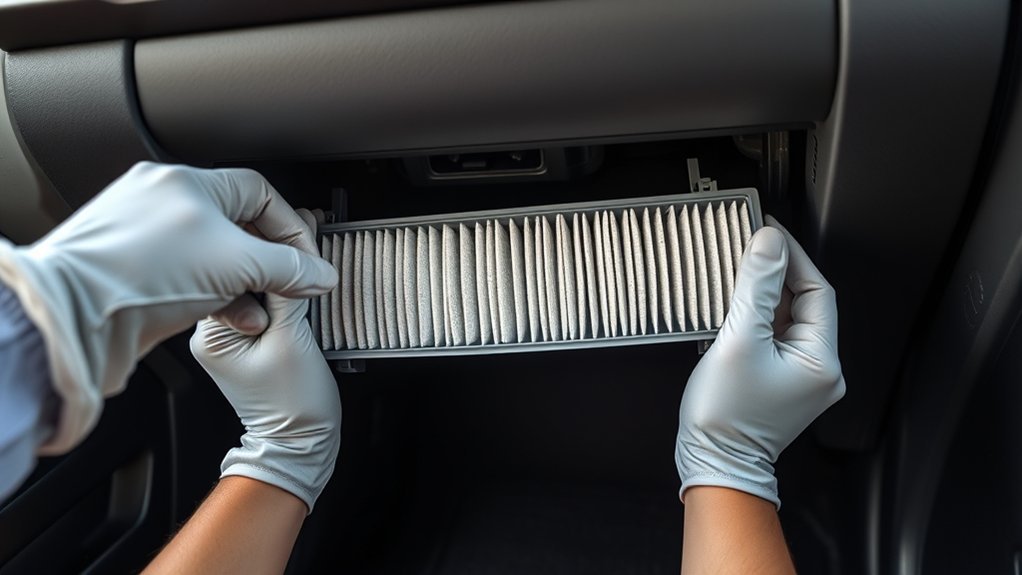
To change a Toyota Tundra cabin air filter, first confirm that your model year uses a serviceable filter and that the replacement matches the exact application. On Tundras with the filter behind the passenger-side glove box, switch the truck off, open or lower the glove box as required, release the access panel and filter cover, remove the filter or case, and note the original markings. Install the new filter without crushing its pleats, latch the cover flush, reassemble the glove box, and test the fan at several speeds.
Quick Answer
On a Toyota Tundra equipped with a serviceable cabin filter, access is normally behind the passenger-side glove box. Turn the truck off, open or lower the glove box as your manual directs, remove the filter cover and case, match the new filter’s orientation markings, reinstall the cover flush, and test the fan.
Key Takeaways
- Confirm that the filter fits your exact Tundra model year, market, and HVAC housing before opening the package. The earliest Tundras (around model year 2000) did not ship with a cabin air filter at all [VERIFY: exact affected model years].
- Toyota “UP” marks describe orientation and face up. An aftermarket “AIR FLOW” arrow must follow that filter manufacturer’s instructions.
- Follow your exact model year’s Toyota Warranty and Maintenance Guide for the cabin air filter interval [VERIFY: confirm exact mileage/month interval — do not assume it matches the engine air filter interval].
- Heavy traffic, dirt roads, and urban, desert, or dusty conditions can shorten filter life and require earlier replacement.
At a Glance
| Time Required | Usually 10–20 minutes after you identify the correct access method; allow longer on your first attempt |
| Difficulty | Beginner |
| Tools Needed | Correct replacement filter, flashlight, and a vacuum or soft brush; many versions require no hand tools |
| Main Risks | Buying the wrong filter, reversing its orientation, spilling debris, or forcing plastic tabs and cover claws |
| Typical Cost | [VERIFY: current OEM and aftermarket price range before publishing] |
Before You Start: Check Fitment, Tools, and Safety
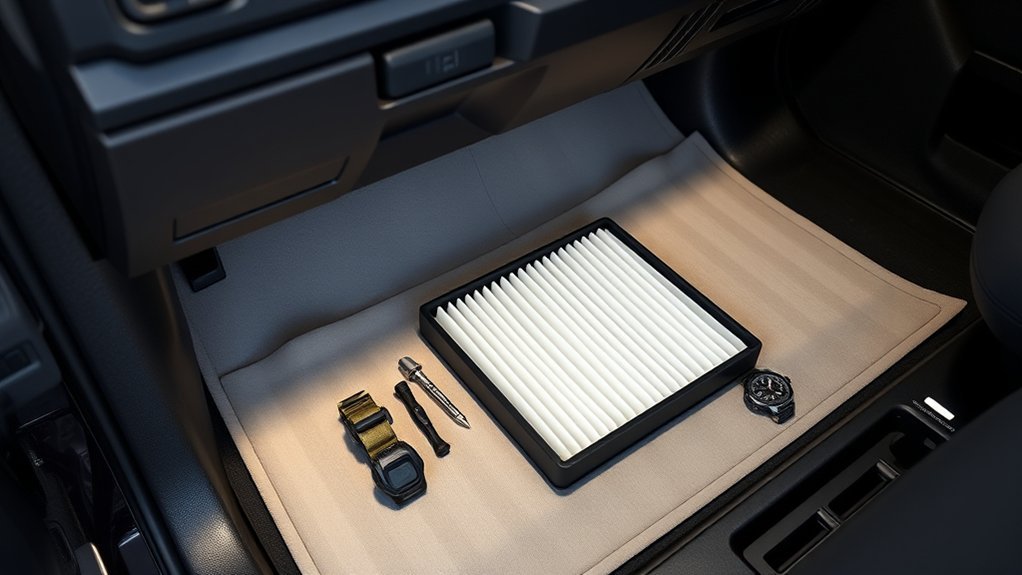
Before you open the glove box, confirm that your Tundra has a serviceable cabin air filter and that the replacement matches your exact model year and market. Compare the replacement part number, outside dimensions, frame shape, pleat direction, and label position with the old filter whenever possible. Fitment reference: [VERIFY: OEM cabin air filter part number(s) by generation — do not publish unverified part numbers].
Toyota changes interior panels, access covers, and filter cases between model years. 2007–2021 (2nd-generation) Tundras use a different glove-box damper and cover-latch style than 2022-and-newer (3rd-generation) trucks, so the exact release mechanism can vary even though the general behind-the-glove-box location does not [VERIFY: confirm generation cutoff and specific latch differences]. Use the filter catalog, package fitment information, your old filter’s part number, and the manual for your truck. Toyota provides model-year-specific documents through its Owners Manuals and Warranties page.
Warning: Turn the engine switch and HVAC system off before removing the filter. Keep the fan off while the filter is out so loose leaves and dust are not pulled deeper into the housing.
[Products Worth Considering]

This KAX cabin air filter is designed to help keep your vehicle interior air cleaner by capturing dust and other airborne particles before they enter the cabin. Its HEPA-style multi-layer construction with activated carbon supports strong filtration while also helping improve HVAC airflow and overall comfort. Built as a direct replacement for select Toyota and Scion models, it offers a convenient maintenance upgrade for fresher cabin air.

This dual-layer cabin air filter is designed to help improve interior air quality by capturing fine particles and reducing odors with activated carbon. It features a durable one-piece frame for a tighter seal and long-lasting fit, making it a dependable replacement for many Toyota, Lexus, Subaru, and other compatible vehicles. Ideal for maintaining a fresher, cleaner cabin environment.

Puroma cabin air filter helps deliver cleaner, fresher air inside your vehicle while supporting efficient HVAC airflow. Its multi-layer design helps reduce stale odors and capture airborne particles, making daily driving more comfortable. Designed for easy installation and broad fitment across many Toyota, Lexus, Mazda, and Subaru models.
Where Is the Toyota Tundra Cabin Air Filter?
On Tundras equipped with a serviceable cabin air filter, the filter is normally accessed behind the passenger-side glove box. The exact access method varies by generation. One truck may use a glove-box damper and flexible side stops, while another may use a removable access panel, filter cover, and separate filter case.
Work slowly and watch how each part releases. The glove box, cover, and filter case use plastic tabs or claws that can break when pried in the wrong direction. In practice, the tabs on these covers are easy to crack in cold weather if you pry rather than press — look for a locking tab, molded arrow, or release point before applying more pressure.
Fitment Checkpoint: If you cannot find the cover where your manual shows it, do not pry, drill, or cut the HVAC housing. Recheck the model year, manual, and filter application before continuing — and confirm your truck was built with a cabin air filter at all, since the earliest Tundras were not.
How Often Should You Replace a Tundra Cabin Air Filter?
Toyota’s Warranty and Maintenance Guide sets the official cabin air filter interval for your specific model year and market [VERIFY: confirm the exact mileage/month interval in the current guide — many current dealer service pages list 15,000 miles or 12 months for the cabin air filter, which is a separate interval from the 30,000-mile engine air filter schedule, so don’t assume the two match]. Toyota also says heavy traffic, dirt roads, and urban, desert, or dusty conditions may shorten the filter’s lifespan.
The schedule has not been presented identically every year. Toyota’s 2024 Tundra maintenance guide listed inspection and replacement intervals [VERIFY: confirm exact 2024-guide figures against the source PDF before restating them]. Follow the guide for your exact model year and market rather than applying one interval to every Tundra.
Check the filter sooner when vent airflow falls, the old filter is packed with dust or leaves, or the windows fog easily in Fresh mode. A musty odor can also justify an inspection, but the filter may not be the only source of an HVAC odor.
Note: Record the replacement date and mileage. This gives you a useful comparison when the next filter is inspected and helps you adjust the interval for dusty or high-traffic driving.
[Products Worth Considering]

This cabin air filter uses activated carbon and a close-meshed filter layer to help capture odors and airborne contaminants before they enter the vehicle interior. It is designed to support cleaner airflow, improve HVAC performance, and deliver a fresher ride for drivers and passengers. The filter is also easy to install and fits a wide range of Toyota, Lexus, Subaru, Land Rover, Jaguar, Scion, and Pontiac models.

This cabin air filter with activated carbon is designed to help keep vehicle interiors fresher by filtering airborne dust, pollen, and odors from the HVAC system. It serves as a replacement for CF10285 and multiple OEM part numbers, with broad fitment across many Toyota, Lexus, Scion, Subaru, Land Rover, Jaguar, and Pontiac models. Built for compatibility and dependable performance, it is a practical maintenance part for improving cabin air quality.

The ECOGARD XC10622 premium cabin air filter helps keep vehicle interiors fresher by capturing up to 99.5% of dust, pollen, pet dander, and other airborne particles before they enter the cabin. It supports HVAC airflow and system performance while helping reduce strain on blower components, making it a smart replacement for maintaining comfortable driving conditions. Designed for a wide range of Toyota, Subaru, and Mazda applications, it is a practical choice for routine cabin air filter service.
How Do You Remove the Old Cabin Air Filter?
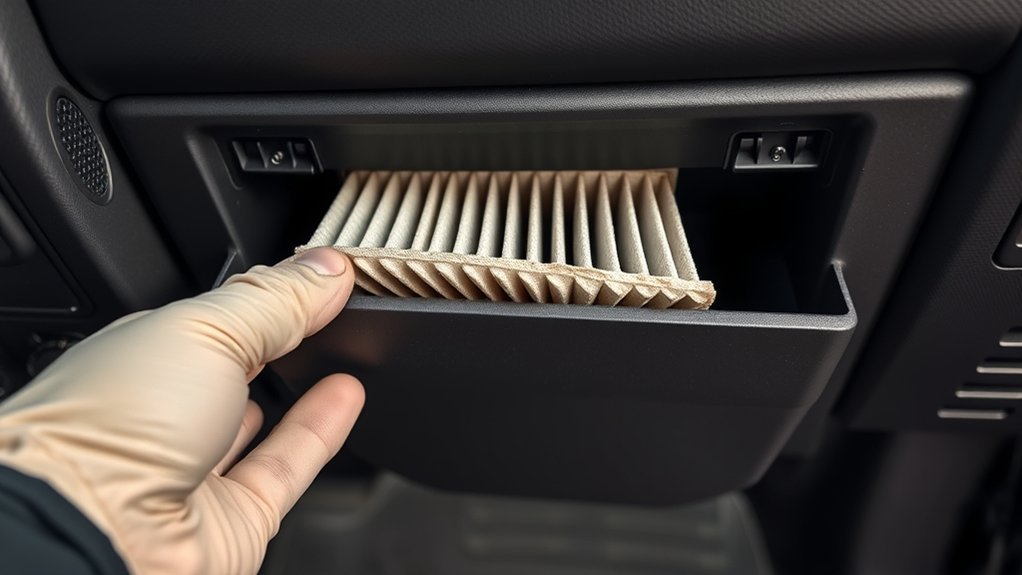
- Switch the truck and fan off. Do not work with the blower running.
- Empty the glove box. Remove papers, tools, charging cables, and anything that could fall behind the dash.
- Photograph the original layout. A quick photo of the cover, case, and visible filter markings can help during reassembly.
- Open or lower the glove box as directed. Depending on the model year, you may need to remove an access panel, release a damper, or press the glove-box sides inward.
- Find the rectangular filter cover. Look for its release tabs, claws, sliding lock, or molded direction arrow.
- Release the cover gently. Operate the locking points as designed and pull the cover in the indicated direction. Do not pry hard with a screwdriver.
- Remove the filter case or filter level. Keeping it level reduces the chance of spilling leaves and grit into the blower area — a heavily loaded filter can shed a surprising amount of debris into the footwell if tipped.
- Record the markings. Note any “UP,” “AIR FLOW,” arrow, and case labels before discarding the old filter.
| What You See | What It Means |
|---|---|
| Gray dust or pollen | Normal loading; replace when dirty or required by the applicable schedule |
| Leaves or pine needles | Vacuum the accessible housing before installing the replacement |
| Damp filter or mildew-like odor | Dry and inspect the housing, then investigate possible water entry |
| Collapsed or bent pleats | Replace the filter and confirm the new one sits square and flat |
| Torn frame or missing seal material | Check the housing and cover for gaps that could allow air to bypass the filter |
How Should You Clean and Inspect the Filter Compartment?
With the old filter removed, vacuum loose debris from the accessible housing, filter seat, and nearby seams. A narrow vacuum nozzle or soft brush works well. Remove debris outward rather than pushing it toward the blower.
Inspect the case, cover, seals, and plastic tabs for cracks, missing foam, or distortion. A loose cover can allow air to bypass the filter, while a bent filter can restrict airflow or keep the cover from latching.
Do not install a new filter into a wet housing. If you find water, mud, repeated dampness, or heavy mold-like residue, locate and correct the source first. A blocked drain, intake leak, or other HVAC problem may need professional inspection.
Pro Tip: Hold the old filter over a trash bag while inspecting it. Dry leaves, sand, pollen, and road grit can otherwise spill into the passenger footwell.
Which Replacement Cabin Air Filter Should You Use?
Exact fit should come before filtration claims. The filter must sit flat in the case, seal around its intended edges, and allow the cover to latch without force. Do not trim an oversized filter or compress a frame that does not match the housing.
Standard particulate filters are designed to catch common dust, pollen, and debris, and are a reasonable default for typical suburban and highway driving. Activated-carbon filters add odor-control media on top of the standard media and are worth the extra cost mainly for drivers who regularly encounter wildfire smoke, farm dust, or heavy diesel/exhaust traffic [VERIFY: specific brand names and current prices before naming products]. Performance and airflow can vary by design, so do not assume every thicker or more expensive filter is automatically better for your truck.
A 2017 UCLA-led study published in PLOS ONE tested 17 Los Angeles taxis and found that a high-efficiency cabin air filter combined with closed windows reduced in-cabin PM2.5 by 37% and ultrafine particles by 47% compared to no mitigation. However, that was a small taxi study rather than a Toyota Tundra product comparison, so the results do not prove that every premium replacement filter will perform the same way. You can review the high-efficiency cabin filter study for its methods and limitations.
[Products Worth Considering]

This CF10285 cabin air filter is designed to help keep your vehicle's interior air cleaner by capturing dust, pollen, soot, and road grime. It is compatible with a wide range of Toyota, Lexus, Jaguar, Land Rover, Subaru, Scion, and Pontiac models, making it a versatile replacement choice. The activated carbon design and easy glove-box installation make it a practical upgrade for fresher driving comfort.

This engine air filter and cabin air filter combo is designed for compatible Toyota and Lexus vehicles to help maintain cleaner airflow for the engine and interior. The cabin filter uses HEPA filtration media to capture dust and fine airborne particles, while the engine filter adds a pre-filter layer and reinforced mesh for dependable protection. A removal tool is included to make filter replacement easier and more convenient.

This cabin and engine air filter kit is designed for a wide range of compatible Toyota, Scion, and Pontiac models, helping improve airflow and keep your HVAC and engine systems cleaner. The activated carbon cabin filter helps reduce odors and trapped debris, while the engine air filter supports efficient performance with extended service life. It is easy to install and offers a convenient replacement solution for routine vehicle maintenance.
Which Way Does the Toyota Tundra Cabin Air Filter Go?
Follow the labels on both the filter and its case. For Toyota filters marked “UP,” the “UP” mark should face up. If an aftermarket filter is marked “AIR FLOW,” follow the airflow direction supplied by that filter manufacturer rather than treating it as another version of Toyota’s “UP” label.
Toyota “UP” markings describe filter orientation. Aftermarket “AIR FLOW” arrows describe the direction air passes through the filter. Treat those labels differently.
- Compare the new and old filters. Confirm their outside dimensions, frame shape, and label placement.
- Place the new filter squarely. Keep the frame flat and avoid crushing or folding the pleats.
- Confirm the label direction. Toyota “UP” marks face up. Follow the supplied instructions for an aftermarket airflow arrow.
- Slide the case or filter in smoothly. If it catches, remove it and realign it instead of applying more force.
- Reinstall the filter cover. Engage its tabs or claws evenly and press only where the cover is designed to lock.
- Check the entire perimeter. The cover should sit flush, with no raised corner or visible gap.
Warning: Stop if the cover requires excessive force. A wrong-size filter, bent filter frame, trapped edge, or misaligned case can prevent the cover from closing and can damage its plastic claws.
How Do You Reassemble the Glove Box?
Reinstall the access panel, glove-box damper, retainer, or side stops in the reverse order of removal. Compare the finished layout with the photo you took before disassembly.
Open and close the glove box once before returning its contents. It should move smoothly without rattling, binding, hanging unevenly, or rubbing against an unsecured panel.
If it does not close, look for trapped papers, a displaced damper, an access panel that is not seated, or a filter cover that remains partly unlatched. Do not slam the glove box to force it shut.
How Can You Tell the Filter Is Installed Correctly?
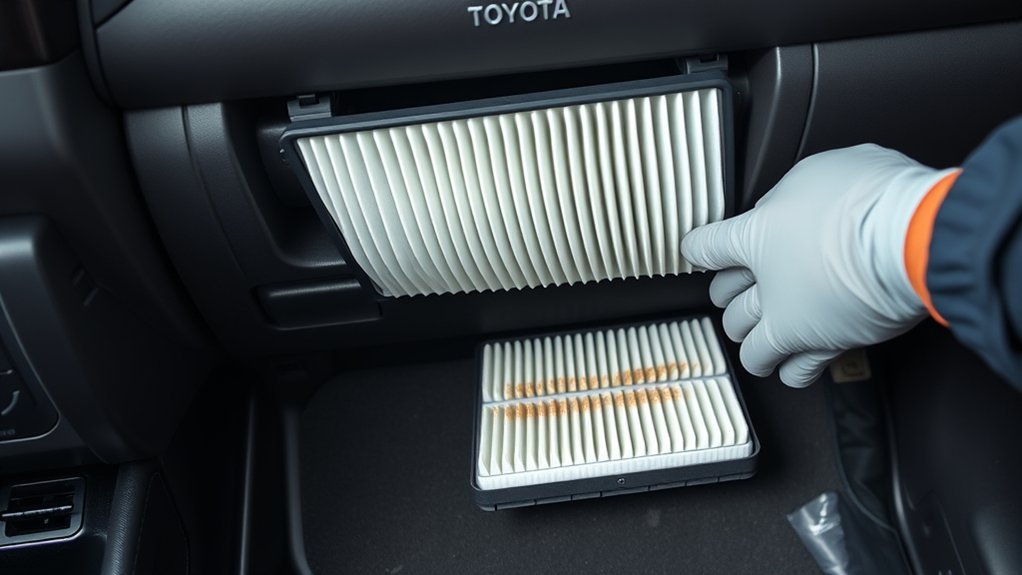
After reassembly, start the truck and run the fan at several speeds. Air should move normally through the vents, and the blower should not make a new scraping, fluttering, rattling, or whistling sound.
- Weak airflow: Remove the filter and check for a crushed frame, blocked housing, incorrect fit, or incorrect orientation.
- Rattling or fluttering: Confirm that the filter case, cover, access panel, and glove-box damper are fully secured.
- Musty odor: Look for damp debris or water in the housing. A new filter will not correct an unresolved moisture source.
- Windows fog easily in Fresh mode: Inspect the filter again and confirm that it is not heavily restricted.
- Cover does not sit flush: Remove the filter and reinstall it squarely. A trapped or bent corner can block the cover.
- New filter does not fit: Compare its part number and dimensions with the old filter. Do not trim the filter or force the cover closed.
Frequently Asked Questions
How often should I change the cabin air filter on my Toyota Tundra?
Follow your specific model year’s Toyota Warranty and Maintenance Guide for the exact cabin air filter interval [VERIFY: confirm the current mileage/month interval — this is a separate schedule from the engine air filter]. Earlier guides may present inspection and time intervals differently, so use the guide for your exact model year and market. Replace the filter sooner when severe dust or traffic conditions shorten its life.
Which way does the Toyota Tundra cabin air filter go?
Toyota filters and cases marked “UP” should have those marks facing up. When an aftermarket filter uses an “AIR FLOW” arrow, follow that filter manufacturer’s stated airflow direction. The two labels do not necessarily communicate the same thing.
Do I need tools to replace a Toyota Tundra cabin air filter?
Many Tundra cabin filter replacements require no hand tools. A flashlight, vacuum, and soft brush are useful. Follow the manual for your exact model year before using pliers, screwdrivers, or trim tools on plastic glove-box parts.
Can I use the HVAC system while the cabin air filter is removed?
Keep the fan and HVAC system off while the filter is removed. Running the blower can pull loose dust, leaves, and other debris farther into the HVAC housing.
Is the cabin air filter the same as the engine air filter?
No. The cabin air filter cleans air entering the passenger compartment through the HVAC system. The engine air filter cleans air entering the engine. They are separate parts, installed in different housings, and typically replaced on different schedules.
Does every Toyota Tundra use the same cabin air filter setup?
No. Filter serviceability, glove-box access, cover design, and replacement-filter fitment can vary by model year and market — the earliest Tundras did not ship with a cabin air filter at all, and the 2022-and-newer redesign changed the housing and latch style from earlier trucks [VERIFY: exact model-year cutoffs]. Confirm the procedure and part application for your exact truck before removing panels or buying a filter.
What should I do if the filter cover will not close?
Remove the filter and confirm that it matches the old filter’s part number, dimensions, frame shape, and orientation. Reinstall it squarely and check for a trapped edge or misaligned case. Do not trim the filter or force the cover.
Conclusion
Replacing a Toyota Tundra cabin air filter is a manageable glove-box job when you first confirm model-year fitment and follow the filter markings. Remove the old filter level, clean accessible debris, seat the replacement without bending it, latch the cover flush, and test several fan speeds after reassembly.
If airflow remains weak or the housing is wet, stop treating the filter as the only possible cause. Recheck fitment, inspect for blockage or water intrusion, and arrange further HVAC diagnosis when needed. Record the replacement date and mileage so you can compare the next service with the schedule for your exact Tundra.
Sources
- Toyota 2025 Tundra Owner’s Manual — Air conditioning filter — model-specific filter access and orientation reference.
- Toyota 2026 Tundra Warranty and Maintenance Guide — current U.S. maintenance chart and shortened-life conditions. [VERIFY: exact cabin air filter interval before restating a specific mileage figure]
- Toyota 2024 Tundra Warranty and Maintenance Guide — model-year-specific inspection and replacement schedule. [VERIFY: exact intervals]
- Toyota Owners Manuals and Warranties — manual lookup for the applicable model year.
- High-efficiency cabin air filter research (Yu et al., PLOS ONE, 2017) — a 17-taxi study of particulate exposure reduction and its limitations.