Engaging 4HI on a 2022 Toyota Tundra is simple, but it has to be done the right way. For normal 2H to 4H shifting, Toyota’s guidance is to slow to less than 62 mph, use the front-wheel drive control switch on the center console, and confirm that the 4H indicator comes on. Use 4HI only when the surface has enough slip for four-wheel drive, such as snow, ice, gravel, dirt, mud, or light off-road terrain.
Quick Answer
To engage 4HI on a 2022 Toyota Tundra, slow to less than 62 mph, keep driving straight if possible, then push and shift the front-wheel drive control switch to 4H. The shift is complete when the 4H indicator stays on. Do not use 4HI on dry, high-traction pavement.
Key Takeaways
- For 2H to 4H, reduce speed to less than 62 mph before shifting.
- A solid 4H indicator confirms the transfer mode has changed.
- Use 4HI on low-traction surfaces, not dry or high-grip pavement.
- Do not confuse 4HI with 4LO; 4LO requires a complete stop, the brake pedal depressed, and the shift lever in N.
- If the 4H or 4L indicators flash rapidly, have the four-wheel-drive system inspected by a Toyota dealer.
At a Glance
| Time Required | A few seconds once conditions are right |
| Difficulty | Easy |
| Tools Needed | None |
| Cost | $0 |
Quick 4HI Answer for the 2022 Tundra

In the 2022 Toyota Tundra, 4HI means four-wheel drive high range. It is the mode you use when you need more traction while still driving at normal road or trail speeds. Examples include snow-covered roads, icy roads, gravel, packed dirt, shallow mud, and light off-road trails.
For the normal shift from 2H to 4H, slow to less than 62 mph and move the front-wheel drive control switch to 4H. The gauge cluster should show the 4H indicator once the shift is complete.
Warning: 4HI is not for dry pavement or other high-traction surfaces. Because the Tundra uses part-time four-wheel drive, using 4HI where the tires cannot slip can cause drivetrain binding, extra wear, harsh handling, or unwanted noise.
Where the 4HI Control Is on the Center Console
The 2022 Tundra’s four-wheel-drive control is on the center console near the shifter area. Toyota refers to it as the front-wheel drive control switch. It is separate from the drive mode selector, Tow/Haul controls, and off-road feature switches.
- Use 2H for normal driving on dry, hard-surfaced roads.
- Use 4H for higher-speed four-wheel-drive traction on slippery or loose surfaces.
- Use 4L for low-speed maximum power and traction, such as steep hills, deep snow, sand, mud, or difficult off-road sections.
Note: Some trims and model variations may label or package nearby drive controls differently. If your switch layout looks different, use the owner’s manual for your exact 2022 Tundra trim.
How to Engage 4HI While Driving: Step-by-Step
You can shift from 2H to 4H while the Tundra is moving, as long as you follow the correct procedure and the road surface is appropriate for 4HI.
- Check the surface. Use 4HI only when the tires can slip slightly, such as snow, ice, gravel, dirt, mud, or light off-road terrain.
- Reduce speed. Slow to less than 62 mph before shifting from 2H to 4H.
- Drive as straight as practical. Avoid sharp turns during the shift.
- Move the 4WD control to 4H. Push and shift the front-wheel drive control switch to the 4H position.
- Confirm the indicator. Watch the gauge cluster. A solid 4H indicator means 4HI is engaged.
- Drive smoothly. Accelerate, steer, and brake gently, especially on snow or ice.
Pro Tip: If the 4H indicator flashes instead of staying solid, keep the truck moving straight and gently accelerate or decelerate. If the indicator still does not settle, follow the message in the multi-information display and avoid forcing repeated shifts.
[Products Worth Considering]

These X-BULL recovery traction tracks help drivers get unstuck from sand, snow, mud, or ice with a stable U-shaped elastic design and a wavy ramp that makes tire entry easier. Built from reinforced nylon, they are flexible, impact-resistant, and designed to perform in extreme temperatures while providing reliable emergency traction for a wide range of vehicles.

These heavy-duty running board side steps are designed to improve access to your Toyota Tundra without reducing ground clearance. Built for Double Cab and CrewMax front door applications, they offer practical convenience for everyday entry, roof loading, and off-road use. The durable iron construction and easy no-drill installation make them a reliable upgrade for rugged driving.

ANCEL BS200 is a permanently connected super capacitor jump starter that delivers fast starting assistance for vehicles with heavy cranking demands, including trucks, classics, and start/stop systems. Once installed, it stays ready without charging or maintenance and automatically helps every engine start while supporting battery health. A smart app adds real-time monitoring, alerts, and jump history so you can stay ahead of battery issues in any climate.
How to Shift Back From 4HI to 2H
Once you return to dry pavement or a high-traction road, shift back to 2H. The process is similar to engaging 4H:
- Reduce speed to less than 62 mph.
- Push and shift the front-wheel drive control switch back to 2H.
- Confirm that the 4H indicator turns off.
- Continue in 2H for normal dry-road driving.
Do not leave the truck in 4H just because the weather was bad earlier. If the road is now dry and the tires have full grip, 2H is the correct mode for lower wear and smoother driving.
4HI vs. 4LO on a 2022 Tundra
Many mistakes happen because drivers treat 4HI and 4LO as the same thing. They are different modes for different speeds and different terrain.
| Mode | Best Use | How to Shift |
|---|---|---|
| 2H | Normal dry-road driving | Use for everyday driving when extra traction is not needed. |
| 4H | Snow, ice, gravel, dirt, shallow mud, and light off-road trails | Slow to less than 62 mph, then shift the control switch to 4H. |
| 4L | Low-speed maximum traction, steep grades, sand, mud, deep snow, or hard pulling | Stop completely, keep the brake pedal depressed, shift to N, then shift the control switch to 4L. |
Warning: Do not shift into 4LO while moving. For 4H to 4L or 4L to 4H, the Tundra must be stopped, the brake pedal must stay depressed, and the shift lever must be in N.
[Products Worth Considering]
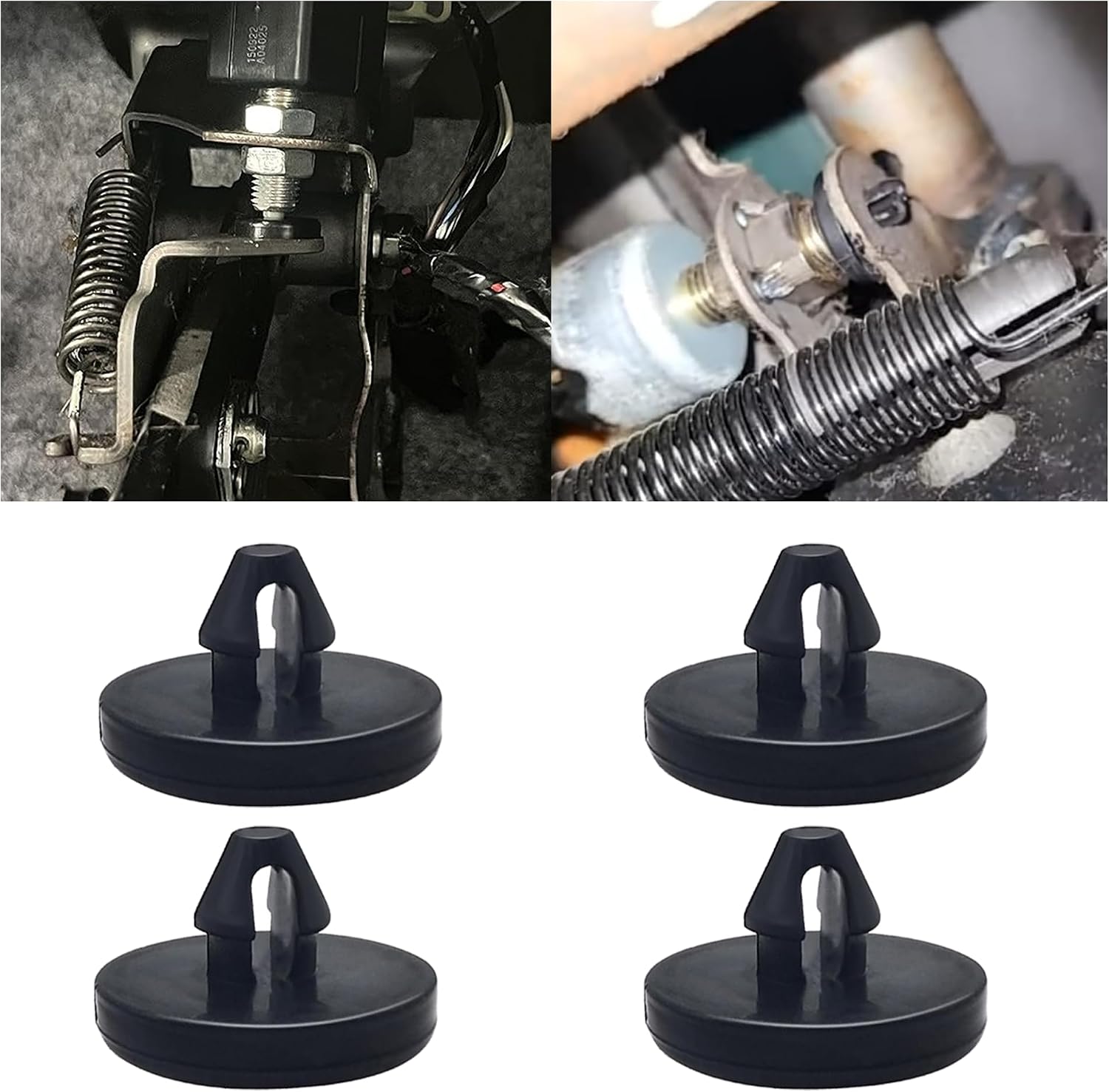
This brake pedal stop pad set is designed as an OEM replacement for compatible Toyota, Lexus, and Scion models, helping restore proper brake light switch function when the brake light stays on. Made from durable nylon, these compact stoppers are built for reliable long-term use and quick, tool-free installation. The set includes multiple pieces for convenient replacement and sharing.
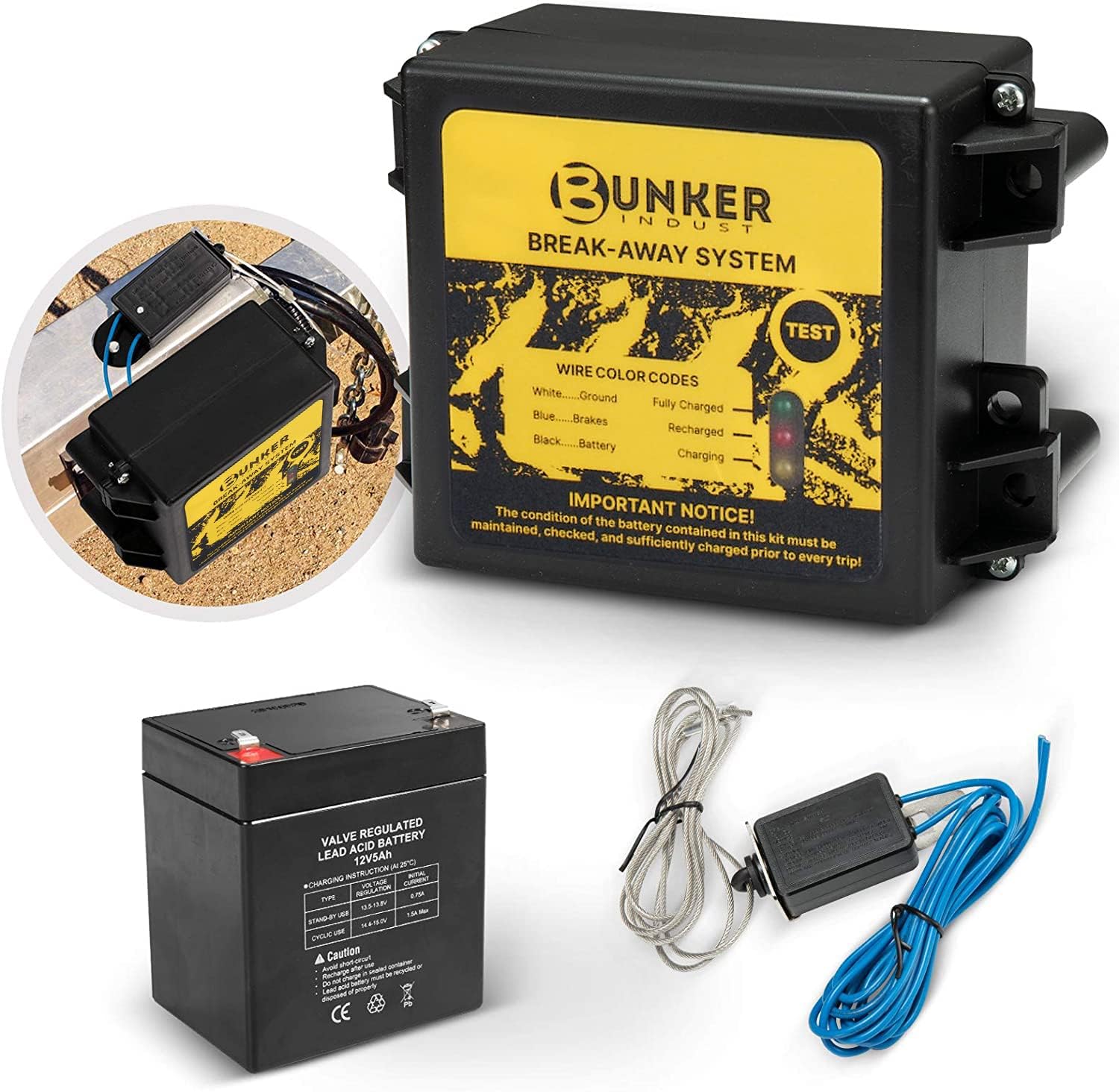
This trailer breakaway kit is designed for trailers with an existing electric brake system, helping activate the brakes if the trailer separates from the tow vehicle. It includes a battery, breakaway switch, and charger with an LED display for easy status checks, making it a practical safety upgrade for caravans and trailers. The side-mount design supports quick installation, while weather and corrosion resistance help it stand up to outdoor use.
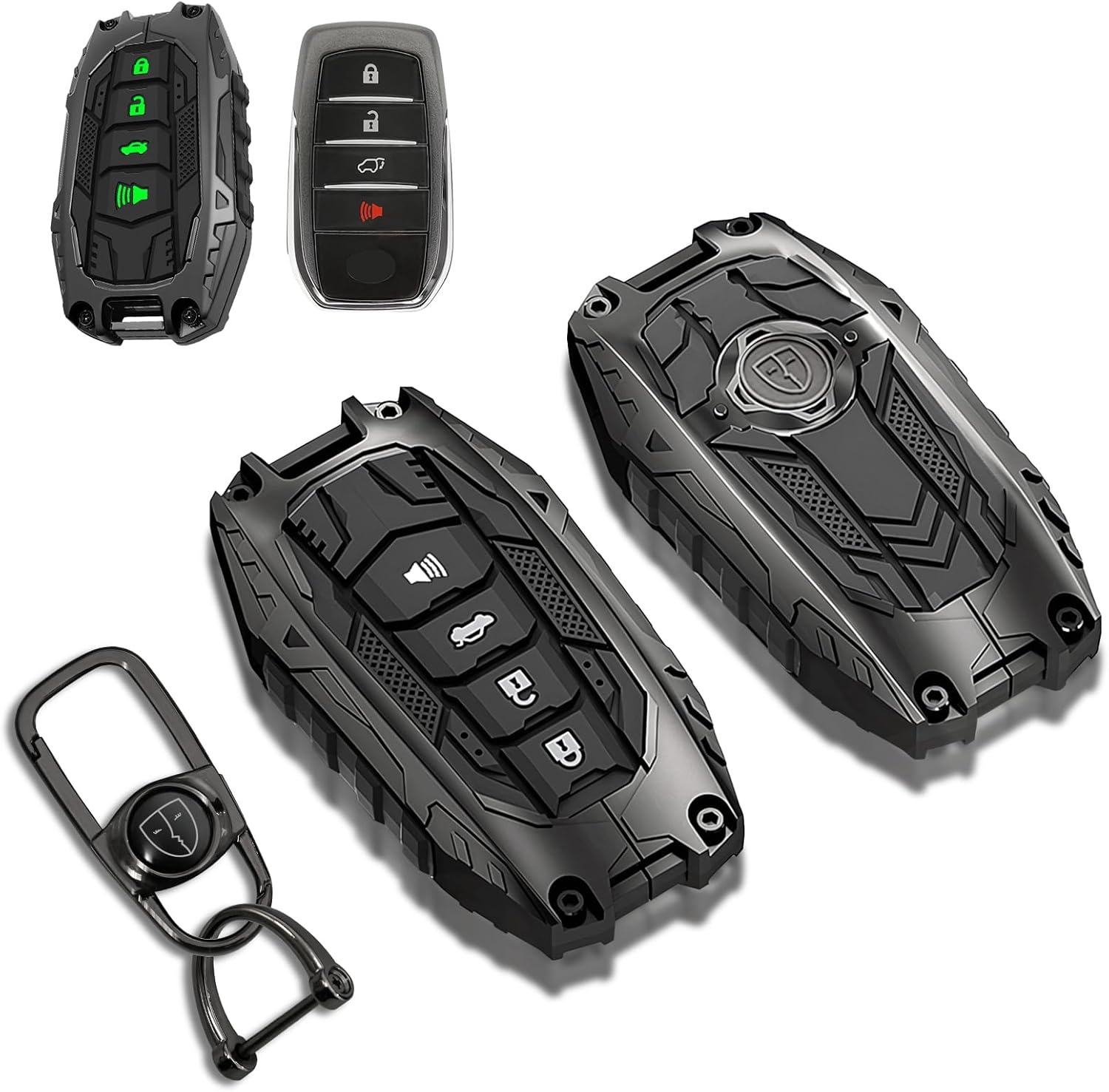
This mech-style metal key fob cover adds a sleek armored look while helping protect your Toyota key from scratches, drops, and everyday wear. Designed for compatible 4-button Toyota smart keys, it preserves full remote functionality with no signal interference and includes glow-in-the-dark buttons for easier nighttime use.
Top 5 Mistakes When Switching to 4HI and How to Avoid Them
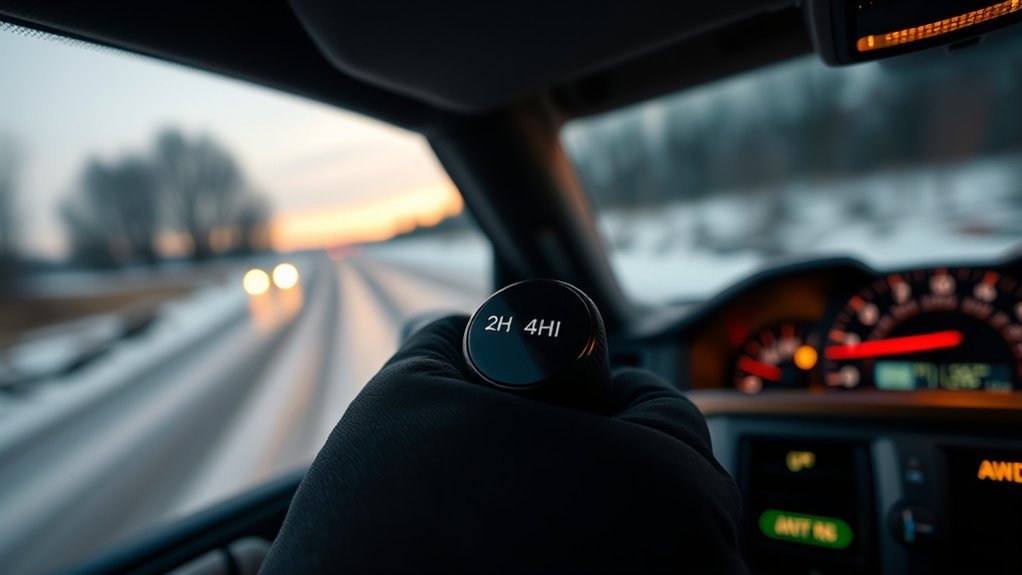
4HI is easy to use, but small mistakes can create warning lights, drivetrain stress, or poor handling. Avoid these five common problems:
- Shifting too fast. For 2H to 4H, slow to less than 62 mph first.
- Using 4H on dry pavement. Save 4H for surfaces where the tires can slip.
- Assuming the shift is complete. Always confirm that the 4H indicator is solid.
- Confusing 4H with 4L. 4L is a low-speed mode that requires a full stop and N.
- Ignoring flashing indicators. Flashing or rapidly flashing 4H/4L indicators mean the system needs attention.
4HI helps the truck get moving and maintain traction, but it does not make ice, snow, or mud safe at normal dry-road speeds. Slow down and leave extra stopping distance.
When 4HI Is Appropriate for the 2022 Tundra
Use 4HI when you need more traction and you are still traveling at normal or moderate speeds. The key rule is simple: the surface should allow some tire slip.
Light Off-Road Trails
4HI is useful on gravel roads, packed dirt, loose trail surfaces, and mild off-road paths. It sends power through the four-wheel-drive system for better traction than 2H, while still allowing higher speeds than 4LO.
Do not use 4HI as a substitute for low-range gearing on steep climbs, deep mud, large rocks, or technical off-road obstacles. Those situations may call for 4LO or another off-road setting, depending on your Tundra’s equipment.
Snow-Covered or Icy Roads
4HI can help on snow-covered or icy roads because the tires have reduced grip and can slip. Use smooth steering, gentle throttle, and extra following distance. Four-wheel drive can help you move forward, but it does not remove the need to drive slowly on slick roads.
The National Highway Traffic Safety Administration recommends slowing down in winter weather because it is harder to control or stop a vehicle on slick or snow-covered surfaces.
Wet Roads
Be careful with 4HI on wet pavement. A light rain on a paved road may still provide too much grip for part-time 4WD, especially during turns. Use 4HI only when the road is genuinely slippery enough for tire slip, such as slush, ice, packed snow, muddy work sites, or loose surfaces.
Towing on Slippery Surfaces
When towing on snow, ice, mud, wet grass, or loose dirt, 4HI can help the tow vehicle maintain traction and directional control. It should not be treated as a trailer-sway fix. Keep speeds low, load the trailer correctly, use smooth inputs, and allow more braking distance than usual.
When Not to Use 4HI
Do not use 4HI just because it is available. In a 2022 Tundra, 2H is the correct choice for normal dry-road driving.
- Avoid 4HI on dry pavement.
- Avoid 4HI in tight turns on high-traction surfaces.
- Avoid using 4HI as a cure for poor tires.
- Avoid using 4HI to drive faster in snow or ice.
- Shift back to 2H once the low-traction section ends.
Dashboard Indicators After 4HI Engagement
After shifting to 4HI, look for the 4H indicator in the gauge cluster. A solid 4H indicator means the truck has completed the shift into four-wheel drive high range.
If the 4H indicator flashes, the shift may not have completed yet. Drive straight ahead while gently accelerating or decelerating, or follow the message shown in the multi-information display. If the indicators flash rapidly, there may be a malfunction in the four-wheel-drive system, and Toyota’s guidance is to have the vehicle inspected by a Toyota dealer.
Do not expect a VSC OFF light just because you selected 4HI. VSC OFF is associated with certain low-range/off-road conditions; when the Tundra is shifted to 4L, Toyota notes that VSC is automatically turned off.
Troubleshoot: 4HI Won’t Engage or the Indicator Is Missing
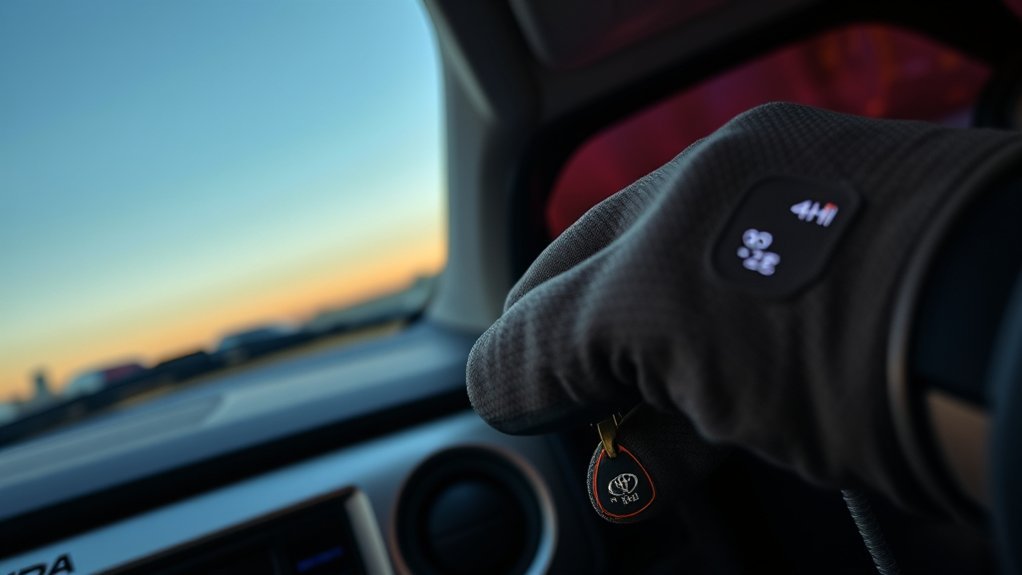
If 4HI will not engage, start with the simple checks before assuming the transfer case has failed.
[Products Worth Considering]

This Nilight LED light bar set delivers bright spot and flood combo lighting for off-road driving, work sites, and rugged trails. Built with high-intensity LEDs, an aluminum housing for better heat dissipation, and IP67 waterproof protection, it is designed for reliable performance in demanding conditions. The included wiring harness kit and mounting brackets make installation straightforward and secure.

This windshield sun shade umbrella is designed for Toyota Tundra models from 2007 to 2026, helping block harsh sunlight and reduce interior heat buildup. Its reflective cooling coating and high-density fabric work together to protect dashboards, seats, and trim while keeping the cabin more comfortable. The umbrella-style design installs quickly, folds down easily, and stores neatly for everyday convenience.

This brake switch stopper helps restore proper brake light operation by providing a precise pedal stopping point, reducing issues where brake lights stay on. Made from durable nylon, it is designed for easy installation and dependable fitment across many Toyota, Lexus, and Scion models. The multi-pack supply makes it convenient to replace worn stoppers and keep spares on hand for future maintenance.
Check Speed and Driving Line
For 2H to 4H, slow to less than 62 mph. If the indicator flashes, drive straight ahead while gently accelerating or decelerating. Avoid shifting while turning sharply or while the tires are loaded unevenly.
Verify the Control Position
Make sure you selected 4H, not a drive mode or another off-road control. The front-wheel drive control switch should be moved fully into the 4H position. Then watch the gauge cluster for a solid 4H indicator.
Understand Flashing 4H or 4L Indicators
A flashing indicator usually means the transfer mode has not finished changing. Follow the multi-information display message if one appears. If the 4H and 4L indicators flash rapidly, do not keep forcing the switch. Have the truck inspected by a Toyota dealer.
Do Not Use the 4L Procedure for 4H
For 2H to 4H, you do not need to stop or shift to N. That complete-stop-and-neutral procedure applies to 4H to 4L or 4L to 4H shifts. Using the wrong process can confuse the diagnosis and lead you to think the system is not working when the truck is simply waiting for the correct shift conditions.
Inspect for Real System Problems
If the switch is damaged, warning messages remain, indicators flash rapidly, or 4HI will not engage after correct use, schedule service. Possible causes include switch faults, actuator problems, transfer-case issues, wiring faults, or control-system errors. A dealer or qualified technician can scan for stored codes and inspect the four-wheel-drive system safely.
Frequently Asked Questions
Can you switch from 2H to 4H while driving a 2022 Toyota Tundra?
Yes. For a 2022 Toyota Tundra, Toyota’s procedure is to reduce vehicle speed to less than 62 mph, then push and shift the front-wheel drive control switch to 4H. Confirm the shift by checking that the 4H indicator comes on.
What does 4HI mean on a Toyota Tundra?
4HI means four-wheel drive high range. It provides more traction than 2H on slippery or loose surfaces while still allowing normal or moderate driving speeds. It is not the same as 4LO, which is for low-speed maximum traction.
How fast can I shift into 4HI on a 2022 Tundra?
For 2H to 4H, slow to less than 62 mph before shifting. After the 4H indicator is solid, continue driving at a safe speed for the surface. On snow, ice, gravel, or mud, safe speed may be much lower than the maximum shift speed.
Can I use 4HI on dry pavement?
No. Use 2H for normal dry, hard-surfaced roads. 4HI is for surfaces where the tires can slip, such as snow, ice, dirt, gravel, mud, or light off-road terrain. Using 4HI on dry pavement can cause drivetrain binding and extra wear.
Why is my 4H indicator flashing?
A flashing 4H indicator usually means the transfer mode has not fully changed yet. Drive straight ahead while gently accelerating or decelerating, and follow any message in the multi-information display. If the 4H and 4L indicators flash rapidly, have the four-wheel-drive system inspected by a Toyota dealer.
Do I need to shift to Neutral for 4HI?
No, not for a normal 2H to 4H shift. You only need the complete stop, brake pedal, and N procedure when shifting between 4H and 4L.
Conclusion
To engage 4HI on a 2022 Toyota Tundra, slow to less than 62 mph, use the front-wheel drive control switch on the center console, and confirm the solid 4H indicator in the gauge cluster. Use 4HI for snow, ice, gravel, dirt, mud, and light off-road surfaces where the tires can slip. Shift back to 2H when you return to dry pavement. If the 4H or 4L indicators flash rapidly or warning messages remain, stop trying to force the shift and have the system inspected.
Sources
- Toyota Owners — 2022 Tundra Four-Wheel Drive System — official 2H, 4H, 4L use, shifting steps, indicators, and warnings.
- Toyota Support — How do I operate On-Demand 4 Wheel Drive? — general Toyota 4H/4L operating guidance and off-road safety disclaimer.
- Toyota Owners — 2022 Tundra Manuals and Warranties — official manual access for model-specific guidance.
- Toyota Owners — 2022 Tundra Downhill Assist Control System — related 4H low-speed off-road assistance information.
- NHTSA Winter Driving Tips — safety guidance for slick and snow-covered roads.