A Toyota Tundra 13WL brake upgrade replaces the early 199 mm Type A/S13WE-style front caliper and pad package with the 231 mm Type B/13WL package on a compatible first-generation Tundra. Toyota also used two front-caliper designs on first-generation Sequoias, but the Tundra brake-vibration bulletin and any Sequoia repair procedure are not interchangeable. The “231 mm” number identifies the caliper and pad family, not rotor diameter. On the common six-lug application, Toyota’s chart lists rotor 43512-0C011 with both Type A and Type B packages; a parts listing gives 318.6 mm diameter, 28 mm new thickness, and 26 mm minimum turning thickness. Verify the casting, VIN and production range, current part supersessions, wheel and spare clearance, bleeder position, line routing, runout, and exact service procedure before driving.
Last updated: July 31, 2026
Evidence note: This guide synthesizes Toyota application data, archived Toyota service information, a catalog listing, and clearly labeled community measurements. It does not claim hands-on testing of the vehicle, calipers, wheels, or spare. Physical fitment and the factory procedure for the exact VIN still control.
Quick Answer
Read the casting and confirm the pad shape before ordering. Toyota’s component-identification information covers two caliper designs on 2000–2005 Tundras and 2001–2005 Sequoias, while BR004-02 is a Tundra front-brake-vibration repair bulletin. For the Type B application, Toyota’s chart lists pad kit 04465-35290 and rotor 43512-0C011; the same rotor is also listed with Type A. Use the exact VIN-specific procedure, put each bleeder at the highest point, and physically test every road wheel and the spare.
Key Takeaways
- The 231 mm label identifies the larger Type B/13WL caliper and pad family; it is not the rotor diameter.
- Check the existing casting and vehicle application because model year alone does not identify every early Tundra brake package.
- Toyota application data pairs rotor 43512-0C011 with both Type A and Type B packages. The pad and fitting kits do not interchange, and a bulletin repair may require additional parts.
- Do not apply 4Runner/Tacoma dust-shield or hose advice to a Tundra repair. Do not assume a Tundra vibration bulletin applies to a Sequoia.
- Do not drive if the pedal sinks, fluid leaks, a bleeder sits below trapped air, a hose rubs, or any road wheel or spare contacts the caliper.
At a Glance
| Scope | Primarily first-generation Toyota Tundra Type A-to-Type B identification and safe fitment. Toyota used the two caliper designs on first-generation Sequoias too, but BR004-02 is a Tundra repair bulletin. A 4Runner/Tacoma swap is a separate conversion. |
| Time Required | No universal estimate is safe. A matched caliper-and-pad service and a bulletin repair involving backing plates, hub work, or brake tubes have different scopes. Plan from the exact procedure, not a generic hour estimate. |
| Difficulty | Advanced. This job affects braking safety and requires correct part identification, accurate measurement, verified torque, bleeding, and a complete clearance inspection. |
| Tools Needed | Jack stands, wheel chocks, torque wrench, line wrench, micrometer, dial indicator, brake bleeding tools, brake cleaner, gloves, and eye protection. Some factory-style procedures require additional hub and backing-plate tools. |
| Cost | Varies by OEM, remanufactured, or aftermarket parts and by whether the procedure also requires hoses, hard lines, backing plates, seals, bearings, or professional labor. |
13WL Fitment Decision
| Check | What to confirm | Why it matters |
|---|---|---|
| Existing caliper | Casting mark and whether the package is 199 mm Type A/13WE or 231 mm Type B/13WL | Prevents ordering a pad and hardware set by model year alone |
| Vehicle application | VIN, production range, original brake package, platform, and the exact service bulletin or repair procedure | Separates Tundra identification, a Tundra bulletin repair, Sequoia service information, and an off-platform swap |
| Rotor | Part number, 318.6 mm diameter, 28 mm new thickness, 26 mm minimum thickness, height, bolt pattern, and hub seating | The nickname “13-inch rotor” is not precise enough for ordering |
| Caliper orientation | Correct left/right caliper with the bleeder at the highest point | A low bleeder can trap air and leave a soft pedal |
| Wheel and hose clearance | Road wheels, spare wheel, spokes, barrel, weights, hose, hard line, suspension, and full steering travel | Wheel diameter alone does not prove clearance |
What’s in This Article
13WL Rotor and Pad Specs: What Must Match?
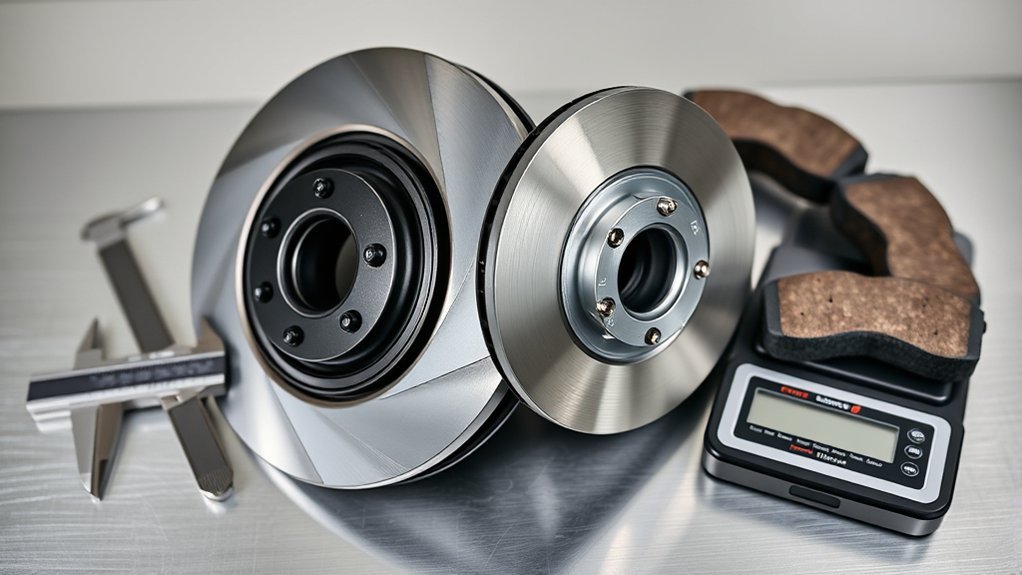
Start with the existing caliper and the vehicle application, not the “13-inch” nickname. Toyota’s brake-pad application chart distinguishes a 199 mm Type A package from a 231 mm Type B package and instructs owners of some early Tundras to check caliper type. The chart pairs pad kit 04465-35290 with the 231 mm Type B package and lists rotor 43512-0C011 in the same application data.
A commercial listing for Toyota rotor 43512-0C011 gives a 318.6 mm diameter, 71 mm height, vented design, six bolt holes, 28 mm new thickness, and 26 mm minimum turning thickness. Confirm the part number and measure the actual rotor before installation because catalog descriptions and cross-references can be wrong.
The 231 mm label does not describe the rotor. It identifies the Type B caliper and matching pad family. In Toyota’s application chart, rotor 43512-0C011 appears with both Type A and Type B, while the pad and fitting kits differ. That is an application-identification point, not proof that every bulletin repair consists only of calipers and pads.
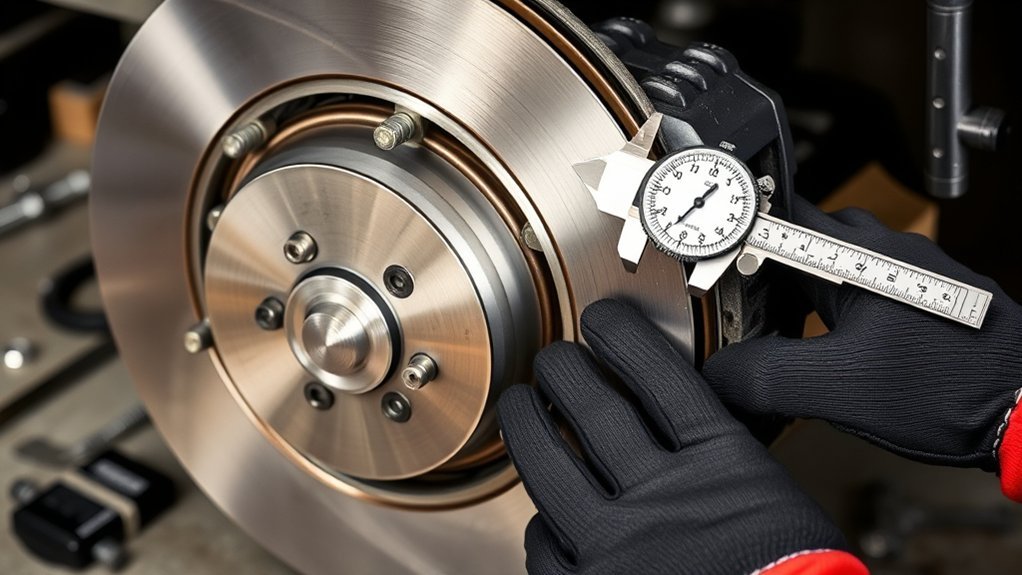
Measure rotor thickness with a micrometer at several evenly spaced points around the disc face. Replace or machine a rotor only if it will remain above the applicable service limit after machining. Do not use a rotor at or below the listed minimum thickness.
Clean the hub face before mounting the rotor. Rust, burrs, paint, or dirt can keep the rotor from sitting flat and can create lateral runout. Seat the rotor against the hub with clean temporary washers and lug nuts, then measure runout with the method specified in the service manual.
The Type B package uses a longer pad family, but the casting alone does not prove a safe upgrade. Correct application, clean mounting surfaces, verified torque, leak-free lines, proper bleeder orientation, wheel clearance, and measured runout still decide whether the vehicle is ready to drive.
[Products Worth Considering]
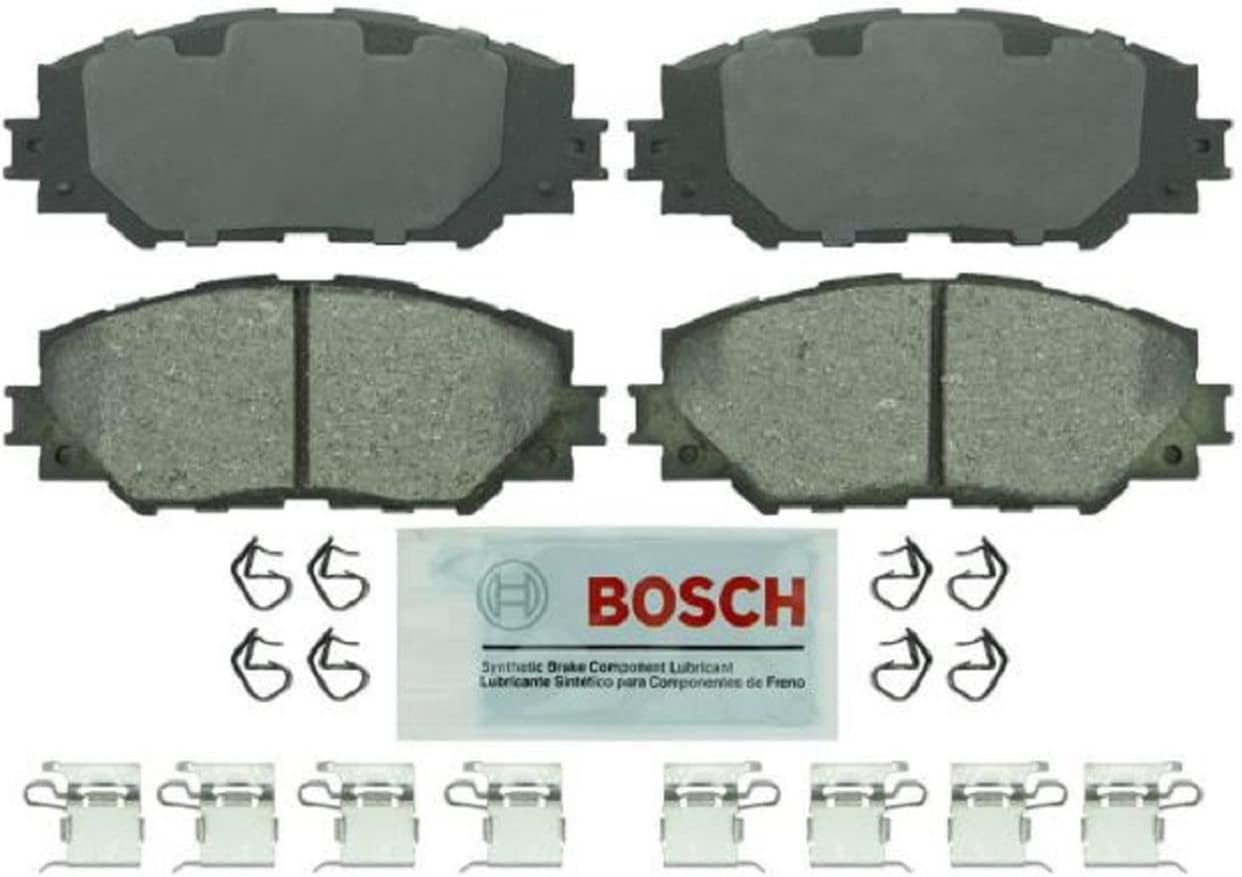
Bosch Blue ceramic front brake pads deliver dependable stopping power with platform-specific friction material designed for select Lexus, Pontiac, Scion, and Toyota vehicles. OE-style shims, slots, and chamfers help promote quiet braking, while the rust-inhibitive coating supports long-lasting performance and cleaner operation. The set includes hardware and synthetic lubricant for easier installation on one axle.

PLEASE CONFIRM YOUR FITMENT: Using the Amazon Confirmed Fit bar at the top of the page or check the Product Description to confirm your vehicle fitment. This may be delivered in multiple boxes

𝗖𝗼𝗺𝗽𝗮𝘁𝗶𝗯𝗶𝗹𝗶𝘁𝘆: The complete brake kit for 2007-2021 Toyota Tundra, 2008-2022 Toyota Sequoia, 2016-2021 Toyota Land Cruiser, 2016-2021 Lexus LX570
Before You Begin
Brake work affects your safety and everyone around the vehicle. Work on a flat surface, chock the wheels, support the vehicle with rated jack stands, and keep brake fluid away from paint. Use the factory service manual or applicable Toyota service bulletin for the exact VIN, production range, brake package, and donor caliper.
This page focuses on 13WL identification and fitment. For routine service steps, see the Toyota Tundra brake pad and rotor replacement guide. Confirm the fluid grade separately in the Toyota Tundra brake fluid guide; do not assume DOT 4 is correct for every first-generation truck.
Warning: Do not drive the vehicle if the pedal feels soft, the pedal sinks, brake fluid leaks, a hose rubs, a bleeder will not seal, a bleeder is not at the highest point, or any road wheel or spare contacts the caliper. Stop the job and correct the problem first.
Platform distinction: Toyota’s caliper-identification bulletin covers Tundra and Sequoia, but BR004-02 is a Tundra front-brake-vibration repair bulletin. A 3rd-generation 4Runner or 1st-generation Tacoma “Tundra brake upgrade” is a separate conversion. Do not transfer backing-plate, trimming, brake-line, hub, or torque instructions between these jobs without the exact procedure.
Gather and verify these items before you start:
- VIN, production date, existing caliper casting, and original brake-package identification
- Two compatible front rotors with measured diameter, height, thickness, bolt pattern, and hub fit
- One front pad set that matches the larger 13WL or 231 mm Type B caliper package
- Correct shims, clips, pins, springs, and anti-rattle hardware for that pad set
- Correct left and right 13WL calipers with the bleeders positioned at the top when installed
- Brake hoses, hard lines, brackets, backing plates, seals, and fasteners required by the exact procedure
- Fresh brake fluid that meets the vehicle specification
- Micrometer, dial indicator, torque wrench, line wrench, and brake bleeding tools
- Every road wheel and the spare wheel for a physical clearance check
- Safe jack, jack stands, wheel chocks, gloves, and eye protection
Inspect every used or remanufactured caliper before installation. Check the pistons, boots, bleeder screws, pad-support surfaces, casting marks, and threaded ports. Rebuild or replace a caliper if you find leaks, torn boots, stuck pistons, damaged threads, or heavy corrosion around a bleeder or fluid port.
What Does 13WL or 231 mm Mean on a Toyota Tundra?
Toyota’s application material labels the two first-generation Tundra and Sequoia front-pad families as 199 mm Type A and 231 mm Type B. The 13WE and 13WL terms are common casting references used during parts identification. The dimensions identify the caliper and matching pad family; neither number is the front-rotor diameter.
Toyota’s front-brake component-identification bulletin says the pads and fitting kits for the two caliper designs are not interchangeable. For early Tundra applications that say “check caliper type,” identify the casting and pad shape on the vehicle before ordering. Record both sides rather than assuming the left and right calipers match.
How Do You Identify a 13WL Caliper?
- Support the vehicle safely, remove the wheel, and clean only enough of the caliper body to read the raised casting mark.
- Photograph the casting, bleeder position, brake-line connection, pad outline, and hardware on both front corners.
- Compare the casting and pad family with Toyota’s Type A/Type B application information, then confirm the VIN and current parts data before ordering.
Do not identify a 13WL from paint color, wheel size, model year alone, or a seller’s “big brake” description. Remanufactured boxes and online catalogs can contain the wrong casting, so verify the part itself before opening the hydraulic system.
| Feature | 199 mm Type A / S13WE-style package | 231 mm Type B / 13WL package |
|---|---|---|
| What the number describes | Type A caliper and pad family | Type B caliper and longer pad family |
| Toyota pad kit in the early “check caliper type” application | 04465-0C012 | 04465-35290 |
| Pad and fitting-kit interchangeability | Do not substitute Type B pads or fitting hardware | Do not substitute Type A pads or fitting hardware |
| Rotor relationship in Toyota’s chart | 43512-0C011 is listed | The same 43512-0C011 rotor is listed |
| Main verification | Casting, pad shape, fitting kit, VIN, and current parts data | Casting, pad shape, line connection, bleeder position, wheel clearance, VIN, and current parts data |
Measurement-source warning: The archived AdventureTaco dimensions often quoted online compare a stock third-generation 4Runner S13WM caliper with a 13WL caliper. They are useful for understanding a 4Runner swap, but they are not a direct 13WE-versus-13WL Tundra measurement table.
Toyota introduced improved front-brake components to address vibration on affected Tundras. The Type B package uses a longer pad family, but the sources reviewed do not establish one universal stopping-distance or pedal-feel gain for every vehicle. Tires, road surface, brake balance, fluid condition, ABS operation, pad compound, and installation quality still control the result.
What Is the Difference Between 13WL and 13WG?
Community fitment references describe 13WG as a related large-caliper casting with a different brake-line port angle. Do not treat 13WG as automatically interchangeable with 13WL. Confirm the port, flare or hose connection, line routing, left/right orientation, and exact vehicle procedure before buying or installing either casting.
Note: “Stock” can mean a 199 mm Type A package, a later 231 mm Type B package, or a different brake system on another Toyota platform. Record the casting and pad shape on both sides before comparing parts.
Which Parts Must Match for a 13WL Upgrade?
Match the parts as a system. The Toyota brake-pad application chart pairs pad kit 04465-35290 with the 231 mm Type B package and tells owners of some early Tundras to check caliper type. Use the chart as an application screen, then confirm the exact vehicle and current superseding part numbers through Toyota parts data or the factory service information.
Toyota rotor 43512-0C011 is listed for first-generation Tundra and Sequoia applications. A model-name match is not enough. Confirm diameter, thickness, height, bolt pattern, hub seating, and the relationship between the rotor friction faces and the caliper before use.
Use This Source Order
- Factory repair information or the applicable Toyota bulletin for the exact VIN and production range
- Current Toyota parts application and supersession data
- Physical casting, pad-shape, rotor, line-connection, and wheel-clearance checks on the vehicle
- Commercial catalogs and community measurements only as secondary cross-checks
Your verified parts list should include:
- Front rotors confirmed by current Toyota application data and physical measurement; the 43512-0C011 listing used here gives 318.6 mm diameter, 28 mm new thickness, and 26 mm minimum turning thickness
- Correct left and right 13WL calipers with clean threads, working bleeders, intact piston boots, and the bleeders at the top
- Front pads that match the 231 mm Type B/13WL caliper package
- Correct shims, clips, pins, springs, and anti-rattle hardware
- Brake hoses, hard lines, brackets, and banjo or flare fittings specified for the exact vehicle and caliper
- Backing plates or dust shields required by the exact Tundra bulletin, Sequoia repair procedure, or documented off-platform conversion
- Fresh specified brake fluid and a proper bleeding setup
- Road wheels and a spare that clear the caliper face, spokes, barrel, wheel weights, and dust shield through a full rotation
A 16-inch wheel diameter does not prove fitment. Factory Tundra wheels used with the 231 mm package are a useful reference, but a swap onto another Toyota platform remains wheel-specific. Test-fit every wheel by hand, rotate it fully, and check the inside barrel, spokes, wheel weights, caliper face, valve-stem area, and dust shield.
[Products Worth Considering]

[THE BOSCH ADVANTAGE] - The Bosch QuietCast line draws on over 77 years of OE braking excellence; promising the highest quality performance, industry-leading strength and durability, and exclusive innovations including Molded Shim Technology (MST)

[THE BOSCH ADVANTAGE] - The Bosch QuietCast line draws on over 77 years of OE braking excellence; promising the highest quality performance, industry-leading strength and durability, and exclusive innovations including Molded Shim Technology (MST)

[THE BOSCH ADVANTAGE] - The Bosch QuietCast line draws on over 77 years of OE braking excellence; promising the highest quality performance, industry-leading strength and durability, and exclusive innovations including Molded Shim Technology (MST)
How Do You Install and Check 13WL Fitment Safely?
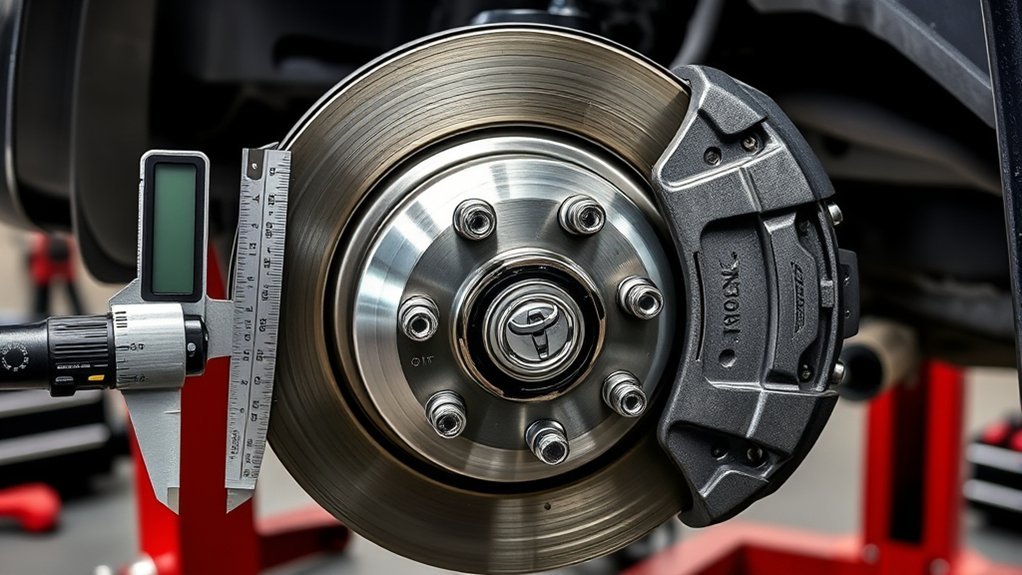
Use the steps below as a verification sequence, not as a substitute for the factory procedure. The exact disassembly, backing-plate work, brake-line parts, torque values, bleed sequence, and ABS precautions depend on the vehicle, VIN, and type of conversion.
- Identify the vehicle and brake package. Record the VIN, production information, existing caliper casting, pad shape, rotor part number, and whether the job is Tundra component identification, a Tundra BR004-02 repair, Sequoia service, or a 4Runner/Tacoma conversion.
- Support the vehicle safely. Chock the rear wheels, raise the front end at approved lifting points, and place the vehicle on rated jack stands before removing any wheel.
- Follow the correct backing-plate procedure. A Tundra BR004-02 repair may specify replacement backing plates, brake tubes, new fasteners, and hub-related work. A Sequoia uses its own repair information. Do not substitute generic dust-shield trimming. On a documented 4Runner/Tacoma conversion, alter the shield only as the applicable procedure requires and smooth every cut edge.
- Inspect and clean the hub face. Remove rust and debris without damaging the hub so the rotor can sit flat against the mounting surface.
- Seat and measure the rotor. Install the rotor squarely, secure it against the hub for measurement, confirm it does not rock, and measure lateral runout by the service-manual method.
- Install the correct left and right calipers. The bleeder screw must be at the highest point of each caliper. If the bleeder sits low, the calipers may be on the wrong sides and air can remain trapped.
- Torque only from the matching procedure. An archived BR004R-02 Tundra bulletin lists 90 ft-lb for new caliper mounting bolts and 11 ft-lb for the new brake-line connection in that bulletin’s procedure. Other model years, fasteners, and conversions can differ, so use the exact factory value for the vehicle and hardware in front of you.
- Route and inspect every line. Keep the hose and hard line clear of the rotor, wheel, suspension, steering stop, and dust shield through full steering and suspension travel. Do not accept twisting, stretching, rubbing, or a fitting under side load.
- Test-fit every wheel and the spare. Install each wheel by hand, rotate it fully, and inspect the spokes, barrel, weights, caliper face, valve-stem area, and dust shield. Verify clearance on both sides before bleeding.
- Bleed the brake circuit. Use the vehicle-specific sequence and fluid. Keep the reservoir from running dry, cycle the pedal, and inspect every fitting and bleeder for leaks.
- Verify the stationary result. Confirm a firm pedal, no pedal sink, no fluid seepage, no trapped-air symptoms, correct pad seating, and free wheel rotation before lowering the vehicle.
- Test at low speed first. In a safe area, confirm pedal feel, straight braking, ABS warning-light status, noise, vibration, and steering feel. Follow the pad or rotor manufacturer’s bedding procedure only after the system passes the leak and clearance checks.
Pro Tip: Record the casting, rotor thickness, runout, primary-wheel clearance, spare-wheel clearance, hose clearance, bleeder position, torque source, and final inspection result. A written record makes a missed mismatch easier to catch.
Reinspect pad orientation, shim placement, retaining hardware, caliper position, and line routing before final wheel torque. Spin each wheel by hand and listen for scraping. If anything touches, stop and correct the problem before the vehicle moves.
[Products Worth Considering]

PLEASE CONFIRM YOUR FITMENT: Using the Amazon Confirmed Fit bar at the top of the page or check the Product Description to confirm your vehicle fitment. This may be delivered in multiple boxes

Kit Includes: 2 Front Performance Brake Calipers; 2 Rear Performance Brake Calipers
Why Does a 13WL Upgrade Rub, Vibrate, or Feel Soft?
Start with the safety faults. If the pedal sinks, fluid appears at a fitting or bleeder, a hose is stretched, or a wheel touches the caliper, do not continue testing. Correct the fault and repeat the stationary inspection before driving.
Soft or spongy pedal: Confirm that the left and right calipers are installed with the bleeders at the highest point. A low bleeder can trap air even after repeated bleeding. Also inspect for leaks, loose fittings, a damaged bleeder seat, an incorrect bleed sequence, expanding hoses, or a master-cylinder problem.
Scraping or no wheel rotation: Remove the wheel and inspect the caliper face, spoke backs, barrel, wheel weights, valve-stem area, dust shield, and rotor position. A 16-inch diameter alone is not proof of clearance. Check the spare because it may use a different casting or offset.
Pedal pulsation or vibration: Measure rotor thickness first, clean the hub face, reseat the rotor, and then measure lateral runout. An archived 2001 Tundra service-manual page lists 28.0 mm standard thickness, 26.0 mm minimum thickness, and 0.07 mm or 0.0028 in. maximum disc runout. Use the specification for the exact vehicle because service limits can differ.
Uneven pad contact or pulling: Verify that the pads match the caliper, sit squarely, and move freely on clean support surfaces. Inspect the piston movement, shims, pins, springs, hose condition, rotor surface, tire pressure, and suspension. Do not assume every pull is a pad-bedding issue. A hot wheel, drag, or rapid uneven wear also warrants the checks in the Toyota Tundra sticking-caliper guide.
Leak after line installation: Stop applying pedal pressure and inspect the fitting type, flare or sealing washers, thread condition, line alignment, and specified torque. Replace damaged sealing parts. Do not overtighten a fitting to hide a damaged seat or wrong connection.
Document the measurements before and after the first controlled test. Recheck torque, hose routing, fluid leaks, wheel clearance, and pad seating after the brakes cool.
When Should a Brake Technician Inspect the Upgrade?
Ask a qualified brake technician to inspect the work if you cannot positively identify the brake package, locate the exact service procedure, verify torque, bleed the system to a firm pedal, route the hose without stress, measure rotor runout, or prove wheel and spare-wheel clearance.
Stop and arrange professional inspection if the pedal remains soft, the vehicle pulls, the ABS or brake warning light stays on, a fitting seeps, a rotor or wheel scrapes, or the brakes grind. A small fluid leak or intermittent contact can become sudden brake loss or wheel damage.
Safety Disclaimer: This article is for informational purposes only and does not replace Toyota factory service information or a professional brake inspection. Do not drive until the parts, procedure, torque, bleeding, leaks, wheel clearance, line routing, ABS status, and pedal feel have all been verified.
Frequently Asked Questions
What size brake pads and rotors do I need for the 13WL upgrade?
For the common six-lug first-generation Tundra application, Toyota’s chart lists rotor 43512-0C011 with the Type B package. The catalog listing used here gives 318.6 mm diameter, 28 mm new thickness, and 26 mm minimum turning thickness. Use pads, shims, and fitting hardware for the 231 mm Type B/13WL package, then confirm current parts data, casting, VIN, and physical measurements.
What does 231 mm mean on a 13WL caliper?
The 231 mm label identifies Toyota’s larger Type B caliper housing and pad family. It does not mean the rotor is 231 mm in diameter.
How can I tell whether I have 13WL calipers?
Read the casting mark on the caliper and compare the pad shape and housing with Toyota’s 199 mm Type A and 231 mm Type B application information. Do not identify the package from model year or wheel size alone.
Do 13WE and 13WL calipers use the same rotor?
Toyota application data can pair rotor 43512-0C011 with both the smaller Type A and larger Type B packages. The important change is the caliper and matching pad family. Confirm the rotor part number and dimensions for the exact vehicle before reuse.
Can I use any 16-inch wheel with 13WL calipers?
No. Spoke shape, barrel profile, offset, casting details, wheel weights, and the spare-wheel design can all change clearance. Test-fit every wheel through a complete rotation before driving.
Why does my brake pedal feel soft after the upgrade?
First confirm that each caliper is on the correct side with the bleeder at the highest point. Then inspect for air, leaks, loose fittings, a damaged bleeder seat, an incorrect bleed sequence, expanding hoses, or a hydraulic component fault. Do not drive with a soft or sinking pedal.
What runout limit should I check after installing the rotor?
An archived 2001 Tundra service-manual page lists 0.07 mm, or 0.0028 in., as maximum disc runout. Measure with the rotor secured against a clean hub and use the service limit for the exact vehicle and brake package.
Do I need to change brake lines or backing plates for the 13WL upgrade?
It depends on the platform and procedure. A Tundra BR004-02 repair can specify brake tubes, backing plates, new fasteners, and hub-related work. A Sequoia uses its own repair information, while a 4Runner/Tacoma conversion may use different hose and shield work. Do not use one universal parts list.
Is a Tundra 13WL update the same as a 4Runner or Tacoma swap?
No. The parts are related, but the vehicle application, backing plate, brake lines, wheel fitment, torque references, and installation steps can differ. Identify the platform and use its exact procedure before buying or modifying parts.
Does Toyota BR004-02 apply to the Sequoia?
No. Toyota’s front-brake component-identification information covers Tundra and Sequoia caliper designs, but BR004-02 is a Tundra front-brake-vibration repair bulletin. Use Sequoia-specific factory repair information for a Sequoia.
Can I use a 13WG caliper instead of a 13WL?
Do not assume it is interchangeable. Community references describe 13WG as a related large casting with a different brake-line port angle. Confirm the fitting type, line routing, left/right orientation, wheel clearance, and exact application before use.
Should I replace or machine rotors near the minimum thickness?
Replace the rotor if machining would leave it at or below the applicable minimum thickness. A rotor at the service limit has no remaining machining allowance and less thermal reserve.
Conclusion
A safe Toyota Tundra 13WL brake upgrade starts with identification, not parts ordering. Confirm whether the truck has the 199 mm Type A/S13WE-style or 231 mm Type B/13WL package. Then separate a Tundra BR004-02 repair from Sequoia service information and from a 4Runner/Tacoma conversion. Verify every rotor, pad, fitting kit, caliper, line, backing plate, wheel, and torque source. Before driving, make sure both bleeders are at the top, the pedal is firm, the system is dry, every road wheel and the spare clear, and measured runout is within the exact service limit.
Sources
- Toyota Parts & Service: Brake Pads Application Chart — Type A 199 mm and Type B 231 mm illustrations, early-Tundra caliper-type check, pad kits 04465-0C012 and 04465-35290, and rotor application data.
- Archived Toyota BR001-03: Front Brake Component Identification — two Tundra/Sequoia caliper designs and the warning that their pads and fitting kits are not interchangeable.
- YotaShop: Toyota Sequoia & Tundra Front Brake Rotor 43512-0C011 — catalog-listed rotor diameter, height, bolt holes, new thickness, minimum turning thickness, and fitment.
- Archived 2001 Toyota Tundra Service Information: Front Disc Inspection — 28.0 mm standard thickness, 26.0 mm minimum thickness, and 0.07 mm / 0.0028 in. maximum runout reference.
- Archived Toyota Tundra BR004R-02 Procedure — Tundra-only bulletin context and bulletin-specific torque references.
- AdventureTaco: Archived 231 mm 13WL Caliper and Rotor Measurements — community measurements of a stock third-generation 4Runner S13WM caliper versus a 13WL caliper, plus swap considerations.