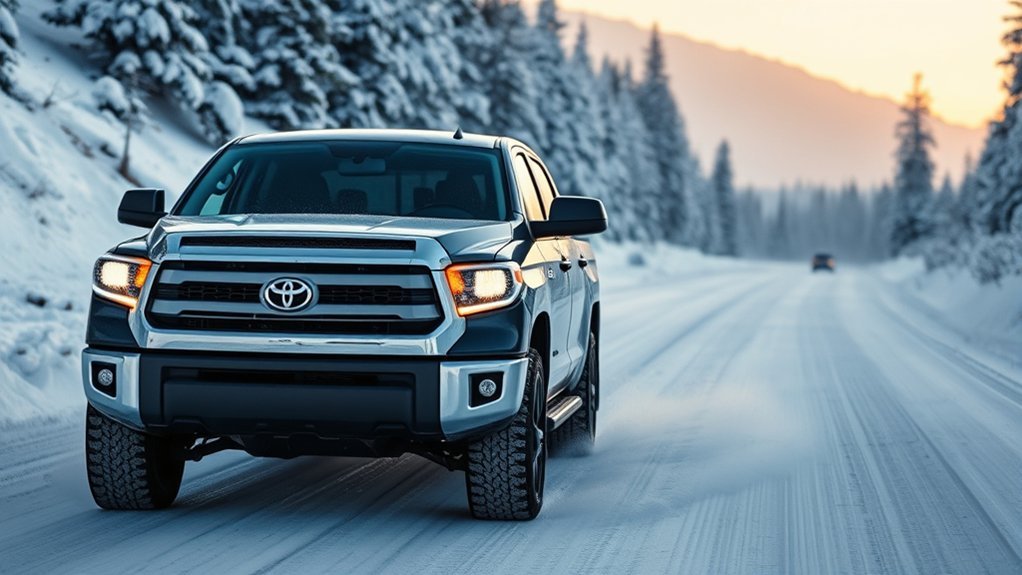
Driving a Toyota Tundra in snow is mostly about preparation, smooth inputs, good tires, and using the truck’s 4WD system correctly. Before you go, check the weather, tire condition, cold tire pressure, battery, lights, fluids, and emergency gear. On the road, slow down, avoid cruise control, use 4H on snowy or icy surfaces where the tires can slip, reserve 4L for low-speed deep snow or steep grades, and leave extra space for braking. Exact 4WD controls and traction features vary by model year and trim, so confirm the operating procedure in your Tundra owner’s manual.
Last updated: September 16, 2026 — documentation-based guide checked against Toyota owner guidance, NHTSA winter-driving guidance, AAA winter-driving guidance, and current tire-manufacturer information.
Quick Answer
Use 4H for normal snow-covered or icy roads where the surface allows tire slip. Use 4L only for slow crawling in deep snow, steep hills, recovery, or hard pulling. Drive with gentle throttle, early braking, and slow steering inputs. Use the tire pressure on your driver-door placard, carry emergency gear, and avoid driving if conditions are unsafe. A published 4WD shift-speed limit is not a recommended driving speed for snow.
Key Takeaways
- Use 4H for snowy, icy, or loose roads where the tires can slip; use 2WD/2H on dry pavement.
- Use 4L only at low speed for deep snow, steep climbs or descents, off-road recovery, or hard pulling.
- Check tire pressure when the tires are cold and use the PSI listed on the Tundra’s door placard or owner’s manual, not a universal number.
- BFGoodrich KO2s are 3PMSF severe-snow-rated all-terrain tires, but dedicated winter tires remain the stronger choice for frequent ice and severe winter roads.
- Do not use cruise control on snow or ice, and increase your following distance to at least five to six seconds.
- On many Tundras, less than 62 mph is a 2WD/2H↔4H shift-procedure limit, not a safe-speed target for winter roads.
At a Glance
| Time Required | 10–20 minutes before a normal trip; longer if installing chains or loading gear |
| Difficulty | Easy to moderate |
| Tools Needed | Tire pressure gauge, ice scraper, flashlight, shovel, straps, emergency kit |
| Cost | $0 if already prepared; more if buying winter tires, chains, secured ballast, or emergency supplies |
Quick Action Steps for Driving a Toyota Tundra in Snow
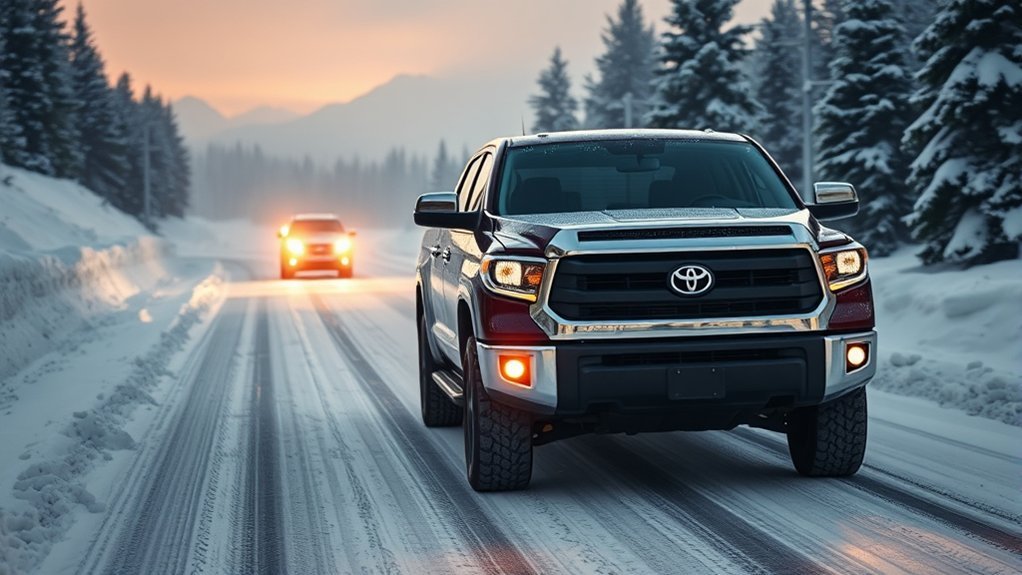
Start with the most important choice: decide whether the trip is necessary. If visibility is poor, roads are closed, ice is building, or local officials advise against travel, stay home. Even a capable truck cannot overcome every winter road condition.
If you must drive, clear all snow and ice from the windshield, roof, lights, mirrors, camera lenses, and license plates. Check weather and road conditions along the full route, tell someone where you are going on longer trips, and keep your fuel tank close to full when possible.
Once moving, use 4H for snowy or icy roads where extra traction is needed and the surface permits tire slip. Keep your speed low, apply the throttle gently, brake early, and steer smoothly. Choose the line with the most visible traction and least standing snow or ice. Do not assume existing tire tracks are safer; packed tracks can still be icy.
Warning: Do not use cruise control on snow, ice, slush, or any slippery surface. Cruise control can apply throttle when traction is already limited and may make a skid harder to correct.
AAA recommends increasing following distance to five to six seconds on snow and ice. Add even more space when towing, driving downhill, carrying a heavy load, visibility is poor, or you suspect ice.
Pre-Trip Checklist for Your Toyota Tundra
Before winter driving, make the truck ready first. The National Highway Traffic Safety Administration recommends checking tires, battery, lights, wipers, washer fluid, cooling system, and emergency supplies before winter weather.
- Tires: Check tread, age, sidewalls, and cold tire pressure. Use the pressure listed on the driver-door placard or your owner’s manual.
- Battery: Cold weather reduces battery power, so test a weak or older battery before the first hard freeze.
- Fluids: Use winter-grade windshield washer fluid, verify coolant condition, and follow Toyota’s recommended engine oil viscosity instead of guessing.
- Lights: Test headlights, brake lights, turn signals, hazard lights, and trailer lights if towing.
- Wipers and defrosters: Replace worn blades and make sure front and rear defrost systems work.
- Emergency gear: Carry a snow shovel, ice scraper, jumper cables or jump pack, flashlight, warning triangles or flares, first-aid kit, blanket, water, snacks, phone charger, gloves, and any needed medication.
Note: Tire sidewall pressure is usually the tire’s maximum pressure, not the correct pressure for your Tundra. Use the vehicle placard or owner’s manual for normal cold tire pressure.
Should You Use 4H or 4L in Snow?
Your Tundra’s 4WD modes are useful, but they are not all for the same situation. Toyota’s 2017 Tundra owner materials say 2WD is for normal dry roads, 4H is for low-traction surfaces such as icy or snow-covered roads, and 4L is for maximum power and traction in deep snow, steep hills, or hard pulling.
Model-year note: Tundra selector labels, traction aids, and operating details vary by generation, trim, and package. Use the table below as a snow-driving decision guide, then confirm the exact switch procedure in the owner’s manual for your truck.
| Mode | Use It For | Avoid It When |
|---|---|---|
| 2WD / 2H | Dry pavement and normal driving | Roads are snowy, icy, muddy, or loose enough that extra driven-wheel traction is needed |
| 4H | Snow-covered roads, ice, gravel, and other loose or slippery surfaces | Dry, high-traction pavement where drivetrain binding can occur |
| 4L | Low-speed deep snow, steep climbs, steep descents, recovery, or hard pulling | Normal road speeds or dry pavement |
On many Tundra model years, Toyota specifies reducing speed to less than 62 mph (100 km/h) before shifting between 2WD/2H and 4H. Treat that number only as a shift-procedure limit; safe speed on snow or ice may be far lower. For a 4H-to-4L shift on applicable models, stop completely, keep your foot on the brake, shift the transmission to Neutral, then select 4L. Do not shift while the wheels are spinning. Confirm the exact procedure in your model-year manual.
For a deeper explanation of transfer-case modes and model-year differences, see the Toyota Tundra 4WD system guide.
Pro Tip: Practice shifting into 4H and, if equipped, 4L in a safe area before a storm. You do not want your first low-range shift to happen while you are already stuck on a dark hill.
[Products Worth Considering]

These X-BULL recovery traction tracks help drivers get unstuck from sand, snow, mud, or ice with a stable U-shaped elastic design and a wavy ramp that makes tire entry easier. Built from reinforced nylon, they are flexible, impact-resistant, and designed to perform in extreme temperatures while providing reliable emergency traction for a wide range of vehicles.
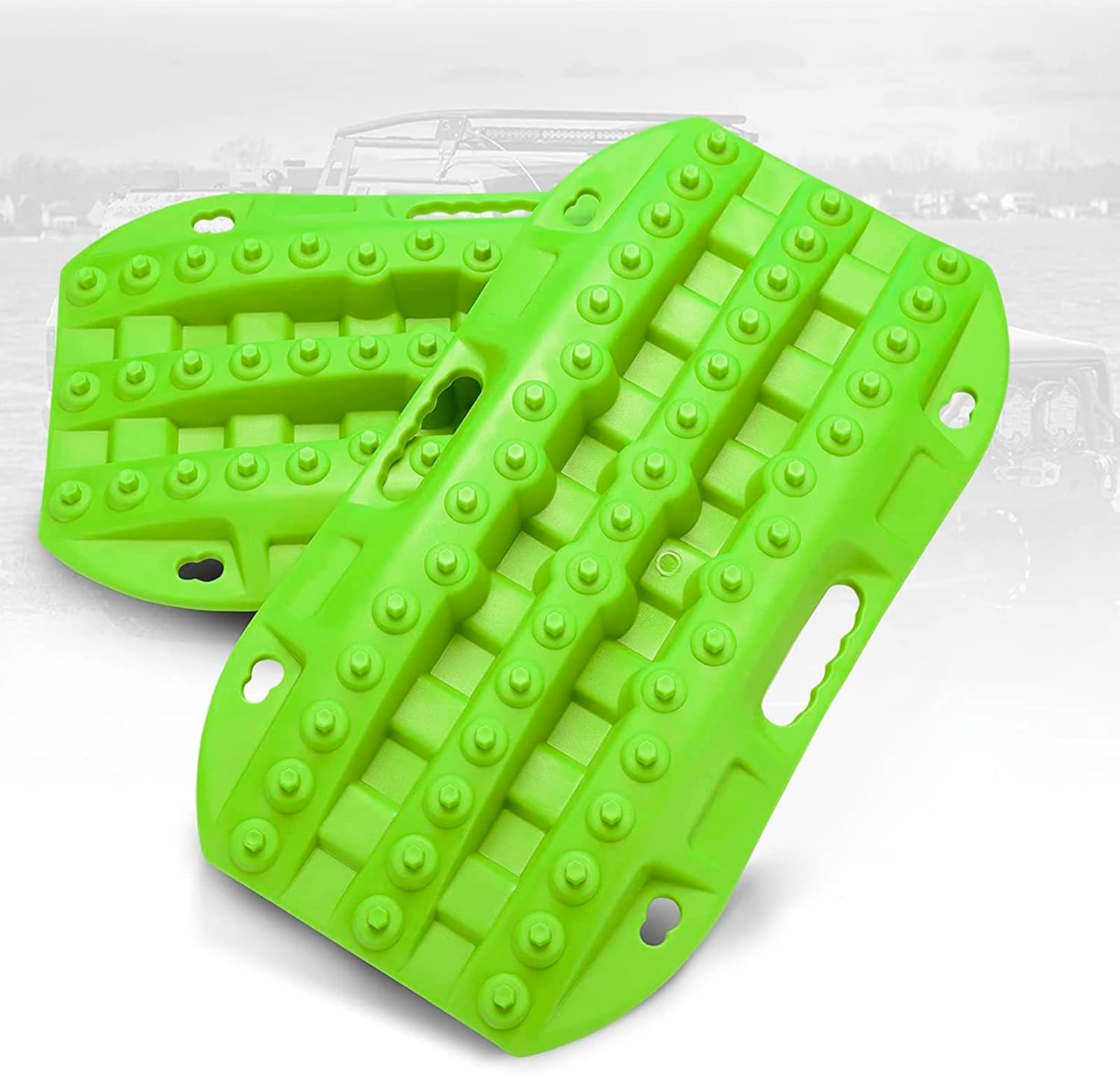
These short recovery traction boards are designed to help ATVs, UTVs, and other off-road vehicles regain grip in mud, sand, and snow. Built with strengthened teeth and a durable polypropylene construction, they provide reliable traction, easy handling, and year-round performance in tough conditions. Their nested, space-saving design and integrated shovels make them practical for carrying and using on remote adventures.

BUNKER INDUST off-road traction boards help vehicles regain grip in mud, sand, and snow with a double-sided diamond array and cross-shaped teeth for improved bite and stability. Built from upgraded automotive-grade polypropylene, they resist UV damage, cold-weather brittleness, and wheel-spin heat while remaining flexible enough to handle demanding recovery situations. Contoured ramps, ergonomic handles, and multiple mounting points make them practical to use, store, and retrieve when adventure turns into recovery.
Choose & Maintain Tires for Your Tundra
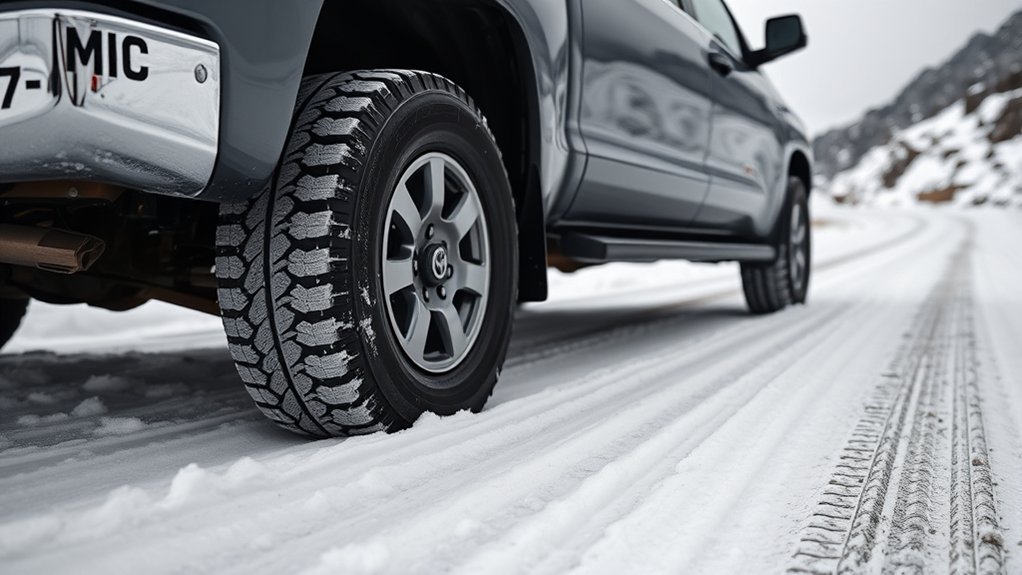
Tires matter more than many drivers expect from 4WD. Four-wheel drive can help the truck accelerate, but it cannot create extra tire-to-road grip for braking or cornering. If you regularly drive in snow, slush, freezing rain, or mountain passes, choose tires for the conditions you actually face.
[Products Worth Considering]

This proportional trailer brake controller provides smooth, responsive braking by automatically matching your tow vehicle’s stopping force for safer trailer control. The bright LED digital display makes it easy to monitor voltage output in real time, while adjustable braking and sync settings help tailor performance to different trailers and road conditions. Designed for quick installation and broad compatibility, it supports 1 to 4 axle trailers for dependable towing confidence.

These off-road traction boards are designed to help vehicles recover from mud, sand, and snow with reliable grip and easier ramp-up. Their double-sided diamond construction, cross-shaped teeth, and contoured ramps improve traction while the durable polypropylene build stays flexible in harsh conditions. Convenient mounting points, ergonomic handles, and a visible leash make them practical to carry, store, and retrieve when recovery is needed.

This all-in-one recovery kit provides a reliable towing solution for roadside emergencies and off-road adventures. It includes a heavy-duty tow strap, two D-ring shackles, and a storage bag for convenient transport and quick access. Built for demanding recovery tasks, it is designed to help with towing trucks, SUVs, ATVs, UTVs, and boats in tough weather conditions.
Winter Tire Selection
BFGoodrich All-Terrain T/A KO2 tires are 3PMSF severe-snow-rated all-terrain tires. They are a strong all-terrain choice for mixed truck use, gravel, dirt, and snow. However, the 3PMSF mark does not make an all-terrain tire equivalent to a dedicated winter tire in every cold-pavement, braking, or ice condition.
Choose based on your winter reality:
- Occasional snow and mixed roads: A healthy 3PMSF-rated all-terrain or all-weather tire may be enough.
- Frequent ice or mountain passes: Dedicated winter tires are the stronger choice.
- Remote or chain-control areas: Carry correctly sized chains or cables even if your tires are snow-rated.
- Heavy towing in winter: Prioritize tires with the correct load rating, healthy tread, and predictable braking.
Proper Tire Pressure
Check tire pressure when the tires are cold, ideally before driving or after the truck has been parked for several hours. Cold temperatures reduce inflation pressure, and underinflation can hurt steering response, braking control, fuel economy, and tire life.
Use the cold PSI listed on your Tundra’s driver-door placard or in the owner’s manual. Do not assume 35 psi is correct for every tire size, trim, load, or replacement-tire setup.
Tire Inspection Routine
Before winter and before long trips, inspect all four tires plus the spare. Look for uneven wear, cuts, cracks, bulges, punctures, exposed cords, and low tread. For winter driving, do not wait until tires are near the legal minimum tread depth. Snow and slush performance drops as tread gets shallow, so start planning replacement early if winter traction is already weak.
- Check pressure at least monthly and before long trips.
- Rotate tires on schedule to keep wear even.
- Replace tires with visible damage or poor winter grip.
- Keep the spare inflated and usable.
- Store off-season tires in a cool, dry place away from sunlight.
Should You Add Weight in the Bed for Snow Traction?
A pickup’s rear end can feel light in snow, especially when the bed is empty. Secured ballast near the rear axle can sometimes improve rear-tire bite, but it is not a substitute for winter-capable tires, slower speed, or 4WD when conditions call for it. Any added weight must remain within the truck’s available payload capacity.
Position Weight Over Axle
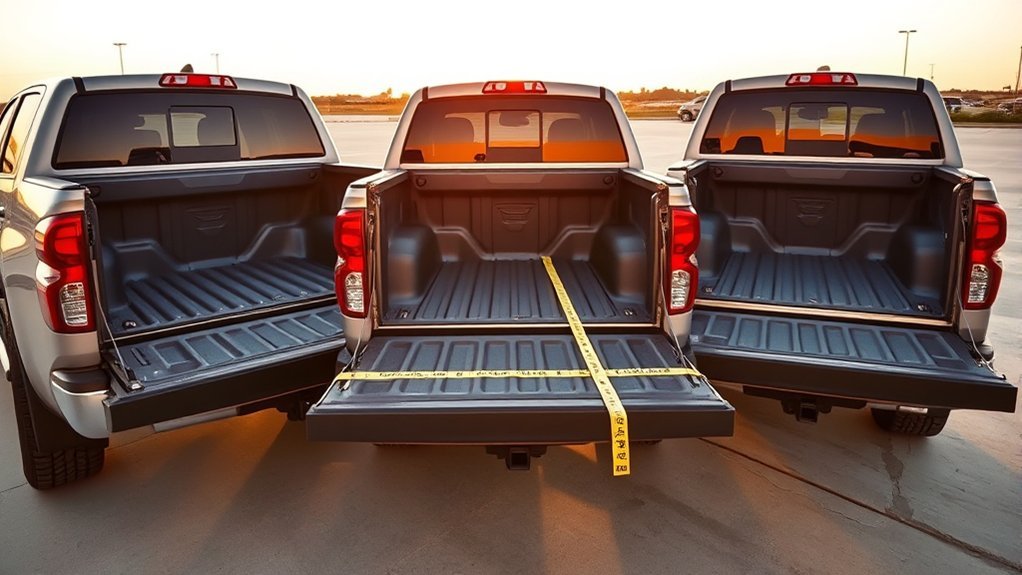
Place added weight low in the bed and centered side to side near the rear axle. Do not stack it high, place it behind the tailgate, or let it slide around. Too much weight can increase stopping distance, change steering balance, reduce remaining payload capacity, and hurt fuel economy.
Stay within the payload limit shown on your Tundra’s door label. If you are carrying tools, passengers, a cap, hitch equipment, or trailer tongue weight, all of that counts toward payload.
How Much Bed Weight Should You Add?
There is no single ballast number that is appropriate for every Tundra. Cab configuration, bed length, tires, passengers, tools, accessories, trailer tongue weight, and the truck’s payload rating all change how much capacity remains. Avoid copying a universal sandbag number from another truck. Use only the amount your truck can safely carry, keep it secured near the rear axle, and remove it when it is no longer needed.
Secure With Heavy Straps
Use ratchet straps or strong tie-downs attached to the bed’s tie-down points. After a short drive, stop somewhere safe and recheck the straps. Loose sandbags or blocks can shift during braking or a skid and make the truck harder to control.
Warning: Bed weight can help rear-wheel traction, but it does not create extra braking grip on ice. Drive slower and leave more stopping room, especially with passengers, cargo, or a trailer.
Start, Stop, and Accelerate Smoothly on Snow
Smooth driving is the core skill. Snow and ice punish sudden inputs. Accelerate gently, brake early, and steer gradually. If the tires spin, ease off the accelerator instead of adding more throttle.
- Starting: Use 4H when the road is snow-covered and the surface permits tire slip. Apply light throttle and let the tires hook up gradually.
- Stopping: Begin braking much earlier than normal. Keep your heel on the floor and use steady pressure.
- ABS braking: If your Tundra has ABS, press the brake pedal firmly and continuously. Do not pump ABS brakes.
- Non-ABS braking: If wheels lock in a vehicle without ABS, ease off and reapply pressure carefully.
- Hills: Build gentle momentum before the hill, avoid sudden throttle, and descend slowly using lower gears when appropriate.
Engine braking can help control speed on descents, but do not downshift abruptly on ice. A sudden downshift can upset traction just like a sudden brake input.
Steer, Corner, and Keep Lane Control Safely
Slow before the turn, not in the middle of it. Take corners slower than usual. Keep both hands steady, avoid jerky steering, and look where you want the truck to go.
If the rear starts to slide, do not slam the brakes. Ease off the throttle, look toward your intended path, and steer smoothly in that direction. Avoid overcorrecting; big steering changes can turn one skid into another.
Watch for black ice on bridges, overpasses, shaded curves, intersections, and areas where snow melts and refreezes. Keep extra distance around plows, semis, and vehicles with poor tire traction.
Use Toyota Traction & Stability Features Correctly
Your Tundra’s traction and stability systems can help, but they cannot override available tire grip. Keep traction control and Vehicle Stability Control active for normal snowy-road driving unless your exact owner’s manual directs otherwise for a particular recovery or terrain mode. If warning or slip lights flash, reduce speed and use gentler inputs.
Engage Traction Control Properly
Traction control helps limit excessive wheelspin during acceleration. Vehicle Stability Control helps the truck stay closer to the direction you are steering. Both systems work best when you drive smoothly and leave them room to help.
Remember that 4WD helps the truck move, but it does not make icy turns or stops safe at normal dry-road speeds. If the system intervenes often, the correct response is usually to slow down.
Use 4WD and Stability
Use 4H before the rear tires are already spinning hard on a snow-covered or icy surface. When shifting between 2WD/2H and 4H, reduce speed as required by your owner’s manual and avoid shifting while the wheels are spinning.
Use 4L only for low-speed conditions such as deep snow, steep grades, or recovery. On some Tundra model years, selecting 4L changes or disables certain stability-control functions, so steering and throttle discipline matter even more. Check your exact owner’s manual before relying on a specific stability-control behavior.
If Your Tundra Has Multi-Terrain Select
Some newer Tundras add Multi-Terrain Select (MTS), but available modes and their behavior vary by model year, powertrain, trim, and package. For example, Toyota owner guidance for equipped 2023 models lists a DEEP SNOW setting in 4H. Treat MTS as an aid for the specified terrain, not as a replacement for suitable tires, correct 4WD use, or reduced speed. Check the owner’s manual for your exact truck before selecting a terrain mode.
Auto LSD: When to Use It
If your Tundra has Auto LSD, do not treat it as a normal highway snow mode. Toyota owner guidance describes Auto LSD as a traction aid for limited situations where a drive wheel is spinning, such as a ditch or rough surface. Feature availability and operation vary by model year, so follow the instructions for your truck and do not leave a recovery-oriented mode active continuously unless the manual specifically permits it.
Fix Skids, Get Unstuck, and Handle Ice
If the Tundra starts sliding, stay calm. Look where you want to go, ease off the accelerator, and steer smoothly toward your intended path. Avoid stomping on the brake or snapping the steering wheel back and forth.
If you get stuck, clear snow from around the tires, under the frame, and near the exhaust pipe. Use sand, kitty litter, or traction boards for grip if needed. Shift between Drive and Reverse gently to rock the truck only if your owner’s manual allows it and you can do so without spinning the tires hard.
- Use 4H for slippery roads and light stuck situations where the surface permits tire slip.
- Use 4L for slow, controlled recovery in deep snow or on steep grades when appropriate for your model.
- Turn off traction control only if your owner’s manual or the specific stuck situation calls for a brief attempt to rock free.
- Turn the traction system back on after you regain normal movement.
- Stop if the tires dig deeper or you smell overheating brakes, clutch, or transmission fluid.
Warning: If you are stranded and run the engine for heat, clear snow from the exhaust pipe first and run the engine only briefly as needed. A blocked exhaust can allow carbon monoxide to enter the cabin.
Use Tire Chains or Cables When Needed
Snow-rated tires are helpful, but chains or cables may still be required by law or needed on packed ice, steep mountain roads, or chain-control routes. Tundra owner guidance for multiple model years instructs drivers to install tire chains on the rear tires and not the front tires. Always confirm your exact model year, factory tire size, wheel clearance, and local regulations before installation. Toyota’s chain guidance should be read together with your vehicle manual and the chain manufacturer’s instructions.
Before a storm trip, confirm that the chains or cables fit your exact tire size and wheel setup. Practice installing them in dry weather. Toyota owner guidance also calls for retightening properly installed rear chains after roughly 1/4–1/2 mile (0.5–1.0 km). Do not exceed the chain manufacturer’s speed limit or 30 mph (50 km/h), whichever is lower. Remove the chains when you return to bare pavement unless local rules require otherwise.
Note: Oversized tires, aftermarket wheels, lift kits, and low-clearance chain designs can change what fits safely. Check clearance before you need chains on the roadside.
[Products Worth Considering]

The CURT 52010 Trailer Breakaway Switch helps keep towing safer by automatically engaging trailer brakes if the trailer disconnects from the tow vehicle. It features silver contact points for a dependable electrical connection, plus a nylon case and pull pin assembly designed to handle outdoor use and secure activation. The included metal mounting tab makes installation simple on trailers with electric brakes.
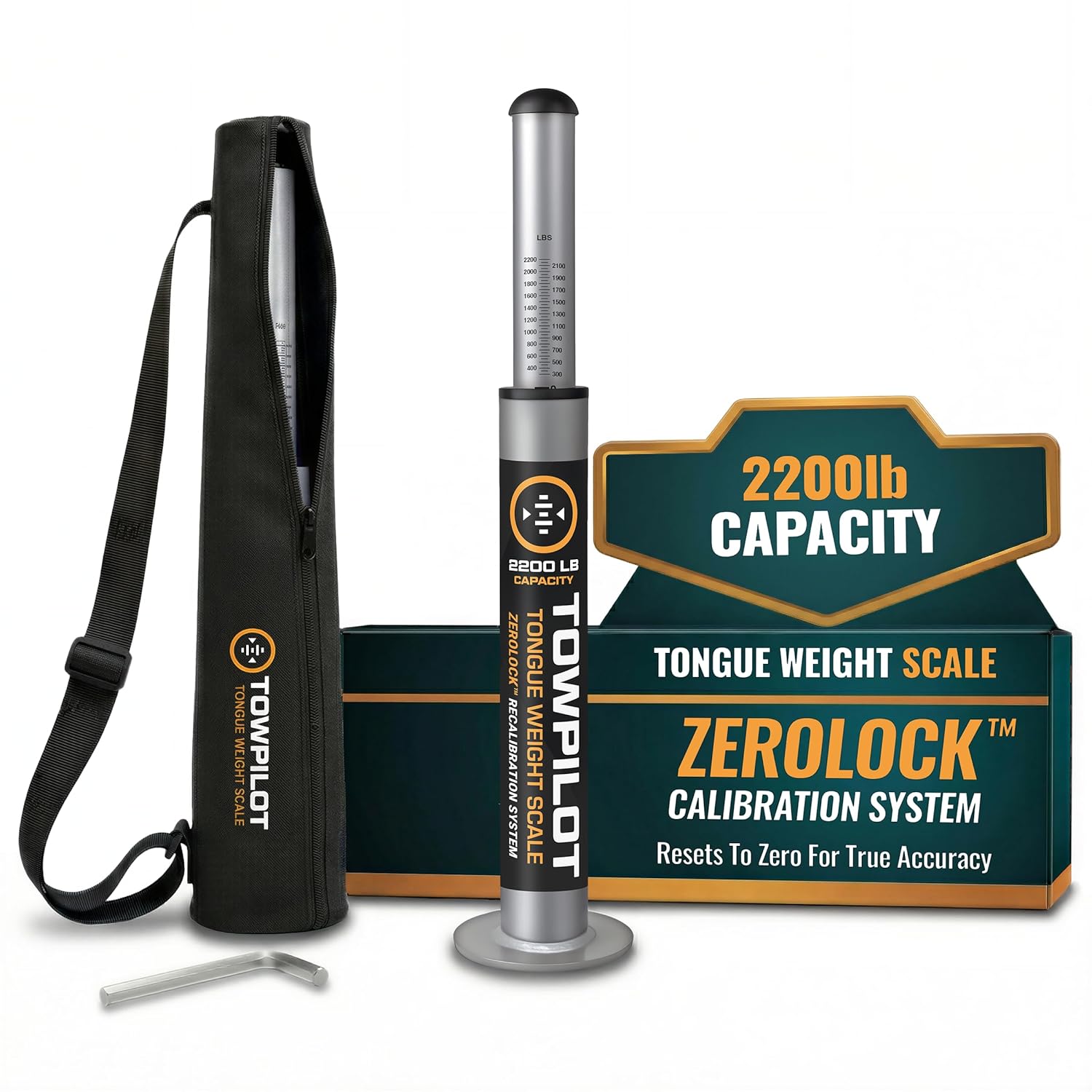
This trailer tongue weight scale helps you check hitch weight quickly and accurately before towing, reducing sway and improving overall safety. Built with durable steel and a spring mechanism, it works without batteries and includes a recalibration feature to maintain true-zero accuracy over time. It is designed for RVs, campers, and utility trailers, with a top plate that helps protect your coupler during use.

These heavy duty jumper cables are designed to help you get back on the road quickly with strong, insulated clamps and extended reach for easier battery access. The flexible cable jacket stays dependable in a wide range of temperatures, while the included storage bag keeps everything organized and ready for emergencies. Built for cars, SUVs, and trucks, they offer a practical roadside solution backed by quality assurance and after-sales support.
Towing a Trailer in Snow With a Tundra
A Tundra can tow in winter, but towing on snow or ice raises the risk quickly. The trailer adds weight, length, and stopping distance. It can also push the truck during downhill braking or cause sway if the trailer is loaded poorly.
Before towing in snow:
- Confirm the trailer, hitch, tongue weight, and cargo are within Toyota’s ratings for your exact Tundra.
- Use a properly adjusted trailer brake controller when required.
- Load the trailer with proper tongue weight and balanced side-to-side weight.
- Use winter-capable tires on the truck and safe, legal tires on the trailer.
- Increase following distance well beyond five to six seconds.
- Cancel or delay the tow if roads are icy, steep, closed, or visibility is poor.
Do not assume 4WD solves trailer braking. Four-wheel drive can help you get moving, but the trailer still needs room and tire grip to stop safely.
Emergency Gear + Winter-to-Summer Maintenance
A winter kit is not just for remote trails. It is useful if you slide off the road, sit in a highway closure, wait for a tow, or need to help someone else. Keep the kit in the cab or in a secured, weatherproof container where you can reach it.
Pack these items:
- Blanket, gloves, hat, and extra warm layers
- Water, snacks, and needed medication
- Phone charger or power bank
- Flashlight with spare batteries
- Jumper cables or jump starter
- Snow shovel, ice scraper, and brush
- Sand, kitty litter, or traction boards
- First-aid kit
- Warning triangles, flares, or reflective markers
- Tow strap rated for the job, if you know how to use it safely
When winter ends, remove unnecessary bed weight, clean road salt from the underbody, inspect brakes and suspension, rotate or swap tires, and store winter gear properly. If you run dedicated winter tires, switch back once temperatures are consistently warm enough for your normal tires.
Frequently Asked Questions
Is a Toyota Tundra good in snow?
A properly equipped Tundra can be very capable in snow, especially with winter-capable tires and correct use of 4H. Its size and 4WD do not remove the limits of tire grip, though. Ice still increases braking and cornering distance, so tire condition, speed, following distance, and smooth driver inputs matter more than simply having four-wheel drive.
How fast can I drive a Tundra in 4H in snow?
Drive only as fast as traction, visibility, tires, traffic, and road conditions safely allow. On many Tundras, Toyota’s less-than-62-mph figure applies to shifting between 2WD/2H and 4H; it is not a recommended snow-driving speed. On ice or heavy snow, a safe speed can be much lower. Check your exact model-year owner’s manual for 4WD operating limits.
Can I tow a trailer in deep snow with my Tundra?
You can only do it safely if the truck, trailer, hitch, tires, brakes, ratings, and road conditions are all appropriate. Deep snow greatly increases stopping distance and sway risk. Check your exact tow rating, use proper trailer brakes, reduce speed, and delay the tow if roads are icy, steep, or poorly plowed.
Will BFGoodrich KO2s perform well on packed ice without chains?
KO2s are 3PMSF severe-snow-rated all-terrain tires, so they meet a recognized snow-traction standard, but packed ice is a different challenge. Dedicated winter tires or legal, correctly sized chains may provide more suitable traction depending on the conditions. Slow down, avoid sudden inputs, and carry chains where chain controls may apply.
How does payload affect electronic stability control performance?
Payload changes weight balance, braking distance, and how quickly the rear of the truck reacts in a slide. Keep weight low, centered, and secured. Stay within the payload rating, slow down, and leave more room because stability control cannot fully compensate for excessive weight or poor load placement.
Should I switch to winter oil or fluids for cold starts?
Do not guess or switch oil only because it is winter. Follow Toyota’s recommended oil viscosity for your exact engine and climate. Use washer fluid suitable for freezing conditions, and make sure coolant meets Toyota’s specification and provides the required freeze protection.
Can hill-start assist be used on icy inclines?
If your Tundra has the relevant hill-start assistance, treat it as assistance rather than a guarantee of traction. Use gentle throttle, keep the wheels straight when possible, and avoid stopping on an icy hill unless necessary. Select the appropriate 4WD mode for your model and conditions, but choose another route if traction is too poor.
Should I turn traction control off in snow?
For normal snowy-road driving, leave the applicable traction and stability systems on. Turn a traction-control function off only when the owner’s manual or a specific stuck-vehicle situation calls for a brief recovery attempt. Turn the system back on when normal driving resumes.
Is 4H safe to use on dry pavement?
Avoid using 4H on dry, high-traction pavement in a part-time 4WD Tundra unless the owner’s manual for your exact model says otherwise. Use 2WD/2H for normal dry roads. Switch to 4H when the surface permits tire slip, such as snow, ice, gravel, mud, or loose dirt.
Conclusion
A Toyota Tundra can be very capable in snow when its tires, preparation, and driving technique match the conditions. Use 4H for snow-covered or icy surfaces that permit tire slip, save 4L for slow deep-snow, steep-grade, or recovery situations, keep tire pressure and tread in check, and drive with smooth inputs. Carry emergency gear, follow the exact owner’s manual for your model year, and stay off the road when traction or visibility is beyond what you can safely manage.
Sources
- NHTSA Winter Weather Driving Tips — tire pressure, battery, fluids, emergency kit, ABS, braking, and carbon monoxide safety
- AAA Winter Driving Tips — following distance, cruise-control warning, route checks, hills, and stuck-vehicle safety
- Toyota 2017 Tundra Manuals and Warranties — model-specific 4WD operation and winter-driving reference
- Toyota On-Demand 4WD Operation Support — 2WD and 4H usage guidance
- Toyota Snow Chains/Cables Support — chain/cable guidance
- BFGoodrich All-Terrain T/A KO2 — 3PMSF severe-snow rating and tire classification