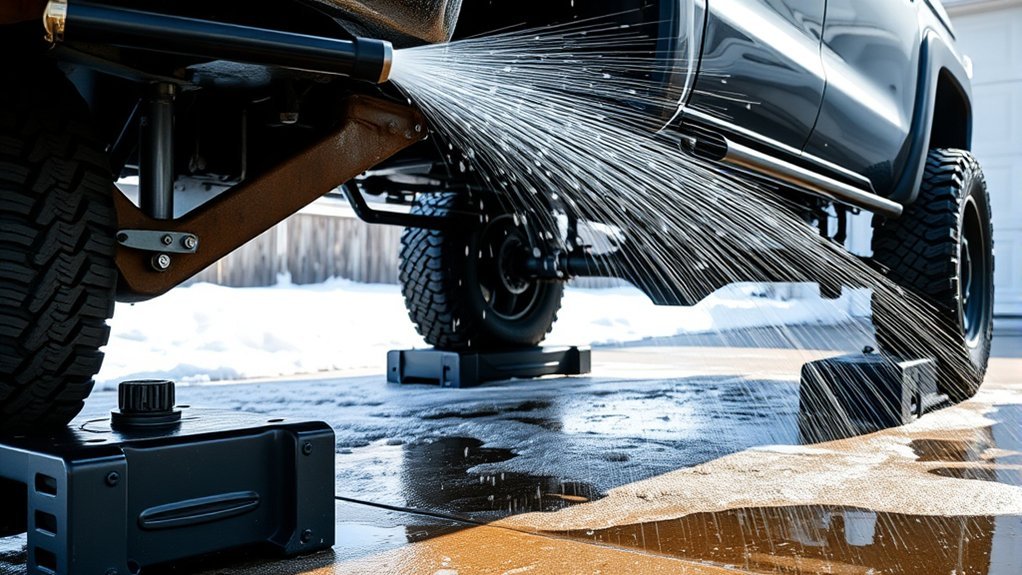
To wash a Toyota Tundra undercarriage after road salt, immediately flush the wheel wells, frame rails, crossmembers, suspension mounts, skid-plate edges, spare-tire area, and brake-line routes with plenty of plain water. Work on a cool truck, keep any pressure-washer spray broad and moving, then let the underside drain before you inspect for rust or damaged lines. Apply a compatible corrosion inhibitor only after loose salt, mud, and flaking rust are gone.
Last updated: July 23, 2026
Quick Answer
Rinse the underside, wheel wells, frame rails, crossmembers, suspension mounts, skid-plate edges, and brake-line routes with a garden hose or a pressure washer at the lowest effective setting. Use a wide fan spray, keep it moving, and stay farther back around coatings, wiring, sensors, rubber boots, and lines. Let the truck drain, inspect for corrosion or damage, and follow the protectant label before applying it.
Key Takeaways
- AAA advises washing at least every two weeks during winter and more often after heavily salted-road driving.
- Use water volume and a wide, moving spray instead of a 0° pinpoint jet near coatings, wiring, rubber boots, sensors, brake lines, and seals.
- Focus on wheel wells, frame rails, suspension mounts, skid-plate edges, spare-tire area, and crossmembers where salt hides.
- Remove loose salt and mud, inspect the metal, then apply only a corrosion inhibitor that is compatible with the truck’s existing coatings and materials.
At a Glance
| Time Required | 30–60 minutes for washing; longer if treating rust or applying coating |
| Difficulty | Easy to moderate DIY maintenance |
| Tools Needed | Garden hose or pressure washer, undercarriage wand, safety glasses, gloves, soft brush, towels or blower, rust inhibitor |
| Cost | A plain-water rinse may cost nothing at home; total cost varies by wash-bay fees, tools, salt remover, and corrosion protectant |
Tundra Undercarriage Salt-Pocket Checklist
| Area | How to Rinse It | Stop-and-Inspect Sign |
|---|---|---|
| Wheel wells and liner edges | Flush from the front and rear of each wheel opening; soften packed slush or mud before brushing. | Loose liner, exposed wiring, torn boot, or rust scale around a mount. |
| Frame rails and crossmembers | Rinse along the rail from both sides and clear visible drain openings without forcing a jet into enclosed components. | Bulging coating, deep flakes, soft metal, cracks, or perforation. |
| Suspension and brake-line routes | Use a broad spray and extra distance around hoses, clips, boots, sensors, and line fittings. | Wet line, heavy pitting, damaged clip, split boot, or fluid leak. |
| Skid plates and shields | Rinse the leading and trailing edges where salt and mud collect; do not remove panels unless you have the correct service information. | Bent panel, missing fastener, trapped debris, or contact with a line or harness. |
| Hitch receiver, spare-tire area, and rear brackets | Flush the receiver opening, safety-chain loops, carrier hardware, bumper brackets, and rear crossmember. | Seized hardware, deep scaling, cracked weld, or weakened attachment point. |
How to Wash a Tundra Undercarriage After Road Salt
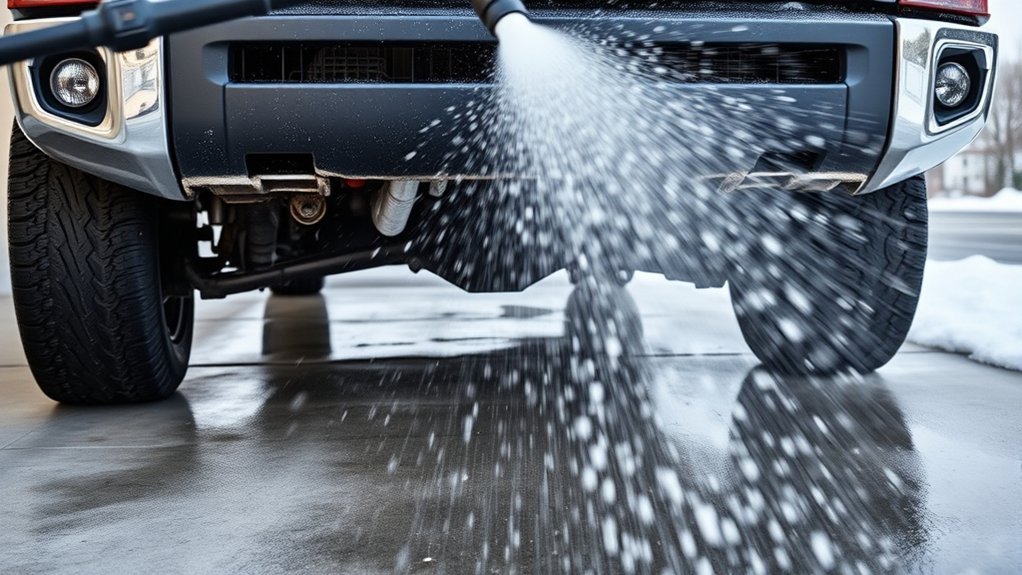
Act soon after driving on salted roads. Road salt and salty slush cling to the underside and can speed corrosion where metal or protective coatings are already exposed. Toyota owner-manual guidance directs owners to remove mud or road salt from the underside and wheel wells during exterior cleaning.
Start with a plain-water rinse while the truck is cool to the touch. A garden hose with an undercarriage attachment is enough for routine salt removal. A pressure washer can help, but only if you use it carefully. Think rinse and flush, not blast and strip.
AAA warns that salt damage is easy to miss because it happens underneath the vehicle, where structural parts, brake lines, and suspension components can be affected.
For salt-state driving, a predictable rinse schedule beats a once-a-year cleanup. AAA recommends washing at least every two weeks during winter and more often after heavily salted roads. For a Tundra that tows, plows, parks outside, or sees off-road mud or water crossings, rinse as soon as practical after severe exposure.
[Products Worth Considering]
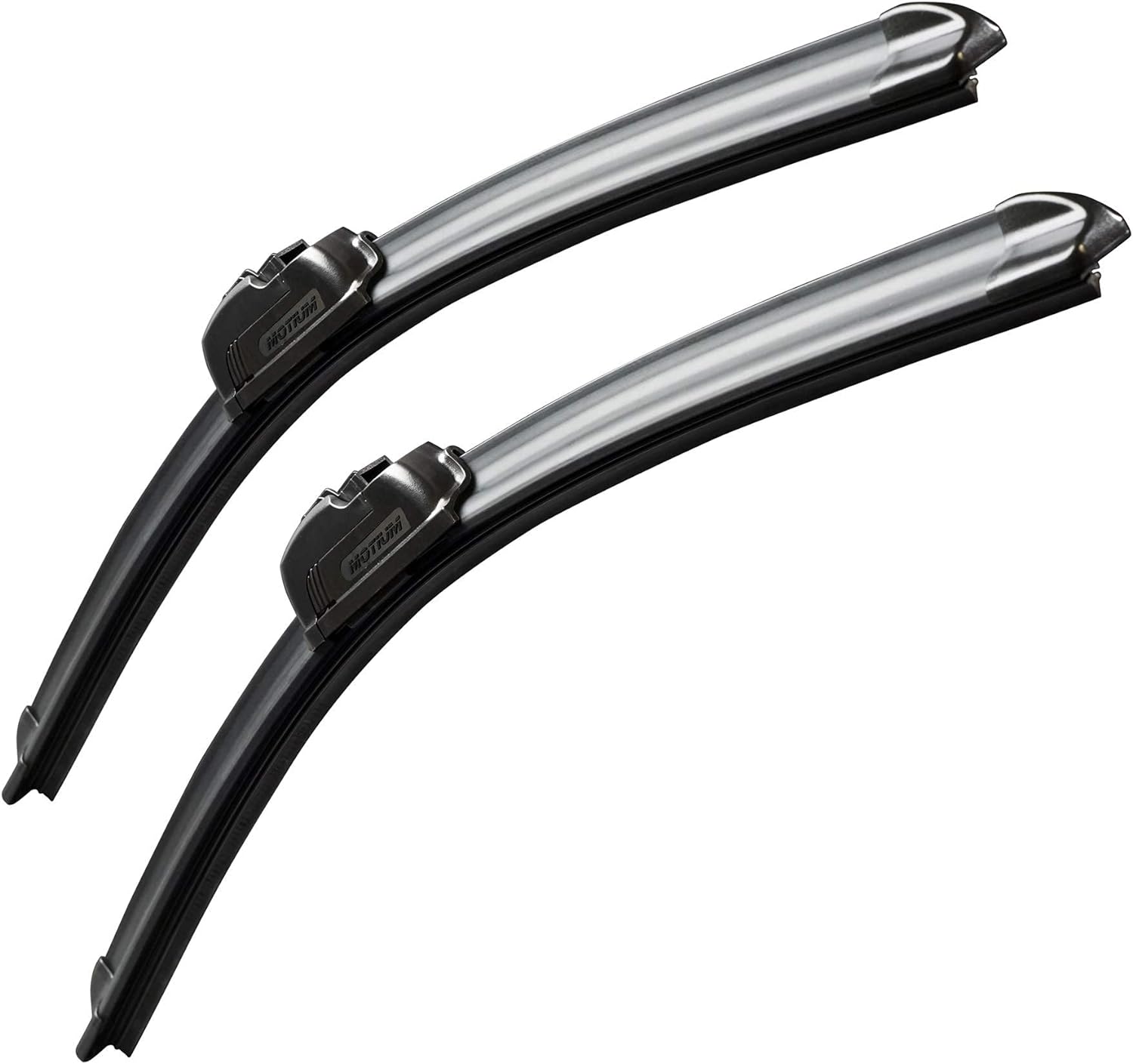
These MOTIUM windshield wiper blades deliver clear, streak-free wiping for improved visibility in rain, snow, and extreme heat. Designed for quiet, smooth operation and easy installation, they include both driver and passenger blades for a quick replacement solution that helps keep driving safer in all seasons.
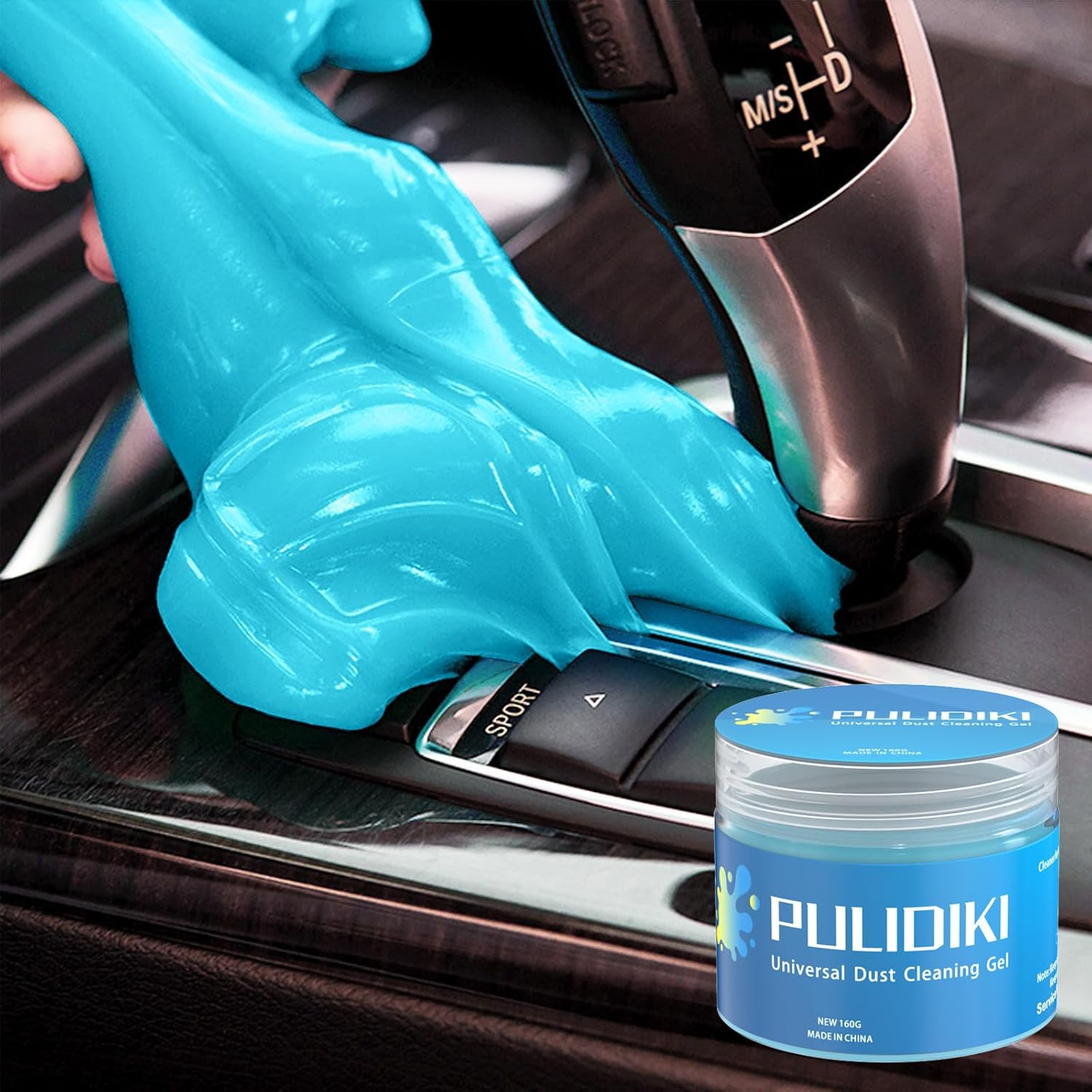
PULIDIKI Car Cleaning Gel is a reusable detailing putty designed to lift dust and debris from hard-to-reach spots inside your vehicle. It helps clean air vents, cup holders, dashboards, and other tight spaces while also working on keyboards, remotes, and other water-resistant surfaces. Made with a lavender scent and natural materials, it offers a simple, mess-free way to keep your car and everyday electronics looking tidy.

Rain-X WeatherBeater wiper blades deliver dependable, conventional performance designed to meet or exceed OEM standards for quality and durability. The natural rubber squeegee, galvanized steel frame, and multiple pressure points work together to provide a clean, consistent wipe while resisting cracking, rust, and corrosion. A pre-installed multi-adapter helps simplify installation on many vehicles.
Safety Setup and Runoff Before You Start
Warning: Never crawl under a Tundra supported only by a jack. Use ramps or properly rated jack stands on a level surface, set the parking brake, chock the wheels, and let the exhaust, brakes, and drivetrain cool before spraying or inspecting underneath.
i-FORCE MAX safety: Toyota warns owners not to touch or attempt to remove orange high-voltage wiring, connectors, or the hybrid service plug. Limit this job to exterior rinsing. If a high-voltage cover, orange cable, or connector looks damaged, stop and arrange qualified Toyota service.
Pick a washing spot where runoff will not carry salty water, oil residue, detergent, and grime straight into a storm drain. The EPA notes that vehicle wash water can contain detergents, metals, hydrocarbons, oils, grease, and other contaminants. A commercial wash bay with an underbody rinse is often the cleanest choice. If you wash at home, use plain water when possible and keep runoff away from storm drains according to local rules.
- Wear safety glasses because salt flakes, grit, and rust scale can fall back toward your face.
- Use gloves if you will brush rust or apply corrosion inhibitor.
- Do not spray directly into electrical connectors, sensors, alternator openings, or sealed boots at close range.
- Do not spray coatings onto brake rotors, brake pads, belts, tires, exhaust parts, or hot surfaces.
- Read the label for any salt remover, degreaser, or rust inhibitor before using it under the truck.
Note: Older Tundras from salt-heavy regions deserve extra attention. Use the official Toyota recall lookup to check for Toyota safety recalls and service campaigns. Use the NHTSA recall tool to check the VIN for unrepaired safety recalls. Do not assume structural frame rust is only a DIY coating issue.
What Tools Do You Need to Wash the Tundra Undercarriage?
Before you rinse, set out the tools so you can work front to back without stopping halfway through. You do not need a professional lift for a basic salt rinse, but you do need reach, light, and control.
- Garden hose with spray nozzle or a pressure washer with adjustable output
- Undercarriage washer attachment or angled wand for upward rinsing
- A wide fan nozzle approved by the pressure-washer manufacturer for vehicle cleaning; never use a 0° pinpoint nozzle
- Soft wheel-well brush or detailing brush for packed salt and mud
- Flashlight or work light for inspecting seams, welds, and brake-line routes
- Clean towels, leaf blower, or compressed air for drying reachable areas
- A compatible rust inhibitor such as Fluid Film, WoolWax, Krown, or AMSOIL Heavy-Duty Metal Protector
Fluid Film’s manufacturer describes it as a lanolin-based, non-drying barrier that protects against road salt. It also warns that the product may soften some undercoatings and may affect non-oil-resistant rubber. AMSOIL says HDMP displaces water and dries to an amber, wax-like coating that protects metal from salt and moisture. Treat each product as a separate system: confirm compatibility with existing undercoating, rubber, plastics, wiring, and the product label before application.
Pro Tip: Take “before” photos of the frame rails, rear crossmember, suspension mounts, and brake-line paths. After rinsing and drying, compare the same spots so you can see whether salt crust, rust bubbles, or flaking scale remains.
[Products Worth Considering]

CHAPIN’s low-profile oil drain pan is designed to slide under low-clearance vehicles and equipment, making fluid changes easier in tight spaces. The large splash-free target area helps reduce mess while the molded carry handles support easier lifting, pouring, and storage. Built for draining oil, coolant, and other automotive fluids, it offers a practical high-capacity solution for routine maintenance.

Rain-X Foaming Car Wash is a concentrated cleaner designed to lift dirt, grime, and road residue while helping reduce spots and streaks for a glossy finish. Its biodegradable formula is safe for waxed surfaces and delivers high-foaming cleaning action for an exceptional wash. Ideal for routine vehicle care, it helps leave your car looking clean and bright after every wash.

Dual function undercarriage cleaner and water broom; The undercarriage cleaner removes dirt, oil, salt, fuel and more from the exposed underside of trucks, cars, SUVs, RVs, trailers and more; Water broom mode is great for removing debris from flat surfaces like garage floors, driveways, pavements, and patios
How Should You Pressure-Wash a Tundra Undercarriage?
Use the gentlest setup that removes the salt. For most DIY work, that means a hose with an undercarriage wand or a pressure washer at its lowest effective setting. Pressure, flow, and nozzle output vary by machine, so follow the pressure-washer manual. Begin with the widest suitable fan spray and a generous distance, then test a small coated area before cleaning the rest of the truck.
Do not use a 0° pinpoint nozzle on the undercarriage. Keep a wide spray moving and stay farther back around damaged coatings, connectors, sensors, rubber boots, brake hoses, seals, vents, and labels. If residue does not release, increase soak time and water volume before you increase pressure or move closer.
[Products Worth Considering]

Powerful Cleaning Capability: This undercarriage pressure washer attachment delivers a robust cleaning performance with a 16-inch wide cleaning path. The 4000 PSI rating ensures effective removal of dirt, grime, and road salt from the underside of vehicles, leaving your car spotless and protected
How Much Pressure Is Safe?
Start low. Sweep the water across the underside instead of holding it in one spot. If salt remains, soak the area, let it soften, brush lightly, and rinse again. Do not solve stubborn grime by moving a narrow jet closer to brake lines, wiring, bushings, or painted/coated metal.
- Start with the widest fan nozzle and the lowest effective pressure.
- Keep the wand moving; never dwell on one fastener, seam, hose, boot, connector, or damaged coating.
- Increase distance around fragile parts and reduce pressure before changing to a narrower fan.
- Use cool or mildly warm water; avoid thermal shock from very hot water on cold metal or plastic.
- Rinse from several angles so water carries salt out instead of driving it deeper into seams.
What Spray Angle Works Best?
Aim upward and across the surface, not straight into one sensitive part. Work from the front of the Tundra toward the rear so dirty water flows away from areas you already cleaned. Then switch sides and repeat from the opposite angle.
- Start at the front crossmember and lower control-arm pockets.
- Rinse inside the front wheel wells, behind liners where reachable, and around mud-flap edges.
- Flush along both frame rails from front to rear.
- Spray around skid-plate edges, tow-hook mounts, and drain holes.
- Rinse suspension mounts, shock mounts, leaf-spring areas, and rear axle brackets.
- Flush the spare-tire area, rear crossmember, hitch receiver, and bumper brackets.
- Finish by rinsing the rocker-panel pinch welds and lower door seams from a safe angle.
Clean Wheel Wells, Frame Rails & Hidden Salt Pockets
The dirtiest areas are not always the lowest areas. Salt hides where spray gets trapped and airflow is poor. On a Tundra, spend extra time on the wheel wells, frame holes, bed crossmembers, suspension pockets, rear bumper brackets, hitch receiver, skid plates, and any area where mud or slush cakes up.
Use water volume and several spray angles to flush hidden salt pockets, but do not aim a concentrated jet into connectors, seals, vents, boots, or damaged coatings.
- Target suspension mounts and brake-line routes where salty slush dries into crust.
- Run the undercarriage wand along each frame rail from multiple angles.
- Brush packed deposits with a soft brush instead of using a narrow high-pressure stream.
- Look for drain holes that are blocked by mud, leaves, or ice.
- Rinse until the water coming off the area looks clear rather than milky, brown, or gritty.
If the Tundra has been off-road, remove mud first. Mud holds moisture against metal and can hide salt residue from winter roads. Let heavy clay soften with water, brush it loose, then rinse again. Do not apply rust inhibitor over mud, wet salt film, or flaky rust.
When Should You Stop and Get Rust Inspected?
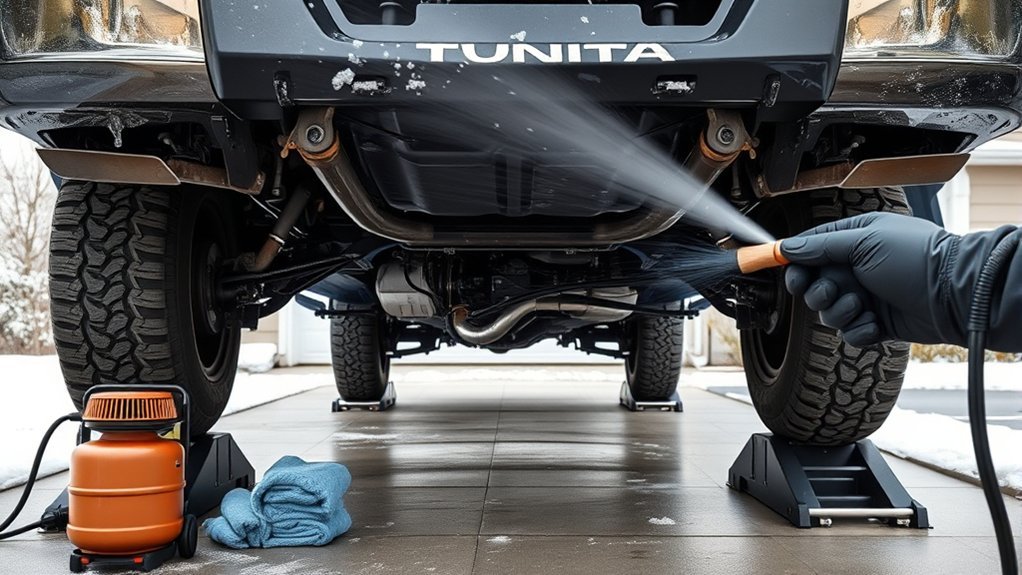
After rinsing, give the undercarriage time to drain. Do not coat the truck while seams and brackets are still dripping unless the product label specifically allows application to damp metal. Use a leaf blower, low-pressure compressed air, or towels on reachable spots. In freezing weather, use a heated wash bay or allow enough time for water around brakes, steps, locks, and parking-brake hardware to dry before the truck sits outside.
Inspect the frame rails, welds, fasteners, suspension mounts, brake-line clips, fuel-line routes, skid-plate edges, hitch receiver, and spare-tire carrier area with a flashlight. Surface rust looks like a thin orange or brown film. More serious corrosion looks scaly, swollen, layered, soft, or perforated.
Warning: If you see holes, deep flaking scale, cracked mounts, soft metal, leaking brake/fuel lines, or rust around structural attachment points, stop the DIY coating plan and have the truck inspected by a qualified mechanic. Coating over structural rust can hide a safety problem.
For light surface rust, remove only loose scale with a hand wire brush or an abrasive approved by the repair-product instructions. Stop if the metal is deeply pitted, thin, soft, cracked, or close to a brake line, fuel line, wiring harness, sensor, or orange high-voltage cable. Clean and treat solid metal according to the product label. Do not spray rust inhibitor on brake rotors, pads, exhaust components, belts, tire tread, sensors, drain openings, labels, or hot parts.
When Should You Apply or Reapply Rust Protection?
Once the Tundra is clean and dry, add protection where salt attacks first: frame rails, seams, brackets, suspension mounts, spring perches, bed crossmembers, hitch hardware, and exposed fasteners. A corrosion inhibitor does not replace washing; it slows moisture and salt from sitting directly on metal.
- Apply protection before winter when possible, but only after the surface preparation required by the product label.
- Use lanolin-style products when their creeping, non-drying film is compatible with the truck’s existing undercoating and rubber parts.
- Use wax-style products where their harder-drying film and surface-preparation requirements fit the application.
- Inspect high-spray areas after severe salt exposure and after undercarriage washing; no single reapplication interval fits every product or climate.
- Do a deeper rinse and reinspection in spring after road-salt season ends.
Apply thin, even coverage. More product is not always better. Heavy overspray can attract dirt, drip, smell on warm parts, block drain openings, or make future inspections harder. Follow the product label. Keep the coating off brakes, exhaust parts, sensors, tires, belts, identification labels, orange high-voltage components, and any rubber or plastic the manufacturer lists as incompatible.
Note: A clean spring rinse matters even if you coated the truck before winter. Salt can sit on top of protective films, inside mud, and around fasteners. Wash first, inspect second, then reapply only where protection has thinned or washed away.
Troubleshooting Stubborn Salt, Mud, and Rust
If the underside still looks chalky or gritty after one rinse, do not jump straight to higher pressure. Use the problem-and-fix approach below.
| Problem | What to Do |
|---|---|
| White salt film remains | Rinse again with more water volume, not a narrower nozzle. Use a pH-balanced automotive salt remover if plain water is not enough. |
| Packed mud in wheel wells | Soak, brush lightly, and rinse from multiple angles. Remove mud before applying any coating. |
| Flaking rust falls off | Brush loose scale, inspect the remaining metal, and get a professional inspection if the metal is pitted, soft, or perforated. |
| Coating washes off quickly | Clean and dry better before reapplying, use thinner coats, and expect touch-ups in high-spray areas. |
| Frozen slush is packed underneath | Let the truck thaw in a safe place or use a winter-safe wash bay. Avoid forcing ice off with a concentrated pressure stream. |
How Often to Wash a Tundra Undercarriage in Salt Season
AAA’s practical baseline is to wash at least every two weeks during winter and more often after heavily salted-road driving. Treat that as a starting point, not a fixed rule. After a major snowstorm, long highway drive, brine pre-treatment, beach driving, or off-road mud run, rinse sooner. If the truck stays visibly coated with salty slush, do not wait for the calendar.
- After every heavy salt drive: quick underbody rinse if practical.
- Every 1–2 weeks in winter: routine undercarriage wash and wheel-well flush.
- Mid-winter: inspect coating and touch up exposed frame or brackets.
- Spring: deep wash, dry, inspect, treat rust, and reapply protection where needed.
- Before next winter: inspect again and apply a fresh protective layer.
Frequently Asked Questions
Should I wash my car after they salt the roads?
Yes. Wash your vehicle after driving on salted roads, and make the undercarriage a priority. Salt can collect underneath, hold moisture, and accelerate rust on the frame, suspension, brake-line areas, and exposed hardware.
How often should I rinse my Tundra’s undercarriage in winter?
AAA recommends washing at least every two weeks during winter and more often after heavily salted-road driving. Rinse sooner after brine, salty slush, beach driving, or muddy off-road use, especially when residue is visibly coating the truck.
Can I pressure wash a Tundra undercarriage?
Yes, but use the lowest effective setting and a wide fan nozzle approved for vehicle cleaning. Keep the spray moving, begin well back from the surface, and stay farther away from wiring, sensors, brake parts, rubber boots, seals, labels, and damaged coatings. Never use a 0° pinpoint nozzle.
How do I clean the undercarriage after off-roading?
Rinse promptly, soak packed mud, brush wheel wells and skid-plate edges with a soft brush, then flush the frame rails, suspension mounts, and crossmembers from multiple angles. Let the truck dry before inspecting or applying rust protection.
What neutralizes salt corrosion on a truck?
Use plenty of water to dissolve and flush road-salt residue. If a visible film remains, use an automotive salt-removal product that is labeled safe for underbody coatings, metal, rubber, and plastics. Avoid improvised household acid or alkaline mixtures around wiring, brake parts, rubber, and protective coatings.
Should I apply Fluid Film before or after washing?
Apply a rust inhibitor only after loose salt, mud, and flaky rust are removed. Then follow that product’s preparation instructions. Some products displace moisture; others require a dry surface. Confirm compatibility with existing undercoating and rubber before spraying.
Is an automatic car wash enough for road salt?
An automatic wash with an underbody spray helps, especially in freezing weather, but it may not reach every frame pocket, skid-plate edge, wheel-well liner, or hitch bracket. Follow up with a targeted rinse and inspection when weather and space allow.
Is undercarriage washing safe on a Tundra i-FORCE MAX hybrid?
A normal exterior rinse is appropriate, but do not touch, open, remove, or closely pressure-spray orange high-voltage wiring, connectors, covers, or the service plug. If any high-voltage part looks damaged, stop and arrange qualified Toyota service.
Conclusion
Make the next step a focused rinse and inspection: flush the wheel wells, frame rails, crossmembers, suspension mounts, skid-plate edges, hitch, and spare-tire area; let the truck drain; then check for damaged coatings, leaking lines, loose hardware, or deep rust. Treat only solid surface metal with a compatible product, and send structural corrosion, damaged brake or fuel lines, and hybrid high-voltage damage to a qualified technician. Use AAA’s two-week winter washing guidance as a baseline, and rinse sooner after severe exposure.
Sources
- Toyota Owners — 2025 Tundra exterior cleaning guidance — supports rinsing mud and road salt from the underside and wheel wells.
- AAA — Winter road salt can cause hidden vehicle damage — supports the undercarriage risk, two-week winter washing baseline, and more frequent washing after heavy salt exposure.
- U.S. EPA — Stormwater Best Management Practice: Vehicle Maintenance and Washing — supports runoff, storm-drain, and commercial-wash guidance.
- Fluid Film — Automotive applications — supports the lanolin-based, non-drying barrier description and compatibility warnings.
- AMSOIL — Heavy-Duty Metal Protector — supports the wax-like coating, water displacement, and salt-protection claims.
- Toyota Recall Lookup — supports checking a Tundra VIN for Toyota safety recalls and service campaigns.
- NHTSA Recall Lookup — supports checking a VIN for unrepaired safety recalls.
- Toyota — 2026 Tundra Hybrid Warranty & Maintenance Guide — supports the warning not to touch or remove orange high-voltage wiring, connectors, or the service plug.