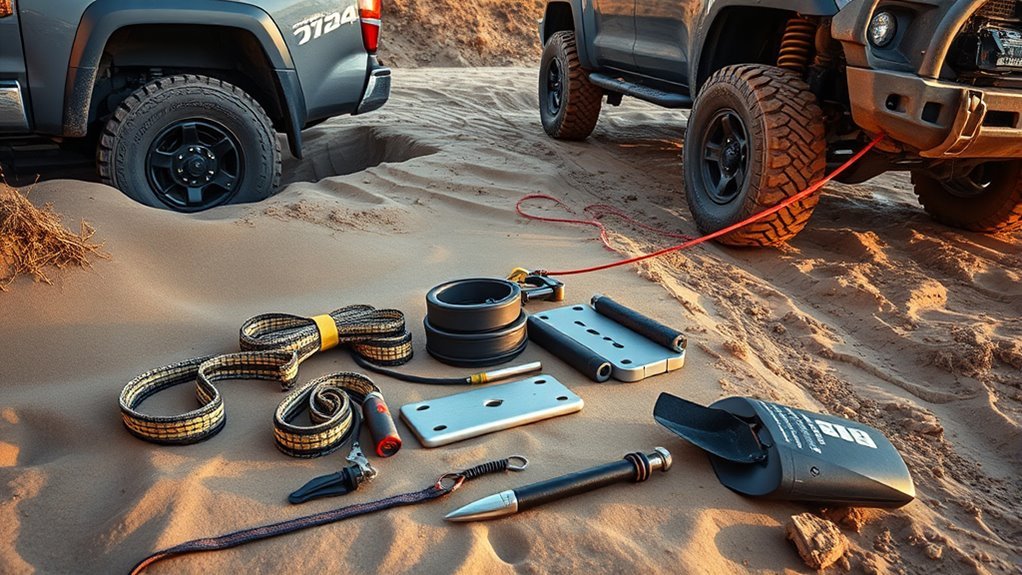
A stuck Toyota Tundra is usually recoverable if you stop early, reduce digging, and work methodically. The goal is simple: stop wheelspin, reduce resistance, give the tires a firm path to climb, and move the truck with steady low-speed control. Follow your owner’s manual, local beach or trail rules, and stop immediately if rising water, an unsafe anchor, vehicle damage, or a buried underbody makes self-recovery risky.
Last updated: September 16, 2026 — rechecked against Toyota owner guidance, National Park Service beach-driving guidance, NHTSA tire guidance, WARN winch guidance, and BFGoodrich recovery guidance.
How this guide was checked: This is a source-checked recovery guide, not a claim that one procedure fits every Tundra. 4WD controls, traction-control behavior, tire/wheel setups, and recovery points vary by model year and equipment, so the owner’s manual and the hardware on your truck remain the final authority.
Affiliate Disclosure: As an Amazon Associate, AutoReviewNest earns from qualifying purchases. This does not affect our editorial independence or the price you pay.
Quick Answer
To get a Toyota Tundra unstuck, stop wheelspin, secure the truck, clear sand or mud from the tires and underbody, use the 4WD or traction setting specified for your model, and place traction boards tight against the tread before applying gentle throttle. Air down only when local rules, your tire/wheel setup, load, and recovery conditions allow it. Reinflate before paved-road speeds and recheck pressure when the tires are cold.
Key Takeaways
- Stop wheelspin first. Spinning deeper usually makes the recovery harder.
- Use the correct 4WD mode before you add throttle. On many newer Tundras, Toyota allows shifting from 2H to 4H below 62 mph, but 4L uses a different procedure.
- Air down from a location-specific rule, not a universal PSI number. Cape Lookout currently publishes different 15–20 psi and 20–25 psi guidance on separate NPS pages, so check the current permit, signs, or ranger guidance for the place you are driving.
- Use traction boards, a shovel, and slow throttle before moving to straps, jacks, or winching.
- After recovery, reinflate to the tire/loading placard pressure, inspect the truck, and clean your recovery gear.
At a Glance
| Time Required | No fixed time; burial depth, terrain, tide, and recovery method can change the job quickly |
| Difficulty | Basic with a shovel and boards; advanced when straps, winches, jacks, or another vehicle are involved |
| Tools Needed | Tire gauge, deflators, compressor, shovel, traction boards, gloves, rated recovery gear, jack base |
| Stop Condition | Rising water, unsafe anchors, damaged gear, leaking fluids, or a heavily buried underbody |
Warning: Never stand in line with a strap, rope, or winch cable under tension. Do not attach recovery gear to a tow ball, bumper hitch, suspension part, or non-rated tie-down point. Use rated recovery points and keep bystanders well clear.
Quick Fix: Get a Stuck Tundra Moving (3-Step Action)
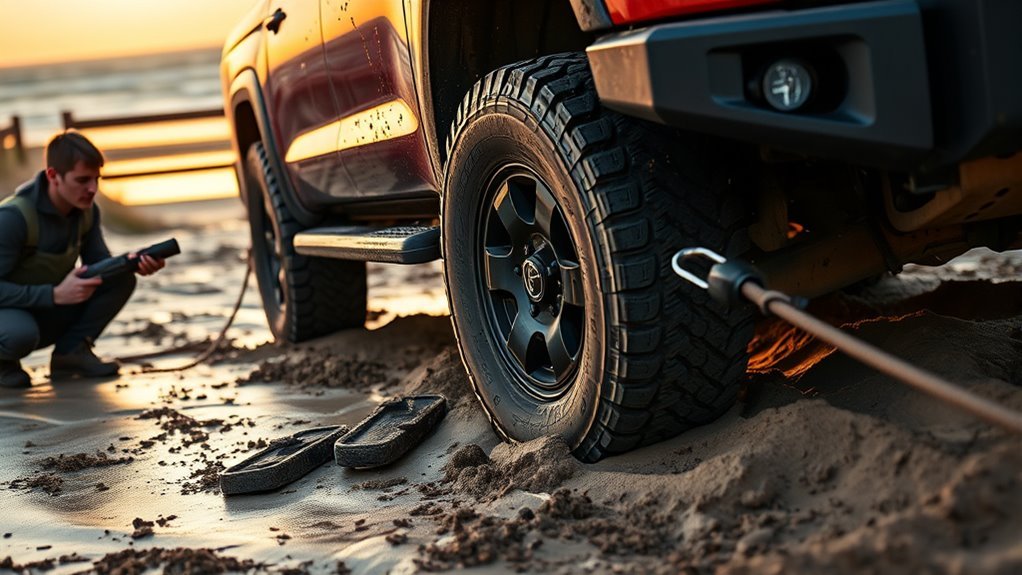
Use this three-step recovery when your Tundra is stuck but not buried to the frame, in rising water, or in a dangerous location.
- Assess: Stop the wheels, set the parking brake, shift to Park, and look at all four tires. Clear sand, mud, snow, or debris from the front and rear of the tires so the truck has a path out.
- Support: Air down only within safe limits, then place traction boards or mats tight against the tread in the direction you want to travel. Build a shallow ramp with a shovel instead of trying to climb a vertical wall of sand or mud.
- Move: Engage the correct 4WD mode, straighten the steering wheel, and use gentle, steady throttle. If the tires spin, stop, reset the boards, dig more, and try again.
Toyota’s 2025 Tundra stuck-vehicle guidance follows the same basic idea: remove the material around the tire, place something under the tire for traction, then restart and accelerate cautiously. Use that as your baseline, then add off-road recovery tools only when needed.
Pro Tip: If the truck moves even a few inches, stop before you spin again. Reset the boards closer to the tread and extend the ramp. Small wins are how you build a clean path out.
Sand vs. Mud: Change the Recovery Strategy
Sand and mud can both stop a Tundra, but they fail in different ways. Soft sand rewards flotation and a smooth ramp. Mud adds suction, clogged tread, ruts, and a higher chance of the frame or axles dragging. Use the surface to decide what you change first.
| Condition | First Move | Avoid |
|---|---|---|
| Soft sand | Stop wheelspin, straighten the steering, clear shallow ramps, and use boards. Air down only within the limits that apply to your location and tire/wheel setup. | Sharp steering, sudden throttle, and repeated spinning that digs the tires deeper. |
| Shallow mud or ruts | Clear packed mud from the tread path and underbody, place boards where the tires can reach them, and use controlled 4WD torque. | High wheel speed that throws mud, deepens ruts, or moves the truck sideways. |
| Deep, suction-heavy mud or frame-buried truck | Stop adding throttle and move to a rated, controlled winch recovery or professional help if the setup is safe. | Kinetic or strap recovery on a deeply bogged vehicle; BFGoodrich recommends a winch or another recovery approach in that situation. |
Before You Recover: Check Safety, Tide, and Local Rules
Before you dig, pull, or winch, make sure the recovery itself will not create a bigger problem. On beaches, check tide direction, weather, access rules, protected-area signs, and permit requirements. The National Park Service beach-driving guidance notes that beach conditions change quickly and that some sections can become impassable at high tide or during bad weather.
- Stop if water is rising: A Tundra stuck near surf, tidal flats, or a washout may need professional recovery.
- Clear people out: Passengers and bystanders should move away from the recovery path and never stand near a loaded line.
- Use real recovery points: Factory tie-down loops are not always rated recovery points. Confirm your truck’s rated points before you pull.
- Protect the terrain: Stay on legal routes, obey closures, and avoid spinning holes that damage beaches, trails, or vegetation.
Tundra Prep Checklist for Sand & Mud: Tires, Tools, Load
Good recovery starts before the truck gets stuck. A heavy pickup needs flotation, steady torque, and recovery gear you can reach without unloading the whole bed.
[Products Worth Considering]

BUNKER INDUST off-road traction boards help vehicles regain grip in mud, sand, and snow with a double-sided diamond array and cross-shaped teeth for improved bite and stability. Built from upgraded automotive-grade polypropylene, they resist UV damage, cold-weather brittleness, and wheel-spin heat while remaining flexible enough to handle demanding recovery situations. Contoured ramps, ergonomic handles, and multiple mounting points make them practical to use, store, and retrieve when adventure turns into recovery.

These X-BULL recovery traction tracks help drivers get unstuck from sand, snow, mud, or ice with a stable U-shaped elastic design and a wavy ramp that makes tire entry easier. Built from reinforced nylon, they are flexible, impact-resistant, and designed to perform in extreme temperatures while providing reliable emergency traction for a wide range of vehicles.
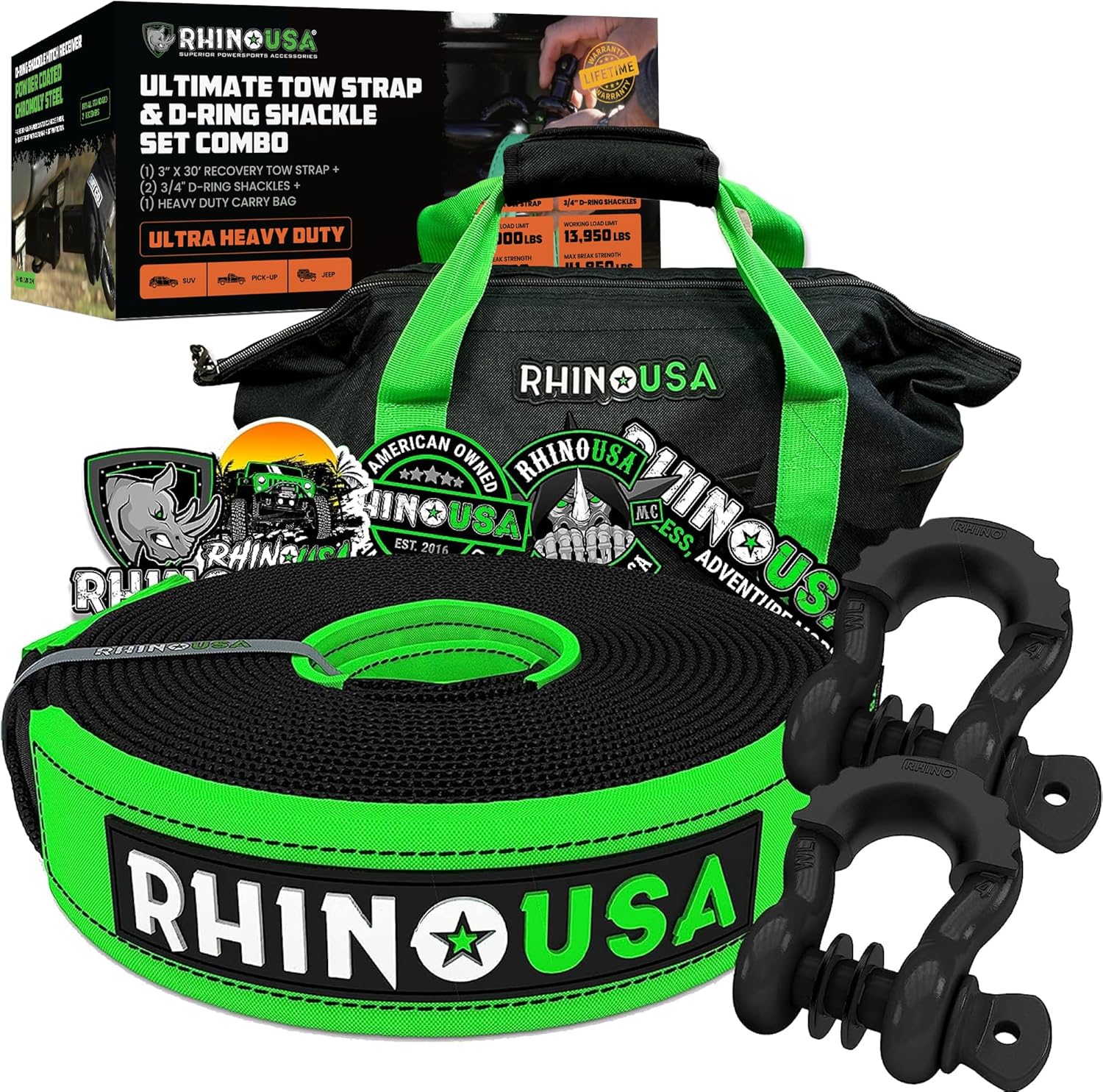
The Rhino USA Recovery Combo Kit is a compact off-road recovery solution designed to help drivers handle basic trail emergencies with confidence. It includes a static tow strap and anchor points with D-ring shackles, giving you essential gear for vehicle recovery when you need it most. Built for peace of mind on the trail, this kit is ideal for off-road enthusiasts looking for a dependable starter recovery setup.
Tire Pressure Setup
Air down before soft sand or mud, not after you have buried the truck. Lower pressure spreads the tire’s contact patch and helps the Tundra float rather than dig. That said, the right pressure depends on tire size, wheel type, load, speed, and local rules.
For managed beaches, follow the current posted requirement first. Cape Lookout is a good example of why you should not copy one PSI number from another article: its Tips for Beach Driving page says 20–25 psi, while its Beach Driving Permit guidance recommends 15–20 psi. Because those live NPS pages are not identical, use the current permit, posted sign, or ranger instruction for your visit. As pressure drops, bead-unseating, sidewall, and steering risks rise, especially with speed or sharp turns.
Start with the current rule for the location and the limits of your tire/wheel setup. Lower pressure only in controlled steps, drive slowly, and reinflate before paved-road speeds.
- Carry a real gauge: Do not rely only on the dashboard reading.
- Use deflators: Adjustable deflators help all four tires land near the same pressure.
- Watch your speed: Low pressure is for slow off-road driving, not highway use.
- Reinflate correctly: Toyota says the recommended cold tire inflation pressure is shown on the tire and loading information label. Use that placard before driving on pavement.
Essential Recovery Gear
Pack recovery gear where you can reach it while the truck is stuck. At minimum, carry:
- Traction boards or mats: Use them to create a firm tire path. Do not use a traction board as a jack base unless its manufacturer specifically allows that use.
- Compact shovel: A shovel is often faster and safer than more throttle.
- Portable air compressor: Required if you air down away from a service station.
- Tire pressure gauge and deflators: Needed for measured air-down and reinflation.
- Rated recovery strap or kinetic rope: Use only with rated recovery points and a trained second driver.
- Gloves, soft shackles or rated bow shackles, and a line dampener: Use correctly rated gear to reduce handling hazards and the consequences of a line failure.
- Jack base: Carry a purpose-built base plate or a wide, solid support board to keep the jack from sinking. Use a traction board only if its manufacturer specifically approves it for that load-bearing use.
- Water, flashlight, first-aid kit, and fire extinguisher: Basic safety gear matters when recovery takes longer than planned.
Load also matters. Before entering soft terrain, avoid unnecessary payload and secure heavy cargo so it cannot shift during recovery. Do not unload passengers or gear into an unsafe traffic, surf, or winch-line area just to reduce weight.
Airing Down: When, How Much, and Safety Tips
Air down before entering soft terrain only when it is appropriate for the location and your tire/wheel setup, then drive slowly and smoothly. Do not use a universal “Tundra sand PSI.” Start with the current local requirement or guidance, make changes in small measured steps, and stop lowering pressure if steering becomes vague, a bead looks unstable, a sidewall is excessively deformed, or the tire/wheel manufacturer’s limits would be exceeded.
- Prep: Check the door-jamb placard pressure, current tire pressure, and load before you leave pavement.
- Deflate deliberately: Measure every tire and reduce pressure in controlled steps. Do not assume the front and rear must always use the same number.
- Drive gently: Avoid sharp turns, sudden braking, hard throttle, and side-hill maneuvers at low pressure.
- Monitor: Recheck pressure during a long recovery attempt and inspect the beads and sidewalls before adding more throttle.
- Reinflate: Use your compressor to return to the placard pressure before paved-road speeds.
Note: Low pressure helps on soft ground, but underinflated tires on pavement can reduce handling and braking safety. Reinflation is part of the recovery, not an optional cleanup step.
Step-by-Step Recovery: Boards, Shovels & Throttle
Once the Tundra is aired down and the path is clear, use the boards and shovel as the main recovery tools. Throttle should be the last part of the process, not the first.
- Stop wheelspin: If the tires are throwing sand or mud, lift off the throttle.
- Secure the truck: Park, parking brake, hazards on, and passengers out if the location is risky.
- Dig around the tires: Clear in front of the tires if moving forward, and behind them if reversing. Remove packed material from under the frame, skid plates, and differential if they are dragging.
- Build a ramp: A gradual ramp beats a steep ledge. Shape the sand or mud so the tire can roll up, not bulldoze.
- Place the boards: Push traction boards tight under the tire and angle them slightly downward into the path of travel.
- Straighten the steering: Turned tires act like plows in soft sand.
- Use steady throttle: Let the tire climb onto the board. Do not launch the truck or bounce it violently.
- Reset and repeat: If a board shoots out or the truck moves only slightly, stop, dig more, and reset the board closer to the tire.
Once you regain momentum, keep rolling gently until the truck reaches firmer ground. Do not stop immediately in the same soft patch unless you must.
4WD, Traction Control, and Lockers: What to Use
Use your Tundra’s drive modes deliberately and match the procedure to the model year. Toyota’s 2025 Tundra guidance allows the 2H-to-4H change below 62 mph (100 km/h). For 4H-to-4L on the cited 2025 procedure, stop completely, keep the brake applied, shift the transmission to Neutral, then select 4L and confirm the indicator before moving. Earlier Tundras can use different labels or switch logic, so do not copy a procedure blindly across generations.
- 4H: Use when you need controlled momentum on a loose surface and the truck is not demanding maximum low-speed torque.
- 4L: Use for slow, controlled torque when resistance is high, such as deep ruts, heavy dragging, or a controlled winch-assisted move.
- TRAC/VSC behavior: Toyota notes that traction control can reduce power when a vehicle is stuck. On the cited 2025 Tundra, a quick press turns TRAC off, while a press-and-hold for more than 3 seconds while stopped disables additional stability functions. Exact behavior varies by model year, drivetrain, selected 4WD mode, and equipment, so confirm the dashboard message.
- Multi-Terrain Select, if equipped: Use the terrain mode that matches the surface before disabling more stability support than necessary. Availability and behavior vary by model and trim.
- Rear locker, if equipped: Use only when appropriate and at low speed. A locker can help both rear tires push together, but it can also reduce turning control.
If the truck is already buried, changing modes alone will not save it. Dig first, reduce resistance, then use 4WD and the least-aggressive traction setting that lets the tires climb out. Restore normal traction and stability settings before returning to regular road driving.
[Products Worth Considering]
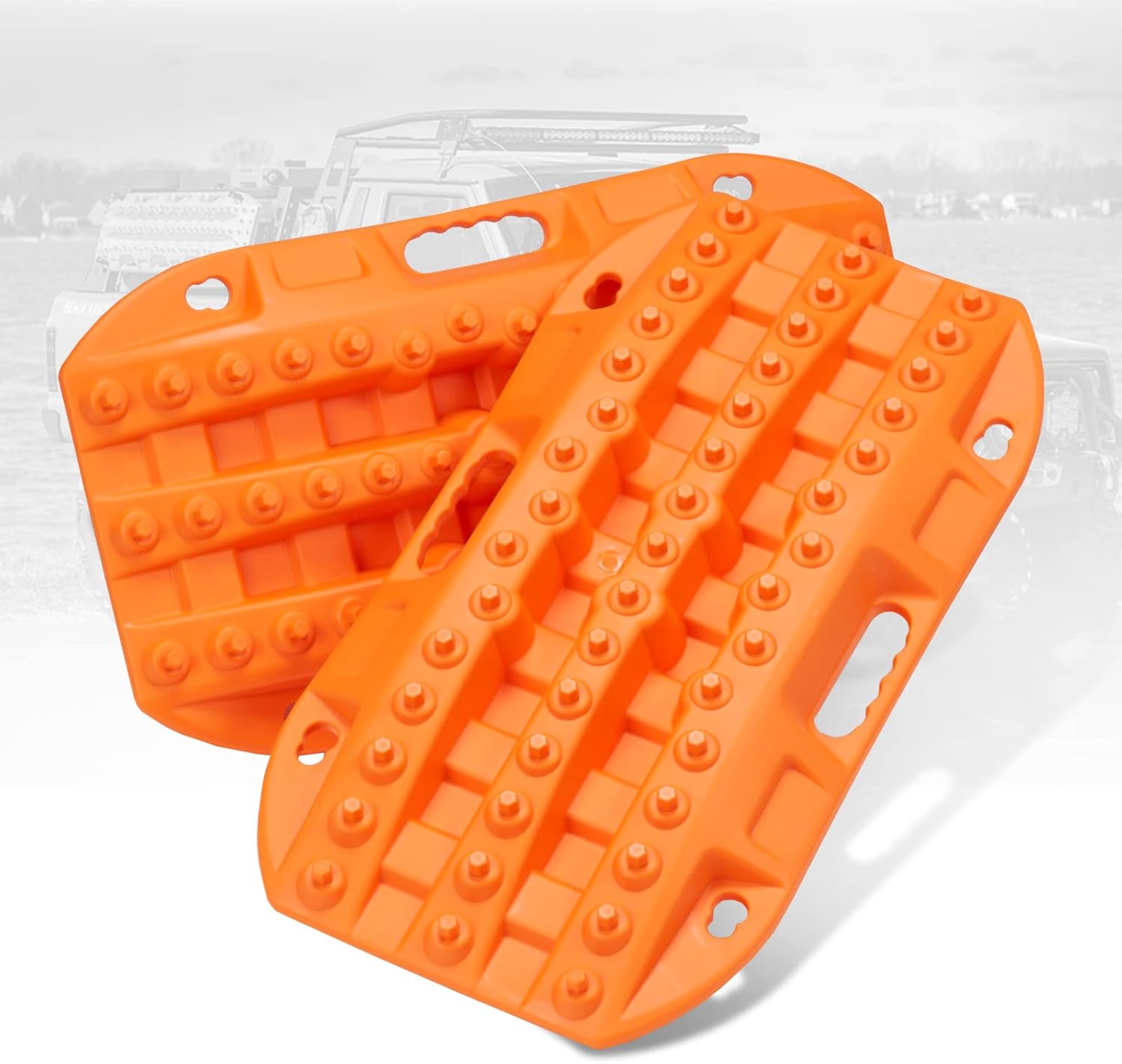
These short off-road traction boards are designed to help ATV and UTV drivers recover from mud, sand, and snow with added convenience and portability. Built with strengthened teeth and a stable bottom channel design, they help prevent wheel slip and improve traction in tough terrain. Made from durable automotive-grade polypropylene, they are lightweight, easy to clean, and suited for year-round use in extreme temperatures. Built-in shovels, ergonomic handles, and nesting storage make them practical for compact vehicle setups.

This heavy duty recovery kit is built for safer vehicle extraction with a high-elasticity nylon snatch strap and reinforced loops for dependable performance. It includes two heavy duty D-ring shackles and a storage bag, giving you a complete setup for off-road, towing, and emergency recovery situations. Designed for strength and durability, it offers a high breaking strength and a generous working load limit for rugged use.

These heavy-duty D-ring shackles are built for demanding recovery tasks, giving off-road drivers a reliable connection for tow straps, winches, and vehicle recovery gear. With a high working load limit and maximum break strength, they are designed to handle tough conditions on Jeeps, trucks, SUVs, ATVs, and UTVs. The black powder coating and galvanized protection help resist rust, while the universal fit supports most bumper-mounted D-ring applications.
When Basic Methods Fail: Winches, Jacks & Stacking Tricks
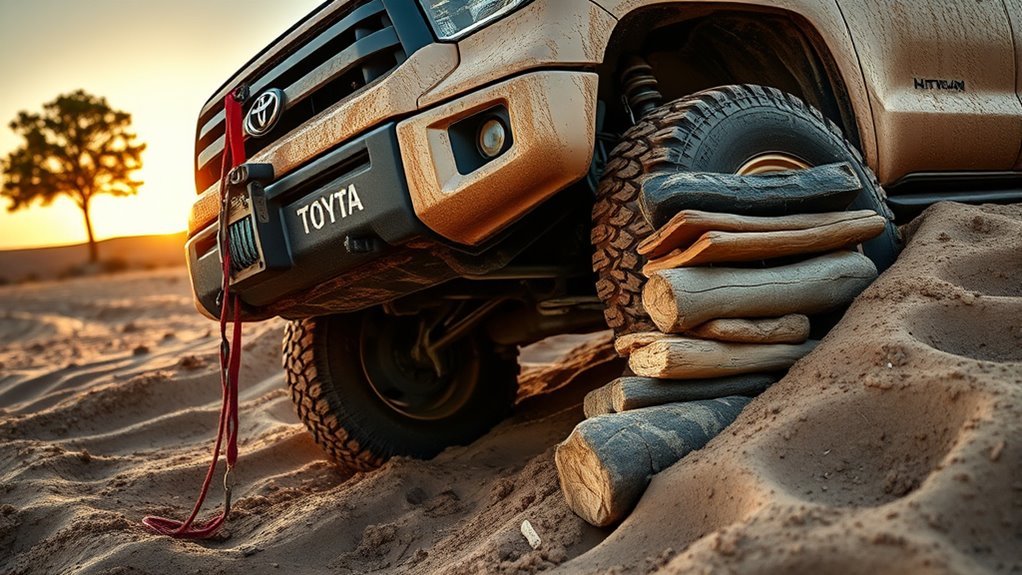
Bring out the winch, jack, and stacking techniques only after the simple board-and-shovel method fails. This is where recovery becomes more technical, so slow down and check every connection.
For winch sizing, WARN recommends GVWR × 1.5 as the minimum pulling capacity. Use GVWR, not curb weight, because the truck may be loaded with passengers, fuel, tools, and cargo.
- Inspect anchor and rigging: Use a tree saver around a suitable tree, a rated anchor, or a properly positioned recovery vehicle. Never wrap a winch line directly around a tree.
- Use a line dampener: Place a purpose-built recovery dampener on the line as directed by its manufacturer. A dampener does not prevent line failure, but it can help reduce the consequences if stored energy is released.
- Keep people clear: No one should stand near the line, between vehicles, or in the direction of pull.
- Jack safely: If you need to lift the truck, use a stable jack base, chock where possible, and never put body parts under an unsupported vehicle.
- Stack boards carefully: Double boards only when they are stable and aligned with tire travel. Avoid steep stacks that can kick out.
- Pull slowly: Winching should be smooth and controlled. Do not jerk a winch line like a kinetic rope.
Warning: Do not use a strap or rope on a tow ball or bumper hitch. BFGoodrich’s recovery guidance warns that straps and ropes should be connected to rated recovery points, and that tow balls and bumper hitches are not rated for recovery loads.
[Products Worth Considering]

This synthetic soft shackle set is designed for safer, easier off-road recovery with a simple loop-and-tighten setup that helps make vehicle pulls more straightforward. Built as a lightweight alternative to traditional metal shackles, it uses anti-scratch synthetic fiber to help protect your vehicle during recovery tasks. The two-pack format adds convenience for trail use, and Rhino USA backs the product with lifetime replacement support.
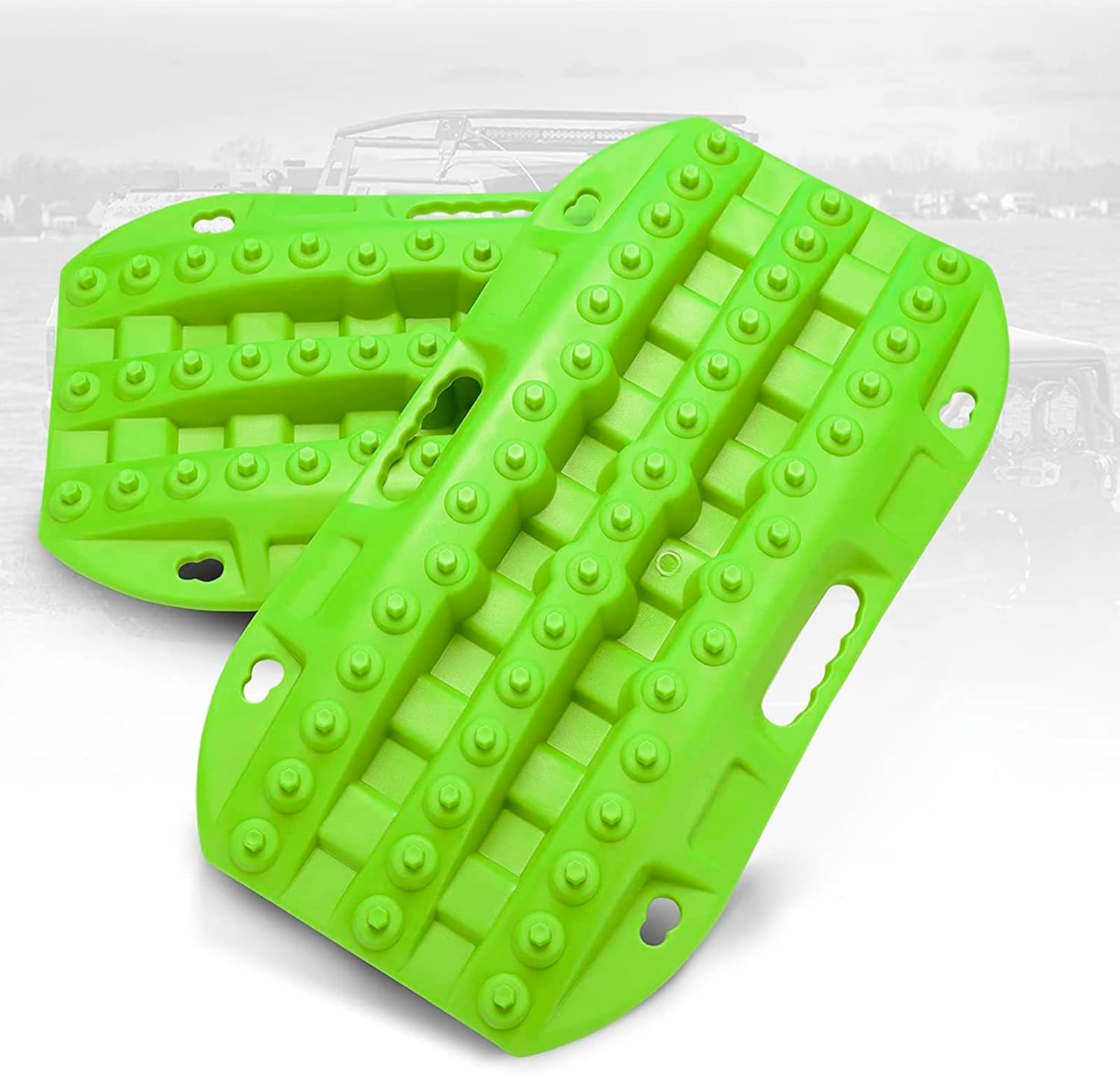
These short recovery traction boards are designed to help ATVs, UTVs, and other off-road vehicles regain grip in mud, sand, and snow. Built with strengthened teeth and a durable polypropylene construction, they provide reliable traction, easy handling, and year-round performance in tough conditions. Their nested, space-saving design and integrated shovels make them practical for carrying and using on remote adventures.

These off-road traction boards are designed to help vehicles recover from mud, sand, and snow with reliable grip and easier ramp-up. Their double-sided diamond construction, cross-shaped teeth, and contoured ramps improve traction while the durable polypropylene build stays flexible in harsh conditions. Convenient mounting points, ergonomic handles, and a visible leash make them practical to carry, store, and retrieve when recovery is needed.
When to Stop and Call for Help
Self-recovery is useful, but it has limits. Stop and call a professional recovery service, park ranger, or local authority if any of these apply:
- The tide, surf, or standing water is moving toward the truck.
- The frame, differential, exhaust, or suspension is buried and dragging heavily.
- You do not have rated recovery points or safe anchors.
- A strap, shackle, winch line, or board is damaged.
- The truck has warning lights, leaking fluids, overheated components, or abnormal noises.
- The recovery path crosses traffic, people, dunes, protected areas, or unstable ground.
- You are alone, out of daylight, out of water, or out of cell/radio range.
Recovery-assistance policies vary by beach, park, and trail system. Check the local policy before the trip instead of assuming a ranger, tow operator, or concessionaire will pull or winch the truck.
Post-Recovery Checklist: Reinflate, Inspect & Restore
Once the Tundra reaches firm ground, do not rush back to highway speed. Recovery is not complete until the truck, tires, and gear are safe for the road.
- Reinflate: Use your compressor to return each tire to the cold pressure listed on the tire/loading information placard or owner’s manual.
- Check tires: Look for cuts, punctures, sidewall damage, missing valve caps, debeaded tires, or debris wedged in the tread.
- Inspect underbody: Check skid plates, suspension links, shocks, brake lines, wiring, exhaust, and the spare-tire area.
- Clear sand and mud: Remove packed debris from wheel wells, brakes, radiator area, undercarriage, and recovery points.
- Clean gear: Rinse, dry, and inspect straps, shackles, boards, shovel, jack base, and winch line before stowing them.
- Drive slowly first: Listen for scraping, vibration, clunks, or brake noise before returning to normal speed.
- Recheck pressure cold: NHTSA defines a cold tire as one that has not been driven for at least three hours. If you aired up while the tires were warm, check and adjust them again when cold.
The NHTSA TireWise guidance recommends using the vehicle manufacturer’s recommended cold inflation pressure on the tire information placard or certification label. That is the safest target after airing back up.
Frequently Asked Questions
Can you switch to 4H while driving a Toyota Tundra?
Yes, on many newer Tundra models equipped with part-time 4WD, Toyota allows shifting between 2H and 4H while moving below 62 mph (100 km/h). Do not treat 4L the same way. For 4L, stop and follow your owner’s manual because the procedure is different.
What PSI should I use for a Tundra on sand?
There is no single safe PSI for every Tundra, tire, wheel, load, or beach. Follow the current rule for the location first. Cape Lookout currently has one NPS page saying 20–25 psi and another saying 15–20 psi, which is exactly why the permit, signs, or ranger guidance for your visit should override a generic number. Drive slowly at reduced pressure and reinflate before paved-road speeds.
Should I use 4H or 4L when the Tundra is stuck?
Use 4H when you need gentle momentum on sand, loose dirt, or shallow mud. Use 4L when you need slow, controlled torque, such as deep ruts, heavy resistance, or winch-assisted recovery. If you are already stuck, dig and place boards before adding throttle.
Should I turn traction control off when my Tundra is stuck?
Only if traction-control intervention is cutting power and preventing a controlled recovery. Toyota notes that TRAC can be turned off to help free a stuck vehicle, but switch behavior varies by Tundra generation and 2H/4H/4L mode. Use the least-aggressive setting that works, confirm the dashboard message, and turn the systems back on once the truck is free.
Are traction boards enough to get a Tundra unstuck?
Often, yes, if the truck is not frame-buried and the tires can reach the boards. Boards work best when you shovel a ramp, push the board tight against the tread, straighten the steering, and use steady throttle. If boards keep slipping, dig more and reset them.
Can I use a tow ball to pull out a stuck Tundra?
No. Do not attach a strap, rope, or winch line to a tow ball or bumper hitch. Use rated recovery points, rated shackles or soft shackles, and gear designed for vehicle recovery. If you do not have the right attachment points, call for professional help.
Conclusion
Getting a Toyota Tundra unstuck is not about more throttle. It is about reducing resistance, improving flotation where appropriate, adding a firm traction path, and using the truck’s 4WD and traction systems deliberately. Stop early, dig first, use boards with care, and move to straps, jacks, or winching only when the attachment points, anchors, gear, and bystander clearance are safe. After recovery, restore normal traction settings, reinflate for road use, recheck pressure when cold, inspect the truck, and reset your gear before the next trail or beach run.
Sources
- Toyota 2025 Tundra Owner’s Manual — If the vehicle becomes stuck — backs up basic stuck-vehicle steps such as clearing around tires and adding traction material.
- Toyota 2025 Tundra Owner’s Manual — Four-wheel drive system — backs up 2H/4H shifting guidance and the 62 mph threshold.
- Toyota 2025 Tundra Owner’s Manual — Tire inflation pressure — backs up using the tire and loading information label for recommended cold pressure.
- National Park Service — Tips for Beach Driving — backs up beach preparation, tide/weather checks, recovery kit items, and tire-pressure guidance.
- National Park Service — Beach Driving Permit — provides the current 15–20 psi recommendation shown on Cape Lookout’s permit guidance, which differs from the park’s 20–25 psi tips page.
- WARN Industries — Determine the Right Winch Capacity — backs up the GVWR × 1.5 minimum winch-capacity rule.
- BFGoodrich — Recovery Techniques — backs up recovery-point, tow-ball, dampener, strap, and winching safety guidance.
- NHTSA — TireWise — backs up using the vehicle manufacturer’s recommended cold inflation pressure and rechecking pressure when the tires are cold.